


Sustainable Rigid Plastic Packaging Market Outlook
The Sustainable Rigid Plastic Packaging market size was valued at USD 68.42 Billion in 2025 and is anticipated to reach USD 122.68 Billion by 2034, growing at a CAGR of 6.7% during the forecast period according to Strategic Packaging Insights. This growth is driven by increasing consumer demand for eco-friendly packaging solutions and stringent government regulations promoting sustainability. Companies like Berry Global and Amcor plc are leading the charge by innovating in recyclable and bio-based plastic materials, which are gaining traction across various industries. The market's expansion is further fueled by advancements in packaging technologies that enhance product shelf life and reduce environmental impact.
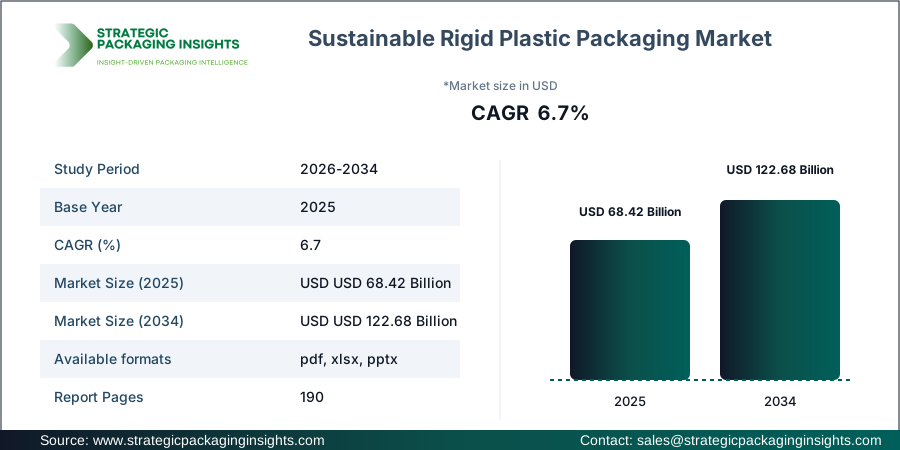
One of the most impactful drivers of the Sustainable Rigid Plastic Packaging market is the global shift towards a circular economy. Governments worldwide are implementing policies to reduce plastic waste and encourage recycling, which is significantly influencing market dynamics. For instance, the European Union's directive on single-use plastics and China's ban on non-degradable plastic bags are compelling manufacturers to adopt sustainable practices. Companies like ALPLA Group and Greiner Packaging are investing heavily in R&D to develop innovative packaging solutions that meet these regulatory requirements while maintaining cost-effectiveness and performance. This regulatory push is expected to create substantial growth opportunities for market players over the coming years.
Report Scope
| Attributes | Details |
| Report Title | Sustainable Rigid Plastic Packaging Market Size, Future Growth and Forecast 2034 |
| By Material | Recycled PET (rPET), High-Density Polyethylene (HDPE), Polypropylene (PP), Bio-Based Plastics, Other Recyclable Polymers |
| By Packaging Type | Bottles, Jars, Containers, Caps & Closures, Trays, Tubs |
| By Application | Food & Beverage, Healthcare & Pharmaceuticals, Personal Care & Cosmetics, Household Products, Industrial Packaging |
| By End User | Food Manufacturers, Beverage Companies, Healthcare Companies, Consumer Goods Companies, Packaging Manufacturers |
| Region | Asia Pacific, North America, Latin America, Europe, Middle East & Africa |
| Base Year | 2025 |
| Historic Period | 2018-2024 |
| Forecast Period | 2026-2034 |
| Number of Pages | 190 |
| Customization Available | Yes* |
Sustainability & Circular Economy Analysis
Sustainability initiatives and circular economy practices are reshaping the packaging industry, with a strong emphasis on reducing environmental impact. The adoption of recyclable materials, such as Recycled PET (rPET) and bio-based plastics, is becoming increasingly prevalent. These materials not only reduce the carbon footprint but also align with consumer preferences for eco-friendly products. Companies are focusing on lightweight packaging designs to minimize material usage and transportation costs, thereby enhancing supply chain efficiency. Eco-friendly material innovation is driving investment decisions, as manufacturers seek to differentiate themselves in a competitive market.
Extended Producer Responsibility (EPR) regulations are compelling companies to take accountability for the entire lifecycle of their packaging products. This has led to the development of waste reduction strategies and closed-loop recycling systems. Packaging manufacturers are collaborating with recycling networks to ensure the effective collection and processing of used materials. ESG initiatives are also gaining traction, with companies setting ambitious sustainability targets to attract environmentally conscious investors and consumers. These trends are influencing packaging design and manufacturing processes, as companies strive to meet regulatory compliance and enhance their long-term market competitiveness.
The shift towards sustainability is also impacting supply chain strategies, with a growing emphasis on localization and global sourcing. Companies are optimizing their procurement strategies to secure a steady supply of sustainable raw materials. This involves building strategic partnerships with suppliers and investing in advanced packaging machinery to improve production capabilities. As a result, the packaging industry is witnessing a transformation towards more sustainable and resilient supply chains, which are crucial for maintaining business competitiveness in an increasingly eco-conscious market.
Packaging Value Chain & Supply Chain Analysis
The packaging value chain is a complex ecosystem involving multiple stakeholders, from raw material suppliers to end-users. Raw material sourcing is a critical component, with companies like Berry Global and Amcor plc focusing on sustainable materials such as rPET and bio-based plastics. Packaging converters and manufacturers play a pivotal role in transforming these materials into finished products, utilizing advanced machinery and technologies to enhance production efficiency. Logistics and distribution channels are equally important, ensuring that products reach consumers in a timely and cost-effective manner.
Supply chain efficiency is a key determinant of market performance, with companies investing in inventory management systems to optimize stock levels and reduce waste. The availability of raw materials, particularly sustainable options, is a significant factor influencing production capabilities. Strategic partnerships with suppliers and logistics providers are essential for maintaining a resilient supply chain. Companies are also exploring localization strategies to mitigate risks associated with global sourcing, such as geopolitical tensions and trade barriers.
Recycling networks are an integral part of the packaging value chain, facilitating the collection and processing of used materials. Companies are collaborating with these networks to enhance their sustainability credentials and comply with regulatory requirements. Brand owners and retailers are increasingly prioritizing sustainable packaging solutions to meet consumer demand and differentiate themselves in the market. As a result, the packaging industry is evolving towards a more integrated and sustainable value chain, which is crucial for achieving long-term growth and competitiveness.
Opportunities & Threats
The Sustainable Rigid Plastic Packaging market presents numerous opportunities for growth, driven by increasing consumer awareness and demand for eco-friendly products. Companies can capitalize on this trend by investing in innovative packaging solutions that reduce environmental impact and enhance product appeal. The development of bio-based plastics and recyclable materials offers significant potential for market expansion, as these materials align with sustainability goals and regulatory requirements. Additionally, the growing popularity of lightweight packaging designs provides opportunities for cost savings and improved supply chain efficiency.
Another opportunity lies in the expansion of the circular economy, which encourages the reuse and recycling of materials. Companies can leverage this trend by implementing closed-loop recycling systems and collaborating with recycling networks to ensure the effective collection and processing of used packaging. This not only enhances sustainability credentials but also reduces reliance on virgin materials, leading to cost savings and improved resource efficiency. Furthermore, the adoption of digital technologies, such as smart packaging and IoT, offers opportunities for enhancing product traceability and consumer engagement.
Despite these opportunities, the market faces several threats, including regulatory challenges and fluctuating raw material prices. Stringent regulations on plastic waste and packaging materials can increase compliance costs and limit market growth. Companies must navigate these challenges by investing in R&D to develop innovative solutions that meet regulatory requirements while maintaining cost-effectiveness. Additionally, the volatility of raw material prices, particularly for sustainable options, can impact production costs and profitability. Companies must implement effective procurement strategies and build strategic partnerships with suppliers to mitigate these risks and ensure a stable supply of materials.
Drivers & Challenges
The primary drivers of the Sustainable Rigid Plastic Packaging market include increasing consumer demand for eco-friendly products and stringent government regulations promoting sustainability. Consumers are becoming more environmentally conscious, seeking products that align with their values and reduce environmental impact. This trend is driving companies to innovate in sustainable packaging solutions, such as recyclable materials and bio-based plastics. Additionally, government regulations, such as the European Union's directive on single-use plastics, are compelling manufacturers to adopt sustainable practices and reduce plastic waste.
Technological advancements in packaging design and manufacturing processes are also driving market growth. Companies are investing in advanced machinery and technologies to enhance production efficiency and reduce environmental impact. The development of lightweight packaging designs and smart packaging solutions offers significant potential for cost savings and improved supply chain efficiency. Furthermore, the growing popularity of digital technologies, such as IoT and blockchain, is enabling companies to enhance product traceability and consumer engagement, driving demand for innovative packaging solutions.
However, the market faces several challenges, including regulatory compliance and fluctuating raw material prices. Stringent regulations on plastic waste and packaging materials can increase compliance costs and limit market growth. Companies must navigate these challenges by investing in R&D to develop innovative solutions that meet regulatory requirements while maintaining cost-effectiveness. Additionally, the volatility of raw material prices, particularly for sustainable options, can impact production costs and profitability. Companies must implement effective procurement strategies and build strategic partnerships with suppliers to mitigate these risks and ensure a stable supply of materials.
Market Share Analysis
The Sustainable Rigid Plastic Packaging market is characterized by intense competition, with several key players dominating the landscape. Companies like Berry Global, Amcor plc, and ALPLA Group hold significant market shares, driven by their extensive product portfolios and strong focus on sustainability. These companies are investing heavily in R&D to develop innovative packaging solutions that meet consumer demand and regulatory requirements. Their strategic partnerships and collaborations with suppliers and recycling networks further enhance their market position.
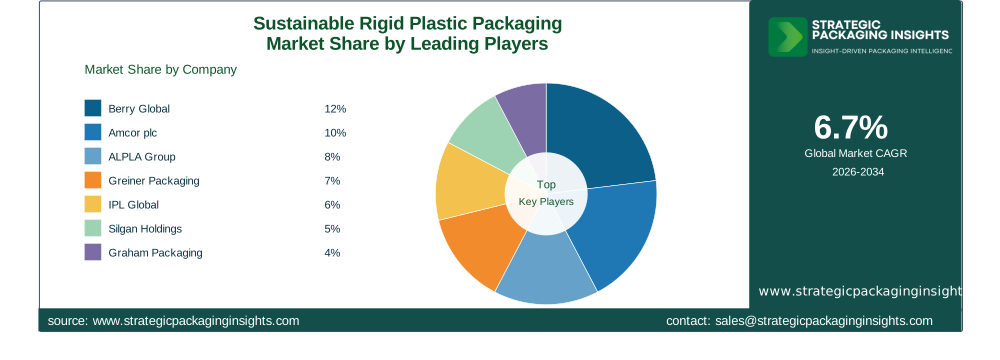
Greiner Packaging and IPL Global are also prominent players in the market, known for their commitment to sustainability and innovation. These companies are leveraging advanced technologies and materials to enhance product performance and reduce environmental impact. Their strong distribution networks and global presence enable them to cater to a diverse range of industries, including food and beverage, healthcare, and personal care. Silgan Holdings and Graham Packaging are also key players, focusing on lightweight packaging designs and recyclable materials to meet consumer demand and regulatory requirements.
Plastipak Packaging and Logoplaste are recognized for their innovative packaging solutions and strong focus on sustainability. These companies are investing in advanced machinery and technologies to enhance production efficiency and reduce environmental impact. Their strategic partnerships with suppliers and recycling networks enable them to secure a steady supply of sustainable raw materials and enhance their market competitiveness. Sonoco Products Company and AptarGroup are also notable players, known for their commitment to sustainability and innovation in packaging design and manufacturing processes.
Alpha Packaging, Gerresheimer AG, Mauser Packaging Solutions, and PACCOR are other key players in the market, focusing on sustainable packaging solutions and advanced technologies. These companies are investing in R&D to develop innovative products that meet consumer demand and regulatory requirements. Their strong distribution networks and global presence enable them to cater to a diverse range of industries, enhancing their market position and competitiveness. The competitive landscape of the Sustainable Rigid Plastic Packaging market is characterized by continuous innovation and strategic partnerships, driving growth and sustainability in the industry.
Key Highlights
- Market Size: USD 68.42 Billion in 2025, projected to reach USD 122.68 Billion by 2034.
- Growth Rate: Forecast CAGR of 6.7% during the forecast period.
- Leading Companies: Berry Global, Amcor plc, ALPLA Group, Greiner Packaging, IPL Global.
- Material Innovation: Increasing use of Recycled PET (rPET) and bio-based plastics.
- Regulatory Influence: Stringent regulations driving sustainable packaging solutions.
- Consumer Demand: Growing preference for eco-friendly and recyclable packaging.
- Regional Growth: Significant growth opportunities in Asia Pacific and Europe.
Sustainable Rigid Plastic Packaging Market Segments Insights

By Material Analysis
The material segment of the Sustainable Rigid Plastic Packaging market is witnessing significant growth, driven by the increasing adoption of recyclable and bio-based plastics. Recycled PET (rPET) is gaining traction due to its environmental benefits and cost-effectiveness. Companies are investing in advanced recycling technologies to enhance the quality and performance of rPET, making it a preferred choice for packaging applications. High-Density Polyethylene (HDPE) and Polypropylene (PP) are also popular materials, known for their durability and versatility. The development of bio-based plastics offers significant potential for market expansion, as these materials align with sustainability goals and regulatory requirements.
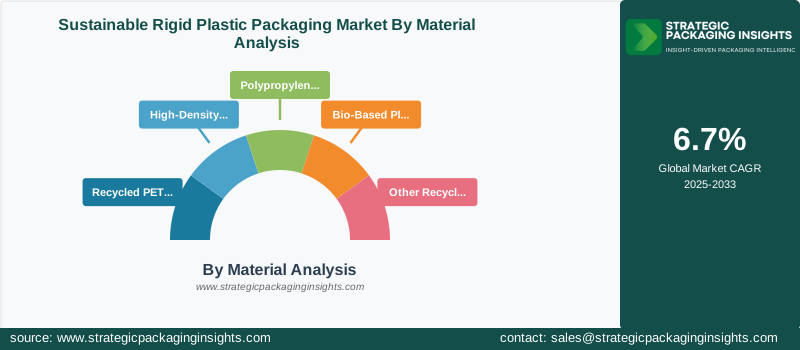
Other recyclable polymers are also gaining popularity, driven by the growing demand for eco-friendly packaging solutions. Companies are focusing on material innovation to enhance product performance and reduce environmental impact. The increasing use of lightweight materials is also contributing to market growth, as it reduces material usage and transportation costs. The material segment is characterized by continuous innovation and investment in R&D, as companies strive to meet consumer demand and regulatory requirements. The adoption of sustainable materials is expected to drive market growth and enhance competitiveness in the coming years.
By Packaging Type Analysis
The packaging type segment of the Sustainable Rigid Plastic Packaging market is diverse, with bottles, jars, and containers being the most popular choices. These packaging types are widely used across various industries, including food and beverage, healthcare, and personal care. Companies are focusing on lightweight packaging designs to reduce material usage and transportation costs, enhancing supply chain efficiency. Caps and closures are also gaining popularity, driven by the growing demand for convenient and user-friendly packaging solutions. Trays and tubs are commonly used in the food industry, offering excellent protection and shelf life for perishable products.
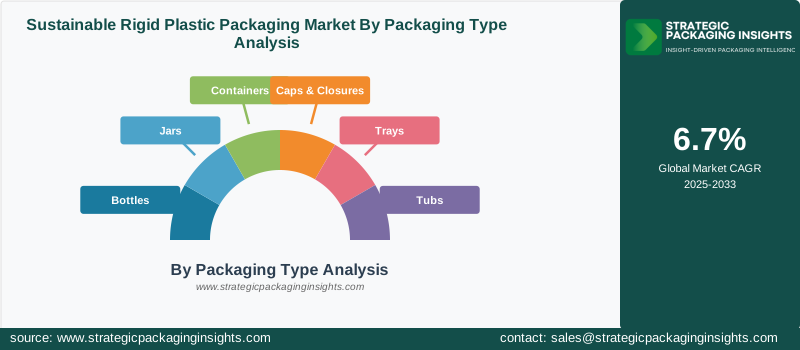
The development of innovative packaging designs is driving market growth, as companies seek to differentiate themselves in a competitive market. The increasing use of smart packaging solutions, such as IoT-enabled packaging, offers significant potential for enhancing product traceability and consumer engagement. The packaging type segment is characterized by continuous innovation and investment in advanced technologies, as companies strive to meet consumer demand and regulatory requirements. The adoption of sustainable packaging solutions is expected to drive market growth and enhance competitiveness in the coming years.
By Application Analysis
The application segment of the Sustainable Rigid Plastic Packaging market is dominated by the food and beverage industry, which accounts for a significant share of the market. The growing demand for convenient and eco-friendly packaging solutions is driving market growth, as companies seek to meet consumer preferences and regulatory requirements. The healthcare and pharmaceuticals industry is also a major contributor to market growth, driven by the increasing demand for safe and sustainable packaging solutions. Personal care and cosmetics, household products, and industrial packaging are other key application areas, offering significant growth opportunities for market players.
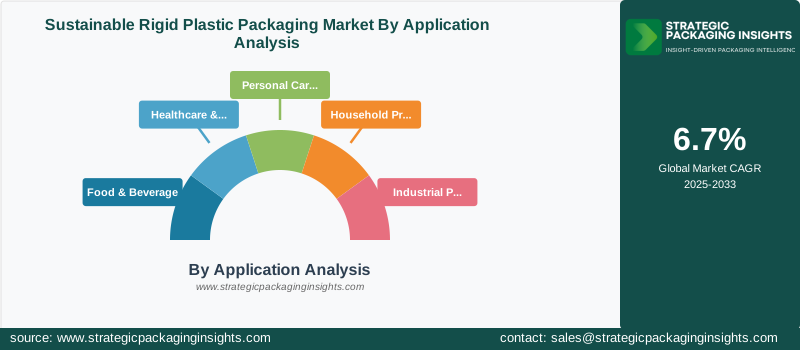
The development of innovative packaging solutions is driving market growth, as companies seek to enhance product performance and reduce environmental impact. The increasing use of smart packaging solutions, such as IoT-enabled packaging, offers significant potential for enhancing product traceability and consumer engagement. The application segment is characterized by continuous innovation and investment in advanced technologies, as companies strive to meet consumer demand and regulatory requirements. The adoption of sustainable packaging solutions is expected to drive market growth and enhance competitiveness in the coming years.
By End User Analysis
The end-user segment of the Sustainable Rigid Plastic Packaging market is diverse, with food manufacturers and beverage companies being the most prominent users. These companies are focusing on sustainable packaging solutions to meet consumer demand and regulatory requirements. Healthcare companies are also major users of rigid plastic packaging, driven by the increasing demand for safe and sustainable packaging solutions. Consumer goods companies and packaging manufacturers are other key end-users, offering significant growth opportunities for market players.
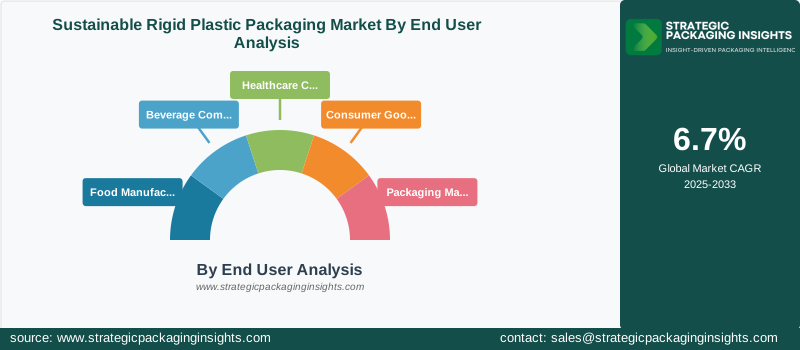
The development of innovative packaging solutions is driving market growth, as companies seek to enhance product performance and reduce environmental impact. The increasing use of smart packaging solutions, such as IoT-enabled packaging, offers significant potential for enhancing product traceability and consumer engagement. The end-user segment is characterized by continuous innovation and investment in advanced technologies, as companies strive to meet consumer demand and regulatory requirements. The adoption of sustainable packaging solutions is expected to drive market growth and enhance competitiveness in the coming years.
Sustainable Rigid Plastic Packaging Market Segments
The Sustainable Rigid Plastic Packaging market has been segmented on the basis ofBy Material
- Recycled PET (rPET)
- High-Density Polyethylene (HDPE)
- Polypropylene (PP)
- Bio-Based Plastics
- Other Recyclable Polymers
By Packaging Type
- Bottles
- Jars
- Containers
- Caps & Closures
- Trays
- Tubs
By Application
- Food & Beverage
- Healthcare & Pharmaceuticals
- Personal Care & Cosmetics
- Household Products
- Industrial Packaging
By End User
- Food Manufacturers
- Beverage Companies
- Healthcare Companies
- Consumer Goods Companies
- Packaging Manufacturers
Region
- Asia Pacific
- North America
- Latin America
- Europe
- Middle East & Africa




