


Sustainable Films for Packaging Market Outlook
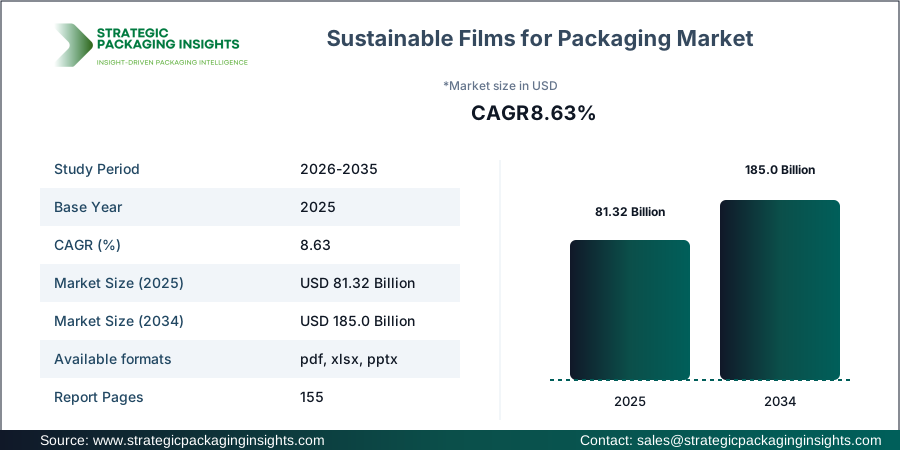
The Sustainable Films for Packaging market size was valued at USD $81.32 Billion in 2025 and is anticipated to reach USD $185.0 Billion by 2035, growing at a CAGR of 8.63% % during the forecast period according to Strategic Packaging Insights.
The most impactful market driver is the increasing consumer demand for environmentally friendly packaging solutions. This demand is supported by regulatory frameworks such as the European Commission's directives on reducing plastic waste and promoting circular economy practices. Companies are investing in research and development to create films that are not only sustainable but also meet the performance requirements of various applications, such as food and beverage packaging.
Report Scope
| Attributes | Details |
| Report Title | Sustainable Films for Packaging Market Projected to Scale to 185.0 Billion by 2035, Assesses Strategic Packaging Insights |
| By Film Type | Bio-Based Films, Biodegradable Films, Compostable Films, Recyclable Films, Mono-Material Films, Barrier Films, Stretch Films, Shrink Films |
| By Material | Polylactic Acid (PLA), Recycled Polyethylene Terephthalate (rPET), Bio-Polyethylene (Bio-PE), Polypropylene (PP), Polyethylene (PE), Polyethylene Terephthalate (PET), Cellulose, Polyhydroxyalkanoates (PHA), Polybutylene Adipate Terephthalate (PBAT), Others |
| By Technology | Blown Film, Cast Film, Coextrusion, Lamination, Extrusion Coating, Metallization |
| By Application | Food and Beverages, Pharmaceuticals, Consumer Goods, Personal Care and Cosmetics, Agriculture, E-commerce, Industrial Packaging, Others |
| By Packaging Format | Pouches, Bags, Wraps, Sachets, Lidding Films, Overwraps, Shrink Sleeves, Mailers, Others |
| By End User | Food Manufacturers, Beverage Manufacturers, Pharmaceutical Manufacturers, Consumer Goods Manufacturers, Personal Care Manufacturers, E-commerce Companies, Industrial Manufacturers |
| By Region | North America, Europe, Asia-Pacific, Latin America, Middle East and Africa |
| Base Year | 2025 |
| Historic Period | 2018-2024 |
| Forecast Period | 2026-2035 |
| Number of Pages | 155 |
| Customization Available | Yes* |
Market Trends Analysis
There is a significant shift towards the use of bio-based and biodegradable films in the packaging industry. This trend is driven by consumer preferences for sustainable products and regulatory pressures to reduce plastic waste. Companies are focusing on developing films that offer similar performance characteristics to traditional plastics but with a reduced environmental impact. The adoption of mono-material films is also gaining traction as they enhance recyclability and simplify the recycling process.
Another trend is the increasing use of advanced technologies such as coextrusion and metallization to enhance the barrier properties of sustainable films. These technologies allow for the production of films that can effectively protect products from moisture, oxygen, and other environmental factors, thereby extending shelf life. The integration of digital printing technologies is also enabling customization and personalization of packaging, which is becoming increasingly important in consumer-driven markets.
Industry Transformation Analysis
The sustainable films for packaging industry is undergoing a transformation driven by technological advancements and changing consumer preferences. Manufacturers are investing in new production technologies to improve the efficiency and sustainability of film production. The shift towards localized production is also evident as companies aim to reduce transportation costs and carbon emissions associated with long-distance shipping.
Value-chain transformation is occurring as companies collaborate with suppliers and customers to develop sustainable solutions. This includes the use of recycled materials and the development of closed-loop systems where packaging materials are collected, recycled, and reused. The industry is also seeing increased consolidation as companies seek to enhance their capabilities and market reach through mergers and acquisitions.
Trends & Disruptions Impacting Customers' Customers
Downstream customers, such as food and beverage manufacturers, are increasingly prioritizing sustainability in their packaging choices. This shift is driven by consumer demand for eco-friendly products and regulatory requirements for sustainable packaging. As a result, these manufacturers are seeking packaging solutions that not only meet performance standards but also align with their sustainability goals. This has led to increased demand for bio-based, biodegradable, and recyclable films.
The changes in downstream customer preferences are influencing the demand for sustainable films, driving innovation and product development in the market. Companies are focusing on developing films that offer enhanced barrier properties, improved recyclability, and reduced environmental impact. This shift is creating opportunities for suppliers to differentiate themselves by offering innovative and sustainable solutions that meet the evolving needs of their customers.
Sustainable Films for Packaging Market Ecosystem
The sustainable films for packaging market ecosystem involves a complex interplay of various stages, from raw material procurement to recycling. Each stage adds value and contributes to the overall sustainability of the packaging solution. The use of bio-based and recycled materials is crucial in reducing the environmental impact of film production. Resin and substrate production involves the synthesis of materials that form the basis of sustainable films.
Film production involves extrusion and casting processes that convert resins into films and sheets. These films are then converted into various packaging formats through processes such as printing and lamination. Distribution ensures that the films reach end users efficiently, while recycling closes the loop by collecting and processing used films for reuse. The ecosystem is supported by collaborations between suppliers, manufacturers, and end users to develop sustainable solutions that meet market demands.
Analyst Perspective
Analyst Perspective: The sustainable films for packaging market is poised for significant growth driven by regulatory pressures and consumer demand for eco-friendly solutions.
One of the most important structural changes is the shift towards mono-material films, which enhance recyclability and simplify the recycling process. This shift is expected to drive innovation and investment in the development of new materials and technologies.
Companies, investors, and suppliers should focus on developing partnerships and collaborations to enhance their capabilities and market reach. Monitoring regulatory developments and consumer trends will be crucial for staying competitive and capitalizing on growth opportunities in the market.
Opportunities & Threats
The sustainable films for packaging market presents significant opportunities for growth, driven by increasing consumer demand for eco-friendly packaging solutions. The development of bio-based and biodegradable films offers a promising avenue for innovation and differentiation. Companies that invest in research and development to create films with enhanced performance characteristics and reduced environmental impact are likely to gain a competitive edge.
Technological advancements in film production, such as coextrusion and metallization, provide opportunities to enhance the barrier properties of sustainable films. These technologies enable the production of films that can effectively protect products from environmental factors, thereby extending shelf life. The integration of digital printing technologies also offers opportunities for customization and personalization of packaging, which is becoming increasingly important in consumer-driven markets.
However, the market also faces threats, including raw material volatility and regulatory uncertainty. The availability and cost of bio-based and recycled materials can impact production costs and profitability. Companies must navigate complex regulatory environments and ensure compliance with evolving standards and requirements. Additionally, competition from traditional plastic films remains a challenge, as they often offer superior performance characteristics at a lower cost.
Recycling constraints and infrastructure limitations pose additional threats to the market. The lack of adequate recycling facilities and systems can hinder the collection and processing of used films, limiting the potential for closed-loop systems. Companies must invest in recycling infrastructure and collaborate with stakeholders to develop effective solutions for managing packaging waste and promoting circular economy practices.
Drivers & Challenges
The primary driver of the sustainable films for packaging market is the increasing consumer demand for environmentally friendly packaging solutions. This demand is supported by regulatory frameworks that promote the reduction of plastic waste and the adoption of sustainable practices. Companies are investing in research and development to create films that meet performance requirements while minimizing environmental impact. The shift towards bio-based and biodegradable films is a key trend, driven by consumer preferences and regulatory pressures.
Another significant driver is the technological advancements in film production, which enable the development of films with enhanced barrier properties and improved recyclability. The use of advanced technologies such as coextrusion and metallization allows for the production of films that can effectively protect products from environmental factors, thereby extending shelf life. The integration of digital printing technologies also enables customization and personalization of packaging, which is becoming increasingly important in consumer-driven markets.
Despite the growth opportunities, the market faces several challenges, including raw material volatility and regulatory uncertainty. The availability and cost of bio-based and recycled materials can impact production costs and profitability. Companies must navigate complex regulatory environments and ensure compliance with evolving standards and requirements. Additionally, competition from traditional plastic films remains a challenge, as they often offer superior performance characteristics at a lower cost.
Packaging Market Economics
The economics of sustainable films for packaging are influenced by several factors, including raw material costs, conversion costs, and energy expenses. The price of bio-based and recycled materials can fluctuate, impacting the overall cost of film production. Conversion costs, including extrusion, printing, and lamination, also play a significant role in determining the final cost of sustainable films.
Energy costs are another important consideration, as film production processes such as extrusion and lamination require significant energy inputs. Companies must optimize their production processes to minimize energy consumption and reduce costs. The integration of advanced technologies and automation can enhance operational efficiency and lower production costs, contributing to the overall economics of sustainable films for packaging.
Packaging Value Chain & Cost Analysis
The value chain for sustainable films for packaging involves several tiers, each contributing to the overall cost and value of the final product. Tier-3 includes resin synthesis and the production of additives and masterbatch, which form the basis of sustainable films. Tier-2 involves film extrusion and substrate production, where resins are converted into films and sheets.
Tier-1 encompasses converting, printing, and lamination processes, where films are transformed into various packaging formats. Downstream activities include co-packing, filling, distribution, and recycling, which ensure that the films reach end users and are collected for reuse. Each tier adds value and incurs costs, influencing the overall economics of sustainable films for packaging.
Unit Economics & Substrate Cost Analysis
The unit economics of sustainable films for packaging are determined by several factors, including raw material costs, energy expenses, and conversion costs. The price of bio-based and recycled materials can vary, impacting the overall cost of film production. Energy costs are another important consideration, as film production processes such as extrusion and lamination require significant energy inputs.
Conversion costs, including extrusion, printing, and lamination, also play a significant role in determining the final cost of sustainable films. Companies must optimize their production processes to minimize energy consumption and reduce costs. The integration of advanced technologies and automation can enhance operational efficiency and lower production costs, contributing to the overall economics of sustainable films for packaging.
Packaging Regulatory & Sustainability Analysis
The regulatory environment for sustainable films for packaging is shaped by several factors, including packaging regulations, recycling targets, and food-contact requirements. The European Commission's directives on reducing plastic waste and promoting circular economy practices are key drivers of the market. Companies must ensure compliance with these regulations and develop packaging solutions that meet sustainability standards.
Extended Producer Responsibility (EPR) schemes and packaging taxes are also influencing the market, as companies are required to take responsibility for the environmental impact of their products. The development of recyclable and compostable films is a key focus, as companies aim to reduce packaging waste and promote circular economy practices. Collaboration with stakeholders and investment in recycling infrastructure are crucial for meeting regulatory requirements and achieving sustainability goals.
Strategic Mergers, Acquisitions & Capacity Expansions
Recent strategic developments in the sustainable films for packaging market include mergers, acquisitions, and capacity expansions. Companies are seeking to enhance their capabilities and market reach through strategic partnerships and collaborations. For example, Amcor plc has invested in new production facilities to increase its capacity for sustainable films.
Other companies, such as Mondi plc and Sealed Air Corporation, are focusing on developing innovative packaging solutions that meet sustainability standards. These strategic developments are driven by the need to meet increasing consumer demand for eco-friendly packaging and comply with regulatory requirements. The market is also seeing increased consolidation as companies seek to enhance their capabilities and market reach through mergers and acquisitions.
Strategic Action Directives
Brand Packaging Engineers & Sustainability Directors should focus on material selection and mono-material qualification to enhance recyclability and meet sustainability goals. Barrier performance and PCR integration are also important considerations for developing sustainable packaging solutions.
Converter Operations & Extrusion Leads should optimize line speed, tooling, and changeover processes to enhance operational efficiency and reduce costs. Managing PCR variability and maximizing capacity utilization are also crucial for maintaining competitiveness in the market.
Procurement & Material Sourcing Managers should focus on securing resin contracts and price indexing to manage raw material costs. Supplier diversification and EPR exposure are also important considerations for ensuring a stable supply chain and meeting regulatory requirements.
Investors should monitor capacity, margin structure, and M&A activity to identify growth opportunities and assess market concentration. Technology advancements and market trends should also be considered when evaluating investment opportunities in the sustainable films for packaging market.
Market Share Analysis
The competitive landscape of the sustainable films for packaging market is characterized by the presence of several key players, including Amcor plc, Mondi plc, and Sealed Air Corporation. These companies are focusing on developing innovative packaging solutions that meet sustainability standards and comply with regulatory requirements. The market is also seeing increased consolidation as companies seek to enhance their capabilities and market reach through mergers and acquisitions.
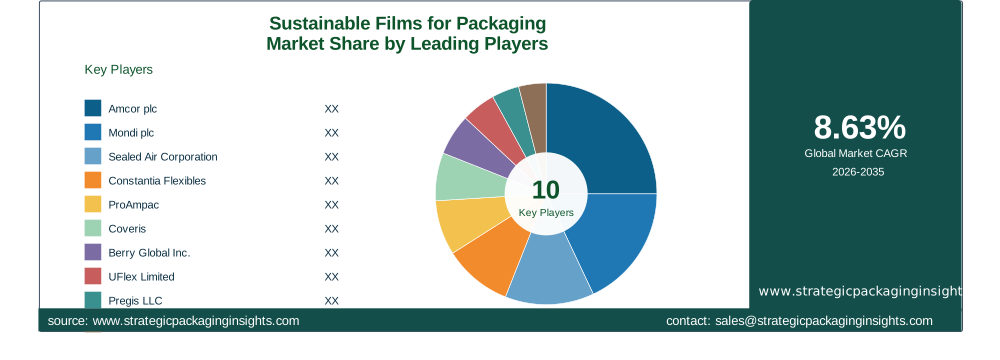
Amcor plc is a leading player in the market, with a strong focus on sustainability and innovation. The company has invested in new production facilities to increase its capacity for sustainable films and meet increasing consumer demand for eco-friendly packaging. Mondi plc is another key player, known for its innovative packaging solutions and commitment to sustainability. The company has developed a range of sustainable films that offer enhanced performance characteristics and reduced environmental impact.
Sealed Air Corporation is also a major player in the market, with a focus on developing packaging solutions that meet the needs of various industries, including food and beverages, pharmaceuticals, and consumer goods. The company has invested in research and development to create films with enhanced barrier properties and improved recyclability. Other key players in the market include Constantia Flexibles, ProAmpac, and Coveris, which are known for their innovative packaging solutions and commitment to sustainability.
The market is also seeing increased competition from new entrants and smaller players, which are focusing on developing niche products and targeting specific market segments. These companies are leveraging advanced technologies and innovative materials to create sustainable packaging solutions that meet the evolving needs of consumers and comply with regulatory requirements.
Key Highlights
- Largest Region: North America
- Fastest-Growing Region: Asia Pacific
- Largest Segment: Bio-Based Films
- Fastest-Growing Segment: Bio-Based Films
- Base-year market size: $81.32 Billion
- Forecast-year market size: $185.0 Billion
- CAGR: 8.63%
- Important application: Food and Beverages
- Major end-use industry: Food Manufacturers
- Major market driver: Increasing consumer demand for eco-friendly packaging solutions
Regional Insights
The global sustainable films for packaging market is segmented into five major regions: North America, Europe, Asia Pacific, Latin America, and the Middle East & Africa. North America is the largest region, driven by strong demand from the food and beverage industry and regulatory support for sustainable packaging solutions. Asia Pacific is the fastest-growing region, with increasing consumer awareness and government initiatives promoting eco-friendly packaging.
North America
North America is the largest market for sustainable films for packaging, driven by strong demand from the food and beverage industry. The region is characterized by a high level of consumer awareness and regulatory support for sustainable packaging solutions. Companies in North America are focusing on developing innovative packaging solutions that meet sustainability standards and comply with regulatory requirements.
The United States is the largest market in North America, with a strong focus on sustainability and innovation. The country is home to several key players in the market, including Amcor plc, Mondi plc, and Sealed Air Corporation, which are known for their innovative packaging solutions and commitment to sustainability.
Europe
Europe is a significant market for sustainable films for packaging, driven by strong regulatory support and consumer demand for eco-friendly packaging solutions. The European Commission's directives on reducing plastic waste and promoting circular economy practices are key drivers of the market. Companies in Europe are focusing on developing sustainable packaging solutions that meet regulatory requirements and align with consumer preferences.
Germany, France, and the United Kingdom are the largest markets in Europe, with a strong focus on sustainability and innovation. These countries are home to several key players in the market, including Constantia Flexibles, ProAmpac, and Coveris, which are known for their innovative packaging solutions and commitment to sustainability.
Asia Pacific
Asia Pacific is the fastest-growing region in the sustainable films for packaging market, driven by increasing consumer awareness and government initiatives promoting eco-friendly packaging. The region is characterized by a high level of consumer demand for sustainable packaging solutions and a growing focus on sustainability and innovation.
China, India, and Japan are the largest markets in Asia Pacific, with a strong focus on sustainability and innovation. These countries are home to several key players in the market, including UFlex Limited, Taghleef Industries, and Innovia Films, which are known for their innovative packaging solutions and commitment to sustainability.
Latin America
Latin America is a growing market for sustainable films for packaging, driven by increasing consumer demand for eco-friendly packaging solutions. The region is characterized by a high level of consumer awareness and regulatory support for sustainable packaging solutions. Companies in Latin America are focusing on developing innovative packaging solutions that meet sustainability standards and comply with regulatory requirements.
Brazil and Mexico are the largest markets in Latin America, with a strong focus on sustainability and innovation. These countries are home to several key players in the market, including Berry Global Inc., Pregis LLC, and Cosmo First Limited, which are known for their innovative packaging solutions and commitment to sustainability.
Middle East & Africa
The Middle East & Africa is a growing market for sustainable films for packaging, driven by increasing consumer demand for eco-friendly packaging solutions. The region is characterized by a high level of consumer awareness and regulatory support for sustainable packaging solutions. Companies in the Middle East & Africa are focusing on developing innovative packaging solutions that meet sustainability standards and comply with regulatory requirements.
South Africa and the United Arab Emirates are the largest markets in the Middle East & Africa, with a strong focus on sustainability and innovation. These countries are home to several key players in the market, including Klöckner Pentaplast, Futamura Chemical Co., Ltd., and TIPA Corp., which are known for their innovative packaging solutions and commitment to sustainability.
Sustainable Films for Packaging Market Segments Insights

By Film Type Analysis
The sustainable films for packaging market is segmented by film type into bio-based films, biodegradable films, compostable films, recyclable films, mono-material films, barrier films, stretch films, and shrink films. Bio-based films are expected to be the fastest-growing segment, driven by increasing demand for eco-friendly packaging solutions. These films are made from renewable resources and offer a reduced environmental impact compared to traditional plastic films.
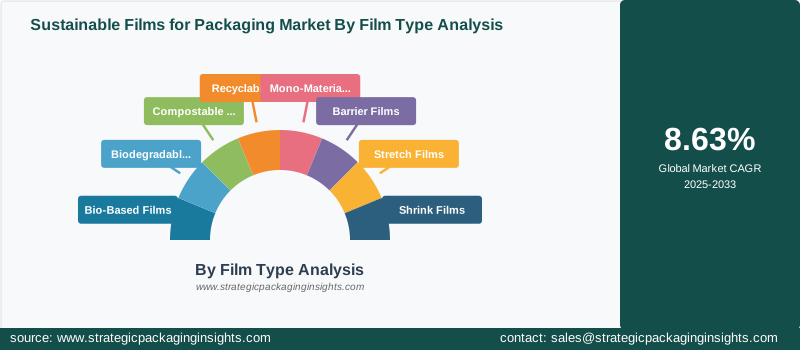
Biodegradable and compostable films are also gaining traction, as they offer the potential for reduced waste and improved sustainability. Recyclable films are becoming increasingly popular, as they align with regulatory requirements and consumer preferences for sustainable packaging solutions. Mono-material films are gaining attention for their enhanced recyclability and simplified recycling process.
By Material Analysis
The market is segmented by material into polylactic acid (PLA), recycled polyethylene terephthalate (rPET), bio-polyethylene (Bio-PE), polypropylene (PP), polyethylene (PE), polyethylene terephthalate (PET), cellulose, polyhydroxyalkanoates (PHA), polybutylene adipate terephthalate (PBAT), and others. PLA and rPET are expected to be the fastest-growing materials, driven by increasing demand for bio-based and recycled materials.
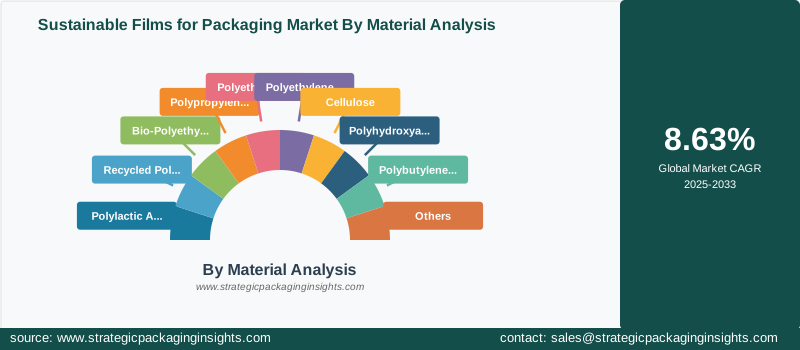
Bio-PE and PHA are also gaining traction, as they offer the potential for reduced environmental impact and improved sustainability. Companies are focusing on developing materials that offer similar performance characteristics to traditional plastics but with a reduced environmental impact. The use of recycled materials is also becoming increasingly important, as companies aim to reduce waste and promote circular economy practices.
By Technology Analysis
The market is segmented by technology into blown film, cast film, coextrusion, lamination, extrusion coating, and metallization. Coextrusion and metallization are expected to be the fastest-growing technologies, driven by their ability to enhance the barrier properties of sustainable films. These technologies enable the production of films that can effectively protect products from environmental factors, thereby extending shelf life.
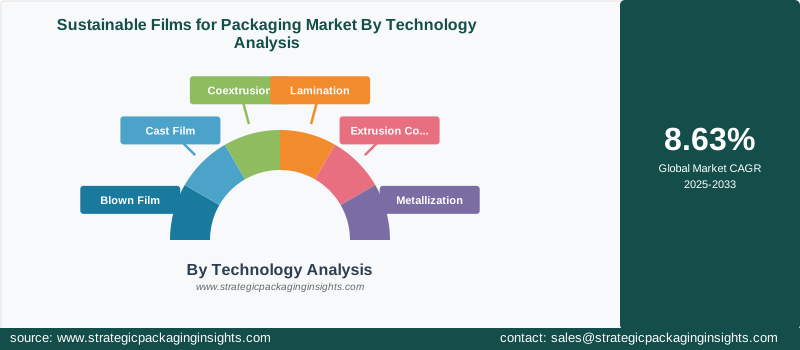
Blown film and cast film are also widely used in the production of sustainable films, as they offer flexibility and versatility in film production. Lamination and extrusion coating are important processes for enhancing the performance characteristics of sustainable films, such as barrier properties and printability. Companies are investing in advanced technologies to improve the efficiency and sustainability of film production.
By Application Analysis
The market is segmented by application into food and beverages, pharmaceuticals, consumer goods, personal care and cosmetics, agriculture, e-commerce, industrial packaging, and others. Food and beverages are expected to be the largest application segment, driven by strong demand for sustainable packaging solutions in the food industry. The need for packaging that can effectively protect food products and extend shelf life is a key driver of the market.
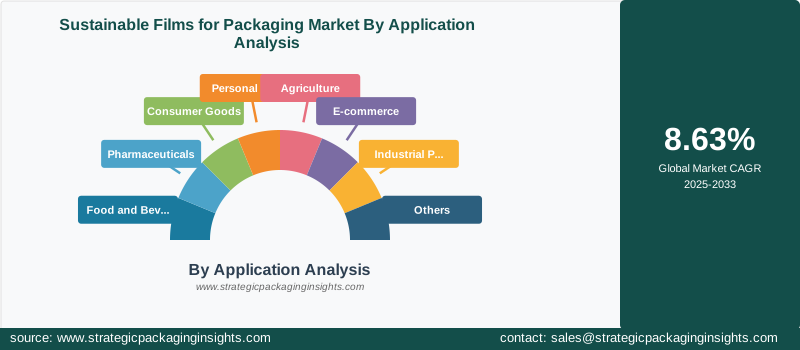
Pharmaceuticals and consumer goods are also significant application segments, as companies in these industries are increasingly prioritizing sustainability in their packaging choices. Personal care and cosmetics, agriculture, and e-commerce are also important application segments, as they offer opportunities for innovation and differentiation in sustainable packaging solutions.
By Packaging Format Analysis
The market is segmented by packaging format into pouches, bags, wraps, sachets, lidding films, overwraps, shrink sleeves, mailers, and others. Pouches are expected to be the largest packaging format segment, driven by their versatility and convenience. Pouches offer a lightweight and flexible packaging solution that can effectively protect products and extend shelf life.
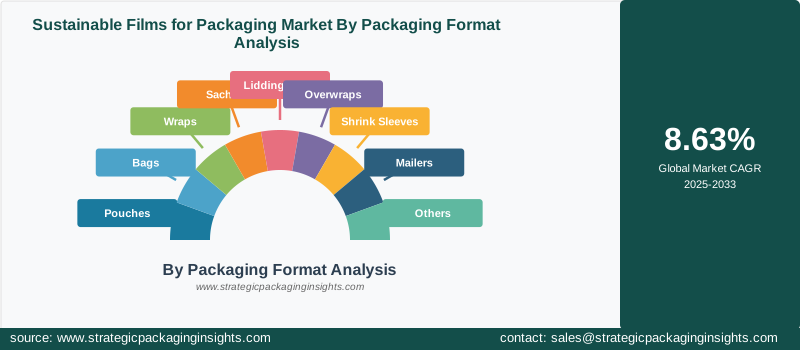
Bags and wraps are also widely used in the sustainable films for packaging market, as they offer a convenient and cost-effective packaging solution. Sachets and lidding films are important packaging formats for specific applications, such as food and beverages and pharmaceuticals. Companies are focusing on developing innovative packaging formats that meet the evolving needs of consumers and comply with regulatory requirements.
By End User Analysis
The market is segmented by end user into food manufacturers, beverage manufacturers, pharmaceutical manufacturers, consumer goods manufacturers, personal care manufacturers, e-commerce companies, and industrial manufacturers. Food manufacturers are expected to be the largest end-user segment, driven by strong demand for sustainable packaging solutions in the food industry.
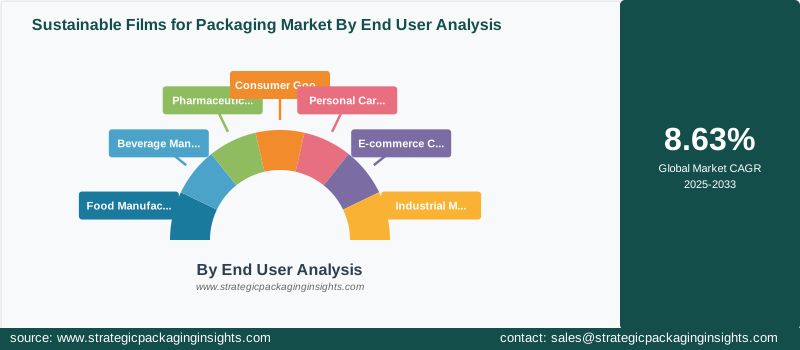
Beverage manufacturers and pharmaceutical manufacturers are also significant end-user segments, as companies in these industries are increasingly prioritizing sustainability in their packaging choices. Consumer goods manufacturers, personal care manufacturers, and e-commerce companies are also important end-user segments, as they offer opportunities for innovation and differentiation in sustainable packaging solutions.
Top 10 Companies in the Sustainable Films for Packaging Market
Amcor plc (Australia)
Amcor plc is a leading player in the sustainable films for packaging market, known for its innovative packaging solutions and commitment to sustainability. The company has invested in new production facilities to increase its capacity for sustainable films and meet increasing consumer demand for eco-friendly packaging.
Mondi plc (UK)
Mondi plc is a key player in the market, known for its innovative packaging solutions and commitment to sustainability. The company has developed a range of sustainable films that offer enhanced performance characteristics and reduced environmental impact.
Sealed Air Corporation (USA)
Sealed Air Corporation is a major player in the market, with a focus on developing packaging solutions that meet the needs of various industries, including food and beverages, pharmaceuticals, and consumer goods. The company has invested in research and development to create films with enhanced barrier properties and improved recyclability.
Constantia Flexibles (Austria)
Constantia Flexibles is known for its innovative packaging solutions and commitment to sustainability. The company has developed a range of sustainable films that offer enhanced performance characteristics and reduced environmental impact.
ProAmpac (USA)
ProAmpac is a leading player in the market, known for its innovative packaging solutions and commitment to sustainability. The company has developed a range of sustainable films that offer enhanced performance characteristics and reduced environmental impact.
Coveris (UK)
Coveris is a key player in the market, known for its innovative packaging solutions and commitment to sustainability. The company has developed a range of sustainable films that offer enhanced performance characteristics and reduced environmental impact.
Berry Global Inc. (USA)
Berry Global Inc. is a major player in the market, with a focus on developing packaging solutions that meet the needs of various industries, including food and beverages, pharmaceuticals, and consumer goods. The company has invested in research and development to create films with enhanced barrier properties and improved recyclability.
UFlex Limited (India)
UFlex Limited is a leading player in the market, known for its innovative packaging solutions and commitment to sustainability. The company has developed a range of sustainable films that offer enhanced performance characteristics and reduced environmental impact.
Pregis LLC (USA)
Pregis LLC is a key player in the market, known for its innovative packaging solutions and commitment to sustainability. The company has developed a range of sustainable films that offer enhanced performance characteristics and reduced environmental impact.
Taghleef Industries (UAE)
Taghleef Industries is a major player in the market, with a focus on developing packaging solutions that meet the needs of various industries, including food and beverages, pharmaceuticals, and consumer goods. The company has invested in research and development to create films with enhanced barrier properties and improved recyclability.
Sustainable Films for Packaging Market Segments
The Sustainable Films for Packaging market has been segmented on the basis ofBy Film Type
- Bio-Based Films
- Biodegradable Films
- Compostable Films
- Recyclable Films
- Mono-Material Films
- Barrier Films
- Stretch Films
- Shrink Films
By Material
- Polylactic Acid (PLA)
- Recycled Polyethylene Terephthalate (rPET)
- Bio-Polyethylene (Bio-PE)
- Polypropylene (PP)
- Polyethylene (PE)
- Polyethylene Terephthalate (PET)
- Cellulose
- Polyhydroxyalkanoates (PHA)
- Polybutylene Adipate Terephthalate (PBAT)
- Others
By Technology
- Blown Film
- Cast Film
- Coextrusion
- Lamination
- Extrusion Coating
- Metallization
By Application
- Food and Beverages
- Pharmaceuticals
- Consumer Goods
- Personal Care and Cosmetics
- Agriculture
- E-commerce
- Industrial Packaging
- Others
By Packaging Format
- Pouches
- Bags
- Wraps
- Sachets
- Lidding Films
- Overwraps
- Shrink Sleeves
- Mailers
- Others
By End User
- Food Manufacturers
- Beverage Manufacturers
- Pharmaceutical Manufacturers
- Consumer Goods Manufacturers
- Personal Care Manufacturers
- E-commerce Companies
- Industrial Manufacturers
By Region
- North America
- Europe
- Asia-Pacific
- Latin America
- Middle East and Africa




