


Sustainable E-Commerce Packaging Market Outlook
The Sustainable E-Commerce Packaging market size was valued at USD 32.74 Billion in 2025 and is anticipated to reach USD 68.52 Billion by 2034, growing at a CAGR of 8.5% during the forecast period according to Strategic Packaging Insights. This growth is driven by increasing consumer awareness and demand for eco-friendly packaging solutions, as well as stringent regulations on packaging waste. Companies like Smurfit Westrock and DS Smith are leading the charge by innovating in sustainable materials and packaging designs that reduce environmental impact while maintaining product safety and integrity.
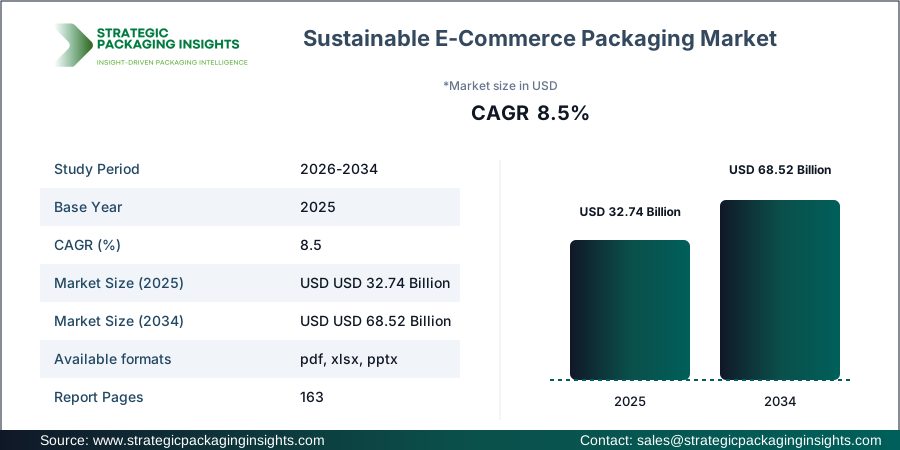
One of the most impactful drivers of this market is the growing emphasis on reducing carbon footprints and waste in the supply chain. Governments worldwide are implementing policies that encourage the use of recyclable and biodegradable materials, which is pushing companies to adopt sustainable practices. For instance, the European Union's directive on single-use plastics has accelerated the shift towards sustainable packaging solutions. This regulatory environment, coupled with consumer preference for green products, is compelling brands like Mondi plc and Ranpak Holdings to invest heavily in research and development to create innovative, sustainable packaging solutions that meet both regulatory standards and consumer expectations.
Report Scope
| Attributes | Details |
| Report Title | Sustainable E-Commerce Packaging Market Size, Future Growth and Forecast 2034 |
| By Material | Corrugated Paperboard, Paper Mailers, Recycled Plastics, Molded Fiber, Bio-Based Materials |
| By Packaging Type | Shipping Boxes, Paper Mailers, Protective Packaging, Void Fill Packaging, Protective Envelopes, Returnable Packaging |
| By Application | Apparel & Fashion, Consumer Electronics, Food & Grocery, Healthcare, Personal Care, General Merchandise |
| By End User | E-Commerce Retailers, Online Marketplaces, Third-Party Logistics Providers, Packaging Manufacturers, Direct-to-Consumer Brands |
| Region | Asia Pacific, North America, Latin America, Europe, Middle East & Africa |
| Base Year | 2025 |
| Historic Period | 2018-2024 |
| Forecast Period | 2026-2034 |
| Number of Pages | 163 |
| Customization Available | Yes* |
Sustainability & Circular Economy Analysis
Sustainability initiatives and circular economy practices are significantly reshaping the e-commerce packaging market. Companies are increasingly adopting recyclable materials and reusable packaging to minimize environmental impact. For instance, the use of corrugated paperboard and recycled plastics is becoming more prevalent as businesses aim to reduce waste and promote a circular economy. These materials not only help in waste reduction but also align with consumer preferences for eco-friendly products, thereby enhancing brand reputation and customer loyalty.
Eco-friendly material innovation is at the forefront of packaging design and manufacturing. Lightweight packaging solutions are being developed to reduce transportation emissions and costs, while still ensuring product protection. Companies are also focusing on reducing their carbon footprint through energy-efficient manufacturing processes and sustainable sourcing of raw materials. This shift towards sustainability is influencing investment decisions, as businesses seek to align with ESG (Environmental, Social, and Governance) criteria to attract environmentally conscious investors.
Regulatory compliance and extended producer responsibility (EPR) are driving companies to rethink their supply chain strategies. Packaging regulations are becoming stricter, requiring businesses to ensure that their products meet environmental standards. This has led to increased collaboration between packaging manufacturers, brand owners, and recycling networks to create closed-loop systems that enhance long-term market competitiveness. As a result, companies are investing in technologies and processes that support sustainable practices, ensuring compliance and reducing environmental impact.
Packaging Value Chain & Supply Chain Analysis
The packaging value chain is a complex ecosystem involving raw material sourcing, packaging converters, manufacturers, and logistics providers. Efficient raw material sourcing is crucial for maintaining supply chain resilience and ensuring the availability of sustainable materials like corrugated paperboard and bio-based materials. Packaging converters and manufacturers play a vital role in transforming these materials into finished products that meet the demands of e-commerce retailers and consumers. Strategic partnerships with suppliers and logistics providers are essential for optimizing transportation and distribution channels, ensuring timely delivery and reducing costs.
Supply chain efficiency is a key factor influencing market performance and competitiveness. Companies are adopting advanced inventory management systems and procurement strategies to enhance supply chain resilience and minimize disruptions. Localization of production facilities is becoming more common as businesses seek to reduce transportation costs and carbon emissions. Global sourcing strategies are also being employed to diversify supply chains and mitigate risks associated with geopolitical tensions and trade barriers.
Recycling networks are an integral part of the packaging value chain, supporting the circular economy by facilitating the collection and processing of used packaging materials. Brand owners and retailers are increasingly collaborating with recycling networks to ensure that their packaging is recyclable and meets environmental standards. This collaboration not only helps in reducing waste but also enhances brand image and customer satisfaction. As a result, companies are investing in technologies and processes that support sustainable practices, ensuring compliance and reducing environmental impact.
Opportunities & Threats
The sustainable e-commerce packaging market presents numerous opportunities for growth and innovation. One significant opportunity lies in the development of bio-based materials, which offer a sustainable alternative to traditional plastics. Companies that invest in research and development to create innovative, eco-friendly packaging solutions can gain a competitive edge in the market. Additionally, the increasing demand for personalized packaging solutions presents an opportunity for businesses to differentiate themselves by offering customized, sustainable packaging options that enhance the customer experience.
Another opportunity is the expansion of e-commerce in emerging markets, which is driving demand for sustainable packaging solutions. As more consumers in these regions become environmentally conscious, there is a growing need for packaging that aligns with their values. Companies that can effectively tap into these markets by offering affordable, sustainable packaging solutions stand to benefit significantly. Furthermore, advancements in digital printing technology provide opportunities for businesses to create visually appealing, sustainable packaging that enhances brand recognition and customer engagement.
Despite these opportunities, the market also faces several threats. One major challenge is the high cost of sustainable materials, which can impact profit margins and limit the adoption of eco-friendly packaging solutions. Additionally, the lack of standardized regulations across different regions can create complexities for companies operating in multiple markets. This regulatory uncertainty can hinder investment in sustainable packaging solutions and slow market growth. Companies must navigate these challenges by developing cost-effective, scalable solutions that meet diverse regulatory requirements and consumer expectations.
Drivers & Challenges
The primary drivers of the sustainable e-commerce packaging market include increasing consumer awareness and demand for eco-friendly products, as well as stringent regulations on packaging waste. Consumers are becoming more environmentally conscious and are seeking products that align with their values. This shift in consumer preferences is driving companies to adopt sustainable packaging solutions that reduce environmental impact and enhance brand reputation. Additionally, government regulations aimed at reducing packaging waste are compelling businesses to invest in sustainable materials and practices.
Technological advancements in packaging design and manufacturing are also driving market growth. Innovations in lightweight packaging solutions and eco-friendly materials are enabling companies to reduce transportation emissions and costs while maintaining product protection. These advancements are not only enhancing the sustainability of packaging solutions but also improving their functionality and appeal to consumers. As a result, companies that invest in research and development to create innovative, sustainable packaging solutions are well-positioned to capitalize on market opportunities.
However, the market also faces several challenges. One significant challenge is the high cost of sustainable materials, which can impact profit margins and limit the adoption of eco-friendly packaging solutions. Additionally, the lack of standardized regulations across different regions can create complexities for companies operating in multiple markets. This regulatory uncertainty can hinder investment in sustainable packaging solutions and slow market growth. Companies must navigate these challenges by developing cost-effective, scalable solutions that meet diverse regulatory requirements and consumer expectations.
Market Share Analysis
The competitive landscape of the sustainable e-commerce packaging market is characterized by the presence of several key players, each striving to gain a larger market share through innovation and strategic partnerships. Companies like Smurfit Westrock and DS Smith are leading the market with their extensive product portfolios and commitment to sustainability. These companies are investing heavily in research and development to create innovative packaging solutions that meet the evolving needs of consumers and regulatory requirements.
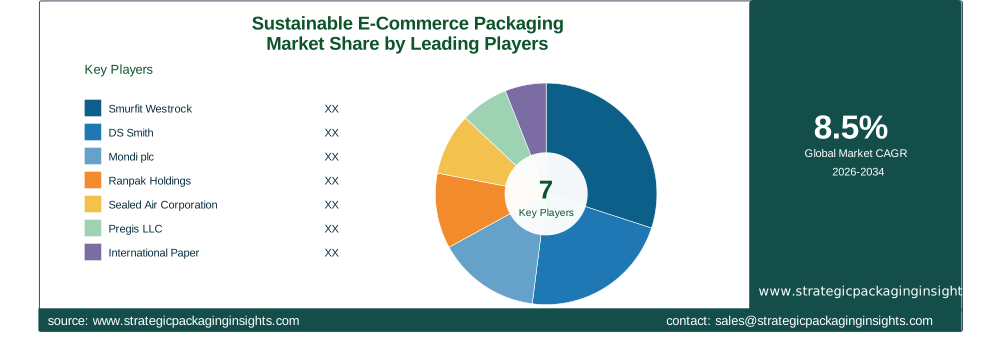
Mondi plc and Ranpak Holdings are also significant players in the market, known for their focus on eco-friendly materials and sustainable packaging solutions. Mondi plc, for instance, has been at the forefront of developing bio-based materials that offer a sustainable alternative to traditional plastics. Ranpak Holdings, on the other hand, is renowned for its protective packaging solutions that are both sustainable and cost-effective. These companies are leveraging their expertise and resources to expand their market presence and capture new opportunities.
Sealed Air Corporation and Pregis LLC are other notable players in the market, recognized for their innovative packaging solutions and commitment to sustainability. Sealed Air Corporation is known for its advanced packaging technologies that enhance product protection while minimizing environmental impact. Pregis LLC, meanwhile, is focused on developing protective packaging solutions that are both sustainable and efficient. These companies are continuously exploring new materials and technologies to stay ahead of the competition and meet the growing demand for sustainable packaging solutions.
International Paper and Sonoco Products Company are also key players in the market, with a strong focus on sustainability and innovation. International Paper is a leading producer of renewable fiber-based packaging solutions, while Sonoco Products Company is known for its diverse range of sustainable packaging products. These companies are investing in research and development to create innovative, eco-friendly packaging solutions that meet the needs of consumers and regulatory requirements. By leveraging their expertise and resources, these companies are well-positioned to capitalize on market opportunities and drive growth in the sustainable e-commerce packaging market.
Key Highlights
- The Sustainable E-Commerce Packaging market is projected to grow from USD 32.74 Billion in 2025 to USD 68.52 Billion by 2034.
- Corrugated Paperboard and Recycled Plastics are leading materials driving market growth.
- Shipping Boxes and Protective Packaging are the most popular packaging types.
- Apparel & Fashion and Consumer Electronics are key application segments.
- North America and Europe are the largest regional markets, with Asia Pacific showing the highest growth potential.
- Smurfit Westrock, DS Smith, and Mondi plc are leading companies in the market.
- Increasing consumer demand for eco-friendly products is a major market driver.
Sustainable E-Commerce Packaging Market Segments Insights

By Material Analysis
The material segment of the sustainable e-commerce packaging market is dominated by corrugated paperboard and recycled plastics, which are favored for their durability and eco-friendliness. Corrugated paperboard is widely used due to its strength and recyclability, making it an ideal choice for shipping boxes and protective packaging. Recycled plastics are gaining popularity as companies seek to reduce their environmental impact by using materials that can be reused and recycled. Bio-based materials are also emerging as a sustainable alternative, offering the potential to reduce reliance on fossil fuels and decrease carbon emissions.
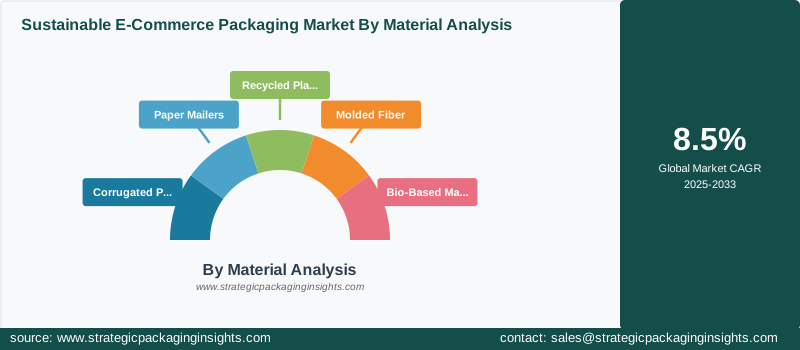
Innovation in material technology is driving the development of new, sustainable packaging solutions. Companies are investing in research and development to create materials that are not only environmentally friendly but also cost-effective and functional. Molded fiber and paper mailers are examples of materials that are gaining traction in the market due to their lightweight and protective properties. These materials are particularly popular in the apparel and fashion industry, where they provide an eco-friendly alternative to traditional packaging solutions.
By Packaging Type Analysis
The packaging type segment is characterized by a diverse range of products, including shipping boxes, paper mailers, and protective packaging. Shipping boxes are the most widely used packaging type, favored for their strength and versatility. They are commonly used in the e-commerce industry to protect products during transit and ensure safe delivery. Protective packaging, such as bubble wrap and foam inserts, is also popular for its ability to cushion and protect fragile items.
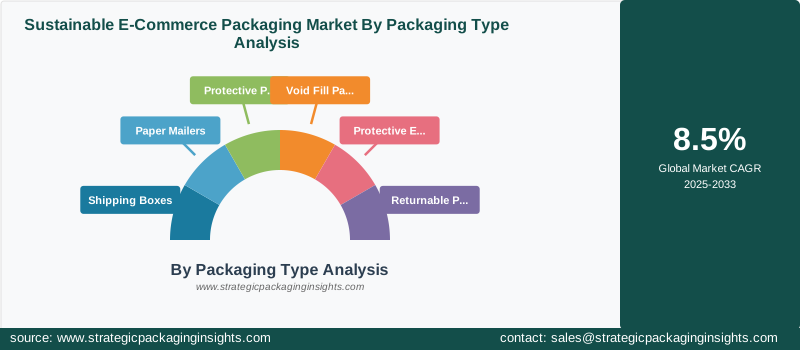
Paper mailers and void fill packaging are gaining popularity as companies seek to reduce their environmental impact by using lightweight, recyclable materials. These packaging types are particularly popular in the apparel and fashion industry, where they provide an eco-friendly alternative to traditional packaging solutions. Returnable packaging is also emerging as a sustainable option, offering the potential to reduce waste and lower costs by allowing for the reuse of packaging materials.
By Application Analysis
The application segment of the sustainable e-commerce packaging market is dominated by apparel & fashion and consumer electronics, which are the largest consumers of packaging materials. The apparel & fashion industry is particularly focused on sustainability, with many brands seeking to reduce their environmental impact by using eco-friendly packaging solutions. Consumer electronics is another key application segment, with companies seeking to protect their products during transit while minimizing their environmental footprint.
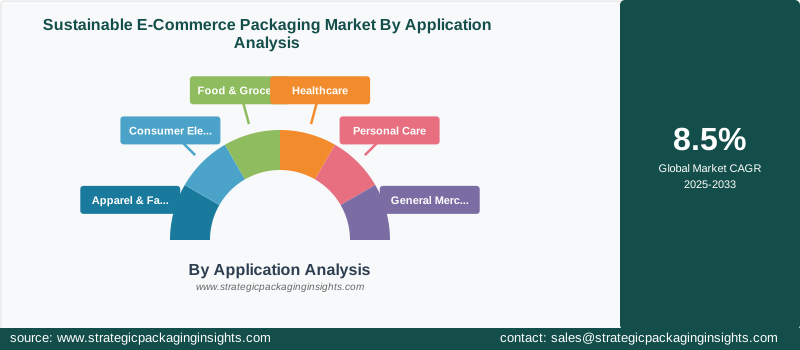
Food & grocery and healthcare are also significant application segments, with companies in these industries seeking to ensure the safety and integrity of their products while reducing waste. Personal care and general merchandise are other important application segments, with companies seeking to enhance their brand image and customer satisfaction by using sustainable packaging solutions. As consumer demand for eco-friendly products continues to grow, these application segments are expected to drive market growth and innovation.
By End User Analysis
The end-user segment of the sustainable e-commerce packaging market is dominated by e-commerce retailers and online marketplaces, which are the largest consumers of packaging materials. These companies are focused on reducing their environmental impact by using sustainable packaging solutions that align with consumer preferences and regulatory requirements. Third-party logistics providers and packaging manufacturers are also significant end-users, with companies seeking to enhance their supply chain efficiency and reduce costs by using eco-friendly packaging solutions.
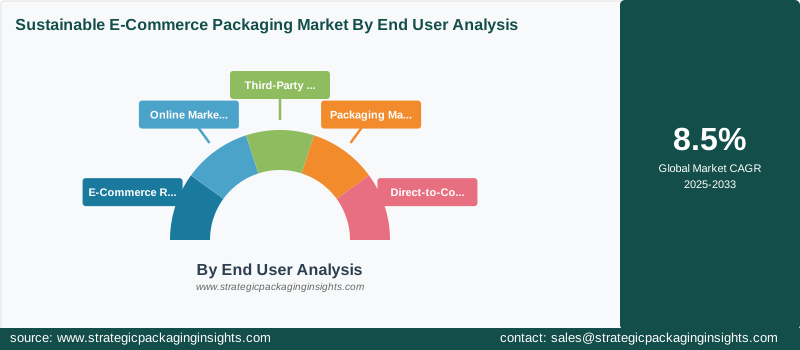
Direct-to-consumer brands are another important end-user segment, with companies seeking to differentiate themselves by offering personalized, sustainable packaging solutions that enhance the customer experience. As consumer demand for eco-friendly products continues to grow, these end-user segments are expected to drive market growth and innovation. Companies that can effectively meet the needs of these end-users by offering innovative, sustainable packaging solutions are well-positioned to capitalize on market opportunities and drive growth in the sustainable e-commerce packaging market.
Sustainable E-Commerce Packaging Market Segments
The Sustainable E-Commerce Packaging market has been segmented on the basis ofBy Material
- Corrugated Paperboard
- Paper Mailers
- Recycled Plastics
- Molded Fiber
- Bio-Based Materials
By Packaging Type
- Shipping Boxes
- Paper Mailers
- Protective Packaging
- Void Fill Packaging
- Protective Envelopes
- Returnable Packaging
By Application
- Apparel & Fashion
- Consumer Electronics
- Food & Grocery
- Healthcare
- Personal Care
- General Merchandise
By End User
- E-Commerce Retailers
- Online Marketplaces
- Third-Party Logistics Providers
- Packaging Manufacturers
- Direct-to-Consumer Brands
Region
- Asia Pacific
- North America
- Latin America
- Europe
- Middle East & Africa




