


Sustainable Beverage Packaging Market Outlook
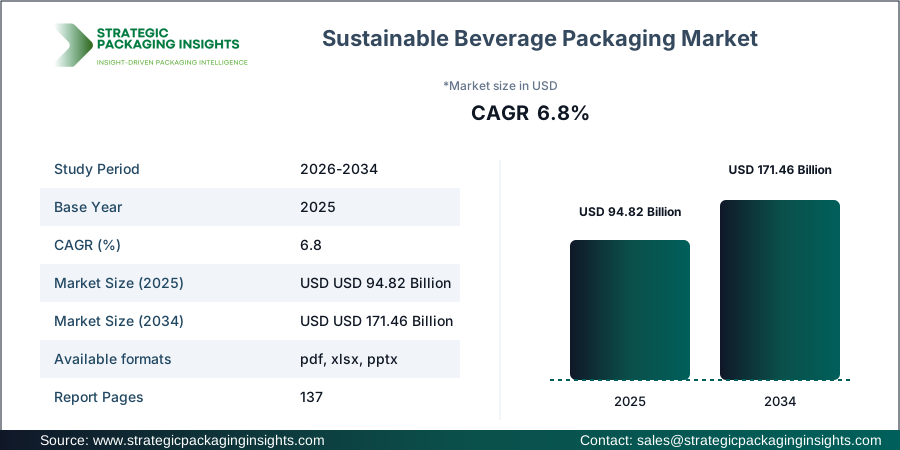
The Sustainable Beverage Packaging market size was valued at USD 94.82 Billion in 2025 and is anticipated to reach USD 171.46 Billion by 2034, growing at a CAGR of 6.8% during the forecast period according to Strategic Packaging Insights. This growth is driven by increasing consumer demand for eco-friendly packaging solutions and stringent government regulations aimed at reducing plastic waste. Companies like Amcor plc and Tetra Pak are leading the charge by innovating in recyclable and biodegradable materials, which are becoming increasingly popular among environmentally conscious consumers. The market is also benefiting from advancements in packaging technology that enhance the shelf life of beverages while minimizing environmental impact.
One of the most impactful drivers of the Sustainable Beverage Packaging market is the growing emphasis on reducing carbon footprints and promoting a circular economy. Governments worldwide are implementing policies to encourage the use of sustainable materials, which is propelling the market forward. For instance, the European Union's directive on single-use plastics is pushing manufacturers to adopt sustainable alternatives. This regulatory push, combined with consumer preference for sustainable products, is creating a fertile ground for market growth. Companies like SIG Group and Ball Corporation are investing heavily in research and development to create innovative packaging solutions that meet these new standards, ensuring their competitiveness in the evolving market landscape.
Report Scope
| Attributes | Details |
| Report Title | Sustainable Beverage Packaging Market Size, Future Growth and Forecast 2034 |
| By Material | Paper & Paperboard, Recycled PET (rPET), Glass, Aluminum, Bio-Based Plastics |
| By Packaging Type | Bottles, Cans, Cartons, Pouches, Bag-in-Box, Caps & Closures |
| By Beverage Type | Carbonated Soft Drinks, Bottled Water, Juices, Alcoholic Beverages, Dairy Beverages, Plant-Based Beverages |
| By End User | Beverage Manufacturers, Contract Beverage Packers, Retail Brands, Foodservice Companies, Packaging Manufacturers |
| Region | Asia Pacific, North America, Latin America, Europe, Middle East & Africa |
| Base Year | 2025 |
| Historic Period | 2018-2024 |
| Forecast Period | 2026-2034 |
| Number of Pages | 137 |
| Customization Available | Yes* |
Sustainability & Circular Economy Analysis
Sustainability initiatives and circular economy practices are significantly shaping the Sustainable Beverage Packaging market. The focus on recyclable materials is driving innovation in packaging design, with companies like ALPLA Group and Berry Global leading the way in developing packaging solutions that are not only eco-friendly but also cost-effective. The use of lightweight packaging is becoming more prevalent as it reduces transportation costs and carbon emissions, aligning with global efforts to minimize environmental impact. Additionally, the adoption of eco-friendly material innovations, such as bio-based plastics, is gaining traction as consumers and regulators demand more sustainable options.
Extended Producer Responsibility (EPR) is another critical factor influencing the market. This regulatory framework holds manufacturers accountable for the entire lifecycle of their products, encouraging them to design packaging that is easier to recycle and reuse. Companies are responding by implementing waste reduction strategies and investing in technologies that enhance the recyclability of their products. This shift towards a circular economy is not only beneficial for the environment but also offers a competitive advantage to companies that can effectively integrate these practices into their operations.
Consumer preferences are also playing a pivotal role in driving sustainability trends in the packaging market. There is a growing demand for products that align with consumers' values, particularly those related to environmental sustainability. This shift is prompting companies to invest in ESG initiatives and reduce their carbon footprints to meet consumer expectations. Packaging regulations are becoming more stringent, requiring companies to adapt quickly to remain compliant and competitive. As a result, sustainability trends are influencing investment decisions, supply chain strategies, and long-term market competitiveness, making it imperative for companies to stay ahead of the curve.
Packaging Value Chain & Supply Chain Analysis
The packaging value chain is a complex ecosystem that involves multiple stakeholders, from raw material suppliers to end consumers. Raw material sourcing is a critical component, with companies like Mondi plc and Smurfit Westrock focusing on sustainable sourcing practices to ensure a steady supply of eco-friendly materials. Packaging converters and manufacturers play a vital role in transforming these materials into finished products, with a focus on efficiency and innovation. Packaging machinery advancements are enabling manufacturers to produce high-quality packaging at scale, meeting the growing demand for sustainable solutions.
Logistics and distribution channels are essential for ensuring that packaging products reach their intended markets efficiently. Companies are optimizing their supply chains by implementing advanced inventory management systems and adopting localization strategies to reduce transportation costs and carbon emissions. Strategic partnerships between brand owners, retailers, and logistics providers are enhancing supply chain resilience, allowing companies to respond quickly to market changes and consumer demands. This collaborative approach is crucial for maintaining competitiveness in the fast-evolving packaging market.
Recycling networks are becoming increasingly important as companies strive to close the loop in the packaging value chain. By investing in recycling infrastructure and collaborating with waste management companies, packaging manufacturers can ensure that their products are recycled and reused, reducing environmental impact. Procurement strategies are also evolving, with companies prioritizing suppliers that adhere to sustainable practices. This holistic approach to the packaging value chain is essential for achieving long-term sustainability goals and maintaining a competitive edge in the market.
Opportunities & Threats
The Sustainable Beverage Packaging market presents numerous opportunities for growth and innovation. One significant opportunity lies in the development of new materials that offer enhanced sustainability without compromising on performance. Companies that can innovate in this area, such as those developing bio-based plastics or advanced recycling technologies, stand to gain a competitive advantage. Additionally, the increasing consumer demand for sustainable products is driving growth in the market, providing opportunities for companies to expand their product offerings and capture new market segments.
Another opportunity is the potential for collaboration and partnerships across the value chain. By working together, companies can leverage each other's strengths to develop more sustainable packaging solutions and improve supply chain efficiency. This collaborative approach can lead to cost savings, increased innovation, and a stronger market position. Furthermore, the growing emphasis on sustainability is opening up new markets and customer segments, particularly in regions where environmental regulations are becoming more stringent.
However, the market also faces several threats that could hinder growth. One of the primary challenges is the high cost of developing and implementing sustainable packaging solutions. While consumer demand for eco-friendly products is increasing, the cost of producing these products can be prohibitive for some companies. Additionally, the regulatory landscape is constantly evolving, and companies must stay abreast of new regulations to remain compliant. Failure to do so could result in fines, reputational damage, and loss of market share. Finally, the availability of raw materials for sustainable packaging is a concern, as supply chain disruptions could impact production and lead to increased costs.
Drivers & Challenges
The Sustainable Beverage Packaging market is driven by several key factors, including increasing consumer awareness of environmental issues and the growing demand for eco-friendly products. As consumers become more conscious of their environmental impact, they are seeking out products that align with their values, driving demand for sustainable packaging solutions. Companies like Amcor plc and Tetra Pak are responding by developing innovative packaging solutions that meet these demands, ensuring their competitiveness in the market.
Another significant driver is the regulatory environment, which is becoming increasingly stringent as governments worldwide implement policies to reduce plastic waste and promote sustainability. These regulations are pushing companies to adopt more sustainable practices and invest in research and development to create innovative packaging solutions. The focus on reducing carbon footprints and promoting a circular economy is also driving growth in the market, as companies seek to align their operations with these global trends.
Despite these drivers, the market faces several challenges that could impact growth. One of the primary challenges is the high cost of developing and implementing sustainable packaging solutions. While consumer demand for eco-friendly products is increasing, the cost of producing these products can be prohibitive for some companies. Additionally, the regulatory landscape is constantly evolving, and companies must stay abreast of new regulations to remain compliant. Failure to do so could result in fines, reputational damage, and loss of market share. Finally, the availability of raw materials for sustainable packaging is a concern, as supply chain disruptions could impact production and lead to increased costs.
Market Share Analysis
The competitive landscape of the Sustainable Beverage Packaging market is characterized by the presence of several key players who are driving innovation and growth. Companies like Amcor plc, Tetra Pak, and SIG Group are leading the market with their advanced packaging solutions and commitment to sustainability. These companies are investing heavily in research and development to create innovative products that meet the growing demand for eco-friendly packaging. Their strong market presence and extensive product portfolios give them a competitive edge in the market.
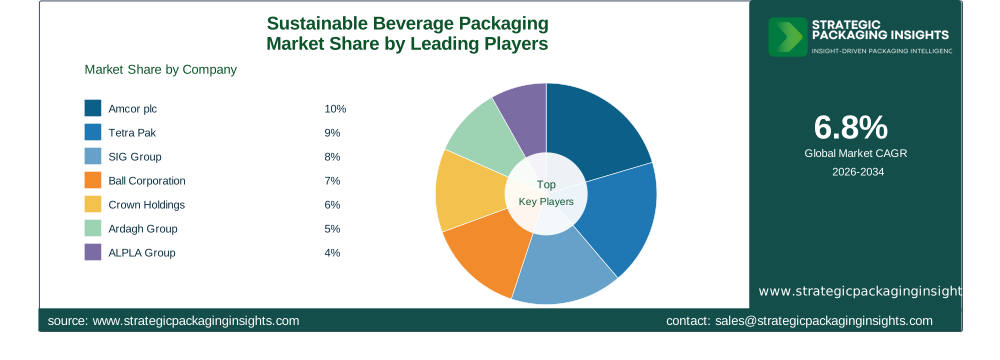
Ball Corporation and Crown Holdings are also significant players in the market, known for their expertise in metal packaging solutions. These companies are focusing on developing lightweight and recyclable packaging options that align with consumer preferences for sustainable products. Their strategic partnerships and collaborations with other industry players are enhancing their market position and enabling them to expand their product offerings.
Ardagh Group and ALPLA Group are making significant strides in the market by developing innovative packaging solutions that cater to the needs of environmentally conscious consumers. These companies are leveraging their expertise in glass and plastic packaging to create products that are not only sustainable but also aesthetically appealing. Their focus on sustainability and innovation is helping them capture a larger share of the market.
Other notable companies in the market include Berry Global, Mondi plc, and Smurfit Westrock, which are known for their commitment to sustainability and innovation. These companies are investing in advanced technologies and sustainable materials to create packaging solutions that meet the evolving needs of consumers and regulators. Their strong market presence and extensive product portfolios make them key players in the Sustainable Beverage Packaging market.
Key Highlights
- Market Size: USD 94.82 Billion in 2025, projected to reach USD 171.46 Billion by 2034.
- Growth Rate: Forecasted CAGR of 6.8% during the forecast period.
- Leading Companies: Amcor plc, Tetra Pak, SIG Group, Ball Corporation, Crown Holdings.
- Material Innovation: Increasing use of bio-based plastics and recycled materials.
- Regulatory Impact: Stringent regulations driving demand for sustainable packaging.
- Consumer Demand: Growing preference for eco-friendly and recyclable packaging solutions.
- Regional Growth: Asia Pacific and Europe are key growth regions.
Sustainable Beverage Packaging Market Segments Insights

By Material Analysis
The material segment of the Sustainable Beverage Packaging market is witnessing significant growth, driven by the increasing demand for eco-friendly and recyclable materials. Paper & paperboard and recycled PET (rPET) are gaining popularity due to their sustainability and cost-effectiveness. Companies like Amcor plc and Tetra Pak are leading the way in developing innovative packaging solutions using these materials. The use of bio-based plastics is also on the rise, as consumers and regulators push for more sustainable options. This trend is expected to continue as companies invest in research and development to create new materials that offer enhanced sustainability without compromising on performance.
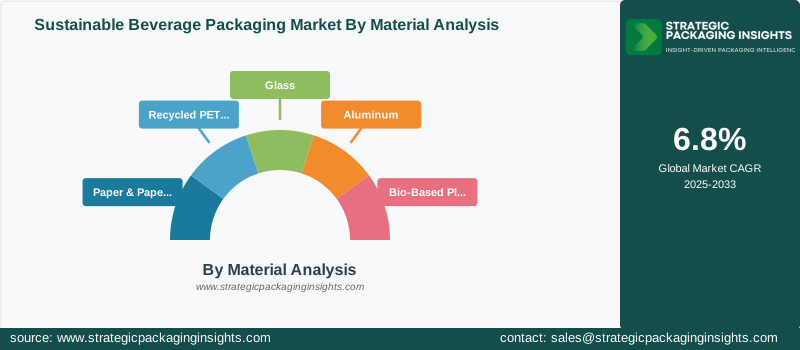
Glass and aluminum are also important materials in the market, known for their recyclability and durability. These materials are particularly popular in the alcoholic beverages segment, where consumers value the premium look and feel of glass and aluminum packaging. Companies like Ardagh Group and Crown Holdings are focusing on developing lightweight and recyclable packaging options that align with consumer preferences for sustainable products. The increasing use of these materials is driving growth in the market, as companies seek to meet the evolving needs of consumers and regulators.
By Packaging Type Analysis
The packaging type segment of the Sustainable Beverage Packaging market is characterized by a diverse range of options, including bottles, cans, cartons, pouches, bag-in-box, and caps & closures. Bottles and cans are the most popular packaging types, driven by their versatility and recyclability. Companies like Ball Corporation and Crown Holdings are leading the market with their advanced metal packaging solutions, which offer a sustainable alternative to traditional plastic packaging. The use of cartons and pouches is also on the rise, as consumers seek out convenient and eco-friendly packaging options.
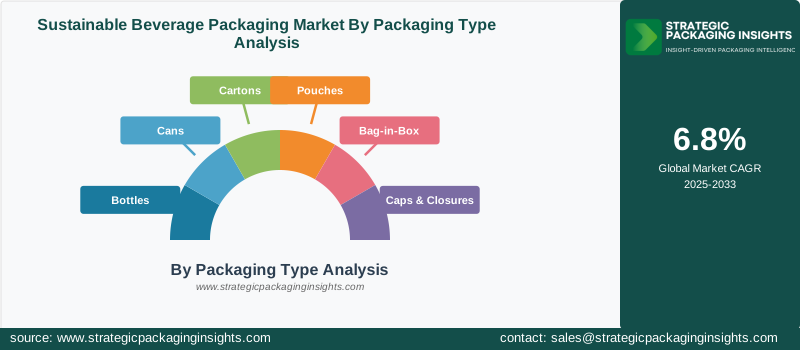
Bag-in-box and caps & closures are gaining traction in the market, particularly in the wine and spirits segment, where they offer a cost-effective and sustainable packaging solution. Companies like SIG Group and ALPLA Group are focusing on developing innovative packaging solutions that cater to the needs of environmentally conscious consumers. The increasing demand for these packaging types is driving growth in the market, as companies seek to expand their product offerings and capture new market segments.
By Beverage Type Analysis
The beverage type segment of the Sustainable Beverage Packaging market is driven by the increasing demand for eco-friendly packaging solutions across a wide range of beverage categories. Carbonated soft drinks and bottled water are the largest segments, driven by the growing consumer preference for convenient and sustainable packaging options. Companies like Amcor plc and Tetra Pak are leading the market with their innovative packaging solutions that meet the evolving needs of consumers and regulators.
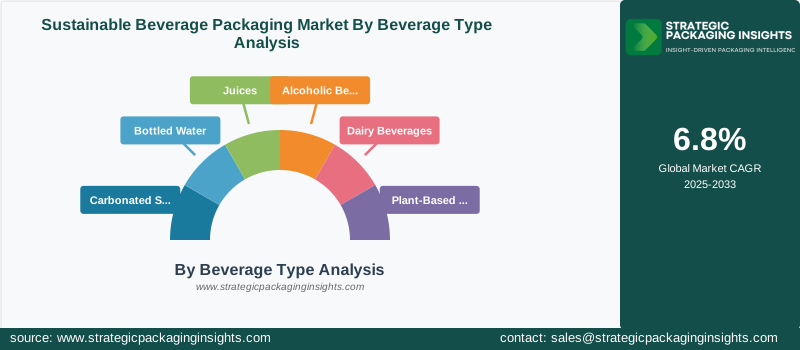
Juices, alcoholic beverages, dairy beverages, and plant-based beverages are also important segments in the market, driven by the increasing demand for premium and sustainable packaging options. Companies like Ardagh Group and Crown Holdings are focusing on developing packaging solutions that cater to the needs of these segments, offering a premium look and feel that aligns with consumer preferences. The increasing demand for these beverage types is driving growth in the market, as companies seek to expand their product offerings and capture new market segments.
By End User Analysis
The end user segment of the Sustainable Beverage Packaging market is characterized by a diverse range of stakeholders, including beverage manufacturers, contract beverage packers, retail brands, foodservice companies, and packaging manufacturers. Beverage manufacturers are the largest end user segment, driven by the increasing demand for sustainable packaging solutions that meet the evolving needs of consumers and regulators. Companies like Amcor plc and Tetra Pak are leading the market with their innovative packaging solutions that cater to the needs of beverage manufacturers.
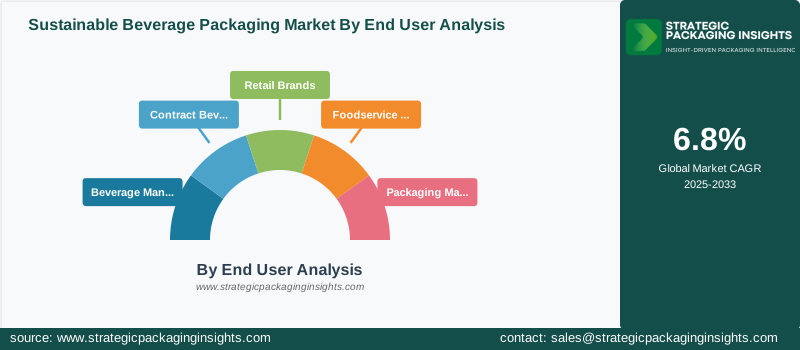
Contract beverage packers and retail brands are also important end user segments, driven by the increasing demand for convenient and eco-friendly packaging options. Companies like SIG Group and ALPLA Group are focusing on developing packaging solutions that cater to the needs of these segments, offering a cost-effective and sustainable packaging solution. The increasing demand for these end user segments is driving growth in the market, as companies seek to expand their product offerings and capture new market segments.
Sustainable Beverage Packaging Market Segments
The Sustainable Beverage Packaging market has been segmented on the basis ofBy Material
- Paper & Paperboard
- Recycled PET (rPET)
- Glass
- Aluminum
- Bio-Based Plastics
By Packaging Type
- Bottles
- Cans
- Cartons
- Pouches
- Bag-in-Box
- Caps & Closures
By Beverage Type
- Carbonated Soft Drinks
- Bottled Water
- Juices
- Alcoholic Beverages
- Dairy Beverages
- Plant-Based Beverages
By End User
- Beverage Manufacturers
- Contract Beverage Packers
- Retail Brands
- Foodservice Companies
- Packaging Manufacturers
Region
- Asia Pacific
- North America
- Latin America
- Europe
- Middle East & Africa




