


Sun Control Films Market Outlook
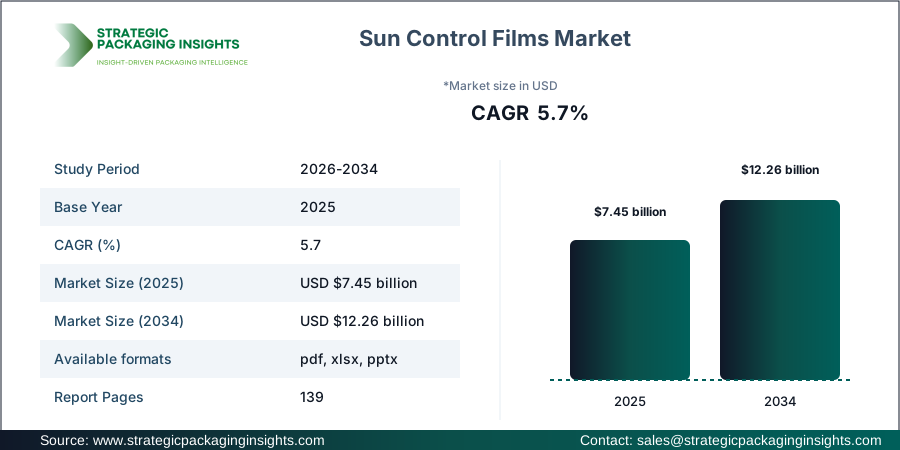
The Sun Control Films market was valued at $7.45 billion in 2025 and is projected to reach $12.26 billion by 2034, growing at a CAGR of 5.7% during the forecast period 2026-2034. This market is experiencing significant growth due to the increasing demand for energy-efficient solutions in both residential and commercial buildings. The rising awareness about the harmful effects of UV rays and the need for glare reduction in automotive and building applications are key drivers. Additionally, the growing construction industry, particularly in emerging economies, is expected to fuel the demand for sun control films. The market is also benefiting from technological advancements in film materials, which enhance durability and performance.
However, the market faces certain restraints, including the high cost of advanced sun control films, which may limit their adoption in price-sensitive markets. Regulatory challenges related to environmental concerns and the disposal of film materials could also pose hurdles. Despite these challenges, the market holds significant growth potential, driven by increasing investments in green building projects and the rising trend of smart homes. The development of innovative, eco-friendly film solutions is expected to create new opportunities for market players.
Report Scope
| Attributes | Details |
| Report Title | Sun Control Films Market Size, Future Growth and Forecast 2034 |
| Film Type | Reflective, Tint, Ceramic |
| End Use | Automotive, Building, Industrial |
| Application | UV Protection, Glare Reduction |
| Region | Asia Pacific, North America, Latin America, Europe, Middle East & Africa |
| Base Year | 2025 |
| Historic Period | 2018-2024 |
| Forecast Period | 2026-2034 |
| Number of Pages | 139 |
| Customization Available | Yes* |
Opportunities & Threats
The Sun Control Films market presents numerous opportunities, particularly in the realm of energy efficiency and sustainability. As governments worldwide implement stricter energy regulations and promote green building initiatives, the demand for sun control films is expected to rise. These films offer a cost-effective solution for reducing energy consumption by minimizing the need for air conditioning, thus aligning with global sustainability goals. Additionally, the growing trend of smart homes and buildings, which integrate advanced technologies for energy management, provides a fertile ground for the adoption of sun control films. The development of innovative films with enhanced UV protection and glare reduction capabilities further expands the market potential.
Another significant opportunity lies in the automotive sector, where sun control films are increasingly used to enhance passenger comfort and vehicle aesthetics. The rising demand for electric vehicles, which require efficient thermal management systems, is expected to boost the adoption of sun control films. Moreover, the expansion of the automotive industry in emerging markets presents lucrative opportunities for market players. Collaborations with automotive manufacturers to develop customized film solutions can further drive market growth.
Despite these opportunities, the market faces threats from the availability of alternative solutions, such as smart glass and window tints, which offer similar benefits. The high cost of advanced sun control films may also deter potential customers, particularly in developing regions. Additionally, the market is subject to fluctuations in raw material prices, which can impact production costs and profit margins. Companies need to focus on cost-effective production methods and strategic pricing to mitigate these threats.
Drivers & Challenges
The primary drivers of the Sun Control Films market include the increasing awareness of the harmful effects of UV radiation and the need for energy-efficient solutions. As consumers become more conscious of health and environmental issues, the demand for sun control films that offer UV protection and reduce energy consumption is on the rise. The growing construction industry, particularly in Asia Pacific and the Middle East, is another key driver, as these regions witness a surge in residential and commercial building projects. The automotive sector also plays a crucial role, with sun control films being used to enhance vehicle comfort and aesthetics.
Technological advancements in film materials and manufacturing processes are further propelling market growth. Innovations such as ceramic films, which offer superior heat rejection and durability, are gaining popularity. The development of eco-friendly films that comply with environmental regulations is also driving market expansion. Additionally, the increasing adoption of smart home technologies, which integrate sun control films for energy management, is expected to boost demand.
However, the market faces several challenges, including the high cost of advanced sun control films, which may limit their adoption in price-sensitive markets. Regulatory challenges related to environmental concerns and the disposal of film materials could also pose hurdles. The availability of alternative solutions, such as smart glass and window tints, presents competition for sun control films. Companies need to focus on cost-effective production methods and strategic pricing to overcome these challenges and maintain their competitive edge.
Market Share Analysis
The Sun Control Films market is characterized by a competitive landscape with several key players vying for market share. Leading companies such as 3M, Eastman, and Saint-Gobain dominate the market, leveraging their extensive product portfolios and strong distribution networks. These companies are known for their innovative film solutions that cater to diverse applications, including automotive, building, and industrial sectors. 3M, for instance, offers a wide range of sun control films that provide UV protection and energy savings, making it a preferred choice among consumers.
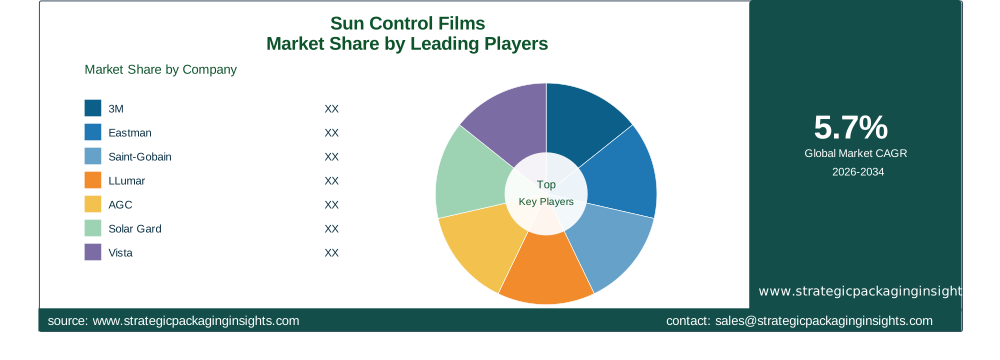
Eastman, another major player, is renowned for its high-performance films that offer superior heat rejection and glare reduction. The company's LLumar brand is particularly popular in the automotive sector, where it is used to enhance vehicle aesthetics and passenger comfort. Saint-Gobain, with its Solar Gard and Vista brands, is also a significant player in the market, offering a variety of films that cater to both residential and commercial applications. These companies invest heavily in research and development to introduce innovative products that meet evolving consumer needs.
Other notable players in the market include AGC, Madico, Avery Dennison, and Johnson Window. AGC is known for its advanced ceramic films that offer excellent heat rejection and durability. Madico, on the other hand, focuses on developing eco-friendly films that comply with environmental regulations. Avery Dennison and Johnson Window are also key players, offering a range of films that cater to different end-use applications. These companies emphasize strategic partnerships and collaborations to expand their market presence and enhance their product offerings.
Key Highlights
- The Sun Control Films market is projected to grow from $7.45 billion in 2025 to $12.26 billion by 2034, at a CAGR of 5.7%.
- Key drivers include increasing awareness of UV protection, energy efficiency, and the growing construction industry.
- Technological advancements in film materials, such as ceramic films, are enhancing market growth.
- The automotive sector presents significant opportunities for sun control films, driven by the demand for electric vehicles.
- Challenges include high costs, regulatory hurdles, and competition from alternative solutions like smart glass.
- Leading companies include 3M, Eastman, Saint-Gobain, AGC, and Madico, known for their innovative film solutions.
- Emerging markets in Asia Pacific and the Middle East offer lucrative growth opportunities.
- Eco-friendly and smart home technologies are driving demand for advanced sun control films.
Top Countries Insights
In the Sun Control Films market, the United States stands out as a key player, with a market size of approximately $2.5 billion and a CAGR of 4%. The country's stringent energy regulations and the growing trend of green buildings are major growth drivers. The demand for sun control films in the automotive sector is also significant, driven by the need for enhanced passenger comfort and vehicle aesthetics. However, the market faces challenges from the availability of alternative solutions and fluctuating raw material prices.
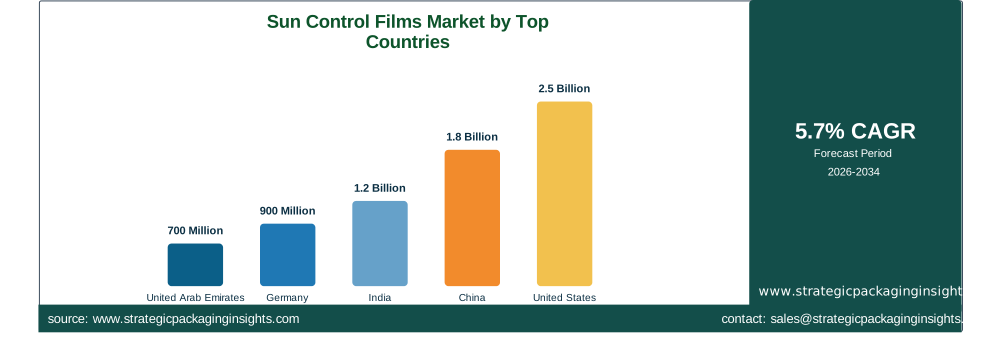
China is another major market, with a market size of around $1.8 billion and a CAGR of 6%. The country's booming construction industry and the increasing adoption of energy-efficient solutions are key growth drivers. The government's focus on reducing carbon emissions and promoting sustainable building practices further boosts the demand for sun control films. However, the market faces challenges from regulatory hurdles and the high cost of advanced films.
India, with a market size of approximately $1.2 billion and a CAGR of 7%, presents significant growth opportunities. The country's rapid urbanization and the growing construction industry are major drivers. The increasing awareness of UV protection and energy efficiency is also boosting demand. However, the market faces challenges from price sensitivity and the availability of alternative solutions.
Germany, with a market size of around $900 million and a CAGR of 5%, is a key market in Europe. The country's focus on energy efficiency and sustainability, along with the growing trend of smart homes, drives demand for sun control films. The automotive sector also presents significant opportunities, driven by the demand for electric vehicles. However, the market faces challenges from regulatory hurdles and competition from alternative solutions.
The United Arab Emirates, with a market size of approximately $700 million and a CAGR of 6%, is a significant market in the Middle East. The country's booming construction industry and the increasing adoption of energy-efficient solutions are key growth drivers. The government's focus on sustainable building practices further boosts demand. However, the market faces challenges from regulatory hurdles and the high cost of advanced films.
Sun Control Films Market Segments Insights

Film Type Analysis
The Sun Control Films market is segmented by film type into Reflective, Tint, and Ceramic films. Reflective films are widely used due to their superior heat rejection capabilities, making them ideal for both residential and commercial applications. These films are particularly popular in regions with high temperatures, as they help reduce energy consumption by minimizing the need for air conditioning. The demand for reflective films is driven by the growing awareness of energy efficiency and the need for UV protection. However, the market faces challenges from the availability of alternative solutions, such as smart glass, which offer similar benefits.
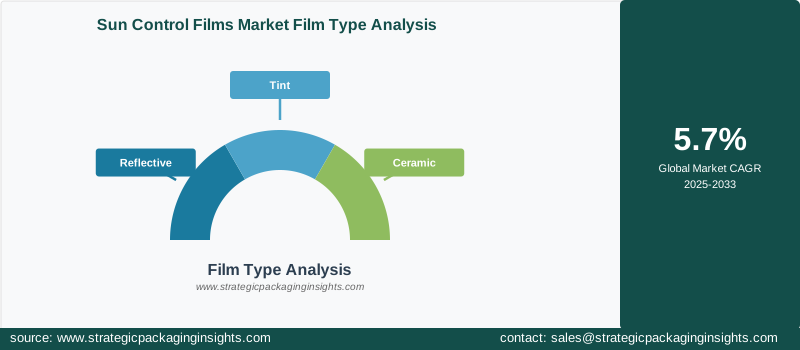
Tint films, on the other hand, are favored for their aesthetic appeal and ability to reduce glare. These films are commonly used in the automotive sector, where they enhance vehicle aesthetics and passenger comfort. The demand for tint films is driven by the growing trend of vehicle customization and the increasing adoption of electric vehicles, which require efficient thermal management systems. However, the market faces challenges from regulatory hurdles related to the use of tinted films in vehicles, which may limit their adoption in certain regions.
Ceramic films are gaining popularity due to their superior performance and durability. These films offer excellent heat rejection and UV protection, making them ideal for both residential and commercial applications. The demand for ceramic films is driven by technological advancements in film materials and the growing trend of smart homes, which integrate advanced technologies for energy management. However, the market faces challenges from the high cost of ceramic films, which may limit their adoption in price-sensitive markets.
End Use Analysis
The Sun Control Films market is segmented by end use into Automotive, Building, and Industrial applications. The automotive sector is a significant driver of market growth, with sun control films being used to enhance vehicle aesthetics and passenger comfort. The demand for sun control films in the automotive sector is driven by the growing trend of vehicle customization and the increasing adoption of electric vehicles, which require efficient thermal management systems. However, the market faces challenges from regulatory hurdles related to the use of tinted films in vehicles, which may limit their adoption in certain regions.
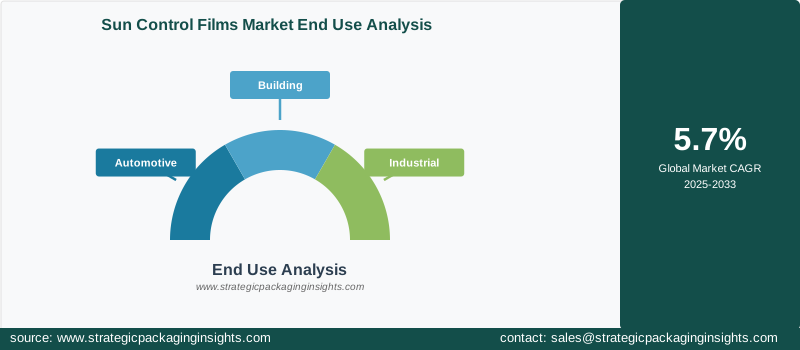
The building sector is another major driver of market growth, with sun control films being used to enhance energy efficiency and reduce glare in residential and commercial buildings. The demand for sun control films in the building sector is driven by the growing awareness of energy efficiency and the need for UV protection. The increasing adoption of green building initiatives and the rising trend of smart homes further boost demand. However, the market faces challenges from the availability of alternative solutions, such as smart glass, which offer similar benefits.
The industrial sector also presents significant opportunities for sun control films, particularly in regions with high temperatures. These films are used to enhance energy efficiency and reduce glare in industrial facilities, helping to improve worker comfort and productivity. The demand for sun control films in the industrial sector is driven by the growing awareness of energy efficiency and the need for UV protection. However, the market faces challenges from the high cost of advanced films, which may limit their adoption in price-sensitive markets.
Application Analysis
The Sun Control Films market is segmented by application into UV Protection and Glare Reduction. UV protection films are widely used due to their ability to block harmful UV rays, making them ideal for both residential and commercial applications. The demand for UV protection films is driven by the growing awareness of the harmful effects of UV radiation and the need for energy-efficient solutions. These films are particularly popular in regions with high temperatures, where they help reduce energy consumption by minimizing the need for air conditioning. However, the market faces challenges from the availability of alternative solutions, such as smart glass, which offer similar benefits.
Glare reduction films, on the other hand, are favored for their ability to reduce glare and enhance visual comfort. These films are commonly used in the automotive sector, where they enhance vehicle aesthetics and passenger comfort. The demand for glare reduction films is driven by the growing trend of vehicle customization and the increasing adoption of electric vehicles, which require efficient thermal management systems. However, the market faces challenges from regulatory hurdles related to the use of tinted films in vehicles, which may limit their adoption in certain regions.
The development of innovative films with enhanced UV protection and glare reduction capabilities further expands the market potential. Companies are investing in research and development to introduce new products that meet evolving consumer needs and comply with environmental regulations. The increasing adoption of smart home technologies, which integrate sun control films for energy management, is also expected to boost demand.
Sun Control Films Market Segments
The Sun Control Films market has been segmented on the basis ofFilm Type
- Reflective
- Tint
- Ceramic
End Use
- Automotive
- Building
- Industrial
Application
- UV Protection
- Glare Reduction
Region
- Asia Pacific
- North America
- Latin America
- Europe
- Middle East & Africa




