


Sugarcane Packaging Market Outlook
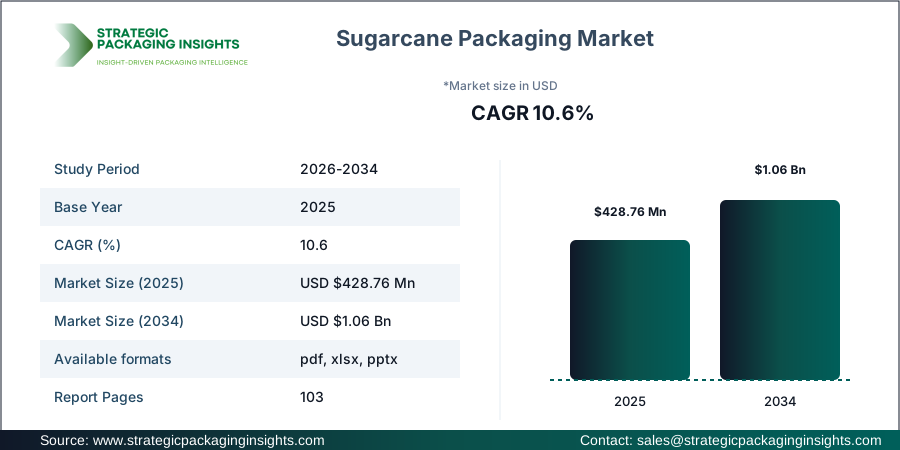
The Sugarcane Packaging market size was valued at USD 428.76 million in 2025 and is anticipated to reach USD 1.06 billion by 2034, growing at a CAGR of 10.6% during the forecast period according to Strategic Packaging Insights. This growth is driven by the increasing demand for sustainable packaging solutions, as consumers and businesses alike are becoming more environmentally conscious. Companies like Huhtamaki and Eco-Products are leading the charge by innovating in biodegradable and compostable packaging solutions derived from sugarcane, which is a renewable resource. The market is also benefiting from the rising trend of eco-friendly packaging in the foodservice industry, where sugarcane packaging is being adopted for its durability and sustainability.
One of the most impactful drivers of the Sugarcane Packaging market is the growing regulatory pressure to reduce plastic waste. Governments worldwide are implementing stringent regulations to curb plastic usage, which is propelling the demand for alternative packaging solutions like those made from sugarcane. For instance, several countries have introduced bans on single-use plastics, encouraging businesses to switch to biodegradable options. This regulatory environment is creating significant growth opportunities for companies like Genpak and Pactiv Evergreen, which are expanding their product lines to include more sustainable options. The shift towards a circular economy, where waste is minimized and resources are reused, is further accelerating the adoption of sugarcane packaging.
Report Scope
| Attributes | Details |
| Report Title | Sugarcane Packaging Market Size, Future Growth and Forecast 2034 |
| Material Type | Bagasse, Sugarcane Fiber, Molded Pulp, Bio-Based Coatings |
| Packaging Type | Trays, Bowls, Plates, Clamshells |
| Application | Foodservice, Takeaway Food, Ready Meals, Retail Food |
| End Use | QSRs, Restaurants, Retail, Institutional Catering |
| Region | Asia Pacific, North America, Latin America, Europe, Middle East & Africa |
| Base Year | 2025 |
| Historic Period | 2018-2024 |
| Forecast Period | 2026-2034 |
| Number of Pages | 103 |
| Customization Available | Yes* |
Sustainability & Circular Economy Analysis
Sustainability initiatives are profoundly influencing the sugarcane packaging market, as businesses and consumers increasingly prioritize eco-friendly solutions. The use of recyclable materials and reusable packaging is becoming a standard practice, driven by the need to reduce environmental impact. Companies like BioPak and Vegware are at the forefront, innovating with lightweight packaging that minimizes waste and reduces carbon footprints. These efforts align with broader ESG initiatives, which emphasize sustainable practices across the supply chain.
The circular economy is reshaping packaging design and manufacturing, encouraging the use of eco-friendly materials and waste reduction strategies. This shift is evident in the investment decisions of major players like World Centric and Sabert, who are focusing on developing packaging solutions that are not only biodegradable but also compostable. Such innovations are crucial for meeting regulatory compliance and maintaining long-term market competitiveness, as consumers increasingly demand sustainable products.
Regulatory compliance and consumer preferences are driving the adoption of extended producer responsibility (EPR) frameworks, which hold manufacturers accountable for the lifecycle of their products. This trend is influencing supply chain strategies, as companies strive to meet packaging regulations while reducing their carbon footprint. The emphasis on sustainability is not only a regulatory requirement but also a competitive advantage, as businesses that prioritize eco-friendly practices are more likely to succeed in the evolving market landscape.
Packaging Value Chain & Supply Chain Analysis
The packaging value chain for sugarcane products involves a complex ecosystem of raw material sourcing, manufacturing, and distribution. Raw materials like bagasse and sugarcane fiber are sourced from agricultural by-products, providing a sustainable base for packaging converters and manufacturers. Companies like Dart Container and Duni Group play a crucial role in transforming these materials into finished products, utilizing advanced packaging machinery to ensure efficiency and quality.
Supply chain efficiency is critical in the sugarcane packaging market, as it directly impacts production capabilities and market performance. Strategic partnerships and localization efforts are essential for ensuring raw material availability and optimizing logistics. Brand owners and retailers rely on robust distribution channels to deliver products to consumers, while recycling networks are integral for managing post-consumer waste. Inventory management and procurement strategies are also key components of a resilient supply chain, enabling companies to adapt to market fluctuations and demand changes.
Global sourcing and transportation are vital for maintaining a competitive edge in the sugarcane packaging market. Companies must navigate challenges related to transportation costs and raw material availability, which can affect overall business competitiveness. By investing in supply chain resilience and fostering strategic partnerships, businesses can enhance their market position and capitalize on growth opportunities. The integration of sustainable practices throughout the supply chain is not only beneficial for the environment but also a strategic imperative for long-term success.
Opportunities & Threats
The Sugarcane Packaging market presents numerous opportunities for growth, driven by the increasing demand for sustainable packaging solutions. As consumers become more environmentally conscious, there is a growing preference for biodegradable and compostable packaging options. This trend is particularly evident in the foodservice industry, where sugarcane packaging is gaining traction due to its eco-friendly properties. Companies like Huhtamaki and Eco-Products are well-positioned to capitalize on this demand by expanding their product offerings and investing in innovative packaging solutions.
Another significant opportunity lies in the regulatory landscape, as governments worldwide implement stricter regulations to reduce plastic waste. These regulations are creating a favorable environment for the adoption of sugarcane packaging, as businesses seek to comply with new standards and reduce their environmental impact. The shift towards a circular economy, where resources are reused and waste is minimized, is further driving the demand for sustainable packaging solutions. Companies that can adapt to these changes and offer innovative products will be well-positioned to succeed in the evolving market.
Despite the opportunities, the Sugarcane Packaging market also faces several threats. One of the primary challenges is the high cost of production, as the manufacturing process for sugarcane packaging can be more expensive than traditional plastic packaging. This cost differential can be a barrier for some businesses, particularly small and medium-sized enterprises, which may struggle to compete with larger companies. Additionally, fluctuations in raw material availability and transportation costs can impact supply chain efficiency and overall market performance. Companies must navigate these challenges to maintain their competitive edge and capitalize on growth opportunities.
Drivers & Challenges
The primary driver of the Sugarcane Packaging market is the increasing consumer demand for sustainable and eco-friendly packaging solutions. As awareness of environmental issues grows, consumers are seeking alternatives to traditional plastic packaging, which is driving the adoption of sugarcane-based products. This trend is particularly strong in the foodservice industry, where businesses are looking for ways to reduce their environmental impact and meet consumer expectations. Companies like Genpak and Pactiv Evergreen are responding to this demand by developing innovative packaging solutions that are both biodegradable and compostable.
Another significant driver is the regulatory environment, as governments worldwide implement stricter regulations to reduce plastic waste. These regulations are creating a favorable environment for the adoption of sugarcane packaging, as businesses seek to comply with new standards and reduce their environmental impact. The shift towards a circular economy, where resources are reused and waste is minimized, is further driving the demand for sustainable packaging solutions. Companies that can adapt to these changes and offer innovative products will be well-positioned to succeed in the evolving market.
Despite the drivers, the Sugarcane Packaging market also faces several challenges. One of the primary challenges is the high cost of production, as the manufacturing process for sugarcane packaging can be more expensive than traditional plastic packaging. This cost differential can be a barrier for some businesses, particularly small and medium-sized enterprises, which may struggle to compete with larger companies. Additionally, fluctuations in raw material availability and transportation costs can impact supply chain efficiency and overall market performance. Companies must navigate these challenges to maintain their competitive edge and capitalize on growth opportunities.
Market Share Analysis
The competitive landscape of the Sugarcane Packaging market is characterized by the presence of several key players, each striving to capture a significant share of the market. Companies like Huhtamaki, Eco-Products, and Genpak are leading the charge with innovative packaging solutions that cater to the growing demand for sustainable products. These companies are investing heavily in research and development to create biodegradable and compostable packaging options that meet consumer expectations and regulatory requirements.
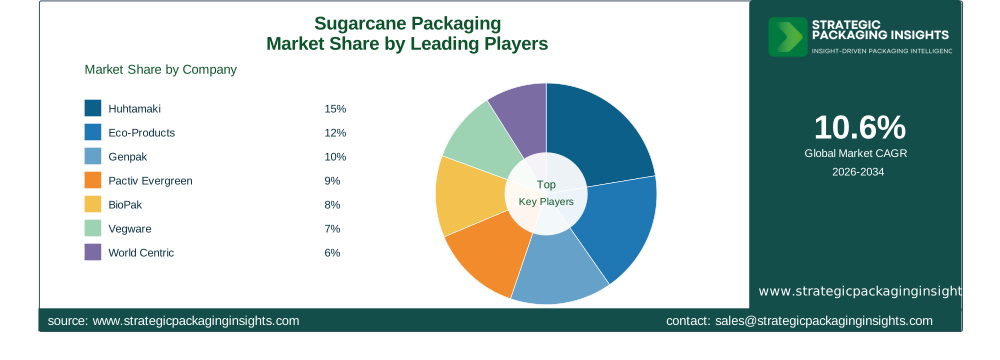
Huhtamaki, a global leader in sustainable packaging solutions, has a strong presence in the sugarcane packaging market. The company is known for its innovative products and commitment to sustainability, which has helped it capture a significant share of the market. Eco-Products, another major player, is renowned for its eco-friendly packaging solutions, which are widely used in the foodservice industry. The company's focus on sustainability and innovation has enabled it to maintain a competitive edge in the market.
Genpak, a leading manufacturer of foodservice packaging, is also a key player in the sugarcane packaging market. The company offers a wide range of sustainable packaging solutions, including biodegradable and compostable options, which are designed to meet the needs of environmentally conscious consumers. Pactiv Evergreen, another major player, is known for its innovative packaging solutions and commitment to sustainability. The company's focus on research and development has enabled it to create products that are both eco-friendly and cost-effective.
Other notable companies in the sugarcane packaging market include BioPak, Vegware, World Centric, Sabert, Dart Container, and Duni Group. These companies are investing in sustainable packaging solutions and expanding their product offerings to meet the growing demand for eco-friendly products. By focusing on innovation and sustainability, these companies are well-positioned to capture a significant share of the market and drive growth in the coming years.
Key Highlights
- Market Size: The Sugarcane Packaging market was valued at USD 428.76 million in 2025 and is projected to reach USD 1.06 billion by 2034.
- Growth Rate: The market is expected to grow at a CAGR of 10.6% during the forecast period.
- Leading Companies: Key players include Huhtamaki, Eco-Products, Genpak, and Pactiv Evergreen.
- Material Type: Bagasse and sugarcane fiber are the primary materials used in packaging.
- Application: The foodservice industry is a major application area for sugarcane packaging.
- Region: Asia Pacific is expected to witness significant growth in the sugarcane packaging market.
- Regulatory Environment: Stricter regulations on plastic waste are driving the demand for sustainable packaging solutions.
Sugarcane Packaging Market Segments Insights
Material Type Analysis
The material type segment of the Sugarcane Packaging market is dominated by bagasse, a by-product of sugarcane processing. Bagasse is widely used due to its biodegradability and compostability, making it an ideal choice for eco-friendly packaging solutions. Companies like Huhtamaki and Eco-Products are leveraging bagasse to create innovative packaging products that meet consumer demand for sustainable options. Sugarcane fiber and molded pulp are also gaining traction, as they offer similar environmental benefits and are suitable for a wide range of applications.
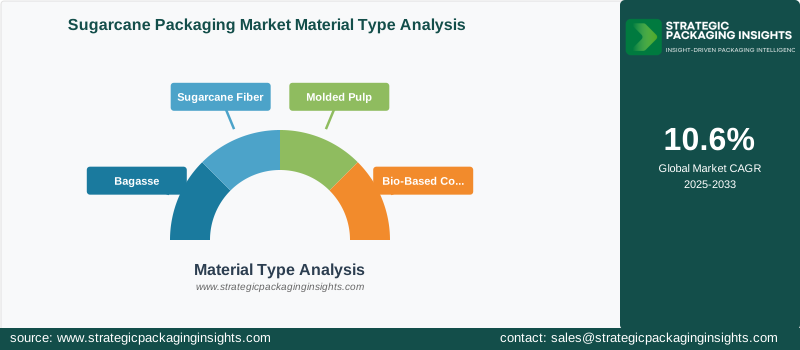
Bio-based coatings are another important material type in the sugarcane packaging market. These coatings enhance the durability and functionality of packaging products, making them suitable for various applications, including foodservice and retail. The use of bio-based coatings is driven by the need to reduce reliance on traditional plastic coatings, which are not environmentally friendly. Companies are investing in research and development to create advanced bio-based coatings that offer superior performance and sustainability.
Packaging Type Analysis
The packaging type segment of the Sugarcane Packaging market includes trays, bowls, plates, and clamshells. Trays are widely used in the foodservice industry, as they provide a convenient and eco-friendly solution for serving and transporting food. Companies like Genpak and Pactiv Evergreen are leading the market with innovative tray designs that cater to the needs of environmentally conscious consumers. Bowls and plates are also popular packaging types, as they offer versatility and convenience for various foodservice applications.
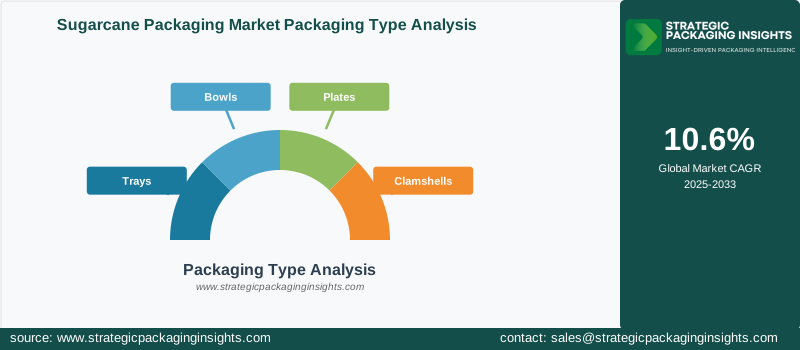
Clamshells are gaining popularity in the sugarcane packaging market, as they provide a secure and sustainable solution for packaging takeaway food and ready meals. The demand for clamshells is driven by the growing trend of on-the-go consumption and the need for convenient packaging solutions. Companies are focusing on developing clamshell designs that offer superior performance and sustainability, making them an attractive option for businesses looking to reduce their environmental impact.
Application Analysis
The application segment of the Sugarcane Packaging market is dominated by the foodservice industry, which accounts for a significant share of the market. The demand for sugarcane packaging in foodservice is driven by the need for sustainable and eco-friendly solutions that meet consumer expectations. Companies like BioPak and Vegware are leading the market with innovative packaging products that cater to the needs of the foodservice industry.
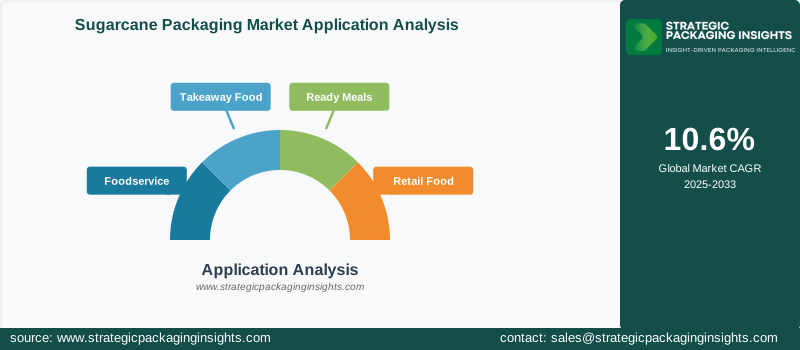
Takeaway food and ready meals are also important application areas for sugarcane packaging. The growing trend of on-the-go consumption and the increasing demand for convenient packaging solutions are driving the adoption of sugarcane packaging in these segments. Retail food is another key application area, as businesses seek to reduce their environmental impact and meet consumer demand for sustainable products. Companies are investing in research and development to create packaging solutions that offer superior performance and sustainability for various applications.
End Use Analysis
The end-use segment of the Sugarcane Packaging market includes quick-service restaurants (QSRs), restaurants, retail, and institutional catering. QSRs are a major end-use segment, as they require convenient and sustainable packaging solutions for serving and transporting food. Companies like World Centric and Sabert are leading the market with innovative packaging products that cater to the needs of QSRs.
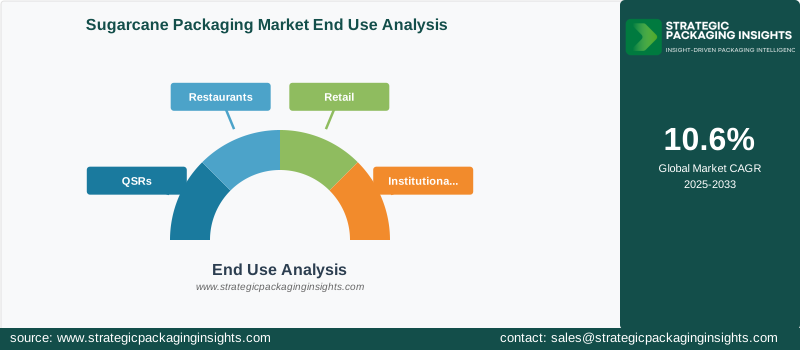
Restaurants and retail are also important end-use segments, as they seek to reduce their environmental impact and meet consumer demand for sustainable products. Institutional catering is another key end-use segment, as businesses and organizations look for eco-friendly packaging solutions that align with their sustainability goals. Companies are focusing on developing packaging products that offer superior performance and sustainability for various end-use applications.
Sugarcane Packaging Market Segments
The Sugarcane Packaging market has been segmented on the basis ofMaterial Type
- Bagasse
- Sugarcane Fiber
- Molded Pulp
- Bio-Based Coatings
Packaging Type
- Trays
- Bowls
- Plates
- Clamshells
Application
- Foodservice
- Takeaway Food
- Ready Meals
- Retail Food
End Use
- QSRs
- Restaurants
- Retail
- Institutional Catering
Region
- Asia Pacific
- North America
- Latin America
- Europe
- Middle East & Africa




