


Sugarcane Fiber Bowls Market Outlook
The Sugarcane Fiber Bowls market was valued at $1.50 billion in 2025 and is projected to reach $3.75 billion by 2034, growing at a CAGR of 10.7% during the forecast period 2026-2034. This market is experiencing significant growth due to increasing consumer awareness about sustainable and eco-friendly packaging solutions. The demand for biodegradable and compostable products is on the rise, driven by stringent environmental regulations and a shift in consumer preferences towards green products. The foodservice industry, in particular, is adopting sugarcane fiber bowls as a sustainable alternative to plastic and Styrofoam containers, further propelling market growth.
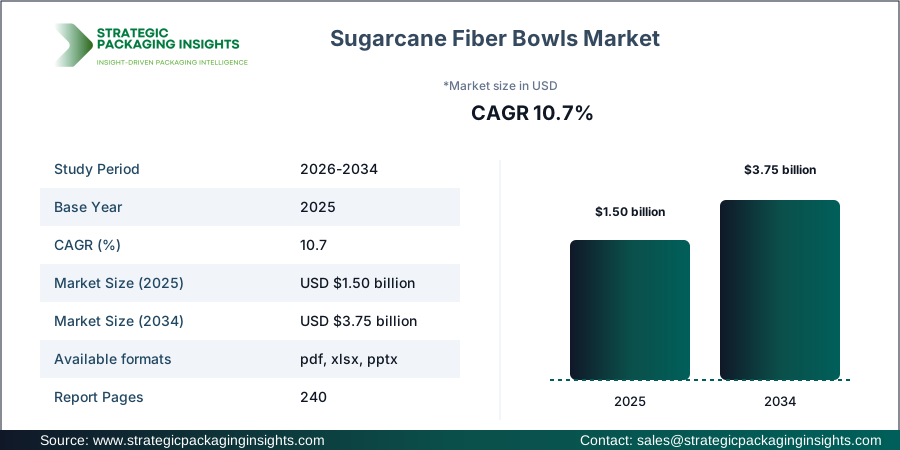
Despite the promising growth trajectory, the Sugarcane Fiber Bowls market faces certain challenges. The high cost of production compared to traditional plastic bowls remains a significant restraint. Additionally, the availability of raw materials and the need for technological advancements in manufacturing processes pose challenges to market expansion. However, the potential for growth remains substantial, with opportunities for innovation in product design and functionality. As more companies invest in research and development, the market is expected to overcome these hurdles, paving the way for broader adoption across various sectors.
Report Scope
| Attributes | Details |
| Report Title | Sugarcane Fiber Bowls Market Size, Future Growth and Forecast 2034 |
| By Product Type | Round Bowls, Square Bowls, Compartment Bowls, Lidded Bowls |
| By Capacity | Below 12 oz, 12–24 oz, Above 24 oz |
| By Application | Takeaway Food, Catering, Institutional Dining, Retail Food |
| By End Use | Foodservice, QSRs, Restaurants, Retail |
| Region | Asia Pacific, North America, Latin America, Europe, Middle East & Africa |
| Base Year | 2025 |
| Historic Period | 2018-2024 |
| Forecast Period | 2026-2034 |
| Number of Pages | 240 |
| Customization Available | Yes* |
Opportunities & Threats
The Sugarcane Fiber Bowls market presents numerous opportunities, particularly in the realm of environmental sustainability. As global awareness of environmental issues grows, there is a significant push towards reducing plastic waste and adopting biodegradable alternatives. This shift is creating a fertile ground for the expansion of sugarcane fiber bowls, which are not only biodegradable but also compostable, making them an attractive option for environmentally conscious consumers and businesses. The increasing demand for sustainable packaging solutions in the foodservice industry, including restaurants, cafes, and catering services, is expected to drive market growth. Additionally, government regulations promoting the use of eco-friendly materials are likely to further boost the adoption of sugarcane fiber bowls.
Another opportunity lies in the innovation and diversification of product offerings. Companies can capitalize on the growing demand by developing new designs and functionalities that cater to specific consumer needs. For instance, creating bowls with compartments for different food items or developing lidded bowls for takeaway purposes can enhance the product's appeal. Furthermore, expanding the market reach to emerging economies, where the demand for sustainable packaging is on the rise, presents a significant growth opportunity. As these regions continue to develop economically, the adoption of eco-friendly products is expected to increase, providing a lucrative market for sugarcane fiber bowls.
However, the market is not without its threats. One of the primary challenges is the competition from other eco-friendly packaging materials, such as bamboo and palm leaf products. These alternatives also offer biodegradable and compostable solutions, which could potentially capture a share of the market. Additionally, the high cost of production and the need for technological advancements in manufacturing processes pose significant threats to market growth. Companies must invest in research and development to improve production efficiency and reduce costs to remain competitive in the market.
Drivers & Challenges
The primary driver of the Sugarcane Fiber Bowls market is the increasing consumer demand for sustainable and eco-friendly packaging solutions. As awareness of environmental issues continues to grow, consumers are becoming more conscious of their purchasing decisions, opting for products that have a minimal impact on the environment. This shift in consumer behavior is driving the demand for biodegradable and compostable products, such as sugarcane fiber bowls, which offer a sustainable alternative to traditional plastic and Styrofoam containers. Additionally, the foodservice industry's growing adoption of eco-friendly packaging solutions is further propelling market growth.
Another significant driver is the implementation of stringent environmental regulations by governments worldwide. These regulations are aimed at reducing plastic waste and promoting the use of sustainable materials, creating a favorable environment for the growth of the Sugarcane Fiber Bowls market. Companies are increasingly investing in research and development to create innovative and sustainable packaging solutions that comply with these regulations. Furthermore, the growing trend of corporate social responsibility is encouraging businesses to adopt eco-friendly practices, further driving the demand for sugarcane fiber bowls.
Despite the positive drivers, the market faces several challenges. One of the primary challenges is the high cost of production compared to traditional plastic bowls. The production of sugarcane fiber bowls requires advanced technology and processes, which can be expensive. Additionally, the availability of raw materials and the need for technological advancements in manufacturing processes pose challenges to market expansion. Companies must invest in research and development to improve production efficiency and reduce costs to remain competitive in the market. Furthermore, the competition from other eco-friendly packaging materials, such as bamboo and palm leaf products, presents a challenge to market growth.
Market Share Analysis
The competitive landscape of the Sugarcane Fiber Bowls market is characterized by the presence of several key players who are actively engaged in product innovation and expansion strategies. Companies such as Huhtamaki, Eco-Products, Genpak, Pactiv Evergreen, BioPak, Vegware, World Centric, Sabert, Dart Container, and Duni Group are leading the market with their extensive product portfolios and strong distribution networks. These companies are focusing on developing innovative and sustainable packaging solutions to meet the growing demand for eco-friendly products. Additionally, they are investing in research and development to improve production efficiency and reduce costs, thereby enhancing their competitive position in the market.
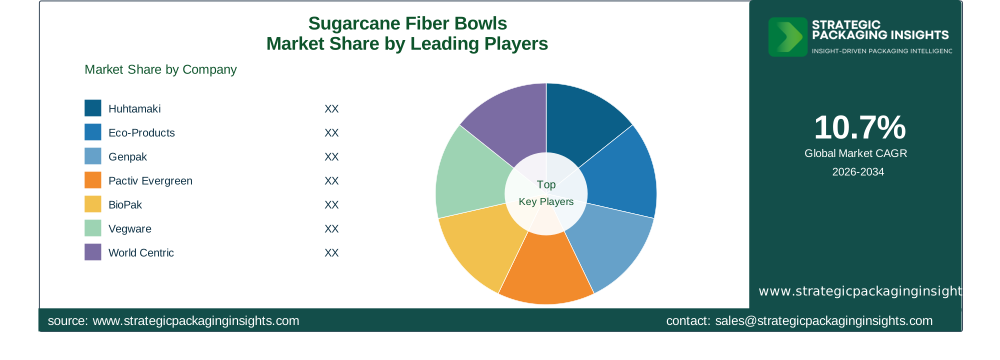
Huhtamaki is one of the leading players in the Sugarcane Fiber Bowls market, known for its extensive range of sustainable packaging solutions. The company has a strong presence in the global market, with a focus on innovation and sustainability. Eco-Products, another key player, is renowned for its commitment to environmental sustainability and offers a wide range of compostable and biodegradable products. Genpak and Pactiv Evergreen are also prominent players in the market, offering a diverse range of eco-friendly packaging solutions to cater to the growing demand.
BioPak and Vegware are notable for their focus on providing sustainable packaging solutions to the foodservice industry. These companies have established a strong presence in the market by offering innovative and environmentally friendly products. World Centric and Sabert are also key players, known for their commitment to sustainability and their extensive product portfolios. Dart Container and Duni Group are other significant players in the market, offering a wide range of eco-friendly packaging solutions to meet the diverse needs of consumers and businesses.
Key Highlights
- The Sugarcane Fiber Bowls market is projected to grow at a CAGR of 10.7% from 2026 to 2034.
- Increasing consumer demand for sustainable and eco-friendly packaging solutions is driving market growth.
- Stringent environmental regulations are promoting the use of biodegradable and compostable products.
- The foodservice industry's growing adoption of eco-friendly packaging solutions is propelling market growth.
- High production costs and competition from other eco-friendly materials pose challenges to market growth.
- Companies are investing in research and development to improve production efficiency and reduce costs.
- Innovation and diversification of product offerings present significant growth opportunities.
- Expanding market reach to emerging economies offers a lucrative growth opportunity.
- Key players in the market include Huhtamaki, Eco-Products, Genpak, and Pactiv Evergreen.
Top Countries Insights
In the Sugarcane Fiber Bowls market, the United States stands out as a leading country, with a market size of approximately $500 million and a CAGR of 8%. The country's strong focus on sustainability and environmental regulations has driven the demand for eco-friendly packaging solutions. The growing trend of corporate social responsibility among businesses is also contributing to market growth. However, the high cost of production remains a challenge for manufacturers in the region.
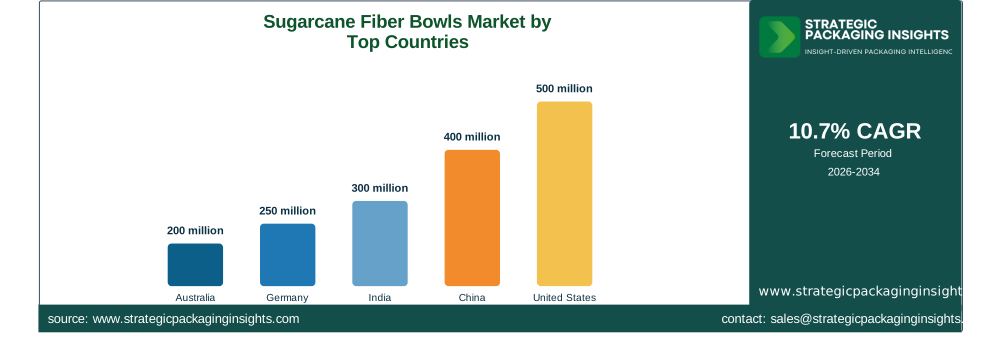
China is another significant player in the market, with a market size of around $400 million and a CAGR of 12%. The country's rapid economic development and increasing consumer awareness of environmental issues are driving the demand for sustainable packaging solutions. Government initiatives promoting the use of biodegradable materials are further boosting market growth. However, the availability of raw materials and the need for technological advancements in manufacturing processes pose challenges to market expansion.
India is emerging as a key market for sugarcane fiber bowls, with a market size of approximately $300 million and a CAGR of 15%. The country's growing population and increasing disposable income are driving the demand for eco-friendly packaging solutions. The government's focus on reducing plastic waste and promoting sustainable materials is also contributing to market growth. However, the high cost of production and competition from other eco-friendly materials remain challenges for manufacturers.
In Europe, Germany is a leading market for sugarcane fiber bowls, with a market size of around $250 million and a CAGR of 9%. The country's strong focus on sustainability and environmental regulations is driving the demand for biodegradable and compostable products. The growing trend of corporate social responsibility among businesses is also contributing to market growth. However, the high cost of production and competition from other eco-friendly materials pose challenges to market expansion.
Australia is another significant market for sugarcane fiber bowls, with a market size of approximately $200 million and a CAGR of 10%. The country's strong focus on sustainability and environmental regulations is driving the demand for eco-friendly packaging solutions. The growing trend of corporate social responsibility among businesses is also contributing to market growth. However, the high cost of production and competition from other eco-friendly materials remain challenges for manufacturers.
Sugarcane Fiber Bowls Market Segments Insights

Product Type Analysis
The Sugarcane Fiber Bowls market is segmented by product type into round bowls, square bowls, compartment bowls, and lidded bowls. Round bowls are the most popular segment, driven by their versatility and wide range of applications in the foodservice industry. These bowls are commonly used for serving soups, salads, and other food items, making them a staple in restaurants and catering services. Square bowls are gaining popularity due to their modern design and aesthetic appeal, which makes them suitable for upscale dining establishments. Compartment bowls are favored for their functionality, allowing consumers to separate different food items within a single container. Lidded bowls are increasingly used for takeaway purposes, providing a convenient and secure packaging solution for food delivery services.
The demand for sugarcane fiber bowls is driven by the growing consumer preference for sustainable and eco-friendly packaging solutions. As awareness of environmental issues continues to rise, consumers are increasingly opting for products that have a minimal impact on the environment. This shift in consumer behavior is driving the demand for biodegradable and compostable products, such as sugarcane fiber bowls, which offer a sustainable alternative to traditional plastic and Styrofoam containers. Additionally, the foodservice industry's growing adoption of eco-friendly packaging solutions is further propelling market growth.
Capacity Analysis
The Sugarcane Fiber Bowls market is segmented by capacity into below 12 oz, 12-24 oz, and above 24 oz. The 12-24 oz segment is the most popular, driven by its versatility and wide range of applications in the foodservice industry. These bowls are commonly used for serving soups, salads, and other food items, making them a staple in restaurants and catering services. The below 12 oz segment is gaining popularity due to its suitability for smaller portions and snacks, making it ideal for cafes and quick-service restaurants. The above 24 oz segment is favored for its capacity to hold larger portions, making it suitable for family-sized meals and catering services.
The demand for sugarcane fiber bowls is driven by the growing consumer preference for sustainable and eco-friendly packaging solutions. As awareness of environmental issues continues to rise, consumers are increasingly opting for products that have a minimal impact on the environment. This shift in consumer behavior is driving the demand for biodegradable and compostable products, such as sugarcane fiber bowls, which offer a sustainable alternative to traditional plastic and Styrofoam containers. Additionally, the foodservice industry's growing adoption of eco-friendly packaging solutions is further propelling market growth.
Application Analysis
The Sugarcane Fiber Bowls market is segmented by application into takeaway food, catering, institutional dining, and retail food. The takeaway food segment is the most popular, driven by the growing trend of food delivery services and the increasing demand for convenient and secure packaging solutions. Catering services are also a significant segment, as sugarcane fiber bowls offer a sustainable and aesthetically pleasing option for serving food at events and gatherings. Institutional dining, including schools and hospitals, is adopting sugarcane fiber bowls as a sustainable alternative to traditional plastic containers. The retail food segment is gaining traction as consumers increasingly seek eco-friendly packaging solutions for their grocery purchases.
The demand for sugarcane fiber bowls is driven by the growing consumer preference for sustainable and eco-friendly packaging solutions. As awareness of environmental issues continues to rise, consumers are increasingly opting for products that have a minimal impact on the environment. This shift in consumer behavior is driving the demand for biodegradable and compostable products, such as sugarcane fiber bowls, which offer a sustainable alternative to traditional plastic and Styrofoam containers. Additionally, the foodservice industry's growing adoption of eco-friendly packaging solutions is further propelling market growth.
End Use Analysis
The Sugarcane Fiber Bowls market is segmented by end use into foodservice, quick-service restaurants (QSRs), restaurants, and retail. The foodservice segment is the most popular, driven by the growing demand for sustainable and eco-friendly packaging solutions in the industry. Quick-service restaurants are also a significant segment, as sugarcane fiber bowls offer a convenient and secure packaging solution for takeaway and delivery services. Restaurants are increasingly adopting sugarcane fiber bowls as a sustainable alternative to traditional plastic and Styrofoam containers. The retail segment is gaining traction as consumers increasingly seek eco-friendly packaging solutions for their grocery purchases.
The demand for sugarcane fiber bowls is driven by the growing consumer preference for sustainable and eco-friendly packaging solutions. As awareness of environmental issues continues to rise, consumers are increasingly opting for products that have a minimal impact on the environment. This shift in consumer behavior is driving the demand for biodegradable and compostable products, such as sugarcane fiber bowls, which offer a sustainable alternative to traditional plastic and Styrofoam containers. Additionally, the foodservice industry's growing adoption of eco-friendly packaging solutions is further propelling market growth.
Sugarcane Fiber Bowls Market Segments
The Sugarcane Fiber Bowls market has been segmented on the basis ofBy Product Type
- Round Bowls
- Square Bowls
- Compartment Bowls
- Lidded Bowls
By Capacity
- Below 12 oz
- 12–24 oz
- Above 24 oz
By Application
- Takeaway Food
- Catering
- Institutional Dining
- Retail Food
By End Use
- Foodservice
- QSRs
- Restaurants
- Retail
Region
- Asia Pacific
- North America
- Latin America
- Europe
- Middle East & Africa




