


Sugarcane Bottle Market Outlook
The Sugarcane Bottle market was valued at $109.55 million in 2025 and is projected to reach $177.89 million by 2034, growing at a CAGR of 5.5% during the forecast period 2026-2034. This market is witnessing a significant surge in demand due to the increasing consumer preference for eco-friendly and sustainable packaging solutions. The shift towards renewable resources in packaging is driven by both environmental concerns and regulatory pressures to reduce carbon footprints. The sugarcane bottle market is particularly gaining traction in the beverage and personal care industries, where the demand for sustainable packaging is most pronounced. The market's growth is further bolstered by technological advancements in bioplastic production, which enhance the durability and usability of sugarcane-based bottles.
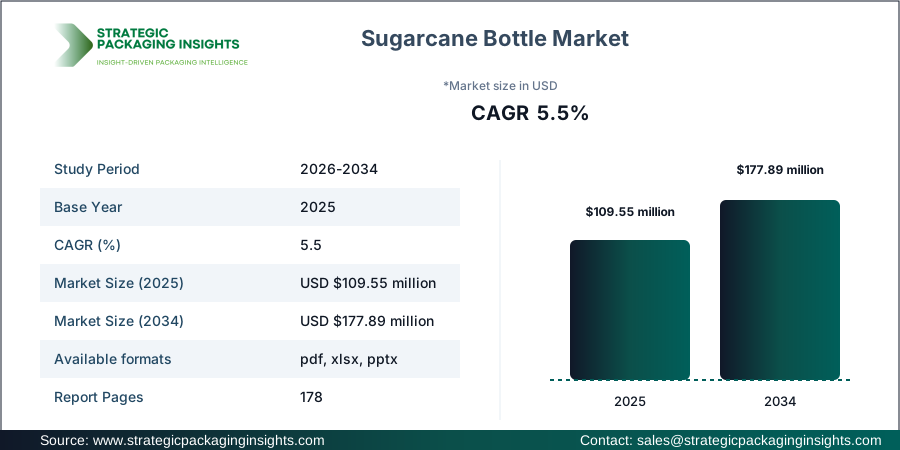
Despite the promising growth trajectory, the sugarcane bottle market faces certain challenges. The high cost of production compared to conventional plastic bottles remains a significant barrier. Additionally, the market is subject to stringent regulations regarding bioplastic production and disposal, which can hinder growth. However, the potential for growth remains substantial, driven by increasing investments in research and development to improve the cost-effectiveness and performance of sugarcane-based materials. The market is also poised to benefit from the growing trend of corporate sustainability initiatives, which are likely to drive demand for eco-friendly packaging solutions.
Report Scope
| Attributes | Details |
| Report Title | Sugarcane Bottle Market Size, Future Growth and Forecast 2034 |
| Material Type | bio-PE, bagasse fiber, sugarcane bioplastic |
| Product Type | beverage bottles, personal care bottles, household bottles |
| Application | water, juices, cosmetics, home care |
| End Use | FMCG brands, retailers, hospitality, foodservice |
| Region | Asia Pacific, North America, Latin America, Europe, Middle East & Africa |
| Base Year | 2025 |
| Historic Period | 2018-2024 |
| Forecast Period | 2026-2034 |
| Number of Pages | 178 |
| Customization Available | Yes* |
Opportunities & Threats
The sugarcane bottle market presents numerous opportunities, particularly in the realm of sustainability. As global awareness of environmental issues continues to rise, consumers and businesses alike are seeking out more sustainable packaging options. This shift in consumer preference is creating a robust demand for sugarcane bottles, which are perceived as a more environmentally friendly alternative to traditional plastic bottles. Additionally, advancements in bioplastic technology are opening up new possibilities for the development of more durable and versatile sugarcane-based products, further expanding the market's potential.
Another significant opportunity lies in the regulatory landscape. Governments around the world are implementing stricter regulations on plastic usage and waste management, which is driving companies to seek out alternative packaging solutions. Sugarcane bottles, being biodegradable and derived from renewable resources, are well-positioned to capitalize on these regulatory changes. Furthermore, the increasing focus on circular economy principles is encouraging companies to adopt sustainable practices, thereby boosting the demand for sugarcane-based packaging solutions.
However, the market is not without its threats. One of the primary challenges is the high cost of production associated with sugarcane bottles. Compared to conventional plastic bottles, sugarcane-based alternatives are more expensive to produce, which can limit their adoption, particularly among cost-sensitive consumers and businesses. Additionally, the market faces competition from other sustainable packaging solutions, such as recycled plastics and other bioplastics, which could potentially limit its growth. Moreover, the availability of raw materials and the impact of climate change on sugarcane production could pose significant risks to the market's stability.
Drivers & Challenges
The primary drivers of the sugarcane bottle market include the growing consumer demand for sustainable packaging solutions and the increasing regulatory pressures to reduce plastic waste. As consumers become more environmentally conscious, there is a rising preference for products that are perceived as eco-friendly. This trend is particularly evident in the beverage and personal care industries, where sugarcane bottles are gaining popularity as a sustainable alternative to traditional plastic packaging. Additionally, government regulations aimed at reducing plastic waste and promoting the use of renewable resources are further driving the market's growth.
Technological advancements in bioplastic production are also playing a crucial role in driving the market. Innovations in the production process have led to the development of more durable and versatile sugarcane-based materials, which are enhancing the usability and appeal of sugarcane bottles. These advancements are making it easier for manufacturers to produce high-quality sugarcane bottles at a competitive cost, thereby boosting their adoption across various industries. Furthermore, the increasing focus on corporate sustainability initiatives is encouraging companies to adopt eco-friendly packaging solutions, further driving the demand for sugarcane bottles.
Despite these drivers, the sugarcane bottle market faces several challenges. One of the primary challenges is the high cost of production associated with sugarcane-based materials. Compared to conventional plastics, sugarcane bottles are more expensive to produce, which can limit their adoption, particularly among cost-sensitive consumers and businesses. Additionally, the market is subject to stringent regulations regarding bioplastic production and disposal, which can hinder growth. Furthermore, the availability of raw materials and the impact of climate change on sugarcane production could pose significant risks to the market's stability.
Market Share Analysis
The competitive landscape of the sugarcane bottle market is characterized by the presence of several key players who are actively engaged in product innovation and strategic partnerships to enhance their market position. Companies such as Braskem, ALPLA, Berry Global, and Amcor are leading the market with their extensive product portfolios and strong distribution networks. These companies are focusing on expanding their production capacities and investing in research and development to improve the quality and performance of their sugarcane-based products. Additionally, they are leveraging strategic collaborations and partnerships to strengthen their market presence and expand their customer base.
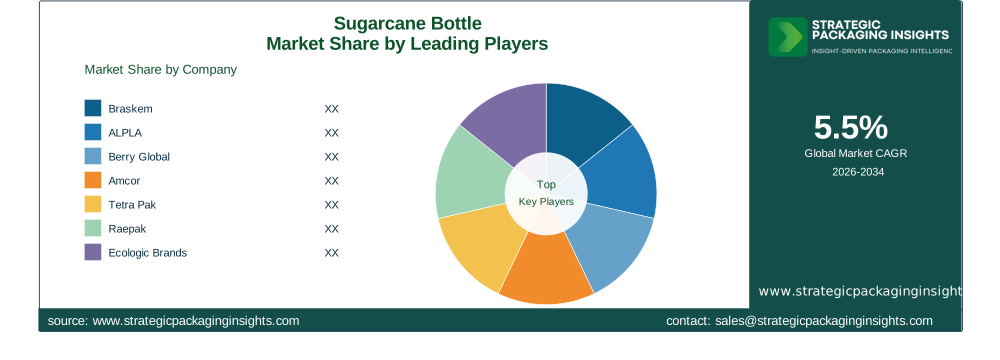
Braskem, a leading player in the sugarcane bottle market, is known for its innovative approach to bioplastic production. The company has developed a range of sugarcane-based products that are widely used in the packaging industry. ALPLA, another major player, is focusing on expanding its production capabilities and enhancing its product offerings to cater to the growing demand for sustainable packaging solutions. Berry Global and Amcor are also actively investing in research and development to improve the performance and cost-effectiveness of their sugarcane-based products.
Other notable players in the market include Tetra Pak, Raepak, Ecologic Brands, Graham Packaging, Plastipak, and LanzaTech. These companies are focusing on product innovation and strategic partnerships to enhance their market position. Tetra Pak, for instance, is known for its commitment to sustainability and has developed a range of sugarcane-based packaging solutions that are widely used in the food and beverage industry. Raepak and Ecologic Brands are also focusing on expanding their product portfolios and enhancing their production capabilities to cater to the growing demand for eco-friendly packaging solutions.
Overall, the sugarcane bottle market is highly competitive, with companies focusing on product innovation, strategic partnerships, and sustainability initiatives to enhance their market position. The market is expected to witness significant growth in the coming years, driven by the increasing demand for sustainable packaging solutions and the growing focus on environmental sustainability.
Key Highlights
- The sugarcane bottle market is projected to grow at a CAGR of 5.5% from 2026 to 2034.
- Increasing consumer preference for eco-friendly packaging solutions is driving market growth.
- Technological advancements in bioplastic production are enhancing the usability of sugarcane bottles.
- Government regulations promoting the use of renewable resources are boosting market demand.
- The high cost of production remains a significant barrier to market growth.
- Key players are focusing on product innovation and strategic partnerships to enhance their market position.
- The market is witnessing significant growth in the beverage and personal care industries.
- Corporate sustainability initiatives are driving the demand for sugarcane-based packaging solutions.
- The availability of raw materials and climate change impacts could pose risks to market stability.
- The market is characterized by the presence of several key players, including Braskem, ALPLA, and Berry Global.
Top Countries Insights
In the sugarcane bottle market, Brazil stands out as a leading country due to its abundant sugarcane production and favorable government policies promoting the use of renewable resources. The market in Brazil is valued at approximately $30 million, with a CAGR of 6%. The country's strong agricultural base and commitment to sustainability are key drivers of market growth. Additionally, Brazil's focus on reducing plastic waste and promoting eco-friendly packaging solutions is further boosting the demand for sugarcane bottles.
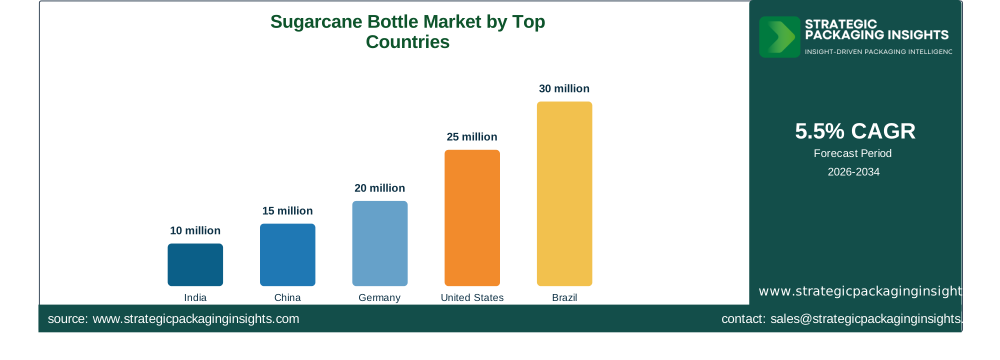
The United States is another significant market for sugarcane bottles, with a market size of around $25 million and a CAGR of 5%. The growing consumer awareness of environmental issues and the increasing demand for sustainable packaging solutions are driving market growth in the country. Furthermore, government regulations aimed at reducing plastic waste and promoting the use of renewable resources are encouraging companies to adopt sugarcane-based packaging solutions.
In Europe, Germany is a key market for sugarcane bottles, with a market size of approximately $20 million and a CAGR of 4%. The country's strong focus on sustainability and environmental protection is driving the demand for eco-friendly packaging solutions. Additionally, the increasing adoption of circular economy principles and government initiatives promoting the use of renewable resources are further boosting market growth.
China is emerging as a significant market for sugarcane bottles, with a market size of around $15 million and a CAGR of 7%. The country's growing middle class and increasing consumer awareness of environmental issues are driving the demand for sustainable packaging solutions. Furthermore, government policies promoting the use of renewable resources and reducing plastic waste are encouraging companies to adopt sugarcane-based packaging solutions.
India is also witnessing significant growth in the sugarcane bottle market, with a market size of approximately $10 million and a CAGR of 8%. The country's abundant sugarcane production and growing focus on sustainability are key drivers of market growth. Additionally, government initiatives promoting the use of renewable resources and reducing plastic waste are further boosting the demand for sugarcane bottles.
Sugarcane Bottle Market Segments Insights

Material Type Analysis
The material type segment of the sugarcane bottle market is categorized into bio-PE, bagasse fiber, and sugarcane bioplastic. Bio-PE is gaining significant traction due to its versatility and compatibility with existing plastic processing technologies. This material is particularly favored in the beverage industry, where it is used to produce durable and lightweight bottles. The demand for bio-PE is driven by its ability to reduce carbon emissions and its biodegradability, making it an attractive option for environmentally conscious consumers and businesses.
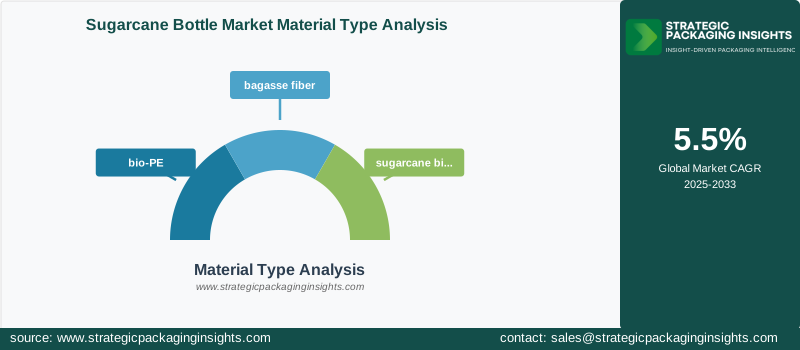
Bagasse fiber, derived from the fibrous residue of sugarcane, is another key material type in the market. It is primarily used in the production of rigid packaging solutions, such as personal care and household bottles. The demand for bagasse fiber is driven by its sustainability and cost-effectiveness, as it utilizes a by-product of sugarcane processing. Additionally, advancements in processing technologies are enhancing the quality and performance of bagasse fiber-based products, further boosting their adoption in the market.
Sugarcane bioplastic is emerging as a promising material type in the sugarcane bottle market. This material is derived from the fermentation of sugarcane juice and is used to produce a wide range of packaging solutions. The demand for sugarcane bioplastic is driven by its biodegradability and its ability to reduce reliance on fossil fuels. Furthermore, ongoing research and development efforts are focused on improving the performance and cost-effectiveness of sugarcane bioplastic, which is expected to drive its adoption in the coming years.
Product Type Analysis
The product type segment of the sugarcane bottle market is divided into beverage bottles, personal care bottles, and household bottles. Beverage bottles are the largest segment, driven by the increasing demand for sustainable packaging solutions in the beverage industry. The shift towards eco-friendly packaging is particularly pronounced in the bottled water and juice segments, where sugarcane bottles are gaining popularity as a sustainable alternative to traditional plastic bottles.
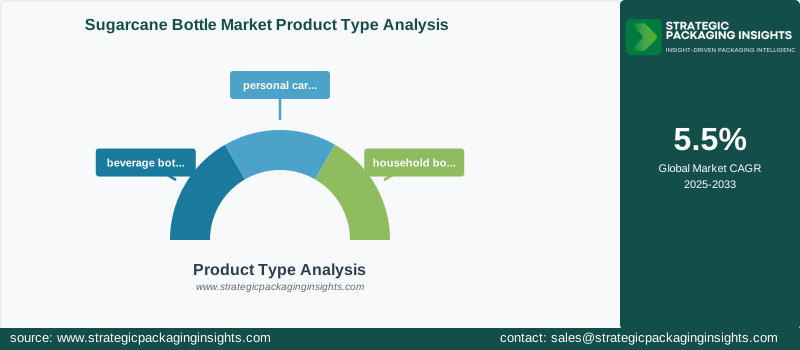
Personal care bottles are another significant segment in the market, driven by the growing consumer preference for eco-friendly packaging solutions in the personal care industry. Sugarcane bottles are increasingly being used to package a wide range of personal care products, including shampoos, conditioners, and lotions. The demand for personal care bottles is driven by the increasing focus on sustainability and the growing consumer awareness of environmental issues.
Household bottles are also witnessing significant growth in the sugarcane bottle market. These bottles are used to package a wide range of household products, including cleaning solutions and detergents. The demand for household bottles is driven by the increasing focus on sustainability and the growing consumer preference for eco-friendly packaging solutions. Additionally, advancements in bioplastic production are enhancing the performance and cost-effectiveness of sugarcane-based household bottles, further boosting their adoption in the market.
Application Analysis
The application segment of the sugarcane bottle market is categorized into water, juices, cosmetics, and home care. The water segment is the largest application segment, driven by the increasing demand for sustainable packaging solutions in the bottled water industry. Sugarcane bottles are gaining popularity as a sustainable alternative to traditional plastic bottles, driven by the growing consumer awareness of environmental issues and the increasing focus on sustainability.
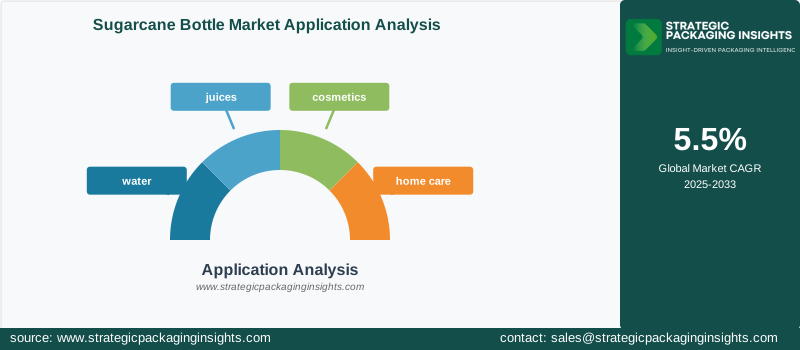
The juices segment is another significant application segment in the market, driven by the increasing demand for eco-friendly packaging solutions in the juice industry. Sugarcane bottles are increasingly being used to package a wide range of juice products, driven by the growing consumer preference for sustainable packaging solutions and the increasing focus on environmental sustainability.
The cosmetics segment is also witnessing significant growth in the sugarcane bottle market. Sugarcane bottles are increasingly being used to package a wide range of cosmetic products, driven by the growing consumer preference for eco-friendly packaging solutions and the increasing focus on sustainability. Additionally, advancements in bioplastic production are enhancing the performance and cost-effectiveness of sugarcane-based cosmetic bottles, further boosting their adoption in the market.
End Use Analysis
The end use segment of the sugarcane bottle market is divided into FMCG brands, retailers, hospitality, and foodservice. FMCG brands are the largest end use segment, driven by the increasing demand for sustainable packaging solutions in the fast-moving consumer goods industry. Sugarcane bottles are gaining popularity as a sustainable alternative to traditional plastic bottles, driven by the growing consumer awareness of environmental issues and the increasing focus on sustainability.
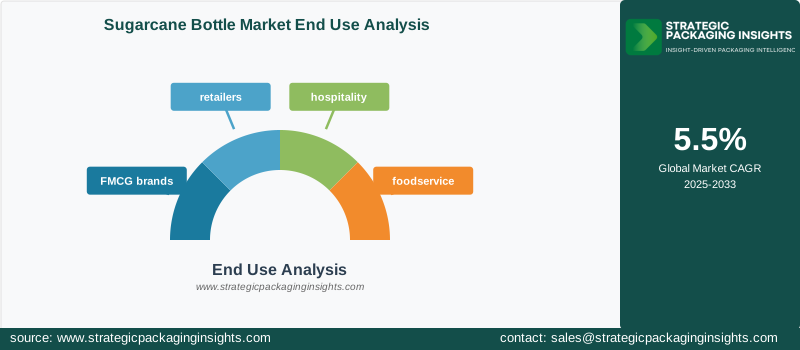
Retailers are another significant end use segment in the market, driven by the increasing demand for eco-friendly packaging solutions in the retail industry. Sugarcane bottles are increasingly being used to package a wide range of retail products, driven by the growing consumer preference for sustainable packaging solutions and the increasing focus on environmental sustainability.
The hospitality and foodservice segments are also witnessing significant growth in the sugarcane bottle market. Sugarcane bottles are increasingly being used to package a wide range of products in the hospitality and foodservice industries, driven by the growing consumer preference for eco-friendly packaging solutions and the increasing focus on sustainability. Additionally, advancements in bioplastic production are enhancing the performance and cost-effectiveness of sugarcane-based bottles, further boosting their adoption in these segments.
Sugarcane Bottle Market Segments
The Sugarcane Bottle market has been segmented on the basis ofMaterial Type
- bio-PE
- bagasse fiber
- sugarcane bioplastic
Product Type
- beverage bottles
- personal care bottles
- household bottles
Application
- water
- juices
- cosmetics
- home care
End Use
- FMCG brands
- retailers
- hospitality
- foodservice
Region
- Asia Pacific
- North America
- Latin America
- Europe
- Middle East & Africa




