


Stringer Pallets Market Outlook
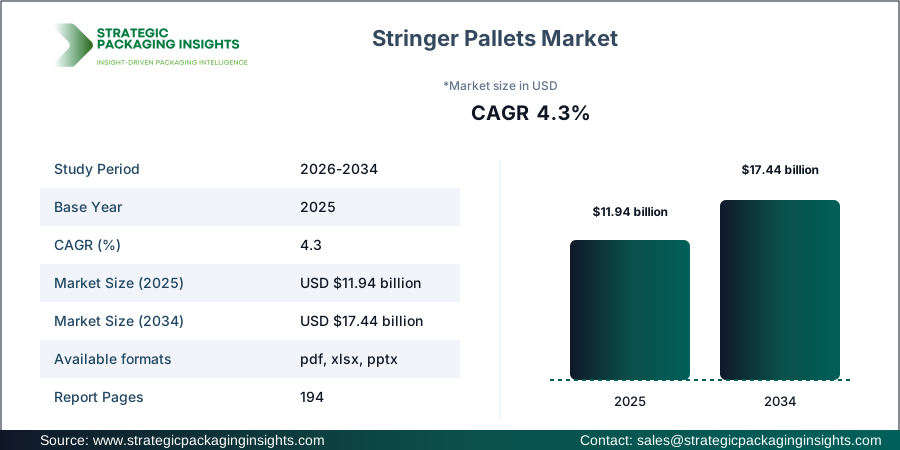
The Stringer Pallets market was valued at $11.94 billion in 2025 and is projected to reach $17.44 billion by 2034, growing at a CAGR of 4.3% during the forecast period 2026-2034. This market is witnessing significant growth due to the increasing demand for efficient and durable pallet solutions across various industries. The rise in global trade and the expansion of the e-commerce sector are driving the need for robust logistics and supply chain solutions, where stringer pallets play a crucial role. Additionally, the growing emphasis on sustainable and recyclable materials is pushing manufacturers to innovate and offer eco-friendly pallet options, further propelling market growth.
Despite the promising growth trajectory, the Stringer Pallets market faces certain challenges. Regulatory constraints related to the use of specific materials, especially in regions with stringent environmental policies, can hinder market expansion. Moreover, the fluctuating prices of raw materials such as wood and metal can impact production costs and, consequently, the pricing strategies of manufacturers. However, the market holds substantial growth potential, particularly with the increasing adoption of advanced manufacturing technologies and the integration of IoT for better tracking and management of pallets in supply chains. These advancements are expected to open new avenues for market players, enhancing operational efficiency and reducing overall costs.
Report Scope
| Attributes | Details |
| Report Title | Stringer Pallets Market Size, Future Growth and Forecast 2034 |
| By Material Type | Wood, Plastic, Composite, Metal |
| By Entry Type | Two-Way Entry, Four-Way Entry |
| By Load Capacity | Light-Duty, Medium-Duty, Heavy-Duty |
| By End Use | Warehousing, Retail, Manufacturing, Export Logistics |
| Region | Asia Pacific, North America, Latin America, Europe, Middle East & Africa |
| Base Year | 2025 |
| Historic Period | 2018-2024 |
| Forecast Period | 2026-2034 |
| Number of Pages | 194 |
| Customization Available | Yes* |
Opportunities & Threats
The Stringer Pallets market presents numerous opportunities, particularly in the realm of technological advancements. The integration of smart technologies, such as RFID tags and IoT-enabled tracking systems, is revolutionizing pallet management, offering real-time data and insights into supply chain operations. This technological shift not only enhances operational efficiency but also reduces losses due to misplacement or damage, thereby providing a significant competitive edge to companies adopting these innovations. Furthermore, the increasing focus on sustainability and eco-friendly practices is driving demand for pallets made from recycled or biodegradable materials, opening up new market segments and opportunities for growth.
Another opportunity lies in the expanding e-commerce sector, which is driving demand for efficient logistics and warehousing solutions. As online retail continues to grow, the need for reliable and durable pallet solutions is becoming more pronounced. This trend is particularly evident in emerging markets, where rapid urbanization and industrialization are fueling demand for advanced logistics infrastructure. Companies that can offer innovative, cost-effective, and sustainable pallet solutions are well-positioned to capitalize on this growing demand, thereby expanding their market presence and increasing their revenue streams.
However, the market is not without its threats. One of the primary challenges is the volatility in raw material prices, particularly for wood and metal, which can significantly impact production costs and profit margins. Additionally, stringent environmental regulations in certain regions can pose compliance challenges for manufacturers, particularly those relying on traditional materials and production methods. The competitive landscape is also intensifying, with numerous players vying for market share, leading to price wars and margin pressures. Companies must navigate these challenges carefully, balancing cost management with innovation and sustainability to maintain their competitive edge.
Drivers & Challenges
The Stringer Pallets market is driven by several key factors, foremost among them being the increasing demand for efficient logistics and supply chain solutions. As global trade continues to expand, the need for reliable and durable pallet solutions is becoming more critical. Stringer pallets, known for their strength and versatility, are increasingly being adopted across various industries, including warehousing, manufacturing, and export logistics. Additionally, the rise of e-commerce and the subsequent boom in warehousing and distribution centers are further fueling demand for stringer pallets, as businesses seek to optimize their supply chain operations and reduce costs.
Another significant driver is the growing emphasis on sustainability and environmental responsibility. With increasing awareness of the environmental impact of traditional materials, there is a rising demand for pallets made from recycled or biodegradable materials. This trend is encouraging manufacturers to innovate and develop eco-friendly pallet solutions, which not only meet regulatory requirements but also appeal to environmentally conscious consumers. Furthermore, advancements in manufacturing technologies, such as automation and IoT integration, are enhancing the efficiency and cost-effectiveness of pallet production, providing additional impetus for market growth.
Despite these drivers, the market faces several challenges that could impede its growth. One of the primary challenges is the fluctuating prices of raw materials, which can significantly impact production costs and pricing strategies. Additionally, stringent environmental regulations in certain regions can pose compliance challenges for manufacturers, particularly those relying on traditional materials and production methods. The competitive landscape is also intensifying, with numerous players vying for market share, leading to price wars and margin pressures. Companies must navigate these challenges carefully, balancing cost management with innovation and sustainability to maintain their competitive edge.
Market Share Analysis
The Stringer Pallets market is characterized by a competitive landscape with several key players dominating the market. Companies such as Brambles, PalletOne, Millwood, PECO Pallet, and Loscam hold significant market shares, leveraging their extensive distribution networks and strong brand recognition to maintain their competitive positions. These companies are continuously investing in research and development to innovate and offer advanced pallet solutions that meet the evolving needs of their customers. Additionally, strategic partnerships and acquisitions are common strategies employed by these players to expand their market presence and enhance their product offerings.
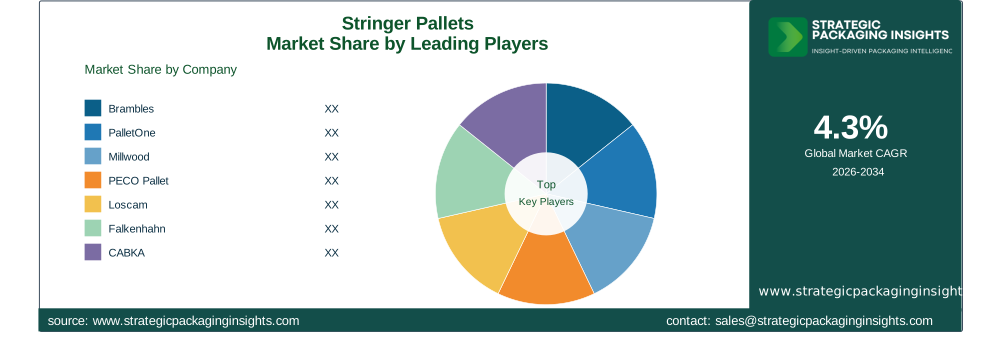
Brambles, a leading player in the market, is known for its extensive range of pallet solutions and strong focus on sustainability. The company has been at the forefront of innovation, integrating smart technologies into its pallet offerings to enhance supply chain efficiency. PalletOne, another major player, is recognized for its high-quality wooden pallets and commitment to customer satisfaction. The company has a strong presence in North America and is expanding its operations to cater to the growing demand in emerging markets.
Millwood is a key player in the market, offering a wide range of pallet solutions, including custom-designed pallets to meet specific customer requirements. The company is known for its focus on quality and innovation, continuously investing in advanced manufacturing technologies to enhance its product offerings. PECO Pallet, a prominent player in the market, is recognized for its high-quality pallets and strong focus on customer service. The company has a robust distribution network across North America and is expanding its operations to cater to the growing demand in other regions.
Loscam, a leading provider of pallet solutions in the Asia Pacific region, is known for its innovative pallet designs and strong focus on sustainability. The company has a strong presence in the region and is expanding its operations to cater to the growing demand for efficient logistics solutions. Falkenhahn, CABKA, Craemer, Rehrig Pacific, and Litco International are other notable players in the market, each with their unique strengths and market strategies. These companies are continuously investing in research and development to innovate and offer advanced pallet solutions that meet the evolving needs of their customers.
Key Highlights
- The Stringer Pallets market is projected to grow from $11.94 billion in 2025 to $17.44 billion by 2034, at a CAGR of 4.3%.
- Technological advancements, such as IoT-enabled tracking systems, are revolutionizing pallet management.
- Increasing demand for sustainable and eco-friendly pallet solutions is driving market growth.
- The expanding e-commerce sector is boosting demand for efficient logistics and warehousing solutions.
- Fluctuating raw material prices pose a significant challenge to market growth.
- Stringent environmental regulations in certain regions can hinder market expansion.
- Key players are focusing on innovation and strategic partnerships to maintain their competitive edge.
- The Asia Pacific region is witnessing significant growth due to rapid industrialization and urbanization.
- North America remains a dominant market, driven by strong demand from the retail and manufacturing sectors.
- Emerging markets offer substantial growth opportunities for companies offering innovative and cost-effective pallet solutions.
Top Countries Insights
In the Stringer Pallets market, the United States stands out as a leading country, with a market size of approximately $3.5 billion and a CAGR of 3%. The country's robust logistics and supply chain infrastructure, coupled with the strong presence of key market players, drives demand for stringer pallets. Additionally, the growing e-commerce sector and the emphasis on sustainable practices are further fueling market growth. However, challenges such as fluctuating raw material prices and stringent environmental regulations can impact market dynamics.
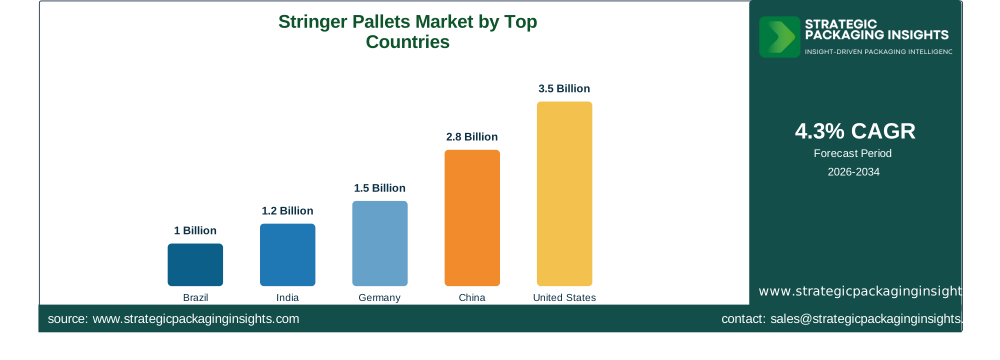
China is another significant player in the Stringer Pallets market, with a market size of around $2.8 billion and a CAGR of 5%. The country's rapid industrialization and urbanization are driving demand for efficient logistics solutions, including stringer pallets. The government's focus on enhancing supply chain infrastructure and promoting sustainable practices is also contributing to market growth. However, the market faces challenges such as regulatory constraints and competition from local manufacturers offering low-cost alternatives.
Germany, with a market size of approximately $1.5 billion and a CAGR of 4%, is a key market for stringer pallets in Europe. The country's strong manufacturing sector and emphasis on sustainability are driving demand for advanced pallet solutions. Additionally, the presence of leading market players and the focus on innovation and technology integration are further propelling market growth. However, the market faces challenges such as stringent environmental regulations and high production costs.
India, with a market size of around $1.2 billion and a CAGR of 6%, is an emerging market for stringer pallets. The country's rapid economic growth and expanding e-commerce sector are driving demand for efficient logistics solutions. The government's focus on enhancing infrastructure and promoting sustainable practices is also contributing to market growth. However, challenges such as regulatory constraints and competition from local manufacturers offering low-cost alternatives can impact market dynamics.
Brazil, with a market size of approximately $1 billion and a CAGR of 4%, is a key market for stringer pallets in Latin America. The country's growing manufacturing sector and emphasis on sustainability are driving demand for advanced pallet solutions. Additionally, the presence of leading market players and the focus on innovation and technology integration are further propelling market growth. However, the market faces challenges such as economic instability and regulatory constraints.
Stringer Pallets Market Segments Insights

Material Type Analysis
The Stringer Pallets market is segmented by material type into wood, plastic, composite, and metal. Wood remains the most widely used material due to its cost-effectiveness and ease of availability. However, the increasing focus on sustainability is driving demand for pallets made from recycled or biodegradable materials. Plastic pallets are gaining popularity due to their durability and resistance to moisture and chemicals, making them ideal for industries with stringent hygiene requirements. Composite and metal pallets, though less common, are preferred in applications requiring high strength and durability.
Wooden pallets dominate the market, accounting for a significant share due to their widespread use in various industries, including warehousing, manufacturing, and export logistics. However, the rising cost of wood and environmental concerns are encouraging manufacturers to explore alternative materials. Plastic pallets, with their longer lifespan and recyclability, are emerging as a viable alternative, particularly in industries such as food and pharmaceuticals. Composite and metal pallets, though more expensive, offer superior strength and durability, making them suitable for heavy-duty applications.
Entry Type Analysis
The market is also segmented by entry type into two-way entry and four-way entry pallets. Four-way entry pallets are gaining popularity due to their versatility and ease of handling, allowing forklifts to access them from all sides. This feature enhances operational efficiency and reduces handling time, making them ideal for high-volume operations. Two-way entry pallets, while less versatile, remain popular in applications where cost is a primary consideration.
Four-way entry pallets are increasingly being adopted across various industries, including warehousing, retail, and manufacturing, due to their operational advantages. The ability to access pallets from all sides enhances flexibility and efficiency in handling and storage operations. Two-way entry pallets, though less versatile, continue to be used in applications where cost considerations outweigh the need for operational flexibility. The choice between two-way and four-way entry pallets often depends on the specific requirements of the application and the available handling equipment.
Load Capacity Analysis
The Stringer Pallets market is further segmented by load capacity into light-duty, medium-duty, and heavy-duty pallets. Heavy-duty pallets are preferred in industries requiring high load-bearing capacity, such as manufacturing and export logistics. Medium-duty pallets are widely used in warehousing and retail applications, where a balance between cost and performance is essential. Light-duty pallets, while less robust, are suitable for applications with lower load requirements.
Heavy-duty pallets are gaining traction in industries with demanding load requirements, offering superior strength and durability. These pallets are designed to withstand heavy loads and harsh handling conditions, making them ideal for manufacturing and export logistics. Medium-duty pallets, offering a balance between cost and performance, are widely used in warehousing and retail applications. Light-duty pallets, though less robust, are suitable for applications with lower load requirements, offering a cost-effective solution for businesses with limited budgets.
End Use Analysis
The market is segmented by end use into warehousing, retail, manufacturing, and export logistics. Warehousing and retail sectors are the largest consumers of stringer pallets, driven by the need for efficient storage and handling solutions. The manufacturing sector also represents a significant market, with pallets being used for material handling and transportation within production facilities. Export logistics is another key segment, with pallets playing a crucial role in ensuring the safe and efficient transport of goods across borders.
Warehousing and retail sectors are the largest consumers of stringer pallets, driven by the need for efficient storage and handling solutions. The rise of e-commerce and the subsequent boom in warehousing and distribution centers are further fueling demand for stringer pallets. The manufacturing sector also represents a significant market, with pallets being used for material handling and transportation within production facilities. Export logistics is another key segment, with pallets playing a crucial role in ensuring the safe and efficient transport of goods across borders.
Stringer Pallets Market Segments
The Stringer Pallets market has been segmented on the basis ofBy Material Type
- Wood
- Plastic
- Composite
- Metal
By Entry Type
- Two-Way Entry
- Four-Way Entry
By Load Capacity
- Light-Duty
- Medium-Duty
- Heavy-Duty
By End Use
- Warehousing
- Retail
- Manufacturing
- Export Logistics
Region
- Asia Pacific
- North America
- Latin America
- Europe
- Middle East & Africa




