


Stretch Film Packs Market Outlook
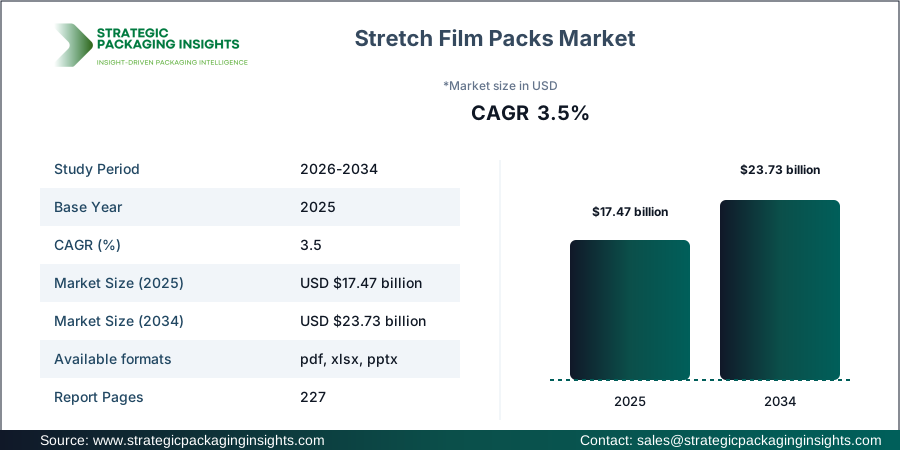
The Stretch Film Packs market was valued at $17.47 billion in 2025 and is projected to reach $23.73 billion by 2034, growing at a CAGR of 3.5% during the forecast period 2026-2034. This market is driven by the increasing demand for efficient packaging solutions across various industries, including warehousing, retail, and food sectors. The versatility and cost-effectiveness of stretch films make them a preferred choice for securing and protecting goods during transportation and storage. The market is also witnessing a shift towards sustainable packaging solutions, with a growing emphasis on recycled and eco-friendly materials. This trend is expected to further propel the market growth as companies strive to meet regulatory requirements and consumer preferences for sustainable products.
Despite the promising growth prospects, the Stretch Film Packs market faces certain challenges. Regulatory constraints related to plastic usage and disposal are significant hurdles that manufacturers need to navigate. Additionally, the fluctuating prices of raw materials, particularly polyethylene, can impact the profitability of stretch film producers. However, advancements in material technology and the development of innovative, high-performance films offer potential growth opportunities. The market is also poised to benefit from the increasing adoption of automation in packaging processes, which enhances efficiency and reduces labor costs. Overall, the Stretch Film Packs market presents a dynamic landscape with a mix of opportunities and challenges that stakeholders need to strategically address.
Report Scope
| Attributes | Details |
| Report Title | Stretch Film Packs Market Size, Future Growth and Forecast 2034 |
| By Product Type | Hand Stretch Film, Machine Stretch Film, Pre-Stretch Film |
| By Material Type | LLDPE, Metallocene PE, Recycled PE |
| By Application | Pallet Wrapping, Bundling, Logistics Packaging |
| By End Use | Warehousing, Retail, Food, Industrial |
| Region | Asia Pacific, North America, Latin America, Europe, Middle East & Africa |
| Base Year | 2025 |
| Historic Period | 2018-2024 |
| Forecast Period | 2026-2034 |
| Number of Pages | 227 |
| Customization Available | Yes* |
Opportunities & Threats
The Stretch Film Packs market is ripe with opportunities, particularly in the realm of sustainable packaging solutions. As environmental concerns continue to rise, there is a growing demand for eco-friendly packaging materials. This trend is driving innovation in the development of biodegradable and recyclable stretch films, which not only meet regulatory requirements but also cater to the increasing consumer preference for sustainable products. Companies that invest in research and development to create high-performance, environmentally friendly stretch films are likely to gain a competitive edge in the market. Additionally, the expansion of e-commerce and the consequent rise in logistics and transportation activities present significant growth opportunities for stretch film manufacturers, as these films are essential for securing goods during transit.
Another opportunity lies in the technological advancements in stretch film production. The development of advanced manufacturing techniques and the integration of automation in packaging processes are enhancing the efficiency and quality of stretch films. These innovations are enabling manufacturers to produce films with superior strength, clarity, and stretchability, which are highly sought after in various industries. Moreover, the increasing adoption of machine stretch films, which offer better load stability and reduced material usage, is expected to drive market growth. Companies that leverage these technological advancements to offer innovative and cost-effective solutions are likely to capture a larger market share.
However, the market is not without its threats. One of the primary challenges is the stringent regulations related to plastic usage and disposal. Governments across the globe are implementing policies to reduce plastic waste, which could impact the demand for traditional stretch films. Manufacturers need to adapt to these regulatory changes by developing sustainable alternatives and investing in recycling initiatives. Additionally, the volatility in raw material prices, particularly polyethylene, poses a threat to the profitability of stretch film producers. Companies need to adopt effective supply chain management strategies to mitigate the impact of fluctuating raw material costs and ensure a steady supply of high-quality materials.
Drivers & Challenges
The Stretch Film Packs market is primarily driven by the increasing demand for efficient and cost-effective packaging solutions across various industries. The versatility of stretch films, which can be used for a wide range of applications such as pallet wrapping, bundling, and logistics packaging, makes them an indispensable component of modern packaging processes. The growing emphasis on reducing packaging waste and improving load stability is further driving the adoption of stretch films. Additionally, the rise of e-commerce and the consequent increase in logistics and transportation activities are boosting the demand for stretch films, as they provide essential protection for goods during transit.
Another significant driver is the shift towards sustainable packaging solutions. With increasing environmental awareness, consumers and businesses are seeking eco-friendly alternatives to traditional packaging materials. This trend is encouraging manufacturers to develop stretch films made from recycled and biodegradable materials, which not only meet regulatory requirements but also align with consumer preferences for sustainable products. The development of high-performance films with enhanced strength, clarity, and stretchability is also contributing to market growth, as these films offer superior protection and efficiency in packaging applications.
Despite the positive drivers, the Stretch Film Packs market faces several challenges. One of the primary challenges is the stringent regulations related to plastic usage and disposal. Governments worldwide are implementing policies to reduce plastic waste, which could impact the demand for traditional stretch films. Manufacturers need to adapt to these regulatory changes by developing sustainable alternatives and investing in recycling initiatives. Additionally, the volatility in raw material prices, particularly polyethylene, poses a threat to the profitability of stretch film producers. Companies need to adopt effective supply chain management strategies to mitigate the impact of fluctuating raw material costs and ensure a steady supply of high-quality materials.
Market Share Analysis
The competitive landscape of the Stretch Film Packs market is characterized by the presence of several key players who are actively engaged in product innovation and strategic partnerships to strengthen their market position. Berry Global, a leading player in the market, holds a significant share due to its extensive product portfolio and strong distribution network. The company is known for its focus on sustainability and innovation, offering a range of eco-friendly stretch films that cater to the growing demand for sustainable packaging solutions. Intertape Polymer Group is another major player, renowned for its high-performance stretch films that offer superior load stability and reduced material usage.
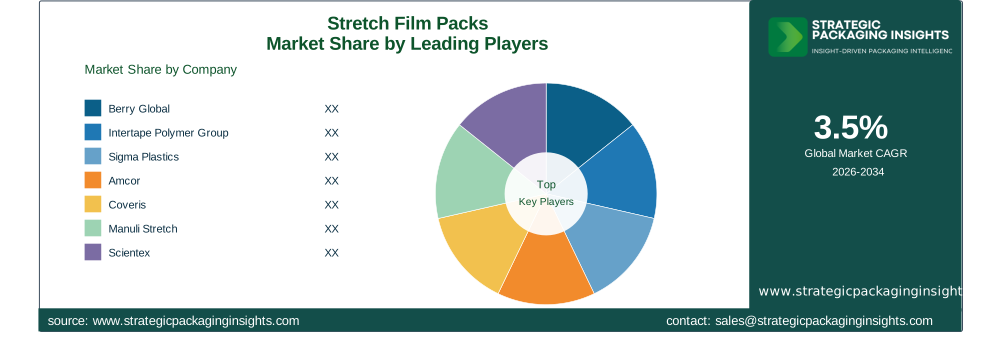
Sigma Plastics is a prominent player in the market, known for its advanced manufacturing capabilities and commitment to quality. The company offers a wide range of stretch films that cater to various industries, including food, retail, and logistics. Amcor, a global leader in packaging solutions, is also a key player in the stretch film market. The company's focus on innovation and sustainability has enabled it to capture a significant market share, with a diverse product portfolio that includes both traditional and eco-friendly stretch films.
Coveris, Manuli Stretch, and Scientex are other notable players in the market, each with a strong presence in different regions. Coveris is known for its innovative packaging solutions and commitment to sustainability, while Manuli Stretch is recognized for its high-quality stretch films that offer excellent load stability and clarity. Scientex, a leading player in the Asia Pacific region, is known for its extensive product range and focus on customer satisfaction. Paragon Films, AEP Industries, and DUO Plast are also key players in the market, each with a unique value proposition that caters to the diverse needs of customers across various industries.
Key Highlights
- The Stretch Film Packs market is projected to grow from $17.47 billion in 2025 to $23.73 billion by 2034, at a CAGR of 3.5%.
- Increasing demand for sustainable packaging solutions is driving innovation in biodegradable and recyclable stretch films.
- Technological advancements in stretch film production are enhancing efficiency and quality, driving market growth.
- The rise of e-commerce and logistics activities is boosting the demand for stretch films for secure packaging.
- Stringent regulations on plastic usage and disposal pose challenges for traditional stretch film manufacturers.
- Volatility in raw material prices, particularly polyethylene, impacts the profitability of stretch film producers.
- Key players in the market include Berry Global, Intertape Polymer Group, Sigma Plastics, and Amcor.
- Companies are focusing on product innovation and strategic partnerships to strengthen their market position.
- The development of high-performance films with enhanced strength and clarity is a key trend in the market.
Top Countries Insights
In the Stretch Film Packs market, the United States holds a significant share, driven by the robust demand from the logistics and retail sectors. The market size in the U.S. is substantial, with a CAGR of 4%. The country's focus on sustainable packaging solutions and the presence of major players like Berry Global and Intertape Polymer Group contribute to its market dominance. Additionally, the increasing adoption of automation in packaging processes is enhancing efficiency and driving market growth.
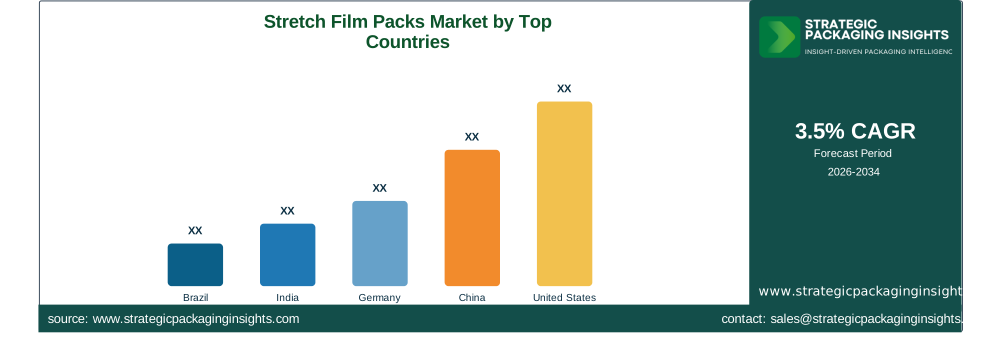
China is another key market for stretch film packs, with a CAGR of 5%. The rapid growth of the e-commerce sector and the expansion of the logistics industry are major drivers of market growth in China. The government's emphasis on reducing plastic waste and promoting sustainable packaging solutions is also influencing market dynamics. Local manufacturers are investing in advanced manufacturing technologies to produce high-quality, eco-friendly stretch films.
Germany is a prominent market in Europe, with a CAGR of 3%. The country's strong industrial base and focus on sustainability are driving the demand for stretch films. The presence of leading packaging companies and the adoption of innovative packaging solutions are contributing to market growth. Germany's stringent regulations on plastic usage are encouraging manufacturers to develop sustainable alternatives.
India is experiencing rapid growth in the stretch film packs market, with a CAGR of 6%. The booming retail and logistics sectors, coupled with the government's initiatives to promote sustainable packaging, are key growth drivers. Indian manufacturers are increasingly focusing on producing cost-effective, high-performance stretch films to cater to the growing demand.
Brazil is a significant market in Latin America, with a CAGR of 4%. The country's expanding logistics and transportation sectors are driving the demand for stretch films. The focus on reducing packaging waste and improving load stability is also influencing market dynamics. Brazilian manufacturers are investing in research and development to create innovative, sustainable packaging solutions.
Stretch Film Packs Market Segments Insights

Product Type Analysis
The Stretch Film Packs market is segmented by product type into hand stretch film, machine stretch film, and pre-stretch film. Hand stretch films are widely used in small-scale packaging operations due to their ease of use and cost-effectiveness. They are particularly popular in the retail and warehousing sectors, where manual packaging processes are prevalent. The demand for hand stretch films is driven by their versatility and ability to provide secure packaging for a variety of goods.
Machine stretch films, on the other hand, are gaining traction in large-scale industrial applications due to their superior load stability and efficiency. These films are designed for use with automated wrapping machines, which enhance packaging speed and reduce labor costs. The increasing adoption of automation in packaging processes is a key driver for the growth of machine stretch films. Pre-stretch films, known for their lightweight and high stretchability, are also witnessing growing demand, particularly in the logistics and transportation sectors.
Material Type Analysis
The market is also segmented by material type into LLDPE, metallocene PE, and recycled PE. LLDPE (Linear Low-Density Polyethylene) is the most commonly used material in stretch film production due to its excellent tensile strength and flexibility. It is favored for its ability to provide secure packaging while minimizing material usage. The demand for LLDPE stretch films is driven by their cost-effectiveness and versatility in various applications.
Metallocene PE is gaining popularity due to its superior performance characteristics, such as enhanced clarity, puncture resistance, and load stability. These films are particularly suitable for high-performance applications where superior protection is required. The growing emphasis on sustainable packaging solutions is driving the demand for recycled PE stretch films, which offer an eco-friendly alternative to traditional materials. Manufacturers are increasingly focusing on developing high-quality recycled films to meet regulatory requirements and consumer preferences for sustainable products.
Application Analysis
By application, the Stretch Film Packs market is segmented into pallet wrapping, bundling, and logistics packaging. Pallet wrapping is the largest application segment, driven by the need for secure and stable packaging of goods during transportation and storage. Stretch films are widely used in pallet wrapping to provide load stability and protection against environmental factors such as dust and moisture.
Bundling is another significant application, where stretch films are used to secure multiple items together for easy handling and transportation. The demand for bundling applications is driven by the retail and warehousing sectors, where efficient packaging solutions are essential for inventory management. Logistics packaging is also a key application area, with stretch films providing essential protection for goods during transit. The rise of e-commerce and the consequent increase in logistics activities are boosting the demand for stretch films in this segment.
End Use Analysis
The market is further segmented by end use into warehousing, retail, food, and industrial sectors. The warehousing sector is a major end user of stretch films, driven by the need for efficient packaging solutions to manage inventory and ensure the safe storage of goods. Stretch films are widely used in warehousing operations to provide secure packaging and protection against environmental factors.
The retail sector is another significant end user, with stretch films being used for packaging a wide range of consumer goods. The demand for stretch films in the retail sector is driven by the need for efficient and cost-effective packaging solutions that enhance product visibility and appeal. The food industry is also a key end user, with stretch films providing essential protection for perishable goods during transportation and storage. The industrial sector, which includes manufacturing and logistics operations, is a growing end user of stretch films, driven by the need for secure and stable packaging solutions.
Stretch Film Packs Market Segments
The Stretch Film Packs market has been segmented on the basis ofBy Product Type
- Hand Stretch Film
- Machine Stretch Film
- Pre-Stretch Film
By Material Type
- LLDPE
- Metallocene PE
- Recycled PE
By Application
- Pallet Wrapping
- Bundling
- Logistics Packaging
By End Use
- Warehousing
- Retail
- Food
- Industrial
Region
- Asia Pacific
- North America
- Latin America
- Europe
- Middle East & Africa




