


Stretch and Shrink Films Market Outlook
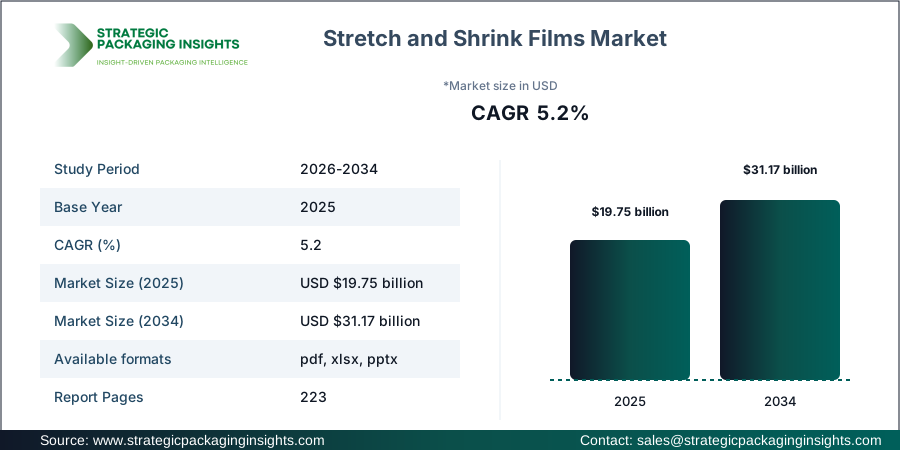
The Stretch and Shrink Films market was valued at $19.75 billion in 2025 and is projected to reach $31.17 billion by 2034, growing at a CAGR of 5.2% during the forecast period 2026-2034. This market is driven by the increasing demand for efficient packaging solutions across various industries, including logistics, food, and industrial sectors. The versatility and cost-effectiveness of stretch and shrink films make them a preferred choice for packaging applications, contributing to their widespread adoption. Additionally, advancements in material technology, such as the development of high-performance films with enhanced strength and durability, are further propelling market growth.
Despite the promising growth prospects, the Stretch and Shrink Films market faces certain challenges that could hinder its expansion. Environmental concerns related to plastic waste and stringent regulations on plastic usage are significant restraining factors. However, the industry is witnessing a shift towards sustainable packaging solutions, with manufacturers focusing on developing biodegradable and recyclable films. This trend presents lucrative growth opportunities for market players who can innovate and align their products with evolving consumer preferences and regulatory requirements. The market's potential is further amplified by the increasing demand for packaged goods and the growth of e-commerce, which necessitates efficient and secure packaging solutions.
Report Scope
| Attributes | Details |
| Report Title | Stretch and Shrink Films Market Size, Future Growth and Forecast 2034 |
| Film Type | Hand Stretch, Machine Stretch, Shrink Hood |
| Material | LLDPE, LDPE, PVC, Polyolefin |
| Application | Palletizing, Bundling, Wrapping |
| End Use | Logistics, Food, Industrial |
| Region | Asia Pacific, North America, Latin America, Europe, Middle East & Africa |
| Base Year | 2025 |
| Historic Period | 2018-2024 |
| Forecast Period | 2026-2034 |
| Number of Pages | 223 |
| Customization Available | Yes* |
Opportunities & Threats
The Stretch and Shrink Films market presents numerous opportunities for growth, primarily driven by the rising demand for sustainable packaging solutions. As environmental concerns continue to mount, consumers and regulatory bodies are increasingly advocating for eco-friendly packaging materials. This shift in consumer preference is prompting manufacturers to innovate and develop biodegradable and recyclable films, opening new avenues for market expansion. Additionally, the rapid growth of the e-commerce sector is fueling the demand for efficient packaging solutions that ensure product safety during transit. This trend is expected to drive the adoption of stretch and shrink films, particularly in the logistics and transportation sectors.
Another significant opportunity lies in the technological advancements in film manufacturing processes. The development of high-performance films with enhanced strength, durability, and clarity is enabling manufacturers to cater to diverse packaging needs across various industries. These innovations are not only improving the functionality of stretch and shrink films but also expanding their application scope. Furthermore, the increasing focus on reducing packaging waste and optimizing supply chain efficiency is encouraging companies to adopt stretch and shrink films as a cost-effective and sustainable packaging solution.
However, the market is not without its threats. One of the primary challenges is the stringent regulations on plastic usage and disposal, which could impact the production and consumption of stretch and shrink films. Governments worldwide are implementing policies to curb plastic waste, which may necessitate significant changes in manufacturing processes and material composition. Additionally, the volatility in raw material prices, particularly petroleum-based resins, poses a threat to market stability. Manufacturers need to navigate these challenges by investing in research and development to create innovative, sustainable, and cost-effective packaging solutions.
Drivers & Challenges
The Stretch and Shrink Films market is primarily driven by the increasing demand for efficient and cost-effective packaging solutions across various industries. The logistics and transportation sectors, in particular, are witnessing a surge in demand for stretch and shrink films due to their ability to secure and protect goods during transit. The growth of the e-commerce industry is further fueling this demand, as online retailers require reliable packaging solutions to ensure product safety and customer satisfaction. Additionally, the versatility of stretch and shrink films, which can be used for palletizing, bundling, and wrapping applications, is contributing to their widespread adoption.
Another significant driver is the advancements in material technology, which are enhancing the performance and functionality of stretch and shrink films. Manufacturers are developing films with improved strength, durability, and clarity, enabling them to cater to diverse packaging needs. These innovations are not only expanding the application scope of stretch and shrink films but also improving their environmental footprint. The shift towards sustainable packaging solutions is further driving market growth, as consumers and regulatory bodies increasingly prioritize eco-friendly materials.
Despite these drivers, the market faces several challenges that could hinder its growth. One of the primary challenges is the environmental concerns associated with plastic waste, which are prompting regulatory bodies to impose stringent regulations on plastic usage and disposal. This could impact the production and consumption of stretch and shrink films, necessitating significant changes in manufacturing processes and material composition. Additionally, the volatility in raw material prices, particularly petroleum-based resins, poses a threat to market stability. Manufacturers need to navigate these challenges by investing in research and development to create innovative, sustainable, and cost-effective packaging solutions.
Market Share Analysis
The Stretch and Shrink Films market is characterized by a highly competitive landscape, with several key players vying for market share. Companies such as Berry Global, Amcor, Sigma Plastics, Inteplast, Dow, ExxonMobil, Trioworld, Paragon Films, Coveris, and Uflex are some of the prominent players in this market. These companies are focusing on strategic initiatives such as mergers and acquisitions, product innovations, and expansions to strengthen their market position and enhance their product offerings. The competitive rivalry in the market is intense, with players striving to differentiate themselves through quality, innovation, and sustainability.
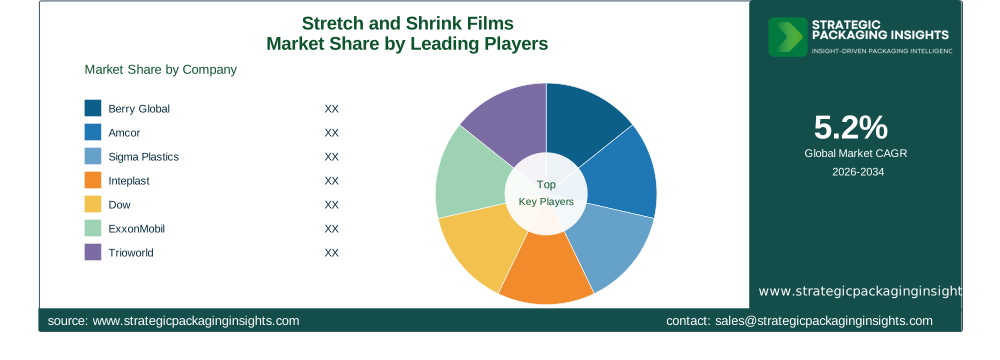
Berry Global is a leading player in the Stretch and Shrink Films market, known for its extensive product portfolio and strong distribution network. The company is committed to sustainability and has been actively investing in the development of eco-friendly packaging solutions. Amcor, another major player, is renowned for its innovative packaging solutions and has a strong presence in the global market. The company focuses on research and development to create high-performance films that cater to diverse packaging needs.
Sigma Plastics and Inteplast are also significant players in the market, known for their wide range of stretch and shrink films. These companies emphasize quality and customer satisfaction, offering customized solutions to meet specific client requirements. Dow and ExxonMobil, with their expertise in material technology, are key contributors to the market's growth. They focus on developing advanced films with enhanced properties, catering to the evolving demands of various industries.
Trioworld, Paragon Films, Coveris, and Uflex are other notable players in the market, each with its unique strengths and capabilities. These companies are actively expanding their product lines and geographical presence to capture a larger share of the market. The competitive landscape is dynamic, with players continuously innovating and adapting to changing market trends and consumer preferences. As the demand for sustainable packaging solutions grows, companies are increasingly focusing on developing biodegradable and recyclable films to align with environmental regulations and consumer expectations.
Key Highlights
- The Stretch and Shrink Films market is projected to grow from $19.75 billion in 2025 to $31.17 billion by 2034, at a CAGR of 5.2%.
- Increasing demand for sustainable packaging solutions is driving market growth.
- Technological advancements in film manufacturing are enhancing product performance.
- The logistics and transportation sectors are major consumers of stretch and shrink films.
- Environmental concerns and regulatory restrictions pose challenges to market growth.
- Key players are focusing on product innovation and sustainability initiatives.
- The e-commerce boom is fueling demand for efficient packaging solutions.
- Volatility in raw material prices is a significant challenge for manufacturers.
- Asia Pacific is expected to witness the highest growth rate during the forecast period.
- Companies are investing in research and development to create eco-friendly films.
Top Countries Insights
In the Stretch and Shrink Films market, the United States holds a significant share, driven by the robust demand from the logistics and e-commerce sectors. The market in the U.S. is valued at approximately $5.5 billion, with a CAGR of 4%. The country's well-established infrastructure and advanced manufacturing capabilities contribute to its market dominance. Additionally, the increasing focus on sustainable packaging solutions is driving innovation and growth in the U.S. market.
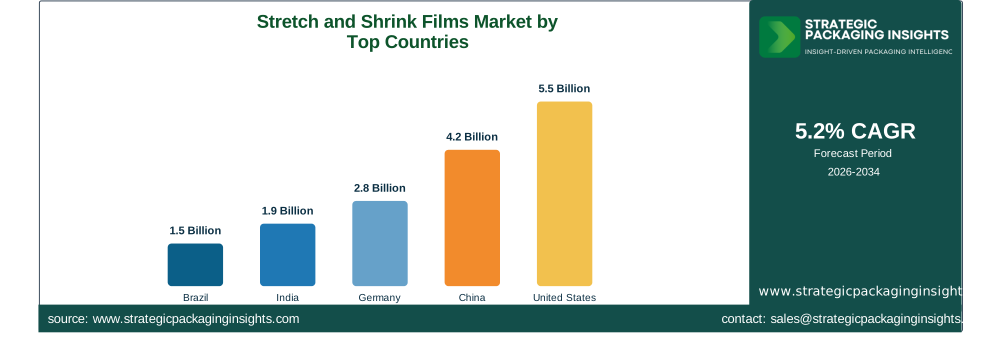
China is another major player in the Stretch and Shrink Films market, with a market size of around $4.2 billion and a CAGR of 7%. The rapid industrialization and urbanization in China are fueling the demand for efficient packaging solutions. The country's large manufacturing base and growing e-commerce sector are significant growth drivers. However, environmental regulations and the push for sustainable packaging are challenges that manufacturers need to address.
Germany, with its strong industrial base, is a key market for stretch and shrink films in Europe. The market is valued at approximately $2.8 billion, with a CAGR of 3%. The demand for high-quality packaging solutions in the automotive and manufacturing sectors is driving market growth. Germany's focus on sustainability and innovation is also contributing to the development of advanced packaging materials.
India is witnessing rapid growth in the Stretch and Shrink Films market, with a market size of about $1.9 billion and a CAGR of 8%. The country's expanding retail and e-commerce sectors are major growth drivers. Additionally, the government's initiatives to promote sustainable packaging and reduce plastic waste are encouraging manufacturers to develop eco-friendly films.
Brazil, with a market size of $1.5 billion and a CAGR of 5%, is a significant market in Latin America. The country's growing industrial and agricultural sectors are driving the demand for stretch and shrink films. However, economic fluctuations and regulatory challenges pose potential hurdles to market growth. Manufacturers in Brazil are focusing on innovation and sustainability to capture a larger market share.
Stretch and Shrink Films Market Segments Insights

Film Type Analysis
The Stretch and Shrink Films market is segmented by film type into hand stretch, machine stretch, and shrink hood films. Hand stretch films are widely used for manual packaging applications, offering flexibility and ease of use. These films are ideal for small-scale operations and are popular in the logistics and retail sectors. Machine stretch films, on the other hand, are designed for automated packaging processes, providing consistent and efficient wrapping solutions. They are preferred in large-scale industrial applications where speed and precision are critical. Shrink hood films are used for securing pallet loads, offering excellent protection and stability during transportation.
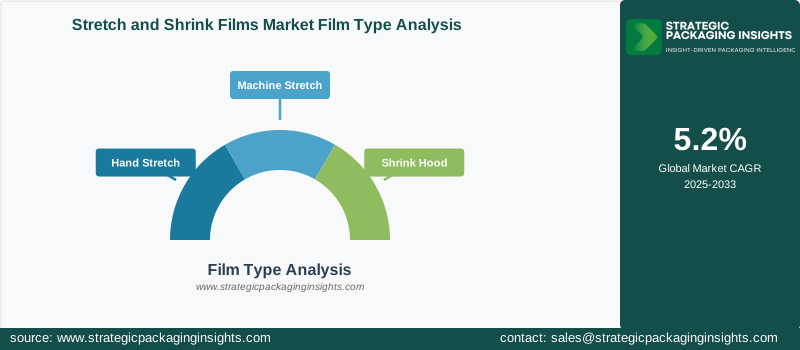
The demand for machine stretch films is expected to grow significantly during the forecast period, driven by the increasing adoption of automation in packaging processes. The efficiency and cost-effectiveness of machine stretch films make them a preferred choice for large-scale operations. Additionally, the development of high-performance films with enhanced strength and durability is further boosting their adoption. Shrink hood films are also gaining traction, particularly in the logistics and transportation sectors, where secure and stable packaging is essential.
Material Analysis
The Stretch and Shrink Films market is segmented by material into LLDPE, LDPE, PVC, and polyolefin films. LLDPE (Linear Low-Density Polyethylene) films are the most widely used material, known for their excellent tensile strength and puncture resistance. These films are ideal for a wide range of packaging applications, including palletizing and bundling. LDPE (Low-Density Polyethylene) films offer good clarity and flexibility, making them suitable for wrapping applications. PVC (Polyvinyl Chloride) films are known for their excellent shrink properties and are commonly used in shrink wrapping applications.
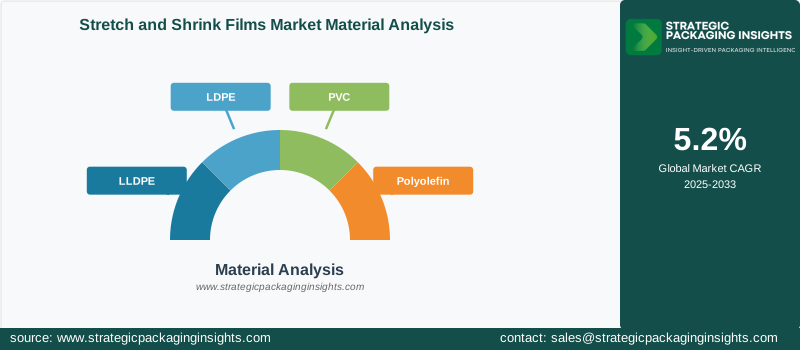
Polyolefin films are gaining popularity due to their superior clarity and environmental benefits. These films are recyclable and offer excellent performance characteristics, making them a preferred choice for sustainable packaging solutions. The demand for polyolefin films is expected to grow significantly during the forecast period, driven by the increasing focus on sustainability and environmental regulations. Manufacturers are investing in research and development to enhance the performance and recyclability of polyolefin films, aligning with the market's shift towards eco-friendly packaging solutions.
Application Analysis
The Stretch and Shrink Films market is segmented by application into palletizing, bundling, and wrapping. Palletizing is the largest application segment, driven by the demand for secure and efficient packaging solutions in the logistics and transportation sectors. Stretch and shrink films are widely used for palletizing applications, offering excellent load stability and protection during transit. The growth of the e-commerce industry is further fueling the demand for palletizing solutions, as online retailers require reliable packaging to ensure product safety.
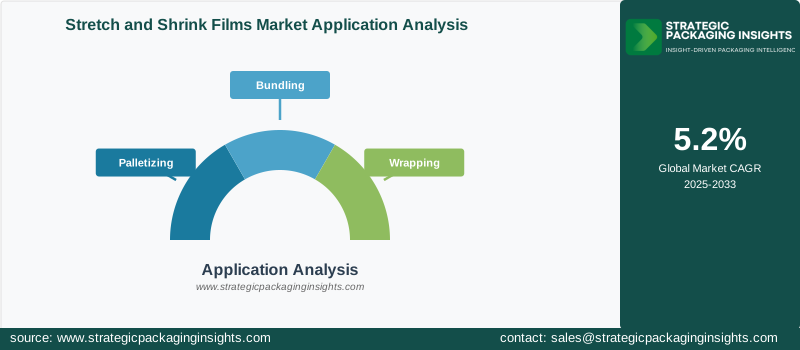
Bundling applications are also witnessing significant growth, particularly in the food and beverage industry. Stretch and shrink films are used for bundling multiple products together, offering convenience and cost savings. The demand for bundling solutions is driven by the increasing focus on reducing packaging waste and optimizing supply chain efficiency. Wrapping applications, which include both manual and automated processes, are gaining traction in various industries, including retail and industrial sectors. The versatility and cost-effectiveness of stretch and shrink films make them a preferred choice for wrapping applications.
End Use Analysis
The Stretch and Shrink Films market is segmented by end use into logistics, food, and industrial sectors. The logistics sector is the largest end-use segment, driven by the demand for efficient and secure packaging solutions. Stretch and shrink films are widely used in the logistics industry for palletizing and bundling applications, offering excellent load stability and protection during transportation. The growth of the e-commerce industry is further fueling the demand for packaging solutions in the logistics sector.
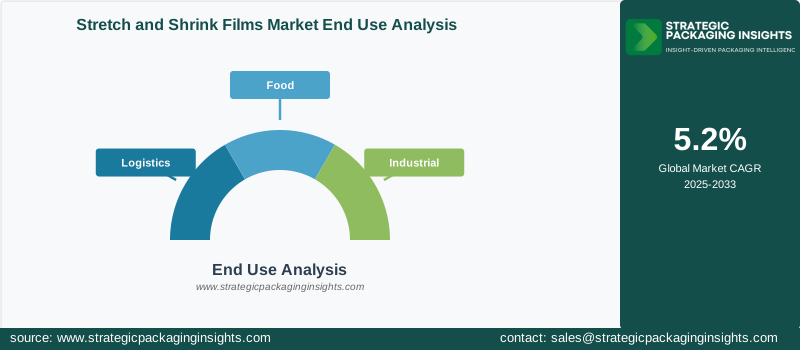
The food industry is another significant end-use segment, where stretch and shrink films are used for packaging perishable goods and ensuring product safety. The demand for food packaging solutions is driven by the increasing focus on food safety and hygiene, as well as the growing trend of convenience foods. The industrial sector is also witnessing significant growth, with stretch and shrink films being used for packaging a wide range of products, including machinery and equipment. The versatility and cost-effectiveness of stretch and shrink films make them a preferred choice for industrial packaging applications.
Stretch and Shrink Films Market Segments
The Stretch and Shrink Films market has been segmented on the basis ofFilm Type
- Hand Stretch
- Machine Stretch
- Shrink Hood
Material
- LLDPE
- LDPE
- PVC
- Polyolefin
Application
- Palletizing
- Bundling
- Wrapping
End Use
- Logistics
- Food
- Industrial
Region
- Asia Pacific
- North America
- Latin America
- Europe
- Middle East & Africa




