


Strapping Devices Market Outlook
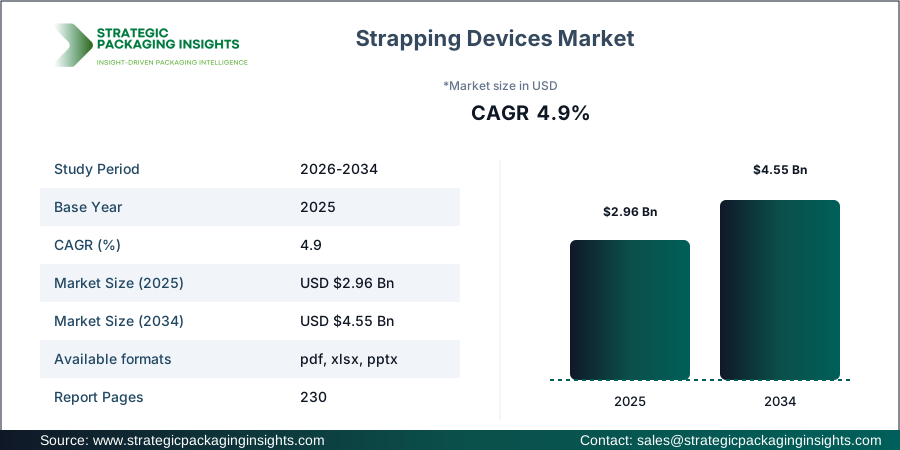
The Strapping Devices market size was valued at USD 2.96 billion in 2025 and is anticipated to reach USD 4.55 billion by 2034, growing at a CAGR of 4.9% during the forecast period according to Strategic Packaging Insights. The market is witnessing significant growth due to the increasing demand for efficient packaging solutions across various industries. Companies like Signode and FROMM Group are leading the charge by innovating in strapping technology, which is crucial for securing goods during transportation. The rise in e-commerce and global trade has further fueled the demand for strapping devices, as businesses seek reliable methods to ensure the safety of their products. The market's expansion is also supported by advancements in automation and the integration of smart technologies in packaging processes.
One of the most impactful drivers of the Strapping Devices market is the growing emphasis on sustainability and eco-friendly packaging solutions. Governments worldwide are implementing stringent regulations to reduce plastic waste, which has led to increased adoption of recyclable and biodegradable strapping materials. For instance, the European Union's directive on reducing plastic waste has encouraged manufacturers to develop alternative strapping solutions that are both effective and environmentally friendly. Companies like Mosca and Samuel Strapping Systems are investing in research and development to create innovative products that meet these regulatory requirements while maintaining high performance standards. This focus on sustainability is expected to drive the market forward, as businesses increasingly prioritize environmentally responsible packaging practices.
Report Scope
| Attributes | Details |
| Report Title | Strapping Devices Market Size, Future Growth and Forecast 2034 |
| Product Type | Manual Strapping Tools, Battery-Powered Tools, Pneumatic Tools, Automatic Strapping Machines |
| Strap Type | PP Strap, PET Strap, Steel Strap, Composite Strap |
| Application | Palletizing, Carton Bundling, Heavy-Duty Packaging |
| End Use | Logistics, Manufacturing, Construction, Retail |
| Region | Asia Pacific, North America, Latin America, Europe, Middle East & Africa |
| Base Year | 2025 |
| Historic Period | 2018-2024 |
| Forecast Period | 2026-2034 |
| Number of Pages | 230 |
| Customization Available | Yes* |
Opportunities & Threats
The Strapping Devices market presents numerous opportunities for growth, particularly in emerging economies where industrialization and urbanization are on the rise. As these regions continue to develop, the demand for efficient and cost-effective packaging solutions is expected to increase significantly. Companies like Polychem and Cordstrap are well-positioned to capitalize on this trend by expanding their presence in these markets and offering tailored solutions that meet the specific needs of local industries. Additionally, the growing popularity of online shopping and the subsequent increase in logistics activities present a lucrative opportunity for strapping device manufacturers to provide innovative solutions that enhance the efficiency and safety of package handling and transportation.
Another opportunity lies in the advancement of technology and automation within the packaging industry. The integration of smart technologies, such as IoT and AI, into strapping devices can significantly enhance their functionality and efficiency. This technological evolution allows for real-time monitoring and control of packaging processes, reducing the risk of errors and improving overall productivity. Companies like Cyklop and Teufelberger are at the forefront of this technological shift, developing advanced strapping solutions that cater to the evolving needs of modern industries. By leveraging these technological advancements, manufacturers can offer more sophisticated and reliable products, thereby gaining a competitive edge in the market.
Despite the promising opportunities, the Strapping Devices market faces certain threats that could hinder its growth. One of the primary challenges is the volatility in raw material prices, particularly for steel and plastic, which are essential components of strapping devices. Fluctuations in these prices can significantly impact the production costs and profit margins of manufacturers. Additionally, the market is highly competitive, with numerous players vying for market share. This intense competition can lead to price wars and reduced profitability for companies. To mitigate these threats, manufacturers must focus on optimizing their supply chains and exploring alternative materials that offer cost advantages without compromising on quality.
Drivers & Challenges
The Strapping Devices market is driven by several key factors, including the increasing demand for efficient packaging solutions in various industries. The logistics and transportation sectors, in particular, rely heavily on strapping devices to secure goods during transit, ensuring their safety and integrity. As global trade continues to expand, the need for reliable and robust packaging solutions becomes even more critical. Companies like Dynaric and PAC Strapping are capitalizing on this demand by offering a wide range of strapping devices that cater to different packaging requirements. Additionally, the rise of e-commerce has further fueled the demand for strapping devices, as businesses seek efficient ways to package and ship their products to customers worldwide.
Another significant driver of the Strapping Devices market is the growing focus on sustainability and eco-friendly packaging solutions. With increasing awareness of environmental issues, businesses are seeking packaging solutions that minimize their carbon footprint and reduce waste. This has led to the development of recyclable and biodegradable strapping materials, which are gaining popularity among environmentally conscious consumers. Companies like Signode and FROMM Group are leading the charge in this area, investing in research and development to create innovative products that meet the evolving needs of the market. By prioritizing sustainability, manufacturers can not only meet regulatory requirements but also appeal to a broader customer base that values environmentally responsible practices.
Despite the positive drivers, the Strapping Devices market faces several challenges that could impact its growth. One of the primary challenges is the high cost of advanced strapping devices, which can be a barrier for small and medium-sized enterprises (SMEs) with limited budgets. Additionally, the market is characterized by rapid technological advancements, which require manufacturers to continuously innovate and upgrade their products to stay competitive. This constant need for innovation can strain resources and increase operational costs for companies. To overcome these challenges, manufacturers must focus on developing cost-effective solutions that offer high performance and reliability, while also investing in research and development to stay ahead of the competition.
Market Growth Factors
- The EU Packaging and Packaging Waste Regulation entered into force on February 11, 2025 and generally applies from August 12, 2026, increasing compliance pressure to reduce packaging waste and improve recyclability, which supports investment in modern strapping equipment and compatible transport-packaging systems.
- U.S. retail e-commerce sales reached 6.7 billion in the first quarter of 2026, up 9.8% year over year and equal to 16.9% of total retail sales, increasing packaging throughput in fulfillment, parcel, and warehouse operations that use strapping devices.
- North American robot orders rose 6.6% in 2025 to 36,766 units, with general industries such as food and consumer goods, semiconductors and electronics, and life sciences contributing to broader automation adoption, which supports demand for automated strapping systems on packaging lines.
- Revised industrial robot safety standards published in 2025, including ISO 10218 and ANSI/A3 R15.06-2025, added clearer requirements for functional safety, collaborative applications, end-effectors, manual load and unload procedures, and cybersecurity, reducing integration uncertainty for robotic and automated strapping cells. [Association for Advancing Automation (A3) ]
- Mosca's SoniXs P7-Connect commercialization adds cloud connectivity, WebHMI, OPC UA interface support, and Industry 4.0 capability for fully automated production lines, accelerating adoption of connected strapping equipment in digital factories.
- Mosca's SoniXs XT brings ultrasonic sealing technology into the entry-level segment while supporting both PP and PET strap and broader machine configuration options, widening adoption among cost-sensitive and first-time buyers of strapping equipment. [Mosca GmbH ]
- Signode's 2026 BXT Go launch adds fast-charging batteries, fully replaceable components, and recycled or recyclable materials to a battery-powered hand strapping tool, supporting replacement demand where ergonomics, uptime, and sustainability are purchasing priorities.
Recent Developments
- In October 2025, Mosca GmbH launched the SoniXs XT strapping machine for the entry-level segment, bringing its SoniXs ultrasonic sealing technology into a lower-cost platform that can process both PP and PET strap while adding broader table-surface, frame-size, and strap-width options. [Mosca GmbH ]
- In October 2025, Mosca GmbH introduced the SoniXs P7-Connect, the next generation of its fully automatic strapping machines, designed for seamless integration into automated production lines with cloud connectivity, WebHMI access, and Industry 4.0-ready control features. [Mosca GmbH ]
- In January 2026, Antalis Packaging launched the Master'in Viper battery-powered hand strapping machine, adding a new ergonomic device with a touch-sensitive interface, front-facing real-time tension display, and configurable settings for load securing applications.
- In May 2026, Signode launched the BXT Go battery-powered hand tool for plastic strapping at Interpack 2026, targeting everyday PP and PET strapping applications with auto, semi, and manual modes, fast-charging Bosch batteries, replaceable components, and recycled or recyclable materials.
Market Share Analysis
The competitive landscape of the Strapping Devices market is characterized by the presence of several key players who dominate the industry. Companies like Signode, FROMM Group, and Mosca hold significant market shares due to their extensive product portfolios and strong global presence. These companies have established themselves as leaders in the market by consistently delivering high-quality and innovative strapping solutions that cater to the diverse needs of their customers. Their ability to adapt to changing market trends and customer preferences has enabled them to maintain a competitive edge in the industry.
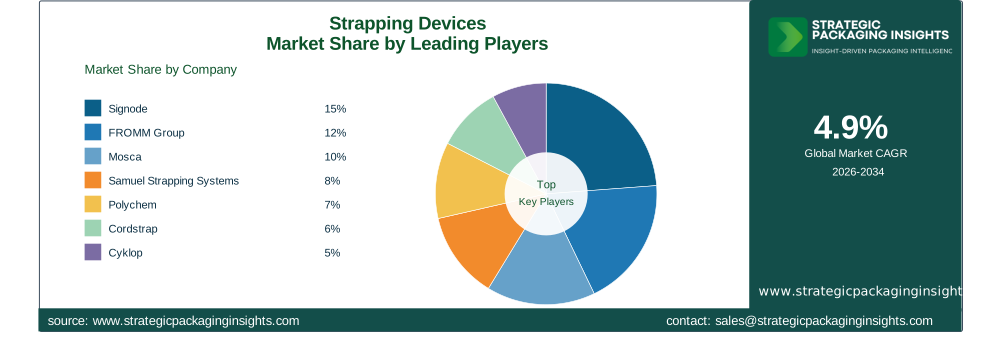
Signode, a prominent player in the Strapping Devices market, is known for its comprehensive range of strapping solutions that cater to various industries, including logistics, manufacturing, and construction. The company's commitment to innovation and sustainability has helped it maintain a strong market position. Similarly, FROMM Group has established itself as a leader in the market by offering a wide range of strapping devices that are designed to enhance packaging efficiency and reduce waste. The company's focus on research and development has enabled it to introduce cutting-edge products that meet the evolving needs of its customers.
Mosca, another key player in the market, is renowned for its advanced strapping machines that offer high performance and reliability. The company's emphasis on quality and customer satisfaction has helped it build a loyal customer base and expand its market share. Samuel Strapping Systems, Polychem, and Cordstrap are also significant players in the market, known for their diverse product offerings and strong distribution networks. These companies have leveraged their expertise and industry knowledge to develop innovative solutions that address the specific needs of their customers.
Other notable players in the market include Cyklop, Teufelberger, Dynaric, and PAC Strapping, each of which has carved out a niche in the industry by offering specialized strapping solutions. These companies have focused on expanding their product portfolios and enhancing their global presence to capture a larger share of the market. By investing in research and development and adopting advanced technologies, these companies have been able to introduce innovative products that cater to the changing demands of the market. Overall, the competitive landscape of the Strapping Devices market is dynamic, with companies continuously striving to enhance their product offerings and strengthen their market positions.
Key Highlights
- The Strapping Devices market is projected to grow from USD 2.96 billion in 2025 to USD 4.55 billion by 2034, at a CAGR of 4.9%.
- Key players like Signode and FROMM Group are driving innovation in strapping technology to meet the growing demand for efficient packaging solutions.
- The market is witnessing increased adoption of eco-friendly and recyclable strapping materials due to stringent environmental regulations.
- Emerging economies present significant growth opportunities for strapping device manufacturers, driven by industrialization and urbanization.
- Technological advancements, such as IoT and AI integration, are enhancing the functionality and efficiency of strapping devices.
- Volatility in raw material prices poses a challenge to manufacturers, impacting production costs and profit margins.
- The market is highly competitive, with numerous players vying for market share, leading to price wars and reduced profitability.
Strapping Devices Market Segments Insights

Product Type Analysis
The Strapping Devices market is segmented by product type into Manual Strapping Tools, Battery-Powered Tools, Pneumatic Tools, and Automatic Strapping Machines. Manual strapping tools are widely used in small-scale operations due to their cost-effectiveness and ease of use. However, the demand for battery-powered and pneumatic tools is increasing as they offer enhanced efficiency and reduce manual labor. Automatic strapping machines are gaining popularity in large-scale operations, where speed and precision are critical. Companies like Signode and FROMM Group are focusing on developing advanced automatic strapping machines that integrate smart technologies to improve productivity and reduce operational costs.
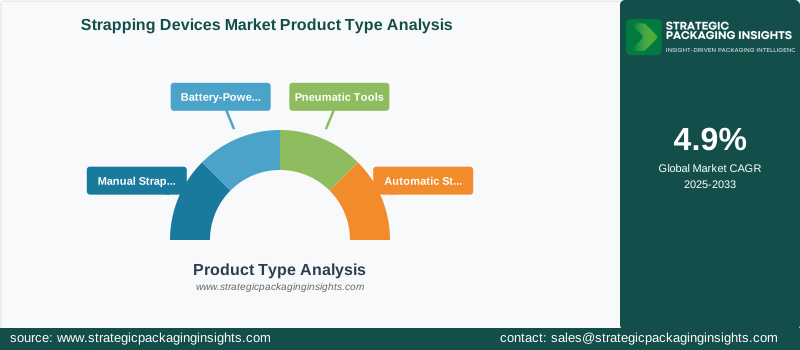
The trend towards automation in the packaging industry is driving the demand for automatic strapping machines, as businesses seek to streamline their operations and improve efficiency. These machines offer several advantages, including consistent tensioning, reduced material waste, and increased throughput. As a result, they are becoming the preferred choice for industries with high-volume packaging requirements. The integration of IoT and AI technologies in these machines is further enhancing their functionality, allowing for real-time monitoring and control of packaging processes. This technological evolution is expected to drive the growth of the automatic strapping machines segment in the coming years.
Strap Type Analysis
The market is also segmented by strap type into PP Strap, PET Strap, Steel Strap, and Composite Strap. PP straps are widely used due to their affordability and versatility, making them suitable for a variety of applications. PET straps are gaining popularity as an eco-friendly alternative to steel straps, offering high tensile strength and durability. Steel straps remain the preferred choice for heavy-duty applications, where maximum strength and security are required. Composite straps, which combine the benefits of both plastic and steel straps, are increasingly being adopted in industries that require a balance of strength and flexibility.
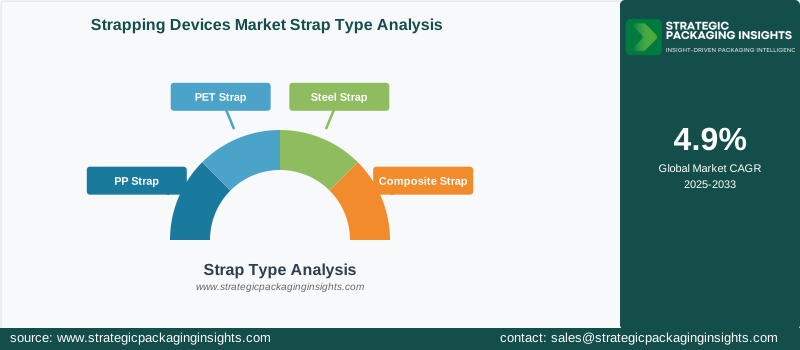
The growing emphasis on sustainability is driving the demand for PET straps, as they are recyclable and have a lower environmental impact compared to traditional steel straps. Companies like Mosca and Samuel Strapping Systems are investing in the development of innovative PET strapping solutions that meet the evolving needs of the market. Additionally, the increasing adoption of composite straps in the logistics and transportation sectors is expected to drive the growth of this segment. These straps offer several advantages, including resistance to weather conditions and ease of handling, making them an ideal choice for securing goods during transit.
Application Analysis
By application, the Strapping Devices market is segmented into Palletizing, Carton Bundling, and Heavy-Duty Packaging. Palletizing is a major application area for strapping devices, as it ensures the stability and security of goods during transportation and storage. The demand for efficient palletizing solutions is increasing, driven by the growth of the logistics and transportation sectors. Companies like Polychem and Cordstrap are focusing on developing advanced strapping solutions that enhance the efficiency and reliability of palletizing processes.
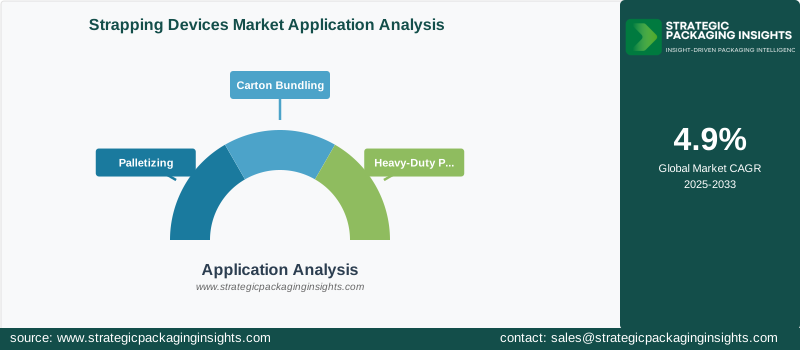
Carton bundling is another significant application area, particularly in the retail and e-commerce sectors, where efficient packaging solutions are essential for handling large volumes of goods. The rise of online shopping has further fueled the demand for carton bundling solutions, as businesses seek to optimize their packaging processes and reduce costs. Heavy-duty packaging is a niche segment that requires robust strapping solutions to secure large and heavy items. Steel straps are commonly used in this segment due to their high tensile strength and durability. The increasing demand for heavy-duty packaging solutions in industries such as construction and manufacturing is expected to drive the growth of this segment.
End Use Analysis
The Strapping Devices market is segmented by end use into Logistics, Manufacturing, Construction, and Retail. The logistics sector is a major end user of strapping devices, as they are essential for securing goods during transportation and storage. The growth of the e-commerce industry and the subsequent increase in logistics activities are driving the demand for efficient strapping solutions in this sector. Companies like Cyklop and Teufelberger are focusing on developing innovative strapping solutions that cater to the specific needs of the logistics industry.
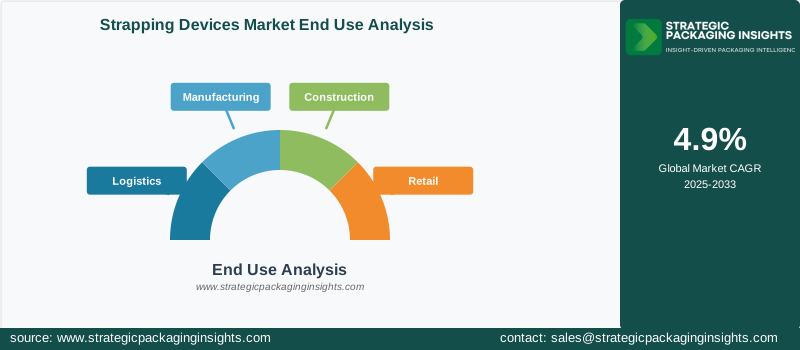
The manufacturing sector is another significant end user of strapping devices, as they are used to secure products during production and distribution. The increasing demand for efficient and cost-effective packaging solutions in the manufacturing sector is driving the growth of this segment. The construction industry also relies on strapping devices to secure building materials and equipment during transportation. The demand for robust and reliable strapping solutions in this sector is expected to increase, driven by the growth of construction activities worldwide. The retail sector is witnessing increased adoption of strapping devices, particularly in the packaging and bundling of goods for distribution and sale. The rise of online shopping and the need for efficient packaging solutions are driving the demand for strapping devices in the retail sector.
Strapping Devices Market Segments
The Strapping Devices market has been segmented on the basis ofProduct Type
- Manual Strapping Tools
- Battery-Powered Tools
- Pneumatic Tools
- Automatic Strapping Machines
Strap Type
- PP Strap
- PET Strap
- Steel Strap
- Composite Strap
Application
- Palletizing
- Carton Bundling
- Heavy-Duty Packaging
End Use
- Logistics
- Manufacturing
- Construction
- Retail
Region
- Asia Pacific
- North America
- Latin America
- Europe
- Middle East & Africa




