


Sterile Rubber Stopper Market Outlook
The Sterile Rubber Stopper market was valued at $774.85 million in 2025 and is projected to reach $1.44 billion by 2034, growing at a CAGR of 7.1% during the forecast period 2026-2034. This market is driven by the increasing demand for safe and effective packaging solutions in the pharmaceutical industry. The rise in injectable drug formulations and the growing prevalence of chronic diseases are significant factors contributing to the market's expansion. Additionally, advancements in material technology and the development of innovative stopper designs are expected to further propel market growth. The market's robust growth trajectory is also supported by the increasing investments in healthcare infrastructure and the rising focus on patient safety and drug efficacy.
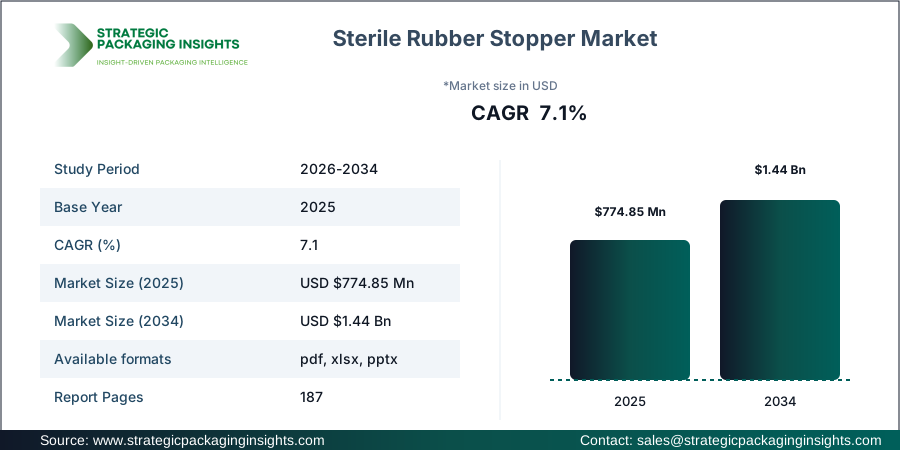
However, the market faces certain challenges that could hinder its growth potential. Regulatory constraints and stringent quality standards imposed by health authorities are significant barriers for new entrants. The high cost of raw materials and the complexity of manufacturing processes also pose challenges to market players. Despite these restraints, the market offers substantial growth opportunities, particularly in emerging economies where healthcare infrastructure is rapidly developing. The increasing adoption of biologics and vaccines, coupled with the growing trend of outsourcing pharmaceutical manufacturing to contract development and manufacturing organizations (CDMOs), presents lucrative opportunities for market expansion.
Report Scope
| Attributes | Details |
| Report Title | Sterile Rubber Stopper Market Size, Future Growth and Forecast 2034 |
| By Product Type | Lyophilization Stoppers, Serum Stoppers, Ready-to-Sterilize Stoppers |
| By Material Type | Bromobutyl, Chlorobutyl, Silicone-Coated Rubber |
| By Application | Injectables, Vaccines, Biologics, Diagnostics |
| By End Use | Pharma Companies, CDMOs, Hospitals, Laboratories |
| Region | Asia Pacific, North America, Latin America, Europe, Middle East & Africa |
| Base Year | 2025 |
| Historic Period | 2018-2024 |
| Forecast Period | 2026-2034 |
| Number of Pages | 187 |
| Customization Available | Yes* |
Opportunities & Threats
The sterile rubber stopper market is poised for significant growth opportunities, driven by the increasing demand for injectable drugs and vaccines. The rise in chronic diseases and the global push for immunization programs have led to a surge in the production of injectable formulations, thereby boosting the demand for sterile rubber stoppers. Additionally, the growing trend of personalized medicine and biologics is expected to create new avenues for market expansion. The development of advanced materials and coatings that enhance the performance and safety of rubber stoppers is another area of opportunity. Companies are investing in research and development to create innovative solutions that meet the stringent regulatory requirements and address the evolving needs of the pharmaceutical industry.
Emerging markets present a significant opportunity for growth, as these regions are witnessing rapid advancements in healthcare infrastructure and increasing investments in pharmaceutical manufacturing. The shift towards self-administration of drugs and the growing preference for prefilled syringes and auto-injectors are also expected to drive the demand for sterile rubber stoppers. Furthermore, the increasing focus on sustainability and eco-friendly packaging solutions is encouraging manufacturers to develop biodegradable and recyclable rubber stoppers, opening up new market opportunities.
Despite the promising growth prospects, the sterile rubber stopper market faces several threats that could impact its expansion. The stringent regulatory landscape and the need for compliance with international quality standards pose significant challenges for manufacturers. The high cost of raw materials and the complexity of the manufacturing process can also affect profitability. Additionally, the market is highly competitive, with numerous players vying for market share, which can lead to pricing pressures and reduced margins. The risk of product recalls and the potential for contamination during the manufacturing process are other threats that could impact market growth.
Drivers & Challenges
The sterile rubber stopper market is primarily driven by the increasing demand for safe and effective packaging solutions in the pharmaceutical industry. The rise in injectable drug formulations, coupled with the growing prevalence of chronic diseases, is a significant driver of market growth. The need for reliable and contamination-free packaging for vaccines and biologics is also contributing to the market's expansion. Additionally, advancements in material technology and the development of innovative stopper designs are expected to further propel market growth. The increasing investments in healthcare infrastructure and the rising focus on patient safety and drug efficacy are also supporting the market's robust growth trajectory.
Another key driver of the sterile rubber stopper market is the growing trend of outsourcing pharmaceutical manufacturing to contract development and manufacturing organizations (CDMOs). This trend is driven by the need for cost-effective and efficient production processes, as well as the increasing complexity of drug formulations. The rise in biologics and personalized medicine is also creating new opportunities for market expansion. Furthermore, the increasing focus on sustainability and eco-friendly packaging solutions is encouraging manufacturers to develop biodegradable and recyclable rubber stoppers, which is expected to drive market growth.
Despite the promising growth prospects, the sterile rubber stopper market faces several challenges that could impact its expansion. The stringent regulatory landscape and the need for compliance with international quality standards pose significant challenges for manufacturers. The high cost of raw materials and the complexity of the manufacturing process can also affect profitability. Additionally, the market is highly competitive, with numerous players vying for market share, which can lead to pricing pressures and reduced margins. The risk of product recalls and the potential for contamination during the manufacturing process are other challenges that could impact market growth.
Market Share Analysis
The sterile rubber stopper market is characterized by a competitive landscape with several key players dominating the market. West Pharmaceutical Services is a leading player, known for its innovative solutions and extensive product portfolio. The company holds a significant market share due to its strong focus on research and development and its ability to meet the stringent quality standards of the pharmaceutical industry. Aptar Pharma is another major player, recognized for its advanced material technology and commitment to sustainability. The company's focus on developing eco-friendly packaging solutions has helped it gain a competitive edge in the market.
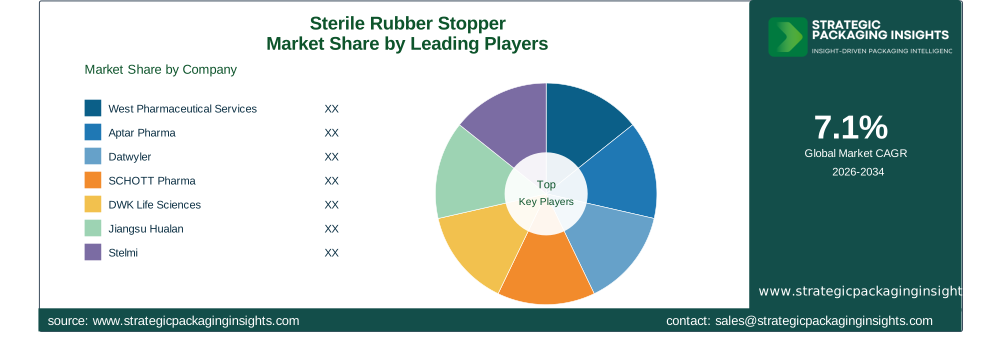
Datwyler is a prominent player in the sterile rubber stopper market, known for its high-quality products and strong customer relationships. The company's focus on innovation and its ability to provide customized solutions have contributed to its market leadership. SCHOTT Pharma is also a key player, with a strong presence in the global market. The company's extensive product portfolio and its focus on quality and safety have helped it maintain a competitive position. DWK Life Sciences is another major player, recognized for its comprehensive range of products and its commitment to customer satisfaction.
Jiangsu Hualan is a leading player in the Asian market, known for its high-quality products and competitive pricing. The company's focus on expanding its product portfolio and its strong distribution network have helped it gain a significant market share. Stelmi is another key player, recognized for its innovative solutions and strong focus on research and development. The company's commitment to quality and its ability to meet the evolving needs of the pharmaceutical industry have contributed to its market leadership.
Shandong Pharmaceutical Glass is a prominent player in the Chinese market, known for its extensive product portfolio and strong customer relationships. The company's focus on innovation and its ability to provide customized solutions have helped it maintain a competitive position. Nipro PharmaPackaging is another major player, recognized for its high-quality products and strong focus on sustainability. The company's commitment to developing eco-friendly packaging solutions has helped it gain a competitive edge in the market. Gerresheimer is a leading player in the global market, known for its innovative solutions and strong focus on customer satisfaction. The company's extensive product portfolio and its ability to meet the stringent quality standards of the pharmaceutical industry have contributed to its market leadership.
Key Highlights
- The sterile rubber stopper market is projected to grow at a CAGR of 7.1% from 2026 to 2034.
- Increasing demand for injectable drugs and vaccines is driving market growth.
- Advancements in material technology are leading to the development of innovative stopper designs.
- Emerging markets offer significant growth opportunities due to rapid healthcare infrastructure development.
- The market faces challenges from stringent regulatory requirements and high raw material costs.
- Key players are focusing on sustainability and eco-friendly packaging solutions.
- Outsourcing pharmaceutical manufacturing to CDMOs is a growing trend in the market.
- Personalized medicine and biologics are creating new opportunities for market expansion.
- The market is highly competitive, with numerous players vying for market share.
Top Countries Insights
In the sterile rubber stopper market, the United States holds a significant share, driven by its advanced healthcare infrastructure and high demand for injectable drugs. The market in the U.S. is expected to grow at a CAGR of 6%, supported by the increasing prevalence of chronic diseases and the rising focus on patient safety. The presence of major pharmaceutical companies and the growing trend of outsourcing manufacturing to CDMOs are also contributing to market growth. However, stringent regulatory requirements and high raw material costs pose challenges to market expansion.
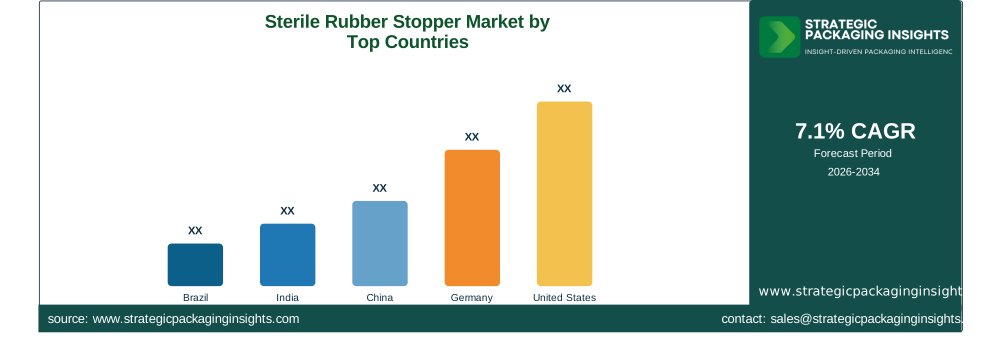
Germany is another key market for sterile rubber stoppers, with a strong focus on innovation and quality. The market in Germany is projected to grow at a CAGR of 5%, driven by the increasing demand for biologics and vaccines. The country's robust pharmaceutical industry and its commitment to sustainability are also supporting market growth. However, the high cost of raw materials and the complexity of manufacturing processes are challenges that need to be addressed.
China is emerging as a significant market for sterile rubber stoppers, with rapid advancements in healthcare infrastructure and increasing investments in pharmaceutical manufacturing. The market in China is expected to grow at a CAGR of 8%, driven by the rising demand for injectable drugs and the growing trend of self-administration. The government's focus on improving healthcare access and the increasing prevalence of chronic diseases are also contributing to market growth. However, the market faces challenges from regulatory constraints and the need for compliance with international quality standards.
India is another promising market for sterile rubber stoppers, with a growing pharmaceutical industry and increasing demand for vaccines and biologics. The market in India is projected to grow at a CAGR of 9%, supported by the government's focus on healthcare infrastructure development and the rising prevalence of chronic diseases. The increasing trend of outsourcing manufacturing to CDMOs and the growing focus on sustainability are also driving market growth. However, the market faces challenges from regulatory requirements and high raw material costs.
Brazil is a key market in Latin America, with a strong focus on healthcare infrastructure development and increasing demand for injectable drugs. The market in Brazil is expected to grow at a CAGR of 7%, driven by the rising prevalence of chronic diseases and the government's focus on improving healthcare access. The growing trend of self-administration and the increasing adoption of biologics are also contributing to market growth. However, the market faces challenges from regulatory constraints and the need for compliance with international quality standards.
Sterile Rubber Stopper Market Segments Insights

Product Type Analysis
The sterile rubber stopper market is segmented by product type into lyophilization stoppers, serum stoppers, and ready-to-sterilize stoppers. Lyophilization stoppers are gaining traction due to their ability to maintain the stability and efficacy of freeze-dried drugs. The increasing demand for biologics and vaccines, which often require lyophilization, is driving the growth of this segment. Serum stoppers are also witnessing significant demand, driven by the rising production of injectable drugs and the need for contamination-free packaging solutions. Ready-to-sterilize stoppers are gaining popularity due to their convenience and cost-effectiveness, particularly among contract development and manufacturing organizations (CDMOs).
The product type segment is characterized by intense competition, with numerous players vying for market share. Companies are focusing on innovation and the development of advanced materials to enhance the performance and safety of rubber stoppers. The growing trend of personalized medicine and the increasing focus on patient safety are also driving the demand for innovative stopper designs. Additionally, the shift towards self-administration of drugs and the growing preference for prefilled syringes and auto-injectors are expected to drive the demand for sterile rubber stoppers.
Material Type Analysis
The sterile rubber stopper market is segmented by material type into bromobutyl, chlorobutyl, and silicone-coated rubber. Bromobutyl rubber is widely used due to its excellent chemical resistance and low permeability to gases and moisture. The increasing demand for high-performance packaging solutions in the pharmaceutical industry is driving the growth of this segment. Chlorobutyl rubber is also gaining popularity due to its superior mechanical properties and resistance to aging and weathering. Silicone-coated rubber is preferred for its biocompatibility and ability to provide a smooth surface finish, which reduces the risk of contamination.
The material type segment is characterized by ongoing research and development efforts to create innovative solutions that meet the stringent regulatory requirements of the pharmaceutical industry. Companies are investing in the development of advanced materials that enhance the performance and safety of rubber stoppers. The growing focus on sustainability and eco-friendly packaging solutions is also driving the demand for biodegradable and recyclable materials. Additionally, the increasing trend of outsourcing pharmaceutical manufacturing to CDMOs is expected to drive the demand for high-quality rubber stoppers.
Application Analysis
The sterile rubber stopper market is segmented by application into injectables, vaccines, biologics, and diagnostics. The injectables segment holds a significant share of the market, driven by the increasing demand for injectable drugs and the rising prevalence of chronic diseases. The growing trend of self-administration and the increasing preference for prefilled syringes and auto-injectors are also contributing to the growth of this segment. The vaccines segment is witnessing significant demand, driven by the global push for immunization programs and the increasing production of vaccines.
The application segment is characterized by the growing trend of personalized medicine and the increasing focus on patient safety and drug efficacy. Companies are investing in research and development to create innovative solutions that meet the evolving needs of the pharmaceutical industry. The increasing adoption of biologics and the growing trend of outsourcing pharmaceutical manufacturing to CDMOs are also driving the demand for sterile rubber stoppers. Additionally, the rising focus on sustainability and eco-friendly packaging solutions is encouraging manufacturers to develop biodegradable and recyclable rubber stoppers.
End Use Analysis
The sterile rubber stopper market is segmented by end use into pharma companies, CDMOs, hospitals, and laboratories. Pharma companies hold a significant share of the market, driven by the increasing demand for injectable drugs and the growing prevalence of chronic diseases. The rising focus on patient safety and drug efficacy is also contributing to the growth of this segment. CDMOs are witnessing significant demand, driven by the growing trend of outsourcing pharmaceutical manufacturing and the need for cost-effective and efficient production processes.
The end use segment is characterized by the increasing focus on sustainability and eco-friendly packaging solutions. Companies are investing in research and development to create innovative solutions that meet the stringent regulatory requirements of the pharmaceutical industry. The growing trend of personalized medicine and the increasing adoption of biologics are also driving the demand for sterile rubber stoppers. Additionally, the rising focus on patient safety and drug efficacy is encouraging manufacturers to develop advanced materials and coatings that enhance the performance and safety of rubber stoppers.
Sterile Rubber Stopper Market Segments
The Sterile Rubber Stopper market has been segmented on the basis ofBy Product Type
- Lyophilization Stoppers
- Serum Stoppers
- Ready-to-Sterilize Stoppers
By Material Type
- Bromobutyl
- Chlorobutyl
- Silicone-Coated Rubber
By Application
- Injectables
- Vaccines
- Biologics
- Diagnostics
By End Use
- Pharma Companies
- CDMOs
- Hospitals
- Laboratories
Region
- Asia Pacific
- North America
- Latin America
- Europe
- Middle East & Africa




