


Standard Liner Market Outlook
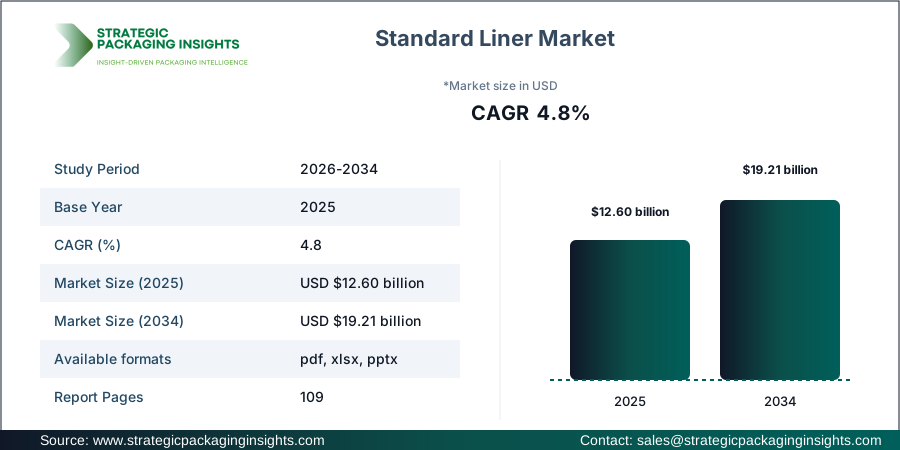
The Standard Liner market was valued at $12.60 billion in 2025 and is projected to reach $19.21 billion by 2034, growing at a CAGR of 4.8% during the forecast period 2026-2034. This growth is driven by the increasing demand for efficient packaging solutions across various industries, including food, chemicals, pharmaceuticals, and cosmetics. The market is witnessing a surge in demand due to the rising need for protective packaging that ensures product safety and extends shelf life. Additionally, the growing trend of sustainable packaging is pushing manufacturers to innovate and develop eco-friendly liner solutions, further propelling market growth.
However, the market faces certain restraints, such as stringent regulatory requirements and environmental concerns related to plastic waste. These factors are compelling manufacturers to invest in research and development to create biodegradable and recyclable liners. Despite these challenges, the market holds significant growth potential, especially with the increasing adoption of liners in emerging economies where industrialization and urbanization are on the rise. The shift towards e-commerce and online retailing is also expected to boost the demand for standard liners, as they play a crucial role in ensuring the safe delivery of products.
Report Scope
| Attributes | Details |
| Report Title | Standard Liner Market Size, Future Growth and Forecast 2034 |
| By Material Type | PE Liners, Foil Liners, Paper Liners |
| By Product Type | Cap Liners, Container Liners, Drum Liners |
| By Application | Food, Chemicals, Pharma, Cosmetics |
| By End Use | Packaging Converters, FMCG, Industrial Users |
| Region | Asia Pacific, North America, Latin America, Europe, Middle East & Africa |
| Base Year | 2025 |
| Historic Period | 2018-2024 |
| Forecast Period | 2026-2034 |
| Number of Pages | 109 |
| Customization Available | Yes* |
Opportunities & Threats
The Standard Liner market presents numerous opportunities, particularly in the realm of sustainable packaging solutions. As consumers become more environmentally conscious, there is a growing demand for liners made from biodegradable and recyclable materials. This trend is encouraging manufacturers to innovate and develop eco-friendly products, which not only meet regulatory standards but also appeal to a broader customer base. Additionally, the expansion of e-commerce and online retailing is creating new avenues for growth, as liners are essential for protecting goods during transit. Companies that can offer innovative, sustainable, and cost-effective liner solutions are likely to gain a competitive edge in the market.
Another significant opportunity lies in the increasing demand for liners in the pharmaceutical and healthcare sectors. With the rise in global health awareness and the need for safe and secure packaging of medical products, the demand for high-quality liners is expected to grow. This is particularly true in emerging markets, where healthcare infrastructure is rapidly developing. Companies that can provide specialized liners that meet the stringent requirements of the pharmaceutical industry are well-positioned to capitalize on this growing demand.
Despite these opportunities, the market faces certain threats, primarily from regulatory challenges and environmental concerns. Governments worldwide are implementing stricter regulations on plastic usage and waste management, which could impact the production and disposal of liners. Additionally, fluctuations in raw material prices and supply chain disruptions pose significant risks to market stability. Companies must navigate these challenges by investing in sustainable practices and developing innovative solutions that comply with regulatory standards while minimizing environmental impact.
Drivers & Challenges
The primary drivers of the Standard Liner market include the increasing demand for efficient and protective packaging solutions across various industries. The food and beverage sector, in particular, is a major contributor to market growth, as liners play a crucial role in preserving product freshness and extending shelf life. Additionally, the rise of e-commerce and online retailing has led to an increased need for secure packaging solutions, further driving the demand for standard liners. The growing trend of sustainable packaging is also a significant driver, as consumers and businesses alike seek eco-friendly alternatives to traditional packaging materials.
Technological advancements and innovations in liner materials and manufacturing processes are also driving market growth. Companies are investing in research and development to create high-performance liners that offer superior protection and durability. The development of smart packaging solutions, which incorporate features such as temperature control and tamper-evidence, is further enhancing the appeal of standard liners. These innovations are not only meeting the evolving needs of consumers but also helping manufacturers differentiate their products in a competitive market.
However, the market faces several challenges, including regulatory hurdles and environmental concerns. The increasing focus on sustainability and waste reduction is putting pressure on manufacturers to develop eco-friendly liners that comply with stringent regulations. Additionally, fluctuations in raw material prices and supply chain disruptions can impact production costs and market stability. Companies must address these challenges by adopting sustainable practices, optimizing their supply chains, and investing in innovative solutions that meet regulatory standards while minimizing environmental impact.
Market Share Analysis
The competitive landscape of the Standard Liner market is characterized by the presence of several key players, each striving to gain a larger share of the market through innovation, strategic partnerships, and expansion into new markets. Selig Group, a leading player in the market, is known for its extensive range of liner solutions and its commitment to sustainability. The company has been actively investing in research and development to create eco-friendly products that meet the evolving needs of consumers and regulatory standards.

TekniPlex and Tri-Seal are also prominent players in the market, offering a wide range of liner products for various applications. These companies have been focusing on expanding their product portfolios and enhancing their manufacturing capabilities to meet the growing demand for high-quality liners. AptarGroup, another key player, is known for its innovative packaging solutions and has been actively expanding its presence in emerging markets to capitalize on the growing demand for liners.
Amcor and Berry Global are major players in the market, with a strong focus on sustainability and innovation. These companies have been investing in advanced manufacturing technologies and sustainable materials to create high-performance liners that meet the needs of consumers and regulatory standards. UFP Technologies and Sonoco are also significant players in the market, offering a diverse range of liner solutions for various industries.
Sealed Air and CCL Industries are other notable companies in the market, known for their innovative packaging solutions and commitment to sustainability. These companies have been actively expanding their product offerings and enhancing their manufacturing capabilities to meet the growing demand for liners. Overall, the competitive landscape of the Standard Liner market is characterized by a strong focus on innovation, sustainability, and strategic partnerships, as companies strive to gain a competitive edge in a rapidly evolving market.
Key Highlights
- The Standard Liner market is projected to grow from $12.60 billion in 2025 to $19.21 billion by 2034, at a CAGR of 4.8%.
- Increasing demand for sustainable and eco-friendly packaging solutions is driving market growth.
- The food and beverage sector is a major contributor to the demand for standard liners.
- Technological advancements and innovations in liner materials are enhancing product performance.
- Regulatory challenges and environmental concerns are key restraints in the market.
- Emerging markets present significant growth opportunities for liner manufacturers.
- Key players are focusing on strategic partnerships and product innovation to gain a competitive edge.
- The rise of e-commerce and online retailing is boosting the demand for secure packaging solutions.
- Pharmaceutical and healthcare sectors are driving demand for high-quality liners.
- Fluctuations in raw material prices and supply chain disruptions pose challenges to market stability.
Top Countries Insights
In the Standard Liner market, the United States stands out as a key player, with a market size of approximately $3.5 billion and a CAGR of 5%. The country's robust industrial base and strong demand for packaging solutions in the food and beverage sector are major growth drivers. Additionally, the increasing focus on sustainable packaging and regulatory compliance is pushing manufacturers to innovate and develop eco-friendly liner solutions.
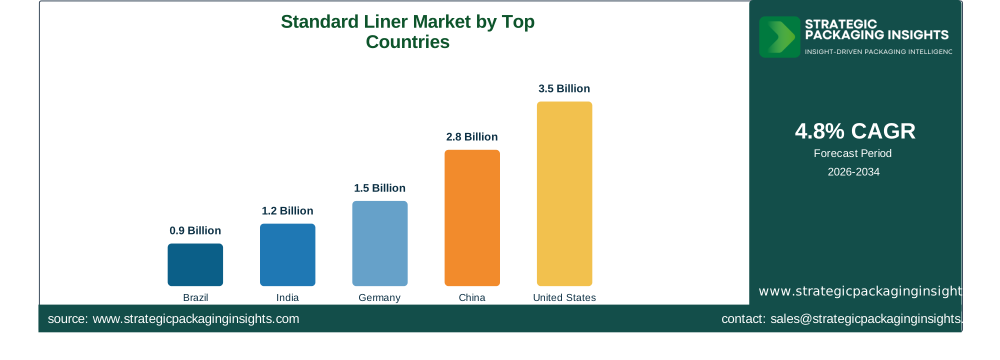
China is another significant market, with a market size of around $2.8 billion and a CAGR of 6%. The country's rapid industrialization and urbanization are driving the demand for efficient packaging solutions. The growing e-commerce sector and the need for secure packaging during transit are also contributing to market growth. Moreover, government initiatives promoting sustainable packaging are encouraging manufacturers to invest in eco-friendly liner solutions.
Germany, with a market size of $1.5 billion and a CAGR of 4%, is a key player in the European market. The country's strong manufacturing base and focus on innovation are driving the demand for high-quality liners. Additionally, the increasing emphasis on sustainability and regulatory compliance is pushing manufacturers to develop eco-friendly products that meet stringent standards.
India, with a market size of $1.2 billion and a CAGR of 7%, presents significant growth opportunities for liner manufacturers. The country's expanding middle class and increasing consumer awareness of sustainable packaging are driving demand. Additionally, the growth of the pharmaceutical and healthcare sectors is boosting the need for high-quality liners that ensure product safety and integrity.
Brazil, with a market size of $0.9 billion and a CAGR of 5%, is a key player in the Latin American market. The country's growing industrial base and increasing demand for packaging solutions in the food and beverage sector are major growth drivers. Additionally, the rise of e-commerce and online retailing is boosting the demand for secure packaging solutions, further driving market growth.
Standard Liner Market Segments Insights

By Material Type Analysis
The Standard Liner market is segmented by material type into PE liners, foil liners, and paper liners. PE liners dominate the market due to their versatility and cost-effectiveness. They are widely used in various applications, including food and beverage packaging, due to their excellent barrier properties and durability. The demand for PE liners is driven by the increasing need for protective packaging solutions that ensure product safety and extend shelf life. Additionally, the growing trend of sustainable packaging is pushing manufacturers to develop eco-friendly PE liners that meet regulatory standards.
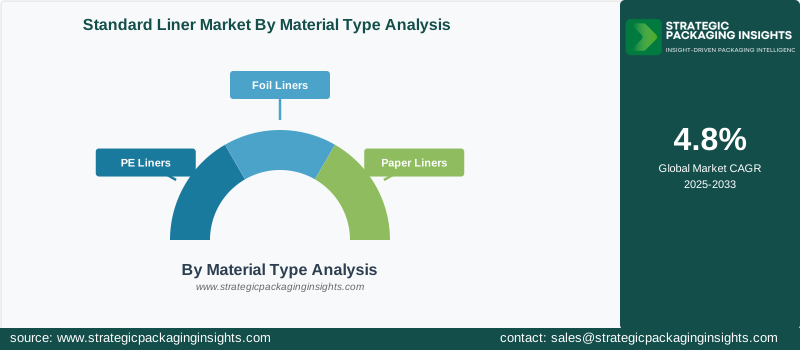
Foil liners are also gaining traction in the market, particularly in the pharmaceutical and healthcare sectors. Their superior barrier properties make them ideal for packaging sensitive products that require protection from moisture, light, and oxygen. The demand for foil liners is expected to grow as the pharmaceutical industry continues to expand, particularly in emerging markets. Paper liners, on the other hand, are gaining popularity due to their eco-friendly nature and recyclability. They are increasingly being used in applications where sustainability is a key consideration, such as in the packaging of organic and natural products.
By Product Type Analysis
The market is further segmented by product type into cap liners, container liners, and drum liners. Cap liners are widely used in the food and beverage industry to ensure product freshness and prevent leakage. The demand for cap liners is driven by the increasing consumption of packaged foods and beverages, as well as the growing trend of convenience packaging. Container liners, on the other hand, are used in various industries, including chemicals and pharmaceuticals, to protect products during storage and transportation. The demand for container liners is expected to grow as these industries continue to expand and require efficient packaging solutions.
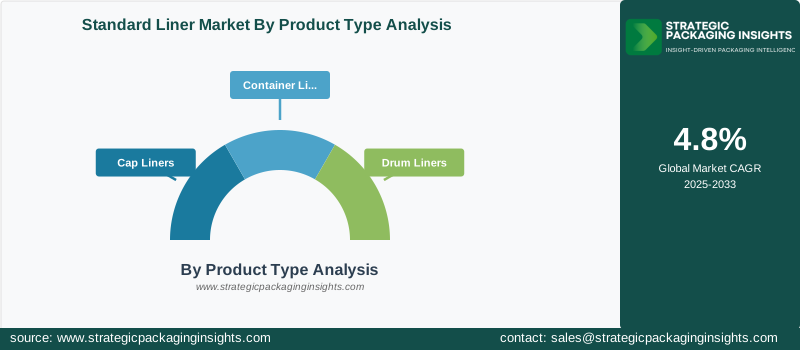
Drum liners are also gaining popularity, particularly in the industrial sector, where they are used to protect bulk products from contamination and moisture. The demand for drum liners is driven by the increasing need for safe and secure packaging solutions in industries such as chemicals and pharmaceuticals. Additionally, the growing trend of bulk packaging is expected to boost the demand for drum liners, as they offer an efficient and cost-effective solution for transporting large quantities of products.
By Application Analysis
The Standard Liner market is segmented by application into food, chemicals, pharma, and cosmetics. The food industry is a major contributor to market growth, as liners play a crucial role in preserving product freshness and extending shelf life. The demand for liners in the food industry is driven by the increasing consumption of packaged foods and beverages, as well as the growing trend of convenience packaging. Additionally, the rise of e-commerce and online retailing is boosting the demand for liners, as they ensure the safe delivery of food products.
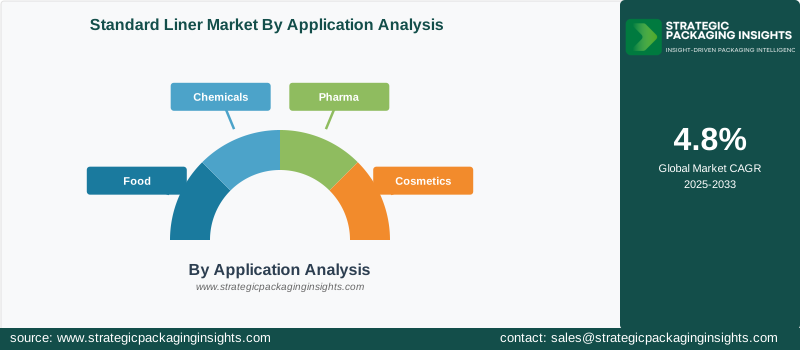
The pharmaceutical industry is another significant application segment, with a growing demand for high-quality liners that ensure product safety and integrity. The demand for liners in the pharmaceutical industry is driven by the increasing need for secure packaging solutions that comply with stringent regulatory standards. The chemicals and cosmetics industries are also key application segments, with a growing demand for liners that offer superior protection and durability. The demand for liners in these industries is driven by the need for efficient packaging solutions that ensure product safety and extend shelf life.
By End Use Analysis
The market is segmented by end use into packaging converters, FMCG, and industrial users. Packaging converters are a major end-use segment, as they play a crucial role in the production and distribution of liners. The demand for liners from packaging converters is driven by the increasing need for efficient and cost-effective packaging solutions that meet the evolving needs of consumers and regulatory standards. Additionally, the growing trend of sustainable packaging is pushing packaging converters to develop eco-friendly liner solutions.
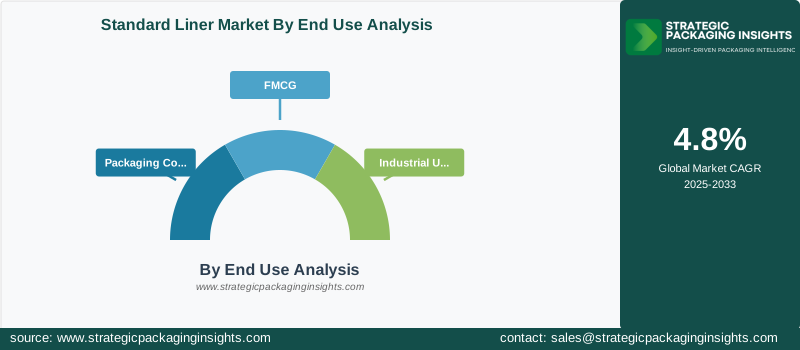
The FMCG sector is another significant end-use segment, with a growing demand for liners that ensure product safety and extend shelf life. The demand for liners in the FMCG sector is driven by the increasing consumption of packaged foods and beverages, as well as the growing trend of convenience packaging. Industrial users, on the other hand, require liners for various applications, including the packaging of chemicals and pharmaceuticals. The demand for liners from industrial users is driven by the need for safe and secure packaging solutions that comply with stringent regulatory standards.
Standard Liner Market Segments
The Standard Liner market has been segmented on the basis ofBy Material Type
- PE Liners
- Foil Liners
- Paper Liners
By Product Type
- Cap Liners
- Container Liners
- Drum Liners
By Application
- Food
- Chemicals
- Pharma
- Cosmetics
By End Use
- Packaging Converters
- FMCG
- Industrial Users
Region
- Asia Pacific
- North America
- Latin America
- Europe
- Middle East & Africa




