


Stamping Machines Market Outlook
The Stamping Machines market size was valued at USD 243.12 billion in 2025 and is anticipated to reach USD 383.68 billion by 2034, growing at a CAGR of 5.2% during the forecast period according to Strategic Packaging Insights. The market is witnessing robust growth due to the increasing demand for precision and efficiency in manufacturing processes across various industries. Schuler Group and AIDA Engineering are leading the charge in innovation, offering advanced stamping solutions that cater to the evolving needs of sectors such as automotive, electronics, and packaging. The integration of automation and digital technologies in stamping machines is further propelling market expansion, as manufacturers seek to enhance productivity and reduce operational costs.
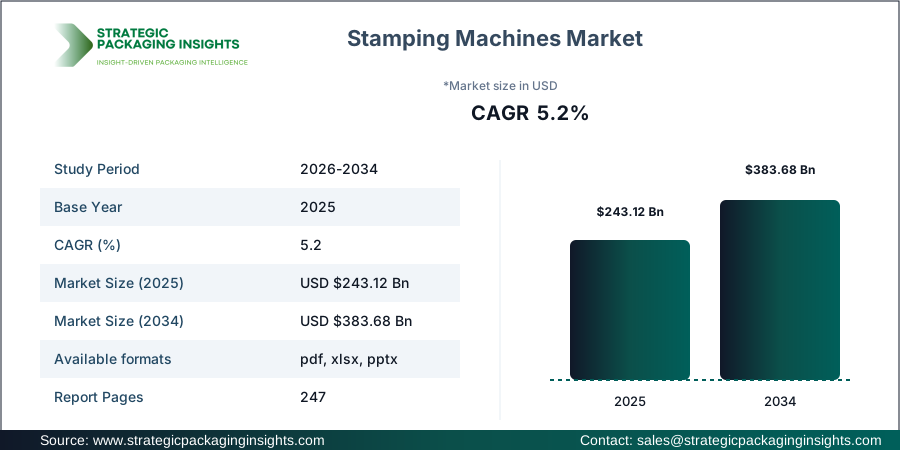
One of the most impactful drivers of the Stamping Machines market is the rising demand for lightweight and durable components in the automotive industry. According to industry reports, the automotive sector is increasingly adopting stamping machines to produce high-strength, lightweight parts that contribute to fuel efficiency and emissions reduction. This trend is supported by stringent government regulations aimed at reducing carbon footprints and enhancing vehicle performance. Companies like Komatsu and Amada are at the forefront, developing innovative stamping technologies that meet these regulatory requirements while ensuring high-quality output. The growing emphasis on sustainability and energy efficiency is expected to further drive the adoption of advanced stamping machines in the coming years.
Report Scope
| Attributes | Details |
| Report Title | Stamping Machines Market Size, Future Growth and Forecast 2034 |
| Machine Type | Mechanical Stamping, Hydraulic Stamping, Servo Stamping, Hot Stamping |
| Application | Metal Components, Packaging Decoration, Automotive Parts, Electronics |
| End Use | Automotive, Packaging, Electronics, Industrial Manufacturing |
| Automation Level | Manual, Semi-Automatic, Automatic |
| Region | Asia Pacific, North America, Latin America, Europe, Middle East & Africa |
| Base Year | 2025 |
| Historic Period | 2018-2024 |
| Forecast Period | 2026-2034 |
| Number of Pages | 247 |
| Customization Available | Yes* |
Sustainability & Circular Economy Analysis
Sustainability initiatives and circular economy practices are significantly influencing the stamping machines market, particularly in the packaging and automotive sectors. The shift towards recyclable materials and reusable packaging is driving the demand for stamping machines that can efficiently process eco-friendly materials. Companies are investing in R&D to develop machines that support lightweight packaging and reduce material waste, aligning with global sustainability goals. Eco-friendly material innovation and waste reduction strategies are becoming integral to the design and manufacturing of stamping machines, ensuring compliance with environmental regulations and enhancing market competitiveness.
The emphasis on reducing carbon footprints and adhering to ESG initiatives is reshaping investment decisions and supply chain strategies within the stamping machines market. Manufacturers are increasingly focusing on energy-efficient machines that minimize environmental impact while maximizing productivity. This trend is influencing packaging design and manufacturing processes, as companies strive to meet consumer sustainability preferences and regulatory compliance. The adoption of extended producer responsibility (EPR) frameworks is further encouraging manufacturers to innovate and develop sustainable stamping solutions that contribute to a circular economy.
As sustainability trends continue to evolve, they are expected to have a lasting impact on the long-term competitiveness of the stamping machines market. Companies that prioritize eco-friendly practices and invest in sustainable technologies are likely to gain a competitive edge, attracting environmentally conscious consumers and investors. The integration of sustainability into business models is not only enhancing brand reputation but also driving growth opportunities in emerging markets where regulatory compliance and consumer demand for sustainable products are on the rise.
Packaging Value Chain & Supply Chain Analysis
The packaging value chain and supply chain ecosystem for stamping machines are complex and multifaceted, involving various stakeholders from raw material suppliers to end-users. Raw material sourcing is a critical component, as the availability and cost of materials such as metals and alloys directly impact production capabilities and pricing strategies. Packaging converters and manufacturers play a pivotal role in transforming raw materials into finished products, utilizing advanced stamping machines to achieve precision and efficiency. Strategic partnerships with suppliers and logistics providers are essential for ensuring a seamless flow of materials and products across the supply chain.
Supply chain efficiency is a key determinant of market performance and business competitiveness in the stamping machines industry. Companies are increasingly adopting localization strategies to mitigate risks associated with global sourcing and enhance supply chain resilience. Inventory management and procurement strategies are being optimized to reduce lead times and improve responsiveness to market demands. The integration of digital technologies and automation in logistics and distribution channels is further enhancing supply chain efficiency, enabling companies to deliver high-quality products to customers in a timely manner.
Recycling networks and sustainable procurement practices are gaining prominence in the stamping machines market, as companies seek to minimize environmental impact and comply with regulatory requirements. The focus on sustainability is driving innovation in packaging design and manufacturing processes, with an emphasis on reducing waste and promoting circular economy principles. As the market continues to evolve, companies that prioritize supply chain resilience and sustainability are likely to achieve long-term success and maintain a competitive advantage in the global marketplace.
Opportunities & Threats
The stamping machines market presents numerous opportunities for growth, driven by technological advancements and increasing demand across various industries. The automotive sector, in particular, offers significant potential for expansion, as manufacturers seek to produce lightweight and durable components that enhance vehicle performance and fuel efficiency. The integration of automation and digital technologies in stamping machines is creating new opportunities for innovation, enabling companies to improve precision and reduce operational costs. Additionally, the growing emphasis on sustainability and eco-friendly practices is driving demand for stamping machines that can process recyclable materials and support circular economy initiatives.
Emerging markets in Asia Pacific and Latin America present lucrative opportunities for stamping machine manufacturers, as industrialization and infrastructure development continue to accelerate. The increasing adoption of advanced manufacturing technologies in these regions is driving demand for high-performance stamping machines that can meet the evolving needs of industries such as automotive, electronics, and packaging. Companies that invest in R&D and develop innovative solutions tailored to the specific requirements of these markets are likely to gain a competitive edge and capture a larger share of the global market.
Despite the promising opportunities, the stamping machines market faces several threats that could hinder growth. Economic uncertainties and fluctuations in raw material prices pose significant challenges for manufacturers, impacting production costs and profitability. Additionally, stringent regulatory requirements related to environmental sustainability and safety standards can increase compliance costs and limit market entry for new players. The competitive landscape is also intensifying, with established companies and new entrants vying for market share. To mitigate these threats, companies must focus on innovation, cost optimization, and strategic partnerships to enhance their market position and drive long-term growth.
Drivers & Challenges
The stamping machines market is driven by several key factors, including the increasing demand for precision and efficiency in manufacturing processes. The automotive industry is a major driver, as manufacturers seek to produce lightweight and durable components that enhance vehicle performance and fuel efficiency. The integration of automation and digital technologies in stamping machines is further propelling market growth, enabling companies to improve precision and reduce operational costs. Additionally, the growing emphasis on sustainability and eco-friendly practices is driving demand for stamping machines that can process recyclable materials and support circular economy initiatives.
Technological advancements in stamping machines are also driving market growth, as companies invest in R&D to develop innovative solutions that meet the evolving needs of industries such as automotive, electronics, and packaging. The adoption of advanced manufacturing technologies is enabling companies to improve productivity and reduce lead times, enhancing their competitiveness in the global market. Furthermore, the increasing focus on energy efficiency and environmental sustainability is driving demand for stamping machines that minimize environmental impact and comply with regulatory requirements.
Despite the positive drivers, the stamping machines market faces several challenges that could hinder growth. Economic uncertainties and fluctuations in raw material prices pose significant challenges for manufacturers, impacting production costs and profitability. Additionally, stringent regulatory requirements related to environmental sustainability and safety standards can increase compliance costs and limit market entry for new players. The competitive landscape is also intensifying, with established companies and new entrants vying for market share. To overcome these challenges, companies must focus on innovation, cost optimization, and strategic partnerships to enhance their market position and drive long-term growth.
Market Share Analysis
The stamping machines market is characterized by a competitive landscape with several key players dominating the industry. Companies such as Schuler Group, AIDA Engineering, and Komatsu hold significant market shares, driven by their strong product portfolios and extensive global presence. These companies are at the forefront of innovation, developing advanced stamping solutions that cater to the evolving needs of industries such as automotive, electronics, and packaging. Their focus on R&D and strategic partnerships has enabled them to maintain a competitive edge and capture a larger share of the global market.
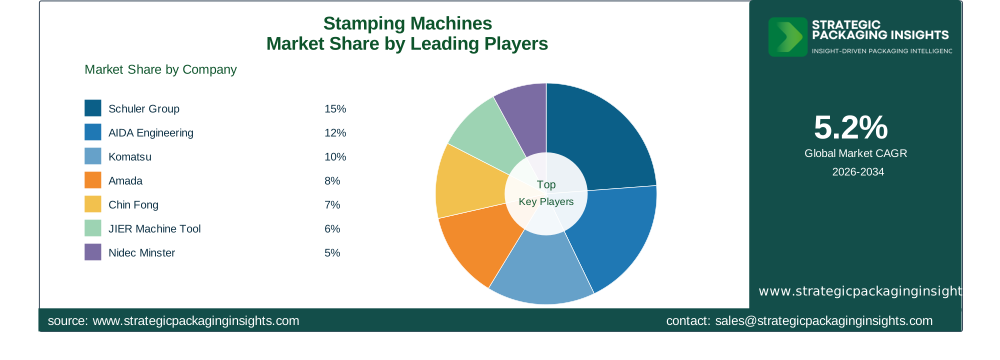
Schuler Group is a leading player in the stamping machines market, known for its cutting-edge technologies and high-quality products. The company has a strong presence in key markets across Europe, Asia Pacific, and North America, and is committed to sustainability and innovation. AIDA Engineering is another major player, offering a wide range of stamping solutions that cater to various industries. The company's focus on automation and digital technologies has enabled it to enhance productivity and reduce operational costs, driving its market growth.
Komatsu is a prominent player in the stamping machines market, known for its robust product portfolio and extensive global reach. The company has a strong focus on R&D and innovation, developing advanced stamping solutions that meet the evolving needs of industries such as automotive and electronics. Amada is another key player, offering a wide range of stamping machines that cater to various applications. The company's commitment to sustainability and eco-friendly practices has enabled it to capture a significant share of the global market.
Other notable players in the stamping machines market include Chin Fong, JIER Machine Tool, Nidec Minster, Seyi, Yangli Group, and Bruderer. These companies are known for their innovative solutions and strong market presence, driven by their focus on R&D and strategic partnerships. Their commitment to sustainability and eco-friendly practices has enabled them to maintain a competitive edge and capture a larger share of the global market. As the market continues to evolve, these companies are expected to play a key role in driving growth and innovation in the stamping machines industry.
Key Highlights
- Market Size: The stamping machines market was valued at USD 243.12 billion in 2025 and is projected to reach USD 383.68 billion by 2034.
- Growth Rate: The market is expected to grow at a CAGR of 5.2% during the forecast period.
- Leading Companies: Schuler Group, AIDA Engineering, and Komatsu are key players driving innovation and market growth.
- Technological Advancements: Integration of automation and digital technologies is enhancing precision and reducing operational costs.
- Sustainability Focus: Increasing demand for eco-friendly stamping machines that support circular economy initiatives.
- Regional Insights: Asia Pacific and Latin America present lucrative opportunities for market expansion.
- Application Segments: Automotive and electronics sectors are major drivers of market demand.
Stamping Machines Market Segments Insights

Machine Type Analysis
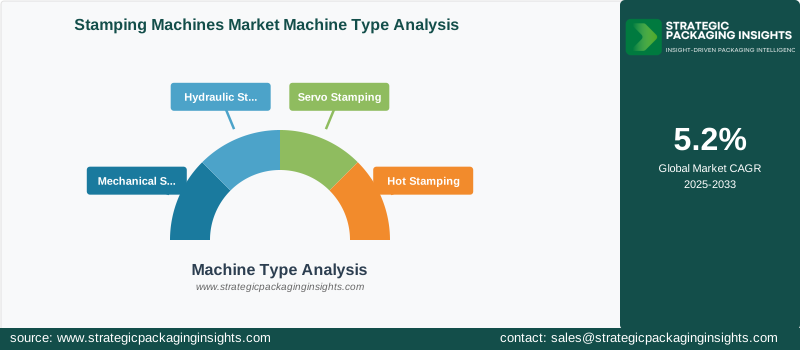
The stamping machines market is segmented by machine type into mechanical stamping, hydraulic stamping, servo stamping, and hot stamping. Mechanical stamping machines are widely used due to their cost-effectiveness and high-speed capabilities, making them ideal for mass production in industries such as automotive and electronics. Hydraulic stamping machines, on the other hand, offer greater precision and control, making them suitable for applications that require intricate designs and high-quality finishes. Servo stamping machines are gaining popularity due to their energy efficiency and ability to produce complex shapes with minimal waste. Hot stamping machines are primarily used in the packaging and decoration industries, where they provide high-quality finishes and vibrant colors.
The demand for advanced stamping machines is driven by the need for precision and efficiency in manufacturing processes. Companies are increasingly investing in R&D to develop innovative solutions that cater to the evolving needs of industries such as automotive, electronics, and packaging. The integration of automation and digital technologies in stamping machines is further enhancing their capabilities, enabling companies to improve productivity and reduce operational costs. As the market continues to evolve, the demand for high-performance stamping machines is expected to grow, driven by technological advancements and increasing demand across various industries.
Application Analysis
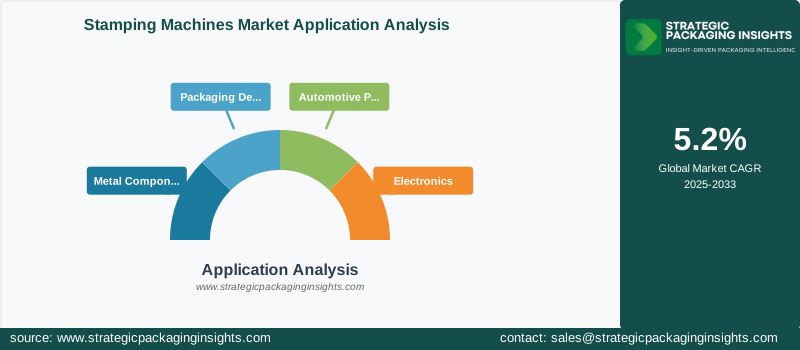
The stamping machines market is segmented by application into metal components, packaging decoration, automotive parts, and electronics. The automotive sector is a major driver of market demand, as manufacturers seek to produce lightweight and durable components that enhance vehicle performance and fuel efficiency. The electronics industry is also a significant contributor, with stamping machines being used to produce intricate components and assemblies that require high precision and quality. Packaging decoration is another key application, where stamping machines are used to create high-quality finishes and vibrant colors that enhance product appeal.
The demand for stamping machines in these applications is driven by the need for precision and efficiency in manufacturing processes. Companies are increasingly investing in R&D to develop innovative solutions that cater to the evolving needs of industries such as automotive, electronics, and packaging. The integration of automation and digital technologies in stamping machines is further enhancing their capabilities, enabling companies to improve productivity and reduce operational costs. As the market continues to evolve, the demand for high-performance stamping machines is expected to grow, driven by technological advancements and increasing demand across various industries.
End Use Analysis
The stamping machines market is segmented by end use into automotive, packaging, electronics, and industrial manufacturing. The automotive sector is a major driver of market demand, as manufacturers seek to produce lightweight and durable components that enhance vehicle performance and fuel efficiency. The packaging industry is also a significant contributor, with stamping machines being used to create high-quality finishes and vibrant colors that enhance product appeal. The electronics industry is another key end-use segment, where stamping machines are used to produce intricate components and assemblies that require high precision and quality.
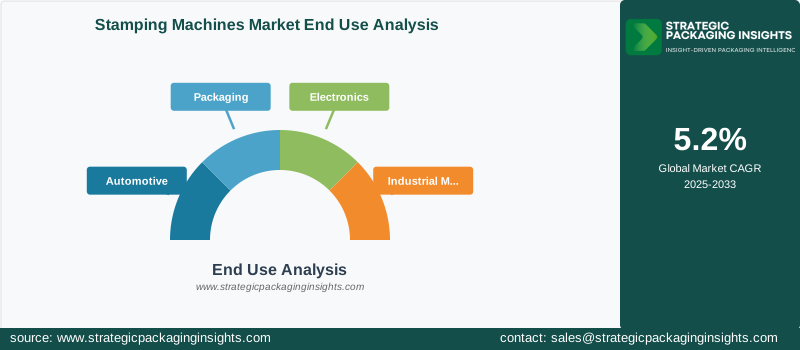
The demand for stamping machines in these end-use segments is driven by the need for precision and efficiency in manufacturing processes. Companies are increasingly investing in R&D to develop innovative solutions that cater to the evolving needs of industries such as automotive, electronics, and packaging. The integration of automation and digital technologies in stamping machines is further enhancing their capabilities, enabling companies to improve productivity and reduce operational costs. As the market continues to evolve, the demand for high-performance stamping machines is expected to grow, driven by technological advancements and increasing demand across various industries.
Automation Level Analysis
The stamping machines market is segmented by automation level into manual, semi-automatic, and automatic machines. Manual stamping machines are widely used in small-scale operations where cost-effectiveness and simplicity are key considerations. Semi-automatic machines offer a balance between cost and efficiency, making them suitable for medium-scale operations that require a higher degree of precision and control. Automatic stamping machines are gaining popularity due to their ability to enhance productivity and reduce operational costs, making them ideal for large-scale operations in industries such as automotive, electronics, and packaging.

The demand for advanced stamping machines is driven by the need for precision and efficiency in manufacturing processes. Companies are increasingly investing in R&D to develop innovative solutions that cater to the evolving needs of industries such as automotive, electronics, and packaging. The integration of automation and digital technologies in stamping machines is further enhancing their capabilities, enabling companies to improve productivity and reduce operational costs. As the market continues to evolve, the demand for high-performance stamping machines is expected to grow, driven by technological advancements and increasing demand across various industries.
Stamping Machines Market Segments
The Stamping Machines market has been segmented on the basis ofMachine Type
- Mechanical Stamping
- Hydraulic Stamping
- Servo Stamping
- Hot Stamping
Application
- Metal Components
- Packaging Decoration
- Automotive Parts
- Electronics
End Use
- Automotive
- Packaging
- Electronics
- Industrial Manufacturing
Automation Level
- Manual
- Semi-Automatic
- Automatic
Region
- Asia Pacific
- North America
- Latin America
- Europe
- Middle East & Africa




