


Stacking Machine Market Outlook
The stacking machine market was valued at $2.88 billion in 2025 and is projected to reach $4.91 billion by 2034, growing at a CAGR of 6.1% during the forecast period 2026-2034. This growth is driven by the increasing demand for automation in various industries such as manufacturing, logistics, and food processing. The need for efficient material handling solutions is pushing companies to adopt advanced stacking machines that offer higher precision and speed. Additionally, the rise in e-commerce and the subsequent need for efficient warehouse management systems are further propelling the market growth. The integration of IoT and AI technologies in stacking machines is also expected to enhance their functionality, thereby boosting market demand.
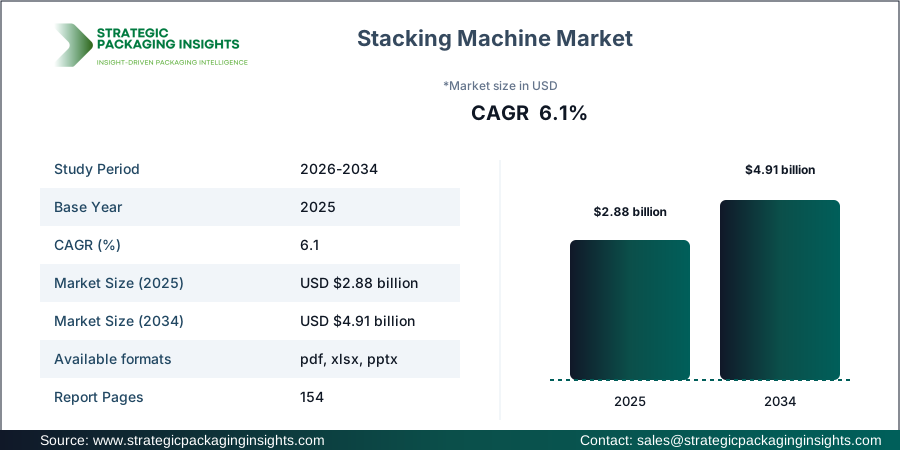
However, the market faces certain restraints, including high initial investment costs and the complexity of integrating these machines into existing systems. Regulatory challenges related to safety standards and environmental concerns also pose significant hurdles. Despite these challenges, the market holds substantial growth potential due to technological advancements and the increasing adoption of automation across various sectors. Companies are focusing on developing cost-effective and energy-efficient stacking machines to overcome these barriers and tap into emerging markets.
Report Scope
| Attributes | Details |
| Report Title | Stacking Machine Market Size, Future Growth and Forecast 2034 |
| Machine Type | Automatic Stackers, Robotic Stackers, Pallet Stackers |
| Application | Packaging Lines, Warehouses, Food Processing |
| Automation | Semi-Automatic, Automatic |
| End Use | Manufacturing, Logistics, Food, Beverage |
| Region | Asia Pacific, North America, Latin America, Europe, Middle East & Africa |
| Base Year | 2025 |
| Historic Period | 2018-2024 |
| Forecast Period | 2026-2034 |
| Number of Pages | 154 |
| Customization Available | Yes* |
Opportunities & Threats
The stacking machine market presents numerous opportunities, particularly with the growing trend towards automation in industries such as manufacturing and logistics. As companies strive to enhance operational efficiency and reduce labor costs, the demand for automated stacking solutions is expected to rise significantly. The integration of advanced technologies such as AI and IoT into stacking machines offers further opportunities for innovation and differentiation. These technologies enable real-time monitoring and predictive maintenance, which can significantly improve machine uptime and productivity. Additionally, the expansion of e-commerce and the need for efficient warehouse management systems provide a fertile ground for the adoption of stacking machines.
Another opportunity lies in the development of eco-friendly stacking machines. With increasing environmental awareness and stringent regulations, there is a growing demand for machines that consume less energy and produce lower emissions. Companies that can offer sustainable solutions are likely to gain a competitive edge in the market. Furthermore, the rise of Industry 4.0 and smart factories is expected to drive the demand for intelligent stacking machines that can seamlessly integrate with other automated systems.
On the flip side, the market faces threats from high initial costs and the complexity of integrating stacking machines into existing operations. Many small and medium-sized enterprises may find it challenging to justify the investment in advanced stacking solutions, especially in regions with low labor costs. Additionally, the rapid pace of technological change poses a threat to companies that fail to innovate and keep up with the latest advancements. The risk of obsolescence is high, and companies must continuously invest in research and development to stay competitive.
Drivers & Challenges
The primary drivers of the stacking machine market include the increasing demand for automation and the need for efficient material handling solutions. As industries strive to improve productivity and reduce operational costs, the adoption of automated stacking machines is becoming increasingly prevalent. These machines offer significant advantages in terms of speed, accuracy, and reliability, making them an attractive option for companies looking to enhance their operational efficiency. The rise of e-commerce and the subsequent need for efficient warehouse management systems are also driving the demand for stacking machines. Additionally, the integration of IoT and AI technologies in stacking machines is expected to enhance their functionality and further boost market demand.
Another significant driver is the growing focus on sustainability and energy efficiency. As environmental concerns continue to rise, companies are increasingly seeking eco-friendly solutions that can help reduce their carbon footprint. Stacking machines that consume less energy and produce lower emissions are gaining popularity, and manufacturers are investing in the development of such solutions to meet the growing demand. Furthermore, the expansion of smart factories and Industry 4.0 is expected to drive the demand for intelligent stacking machines that can seamlessly integrate with other automated systems.
Despite these drivers, the stacking machine market faces several challenges. High initial investment costs and the complexity of integrating these machines into existing systems are significant barriers to adoption. Many small and medium-sized enterprises may find it challenging to justify the investment in advanced stacking solutions, especially in regions with low labor costs. Additionally, regulatory challenges related to safety standards and environmental concerns pose significant hurdles. Companies must navigate these challenges carefully to capitalize on the growth opportunities in the market.
Market Share Analysis
The stacking machine market is characterized by intense competition, with several key players vying for market share. Companies such as Daifuku, SSI Schaefer, Dematic, Krones, Sidel, Interroll, Vanderlande, Swisslog, Murata Machinery, and TGW Logistics are some of the prominent players in the market. These companies are focusing on innovation and product development to gain a competitive edge. They are investing heavily in research and development to introduce advanced stacking machines that offer higher efficiency and reliability. Additionally, strategic partnerships and collaborations are common strategies adopted by these companies to expand their market presence and enhance their product offerings.
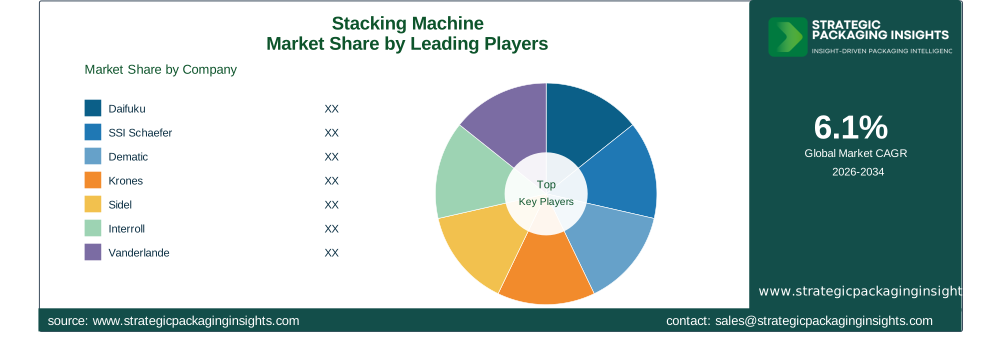
Daifuku, a leading player in the stacking machine market, holds a significant market share due to its extensive product portfolio and strong global presence. The company is known for its innovative solutions and has been at the forefront of integrating advanced technologies such as IoT and AI into its stacking machines. SSI Schaefer is another major player, renowned for its comprehensive range of automated material handling solutions. The company focuses on providing customized solutions to meet the specific needs of its clients, which has helped it maintain a strong market position.
Dematic, a subsidiary of the KION Group, is a key player in the stacking machine market, offering a wide range of automated solutions for various industries. The company's focus on innovation and customer-centric approach has enabled it to capture a significant market share. Krones and Sidel are also prominent players, known for their expertise in the beverage industry. These companies offer specialized stacking machines designed to meet the unique requirements of beverage manufacturers.
Interroll, Vanderlande, Swisslog, Murata Machinery, and TGW Logistics are other notable players in the market. These companies are known for their advanced material handling solutions and have a strong presence in the global market. They are continuously investing in research and development to introduce innovative products and expand their market reach. The competitive landscape of the stacking machine market is dynamic, with companies constantly striving to enhance their product offerings and gain a competitive edge.
Key Highlights
- The stacking machine market is projected to grow at a CAGR of 6.1% from 2026 to 2034.
- Key drivers include the increasing demand for automation and efficient material handling solutions.
- High initial investment costs and regulatory challenges are significant barriers to market growth.
- Technological advancements such as IoT and AI integration are enhancing the functionality of stacking machines.
- The rise of e-commerce is driving the demand for efficient warehouse management systems.
- Eco-friendly stacking machines are gaining popularity due to increasing environmental awareness.
- Key players in the market include Daifuku, SSI Schaefer, Dematic, Krones, and Sidel.
- Strategic partnerships and collaborations are common strategies adopted by companies to expand their market presence.
- The market is characterized by intense competition, with companies focusing on innovation and product development.
Top Countries Insights
In the stacking machine market, the United States stands out as a key player, with a market size of approximately $1.2 billion and a CAGR of 5%. The country's strong industrial base and the rapid adoption of automation technologies are significant growth drivers. The presence of major players and a well-established logistics sector further bolster the market. However, regulatory challenges related to safety standards and environmental concerns pose potential hurdles.
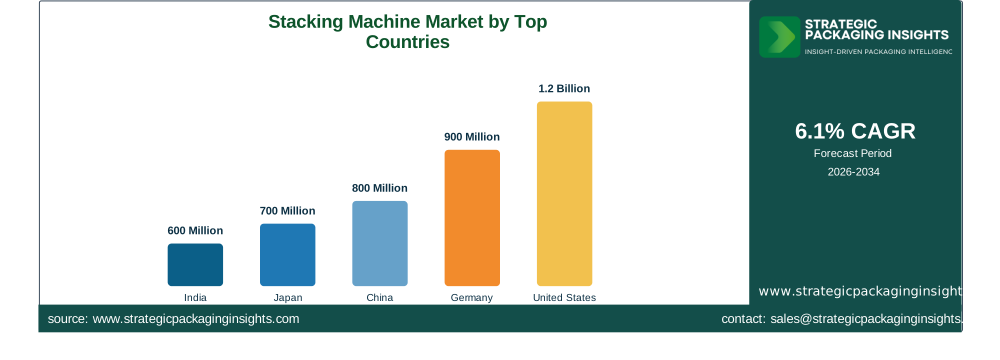
Germany, with a market size of around $900 million and a CAGR of 4%, is another prominent player in the stacking machine market. The country's strong manufacturing sector and focus on Industry 4.0 initiatives drive the demand for advanced stacking solutions. The integration of IoT and AI technologies in stacking machines is a key trend in the German market. However, high initial investment costs and the complexity of integrating these machines into existing systems are significant challenges.
China, with a market size of approximately $800 million and a CAGR of 7%, is experiencing rapid growth in the stacking machine market. The country's booming e-commerce sector and the increasing demand for efficient warehouse management systems are key growth drivers. The government's focus on industrial automation and smart manufacturing further supports market growth. However, the market faces challenges related to regulatory compliance and the need for skilled labor.
Japan, with a market size of around $700 million and a CAGR of 6%, is a significant player in the stacking machine market. The country's strong focus on technological innovation and the adoption of advanced automation solutions drive market growth. The integration of AI and IoT technologies in stacking machines is a key trend in the Japanese market. However, the market faces challenges related to high initial investment costs and the complexity of integrating these machines into existing systems.
India, with a market size of approximately $600 million and a CAGR of 8%, is emerging as a key player in the stacking machine market. The country's growing manufacturing sector and the increasing adoption of automation technologies are significant growth drivers. The government's focus on industrial development and infrastructure improvement further supports market growth. However, the market faces challenges related to regulatory compliance and the need for skilled labor.
Stacking Machine Market Segments Insights

Machine Type Analysis
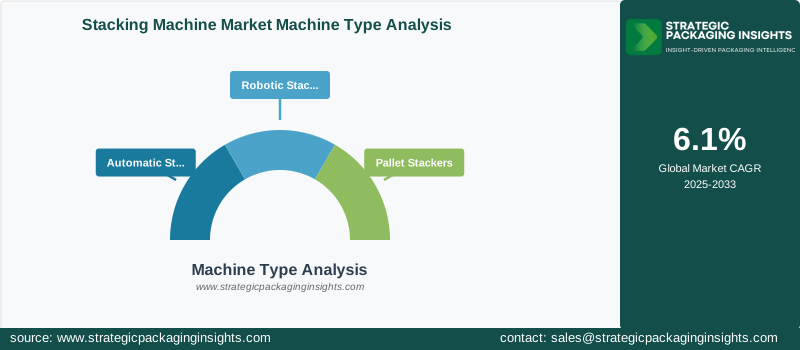
The stacking machine market is segmented by machine type into automatic stackers, robotic stackers, and pallet stackers. Automatic stackers are gaining popularity due to their ability to enhance operational efficiency and reduce labor costs. These machines are widely used in industries such as manufacturing and logistics, where speed and accuracy are critical. Robotic stackers, on the other hand, offer greater flexibility and precision, making them ideal for complex stacking tasks. The demand for robotic stackers is expected to rise significantly as industries continue to adopt automation technologies. Pallet stackers, known for their durability and reliability, are commonly used in warehouses and distribution centers. The increasing demand for efficient material handling solutions is driving the growth of this segment.
Technological advancements and the integration of IoT and AI technologies are key trends in the machine type segment. These technologies enable real-time monitoring and predictive maintenance, which can significantly improve machine uptime and productivity. Companies are focusing on developing advanced stacking machines that offer higher efficiency and reliability to gain a competitive edge. The growing focus on sustainability and energy efficiency is also driving the demand for eco-friendly stacking machines. Manufacturers are investing in the development of machines that consume less energy and produce lower emissions to meet the growing demand for sustainable solutions.
Application Analysis
The stacking machine market is segmented by application into packaging lines, warehouses, and food processing. Packaging lines are a major application area for stacking machines, as they require high-speed and accurate stacking solutions to ensure efficient operations. The rise of e-commerce and the increasing demand for efficient packaging solutions are driving the growth of this segment. Warehouses are another significant application area, where stacking machines are used to optimize space utilization and improve operational efficiency. The growing need for efficient warehouse management systems is expected to drive the demand for stacking machines in this segment.
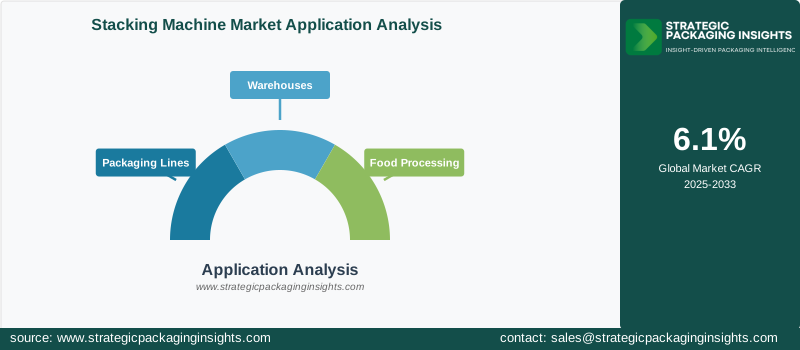
In the food processing industry, stacking machines are used to handle delicate products and ensure precise stacking. The increasing demand for packaged food products and the need for efficient processing solutions are driving the growth of this segment. Technological advancements and the integration of IoT and AI technologies are key trends in the application segment. These technologies enable real-time monitoring and predictive maintenance, which can significantly improve machine uptime and productivity. Companies are focusing on developing advanced stacking machines that offer higher efficiency and reliability to gain a competitive edge.
Automation Analysis
The stacking machine market is segmented by automation into semi-automatic and automatic machines. Automatic stacking machines are gaining popularity due to their ability to enhance operational efficiency and reduce labor costs. These machines are widely used in industries such as manufacturing and logistics, where speed and accuracy are critical. Semi-automatic machines, on the other hand, offer greater flexibility and are ideal for applications where manual intervention is required. The demand for semi-automatic machines is expected to rise significantly as industries continue to adopt automation technologies.
Technological advancements and the integration of IoT and AI technologies are key trends in the automation segment. These technologies enable real-time monitoring and predictive maintenance, which can significantly improve machine uptime and productivity. Companies are focusing on developing advanced stacking machines that offer higher efficiency and reliability to gain a competitive edge. The growing focus on sustainability and energy efficiency is also driving the demand for eco-friendly stacking machines. Manufacturers are investing in the development of machines that consume less energy and produce lower emissions to meet the growing demand for sustainable solutions.
End Use Analysis
The stacking machine market is segmented by end use into manufacturing, logistics, food, and beverage industries. The manufacturing industry is a major end-user of stacking machines, as they require high-speed and accurate stacking solutions to ensure efficient operations. The increasing demand for automation and the need for efficient material handling solutions are driving the growth of this segment. The logistics industry is another significant end-user, where stacking machines are used to optimize space utilization and improve operational efficiency. The growing need for efficient warehouse management systems is expected to drive the demand for stacking machines in this segment.
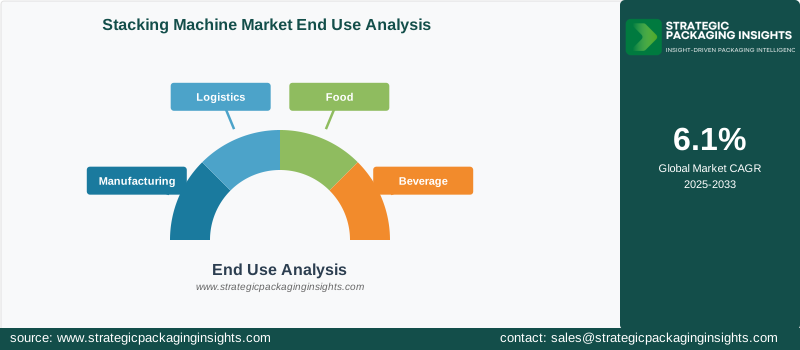
In the food and beverage industries, stacking machines are used to handle delicate products and ensure precise stacking. The increasing demand for packaged food products and the need for efficient processing solutions are driving the growth of this segment. Technological advancements and the integration of IoT and AI technologies are key trends in the end-use segment. These technologies enable real-time monitoring and predictive maintenance, which can significantly improve machine uptime and productivity. Companies are focusing on developing advanced stacking machines that offer higher efficiency and reliability to gain a competitive edge.
Stacking Machine Market Segments
The Stacking Machine market has been segmented on the basis ofMachine Type
- Automatic Stackers
- Robotic Stackers
- Pallet Stackers
Application
- Packaging Lines
- Warehouses
- Food Processing
Automation
- Semi-Automatic
- Automatic
End Use
- Manufacturing
- Logistics
- Food
- Beverage
Region
- Asia Pacific
- North America
- Latin America
- Europe
- Middle East & Africa




