


Spray Caps Market Outlook
The spray caps market was valued at $911.94 million in 2025 and is projected to reach $1.42 billion by 2034, growing at a CAGR of 5.1% during the forecast period 2026-2034. This market is driven by the increasing demand for convenient and efficient packaging solutions across various industries, including cosmetics, pharmaceuticals, and household cleaners. The versatility of spray caps in delivering precise and controlled dispensing of products has made them a preferred choice among manufacturers and consumers alike. Additionally, the growing trend towards sustainable packaging solutions is expected to further boost the market, as companies increasingly adopt recycled plastics and eco-friendly materials in their production processes.
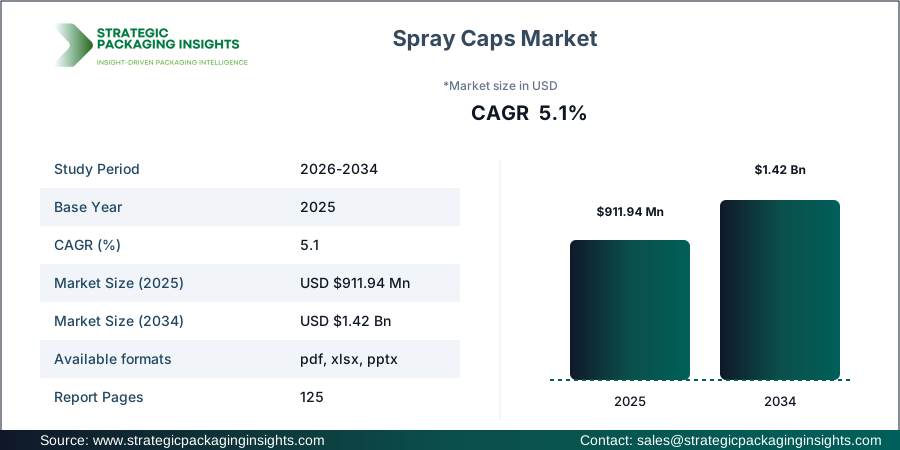
Despite the promising growth prospects, the spray caps market faces certain challenges that could hinder its expansion. Regulatory restrictions on the use of certain materials, particularly in the pharmaceutical and food sectors, could pose significant hurdles for manufacturers. Moreover, the fluctuating prices of raw materials, such as plastics and metals, could impact the profitability of companies operating in this space. However, the market's potential for growth remains substantial, driven by ongoing innovations in product design and functionality, as well as the increasing adoption of spray caps in emerging markets.
Report Scope
| Attributes | Details |
| Report Title | Spray Caps Market Size, Future Growth and Forecast 2034 |
| By Product Type | Mist Spray Caps, Trigger Spray Caps, Aerosol Spray Caps |
| By Material Type | PP, PE, Metal, Recycled Plastics |
| By Application | Cosmetics, Household Cleaners, Pharmaceuticals, Chemicals |
| By End Use | FMCG Brands, Pharma Firms, Chemical Companies, Packaging Converters |
| Region | Asia Pacific, North America, Latin America, Europe, Middle East & Africa |
| Base Year | 2025 |
| Historic Period | 2018-2024 |
| Forecast Period | 2026-2034 |
| Number of Pages | 125 |
| Customization Available | Yes* |
Opportunities & Threats
The spray caps market presents numerous opportunities for growth, particularly in the realm of sustainable packaging solutions. As environmental concerns continue to rise, there is a growing demand for eco-friendly packaging options that minimize waste and reduce carbon footprints. This trend is driving manufacturers to innovate and develop spray caps made from recycled plastics and biodegradable materials. Additionally, the increasing popularity of e-commerce and online retailing is creating new avenues for market expansion, as spray caps are widely used in packaging products for shipment and delivery. Companies that can effectively leverage these trends and offer sustainable, high-quality products are likely to gain a competitive edge in the market.
Another significant opportunity lies in the expanding applications of spray caps across various industries. The cosmetics and personal care sector, in particular, is witnessing a surge in demand for spray caps, driven by the growing popularity of products such as perfumes, deodorants, and hair sprays. Similarly, the pharmaceutical industry is increasingly adopting spray caps for packaging liquid medications and topical treatments, owing to their precision and ease of use. As these industries continue to grow, the demand for spray caps is expected to rise, providing ample opportunities for market players to expand their product offerings and capture new market segments.
However, the spray caps market is not without its threats. One of the primary challenges facing the industry is the increasing competition from alternative packaging solutions, such as pumps and droppers, which offer similar functionality and convenience. Additionally, the market is highly fragmented, with numerous small and medium-sized players competing for market share. This intense competition can lead to price wars and margin pressures, making it difficult for companies to maintain profitability. Furthermore, the ongoing volatility in raw material prices, particularly plastics and metals, poses a significant threat to the market's stability and growth prospects.
Drivers & Challenges
The spray caps market is primarily driven by the increasing demand for convenient and user-friendly packaging solutions across various industries. Consumers today are seeking products that offer ease of use and precise dispensing, making spray caps an ideal choice for a wide range of applications. The growing popularity of personal care and cosmetic products, such as perfumes, deodorants, and hair sprays, is further fueling the demand for spray caps. Additionally, the pharmaceutical industry is increasingly adopting spray caps for packaging liquid medications and topical treatments, owing to their precision and ease of use. As these industries continue to expand, the demand for spray caps is expected to rise, providing significant growth opportunities for market players.
Another key driver of the spray caps market is the growing trend towards sustainable packaging solutions. As environmental concerns continue to rise, there is a growing demand for eco-friendly packaging options that minimize waste and reduce carbon footprints. This trend is driving manufacturers to innovate and develop spray caps made from recycled plastics and biodegradable materials. Companies that can effectively leverage these trends and offer sustainable, high-quality products are likely to gain a competitive edge in the market. Furthermore, the increasing popularity of e-commerce and online retailing is creating new avenues for market expansion, as spray caps are widely used in packaging products for shipment and delivery.
Despite the promising growth prospects, the spray caps market faces several challenges that could hinder its expansion. One of the primary challenges is the increasing competition from alternative packaging solutions, such as pumps and droppers, which offer similar functionality and convenience. Additionally, the market is highly fragmented, with numerous small and medium-sized players competing for market share. This intense competition can lead to price wars and margin pressures, making it difficult for companies to maintain profitability. Furthermore, the ongoing volatility in raw material prices, particularly plastics and metals, poses a significant threat to the market's stability and growth prospects.
Market Share Analysis
The spray caps market is characterized by a highly competitive landscape, with several key players vying for market share. Among the leading companies in this space are AptarGroup, Silgan Dispensing, Berry Global, Coster Group, Lindal Group, Precision Valve Corporation, Weener Plastics, TriMas Packaging, Bericap, and Mold-Rite Plastics. These companies are known for their extensive product portfolios, strong distribution networks, and focus on innovation and sustainability. They are continuously investing in research and development to enhance their product offerings and meet the evolving needs of consumers and industries.

AptarGroup is a prominent player in the spray caps market, known for its innovative and sustainable packaging solutions. The company has a strong presence in the cosmetics and personal care sectors, offering a wide range of spray caps for perfumes, deodorants, and other products. Silgan Dispensing is another key player, specializing in the design and manufacture of dispensing systems for various applications, including household cleaners and pharmaceuticals. The company's focus on sustainability and eco-friendly materials has helped it gain a competitive edge in the market.
Berry Global is a leading provider of packaging solutions, including spray caps, for a wide range of industries. The company's extensive product portfolio and strong distribution network have enabled it to capture a significant share of the market. Coster Group and Lindal Group are also major players in the spray caps market, known for their innovative designs and focus on sustainability. These companies are continuously investing in research and development to enhance their product offerings and meet the evolving needs of consumers and industries.
Precision Valve Corporation, Weener Plastics, TriMas Packaging, Bericap, and Mold-Rite Plastics are other notable players in the spray caps market. These companies are known for their strong focus on innovation and sustainability, offering a wide range of spray caps for various applications. They are continuously investing in research and development to enhance their product offerings and meet the evolving needs of consumers and industries. The competitive landscape of the spray caps market is expected to remain intense, with companies focusing on innovation, sustainability, and strategic partnerships to gain a competitive edge.
Key Highlights
- The spray caps market is projected to grow at a CAGR of 5.1% from 2026 to 2034.
- Increasing demand for sustainable packaging solutions is driving market growth.
- Cosmetics and personal care sectors are major contributors to market demand.
- Regulatory restrictions on materials pose challenges for manufacturers.
- Fluctuating raw material prices impact market profitability.
- Key players include AptarGroup, Silgan Dispensing, and Berry Global.
- Innovation and sustainability are key focus areas for market players.
- Expanding applications in pharmaceuticals and household cleaners.
- Growing popularity of e-commerce is creating new market opportunities.
- Intense competition from alternative packaging solutions.
Top Countries Insights
In the spray caps market, the United States stands out as a leading country, with a market size of approximately $300 million and a CAGR of 4%. The country's robust cosmetics and personal care industry, coupled with a strong focus on sustainable packaging solutions, drives the demand for spray caps. Additionally, the presence of major market players and a well-established distribution network further bolster the market's growth prospects in the region.
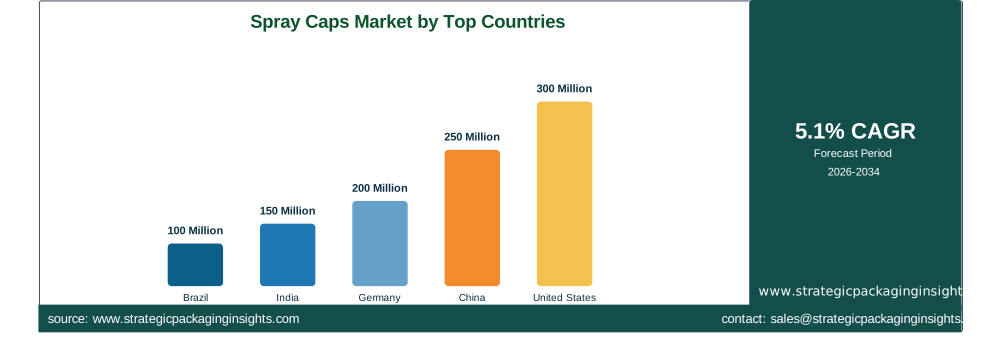
China is another significant player in the spray caps market, with a market size of around $250 million and a CAGR of 6%. The country's rapidly growing consumer goods industry, along with increasing urbanization and rising disposable incomes, fuels the demand for spray caps. Moreover, the Chinese government's emphasis on sustainable development and environmental protection encourages the adoption of eco-friendly packaging solutions, providing further impetus to the market.
Germany, with a market size of approximately $200 million and a CAGR of 5%, is a key market for spray caps in Europe. The country's strong manufacturing base, coupled with a focus on innovation and sustainability, drives the demand for spray caps across various industries. Additionally, Germany's stringent regulatory framework ensures the use of high-quality materials and environmentally friendly packaging solutions, further supporting market growth.
India, with a market size of around $150 million and a CAGR of 7%, is an emerging market for spray caps. The country's expanding middle class, increasing urbanization, and growing awareness of personal care and hygiene products drive the demand for spray caps. Furthermore, the Indian government's initiatives to promote sustainable packaging solutions and reduce plastic waste provide additional growth opportunities for market players.
Brazil, with a market size of approximately $100 million and a CAGR of 5%, is a key market for spray caps in Latin America. The country's growing consumer goods industry, coupled with increasing demand for personal care and household cleaning products, drives the market's growth. Additionally, Brazil's focus on sustainable development and environmental protection encourages the adoption of eco-friendly packaging solutions, providing further impetus to the market.
Spray Caps Market Segments Insights

Product Type Analysis
The spray caps market is segmented by product type into mist spray caps, trigger spray caps, and aerosol spray caps. Mist spray caps are widely used in the cosmetics and personal care industry for products such as perfumes and facial mists, owing to their ability to deliver a fine and even spray. The growing demand for personal grooming products and the increasing popularity of travel-sized packaging are driving the demand for mist spray caps. Trigger spray caps, on the other hand, are commonly used in household cleaners and industrial applications, where a more robust and controlled spray is required. The rising awareness of hygiene and cleanliness, particularly in the wake of the COVID-19 pandemic, has further fueled the demand for trigger spray caps. Aerosol spray caps are primarily used in the pharmaceutical and chemical industries, where precise and controlled dispensing is crucial. The increasing adoption of aerosol spray caps in these industries is driven by their ability to deliver a consistent and accurate dosage, enhancing product efficacy and user experience.
Material Type Analysis
In terms of material type, the spray caps market is segmented into PP, PE, metal, and recycled plastics. Polypropylene (PP) and polyethylene (PE) are the most commonly used materials for spray caps, owing to their durability, flexibility, and cost-effectiveness. These materials are widely used in the production of spray caps for various applications, including cosmetics, household cleaners, and pharmaceuticals. Metal spray caps, although less common, are used in applications where a more premium and durable packaging solution is required. The growing trend towards sustainable packaging solutions is driving the demand for spray caps made from recycled plastics. Manufacturers are increasingly adopting recycled materials in their production processes to reduce their environmental impact and meet the growing demand for eco-friendly packaging solutions. This trend is expected to continue, as consumers and industries alike increasingly prioritize sustainability in their purchasing decisions.
Application Analysis
The spray caps market is segmented by application into cosmetics, household cleaners, pharmaceuticals, and chemicals. The cosmetics industry is a major driver of demand for spray caps, with products such as perfumes, deodorants, and hair sprays relying heavily on spray caps for precise and controlled dispensing. The growing popularity of personal grooming products and the increasing focus on hygiene and cleanliness are driving the demand for spray caps in this sector. The household cleaners segment is also a significant contributor to market demand, with products such as disinfectants and cleaning sprays requiring robust and reliable spray caps for effective application. The pharmaceutical industry is increasingly adopting spray caps for packaging liquid medications and topical treatments, owing to their precision and ease of use. The chemicals industry, although a smaller segment, is also witnessing growing demand for spray caps, particularly in applications where precise and controlled dispensing is crucial.
End Use Analysis
The spray caps market is segmented by end use into FMCG brands, pharma firms, chemical companies, and packaging converters. FMCG brands are the largest end users of spray caps, with products such as personal care and household cleaning products relying heavily on spray caps for effective packaging and dispensing. The growing demand for convenient and user-friendly packaging solutions is driving the adoption of spray caps among FMCG brands. Pharma firms are also significant end users of spray caps, with liquid medications and topical treatments increasingly being packaged in spray bottles for precise and controlled dispensing. Chemical companies, although a smaller segment, are also adopting spray caps for applications where precise and controlled dispensing is crucial. Packaging converters, who provide packaging solutions to various industries, are also significant end users of spray caps, as they seek to offer innovative and sustainable packaging solutions to their clients.
Spray Caps Market Segments
The Spray Caps market has been segmented on the basis ofBy Product Type
- Mist Spray Caps
- Trigger Spray Caps
- Aerosol Spray Caps
By Material Type
- PP
- PE
- Metal
- Recycled Plastics
By Application
- Cosmetics
- Household Cleaners
- Pharmaceuticals
- Chemicals
By End Use
- FMCG Brands
- Pharma Firms
- Chemical Companies
- Packaging Converters
Region
- Asia Pacific
- North America
- Latin America
- Europe
- Middle East & Africa




