


Sortation systems Market Outlook
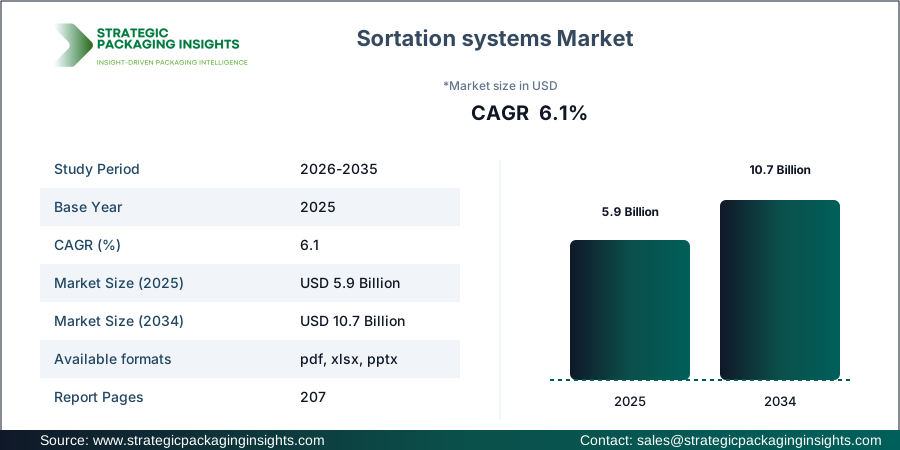
The Sortation systems market size was valued at USD $5.9 Billion in 2025 and is anticipated to reach USD $10.7 Billion by 2035, growing at a CAGR of 6.1% % during the forecast period according to Strategic Packaging Insights. The increasing demand for efficient logistics and distribution solutions, particularly in the e-commerce sector, is a significant driver of market growth. The rise in online shopping and the need for rapid order fulfillment are pushing companies to invest in advanced sortation systems to enhance operational efficiency and reduce delivery times.Report Scope
| Attributes | Details |
| Report Title | Sortation systems Market Projected to Scale to 10.7 Billion by 2035, Assesses Strategic Packaging Insights |
| By System Type | Cross-Belt Sorters, Sliding Shoe Sorters, Tilt-Tray Sorters, Bombay Sorters, Roller Sorters, Belt Sorters, Pop-Up Wheel Sorters, Pusher Sorters, Vertical Sorters |
| By Sorting Technology | Automated Sortation, Robotic Sortation, Barcode-Based Sortation, RFID-Based Sortation, Vision-Based Sortation, AI-Enabled Sortation |
| By Application | Parcel Sorting, Order Fulfillment, Warehouse Sorting, Distribution Center Sorting, Airport Baggage Sorting, Manufacturing Line Sorting, Postal Sorting, E-Commerce Sorting |
| By End Use Industry | E-Commerce, Retail, Logistics and Transportation, Food and Beverage, Pharmaceuticals, Automotive, Airports, Postal Services, Manufacturing |
| By Load Type | Unit Loads, Cartons, Parcels, Packages, Totes, Polybags, Trays |
| By Capacity | Low Throughput, Medium Throughput, High Throughput, Very High Throughput |
| By Component | Conveyors, Sorters, Sensors, Barcode Scanners, RFID Readers, Controllers, Software, Robotics |
| By Operation | Inbound Sortation, Outbound Sortation, Putaway Sortation, Order Consolidation, Returns Sortation |
| By Region | North America, Europe, Asia-Pacific, Latin America, Middle East and Africa |
| Base Year | 2025 |
| Historic Period | 2018-2024 |
| Forecast Period | 2026-2035 |
| Number of Pages | 207 |
| Customization Available | Yes* |
Market Trends Analysis
Sortation systems are increasingly integrating advanced technologies such as AI and robotics to enhance sorting accuracy and speed. The adoption of AI-enabled sortation systems is transforming the industry by enabling predictive maintenance and real-time data analytics, which optimize operational efficiency. Additionally, the shift towards automated and robotic sortation systems is driven by the need to handle high volumes of parcels and packages efficiently, especially in e-commerce and logistics sectors. Automation and digital transformation are key trends influencing market growth, as companies seek to improve throughput and reduce labor costs.
Sustainability is becoming a crucial consideration in the sortation systems market. Companies are focusing on energy-efficient systems and sustainable materials to meet regulatory requirements and consumer expectations. The trend towards eco-friendly operations is driving the adoption of systems that minimize energy consumption and reduce carbon footprints. Furthermore, the integration of recyclable materials and energy-efficient technologies is expected to enhance the market's competitive positioning and attract environmentally conscious customers.
Industry Transformation Analysis
The sortation systems industry is undergoing significant transformation with the integration of advanced technologies and automation. The shift towards AI and robotics is reshaping the manufacturing and operational processes, leading to increased efficiency and reduced operational costs. Companies are investing in technology upgrades and capacity expansions to meet the growing demand for efficient sortation solutions. The focus on operational efficiency and automation is driving the industry towards a more streamlined and cost-effective value chain.
Localization of manufacturing and supply chain operations is becoming a strategic priority for companies in the sortation systems market. The need to reduce dependency on global supply chains and enhance resilience is prompting companies to establish local production facilities. This trend is expected to improve supply chain efficiency and reduce lead times, thereby enhancing the market's competitive landscape. Additionally, the integration of sustainable practices and technologies is transforming the industry's approach to environmental responsibility and regulatory compliance.
Trends & Disruptions Impacting Customers' Customers
Downstream customers, particularly in the e-commerce and logistics sectors, are increasingly demanding faster and more accurate sortation solutions to meet the growing consumer expectations for quick and reliable deliveries. The rise in online shopping and the need for efficient order fulfillment are driving the demand for advanced sortation systems. Customers are prioritizing systems that offer high throughput, flexibility, and scalability to handle varying volumes and types of packages. The integration of AI and robotics in sortation systems is enabling customers to achieve higher efficiency and accuracy in their operations.
The evolving needs of downstream customers are influencing product demand and innovation in the sortation systems market. Companies are focusing on developing systems that offer enhanced performance, energy efficiency, and sustainability to meet customer expectations. The demand for customizable and scalable solutions is driving innovation and product development, creating new market opportunities. Additionally, the emphasis on sustainability and eco-friendly operations is shaping customer purchasing decisions and supplier requirements, influencing the market's future growth trajectory.
Sortation systems Market Ecosystem
The sortation systems market ecosystem involves a complex network of suppliers, manufacturers, integrators, and end users. Raw materials such as metals, plastics, and electronic components are procured from upstream suppliers and transformed into components like conveyors, sorters, and sensors. These components are then integrated into complete systems by system integrators, who ensure seamless operation and compatibility. The distribution stage involves logistics and transportation of finished systems to end users across various industries, including e-commerce, logistics, and manufacturing.
Value creation in the sortation systems market is driven by technological innovation and operational efficiency. The integration of advanced technologies such as AI and robotics enhances system performance and reduces operational costs, creating significant value for end users. Supply chain dependencies and material flows are critical factors influencing market dynamics, as disruptions in raw material supply can impact production and delivery timelines. The focus on sustainability and energy efficiency is reshaping procurement relationships and capacity constraints, driving the market towards more eco-friendly and efficient solutions.
Analyst Perspective
Analyst Perspective: The sortation systems market is poised for significant growth driven by technological advancements and increasing demand for efficient logistics solutions.
The integration of AI and robotics is a key structural change transforming the industry, enabling higher efficiency and accuracy in sorting operations. This shift is expected to drive market growth and create new opportunities for innovation and product development.
Companies, investors, and suppliers should focus on technological advancements and sustainability initiatives during the forecast period. Monitoring regulatory changes and consumer expectations will be crucial for maintaining competitive advantage and capturing market opportunities.
Opportunities & Threats
The sortation systems market presents significant opportunities for growth driven by the increasing demand for efficient logistics and distribution solutions. The rise of e-commerce and the need for rapid order fulfillment are creating new market opportunities for advanced sortation systems. Companies can capitalize on these opportunities by investing in technology upgrades and capacity expansions to meet the growing demand for efficient sortation solutions.
Technological advancements in AI and robotics are creating new opportunities for innovation and product development in the sortation systems market. The integration of AI-enabled sortation systems is transforming the industry by enabling predictive maintenance and real-time data analytics, which optimize operational efficiency. Companies can leverage these advancements to enhance system performance and reduce operational costs, creating significant value for end users.
However, the sortation systems market also faces several threats, including raw material volatility and regulatory uncertainty. Fluctuations in the prices of metals, plastics, and electronic components can impact production costs and profitability. Additionally, regulatory changes and compliance requirements can pose challenges for companies operating in the market, affecting their ability to meet customer expectations and maintain competitive advantage.
Supply chain disruptions and competition from alternative technologies also pose threats to the sortation systems market. Disruptions in raw material supply and logistics can impact production and delivery timelines, affecting market dynamics. Additionally, competition from alternative technologies such as manual sorting and less advanced systems can pose challenges for companies seeking to capture market share and maintain competitive advantage.
Drivers & Challenges
The primary driver of the sortation systems market is the increasing demand for efficient logistics and distribution solutions, particularly in the e-commerce sector. The rise in online shopping and the need for rapid order fulfillment are pushing companies to invest in advanced sortation systems to enhance operational efficiency and reduce delivery times. Additionally, technological advancements in AI and robotics are driving the adoption of automated and robotic sortation systems, enabling higher efficiency and accuracy in sorting operations.
Another significant driver is the growing emphasis on sustainability and eco-friendly operations. Companies are focusing on energy-efficient systems and sustainable materials to meet regulatory requirements and consumer expectations. The trend towards eco-friendly operations is driving the adoption of systems that minimize energy consumption and reduce carbon footprints, enhancing the market's competitive positioning and attracting environmentally conscious customers.
Despite the positive drivers, the sortation systems market faces several challenges, including raw material volatility and regulatory uncertainty. Fluctuations in the prices of metals, plastics, and electronic components can impact production costs and profitability. Additionally, regulatory changes and compliance requirements can pose challenges for companies operating in the market, affecting their ability to meet customer expectations and maintain competitive advantage.
Market Share Analysis
The sortation systems market is characterized by intense competition among key players, including Daifuku, Vanderlande, BEUMER Group, Siemens, Honeywell, Interroll, Dematic, TGW Logistics, KNAPP, Fives Group, SSI SCHAEFER, Murata Machinery, Bastian Solutions, Honeywell Intelligrated, and Itoh Denki. These companies are focusing on technological advancements and capacity expansions to enhance their market position and capture new opportunities.
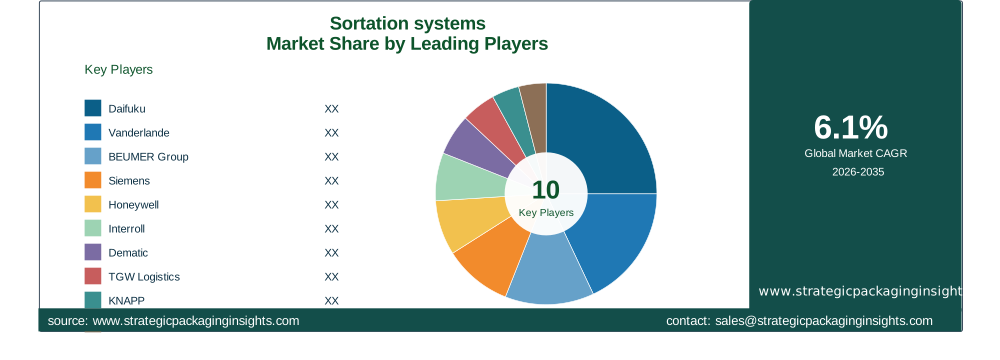
Daifuku and Vanderlande are among the leading players in the sortation systems market, known for their advanced technologies and extensive product portfolios. These companies are investing in research and development to introduce innovative solutions and maintain their competitive edge. Additionally, strategic partnerships and collaborations are enabling companies to expand their geographic presence and enhance their market reach.
Honeywell and Siemens are also prominent players in the market, leveraging their expertise in automation and robotics to offer advanced sortation solutions. These companies are focusing on enhancing system performance and operational efficiency to meet the growing demand for efficient logistics solutions. The emphasis on sustainability and eco-friendly operations is also driving companies to develop energy-efficient systems and sustainable materials.
Interroll and Dematic are focusing on expanding their product offerings and enhancing their technological capabilities to capture new market opportunities. These companies are investing in technology upgrades and capacity expansions to meet the growing demand for efficient sortation solutions. The focus on operational efficiency and automation is driving the industry towards a more streamlined and cost-effective value chain.
Key Highlights
- Largest Region: North America
- Fastest-Growing Region: Asia Pacific
- Largest Segment: E-Commerce
- Fastest-Growing Segment: AI-Enabled Sortation
- Base-year market size: USD 5.9 Billion
- Forecast-year market size: USD 10.7 Billion
- CAGR: 6.1%
- Important application: Order Fulfillment
- Major end-use industry: E-Commerce
- Major market driver: Increasing demand for efficient logistics solutions
Regional Insights
The global sortation systems market is witnessing significant growth across major regions, with North America being the largest market and Asia Pacific emerging as the fastest-growing region. The increasing demand for efficient logistics and distribution solutions, particularly in the e-commerce sector, is driving market growth in these regions.
North America
North America is the largest market for sortation systems, driven by the presence of major e-commerce and logistics companies. The region's focus on technological advancements and automation is enhancing the adoption of advanced sortation systems. The emphasis on operational efficiency and sustainability is also driving market growth, as companies seek to reduce energy consumption and carbon footprints.
The United States is a key contributor to the North American market, with significant investments in technology upgrades and capacity expansions. The demand for efficient logistics solutions and rapid order fulfillment is driving the adoption of advanced sortation systems in the region.
Europe
Europe is a significant market for sortation systems, characterized by the presence of leading players and a strong focus on sustainability. The region's emphasis on eco-friendly operations and regulatory compliance is driving the adoption of energy-efficient systems and sustainable materials. The demand for efficient logistics solutions and rapid order fulfillment is also contributing to market growth.
Germany and the United Kingdom are key contributors to the European market, with significant investments in technology upgrades and capacity expansions. The focus on operational efficiency and automation is driving the industry towards a more streamlined and cost-effective value chain.
Asia Pacific
Asia Pacific is the fastest-growing region in the sortation systems market, driven by the rapid growth of the e-commerce sector and increasing demand for efficient logistics solutions. The region's focus on technological advancements and automation is enhancing the adoption of advanced sortation systems. The emphasis on operational efficiency and sustainability is also driving market growth, as companies seek to reduce energy consumption and carbon footprints.
China and India are key contributors to the Asia Pacific market, with significant investments in technology upgrades and capacity expansions. The demand for efficient logistics solutions and rapid order fulfillment is driving the adoption of advanced sortation systems in the region.
Latin America
Latin America is witnessing moderate growth in the sortation systems market, driven by the increasing demand for efficient logistics solutions and rapid order fulfillment. The region's focus on technological advancements and automation is enhancing the adoption of advanced sortation systems. The emphasis on operational efficiency and sustainability is also driving market growth, as companies seek to reduce energy consumption and carbon footprints.
Brazil and Mexico are key contributors to the Latin American market, with significant investments in technology upgrades and capacity expansions. The demand for efficient logistics solutions and rapid order fulfillment is driving the adoption of advanced sortation systems in the region.
Middle East & Africa
The Middle East & Africa region is witnessing moderate growth in the sortation systems market, driven by the increasing demand for efficient logistics solutions and rapid order fulfillment. The region's focus on technological advancements and automation is enhancing the adoption of advanced sortation systems. The emphasis on operational efficiency and sustainability is also driving market growth, as companies seek to reduce energy consumption and carbon footprints.
South Africa and the United Arab Emirates are key contributors to the Middle East & Africa market, with significant investments in technology upgrades and capacity expansions. The demand for efficient logistics solutions and rapid order fulfillment is driving the adoption of advanced sortation systems in the region.
Sortation systems Market Segments Insights

By System Type Analysis
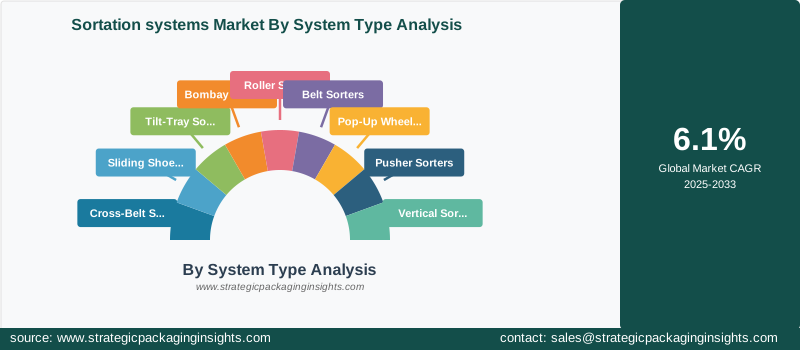
The sortation systems market is segmented by system type, including Cross-Belt Sorters, Sliding Shoe Sorters, Tilt-Tray Sorters, Bombay Sorters, Roller Sorters, Belt Sorters, Pop-Up Wheel Sorters, Pusher Sorters, and Vertical Sorters. Cross-Belt Sorters are widely used due to their high speed and accuracy, making them ideal for e-commerce and logistics applications. Sliding Shoe Sorters and Tilt-Tray Sorters are also popular for their flexibility and ability to handle a wide range of package sizes and shapes.
The demand for advanced sortation systems is driven by the need for efficient logistics solutions and rapid order fulfillment. Companies are investing in technology upgrades and capacity expansions to meet the growing demand for efficient sortation solutions. The focus on operational efficiency and automation is driving the industry towards a more streamlined and cost-effective value chain.
By Sorting Technology Analysis
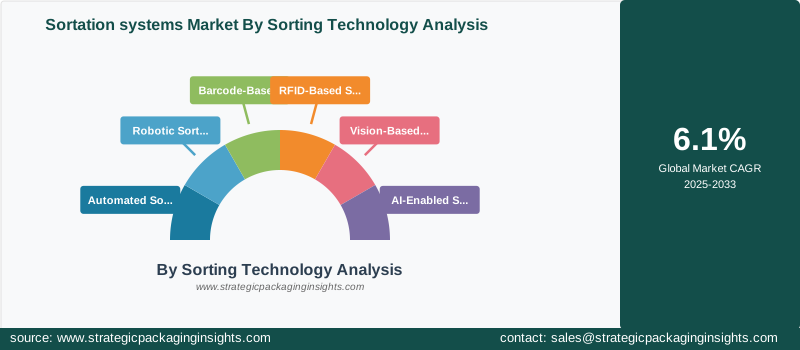
The sortation systems market is segmented by sorting technology, including Automated Sortation, Robotic Sortation, Barcode-Based Sortation, RFID-Based Sortation, Vision-Based Sortation, and AI-Enabled Sortation. Automated and Robotic Sortation systems are gaining popularity due to their high efficiency and accuracy, enabling companies to handle high volumes of parcels and packages efficiently.
The integration of AI and robotics is transforming the industry by enabling predictive maintenance and real-time data analytics, which optimize operational efficiency. The demand for advanced sortation systems is driven by the need for efficient logistics solutions and rapid order fulfillment. Companies are focusing on developing systems that offer enhanced performance, energy efficiency, and sustainability to meet customer expectations.
By Application Analysis
The sortation systems market is segmented by application, including Parcel Sorting, Order Fulfillment, Warehouse Sorting, Distribution Center Sorting, Airport Baggage Sorting, Manufacturing Line Sorting, Postal Sorting, and E-Commerce Sorting. The demand for sortation systems is driven by the need for efficient logistics solutions and rapid order fulfillment, particularly in the e-commerce and logistics sectors.
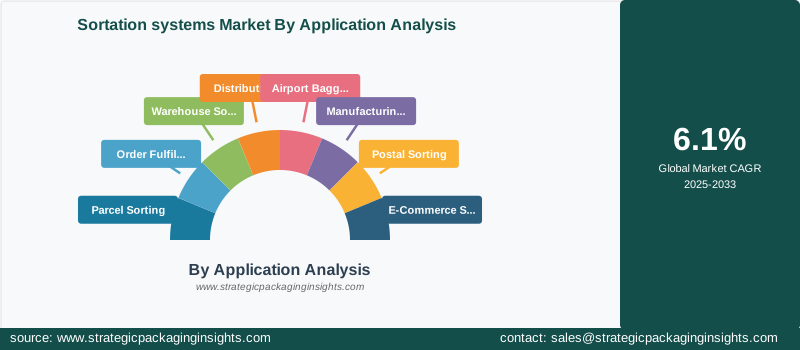
Order Fulfillment and E-Commerce Sorting are the largest applications, driven by the rise in online shopping and the need for rapid order fulfillment. Companies are investing in technology upgrades and capacity expansions to meet the growing demand for efficient sortation solutions. The focus on operational efficiency and automation is driving the industry towards a more streamlined and cost-effective value chain.
By End Use Industry Analysis
The sortation systems market is segmented by end use industry, including E-Commerce, Retail, Logistics and Transportation, Food and Beverage, Pharmaceuticals, Automotive, Airports, Postal Services, and Manufacturing. The demand for sortation systems is driven by the need for efficient logistics solutions and rapid order fulfillment, particularly in the e-commerce and logistics sectors.
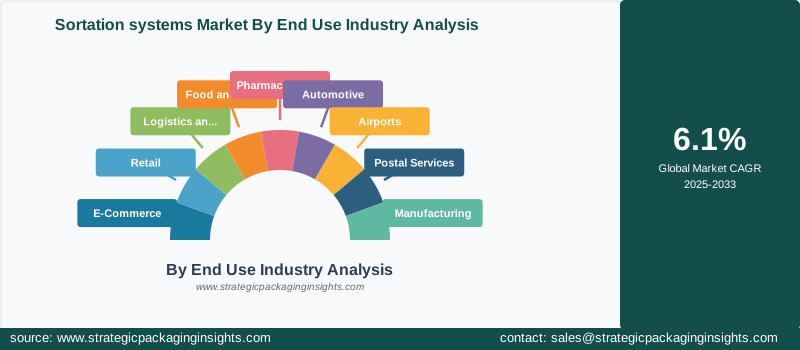
E-Commerce and Logistics and Transportation are the largest end use industries, driven by the rise in online shopping and the need for rapid order fulfillment. Companies are investing in technology upgrades and capacity expansions to meet the growing demand for efficient sortation solutions. The focus on operational efficiency and automation is driving the industry towards a more streamlined and cost-effective value chain.
By Load Type Analysis
The sortation systems market is segmented by load type, including Unit Loads, Cartons, Parcels, Packages, Totes, Polybags, and Trays. The demand for sortation systems is driven by the need for efficient logistics solutions and rapid order fulfillment, particularly in the e-commerce and logistics sectors.
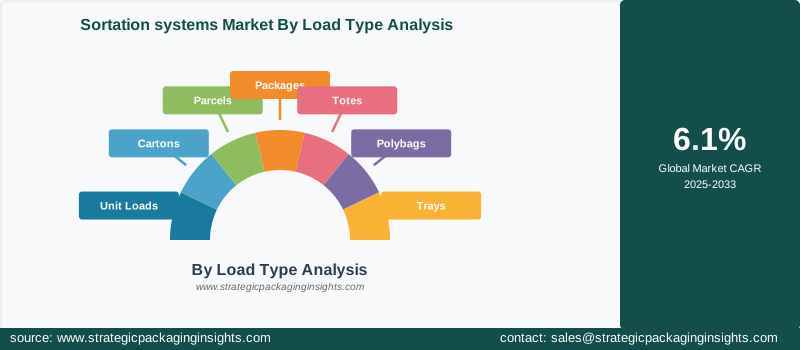
Parcels and Packages are the largest load types, driven by the rise in online shopping and the need for rapid order fulfillment. Companies are investing in technology upgrades and capacity expansions to meet the growing demand for efficient sortation solutions. The focus on operational efficiency and automation is driving the industry towards a more streamlined and cost-effective value chain.
By Capacity Analysis
The sortation systems market is segmented by capacity, including Low Throughput, Medium Throughput, High Throughput, and Very High Throughput. The demand for sortation systems is driven by the need for efficient logistics solutions and rapid order fulfillment, particularly in the e-commerce and logistics sectors.
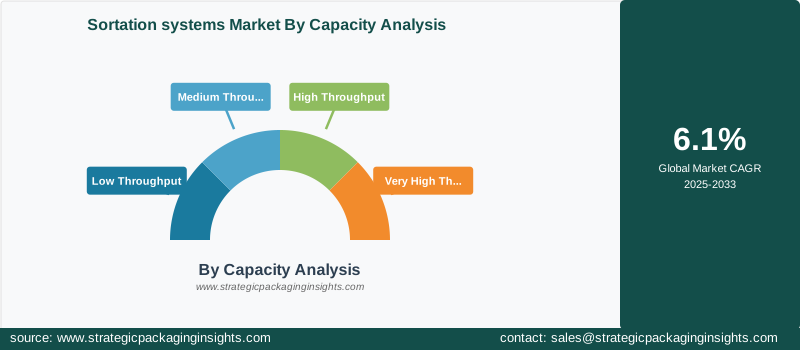
High Throughput and Very High Throughput systems are gaining popularity due to their ability to handle high volumes of parcels and packages efficiently. Companies are investing in technology upgrades and capacity expansions to meet the growing demand for efficient sortation solutions. The focus on operational efficiency and automation is driving the industry towards a more streamlined and cost-effective value chain.
By Component Analysis
The sortation systems market is segmented by component, including Conveyors, Sorters, Sensors, Barcode Scanners, RFID Readers, Controllers, Software, and Robotics. The demand for sortation systems is driven by the need for efficient logistics solutions and rapid order fulfillment, particularly in the e-commerce and logistics sectors.
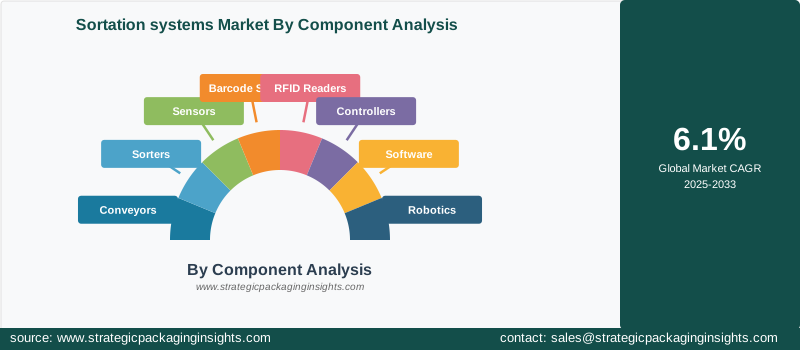
Sorters and Conveyors are the largest components, driven by the rise in online shopping and the need for rapid order fulfillment. Companies are investing in technology upgrades and capacity expansions to meet the growing demand for efficient sortation solutions. The focus on operational efficiency and automation is driving the industry towards a more streamlined and cost-effective value chain.
By Operation Analysis
The sortation systems market is segmented by operation, including Inbound Sortation, Outbound Sortation, Putaway Sortation, Order Consolidation, and Returns Sortation. The demand for sortation systems is driven by the need for efficient logistics solutions and rapid order fulfillment, particularly in the e-commerce and logistics sectors.
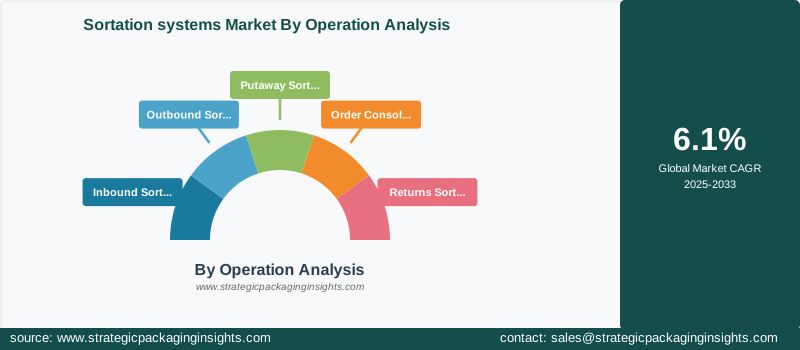
Outbound Sortation and Order Consolidation are the largest operations, driven by the rise in online shopping and the need for rapid order fulfillment. Companies are investing in technology upgrades and capacity expansions to meet the growing demand for efficient sortation solutions. The focus on operational efficiency and automation is driving the industry towards a more streamlined and cost-effective value chain.
Strategic Mergers, Acquisitions & Capacity Expansions
Recent strategic developments in the sortation systems market include mergers, acquisitions, and capacity expansions by key players such as Daifuku, Vanderlande, BEUMER Group, Siemens, Honeywell, Interroll, Dematic, TGW Logistics, KNAPP, Fives Group, SSI SCHAEFER, Murata Machinery, Bastian Solutions, Honeywell Intelligrated, and Itoh Denki. These companies are focusing on technological advancements and capacity expansions to enhance their market position and capture new opportunities.
Daifuku and Vanderlande have been actively involved in strategic partnerships and collaborations to expand their geographic presence and enhance their market reach. These companies are investing in research and development to introduce innovative solutions and maintain their competitive edge. Additionally, strategic mergers and acquisitions are enabling companies to expand their product offerings and enhance their technological capabilities.
Honeywell and Siemens are focusing on enhancing system performance and operational efficiency to meet the growing demand for efficient logistics solutions. These companies are investing in technology upgrades and capacity expansions to capture new market opportunities. The emphasis on sustainability and eco-friendly operations is also driving companies to develop energy-efficient systems and sustainable materials.
Interroll and Dematic are focusing on expanding their product offerings and enhancing their technological capabilities to capture new market opportunities. These companies are investing in technology upgrades and capacity expansions to meet the growing demand for efficient sortation solutions. The focus on operational efficiency and automation is driving the industry towards a more streamlined and cost-effective value chain.
Strategic Action Directives
Brand Packaging Engineers & Sustainability Directors should focus on material selection and recyclability to meet regulatory requirements and consumer expectations. The integration of sustainable materials and energy-efficient technologies is crucial for enhancing the market's competitive positioning and attracting environmentally conscious customers.
Converter Operations & Extrusion Leads should focus on line speed and tooling to enhance operational efficiency and reduce scrap. The integration of advanced technologies such as AI and robotics is crucial for optimizing operational efficiency and reducing operational costs.
Procurement & Material Sourcing Managers should focus on supplier diversification and price indexing to mitigate raw material volatility and regulatory uncertainty. The integration of sustainable materials and energy-efficient technologies is crucial for enhancing the market's competitive positioning and attracting environmentally conscious customers.
Investors should focus on capacity expansions and technology advancements to capture new market opportunities. The integration of advanced technologies such as AI and robotics is crucial for optimizing operational efficiency and reducing operational costs. Monitoring regulatory changes and consumer expectations will be crucial for maintaining competitive advantage and capturing market opportunities.
Sortation systems Market Segments
The Sortation systems market has been segmented on the basis ofBy System Type
- Cross-Belt Sorters
- Sliding Shoe Sorters
- Tilt-Tray Sorters
- Bombay Sorters
- Roller Sorters
- Belt Sorters
- Pop-Up Wheel Sorters
- Pusher Sorters
- Vertical Sorters
By Sorting Technology
- Automated Sortation
- Robotic Sortation
- Barcode-Based Sortation
- RFID-Based Sortation
- Vision-Based Sortation
- AI-Enabled Sortation
By Application
- Parcel Sorting
- Order Fulfillment
- Warehouse Sorting
- Distribution Center Sorting
- Airport Baggage Sorting
- Manufacturing Line Sorting
- Postal Sorting
- E-Commerce Sorting
By End Use Industry
- E-Commerce
- Retail
- Logistics and Transportation
- Food and Beverage
- Pharmaceuticals
- Automotive
- Airports
- Postal Services
- Manufacturing
By Load Type
- Unit Loads
- Cartons
- Parcels
- Packages
- Totes
- Polybags
- Trays
By Capacity
- Low Throughput
- Medium Throughput
- High Throughput
- Very High Throughput
By Component
- Conveyors
- Sorters
- Sensors
- Barcode Scanners
- RFID Readers
- Controllers
- Software
- Robotics
By Operation
- Inbound Sortation
- Outbound Sortation
- Putaway Sortation
- Order Consolidation
- Returns Sortation
By Region
- North America
- Europe
- Asia-Pacific
- Latin America
- Middle East and Africa




