


Soluble-Film Cutters Market Outlook
The Soluble-Film Cutters market was valued at $342.60 million in 2025 and is projected to reach $719.87 million by 2034, growing at a CAGR of 8.6% during the forecast period 2026-2034. This market is witnessing significant growth due to the increasing demand for eco-friendly and sustainable packaging solutions. Soluble-film cutters are essential in the production of water-soluble films, which are gaining popularity in various industries such as home care, pharmaceuticals, and packaging converters. The rising awareness about environmental conservation and the need for reducing plastic waste are driving the adoption of soluble-film cutters, thereby boosting market growth.
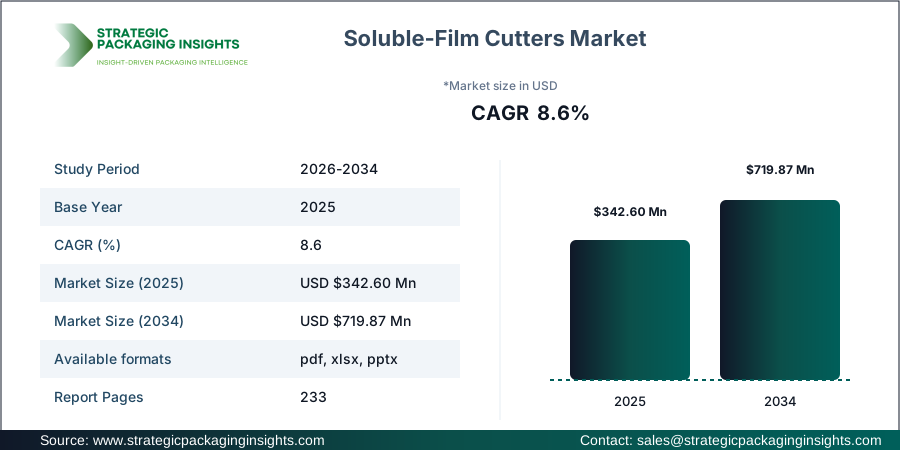
Despite the promising growth prospects, the soluble-film cutters market faces certain challenges. Regulatory constraints related to the use of specific materials in film production and the high initial investment required for advanced cutting technologies are some of the key restraints. However, the market holds immense potential for growth, driven by technological advancements and the increasing adoption of automation in manufacturing processes. The development of innovative cutting technologies and the expansion of application areas are expected to create lucrative opportunities for market players in the coming years.
Report Scope
| Attributes | Details |
| Report Title | Soluble-Film Cutters Market Size, Future Growth and Forecast 2034 |
| Machine Type | Rotary Cutters, Guillotine Cutters, Laser Cutters |
| Application | PVOH Films, Unit-Dose Packs, Soluble Pouches |
| Automation | Manual, Semi-Automatic, Automatic |
| End Use | Home Care, Pharma, Packaging Converters, Film Manufacturers |
| Region | Asia Pacific, North America, Latin America, Europe, Middle East & Africa |
| Base Year | 2025 |
| Historic Period | 2018-2024 |
| Forecast Period | 2026-2034 |
| Number of Pages | 233 |
| Customization Available | Yes* |
Opportunities & Threats
The soluble-film cutters market presents numerous opportunities for growth, primarily driven by the increasing demand for sustainable packaging solutions. As consumers become more environmentally conscious, there is a growing preference for biodegradable and water-soluble packaging materials. This shift in consumer behavior is encouraging manufacturers to adopt soluble-film cutters to produce eco-friendly packaging solutions. Additionally, the expansion of the pharmaceutical and home care industries is creating new avenues for market growth, as these sectors increasingly utilize soluble films for packaging unit-dose packs and soluble pouches.
Another significant opportunity lies in the technological advancements in cutting technologies. The development of advanced cutting machines, such as laser cutters, is enhancing the efficiency and precision of film cutting processes. These innovations are enabling manufacturers to produce high-quality films with minimal waste, thereby reducing production costs and improving profitability. Furthermore, the integration of automation in cutting processes is streamlining operations and increasing production capacity, which is expected to drive market growth in the coming years.
However, the market also faces certain threats that could hinder its growth. One of the primary challenges is the high initial investment required for setting up advanced cutting technologies. Small and medium-sized enterprises may find it difficult to afford these technologies, which could limit their market participation. Additionally, regulatory constraints related to the use of specific materials in film production could pose challenges for manufacturers, as they need to comply with stringent environmental regulations. These factors could potentially impact the growth of the soluble-film cutters market.
Drivers & Challenges
The soluble-film cutters market is primarily driven by the increasing demand for eco-friendly packaging solutions. As environmental concerns continue to rise, consumers and businesses are seeking sustainable alternatives to traditional plastic packaging. Soluble films, which dissolve in water and leave no residue, are gaining popularity as a viable solution to reduce plastic waste. This growing demand for sustainable packaging is driving the adoption of soluble-film cutters, as they are essential in the production of these films. Additionally, the expansion of the pharmaceutical and home care industries is further fueling market growth, as these sectors increasingly utilize soluble films for packaging applications.
Technological advancements in cutting technologies are also playing a crucial role in driving market growth. The development of advanced cutting machines, such as laser cutters, is enhancing the efficiency and precision of film cutting processes. These innovations are enabling manufacturers to produce high-quality films with minimal waste, thereby reducing production costs and improving profitability. Furthermore, the integration of automation in cutting processes is streamlining operations and increasing production capacity, which is expected to drive market growth in the coming years.
Despite the promising growth prospects, the soluble-film cutters market faces certain challenges. One of the primary challenges is the high initial investment required for setting up advanced cutting technologies. Small and medium-sized enterprises may find it difficult to afford these technologies, which could limit their market participation. Additionally, regulatory constraints related to the use of specific materials in film production could pose challenges for manufacturers, as they need to comply with stringent environmental regulations. These factors could potentially impact the growth of the soluble-film cutters market.
Market Share Analysis
The soluble-film cutters market is characterized by a competitive landscape with several key players vying for market share. Companies such as Kuraray, MonoSol, Aicello, and Sekisui Chemical are some of the prominent players in the market. These companies have established a strong presence in the market through their extensive product portfolios and strategic partnerships. They are focusing on expanding their product offerings and enhancing their production capabilities to cater to the growing demand for soluble-film cutters.
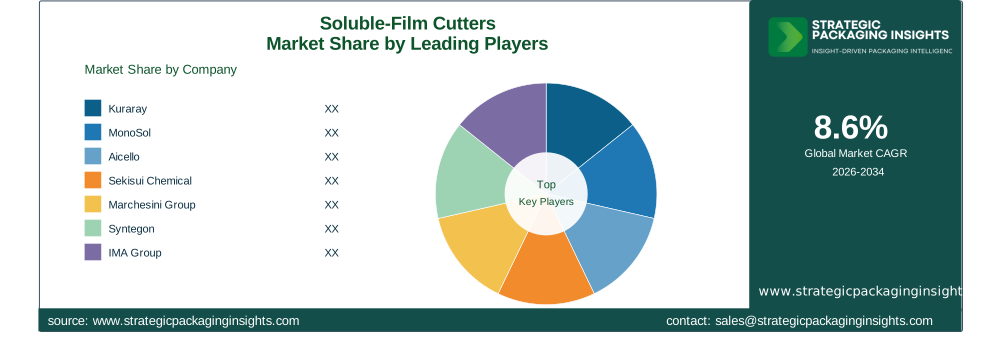
Kuraray is a leading player in the soluble-film cutters market, known for its innovative solutions and high-quality products. The company has a significant market share and is continuously investing in research and development to introduce advanced cutting technologies. MonoSol, another key player, is renowned for its water-soluble films and has a strong presence in the home care and pharmaceutical sectors. The company is focusing on expanding its production capacity and strengthening its distribution network to enhance its market position.
Aicello and Sekisui Chemical are also prominent players in the market, offering a wide range of soluble-film cutters for various applications. These companies are leveraging their technological expertise and extensive industry experience to develop innovative solutions that meet the evolving needs of customers. Additionally, companies like Marchesini Group, Syntegon, IMA Group, Delta ModTech, Hudson-Sharp, and Totani Corporation are actively participating in the market, contributing to its growth through their diverse product offerings and strategic initiatives.
Key Highlights
- The soluble-film cutters market is projected to grow at a CAGR of 8.6% from 2026 to 2034.
- Increasing demand for eco-friendly packaging solutions is driving market growth.
- Technological advancements in cutting technologies are enhancing efficiency and precision.
- High initial investment and regulatory constraints are key challenges for market players.
- Key players include Kuraray, MonoSol, Aicello, and Sekisui Chemical.
- The pharmaceutical and home care industries are major end-users of soluble films.
- Automation in cutting processes is streamlining operations and increasing production capacity.
- Expansion of application areas is creating new growth opportunities for market players.
- Stringent environmental regulations are impacting the use of specific materials in film production.
- Strategic partnerships and product innovations are key strategies adopted by market players.
Top Countries Insights
In the soluble-film cutters market, the United States is a leading player, with a market size of approximately $120 million and a CAGR of 7%. The country's strong focus on sustainability and environmental conservation is driving the demand for eco-friendly packaging solutions. Government initiatives promoting the use of biodegradable materials are further supporting market growth. However, regulatory constraints related to material usage pose challenges for manufacturers.
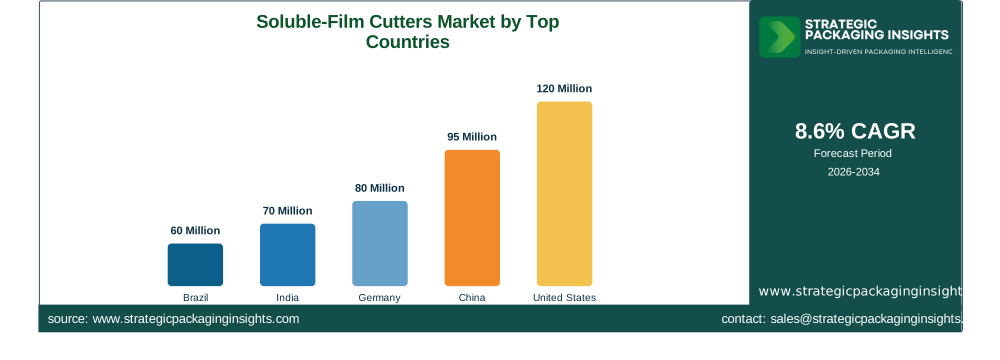
China is another significant market, with a market size of around $95 million and a CAGR of 10%. The country's booming pharmaceutical and home care industries are major growth drivers, as they increasingly utilize soluble films for packaging applications. Additionally, the government's emphasis on reducing plastic waste and promoting sustainable practices is boosting the adoption of soluble-film cutters. However, the high initial investment required for advanced cutting technologies remains a challenge for small and medium-sized enterprises.
Germany, with a market size of approximately $80 million and a CAGR of 8%, is a key player in the European market. The country's strong manufacturing base and focus on technological innovation are driving the adoption of advanced cutting technologies. The increasing demand for sustainable packaging solutions in the pharmaceutical and home care sectors is further fueling market growth. However, stringent environmental regulations related to material usage pose challenges for manufacturers.
India, with a market size of around $70 million and a CAGR of 12%, is emerging as a lucrative market for soluble-film cutters. The country's growing population and increasing awareness about environmental conservation are driving the demand for eco-friendly packaging solutions. The expansion of the pharmaceutical and home care industries is further supporting market growth. However, the high initial investment required for advanced cutting technologies remains a challenge for small and medium-sized enterprises.
Brazil, with a market size of approximately $60 million and a CAGR of 9%, is a key player in the Latin American market. The country's focus on sustainability and environmental conservation is driving the demand for soluble-film cutters. Government initiatives promoting the use of biodegradable materials are further supporting market growth. However, regulatory constraints related to material usage pose challenges for manufacturers.
Soluble-Film Cutters Market Segments Insights

Machine Type Analysis
The soluble-film cutters market is segmented by machine type into rotary cutters, guillotine cutters, and laser cutters. Rotary cutters are widely used due to their efficiency and ability to handle large volumes of film. They are particularly popular in the packaging industry, where speed and precision are crucial. Guillotine cutters, on the other hand, are favored for their simplicity and cost-effectiveness, making them ideal for small to medium-sized enterprises. Laser cutters are gaining traction due to their precision and ability to cut complex shapes, making them suitable for high-end applications.
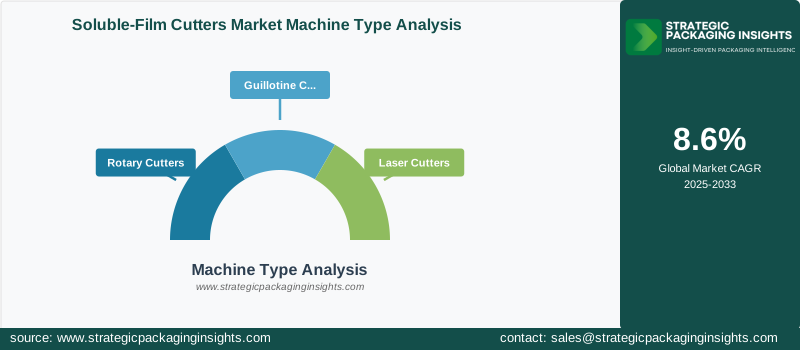
The demand for rotary cutters is driven by the increasing need for high-speed production in the packaging industry. These machines offer the advantage of continuous cutting, which enhances productivity and reduces downtime. Guillotine cutters are preferred by small and medium-sized enterprises due to their lower cost and ease of use. However, the market for laser cutters is expected to grow significantly, driven by technological advancements and the increasing demand for precision cutting in high-end applications. The integration of automation in cutting processes is further enhancing the efficiency and precision of these machines, driving their adoption in various industries.
Application Analysis
The soluble-film cutters market is segmented by application into PVOH films, unit-dose packs, and soluble pouches. PVOH films are widely used in the packaging industry due to their water-soluble properties and environmental benefits. They are particularly popular in the home care and pharmaceutical sectors, where they are used for packaging unit-dose packs and soluble pouches. The demand for PVOH films is driven by the increasing awareness about environmental conservation and the need for sustainable packaging solutions.
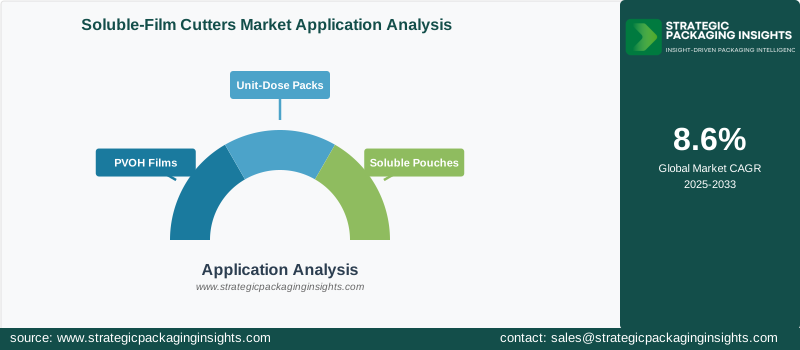
Unit-dose packs and soluble pouches are gaining popularity in the pharmaceutical and home care industries due to their convenience and ease of use. These packaging solutions offer the advantage of precise dosing and reduced waste, making them ideal for single-use applications. The demand for unit-dose packs and soluble pouches is driven by the increasing focus on sustainability and the need for eco-friendly packaging solutions. The expansion of the pharmaceutical and home care industries is further fueling the demand for these packaging solutions, driving the growth of the soluble-film cutters market.
Automation Analysis
The soluble-film cutters market is segmented by automation into manual, semi-automatic, and automatic machines. Manual machines are widely used by small and medium-sized enterprises due to their lower cost and ease of use. However, the demand for semi-automatic and automatic machines is increasing, driven by the need for higher efficiency and productivity in large-scale production.
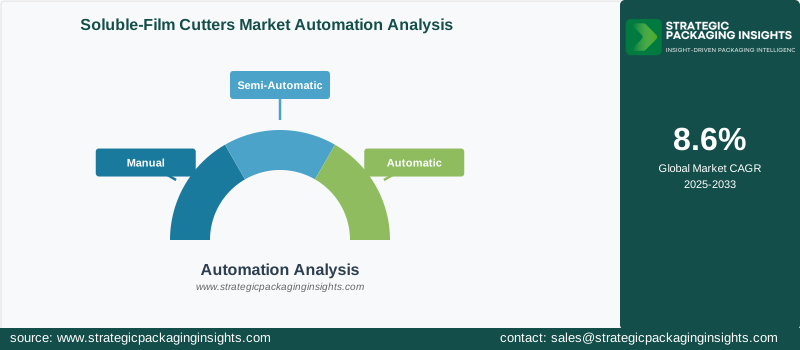
Semi-automatic machines offer the advantage of increased efficiency and reduced labor costs, making them ideal for medium-sized enterprises. Automatic machines, on the other hand, offer the highest level of efficiency and precision, making them suitable for large-scale production. The integration of automation in cutting processes is streamlining operations and increasing production capacity, driving the adoption of semi-automatic and automatic machines in various industries. The demand for these machines is expected to grow significantly, driven by technological advancements and the increasing focus on automation in manufacturing processes.
End Use Analysis
The soluble-film cutters market is segmented by end use into home care, pharma, packaging converters, and film manufacturers. The home care and pharmaceutical industries are major end-users of soluble films, driven by the increasing demand for eco-friendly packaging solutions. These industries are increasingly utilizing soluble films for packaging unit-dose packs and soluble pouches, driving the demand for soluble-film cutters.
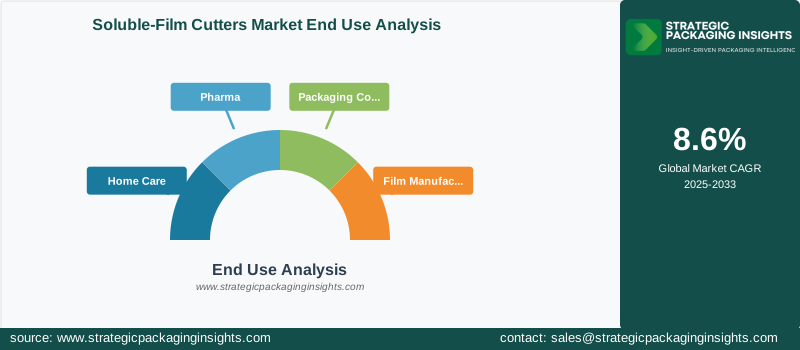
Packaging converters and film manufacturers are also significant end-users of soluble-film cutters, driven by the need for high-quality films and efficient production processes. These industries are focusing on expanding their production capabilities and enhancing their product offerings to cater to the growing demand for soluble films. The demand for soluble-film cutters in these industries is driven by the increasing focus on sustainability and the need for eco-friendly packaging solutions. The expansion of application areas and the development of innovative cutting technologies are expected to create new growth opportunities for market players in the coming years.
Soluble-Film Cutters Market Segments
The Soluble-Film Cutters market has been segmented on the basis ofMachine Type
- Rotary Cutters
- Guillotine Cutters
- Laser Cutters
Application
- PVOH Films
- Unit-Dose Packs
- Soluble Pouches
Automation
- Manual
- Semi-Automatic
- Automatic
End Use
- Home Care
- Pharma
- Packaging Converters
- Film Manufacturers
Region
- Asia Pacific
- North America
- Latin America
- Europe
- Middle East & Africa




