


Snap on Rubber Stopper Market Outlook
The Snap on Rubber Stopper market size was valued at USD 2.36 billion in 2025 and is anticipated to reach USD 4.24 billion by 2034, growing at a CAGR of 6.7% during the forecast period according to Strategic Packaging Insights. The market is witnessing significant growth due to the increasing demand for pharmaceutical packaging solutions that ensure product integrity and safety. West Pharmaceutical Services, a leading player in the market, is at the forefront of innovation, offering advanced rubber stopper solutions that cater to the evolving needs of the pharmaceutical industry. The growing prevalence of chronic diseases and the subsequent rise in injectable drug formulations are driving the demand for snap-on rubber stoppers, which provide a secure seal and prevent contamination.
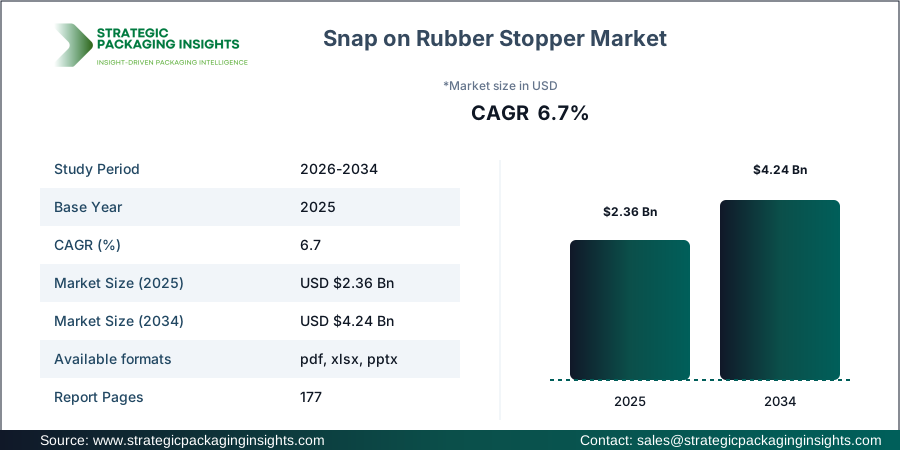
One of the most impactful drivers of the Snap on Rubber Stopper market is the stringent regulatory requirements for pharmaceutical packaging. Governments worldwide are implementing strict guidelines to ensure the safety and efficacy of pharmaceutical products, which has led to increased adoption of high-quality rubber stoppers. According to recent reports, the global pharmaceutical industry is expected to grow significantly, further boosting the demand for reliable packaging solutions. Companies like Datwyler are investing in research and development to enhance the performance of their rubber stoppers, ensuring compliance with international standards and gaining a competitive edge in the market.
Report Scope
| Attributes | Details |
| Report Title | Snap on Rubber Stopper Market Size, Future Growth and Forecast 2034 |
| By Material Type | Butyl Rubber, Bromobutyl Rubber, Chlorobutyl Rubber, Silicone Rubber |
| By Product Type | Snap-On Stoppers, Vial Stoppers, Serum Stoppers, Lyophilization Stoppers |
| By Application | Injectables, Vaccines, Diagnostics, Laboratory Containers |
| By End Use | Pharma Companies, Biotech Companies, Hospitals, Laboratories |
| Region | Asia Pacific, North America, Latin America, Europe, Middle East & Africa |
| Base Year | 2025 |
| Historic Period | 2018-2024 |
| Forecast Period | 2026-2034 |
| Number of Pages | 177 |
| Customization Available | Yes* |
Sustainability & Circular Economy Analysis
Sustainability initiatives are increasingly shaping the Snap on Rubber Stopper market, as companies strive to reduce their environmental impact and meet consumer expectations for eco-friendly products. The use of recyclable materials and the development of reusable packaging solutions are becoming more prevalent, as manufacturers aim to minimize waste and lower their carbon footprint. West Pharmaceutical Services, for instance, is actively exploring sustainable material innovations to enhance the environmental performance of their rubber stoppers, aligning with global sustainability goals.
The circular economy concept is gaining traction in the packaging industry, influencing the design and manufacturing processes of rubber stoppers. Companies are adopting waste reduction strategies and implementing extended producer responsibility (EPR) programs to ensure the responsible disposal and recycling of packaging materials. These initiatives not only contribute to environmental conservation but also enhance brand reputation and customer loyalty. As a result, sustainability trends are driving investment decisions and shaping supply chain strategies, as companies seek to balance profitability with environmental stewardship.
Regulatory compliance is a critical factor in the Snap on Rubber Stopper market, as governments worldwide are imposing stricter packaging regulations to protect public health and the environment. Manufacturers are required to adhere to these regulations, which often necessitate the use of eco-friendly materials and sustainable production practices. This has led to increased collaboration between packaging companies and regulatory bodies, as they work together to develop innovative solutions that meet both regulatory requirements and consumer preferences. The focus on sustainability is expected to continue influencing the market, driving long-term competitiveness and growth.
Packaging Value Chain & Supply Chain Analysis
The packaging value chain for Snap on Rubber Stoppers involves multiple stakeholders, including raw material suppliers, packaging converters, manufacturers, and logistics providers. Efficient raw material sourcing is crucial for maintaining production capabilities and ensuring timely delivery of high-quality rubber stoppers. Companies like Aptar Pharma are leveraging strategic partnerships with raw material suppliers to secure a steady supply of premium rubber compounds, enhancing their competitive position in the market.
Supply chain efficiency is a key determinant of market performance, as it impacts production costs, lead times, and customer satisfaction. Manufacturers are investing in advanced packaging machinery and automation technologies to streamline production processes and improve operational efficiency. Logistics and distribution channels play a vital role in ensuring the timely delivery of rubber stoppers to end-users, such as pharmaceutical companies and hospitals. Companies are adopting localization strategies to reduce transportation costs and enhance supply chain resilience, particularly in regions with high demand for pharmaceutical packaging solutions.
Recycling networks are becoming an integral part of the packaging supply chain, as companies seek to minimize waste and promote sustainable practices. The integration of recycling initiatives into the supply chain not only supports environmental goals but also offers cost-saving opportunities through the reuse of materials. Inventory management and procurement strategies are being optimized to align with sustainability objectives, as companies aim to reduce excess inventory and minimize resource consumption. These efforts are contributing to the overall competitiveness of the Snap on Rubber Stopper market, as companies strive to meet the evolving needs of their customers while adhering to environmental standards.
Opportunities & Threats
The Snap on Rubber Stopper market presents numerous opportunities for growth, driven by the increasing demand for pharmaceutical packaging solutions that ensure product safety and integrity. The rise in chronic diseases and the growing prevalence of injectable drug formulations are creating a significant demand for high-quality rubber stoppers. Companies like Stelmi are capitalizing on this opportunity by developing innovative stopper solutions that cater to the specific needs of the pharmaceutical industry. Additionally, the expansion of the global pharmaceutical industry is expected to drive further demand for rubber stoppers, providing lucrative growth opportunities for market players.
Technological advancements in rubber stopper manufacturing are opening new avenues for market growth. The development of advanced materials and production techniques is enabling manufacturers to enhance the performance and durability of their products. Companies are investing in research and development to create rubber stoppers that offer superior sealing properties and resistance to chemical degradation. This focus on innovation is expected to drive market growth, as companies seek to differentiate themselves in a competitive landscape. Furthermore, the increasing adoption of sustainable packaging solutions is creating opportunities for companies to develop eco-friendly rubber stoppers that align with consumer preferences and regulatory requirements.
Despite the growth opportunities, the Snap on Rubber Stopper market faces several challenges, including the volatility of raw material prices and the stringent regulatory landscape. Fluctuations in the prices of rubber compounds can impact production costs and profit margins, posing a threat to market stability. Additionally, manufacturers must navigate complex regulatory requirements to ensure compliance with international standards, which can be resource-intensive and time-consuming. Companies must also address the growing demand for sustainable packaging solutions, which requires significant investment in research and development and the adoption of new production practices. These challenges necessitate strategic planning and collaboration with industry stakeholders to ensure long-term market success.
Drivers & Challenges
The Snap on Rubber Stopper market is driven by several key factors, including the increasing demand for pharmaceutical packaging solutions that ensure product safety and integrity. The rise in chronic diseases and the growing prevalence of injectable drug formulations are creating a significant demand for high-quality rubber stoppers. Companies like Stelmi are capitalizing on this opportunity by developing innovative stopper solutions that cater to the specific needs of the pharmaceutical industry. Additionally, the expansion of the global pharmaceutical industry is expected to drive further demand for rubber stoppers, providing lucrative growth opportunities for market players.
Technological advancements in rubber stopper manufacturing are opening new avenues for market growth. The development of advanced materials and production techniques is enabling manufacturers to enhance the performance and durability of their products. Companies are investing in research and development to create rubber stoppers that offer superior sealing properties and resistance to chemical degradation. This focus on innovation is expected to drive market growth, as companies seek to differentiate themselves in a competitive landscape. Furthermore, the increasing adoption of sustainable packaging solutions is creating opportunities for companies to develop eco-friendly rubber stoppers that align with consumer preferences and regulatory requirements.
Despite the growth opportunities, the Snap on Rubber Stopper market faces several challenges, including the volatility of raw material prices and the stringent regulatory landscape. Fluctuations in the prices of rubber compounds can impact production costs and profit margins, posing a threat to market stability. Additionally, manufacturers must navigate complex regulatory requirements to ensure compliance with international standards, which can be resource-intensive and time-consuming. Companies must also address the growing demand for sustainable packaging solutions, which requires significant investment in research and development and the adoption of new production practices. These challenges necessitate strategic planning and collaboration with industry stakeholders to ensure long-term market success.
Market Share Analysis
The Snap on Rubber Stopper market is characterized by a competitive landscape with several key players vying for market share. West Pharmaceutical Services is a leading company in the market, known for its innovative rubber stopper solutions that cater to the evolving needs of the pharmaceutical industry. The company has a strong presence in the market, driven by its commitment to quality and customer satisfaction. Datwyler is another prominent player, offering a wide range of rubber stoppers that meet stringent regulatory requirements and provide superior sealing properties.
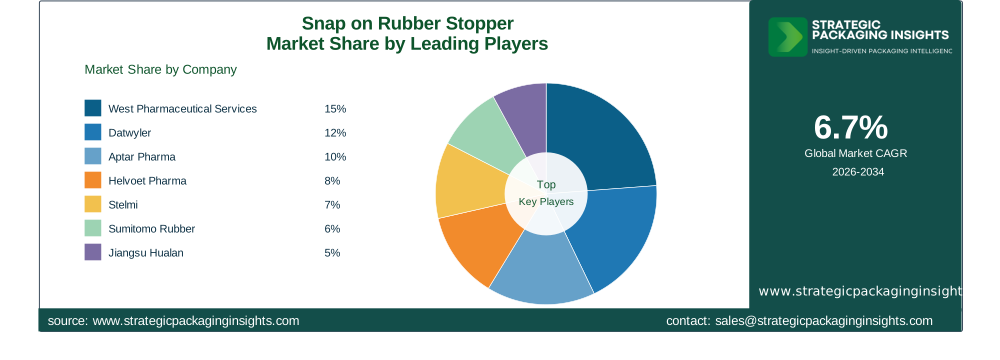
Aptar Pharma is a key player in the Snap on Rubber Stopper market, known for its focus on sustainability and innovation. The company is actively investing in research and development to enhance the performance of its rubber stoppers and align with global sustainability goals. Helvoet Pharma is also a significant player, offering high-quality rubber stoppers that cater to the specific needs of the pharmaceutical industry. The company's commitment to quality and customer satisfaction has helped it maintain a strong position in the market.
Stelmi is a leading manufacturer of rubber stoppers, known for its innovative solutions that cater to the evolving needs of the pharmaceutical industry. The company has a strong presence in the market, driven by its focus on quality and customer satisfaction. Sumitomo Rubber is another key player, offering a wide range of rubber stoppers that meet stringent regulatory requirements and provide superior sealing properties. The company's commitment to sustainability and innovation has helped it maintain a competitive edge in the market.
Jiangsu Hualan is a prominent player in the Snap on Rubber Stopper market, known for its focus on quality and customer satisfaction. The company offers a wide range of rubber stoppers that cater to the specific needs of the pharmaceutical industry. Shandong Pharmaceutical Glass is another key player, offering high-quality rubber stoppers that meet stringent regulatory requirements and provide superior sealing properties. The company's commitment to sustainability and innovation has helped it maintain a strong position in the market.
Key Highlights
- Market Size: The Snap on Rubber Stopper market was valued at USD 2.36 billion in 2025 and is projected to reach USD 4.24 billion by 2034.
- Growth Rate: The market is expected to grow at a CAGR of 6.7% during the forecast period.
- Leading Companies: Key players include West Pharmaceutical Services, Datwyler, and Aptar Pharma.
- Material Type: Butyl Rubber and Bromobutyl Rubber are the most commonly used materials.
- Product Type: Snap-On Stoppers and Vial Stoppers are the leading product segments.
- Application: Injectables and Vaccines are the primary applications driving market demand.
- End Use: Pharma Companies and Biotech Companies are the major end-users.
- Regional Insights: Asia Pacific is expected to witness the highest growth rate.
- Sustainability Focus: Increasing adoption of eco-friendly materials and sustainable packaging solutions.
Snap on Rubber Stopper Market Segments Insights

By Material Type Analysis
The Snap on Rubber Stopper market is segmented by material type, with Butyl Rubber, Bromobutyl Rubber, Chlorobutyl Rubber, and Silicone Rubber being the primary materials used in manufacturing. Butyl Rubber is widely preferred due to its excellent impermeability and resistance to chemical degradation, making it ideal for pharmaceutical applications. Bromobutyl Rubber is also gaining traction, offering superior sealing properties and compatibility with a wide range of pharmaceutical formulations. Companies like West Pharmaceutical Services are investing in research and development to enhance the performance of these materials, ensuring compliance with stringent regulatory requirements and meeting the evolving needs of the pharmaceutical industry.
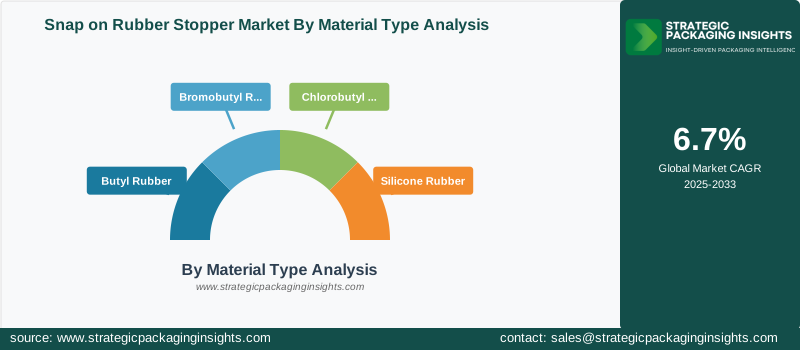
Chlorobutyl Rubber is another key material used in the production of snap-on rubber stoppers, known for its excellent resistance to heat and chemical exposure. This material is particularly suitable for applications requiring high-temperature sterilization, such as autoclaving. Silicone Rubber is also used in the market, offering flexibility and durability, making it suitable for a variety of pharmaceutical packaging applications. The increasing demand for high-quality rubber stoppers that ensure product safety and integrity is driving the growth of these material segments, as companies seek to differentiate themselves in a competitive landscape.
By Product Type Analysis
The Snap on Rubber Stopper market is segmented by product type, with Snap-On Stoppers, Vial Stoppers, Serum Stoppers, and Lyophilization Stoppers being the primary products offered. Snap-On Stoppers are widely used in the pharmaceutical industry, providing a secure seal and preventing contamination of drug formulations. Vial Stoppers are also in high demand, offering excellent sealing properties and compatibility with a wide range of pharmaceutical formulations. Companies like Datwyler are focusing on innovation to enhance the performance of these products, ensuring compliance with international standards and meeting the evolving needs of the pharmaceutical industry.
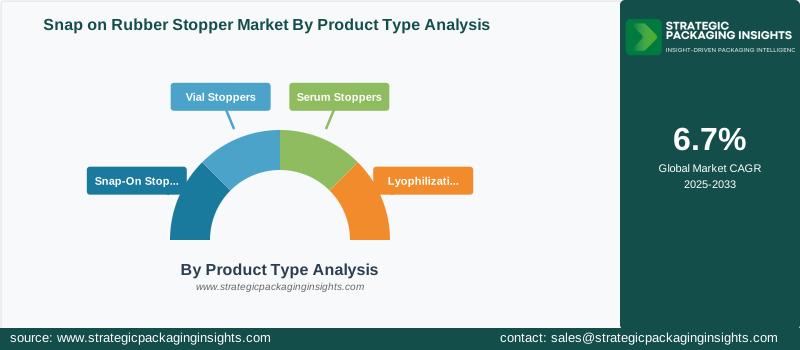
Serum Stoppers are another key product segment, known for their ability to maintain the integrity of serum samples and prevent contamination. Lyophilization Stoppers are used in freeze-drying applications, offering excellent sealing properties and resistance to chemical degradation. The increasing demand for high-quality rubber stoppers that ensure product safety and integrity is driving the growth of these product segments, as companies seek to differentiate themselves in a competitive landscape. The focus on innovation and sustainability is expected to drive further growth in the market, as companies invest in research and development to create advanced rubber stopper solutions.
By Application Analysis
The Snap on Rubber Stopper market is segmented by application, with Injectables, Vaccines, Diagnostics, and Laboratory Containers being the primary applications driving market demand. Injectables are the largest application segment, driven by the increasing prevalence of chronic diseases and the growing demand for injectable drug formulations. Vaccines are also a significant application, with the global vaccination programs driving the demand for high-quality rubber stoppers that ensure product safety and integrity. Companies like Aptar Pharma are focusing on innovation to enhance the performance of their rubber stoppers, ensuring compliance with international standards and meeting the evolving needs of the pharmaceutical industry.

Diagnostics is another key application segment, with the increasing demand for diagnostic tests driving the need for reliable packaging solutions. Laboratory Containers are also in high demand, offering excellent sealing properties and compatibility with a wide range of laboratory applications. The focus on innovation and sustainability is expected to drive further growth in the market, as companies invest in research and development to create advanced rubber stopper solutions. The increasing adoption of sustainable packaging solutions is also creating opportunities for companies to develop eco-friendly rubber stoppers that align with consumer preferences and regulatory requirements.
By End Use Analysis
The Snap on Rubber Stopper market is segmented by end use, with Pharma Companies, Biotech Companies, Hospitals, and Laboratories being the primary end-users. Pharma Companies are the largest end-user segment, driven by the increasing demand for pharmaceutical packaging solutions that ensure product safety and integrity. Biotech Companies are also a significant end-user, with the growing focus on biotechnology research and development driving the demand for high-quality rubber stoppers. Companies like Stelmi are focusing on innovation to enhance the performance of their rubber stoppers, ensuring compliance with international standards and meeting the evolving needs of the pharmaceutical industry.
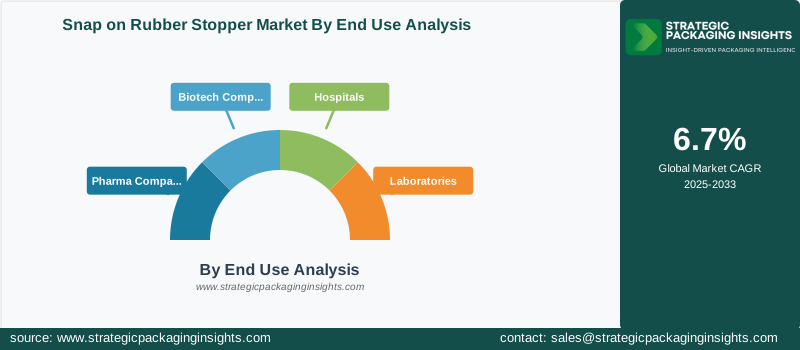
Hospitals are another key end-user segment, with the increasing demand for injectable drug formulations driving the need for reliable packaging solutions. Laboratories are also in high demand, offering excellent sealing properties and compatibility with a wide range of laboratory applications. The focus on innovation and sustainability is expected to drive further growth in the market, as companies invest in research and development to create advanced rubber stopper solutions. The increasing adoption of sustainable packaging solutions is also creating opportunities for companies to develop eco-friendly rubber stoppers that align with consumer preferences and regulatory requirements.
Snap on Rubber Stopper Market Segments
The Snap on Rubber Stopper market has been segmented on the basis ofBy Material Type
- Butyl Rubber
- Bromobutyl Rubber
- Chlorobutyl Rubber
- Silicone Rubber
By Product Type
- Snap-On Stoppers
- Vial Stoppers
- Serum Stoppers
- Lyophilization Stoppers
By Application
- Injectables
- Vaccines
- Diagnostics
- Laboratory Containers
By End Use
- Pharma Companies
- Biotech Companies
- Hospitals
- Laboratories
Region
- Asia Pacific
- North America
- Latin America
- Europe
- Middle East & Africa




