


Smart Labelling in Logistics Market Outlook
The Smart Labelling in Logistics market was valued at $7.35 billion in 2025 and is projected to reach $13.90 billion by 2034, growing at a CAGR of 7.3% during the forecast period 2026-2034. This market is experiencing significant growth due to the increasing demand for efficient supply chain management solutions. The integration of smart labelling technologies such as RFID, NFC, and QR codes is enhancing the tracking and monitoring capabilities within logistics operations. These technologies provide real-time data and insights, which are crucial for optimizing logistics processes, reducing errors, and improving overall operational efficiency. The rise in e-commerce and the need for faster delivery times are further propelling the adoption of smart labelling solutions in the logistics sector.
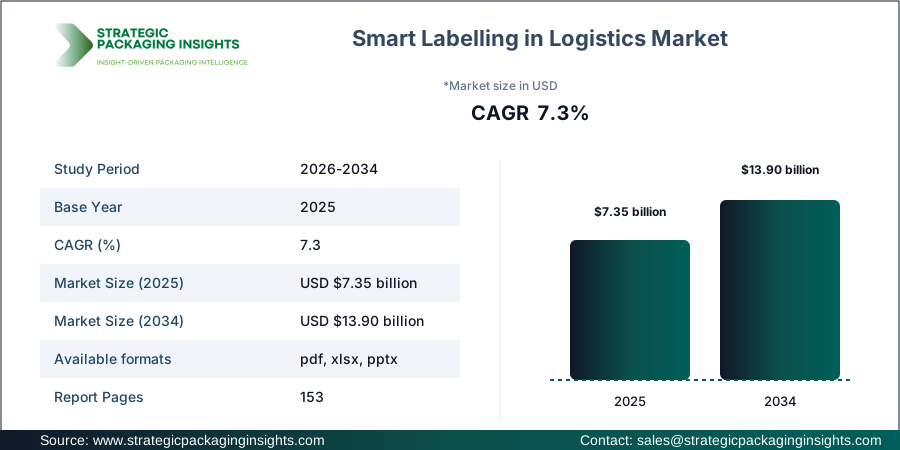
Despite the promising growth prospects, the Smart Labelling in Logistics market faces certain challenges. High initial costs associated with the implementation of smart labelling technologies can be a barrier for small and medium-sized enterprises. Additionally, concerns regarding data privacy and security are prevalent, as these technologies involve the transmission and storage of sensitive information. However, advancements in technology and the development of cost-effective solutions are expected to mitigate these challenges over time. The market also presents significant opportunities for growth, particularly in emerging economies where the logistics sector is rapidly expanding. As companies continue to invest in digital transformation, the demand for smart labelling solutions is anticipated to rise, driving market growth.
Report Scope
| Attributes | Details |
| Report Title | Smart Labelling in Logistics Market Size, Future Growth and Forecast 2034 |
| Technology | RFID, NFC, QR, Sensor Labels |
| Application | Asset Tracking, Temperature Monitoring, Authentication |
| End Use | Warehouse, Transport, Retail |
| Deployment | Cloud, Hybrid |
| Region | Asia Pacific, North America, Latin America, Europe, Middle East & Africa |
| Base Year | 2025 |
| Historic Period | 2018-2024 |
| Forecast Period | 2026-2034 |
| Number of Pages | 153 |
| Customization Available | Yes* |
Opportunities & Threats
The Smart Labelling in Logistics market offers numerous opportunities for growth, driven by the increasing adoption of IoT and automation technologies. As logistics companies strive to enhance their operational efficiency, the demand for smart labelling solutions is expected to rise. These technologies enable real-time tracking and monitoring of goods, reducing the risk of errors and improving supply chain visibility. Furthermore, the growing trend of e-commerce and the need for faster delivery times are creating a favorable environment for the adoption of smart labelling solutions. Companies are increasingly investing in digital transformation initiatives, which is expected to drive the demand for smart labelling technologies in the logistics sector.
Another significant opportunity lies in the expansion of the logistics sector in emerging economies. As these regions continue to develop their infrastructure and improve their supply chain capabilities, the demand for smart labelling solutions is expected to increase. The integration of smart labelling technologies can help logistics companies in these regions to enhance their operational efficiency and competitiveness. Additionally, the development of cost-effective smart labelling solutions is expected to further drive market growth, making these technologies more accessible to small and medium-sized enterprises.
However, the market also faces certain threats that could hinder its growth. One of the primary challenges is the high initial cost associated with the implementation of smart labelling technologies. This can be a significant barrier for small and medium-sized enterprises, which may not have the financial resources to invest in these solutions. Additionally, concerns regarding data privacy and security are prevalent, as smart labelling technologies involve the transmission and storage of sensitive information. Companies need to ensure that they have robust security measures in place to protect their data and maintain customer trust.
Drivers & Challenges
The Smart Labelling in Logistics market is primarily driven by the increasing demand for efficient supply chain management solutions. The integration of smart labelling technologies such as RFID, NFC, and QR codes is enhancing the tracking and monitoring capabilities within logistics operations. These technologies provide real-time data and insights, which are crucial for optimizing logistics processes, reducing errors, and improving overall operational efficiency. The rise in e-commerce and the need for faster delivery times are further propelling the adoption of smart labelling solutions in the logistics sector. Additionally, the growing trend of digital transformation is driving companies to invest in smart labelling technologies to enhance their operational efficiency and competitiveness.
Another significant driver of the Smart Labelling in Logistics market is the increasing adoption of IoT and automation technologies. As logistics companies strive to enhance their operational efficiency, the demand for smart labelling solutions is expected to rise. These technologies enable real-time tracking and monitoring of goods, reducing the risk of errors and improving supply chain visibility. Furthermore, the expansion of the logistics sector in emerging economies is creating a favorable environment for the adoption of smart labelling solutions. As these regions continue to develop their infrastructure and improve their supply chain capabilities, the demand for smart labelling technologies is expected to increase.
Despite the promising growth prospects, the Smart Labelling in Logistics market faces certain challenges. High initial costs associated with the implementation of smart labelling technologies can be a barrier for small and medium-sized enterprises. Additionally, concerns regarding data privacy and security are prevalent, as these technologies involve the transmission and storage of sensitive information. Companies need to ensure that they have robust security measures in place to protect their data and maintain customer trust. However, advancements in technology and the development of cost-effective solutions are expected to mitigate these challenges over time.
Market Share Analysis
The competitive landscape of the Smart Labelling in Logistics market is characterized by the presence of several key players who are actively investing in research and development to enhance their product offerings. Companies such as Avery Dennison, Zebra Technologies, and CCL Industries are leading the market with their innovative smart labelling solutions. These companies are focusing on expanding their product portfolios and strengthening their distribution networks to cater to the growing demand for smart labelling technologies in the logistics sector. Additionally, strategic partnerships and collaborations are common strategies adopted by these companies to enhance their market presence and gain a competitive edge.
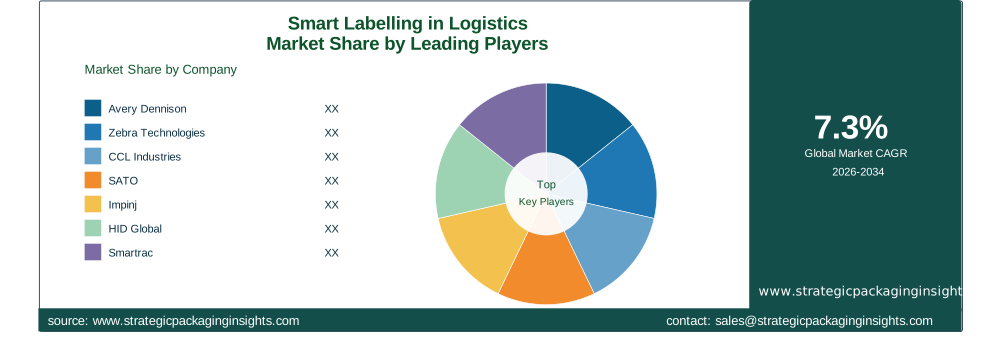
Avery Dennison is a prominent player in the Smart Labelling in Logistics market, known for its comprehensive range of RFID and smart labelling solutions. The company is focused on expanding its product offerings and strengthening its distribution network to cater to the growing demand for smart labelling technologies. Zebra Technologies is another key player in the market, offering a wide range of smart labelling solutions that enhance supply chain visibility and operational efficiency. The company is actively investing in research and development to enhance its product offerings and maintain its competitive edge in the market.
CCL Industries is a leading provider of smart labelling solutions, known for its innovative product offerings and strong market presence. The company is focused on expanding its product portfolio and strengthening its distribution network to cater to the growing demand for smart labelling technologies in the logistics sector. SATO is another key player in the market, offering a wide range of smart labelling solutions that enhance supply chain visibility and operational efficiency. The company is actively investing in research and development to enhance its product offerings and maintain its competitive edge in the market.
Other notable players in the Smart Labelling in Logistics market include Impinj, HID Global, Smartrac, NXP Semiconductors, Checkpoint, and TSC Auto ID. These companies are actively investing in research and development to enhance their product offerings and maintain their competitive edge in the market. Strategic partnerships and collaborations are common strategies adopted by these companies to enhance their market presence and gain a competitive edge. The competitive landscape of the Smart Labelling in Logistics market is expected to remain dynamic, with companies focusing on innovation and strategic partnerships to drive market growth.
Key Highlights
- The Smart Labelling in Logistics market is projected to grow at a CAGR of 7.3% from 2026 to 2034.
- Increasing demand for efficient supply chain management solutions is driving market growth.
- Integration of smart labelling technologies such as RFID, NFC, and QR codes is enhancing tracking and monitoring capabilities.
- The rise in e-commerce and the need for faster delivery times are propelling the adoption of smart labelling solutions.
- High initial costs and data privacy concerns are key challenges in the market.
- Emerging economies present significant growth opportunities for smart labelling solutions.
- Key players in the market include Avery Dennison, Zebra Technologies, and CCL Industries.
- Strategic partnerships and collaborations are common strategies adopted by companies to enhance their market presence.
- Advancements in technology and the development of cost-effective solutions are expected to drive market growth.
Top Countries Insights
In the Smart Labelling in Logistics market, the United States holds a significant share, driven by the presence of major logistics companies and the rapid adoption of advanced technologies. The market size in the U.S. is substantial, with a CAGR of 6%. The country's strong infrastructure and focus on digital transformation are key growth drivers. However, challenges such as high implementation costs and data privacy concerns persist.
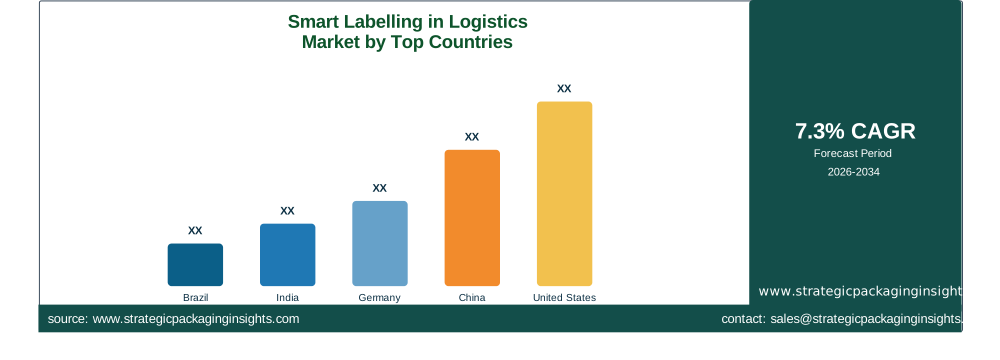
China is another major player in the Smart Labelling in Logistics market, with a market size that continues to grow rapidly. The country's logistics sector is expanding, driven by the rise in e-commerce and the need for efficient supply chain management solutions. The market in China is expected to grow at a CAGR of 8%, supported by government initiatives to enhance logistics infrastructure and promote digital transformation.
Germany is a key market for smart labelling solutions in Europe, with a strong focus on innovation and technology adoption. The market size in Germany is significant, with a CAGR of 5%. The country's well-developed logistics infrastructure and emphasis on efficiency and sustainability are driving the demand for smart labelling technologies. However, regulatory challenges and data privacy concerns remain key issues.
India is an emerging market for smart labelling solutions, with a growing logistics sector and increasing adoption of digital technologies. The market size in India is expanding, with a CAGR of 9%. The country's focus on improving supply chain efficiency and reducing logistics costs is driving the demand for smart labelling solutions. However, challenges such as high implementation costs and lack of awareness persist.
Brazil is another important market for smart labelling solutions in Latin America, with a growing logistics sector and increasing adoption of advanced technologies. The market size in Brazil is substantial, with a CAGR of 7%. The country's focus on improving supply chain efficiency and reducing logistics costs is driving the demand for smart labelling solutions. However, challenges such as high implementation costs and regulatory issues remain key concerns.
Smart Labelling in Logistics Market Segments Insights

Technology Analysis
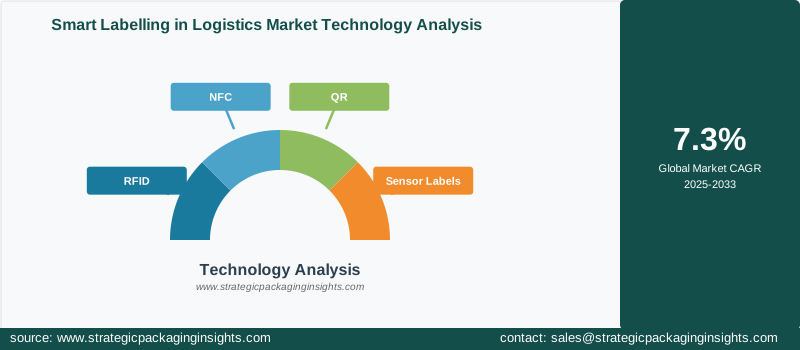
The technology segment of the Smart Labelling in Logistics market is dominated by RFID, NFC, QR, and sensor labels. RFID technology is widely used due to its ability to provide real-time tracking and monitoring of goods, enhancing supply chain visibility and operational efficiency. The adoption of NFC technology is also on the rise, driven by its ease of use and ability to facilitate secure data exchange. QR codes are popular for their cost-effectiveness and ease of implementation, making them a preferred choice for small and medium-sized enterprises. Sensor labels are gaining traction due to their ability to monitor environmental conditions such as temperature and humidity, ensuring the quality and safety of goods during transit.
The increasing demand for efficient supply chain management solutions is driving the adoption of smart labelling technologies in the logistics sector. Companies are investing in advanced technologies to enhance their operational efficiency and competitiveness. The integration of IoT and automation technologies is further propelling the demand for smart labelling solutions, enabling real-time tracking and monitoring of goods. However, high initial costs and data privacy concerns remain key challenges in the technology segment. Companies need to ensure that they have robust security measures in place to protect their data and maintain customer trust.
Application Analysis
The application segment of the Smart Labelling in Logistics market includes asset tracking, temperature monitoring, and authentication. Asset tracking is a key application, driven by the need for real-time tracking and monitoring of goods to enhance supply chain visibility and operational efficiency. Temperature monitoring is gaining importance, particularly in the pharmaceutical and food industries, where maintaining the quality and safety of goods during transit is crucial. Authentication is another important application, driven by the need to prevent counterfeiting and ensure the authenticity of goods.
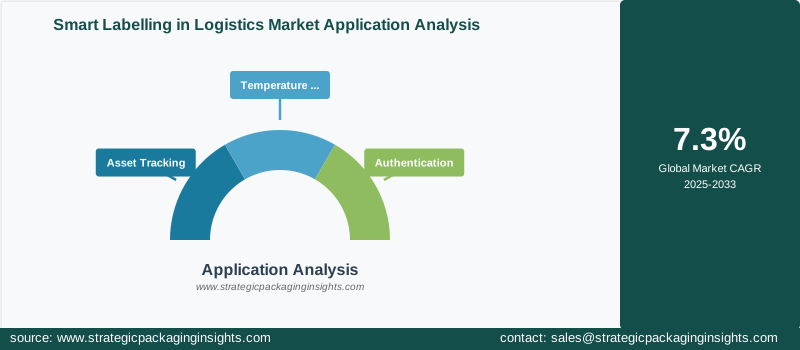
The growing trend of e-commerce and the need for faster delivery times are driving the demand for smart labelling solutions in the logistics sector. Companies are increasingly investing in digital transformation initiatives to enhance their operational efficiency and competitiveness. The integration of smart labelling technologies is enabling companies to optimize their logistics processes, reduce errors, and improve overall operational efficiency. However, high initial costs and data privacy concerns remain key challenges in the application segment. Companies need to ensure that they have robust security measures in place to protect their data and maintain customer trust.
End Use Analysis
The end-use segment of the Smart Labelling in Logistics market includes warehouse, transport, and retail. The warehouse segment is a major end-user of smart labelling solutions, driven by the need for efficient inventory management and real-time tracking of goods. The transport segment is also a key end-user, driven by the need for real-time tracking and monitoring of goods during transit. The retail segment is gaining importance, driven by the need for efficient supply chain management and enhanced customer experience.
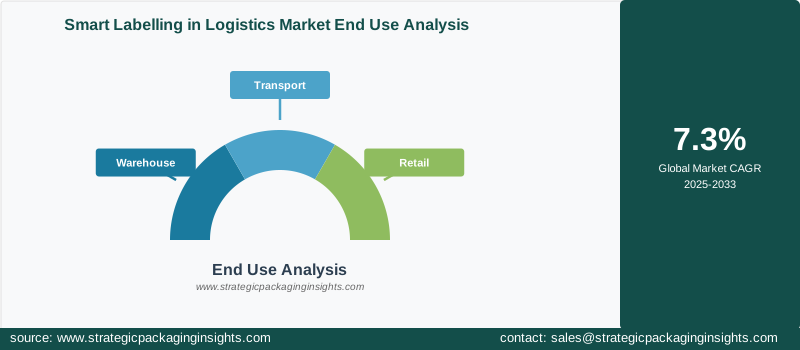
The increasing demand for efficient supply chain management solutions is driving the adoption of smart labelling technologies in the logistics sector. Companies are investing in advanced technologies to enhance their operational efficiency and competitiveness. The integration of IoT and automation technologies is further propelling the demand for smart labelling solutions, enabling real-time tracking and monitoring of goods. However, high initial costs and data privacy concerns remain key challenges in the end-use segment. Companies need to ensure that they have robust security measures in place to protect their data and maintain customer trust.
Deployment Analysis
The deployment segment of the Smart Labelling in Logistics market includes cloud and hybrid solutions. Cloud-based solutions are gaining popularity due to their scalability, flexibility, and cost-effectiveness. These solutions enable companies to access real-time data and insights, enhancing their operational efficiency and competitiveness. Hybrid solutions are also gaining traction, offering a combination of cloud and on-premise capabilities to meet the specific needs of companies.
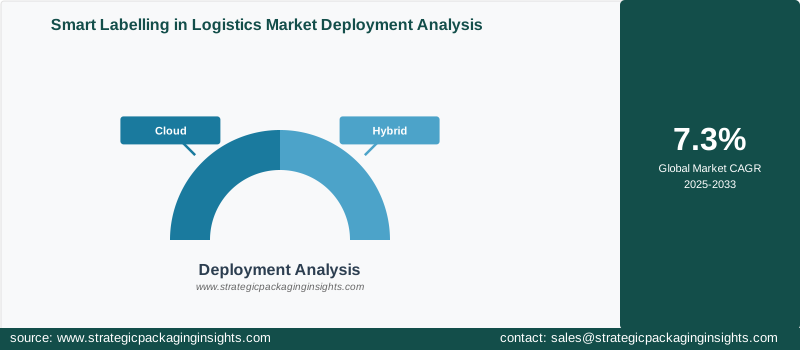
The increasing demand for efficient supply chain management solutions is driving the adoption of smart labelling technologies in the logistics sector. Companies are investing in advanced technologies to enhance their operational efficiency and competitiveness. The integration of IoT and automation technologies is further propelling the demand for smart labelling solutions, enabling real-time tracking and monitoring of goods. However, high initial costs and data privacy concerns remain key challenges in the deployment segment. Companies need to ensure that they have robust security measures in place to protect their data and maintain customer trust.
Smart Labelling in Logistics Market Segments
The Smart Labelling in Logistics market has been segmented on the basis ofTechnology
- RFID
- NFC
- QR
- Sensor Labels
Application
- Asset Tracking
- Temperature Monitoring
- Authentication
End Use
- Warehouse
- Transport
- Retail
Deployment
- Cloud
- Hybrid
Region
- Asia Pacific
- North America
- Latin America
- Europe
- Middle East & Africa




