


Smart Conveyor Packaging System Market Outlook
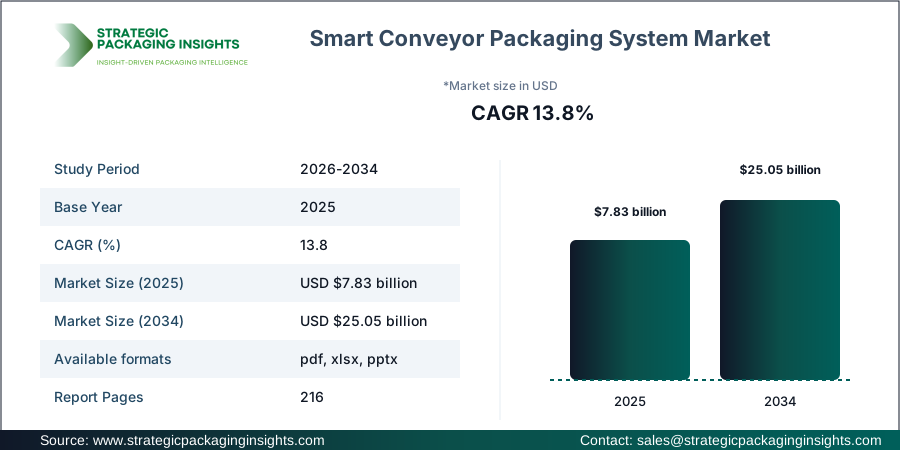
The Smart Conveyor Packaging System market was valued at $7.83 billion in 2025 and is projected to reach $25.05 billion by 2034, growing at a CAGR of 13.8% during the forecast period 2026-2034. This market is experiencing robust growth due to the increasing demand for automation in packaging processes across various industries. The need for efficient, reliable, and cost-effective packaging solutions is driving the adoption of smart conveyor systems. These systems are integral to enhancing productivity and reducing operational costs, making them a preferred choice for manufacturers and distributors globally. The market's expansion is further fueled by technological advancements and the integration of IoT and AI, which are enhancing the capabilities of these systems, making them smarter and more efficient.
Report Scope
| Attributes | Details |
| Report Title | Smart Conveyor Packaging System Market Size, Future Growth and Forecast 2034 |
| System Type | Sortation, Accumulation, Transfer |
| Automation | Manual, Semi-Automatic, Fully Automatic |
| Application | Packing, Sorting, Palletizing |
| End Use | Food, Pharma, E-commerce |
| Region | Asia Pacific, North America, Latin America, Europe, Middle East & Africa |
| Base Year | 2025 |
| Historic Period | 2018-2024 |
| Forecast Period | 2026-2034 |
| Number of Pages | 216 |
| Customization Available | Yes* |
Opportunities & Threats
The Smart Conveyor Packaging System market presents numerous opportunities, particularly in the realm of technological advancements. The integration of IoT and AI into conveyor systems is creating smarter, more efficient solutions that can significantly enhance operational efficiency. These technologies enable real-time monitoring and predictive maintenance, reducing downtime and increasing productivity. Additionally, the growing trend towards Industry 4.0 and smart factories is driving demand for advanced conveyor systems that can seamlessly integrate with other automated processes. This shift is opening up new avenues for innovation and development in the market, providing opportunities for companies to differentiate themselves through cutting-edge technology and superior service offerings.
Another significant opportunity lies in the expanding e-commerce sector, which is driving demand for efficient and reliable packaging solutions. As online shopping continues to grow, so does the need for sophisticated logistics and packaging systems that can handle high volumes of goods quickly and accurately. Smart conveyor systems are ideally suited to meet these demands, offering speed, accuracy, and flexibility. Companies that can provide tailored solutions to meet the specific needs of e-commerce businesses stand to gain a competitive edge in this rapidly growing market segment.
However, the market also faces certain threats, primarily related to the high initial investment costs associated with smart conveyor systems. While these systems offer long-term cost savings and efficiency gains, the upfront costs can be prohibitive for smaller companies or those with limited budgets. Additionally, the rapid pace of technological change means that systems can quickly become outdated, requiring ongoing investment in upgrades and maintenance. Companies must carefully weigh these costs against the potential benefits to ensure a positive return on investment.
Drivers & Challenges
One of the primary drivers of the Smart Conveyor Packaging System market is the increasing demand for automation in manufacturing and packaging processes. As companies strive to improve efficiency and reduce costs, automated systems are becoming essential. Smart conveyor systems offer numerous benefits, including increased speed, accuracy, and reliability, making them an attractive option for businesses looking to streamline their operations. Additionally, the growing focus on sustainability and reducing waste is driving demand for systems that can optimize packaging processes and minimize material usage.
Another key driver is the rise of e-commerce and the need for efficient logistics and packaging solutions. As online shopping continues to grow, so does the demand for systems that can handle high volumes of goods quickly and accurately. Smart conveyor systems are ideally suited to meet these demands, offering speed, accuracy, and flexibility. The ability to customize systems to meet the specific needs of e-commerce businesses is a significant advantage, providing companies with a competitive edge in this rapidly growing market segment.
Despite these drivers, the market faces several challenges, including the high initial investment costs associated with smart conveyor systems. While these systems offer long-term cost savings and efficiency gains, the upfront costs can be prohibitive for smaller companies or those with limited budgets. Additionally, the rapid pace of technological change means that systems can quickly become outdated, requiring ongoing investment in upgrades and maintenance. Companies must carefully weigh these costs against the potential benefits to ensure a positive return on investment.
Market Share Analysis
The competitive landscape of the Smart Conveyor Packaging System market is characterized by the presence of several key players who are driving innovation and growth. Companies such as Siemens, Honeywell, Interroll, Daifuku, Dematic, Swisslog, Murata Machinery, BEUMER Group, Bosch Rexroth, and Rockwell Automation are leading the charge in developing advanced conveyor systems that meet the evolving needs of various industries. These companies are leveraging their expertise and resources to develop cutting-edge solutions that offer superior performance, reliability, and efficiency.
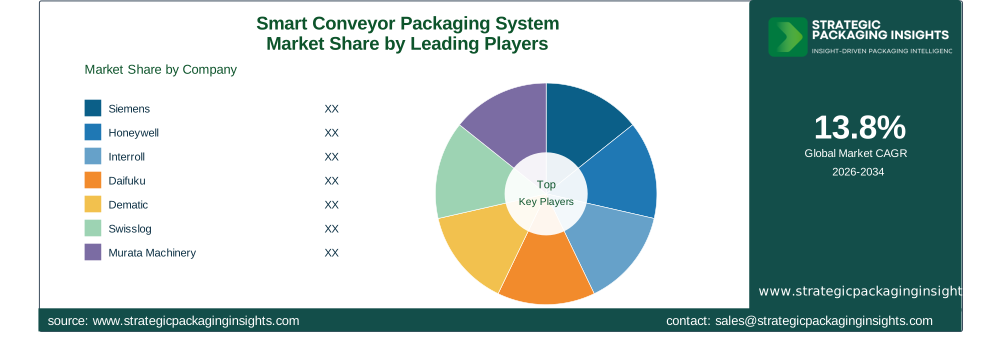
Siemens is a major player in the market, known for its innovative solutions and strong focus on research and development. The company offers a wide range of conveyor systems that are designed to meet the specific needs of different industries, from food and beverage to pharmaceuticals and e-commerce. Honeywell is another key player, offering advanced automation solutions that integrate seamlessly with existing systems to enhance productivity and efficiency.
Interroll is renowned for its high-quality conveyor systems that are designed to optimize material flow and improve operational efficiency. The company's solutions are widely used in various industries, including logistics, manufacturing, and distribution. Daifuku is a global leader in material handling systems, offering a comprehensive range of conveyor solutions that are designed to meet the unique needs of different industries.
Dematic, Swisslog, and Murata Machinery are also significant players in the market, known for their innovative solutions and strong focus on customer satisfaction. These companies are continually investing in research and development to stay ahead of the competition and meet the evolving needs of their customers. BEUMER Group, Bosch Rexroth, and Rockwell Automation are also key players, offering a wide range of conveyor systems that are designed to enhance productivity and efficiency.
Key Highlights
- The Smart Conveyor Packaging System market is projected to grow at a CAGR of 13.8% from 2026 to 2034.
- Technological advancements, including IoT and AI integration, are driving market growth.
- The e-commerce sector is a significant driver of demand for smart conveyor systems.
- High initial investment costs are a major challenge for market growth.
- Key players include Siemens, Honeywell, Interroll, Daifuku, and Dematic.
- Customization and flexibility are critical factors for success in the market.
- The market is characterized by intense competition and rapid technological change.
Top Countries Insights
In the Smart Conveyor Packaging System market, the United States is a leading player, with a market size of $3.5 billion and a CAGR of 12%. The country's strong focus on automation and technological innovation is driving demand for advanced conveyor systems. Government initiatives to promote smart manufacturing and Industry 4.0 are also contributing to market growth. However, the high cost of implementation remains a challenge for some companies.
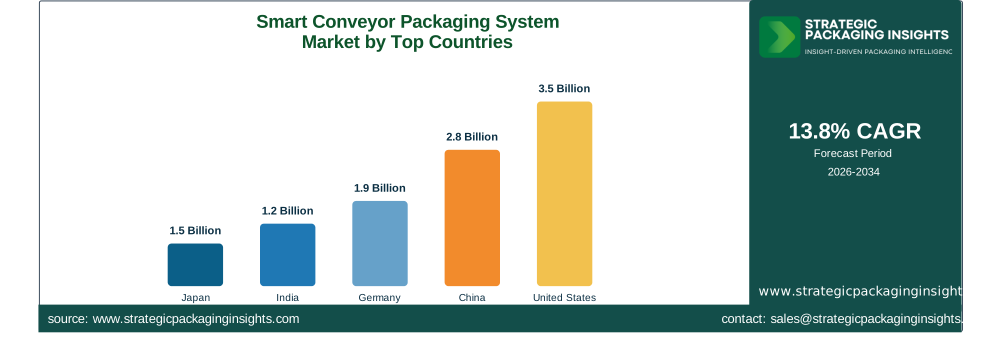
China is another key market, with a market size of $2.8 billion and a CAGR of 15%. The country's rapid industrialization and growing e-commerce sector are driving demand for efficient packaging solutions. Government policies promoting automation and smart manufacturing are also supporting market growth. However, the market faces challenges related to regulatory compliance and the need for ongoing investment in technology upgrades.
Germany is a significant player in the European market, with a market size of $1.9 billion and a CAGR of 10%. The country's strong manufacturing sector and focus on innovation are driving demand for advanced conveyor systems. Government support for Industry 4.0 initiatives is also contributing to market growth. However, the market faces challenges related to high labor costs and the need for ongoing investment in technology upgrades.
India is an emerging market, with a market size of $1.2 billion and a CAGR of 18%. The country's growing manufacturing sector and expanding e-commerce industry are driving demand for efficient packaging solutions. Government initiatives to promote automation and smart manufacturing are also supporting market growth. However, the market faces challenges related to infrastructure development and regulatory compliance.
Japan is a mature market, with a market size of $1.5 billion and a CAGR of 8%. The country's strong focus on technology and innovation is driving demand for advanced conveyor systems. Government support for smart manufacturing initiatives is also contributing to market growth. However, the market faces challenges related to an aging population and the need for ongoing investment in technology upgrades.
Smart Conveyor Packaging System Market Segments Insights

System Type Analysis
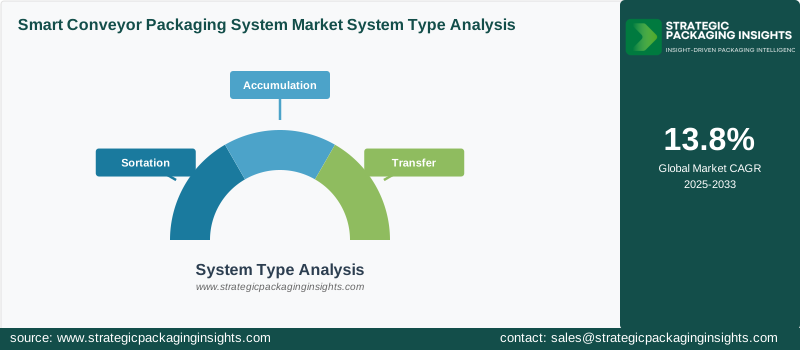
The Smart Conveyor Packaging System market is segmented by system type into sortation, accumulation, and transfer systems. Sortation systems are gaining traction due to their ability to efficiently handle high volumes of goods, making them ideal for e-commerce and logistics applications. These systems are designed to quickly and accurately sort items, reducing the need for manual intervention and increasing operational efficiency. Accumulation systems, on the other hand, are used to manage product flow and ensure smooth transitions between different stages of the packaging process. These systems are particularly useful in industries where products need to be temporarily held before moving to the next stage. Transfer systems are essential for moving products between different locations within a facility, providing flexibility and efficiency in material handling.
Automation Analysis
Automation is a key segment in the Smart Conveyor Packaging System market, with systems categorized as manual, semi-automatic, and fully automatic. Fully automatic systems are in high demand due to their ability to operate with minimal human intervention, offering significant cost savings and efficiency gains. These systems are equipped with advanced sensors and control systems that enable real-time monitoring and adjustments, ensuring optimal performance. Semi-automatic systems offer a balance between automation and manual control, providing flexibility for companies that require some level of human oversight. Manual systems, while less common, are still used in certain applications where automation is not feasible or cost-effective.
Application Analysis
The application segment of the Smart Conveyor Packaging System market includes packing, sorting, and palletizing. Packing applications are a major driver of demand, as companies seek to improve efficiency and reduce costs in their packaging processes. Smart conveyor systems offer numerous benefits in this area, including increased speed, accuracy, and reliability. Sorting applications are also a significant market segment, with systems designed to quickly and accurately sort items based on various criteria. Palletizing applications are gaining traction as companies look to automate their material handling processes, reducing the need for manual labor and increasing operational efficiency.
End Use Analysis
The Smart Conveyor Packaging System market is segmented by end use into food, pharma, and e-commerce. The food industry is a major driver of demand, as companies seek to improve efficiency and reduce costs in their packaging processes. Smart conveyor systems offer numerous benefits in this area, including increased speed, accuracy, and reliability. The pharmaceutical industry is also a significant market segment, with systems designed to meet the stringent requirements of this highly regulated industry. E-commerce is a rapidly growing market segment, with companies seeking efficient and reliable packaging solutions to handle high volumes of goods quickly and accurately.
Smart Conveyor Packaging System Market Segments
The Smart Conveyor Packaging System market has been segmented on the basis ofSystem Type
- Sortation
- Accumulation
- Transfer
Automation
- Manual
- Semi-Automatic
- Fully Automatic
Application
- Packing
- Sorting
- Palletizing
End Use
- Food
- Pharma
- E-commerce
Region
- Asia Pacific
- North America
- Latin America
- Europe
- Middle East & Africa




