


Skincare Product Packaging Market Outlook
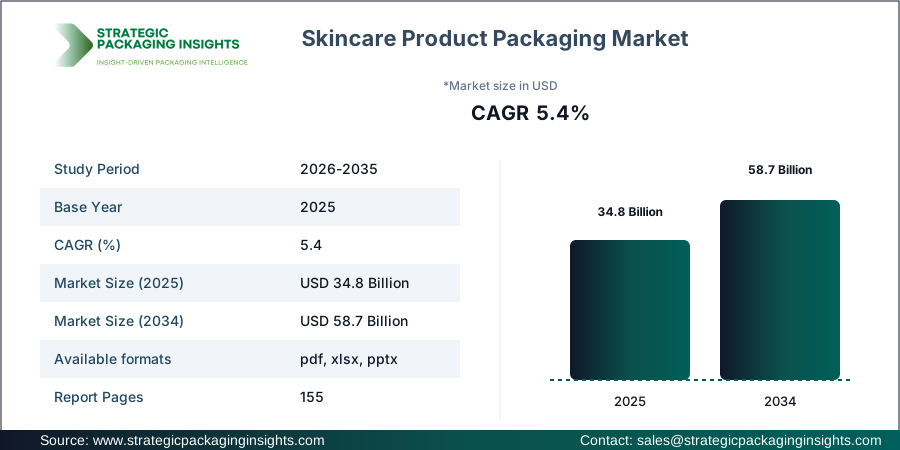
The Skincare Product Packaging market size was valued at USD $34.8 Billion in 2025 and is anticipated to reach USD $58.7 Billion by 2035, growing at a CAGR of 5.4% during the forecast period according to Strategic Packaging Insights.
The increasing consumer preference for premium and luxury skincare products is a significant driver of the market. This trend is supported by rising disposable incomes and the growing importance of skincare routines, particularly in emerging markets. The demand for innovative and sustainable packaging solutions is also propelling market growth, as brands seek to differentiate their products and meet consumer expectations for eco-friendly packaging.
Report Scope
| Attributes | Details |
| Report Title | Skincare Product Packaging Market Projected to Scale to 58.7 Billion by 2035, Assesses Strategic Packaging Insights |
| By Packaging Type | Bottles, Jars, Tubes, Pumps and Dispensers, Droppers, Airless Packaging, Pouches and Sachets, Blister and Sachet Packs, Stick Packaging, Other Packaging Types |
| By Material | Plastic, Glass, Aluminum, Paper and Paperboard, Metal, Biodegradable Materials, Recycled Materials |
| By Product Category | Face Care, Body Care, Sun Care, Anti-Aging Products, Moisturizers, Cleansers, Serums, Masks, Eye Care, Acne and Blemish Care |
| By Packaging Format | Rigid Packaging, Flexible Packaging, Semi-Rigid Packaging, Refill Packaging, Travel-Size Packaging |
| By Dispensing System | Screw Caps, Flip-Top Caps, Pump Dispensers, Spray Pumps, Dropper Systems, Airless Pumps, Roll-On Applicators |
| By Application | Facial Skincare, Body Skincare, Hand and Foot Care, Sun Protection, Dermatological Skincare, Premium and Luxury Skincare |
| By End User | Mass-Market Skincare Brands, Premium Skincare Brands, Luxury Cosmetics Brands, Dermatology and Medical Skincare Brands, Private-Label Brands, Contract Manufacturers |
| By Sustainability | Conventional Packaging, Recyclable Packaging, Recycled Content Packaging, Refillable Packaging, Reusable Packaging, Biodegradable Packaging, Compostable Packaging |
| By Distribution Channel | Supermarkets and Hypermarkets, Specialty Beauty Stores, Pharmacies and Drugstores, Department Stores, Online Retail, Direct-to-Consumer |
| By Region | North America, Europe, Asia-Pacific, Latin America, Middle East and Africa |
| Base Year | 2025 |
| Historic Period | 2018-2024 |
| Forecast Period | 2026-2035 |
| Number of Pages | 155 |
| Customization Available | Yes* |
Market Trends Analysis
One of the major trends in the Skincare Product Packaging market is the shift towards sustainable packaging solutions. Consumers are increasingly demanding packaging that is recyclable, biodegradable, or made from recycled materials. This trend is influencing brands to adopt eco-friendly materials and designs, which is expected to drive innovation and investment in sustainable packaging technologies. Additionally, the rise of e-commerce and direct-to-consumer sales channels is reshaping packaging requirements, with a focus on lightweight and protective packaging to ensure product integrity during shipping.
Another significant trend is the growing demand for personalized and customizable packaging. Brands are leveraging digital printing and advanced manufacturing technologies to offer unique packaging designs that cater to individual consumer preferences. This trend is enhancing brand differentiation and customer engagement, as consumers seek products that reflect their personal style and values. The integration of smart packaging technologies, such as QR codes and NFC tags, is also gaining traction, providing consumers with interactive and informative experiences.
Industry Transformation Analysis
The Skincare Product Packaging industry is undergoing significant transformation driven by technological advancements and changing consumer preferences. The adoption of automation and digital technologies in manufacturing processes is enhancing operational efficiency and reducing production costs. This transformation is enabling manufacturers to meet the growing demand for high-quality and innovative packaging solutions while maintaining competitive pricing.
The value chain is also evolving, with increased collaboration between packaging manufacturers, material suppliers, and brand owners. This collaboration is facilitating the development of sustainable and innovative packaging solutions that align with brand strategies and consumer expectations. The focus on sustainability is leading to the integration of recycled and biodegradable materials into packaging designs, which is expected to reshape the industry's material sourcing and procurement practices.
Trends & Disruptions Impacting Customers' Customers
Downstream customers, including skincare brands and retailers, are increasingly prioritizing sustainability and innovation in their packaging choices. This shift is driven by consumer demand for eco-friendly products and the need to comply with regulatory requirements related to packaging waste and recyclability. As a result, brands are investing in sustainable packaging solutions that enhance their environmental credentials and appeal to environmentally conscious consumers.
The changing preferences of downstream customers are influencing product demand and innovation in the Skincare Product Packaging market. Brands are seeking packaging solutions that offer convenience, functionality, and aesthetic appeal, which is driving the development of new packaging formats and materials. The focus on sustainability is also leading to increased demand for packaging that supports circular economy principles, such as refillable and reusable packaging. These trends are creating opportunities for packaging manufacturers to differentiate their offerings and capture market share.
Skincare Product Packaging Market Ecosystem
The Skincare Product Packaging market ecosystem involves a complex interplay of raw material suppliers, packaging manufacturers, and brand owners. The procurement of high-quality materials is critical to ensuring the durability and functionality of packaging solutions. Resin and substrate production play a vital role in determining the material properties and performance of packaging products.
Converting processes, including molding and forming, are essential for creating diverse packaging formats that meet consumer needs. Printing and decoration add value by enhancing brand visibility and consumer appeal. The filling and sealing stage ensures product integrity and safety, while distribution channels facilitate the efficient delivery of packaged products to end users. Recycling and end-of-life processing are increasingly important as brands and consumers focus on reducing packaging waste and environmental impact.
Analyst Perspective
Analyst Perspective: The Skincare Product Packaging market is poised for significant growth, driven by consumer demand for sustainable and innovative packaging solutions.
The most important structural change is the shift towards eco-friendly materials and designs, which is reshaping the competitive landscape and creating opportunities for differentiation. Companies that invest in sustainable packaging technologies and materials are likely to gain a competitive edge and capture market share.
Market participants should closely monitor regulatory developments related to packaging waste and recyclability, as these factors will influence packaging design and material choices. Additionally, the rise of e-commerce and direct-to-consumer sales channels presents opportunities for packaging manufacturers to develop solutions that enhance product protection and consumer experience.
Opportunities & Threats
The Skincare Product Packaging market presents significant opportunities for growth, driven by the increasing demand for sustainable and innovative packaging solutions. Brands are seeking packaging that aligns with their sustainability goals and enhances their environmental credentials. This trend is creating opportunities for packaging manufacturers to develop eco-friendly materials and designs that meet consumer expectations.
Technological advancements in packaging manufacturing, such as digital printing and automation, are enabling brands to offer personalized and customizable packaging solutions. This trend is enhancing brand differentiation and customer engagement, as consumers seek products that reflect their personal style and values. The integration of smart packaging technologies is also gaining traction, providing consumers with interactive and informative experiences.
However, the market faces several threats, including raw material volatility and regulatory uncertainty. The fluctuating prices of raw materials, such as plastic and aluminum, can impact production costs and profit margins. Additionally, evolving regulations related to packaging waste and recyclability may require brands to invest in new materials and technologies, which could increase operational costs.
Competition in the Skincare Product Packaging market is intense, with numerous players vying for market share. This competitive landscape can lead to pricing pressure and margin erosion, particularly for smaller manufacturers. The need to invest in sustainable packaging solutions and technologies may also pose financial challenges for companies with limited resources.
Drivers & Challenges
The Skincare Product Packaging market is driven by several key factors, including the growing consumer demand for premium and luxury skincare products. This demand is supported by rising disposable incomes and the increasing importance of skincare routines, particularly in emerging markets. The trend towards sustainable packaging solutions is also a significant driver, as brands seek to differentiate their products and meet consumer expectations for eco-friendly packaging.
Technological advancements in packaging manufacturing, such as digital printing and automation, are enhancing operational efficiency and enabling brands to offer personalized and customizable packaging solutions. The rise of e-commerce and direct-to-consumer sales channels is reshaping packaging requirements, with a focus on lightweight and protective packaging to ensure product integrity during shipping.
Despite these drivers, the market faces several challenges, including raw material volatility and regulatory uncertainty. The fluctuating prices of raw materials, such as plastic and aluminum, can impact production costs and profit margins. Additionally, evolving regulations related to packaging waste and recyclability may require brands to invest in new materials and technologies, which could increase operational costs.
Packaging Market Economics
The economics of Skincare Product Packaging are influenced by several factors, including raw material costs, conversion costs, and energy expenses. The prices of materials such as plastic, glass, and aluminum can fluctuate based on supply and demand dynamics, impacting production costs and profit margins. Conversion costs, including molding and forming processes, are critical to creating diverse packaging formats that meet consumer needs.
Energy costs are another important consideration, as packaging manufacturing processes can be energy-intensive. The integration of sustainable materials and technologies can help reduce energy consumption and lower production costs. Additionally, the focus on recyclability and end-of-life processing is driving investment in recycling infrastructure and technologies, which can impact the overall economics of packaging production.
Packaging Value Chain & Cost Analysis
The Skincare Product Packaging value chain involves several key stages, including resin synthesis, film extrusion, and converting. Resin synthesis and substrate production are critical to determining the material properties and performance of packaging products. Film extrusion and converting processes, such as molding and forming, are essential for creating diverse packaging formats that meet consumer needs.
Downstream activities, such as co-packing and distribution, play a vital role in delivering packaged products to end users. The focus on sustainability is leading to increased investment in recycling infrastructure and technologies, which can impact the overall cost structure of packaging production. The integration of sustainable materials and technologies is also reshaping procurement practices and material sourcing strategies.
Unit Economics & Substrate Cost Analysis
The unit economics of Skincare Product Packaging are influenced by several factors, including raw material costs, energy expenses, and conversion processes. The prices of materials such as plastic, glass, and aluminum can fluctuate based on supply and demand dynamics, impacting production costs and profit margins. Energy costs are another important consideration, as packaging manufacturing processes can be energy-intensive.
Conversion processes, such as molding and forming, are critical to creating diverse packaging formats that meet consumer needs. The integration of sustainable materials and technologies can help reduce energy consumption and lower production costs. Additionally, the focus on recyclability and end-of-life processing is driving investment in recycling infrastructure and technologies, which can impact the overall economics of packaging production.
Packaging Regulatory & Sustainability Analysis
The Skincare Product Packaging market is subject to several regulatory and sustainability considerations, including packaging waste regulations and recyclability requirements. Regulatory bodies such as the European Commission and the U.S. Environmental Protection Agency (EPA) are implementing measures to reduce packaging waste and promote sustainable packaging solutions.
Extended Producer Responsibility (EPR) schemes are gaining traction, requiring brands to take responsibility for the end-of-life management of their packaging materials. This trend is driving investment in recycling infrastructure and technologies, as brands seek to comply with regulatory requirements and enhance their environmental credentials. The focus on sustainability is also leading to increased demand for packaging that supports circular economy principles, such as refillable and reusable packaging.
Strategic Mergers, Acquisitions & Capacity Expansions
Recent strategic developments in the Skincare Product Packaging market include mergers, acquisitions, and capacity expansions aimed at enhancing competitive positioning and market reach. Companies are investing in new technologies and materials to meet the growing demand for sustainable and innovative packaging solutions.
For example, Albea Group has expanded its production capabilities to include sustainable packaging solutions, while AptarGroup has invested in digital printing technologies to offer personalized and customizable packaging options. These strategic initiatives are enabling companies to differentiate their offerings and capture market share in a competitive landscape.
Capacity expansions and new product launches are also contributing to market growth, as companies seek to meet the increasing demand for high-quality and innovative packaging solutions. The focus on sustainability is driving investment in recycling infrastructure and technologies, which is expected to reshape the industry's material sourcing and procurement practices.
Strategic Action Directives
Brand Packaging Engineers & Sustainability Directors should focus on material selection and mono-material qualification to enhance recyclability and meet sustainability goals. The integration of PCR materials and eco-friendly designs can enhance brand differentiation and appeal to environmentally conscious consumers.
Converter Operations & Extrusion Leads should prioritize line speed and tooling optimization to enhance operational efficiency and reduce production costs. The focus on sustainable materials and technologies can help reduce energy consumption and lower production costs.
Procurement & Material Sourcing Managers should diversify supplier networks and establish long-term contracts to mitigate raw material volatility and ensure a stable supply of sustainable materials. The focus on recyclability and end-of-life processing is driving investment in recycling infrastructure and technologies, which can impact procurement practices and material sourcing strategies.
Investors should monitor regulatory developments related to packaging waste and recyclability, as these factors will influence packaging design and material choices. The rise of e-commerce and direct-to-consumer sales channels presents opportunities for packaging manufacturers to develop solutions that enhance product protection and consumer experience.
Market Share Analysis
The Skincare Product Packaging market is characterized by intense competition, with numerous players vying for market share. Key companies such as Albea Group, AptarGroup, and Berry Global are leading the market with their innovative packaging solutions and strong market presence. These companies are investing in new technologies and materials to meet the growing demand for sustainable and innovative packaging solutions.
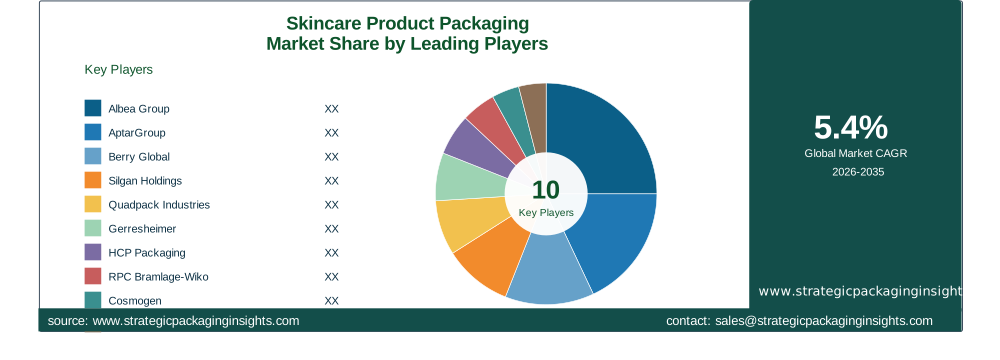
Albea Group is a prominent player in the market, known for its extensive product portfolio and focus on sustainability. The company has expanded its production capabilities to include sustainable packaging solutions, enhancing its competitive positioning and market reach. AptarGroup is another key player, recognized for its innovative dispensing systems and digital printing technologies that offer personalized and customizable packaging options.
Berry Global is a leading manufacturer of plastic packaging solutions, with a strong focus on sustainability and innovation. The company has invested in recycling infrastructure and technologies to enhance its environmental credentials and meet regulatory requirements. Silgan Holdings is also a major player in the market, known for its extensive product portfolio and focus on sustainability.
Other notable companies in the market include Quadpack Industries, Gerresheimer, HCP Packaging, RPC Bramlage-Wiko, Cosmogen, SKS Bottle & Packaging, Virospack, Lumson, Baralan, Yonwoo, and Heinz-Glas. These companies are investing in new technologies and materials to meet the growing demand for sustainable and innovative packaging solutions, enhancing their competitive positioning and market reach.
Key Highlights
- Largest Region: North America
- Fastest-Growing Region: Asia Pacific
- Largest Segment: Plastic Packaging
- Fastest-Growing Segment: Recyclable Packaging
- Base-year market size: USD $34.8 Billion
- Forecast-year market size: USD $58.7 Billion
- CAGR: 5.4%
- Important application: Premium and Luxury Skincare
- Major end-use industry: Premium Skincare Brands
- Major market driver: Demand for Sustainable Packaging
Regional Insights
The Skincare Product Packaging market is witnessing significant growth across major regions, with North America being the largest market and Asia Pacific emerging as the fastest-growing region. The demand for premium and luxury skincare products is driving market growth in these regions, supported by rising disposable incomes and the increasing importance of skincare routines.
North America
North America is the largest market for Skincare Product Packaging, driven by the high demand for premium and luxury skincare products. The region is characterized by a strong focus on sustainability and innovation, with brands investing in eco-friendly packaging solutions to meet consumer expectations. The presence of key market players and advanced manufacturing capabilities further support market growth.
The U.S. is a major contributor to the market, with a well-established skincare industry and a strong focus on sustainability. The demand for personalized and customizable packaging solutions is also driving market growth, as brands seek to differentiate their products and enhance customer engagement.
Europe
Europe is a significant market for Skincare Product Packaging, characterized by a strong focus on sustainability and regulatory compliance. The region is witnessing increasing demand for eco-friendly packaging solutions, driven by stringent regulations related to packaging waste and recyclability. The presence of key market players and advanced manufacturing capabilities further support market growth.
Germany, France, and the U.K. are major contributors to the market, with a well-established skincare industry and a strong focus on sustainability. The demand for premium and luxury skincare products is also driving market growth, supported by rising disposable incomes and the increasing importance of skincare routines.
Asia Pacific
Asia Pacific is the fastest-growing region for Skincare Product Packaging, driven by the increasing demand for premium and luxury skincare products. The region is characterized by rising disposable incomes and the growing importance of skincare routines, particularly in emerging markets such as China and India. The focus on sustainability is also driving demand for eco-friendly packaging solutions.
China and India are major contributors to the market, with a rapidly growing skincare industry and a strong focus on sustainability. The demand for personalized and customizable packaging solutions is also driving market growth, as brands seek to differentiate their products and enhance customer engagement.
Latin America
Latin America is witnessing moderate growth in the Skincare Product Packaging market, driven by the increasing demand for premium and luxury skincare products. The region is characterized by rising disposable incomes and the growing importance of skincare routines, particularly in countries such as Brazil and Mexico. The focus on sustainability is also driving demand for eco-friendly packaging solutions.
Brazil and Mexico are major contributors to the market, with a well-established skincare industry and a strong focus on sustainability. The demand for personalized and customizable packaging solutions is also driving market growth, as brands seek to differentiate their products and enhance customer engagement.
Middle East & Africa
The Middle East & Africa region is witnessing moderate growth in the Skincare Product Packaging market, driven by the increasing demand for premium and luxury skincare products. The region is characterized by rising disposable incomes and the growing importance of skincare routines, particularly in countries such as the UAE and South Africa. The focus on sustainability is also driving demand for eco-friendly packaging solutions.
The UAE and South Africa are major contributors to the market, with a well-established skincare industry and a strong focus on sustainability. The demand for personalized and customizable packaging solutions is also driving market growth, as brands seek to differentiate their products and enhance customer engagement.
Skincare Product Packaging Market Segments Insights

By Packaging Type Analysis
The Skincare Product Packaging market is segmented by packaging type, with bottles, jars, and tubes being the most popular formats. Bottles are widely used for liquid skincare products, offering convenience and ease of use. Jars are preferred for creams and lotions, providing a premium look and feel. Tubes are popular for their portability and ease of dispensing, making them ideal for travel-size products.
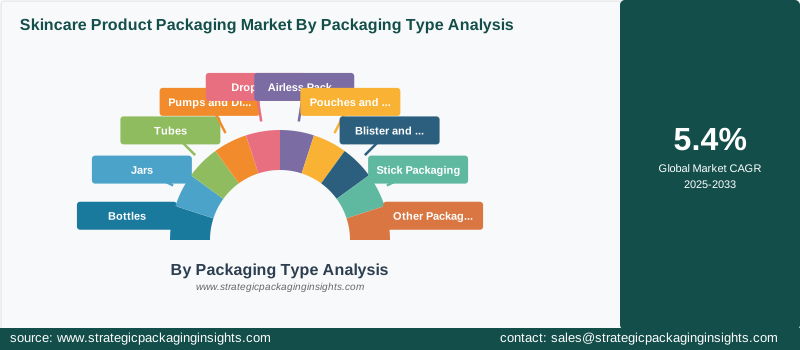
Pumps and dispensers are gaining traction, offering precise and hygienic dispensing of skincare products. Droppers and airless packaging are also popular for their ability to preserve product integrity and extend shelf life. Pouches and sachets are increasingly used for sample and travel-size products, offering convenience and portability. Blister and sachet packs are popular for single-use applications, providing a hygienic and convenient packaging solution.
By Material Analysis
The Skincare Product Packaging market is segmented by material, with plastic being the most widely used material due to its versatility and cost-effectiveness. Plastic packaging is lightweight, durable, and easy to mold, making it ideal for a wide range of skincare products. Glass is preferred for premium and luxury skincare products, offering a premium look and feel.
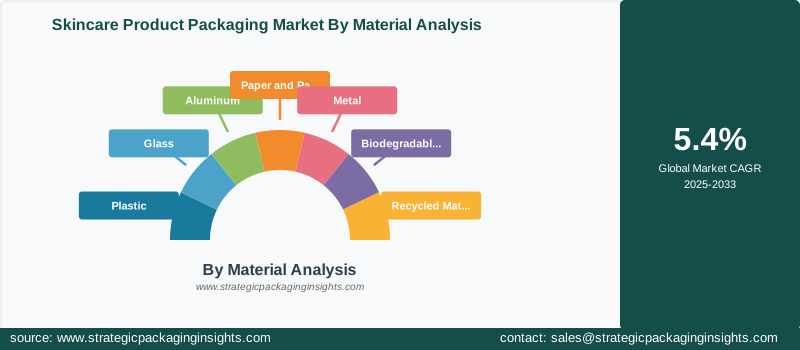
Aluminum is gaining popularity for its recyclability and ability to preserve product integrity. Paper and paperboard are increasingly used for eco-friendly packaging solutions, offering a sustainable alternative to plastic. Biodegradable and recycled materials are gaining traction, driven by the growing demand for sustainable packaging solutions. Metal packaging is also popular for its durability and ability to preserve product integrity.
By Product Category Analysis
The Skincare Product Packaging market is segmented by product category, with face care being the largest segment. Face care products, including moisturizers, cleansers, and serums, are in high demand, driven by the increasing importance of skincare routines. Body care products, including lotions and creams, are also popular, offering hydration and nourishment for the skin.
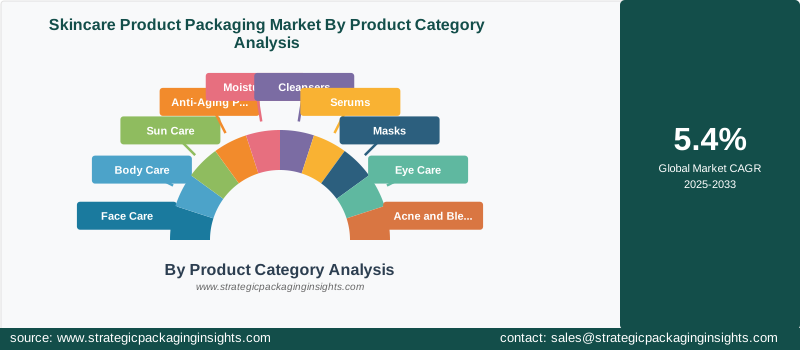
Sun care products are gaining traction, driven by the growing awareness of the harmful effects of UV radiation. Anti-aging products are in high demand, driven by the increasing focus on maintaining youthful and healthy skin. Masks and eye care products are also popular, offering targeted solutions for specific skincare concerns. Acne and blemish care products are gaining popularity, driven by the increasing prevalence of acne and skin blemishes.
By Packaging Format Analysis
The Skincare Product Packaging market is segmented by packaging format, with rigid packaging being the most widely used format. Rigid packaging offers durability and protection for skincare products, making it ideal for premium and luxury products. Flexible packaging is gaining popularity for its lightweight and cost-effective nature, offering convenience and portability.
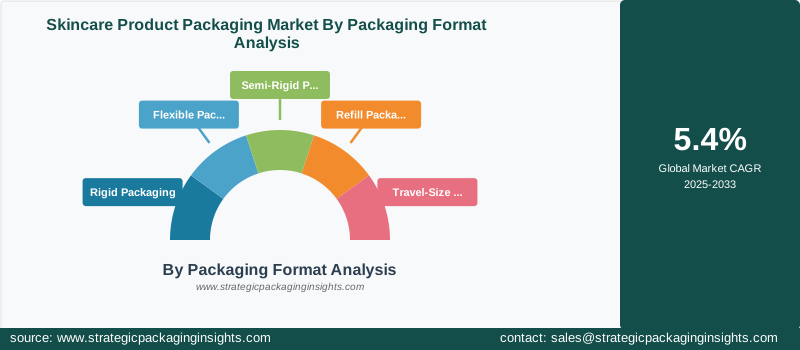
Semi-rigid packaging is also popular, offering a balance between durability and flexibility. Refill packaging is gaining traction, driven by the growing demand for sustainable packaging solutions. Travel-size packaging is increasingly used for convenience and portability, offering a compact and lightweight solution for on-the-go skincare.
By Dispensing System Analysis
The Skincare Product Packaging market is segmented by dispensing system, with screw caps and flip-top caps being the most widely used systems. Screw caps offer a secure and reliable closure for skincare products, while flip-top caps offer convenience and ease of use. Pump dispensers are gaining popularity for their precise and hygienic dispensing, making them ideal for liquid skincare products.
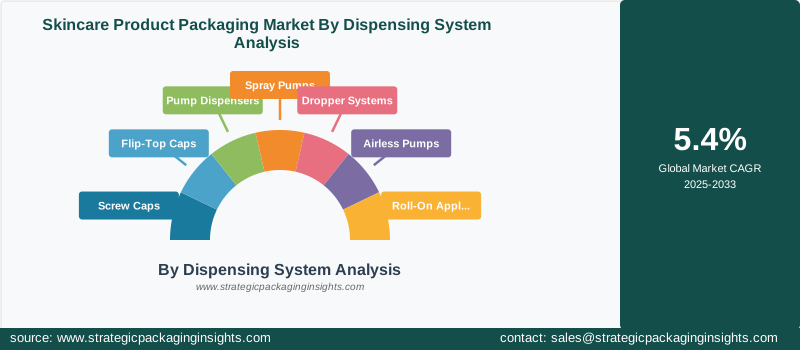
Spray pumps are also popular for their ability to deliver a fine mist, offering a refreshing and convenient application. Dropper systems are gaining traction for their ability to deliver precise doses of skincare products, making them ideal for serums and oils. Airless pumps are popular for their ability to preserve product integrity and extend shelf life, while roll-on applicators offer a convenient and hygienic application for skincare products.
By Application Analysis
The Skincare Product Packaging market is segmented by application, with facial skincare being the largest segment. Facial skincare products, including moisturizers, cleansers, and serums, are in high demand, driven by the increasing importance of skincare routines. Body skincare products, including lotions and creams, are also popular, offering hydration and nourishment for the skin.
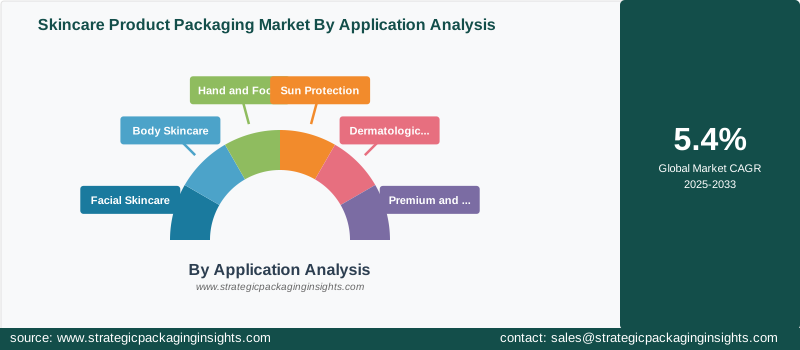
Hand and foot care products are gaining traction, driven by the growing awareness of the importance of hand and foot care. Sun protection products are in high demand, driven by the increasing awareness of the harmful effects of UV radiation. Dermatological skincare products are gaining popularity, offering targeted solutions for specific skincare concerns. Premium and luxury skincare products are also in high demand, driven by the increasing focus on maintaining youthful and healthy skin.
By End User Analysis
The Skincare Product Packaging market is segmented by end user, with mass-market skincare brands being the largest segment. Mass-market skincare brands offer affordable and accessible skincare products, catering to a wide range of consumers. Premium skincare brands are gaining popularity, offering high-quality and innovative skincare solutions.
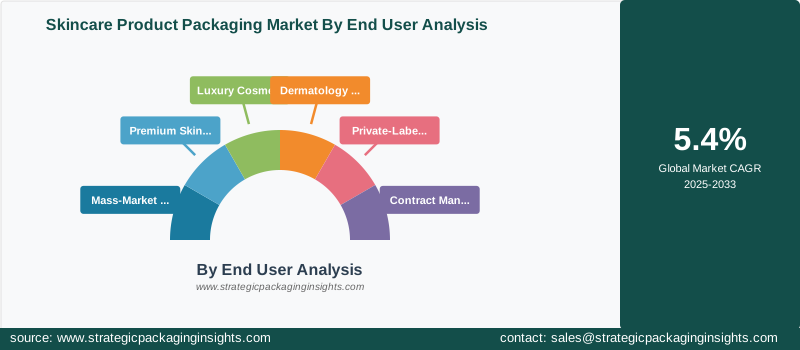
Luxury cosmetics brands are also in high demand, offering premium and luxurious skincare products. Dermatology and medical skincare brands are gaining traction, offering targeted solutions for specific skincare concerns. Private-label brands are increasingly popular, offering affordable and customizable skincare solutions. Contract manufacturers are also gaining popularity, offering cost-effective and efficient production solutions for skincare brands.
By Sustainability Analysis
The Skincare Product Packaging market is segmented by sustainability, with conventional packaging being the most widely used format. Conventional packaging offers durability and protection for skincare products, making it ideal for mass-market products. Recyclable packaging is gaining popularity, driven by the growing demand for sustainable packaging solutions.
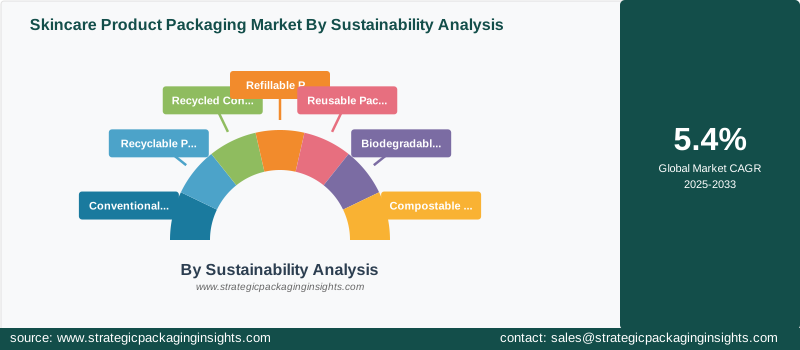
Recycled content packaging is also popular, offering a sustainable alternative to conventional packaging. Refillable packaging is gaining traction, driven by the growing demand for sustainable packaging solutions. Reusable packaging is increasingly used for convenience and portability, offering a compact and lightweight solution for on-the-go skincare. Biodegradable and compostable packaging are gaining popularity, driven by the growing demand for sustainable packaging solutions.
By Distribution Channel Analysis
The Skincare Product Packaging market is segmented by distribution channel, with supermarkets and hypermarkets being the largest segment. Supermarkets and hypermarkets offer a wide range of skincare products, catering to a wide range of consumers. Specialty beauty stores are gaining popularity, offering high-quality and innovative skincare solutions.
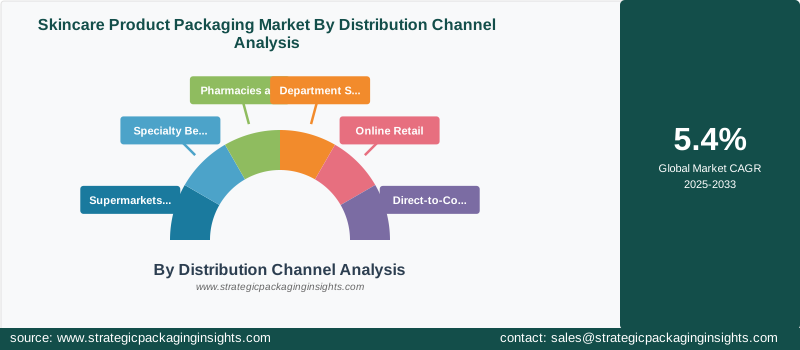
Pharmacies and drugstores are also popular, offering affordable and accessible skincare products. Department stores are gaining traction, offering premium and luxurious skincare products. Online retail is increasingly popular, offering convenience and accessibility for consumers. Direct-to-consumer sales channels are gaining popularity, offering personalized and customizable skincare solutions.
Skincare Product Packaging Market Segments
The Skincare Product Packaging market has been segmented on the basis ofBy Packaging Type
- Bottles
- Jars
- Tubes
- Pumps and Dispensers
- Droppers
- Airless Packaging
- Pouches and Sachets
- Blister and Sachet Packs
- Stick Packaging
- Other Packaging Types
By Material
- Plastic
- Glass
- Aluminum
- Paper and Paperboard
- Metal
- Biodegradable Materials
- Recycled Materials
By Product Category
- Face Care
- Body Care
- Sun Care
- Anti-Aging Products
- Moisturizers
- Cleansers
- Serums
- Masks
- Eye Care
- Acne and Blemish Care
By Packaging Format
- Rigid Packaging
- Flexible Packaging
- Semi-Rigid Packaging
- Refill Packaging
- Travel-Size Packaging
By Dispensing System
- Screw Caps
- Flip-Top Caps
- Pump Dispensers
- Spray Pumps
- Dropper Systems
- Airless Pumps
- Roll-On Applicators
By Application
- Facial Skincare
- Body Skincare
- Hand and Foot Care
- Sun Protection
- Dermatological Skincare
- Premium and Luxury Skincare
By End User
- Mass-Market Skincare Brands
- Premium Skincare Brands
- Luxury Cosmetics Brands
- Dermatology and Medical Skincare Brands
- Private-Label Brands
- Contract Manufacturers
By Sustainability
- Conventional Packaging
- Recyclable Packaging
- Recycled Content Packaging
- Refillable Packaging
- Reusable Packaging
- Biodegradable Packaging
- Compostable Packaging
By Distribution Channel
- Supermarkets and Hypermarkets
- Specialty Beauty Stores
- Pharmacies and Drugstores
- Department Stores
- Online Retail
- Direct-to-Consumer
By Region
- North America
- Europe
- Asia-Pacific
- Latin America
- Middle East and Africa




