


Silage Tube Market Outlook
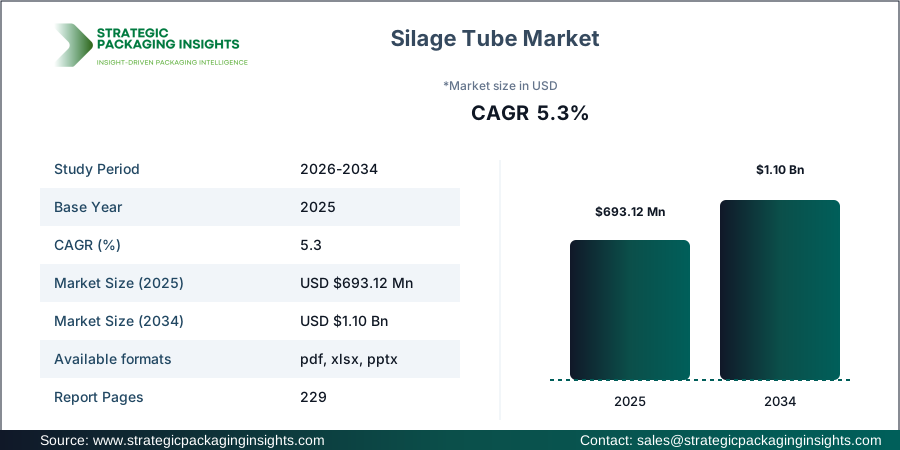
The Silage Tube market was valued at $693.12 million in 2025 and is projected to reach $1.10 billion by 2034, growing at a CAGR of 5.3% during the forecast period 2026-2034. This market is witnessing significant growth due to the increasing demand for efficient storage solutions in the agricultural sector. Silage tubes are becoming a preferred choice for farmers and agricultural cooperatives due to their ability to preserve the nutritional value of fodder and grains over extended periods. The market is also driven by advancements in material technology, which enhance the durability and effectiveness of silage tubes. As the global population continues to rise, the demand for sustainable and efficient agricultural practices is expected to further propel the growth of the silage tube market.
Report Scope
| Attributes | Details |
| Report Title | Silage Tube Market Size, Future Growth and Forecast 2034 |
| By Product Type | Silage Tubes, Silage Bags, Barrier Tubes |
| By Material Type | LDPE, LLDPE, Multilayer Films, Oxygen-Barrier Films |
| By Application | Fodder Storage, Grain Storage, Forage Preservation |
| By End Use | Dairy Farms, Livestock Farms, Agricultural Cooperatives, Feed Producers |
| Region | Asia Pacific, North America, Latin America, Europe, Middle East & Africa |
| Base Year | 2025 |
| Historic Period | 2018-2024 |
| Forecast Period | 2026-2034 |
| Number of Pages | 229 |
| Customization Available | Yes* |
Opportunities & Threats
One of the key opportunities in the silage tube market lies in the increasing adoption of advanced agricultural practices across emerging economies. As countries in Asia Pacific and Latin America continue to modernize their agricultural sectors, the demand for efficient storage solutions like silage tubes is expected to rise. Additionally, the growing awareness about the benefits of silage tubes in preserving the nutritional content of fodder and grains is likely to drive market growth. The development of innovative materials, such as oxygen-barrier films, presents further opportunities for market expansion by enhancing the preservation capabilities of silage tubes.
Another significant opportunity is the rising focus on sustainability and eco-friendly agricultural practices. With increasing environmental concerns, there is a growing demand for biodegradable and recyclable silage tubes. Companies investing in the development of eco-friendly products are likely to gain a competitive edge in the market. Furthermore, government initiatives promoting sustainable agriculture and providing subsidies for modern farming equipment are expected to boost the adoption of silage tubes, particularly in regions with large agricultural sectors.
However, the market faces certain threats, including the volatility of raw material prices, which can impact the overall cost of production for silage tubes. Additionally, the availability of alternative storage solutions, such as silage bags and traditional silos, poses a challenge to market growth. The need for significant initial investment in silage tube systems may also deter small-scale farmers from adopting these solutions. Furthermore, the lack of awareness and technical expertise in certain regions could hinder the widespread adoption of silage tubes.
Drivers & Challenges
The primary driver of the silage tube market is the increasing demand for efficient and cost-effective storage solutions in the agricultural sector. As farmers seek to maximize the nutritional value of their fodder and grains, silage tubes offer a reliable method for preserving these resources. The ability of silage tubes to reduce spoilage and waste is a significant factor driving their adoption. Additionally, advancements in material technology, such as the development of multilayer films and oxygen-barrier films, are enhancing the performance and durability of silage tubes, further driving market growth.
Another key driver is the growing focus on sustainable agricultural practices. As environmental concerns continue to rise, there is an increasing demand for eco-friendly and biodegradable silage tubes. Companies that invest in the development of sustainable products are likely to benefit from this trend. Furthermore, government initiatives promoting modern farming techniques and providing financial support for the adoption of advanced agricultural equipment are expected to drive the growth of the silage tube market.
Despite these drivers, the market faces several challenges. One of the main challenges is the high initial investment required for silage tube systems, which may deter small-scale farmers from adopting these solutions. Additionally, the volatility of raw material prices can impact the overall cost of production, affecting the profitability of manufacturers. The availability of alternative storage solutions, such as silage bags and traditional silos, also poses a challenge to market growth. Furthermore, the lack of awareness and technical expertise in certain regions could hinder the widespread adoption of silage tubes.
Market Share Analysis
The silage tube market is characterized by a competitive landscape with several key players vying for market share. Companies such as Berry Global, RKW Group, and Trioplast are leading the market with their extensive product portfolios and strong distribution networks. These companies are focusing on product innovation and strategic partnerships to strengthen their market position. Berry Global, for instance, is known for its advanced material technology and commitment to sustainability, which has helped it maintain a significant market share.

RKW Group is another major player in the silage tube market, known for its high-quality products and customer-centric approach. The company has a strong presence in Europe and is expanding its operations in emerging markets to capitalize on the growing demand for silage tubes. Trioplast, on the other hand, is focusing on expanding its product offerings and enhancing its production capabilities to meet the increasing demand for silage tubes globally.
Other notable companies in the market include Plastika Kritis, Armando Alvarez Group, and Silostop Agri. Plastika Kritis is recognized for its innovative solutions and commitment to quality, which has helped it establish a strong foothold in the market. Armando Alvarez Group is leveraging its extensive experience in the packaging industry to offer a wide range of silage tube products. Silostop Agri is focusing on developing eco-friendly solutions to cater to the growing demand for sustainable agricultural practices.
Barbier Group, Coveris, Novatex, and Tama Group are also key players in the silage tube market. These companies are investing in research and development to introduce new and improved products that meet the evolving needs of the agricultural sector. By focusing on product innovation and expanding their distribution networks, these companies are well-positioned to capture a significant share of the growing silage tube market.
Key Highlights
- The silage tube market is projected to grow at a CAGR of 5.3% from 2026 to 2034.
- Advancements in material technology, such as multilayer films and oxygen-barrier films, are driving market growth.
- Increasing demand for sustainable and eco-friendly agricultural practices is boosting the adoption of silage tubes.
- Government initiatives promoting modern farming techniques are expected to drive market growth.
- Key players in the market include Berry Global, RKW Group, and Trioplast.
- The Asia Pacific region is expected to witness significant growth due to the modernization of the agricultural sector.
- Volatility of raw material prices poses a challenge to market growth.
- The availability of alternative storage solutions, such as silage bags, is a potential threat to the market.
- High initial investment costs may deter small-scale farmers from adopting silage tube systems.
- Companies are focusing on product innovation and strategic partnerships to strengthen their market position.
Top Countries Insights
In the silage tube market, the United States stands out as a key player, with a market size of approximately $200 million and a CAGR of 4%. The country's advanced agricultural infrastructure and strong focus on sustainable farming practices drive the demand for silage tubes. Government subsidies and support for modern farming equipment further bolster market growth. However, challenges such as fluctuating raw material prices and competition from alternative storage solutions persist.
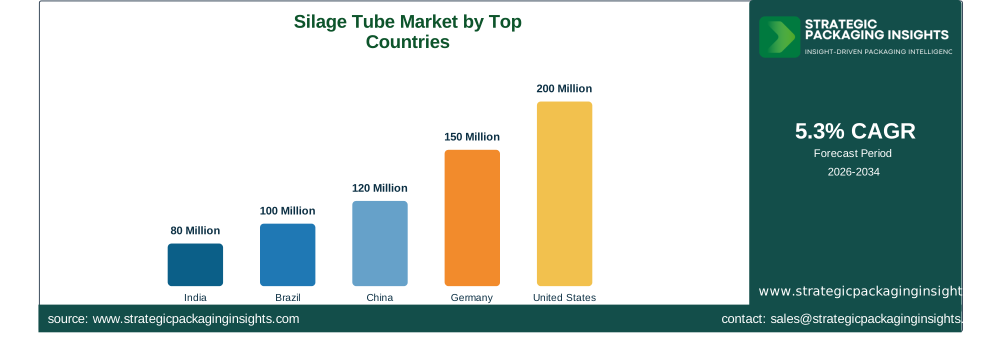
Germany is another significant market, with a market size of around $150 million and a CAGR of 5%. The country's emphasis on high-quality agricultural products and efficient storage solutions fuels the demand for silage tubes. Innovations in material technology and a strong focus on sustainability are key growth drivers. However, the market faces challenges from stringent environmental regulations and the need for continuous product innovation.
China, with its rapidly modernizing agricultural sector, presents a lucrative opportunity for the silage tube market. The market size is estimated at $120 million, with a CAGR of 7%. The country's large agricultural base and increasing adoption of advanced farming practices drive market growth. Government initiatives promoting sustainable agriculture and providing financial support for modern equipment are significant growth drivers. However, the market faces challenges from the availability of low-cost alternatives and the need for increased awareness and technical expertise.
Brazil, with a market size of $100 million and a CAGR of 6%, is a key player in the Latin American region. The country's vast agricultural sector and focus on improving storage efficiency drive the demand for silage tubes. Government support for modern farming techniques and the development of eco-friendly products are significant growth drivers. However, challenges such as economic instability and competition from alternative storage solutions persist.
India, with its growing agricultural sector, presents a promising market for silage tubes. The market size is estimated at $80 million, with a CAGR of 8%. The country's focus on improving agricultural productivity and reducing post-harvest losses drives market growth. Government initiatives promoting modern farming practices and providing financial support for advanced equipment are key growth drivers. However, challenges such as the need for increased awareness and technical expertise, as well as competition from traditional storage methods, persist.
Silage Tube Market Segments Insights

Product Type Analysis
The silage tube market is segmented by product type into silage tubes, silage bags, and barrier tubes. Silage tubes are the most popular choice among farmers due to their ability to preserve the nutritional value of fodder and grains over extended periods. The demand for silage tubes is driven by their cost-effectiveness and ease of use, making them a preferred choice for small and large-scale farmers alike. Silage bags, on the other hand, offer flexibility and convenience, making them suitable for temporary storage needs. Barrier tubes are gaining traction due to their enhanced preservation capabilities, particularly in regions with extreme weather conditions.
Silage tubes are expected to dominate the market during the forecast period, driven by the increasing adoption of advanced agricultural practices and the growing focus on sustainable farming. The development of innovative materials, such as oxygen-barrier films, is further enhancing the performance of silage tubes, making them a preferred choice for farmers. Silage bags and barrier tubes are also witnessing growth, driven by the need for flexible and efficient storage solutions in the agricultural sector.
Material Type Analysis
The silage tube market is segmented by material type into LDPE, LLDPE, multilayer films, and oxygen-barrier films. LDPE and LLDPE are widely used due to their durability and cost-effectiveness. These materials offer excellent protection against moisture and UV rays, making them suitable for long-term storage. Multilayer films are gaining popularity due to their enhanced preservation capabilities, particularly in regions with extreme weather conditions. Oxygen-barrier films are the latest innovation in the market, offering superior protection against oxygen ingress and spoilage.
The demand for multilayer films and oxygen-barrier films is expected to grow significantly during the forecast period, driven by the increasing focus on preserving the nutritional value of fodder and grains. The development of eco-friendly and biodegradable materials is also expected to drive market growth, as farmers seek sustainable solutions for their storage needs. LDPE and LLDPE are expected to maintain their dominance in the market, driven by their cost-effectiveness and widespread availability.
Application Analysis
The silage tube market is segmented by application into fodder storage, grain storage, and forage preservation. Fodder storage is the largest application segment, driven by the increasing demand for efficient storage solutions in the livestock and dairy farming sectors. Silage tubes offer a reliable method for preserving the nutritional value of fodder, reducing spoilage and waste. Grain storage is another significant application, driven by the need for efficient storage solutions in the agricultural sector. Silage tubes offer protection against moisture and pests, making them a preferred choice for grain storage.
Forage preservation is a growing application segment, driven by the increasing focus on sustainable farming practices and the need to reduce post-harvest losses. Silage tubes offer a cost-effective and efficient solution for preserving forage, making them a preferred choice for farmers. The demand for silage tubes in forage preservation is expected to grow significantly during the forecast period, driven by the increasing adoption of advanced agricultural practices and the growing focus on sustainability.
End Use Analysis
The silage tube market is segmented by end use into dairy farms, livestock farms, agricultural cooperatives, and feed producers. Dairy farms are the largest end-use segment, driven by the increasing demand for efficient storage solutions in the dairy farming sector. Silage tubes offer a reliable method for preserving the nutritional value of fodder, reducing spoilage and waste. Livestock farms are another significant end-use segment, driven by the need for efficient storage solutions in the livestock farming sector.
Agricultural cooperatives and feed producers are also significant end-use segments, driven by the need for efficient storage solutions in the agricultural sector. Silage tubes offer a cost-effective and efficient solution for preserving fodder and grains, making them a preferred choice for agricultural cooperatives and feed producers. The demand for silage tubes in these end-use segments is expected to grow significantly during the forecast period, driven by the increasing adoption of advanced agricultural practices and the growing focus on sustainability.
Silage Tube Market Segments
The Silage Tube market has been segmented on the basis ofBy Product Type
- Silage Tubes
- Silage Bags
- Barrier Tubes
By Material Type
- LDPE
- LLDPE
- Multilayer Films
- Oxygen-Barrier Films
By Application
- Fodder Storage
- Grain Storage
- Forage Preservation
By End Use
- Dairy Farms
- Livestock Farms
- Agricultural Cooperatives
- Feed Producers
Region
- Asia Pacific
- North America
- Latin America
- Europe
- Middle East & Africa




