


Shrink Bundling Film Market Outlook
The Shrink Bundling Film market size was valued at USD 5.18 billion in 2025 and is anticipated to reach USD 8.83 billion by 2034, growing at a CAGR of 6.1% during the forecast period according to Strategic Packaging Insights. This growth is driven by the increasing demand for efficient packaging solutions across various industries, including food and beverage, logistics, and FMCG. Companies like Berry Global and RKW Group are at the forefront, leveraging advanced technologies to enhance product durability and sustainability. The market's expansion is further fueled by the rising trend of retail-ready packaging, which is gaining traction due to its convenience and cost-effectiveness.
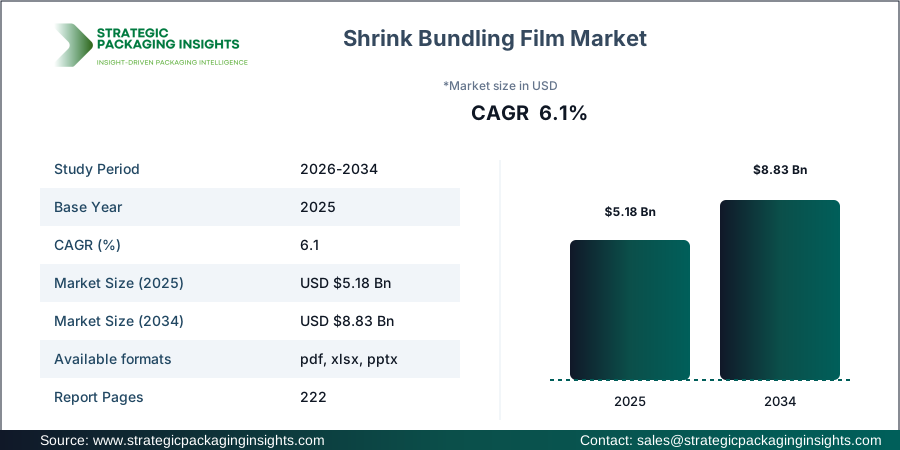
One of the most impactful drivers of the Shrink Bundling Film market is the growing emphasis on sustainability and eco-friendly packaging solutions. Governments and environmental organizations worldwide are advocating for reduced plastic waste, prompting manufacturers to innovate with recyclable and biodegradable materials. This shift is supported by consumer preferences leaning towards environmentally responsible products, creating a significant demand for sustainable packaging solutions. Companies like Sealed Air and Sigma Plastics are investing heavily in R&D to develop films that meet these new standards, ensuring compliance with stringent regulations and enhancing their market competitiveness.
Report Scope
| Attributes | Details |
| Report Title | Shrink Bundling Film Market Size, Future Growth and Forecast 2034 |
| By Material Type | PE, LDPE, LLDPE, Recycled PE |
| By Film Type | Printed Films, Clear Films, Heavy-Duty Films |
| By Application | Beverage Multipacks, Carton Bundling, Industrial Packs, Retail Bundles |
| By End Use | Food & Beverage, Logistics, FMCG, Industrial |
| Region | Asia Pacific, North America, Latin America, Europe, Middle East & Africa |
| Base Year | 2025 |
| Historic Period | 2018-2024 |
| Forecast Period | 2026-2034 |
| Number of Pages | 222 |
| Customization Available | Yes* |
Sustainability & Circular Economy Analysis
Sustainability initiatives are reshaping the Shrink Bundling Film market, with a strong focus on reducing environmental impact through innovative packaging solutions. The integration of recyclable materials and the development of reusable packaging options are becoming standard practices. Companies are increasingly adopting lightweight packaging to minimize material usage and reduce transportation emissions. This trend is driven by consumer demand for eco-friendly products and stringent packaging regulations aimed at reducing plastic waste. As a result, manufacturers are investing in eco-friendly material innovations to align with these sustainability goals.
The circular economy is influencing packaging design and manufacturing processes, encouraging companies to adopt waste reduction strategies and extended producer responsibility (EPR) programs. These initiatives are not only reducing the carbon footprint of packaging operations but also enhancing brand reputation and customer loyalty. ESG initiatives are becoming a critical component of corporate strategies, with companies like Coveris and Intertape Polymer Group leading the way in implementing sustainable practices across their supply chains.
As sustainability trends continue to evolve, they are impacting investment decisions and supply chain strategies within the Shrink Bundling Film market. Companies are prioritizing regulatory compliance and long-term market competitiveness by adopting sustainable practices. This shift is driving innovation in packaging materials and processes, with a focus on reducing environmental impact while maintaining product quality and performance. The emphasis on sustainability is expected to drive significant growth in the market, as companies seek to meet consumer expectations and regulatory requirements.
Packaging Value Chain & Supply Chain Analysis
The packaging value chain for Shrink Bundling Film involves a complex ecosystem of raw material sourcing, manufacturing, and distribution. Raw material availability, particularly for polyethylene (PE) and its derivatives, plays a crucial role in determining production capabilities and cost structures. Packaging converters and manufacturers like Berry Global and Scientex are pivotal in transforming these raw materials into high-performance films, ensuring quality and consistency across their product lines. Strategic partnerships with suppliers and logistics providers are essential for maintaining supply chain resilience and optimizing procurement strategies.
Supply chain efficiency is a key determinant of market performance, with transportation and logistics playing a critical role in ensuring timely delivery of products to end-users. Distribution channels are evolving to accommodate the growing demand for shrink bundling films in various applications, from beverage multipacks to industrial packs. Companies are investing in advanced packaging machinery to enhance production capabilities and meet the increasing demand for customized packaging solutions. This focus on efficiency and innovation is driving competitiveness in the market.
Global sourcing and localization strategies are becoming increasingly important as companies navigate the challenges of fluctuating raw material prices and geopolitical uncertainties. By diversifying their supplier base and optimizing inventory management, companies can mitigate risks and enhance their market position. Recycling networks are also gaining prominence, as companies seek to close the loop on packaging waste and align with circular economy principles. This holistic approach to the packaging value chain is essential for sustaining growth and maintaining a competitive edge in the Shrink Bundling Film market.
Opportunities & Threats
The Shrink Bundling Film market presents numerous opportunities for growth, driven by the increasing demand for sustainable packaging solutions. The shift towards eco-friendly materials and recyclable films is creating new avenues for innovation and product development. Companies that invest in R&D to develop biodegradable and compostable films are likely to gain a competitive advantage, as consumers and regulators prioritize environmental sustainability. Additionally, the growing trend of e-commerce and online retail is boosting demand for efficient packaging solutions, providing further growth opportunities for market players.
Another significant opportunity lies in the expansion of the food and beverage industry, which is a major end-user of shrink bundling films. As consumer preferences shift towards convenience and ready-to-eat products, the demand for efficient and attractive packaging solutions is expected to rise. Companies that can offer customized and visually appealing packaging options are likely to capture a larger market share. Furthermore, the increasing focus on reducing food waste through improved packaging solutions presents an opportunity for companies to differentiate themselves in the market.
Despite the growth opportunities, the Shrink Bundling Film market faces several threats, including regulatory challenges and fluctuating raw material prices. Stringent regulations aimed at reducing plastic waste and promoting sustainability can increase compliance costs for manufacturers. Additionally, the volatility in raw material prices, particularly for polyethylene, can impact profit margins and create uncertainty in the market. Companies must navigate these challenges by adopting flexible pricing strategies and investing in sustainable practices to mitigate risks and maintain their competitive position.
Drivers & Challenges
The primary drivers of the Shrink Bundling Film market include the increasing demand for efficient and cost-effective packaging solutions across various industries. The food and beverage sector, in particular, is a significant driver, as companies seek to enhance product shelf life and reduce transportation costs through innovative packaging solutions. The rise of e-commerce and online retail is also driving demand for shrink bundling films, as companies look for durable and visually appealing packaging options to enhance customer experience and brand visibility.
Technological advancements in packaging materials and processes are further driving market growth. Companies are investing in advanced manufacturing technologies to produce high-performance films that offer superior strength and clarity. The development of multi-layer films with enhanced barrier properties is gaining traction, as it allows for better protection of packaged goods and extends shelf life. These innovations are enabling companies to meet the evolving needs of consumers and maintain a competitive edge in the market.
However, the Shrink Bundling Film market also faces several challenges, including environmental concerns and regulatory pressures. The increasing focus on sustainability and reducing plastic waste is prompting companies to rethink their packaging strategies and invest in eco-friendly alternatives. Compliance with stringent regulations can increase operational costs and impact profitability. Additionally, the volatility in raw material prices poses a challenge for manufacturers, as it can affect production costs and pricing strategies. Companies must navigate these challenges by adopting sustainable practices and optimizing their supply chains to remain competitive.
Market Share Analysis
The Shrink Bundling Film market is characterized by a competitive landscape with several key players vying for market share. Companies like Berry Global, RKW Group, and Coveris are leading the market, leveraging their extensive product portfolios and global presence to maintain a competitive edge. These companies are investing in R&D to develop innovative packaging solutions that meet the evolving needs of consumers and comply with stringent environmental regulations. Their focus on sustainability and eco-friendly materials is driving growth and enhancing their market position.
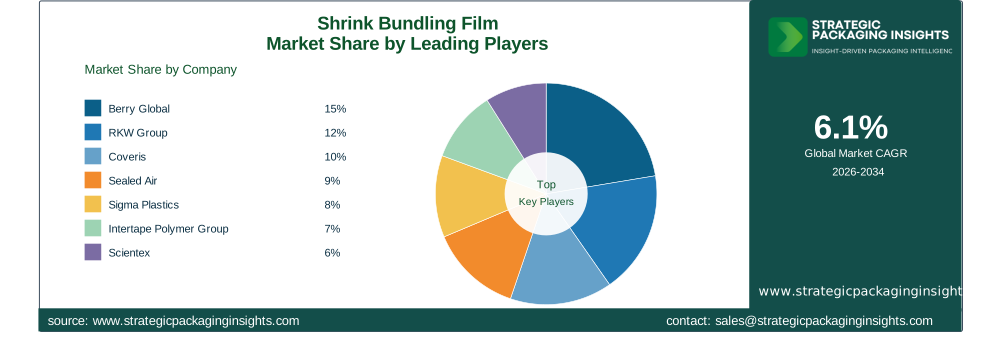
Sealed Air and Sigma Plastics are also prominent players in the market, known for their advanced manufacturing capabilities and commitment to quality. These companies are focusing on expanding their product offerings and enhancing their distribution networks to capture a larger market share. Their strategic partnerships with suppliers and logistics providers are enabling them to optimize their supply chains and improve operational efficiency. As a result, they are well-positioned to capitalize on the growing demand for shrink bundling films across various industries.
Intertape Polymer Group and Scientex are making significant strides in the market, with a focus on innovation and sustainability. These companies are investing in advanced technologies to produce high-performance films that offer superior strength and clarity. Their commitment to reducing environmental impact and promoting sustainable practices is resonating with consumers and regulators alike, driving growth and enhancing their market competitiveness. Their strategic initiatives and strong market presence are contributing to their success in the Shrink Bundling Film market.
Trioplast, Manuli Stretch, and DUO PLAST are also key players in the market, known for their expertise in producing high-quality shrink bundling films. These companies are focusing on expanding their product portfolios and enhancing their manufacturing capabilities to meet the growing demand for efficient packaging solutions. Their emphasis on sustainability and eco-friendly materials is driving innovation and growth, positioning them as leaders in the market. Their strategic partnerships and global presence are enabling them to capture a larger market share and maintain their competitive edge.
Key Highlights
- Market Size: The Shrink Bundling Film market was valued at USD 5.18 billion in 2025 and is projected to reach USD 8.83 billion by 2034.
- Growth Rate: The market is expected to grow at a CAGR of 6.1% during the forecast period.
- Leading Companies: Key players include Berry Global, RKW Group, and Coveris, known for their innovative packaging solutions.
- Sustainability Focus: Increasing demand for eco-friendly and recyclable packaging materials is driving market growth.
- Technological Advancements: Development of multi-layer films with enhanced barrier properties is gaining traction.
- Regional Insights: Asia Pacific is expected to witness significant growth due to rising demand in the food and beverage sector.
- Application Segments: Beverage multipacks and industrial packs are major application areas driving demand.
Shrink Bundling Film Market Segments Insights

By Material Type Analysis
The Shrink Bundling Film market is segmented by material type, including PE, LDPE, LLDPE, and Recycled PE. Polyethylene (PE) is the most widely used material due to its excellent strength and flexibility, making it ideal for various packaging applications. LDPE and LLDPE are gaining popularity for their superior clarity and puncture resistance, which are essential for maintaining product integrity during transportation. Recycled PE is emerging as a sustainable alternative, driven by the increasing focus on reducing plastic waste and promoting circular economy practices. Companies are investing in R&D to enhance the performance of recycled materials and meet the growing demand for eco-friendly packaging solutions.
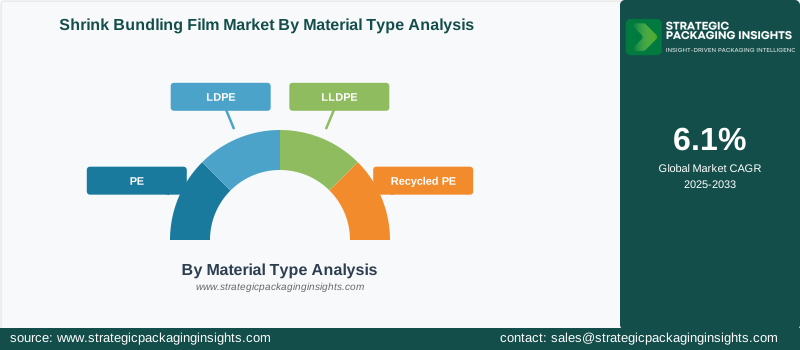
The demand for PE-based shrink bundling films is driven by their cost-effectiveness and versatility, making them suitable for a wide range of applications, from beverage multipacks to industrial packs. The growing emphasis on sustainability is prompting manufacturers to explore innovative material formulations that offer enhanced performance while minimizing environmental impact. This trend is expected to drive significant growth in the market, as companies seek to align with consumer preferences and regulatory requirements. The development of bio-based and biodegradable films is also gaining traction, offering new opportunities for market expansion.
By Film Type Analysis
The Shrink Bundling Film market is segmented by film type, including Printed Films, Clear Films, and Heavy-Duty Films. Printed films are gaining popularity for their ability to enhance brand visibility and consumer engagement through attractive graphics and designs. Clear films are preferred for their transparency and clarity, allowing consumers to view the packaged products easily. Heavy-duty films are designed for high-strength applications, providing superior protection for industrial and bulk packaging. The demand for these films is driven by the need for durable and visually appealing packaging solutions across various industries.
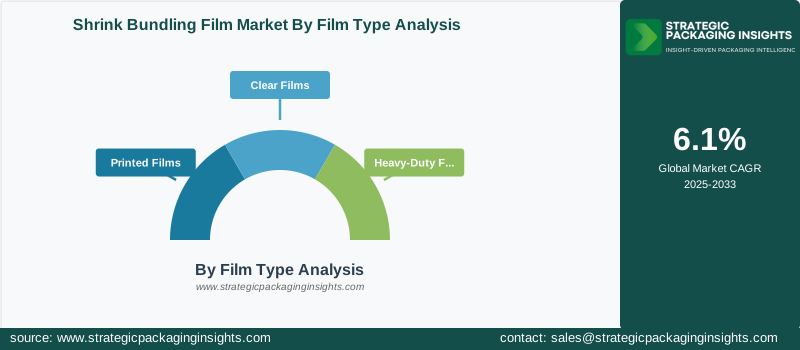
The increasing focus on branding and marketing is driving the demand for printed films, as companies seek to differentiate their products and enhance shelf appeal. The development of advanced printing technologies is enabling manufacturers to produce high-quality graphics and designs, further boosting the demand for printed films. Clear films are favored for their versatility and cost-effectiveness, making them suitable for a wide range of applications, from retail bundles to industrial packs. The demand for heavy-duty films is driven by the need for robust packaging solutions that can withstand harsh transportation and storage conditions.
By Application Analysis
The Shrink Bundling Film market is segmented by application, including Beverage Multipacks, Carton Bundling, Industrial Packs, and Retail Bundles. Beverage multipacks are a major application area, driven by the increasing demand for convenient and attractive packaging solutions in the food and beverage industry. Carton bundling is gaining traction for its ability to enhance product protection and reduce transportation costs. Industrial packs are designed for heavy-duty applications, providing superior strength and durability for bulk packaging. Retail bundles are favored for their convenience and cost-effectiveness, making them ideal for a wide range of consumer products.
The demand for beverage multipacks is driven by the growing trend of on-the-go consumption and the increasing popularity of ready-to-drink beverages. Companies are investing in innovative packaging solutions that offer enhanced convenience and shelf appeal, driving growth in this segment. Carton bundling is favored for its ability to reduce packaging waste and improve logistics efficiency, making it an attractive option for manufacturers and retailers. The demand for industrial packs is driven by the need for robust packaging solutions that can withstand harsh transportation and storage conditions, ensuring product integrity and safety.
By End Use Analysis
The Shrink Bundling Film market is segmented by end use, including Food & Beverage, Logistics, FMCG, and Industrial. The food and beverage sector is a major end-user, driven by the increasing demand for efficient and attractive packaging solutions that enhance product shelf life and reduce transportation costs. The logistics sector is also a significant end-user, as companies seek to optimize their supply chains and improve operational efficiency through innovative packaging solutions. The FMCG sector is driven by the need for convenient and cost-effective packaging options that enhance consumer experience and brand visibility.
The demand for shrink bundling films in the food and beverage sector is driven by the growing trend of convenience and ready-to-eat products, as consumers seek quick and easy meal solutions. Companies are investing in advanced packaging technologies that offer enhanced protection and shelf appeal, driving growth in this segment. The logistics sector is focused on reducing packaging waste and improving transportation efficiency, making shrink bundling films an attractive option for optimizing supply chains. The FMCG sector is driven by the need for visually appealing and convenient packaging solutions that enhance consumer experience and brand visibility.
Shrink Bundling Film Market Segments
The Shrink Bundling Film market has been segmented on the basis ofBy Material Type
- PE
- LDPE
- LLDPE
- Recycled PE
By Film Type
- Printed Films
- Clear Films
- Heavy-Duty Films
By Application
- Beverage Multipacks
- Carton Bundling
- Industrial Packs
- Retail Bundles
By End Use
- Food & Beverage
- Logistics
- FMCG
- Industrial
Region
- Asia Pacific
- North America
- Latin America
- Europe
- Middle East & Africa




