


Shipping Supply Market Outlook
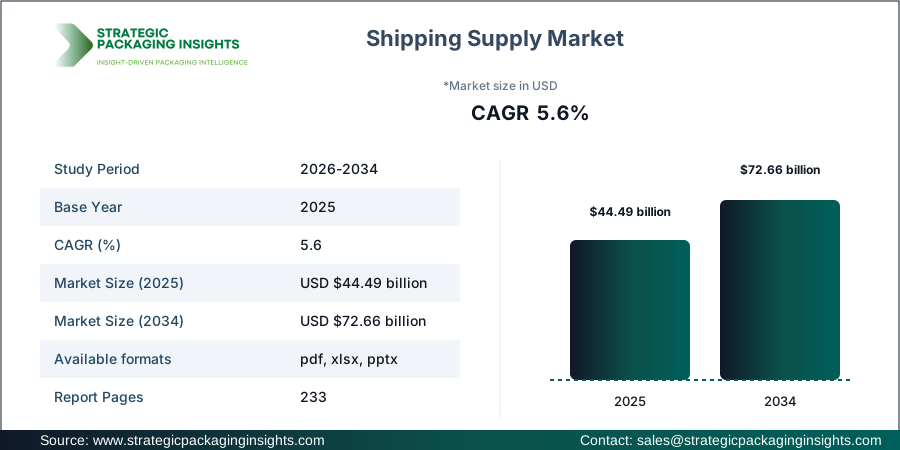
The Shipping Supply market was valued at $44.49 billion in 2025 and is projected to reach $72.66 billion by 2034, growing at a CAGR of 5.6% during the forecast period 2026-2034. This market is experiencing robust growth driven by the exponential rise in e-commerce activities and the increasing demand for efficient packaging solutions. The surge in online shopping has necessitated the need for reliable shipping supplies, including boxes, mailers, tapes, and cushioning materials, to ensure the safe delivery of goods. Additionally, the logistics and retail sectors are also contributing significantly to the market's expansion as they seek to optimize their supply chain operations with advanced packaging solutions. The growing emphasis on sustainability and eco-friendly packaging materials is further propelling the market, as companies strive to reduce their carbon footprint and meet regulatory requirements.
However, the market faces certain challenges that could hinder its growth potential. Regulatory constraints related to packaging waste and environmental impact are becoming increasingly stringent, compelling companies to innovate and adopt sustainable practices. The fluctuating prices of raw materials, such as paperboard and plastic, also pose a threat to market stability. Despite these challenges, the shipping supply market holds immense growth potential, driven by technological advancements and the increasing adoption of automation in packaging processes. The integration of smart packaging solutions, such as RFID tags and QR codes, is expected to enhance supply chain visibility and efficiency, further boosting market growth.
Report Scope
| Attributes | Details |
| Report Title | Shipping Supply Market Size, Future Growth and Forecast 2034 |
| Product Type | Boxes, Mailers, Tapes, Labels, Cushioning |
| Material Type | Paperboard, Plastic, Foam, Fiber |
| Application | E-commerce, Logistics, Retail, Industrial Shipping |
| Sales Channel | B2B, Online, Distributors, Retail |
| Region | Asia Pacific, North America, Latin America, Europe, Middle East & Africa |
| Base Year | 2025 |
| Historic Period | 2018-2024 |
| Forecast Period | 2026-2034 |
| Number of Pages | 233 |
| Customization Available | Yes* |
Opportunities & Threats
The shipping supply market is ripe with opportunities, particularly in the realm of e-commerce. As online shopping continues to grow, the demand for efficient and reliable shipping supplies is expected to surge. Companies are increasingly investing in innovative packaging solutions that not only protect products during transit but also enhance the unboxing experience for consumers. This trend is driving the development of customized and branded packaging solutions, offering significant growth opportunities for market players. Additionally, the increasing focus on sustainability presents a lucrative opportunity for companies to develop eco-friendly packaging materials that align with consumer preferences and regulatory requirements.
Another promising opportunity lies in the integration of technology into packaging solutions. The adoption of smart packaging, which includes features like RFID tags and QR codes, is gaining traction as companies seek to improve supply chain visibility and efficiency. These technologies enable real-time tracking of shipments, reducing the risk of loss or damage and enhancing customer satisfaction. Furthermore, the rise of automation in packaging processes is expected to streamline operations and reduce costs, providing a competitive edge to companies that embrace these advancements.
Despite the numerous opportunities, the shipping supply market faces certain threats that could impede its growth. One of the primary challenges is the increasing regulatory scrutiny on packaging waste and environmental impact. Governments worldwide are implementing stringent regulations to curb packaging waste, compelling companies to adopt sustainable practices. This shift towards eco-friendly packaging materials may increase production costs, posing a threat to profitability. Additionally, the fluctuating prices of raw materials, such as paperboard and plastic, can impact market stability and profitability, making it crucial for companies to adopt effective cost management strategies.
Drivers & Challenges
The shipping supply market is primarily driven by the rapid growth of the e-commerce sector. The increasing preference for online shopping has led to a surge in demand for packaging materials that ensure the safe and timely delivery of products. This trend is further fueled by the growing consumer expectations for quick and hassle-free deliveries, prompting companies to invest in efficient packaging solutions. Additionally, the expansion of the logistics and retail sectors is contributing to market growth as these industries seek to optimize their supply chain operations with advanced packaging solutions.
Another significant driver of the shipping supply market is the growing emphasis on sustainability. As environmental concerns continue to rise, companies are increasingly adopting eco-friendly packaging materials to reduce their carbon footprint and comply with regulatory requirements. This shift towards sustainable packaging is not only driven by regulatory pressures but also by consumer demand for environmentally responsible products. The development of biodegradable and recyclable packaging materials is expected to drive market growth, offering a competitive advantage to companies that prioritize sustainability.
However, the market faces several challenges that could hinder its growth potential. One of the primary challenges is the fluctuating prices of raw materials, such as paperboard and plastic, which can impact production costs and profitability. Additionally, the increasing regulatory scrutiny on packaging waste and environmental impact is compelling companies to innovate and adopt sustainable practices, which may increase production costs. The competitive landscape of the market is also a challenge, with numerous players vying for market share, making it crucial for companies to differentiate themselves through innovation and quality.
Market Share Analysis
The shipping supply market is characterized by a highly competitive landscape, with several key players vying for market share. Companies such as Uline, Packaging Corporation of America, International Paper, and WestRock are among the leading players in the market, known for their extensive product portfolios and strong distribution networks. These companies have established a significant presence in the market through strategic partnerships, mergers, and acquisitions, enabling them to expand their product offerings and enhance their market position.
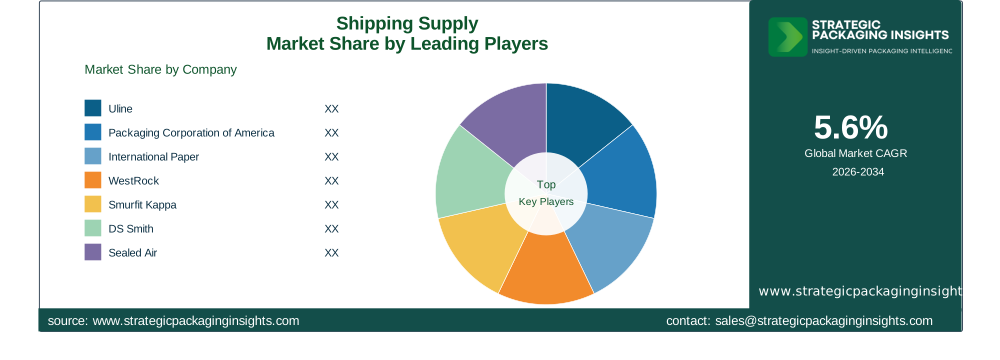
Uline is a prominent player in the shipping supply market, known for its comprehensive range of packaging products and exceptional customer service. The company has a strong distribution network across North America, enabling it to cater to a wide customer base. Packaging Corporation of America is another key player, recognized for its innovative packaging solutions and commitment to sustainability. The company has made significant investments in research and development to develop eco-friendly packaging materials, aligning with the growing demand for sustainable solutions.
International Paper and WestRock are also major players in the market, known for their extensive product portfolios and strong focus on sustainability. International Paper is a leading producer of fiber-based packaging products, with a strong presence in North America and Europe. The company has made significant investments in sustainable packaging solutions, aligning with the growing demand for eco-friendly products. WestRock, on the other hand, is known for its innovative packaging solutions and strong focus on customer satisfaction. The company has a diverse product portfolio, catering to various industries, including e-commerce, logistics, and retail.
Other notable players in the market include Smurfit Kappa, DS Smith, Sealed Air, Pregis, Veritiv, and Berlin Packaging. These companies have established a strong presence in the market through strategic partnerships and acquisitions, enabling them to expand their product offerings and enhance their market position. Smurfit Kappa is known for its innovative packaging solutions and strong focus on sustainability, while DS Smith is recognized for its extensive product portfolio and commitment to customer satisfaction. Sealed Air and Pregis are known for their advanced packaging solutions, catering to various industries, including e-commerce and logistics.
Key Highlights
- The shipping supply market is projected to grow from $44.49 billion in 2025 to $72.66 billion by 2034, at a CAGR of 5.6%.
- Key drivers include the rapid growth of e-commerce and the increasing demand for efficient packaging solutions.
- Sustainability is a major trend, with companies adopting eco-friendly packaging materials to reduce their carbon footprint.
- Technological advancements, such as smart packaging and automation, are enhancing supply chain visibility and efficiency.
- Regulatory constraints related to packaging waste and environmental impact are compelling companies to innovate and adopt sustainable practices.
- The competitive landscape is characterized by several key players, including Uline, Packaging Corporation of America, and International Paper.
- Fluctuating raw material prices pose a challenge to market stability and profitability.
- Strategic partnerships, mergers, and acquisitions are enabling companies to expand their product offerings and enhance their market position.
- The integration of technology into packaging solutions is gaining traction, offering significant growth opportunities for market players.
Top Countries Insights
In the shipping supply market, the United States stands out as a key player, with a market size of approximately $15 billion and a CAGR of 6%. The country's robust e-commerce sector and advanced logistics infrastructure are major growth drivers. The increasing demand for efficient and reliable packaging solutions is further propelling market growth. However, regulatory constraints related to packaging waste and environmental impact pose a challenge to market players.
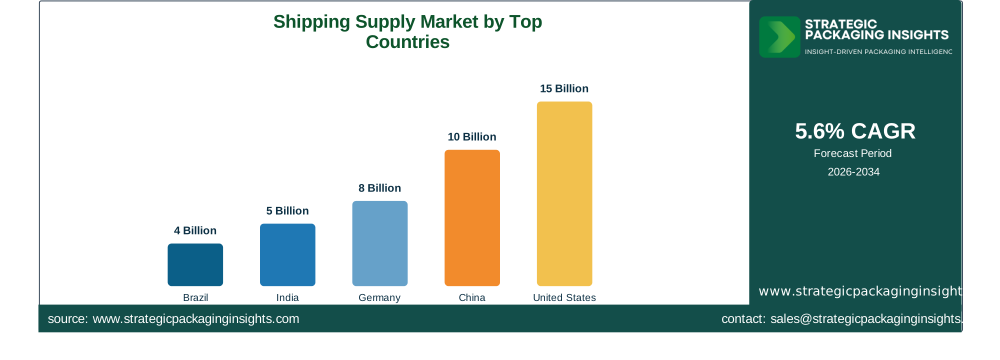
China is another significant market, with a market size of around $10 billion and a CAGR of 7%. The country's booming e-commerce industry and rapid urbanization are driving the demand for shipping supplies. The government's focus on sustainability and eco-friendly packaging materials is also contributing to market growth. However, the fluctuating prices of raw materials and regulatory constraints pose challenges to market players.
Germany is a key market in Europe, with a market size of approximately $8 billion and a CAGR of 5%. The country's strong logistics infrastructure and focus on sustainability are major growth drivers. The increasing demand for efficient packaging solutions in the retail and industrial shipping sectors is further propelling market growth. However, regulatory constraints related to packaging waste and environmental impact pose a challenge to market players.
India is an emerging market, with a market size of around $5 billion and a CAGR of 8%. The country's growing e-commerce sector and increasing focus on sustainability are driving the demand for shipping supplies. The government's initiatives to promote eco-friendly packaging materials are also contributing to market growth. However, the fluctuating prices of raw materials and regulatory constraints pose challenges to market players.
Brazil is a key market in Latin America, with a market size of approximately $4 billion and a CAGR of 6%. The country's expanding e-commerce sector and increasing demand for efficient packaging solutions are major growth drivers. The government's focus on sustainability and eco-friendly packaging materials is also contributing to market growth. However, regulatory constraints related to packaging waste and environmental impact pose a challenge to market players.
Shipping Supply Market Segments Insights

Product Type Analysis
The product type segment of the shipping supply market is diverse, encompassing boxes, mailers, tapes, labels, and cushioning materials. Boxes remain the most dominant sub-segment, driven by their widespread use across various industries, including e-commerce, logistics, and retail. The increasing demand for customized and branded packaging solutions is further propelling the growth of this sub-segment. Mailers are also gaining traction, particularly in the e-commerce sector, where they are used for shipping small and lightweight items. The growing emphasis on sustainability is driving the demand for eco-friendly mailers, made from recyclable and biodegradable materials.
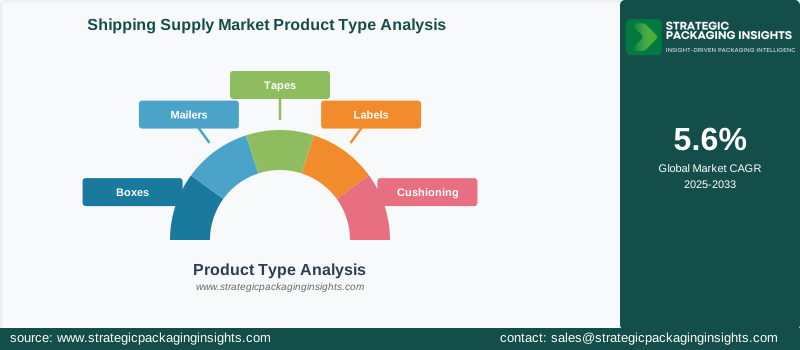
Tapes and labels are essential components of the shipping supply market, used for sealing packages and providing important information about the contents. The increasing demand for tamper-evident and security tapes is driving the growth of this sub-segment, as companies seek to enhance the safety and security of their shipments. Cushioning materials, such as bubble wrap and foam, are also experiencing significant demand, driven by the need to protect fragile and delicate items during transit. The development of innovative cushioning solutions, such as air pillows and biodegradable foam, is expected to drive market growth, offering a competitive advantage to companies that prioritize sustainability.
Material Type Analysis
The material type segment of the shipping supply market includes paperboard, plastic, foam, and fiber. Paperboard is the most widely used material, driven by its versatility and eco-friendly properties. The increasing demand for sustainable packaging solutions is propelling the growth of this sub-segment, as companies seek to reduce their carbon footprint and comply with regulatory requirements. Plastic is also a popular material, known for its durability and cost-effectiveness. However, the growing emphasis on sustainability is driving the demand for biodegradable and recyclable plastics, offering significant growth opportunities for market players.
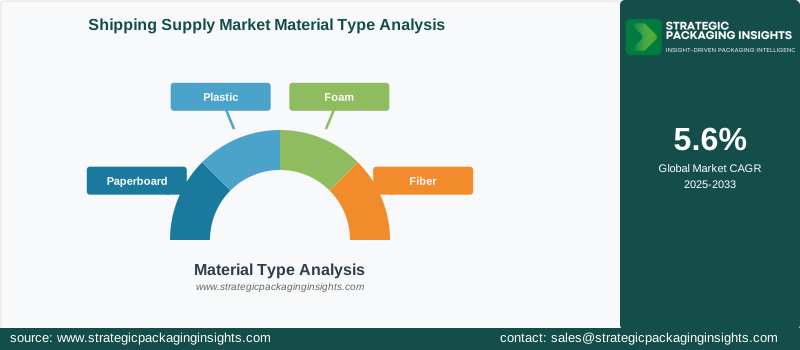
Foam is another important material, used for cushioning and protecting fragile items during transit. The development of innovative foam solutions, such as biodegradable and recyclable foam, is expected to drive market growth, offering a competitive advantage to companies that prioritize sustainability. Fiber is also gaining traction, particularly in the e-commerce sector, where it is used for packaging lightweight and delicate items. The increasing demand for eco-friendly and sustainable packaging materials is driving the growth of this sub-segment, as companies seek to align with consumer preferences and regulatory requirements.
Application Analysis
The application segment of the shipping supply market includes e-commerce, logistics, retail, and industrial shipping. E-commerce is the most dominant sub-segment, driven by the rapid growth of online shopping and the increasing demand for efficient and reliable packaging solutions. The logistics sector is also experiencing significant demand, as companies seek to optimize their supply chain operations with advanced packaging solutions. The growing emphasis on sustainability is driving the demand for eco-friendly packaging materials in this sector, as companies seek to reduce their carbon footprint and comply with regulatory requirements.

Retail is another important sub-segment, driven by the increasing demand for customized and branded packaging solutions. The development of innovative packaging solutions, such as smart packaging and automation, is expected to drive market growth, offering a competitive advantage to companies that embrace these advancements. Industrial shipping is also experiencing significant demand, driven by the need for durable and cost-effective packaging solutions. The increasing focus on sustainability is driving the demand for eco-friendly packaging materials in this sector, as companies seek to align with consumer preferences and regulatory requirements.
Sales Channel Analysis
The sales channel segment of the shipping supply market includes B2B, online, distributors, and retail. B2B is the most dominant sub-segment, driven by the increasing demand for bulk packaging solutions from various industries, including e-commerce, logistics, and retail. The growing emphasis on sustainability is driving the demand for eco-friendly packaging materials in this sector, as companies seek to reduce their carbon footprint and comply with regulatory requirements. Online sales are also gaining traction, driven by the increasing preference for online shopping and the convenience of purchasing packaging materials online.

Distributors play a crucial role in the shipping supply market, providing a wide range of packaging solutions to various industries. The development of innovative packaging solutions, such as smart packaging and automation, is expected to drive market growth, offering a competitive advantage to companies that embrace these advancements. Retail is another important sub-segment, driven by the increasing demand for customized and branded packaging solutions. The growing emphasis on sustainability is driving the demand for eco-friendly packaging materials in this sector, as companies seek to align with consumer preferences and regulatory requirements.
Shipping Supply Market Segments
The Shipping Supply market has been segmented on the basis ofProduct Type
- Boxes
- Mailers
- Tapes
- Labels
- Cushioning
Material Type
- Paperboard
- Plastic
- Foam
- Fiber
Application
- E-commerce
- Logistics
- Retail
- Industrial Shipping
Sales Channel
- B2B
- Online
- Distributors
- Retail
Region
- Asia Pacific
- North America
- Latin America
- Europe
- Middle East & Africa




