


Shelf-Adaptive Geometry Packs Market Outlook
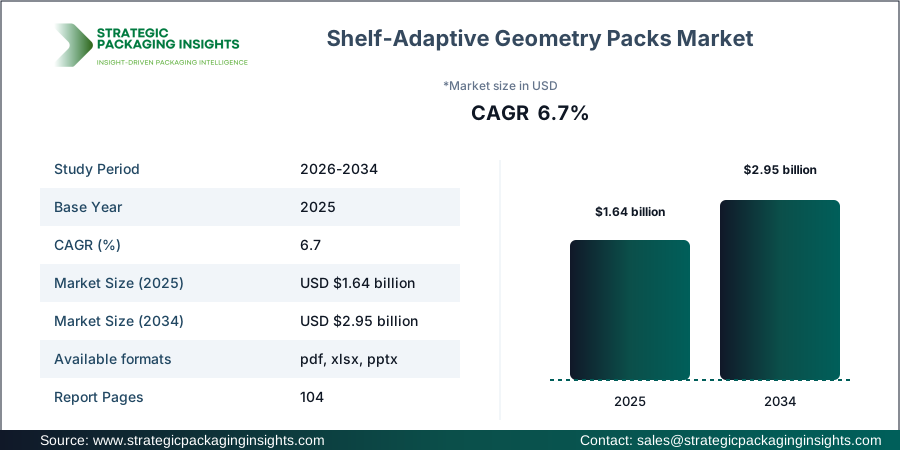
The Shelf-Adaptive Geometry Packs market was valued at $1.64 billion in 2025 and is projected to reach $2.95 billion by 2034, growing at a CAGR of 6.7% during the forecast period 2026-2034. This market is witnessing significant growth due to the increasing demand for innovative packaging solutions that enhance product visibility and consumer engagement. The rise in e-commerce and retail sectors has further fueled the need for adaptive packaging solutions that can efficiently utilize shelf space and reduce waste. Companies are increasingly investing in research and development to create packaging that is not only functional but also sustainable, aligning with global environmental goals. The market's growth is also driven by advancements in material technology, allowing for more versatile and durable packaging options.
Despite the promising growth trajectory, the Shelf-Adaptive Geometry Packs market faces certain challenges. Regulatory constraints regarding packaging waste and recycling are becoming more stringent, which could impact the production and design of these packs. However, these regulations also present opportunities for innovation in sustainable packaging solutions. The market's potential is further bolstered by the increasing consumer preference for eco-friendly products, which encourages companies to adopt greener practices. The competitive landscape is characterized by a mix of established players and new entrants, all vying for market share through product differentiation and strategic partnerships.
Report Scope
| Attributes | Details |
| Report Title | Shelf-Adaptive Geometry Packs Market Size, Future Growth and Forecast 2034 |
| By Pack Type | Shape-Shifting Cartons, Adaptive Trays, Modular Shelf Packs |
| By Material Type | Paperboard, Plastic, Hybrid Materials |
| By Application | Retail Display, Convenience Foods, Cosmetics, Electronics |
| By End Use | Retailers, CPG Brands, Display Packaging Firms |
| Region | Asia Pacific, North America, Latin America, Europe, Middle East & Africa |
| Base Year | 2025 |
| Historic Period | 2018-2024 |
| Forecast Period | 2026-2034 |
| Number of Pages | 104 |
| Customization Available | Yes* |
Opportunities & Threats
The Shelf-Adaptive Geometry Packs market presents numerous opportunities, particularly in the realm of sustainability and innovation. As consumers become more environmentally conscious, there is a growing demand for packaging solutions that minimize environmental impact. This trend is driving companies to explore biodegradable materials and recyclable designs, which not only meet regulatory requirements but also appeal to eco-conscious consumers. Additionally, the rise of e-commerce has created a need for packaging that can withstand the rigors of shipping while maintaining product integrity and appeal. Companies that can innovate in these areas are likely to gain a competitive edge in the market.
Another significant opportunity lies in the customization of packaging solutions. With the increasing emphasis on brand differentiation, companies are seeking packaging that can be tailored to specific product lines or marketing campaigns. This trend is particularly evident in the cosmetics and electronics sectors, where packaging plays a crucial role in brand perception. By offering customizable and adaptive packaging solutions, companies can cater to the unique needs of different industries and enhance their market presence. Furthermore, advancements in digital printing technology are enabling more personalized and cost-effective packaging solutions, further driving market growth.
However, the market is not without its threats. One of the primary challenges is the high cost associated with developing and implementing innovative packaging solutions. While consumers are willing to pay a premium for sustainable products, the initial investment required for research and development can be a barrier for smaller companies. Additionally, the market is highly competitive, with numerous players vying for market share. This competition can lead to price wars and reduced profit margins, particularly for companies that are unable to differentiate their products effectively. Moreover, fluctuations in raw material prices can impact production costs and, consequently, pricing strategies.
Drivers & Challenges
The primary drivers of the Shelf-Adaptive Geometry Packs market include the increasing demand for sustainable packaging solutions and the growth of the e-commerce sector. As consumers become more environmentally conscious, there is a growing preference for packaging that minimizes environmental impact. This trend is driving companies to explore innovative materials and designs that are both functional and eco-friendly. Additionally, the rise of e-commerce has created a need for packaging that can withstand the rigors of shipping while maintaining product integrity and appeal. Companies that can innovate in these areas are likely to gain a competitive edge in the market.
Another significant driver is the increasing emphasis on brand differentiation. With the growing competition in various industries, companies are seeking packaging solutions that can enhance their brand image and attract consumers. This trend is particularly evident in the cosmetics and electronics sectors, where packaging plays a crucial role in brand perception. By offering customizable and adaptive packaging solutions, companies can cater to the unique needs of different industries and enhance their market presence. Furthermore, advancements in digital printing technology are enabling more personalized and cost-effective packaging solutions, further driving market growth.
Despite these drivers, the market faces several challenges. One of the primary challenges is the high cost associated with developing and implementing innovative packaging solutions. While consumers are willing to pay a premium for sustainable products, the initial investment required for research and development can be a barrier for smaller companies. Additionally, the market is highly competitive, with numerous players vying for market share. This competition can lead to price wars and reduced profit margins, particularly for companies that are unable to differentiate their products effectively. Moreover, fluctuations in raw material prices can impact production costs and, consequently, pricing strategies.
Market Share Analysis
The competitive landscape of the Shelf-Adaptive Geometry Packs market is characterized by the presence of several key players, each striving to enhance their market position through innovation and strategic partnerships. Companies such as DS Smith, Smurfit Kappa, and WestRock are leading the charge with their extensive product portfolios and strong distribution networks. These companies have established themselves as leaders in the market by consistently delivering high-quality, sustainable packaging solutions that meet the evolving needs of consumers and businesses alike.
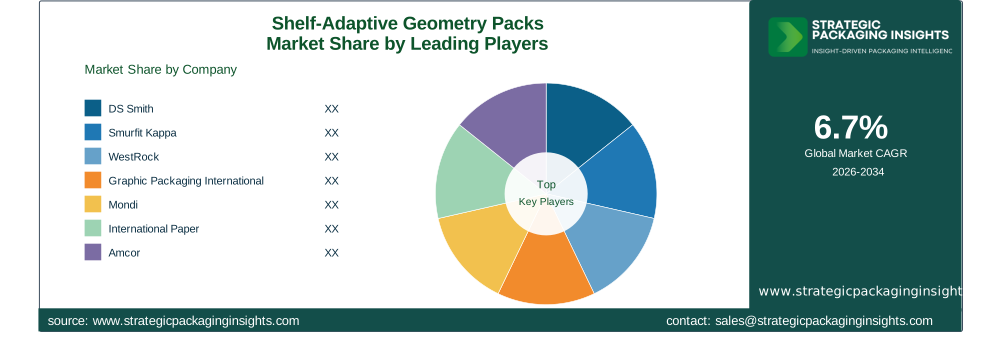
DS Smith, for instance, has been at the forefront of innovation in the packaging industry, offering a wide range of adaptive packaging solutions that cater to various industries. Their focus on sustainability and customer-centric design has enabled them to capture a significant share of the market. Similarly, Smurfit Kappa has leveraged its extensive experience and global reach to provide innovative packaging solutions that enhance product visibility and consumer engagement. Their commitment to sustainability and innovation has positioned them as a key player in the market.
WestRock, another major player in the market, has focused on expanding its product offerings through strategic acquisitions and partnerships. Their emphasis on innovation and sustainability has enabled them to capture a significant share of the market. Graphic Packaging International and Mondi are also notable players in the market, known for their innovative packaging solutions and commitment to sustainability. These companies have leveraged their expertise and resources to develop adaptive packaging solutions that meet the diverse needs of their customers.
Other key players in the market include International Paper, Amcor, Sonoco, Huhtamaki, and Packsize. These companies have established themselves as leaders in the market by consistently delivering high-quality, sustainable packaging solutions that meet the evolving needs of consumers and businesses alike. Their focus on innovation and customer-centric design has enabled them to capture a significant share of the market. As the market continues to evolve, these companies are likely to play a crucial role in shaping its future trajectory.
Key Highlights
- The Shelf-Adaptive Geometry Packs market is projected to grow at a CAGR of 6.7% from 2026 to 2034.
- Increasing demand for sustainable and eco-friendly packaging solutions is driving market growth.
- Advancements in material technology are enabling more versatile and durable packaging options.
- The rise of e-commerce is creating a need for packaging that can withstand shipping rigors.
- Customization and personalization of packaging solutions are becoming increasingly important.
- Regulatory constraints regarding packaging waste and recycling are impacting market dynamics.
- High initial investment costs for innovative packaging solutions pose a challenge for smaller companies.
- Fluctuations in raw material prices can impact production costs and pricing strategies.
- Key players in the market include DS Smith, Smurfit Kappa, WestRock, and Graphic Packaging International.
- The market is characterized by a mix of established players and new entrants, all vying for market share.
Top Countries Insights
In the Shelf-Adaptive Geometry Packs market, the United States stands out as a key player, with a market size of approximately $500 million and a CAGR of 5%. The country's robust retail sector and increasing consumer demand for sustainable packaging solutions are driving market growth. Additionally, favorable government policies promoting recycling and waste reduction are encouraging companies to adopt eco-friendly packaging practices. However, the high cost of raw materials and stringent regulatory requirements pose challenges for market players.
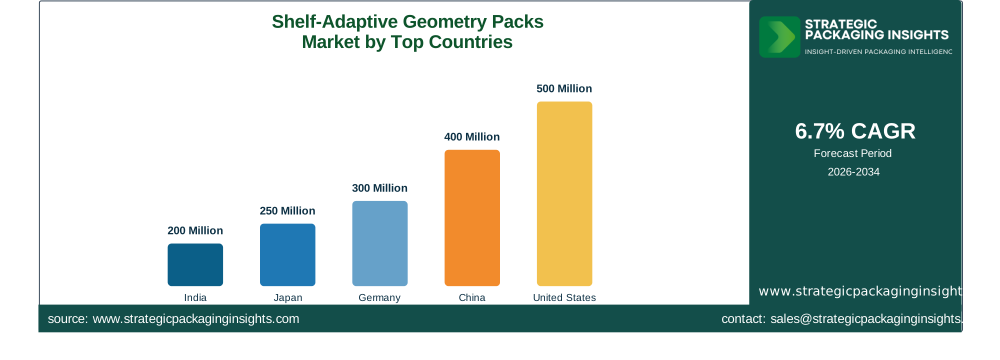
China is another significant market, with a market size of around $400 million and a CAGR of 8%. The country's booming e-commerce sector and growing middle class are driving demand for innovative packaging solutions. Additionally, government initiatives promoting sustainable practices and reducing packaging waste are encouraging companies to invest in eco-friendly packaging solutions. However, the market faces challenges such as fluctuating raw material prices and intense competition from local players.
Germany, with a market size of approximately $300 million and a CAGR of 6%, is a key player in the European market. The country's strong emphasis on sustainability and recycling is driving demand for eco-friendly packaging solutions. Additionally, the presence of major packaging companies and a well-established retail sector are contributing to market growth. However, the market faces challenges such as high production costs and stringent regulatory requirements.
In Japan, the market size is estimated at $250 million, with a CAGR of 4%. The country's aging population and increasing demand for convenience foods are driving demand for adaptive packaging solutions. Additionally, government initiatives promoting recycling and waste reduction are encouraging companies to adopt sustainable packaging practices. However, the market faces challenges such as high production costs and intense competition from local players.
India, with a market size of around $200 million and a CAGR of 9%, is an emerging market for Shelf-Adaptive Geometry Packs. The country's growing middle class and increasing consumer demand for convenience foods are driving market growth. Additionally, government initiatives promoting sustainable practices and reducing packaging waste are encouraging companies to invest in eco-friendly packaging solutions. However, the market faces challenges such as fluctuating raw material prices and intense competition from local players.
Shelf-Adaptive Geometry Packs Market Segments Insights

Pack Type Analysis
The Pack Type segment of the Shelf-Adaptive Geometry Packs market is categorized into shape-shifting cartons, adaptive trays, and modular shelf packs. Shape-shifting cartons are gaining popularity due to their ability to adapt to different product sizes and shapes, providing flexibility and reducing the need for multiple packaging solutions. This adaptability is particularly beneficial for e-commerce and retail sectors, where product variety is high. The demand for adaptive trays is also on the rise, driven by the convenience food sector's need for packaging that can maintain product integrity during transportation and storage. Modular shelf packs, on the other hand, are favored for their ability to optimize shelf space and enhance product visibility, making them ideal for retail displays.
In terms of competition, companies are focusing on innovation and sustainability to differentiate their products in the Pack Type segment. The use of advanced materials and design techniques is enabling the development of packaging solutions that are not only functional but also environmentally friendly. Customer demand for customizable and eco-friendly packaging is driving companies to invest in research and development to create innovative solutions that meet these needs. As a result, the Pack Type segment is expected to witness significant growth during the forecast period.
Material Type Analysis
The Material Type segment of the Shelf-Adaptive Geometry Packs market includes paperboard, plastic, and hybrid materials. Paperboard is the most widely used material due to its recyclability and cost-effectiveness. It is particularly favored in the retail display and convenience food sectors, where sustainability is a key consideration. Plastic, while less environmentally friendly, offers durability and flexibility, making it suitable for electronics and cosmetics packaging. However, the increasing regulatory pressure to reduce plastic waste is driving companies to explore alternative materials.
Hybrid materials, which combine the benefits of paperboard and plastic, are gaining traction as a sustainable alternative. These materials offer the durability of plastic with the recyclability of paperboard, making them an attractive option for companies looking to balance functionality and sustainability. The Material Type segment is characterized by intense competition, with companies investing in research and development to create innovative materials that meet the evolving needs of consumers and businesses. As a result, the segment is expected to witness significant growth during the forecast period.
Application Analysis
The Application segment of the Shelf-Adaptive Geometry Packs market is divided into retail display, convenience foods, cosmetics, and electronics. Retail display is the largest application segment, driven by the need for packaging that enhances product visibility and attracts consumers. The convenience food sector is also a significant contributor to market growth, with increasing demand for packaging that maintains product integrity and extends shelf life. In the cosmetics sector, packaging plays a crucial role in brand perception, driving demand for innovative and customizable solutions.
The electronics sector is witnessing growing demand for packaging that provides protection during transportation and storage. Companies are focusing on developing packaging solutions that are not only functional but also aesthetically pleasing, enhancing the overall consumer experience. The Application segment is characterized by diverse customer needs, driving companies to invest in research and development to create innovative solutions that cater to these needs. As a result, the segment is expected to witness significant growth during the forecast period.
End Use Analysis
The End Use segment of the Shelf-Adaptive Geometry Packs market includes retailers, CPG brands, and display packaging firms. Retailers are the largest end-users, driven by the need for packaging that enhances product visibility and attracts consumers. CPG brands are also significant contributors to market growth, with increasing demand for packaging that maintains product integrity and extends shelf life. Display packaging firms are focusing on developing innovative solutions that cater to the diverse needs of retailers and CPG brands.
The End Use segment is characterized by intense competition, with companies investing in research and development to create innovative solutions that meet the evolving needs of consumers and businesses. The increasing emphasis on sustainability and customization is driving companies to explore new materials and design techniques, enhancing their market presence. As a result, the End Use segment is expected to witness significant growth during the forecast period.
Shelf-Adaptive Geometry Packs Market Segments
The Shelf-Adaptive Geometry Packs market has been segmented on the basis ofBy Pack Type
- Shape-Shifting Cartons
- Adaptive Trays
- Modular Shelf Packs
By Material Type
- Paperboard
- Plastic
- Hybrid Materials
By Application
- Retail Display
- Convenience Foods
- Cosmetics
- Electronics
By End Use
- Retailers
- CPG Brands
- Display Packaging Firms
Region
- Asia Pacific
- North America
- Latin America
- Europe
- Middle East & Africa




