


Serum Vials Market Outlook
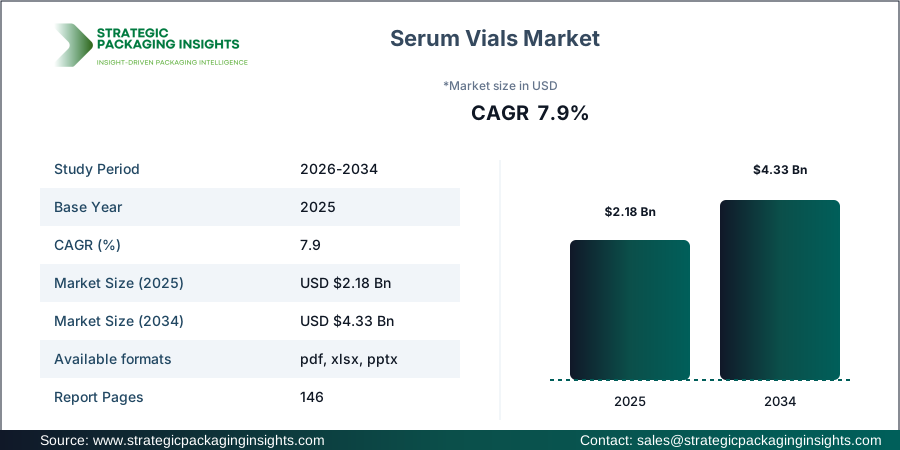
The Serum Vials market was valued at $2.18 billion in 2025 and is projected to reach $4.33 billion by 2034, growing at a CAGR of 7.9% during the forecast period 2026-2034. This growth is driven by the increasing demand for vaccines and biologics, which require secure and reliable packaging solutions. The market is also benefiting from advancements in material science, leading to the development of more durable and safer vial options. The rising prevalence of chronic diseases and the subsequent increase in diagnostic procedures are further propelling the demand for serum vials. Additionally, the expansion of the pharmaceutical and biotechnology sectors, particularly in emerging economies, is expected to provide significant growth opportunities for the serum vials market.
Report Scope
| Attributes | Details |
| Report Title | Serum Vials Market Size, Future Growth and Forecast 2034 |
| Material Type | Glass, Plastic, Cyclic Olefin Polymer, Cyclic Olefin Copolymer |
| Capacity | Below 5 ml, 5–10 ml, Above 10 ml |
| Application | Vaccines, Biologics, Diagnostics, Injectable Drugs |
| End Use | Pharmaceutical Companies, Biotech Companies, Hospitals, Laboratories |
| Region | Asia Pacific, North America, Latin America, Europe, Middle East & Africa |
| Base Year | 2025 |
| Historic Period | 2018-2024 |
| Forecast Period | 2026-2034 |
| Number of Pages | 146 |
| Customization Available | Yes* |
Opportunities & Threats
The serum vials market presents numerous opportunities, particularly in the realm of technological advancements and innovation. The development of smart vials that can monitor and report the condition of their contents is a promising area. These innovations not only enhance the safety and efficacy of the drugs but also improve patient compliance and outcomes. Furthermore, the increasing focus on personalized medicine and the growing trend of self-administration of drugs are expected to drive the demand for user-friendly and safe packaging solutions like serum vials. The expansion of healthcare infrastructure in developing regions also offers lucrative opportunities for market players to expand their footprint and increase their market share.
Another significant opportunity lies in the growing demand for eco-friendly and sustainable packaging solutions. As environmental concerns continue to rise, there is a growing preference for packaging materials that are recyclable and have a lower carbon footprint. Companies that can offer sustainable serum vial solutions are likely to gain a competitive edge in the market. Additionally, the increasing investments in research and development by pharmaceutical companies to develop new drugs and vaccines are expected to boost the demand for serum vials, providing further growth opportunities for the market.
However, the serum vials market also faces certain threats that could hinder its growth. One of the primary challenges is the stringent regulatory requirements associated with the manufacturing and approval of serum vials. These regulations can increase the time and cost associated with bringing new products to market, potentially limiting innovation and market entry for new players. Additionally, the volatility in raw material prices, particularly for glass and plastic, can impact the profitability of serum vial manufacturers. The intense competition in the market, with numerous players vying for market share, also poses a threat to the growth of individual companies.
Drivers & Challenges
The serum vials market is primarily driven by the increasing demand for vaccines and biologics, which require secure and reliable packaging solutions. The ongoing COVID-19 pandemic has further accelerated the demand for vaccines, leading to a surge in the production and consumption of serum vials. Additionally, the rising prevalence of chronic diseases and the subsequent increase in diagnostic procedures are driving the demand for serum vials. The expansion of the pharmaceutical and biotechnology sectors, particularly in emerging economies, is also contributing to the growth of the serum vials market. Furthermore, advancements in material science have led to the development of more durable and safer vial options, further driving market growth.
Another significant driver of the serum vials market is the increasing focus on personalized medicine and the growing trend of self-administration of drugs. These trends are driving the demand for user-friendly and safe packaging solutions like serum vials. The expansion of healthcare infrastructure in developing regions also offers lucrative opportunities for market players to expand their footprint and increase their market share. Additionally, the growing demand for eco-friendly and sustainable packaging solutions is driving the development of recyclable and low-carbon footprint serum vials, providing further growth opportunities for the market.
Despite the positive growth drivers, the serum vials market faces several challenges that could hinder its growth. One of the primary challenges is the stringent regulatory requirements associated with the manufacturing and approval of serum vials. These regulations can increase the time and cost associated with bringing new products to market, potentially limiting innovation and market entry for new players. Additionally, the volatility in raw material prices, particularly for glass and plastic, can impact the profitability of serum vial manufacturers. The intense competition in the market, with numerous players vying for market share, also poses a challenge to the growth of individual companies.
Market Share Analysis
The serum vials market is characterized by a highly competitive landscape, with several key players dominating the market. Companies such as Schott, Gerresheimer, and SGD Pharma hold significant market shares due to their extensive product portfolios and strong distribution networks. These companies have established themselves as leaders in the market by consistently investing in research and development to innovate and improve their product offerings. Additionally, their strategic partnerships and collaborations with pharmaceutical companies have further strengthened their market positions.
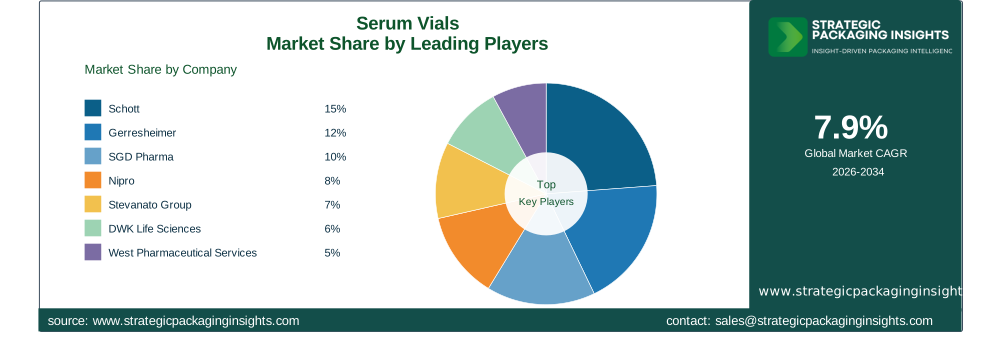
Schott is a leading player in the serum vials market, known for its high-quality glass vials that offer superior protection for sensitive drugs and vaccines. The company's focus on innovation and sustainability has helped it maintain a strong market presence. Gerresheimer, another major player, offers a wide range of glass and plastic vials, catering to the diverse needs of the pharmaceutical and biotechnology industries. The company's commitment to quality and customer satisfaction has earned it a loyal customer base and a significant market share.
SGD Pharma is renowned for its expertise in glass packaging solutions, providing high-quality serum vials that meet the stringent requirements of the pharmaceutical industry. The company's focus on sustainability and innovation has helped it maintain a competitive edge in the market. Nipro, Stevanato Group, and DWK Life Sciences are also key players in the serum vials market, known for their extensive product offerings and strong customer relationships. These companies have consistently invested in research and development to enhance their product portfolios and expand their market reach.
West Pharmaceutical Services, Corning, Shandong Pharmaceutical Glass, and Piramal Glass are other notable players in the serum vials market. These companies have established themselves as reliable suppliers of high-quality serum vials, catering to the needs of pharmaceutical and biotechnology companies worldwide. Their focus on innovation, quality, and customer satisfaction has helped them maintain strong market positions and capture significant market shares.
Key Highlights
- The serum vials market is projected to grow at a CAGR of 7.9% from 2026 to 2034.
- Increasing demand for vaccines and biologics is driving the growth of the serum vials market.
- Advancements in material science are leading to the development of more durable and safer vial options.
- The expansion of the pharmaceutical and biotechnology sectors is contributing to market growth.
- Stringent regulatory requirements pose a challenge to market growth.
- Volatility in raw material prices can impact the profitability of serum vial manufacturers.
- Key players in the market include Schott, Gerresheimer, and SGD Pharma.
Top Countries Insights
In the serum vials market, the United States holds a significant share due to its advanced healthcare infrastructure and high demand for vaccines and biologics. The market in the U.S. is expected to grow at a CAGR of 6%, driven by the increasing prevalence of chronic diseases and the subsequent rise in diagnostic procedures. The presence of major pharmaceutical companies and ongoing research and development activities further contribute to the market's growth.
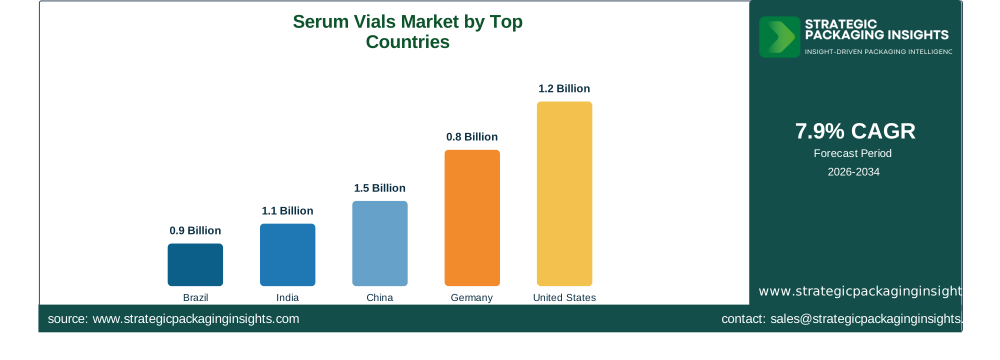
Germany is another key market for serum vials, with a strong focus on innovation and sustainability. The market in Germany is projected to grow at a CAGR of 5%, driven by the increasing demand for eco-friendly packaging solutions and the expansion of the pharmaceutical and biotechnology sectors. The country's stringent regulatory requirements ensure the production of high-quality serum vials, further boosting market growth.
China is emerging as a significant player in the serum vials market, with a projected CAGR of 10%. The country's rapidly expanding healthcare infrastructure and increasing investments in research and development are driving the demand for serum vials. The growing focus on personalized medicine and the rising trend of self-administration of drugs are also contributing to market growth in China.
India is another promising market for serum vials, with a projected CAGR of 9%. The country's expanding pharmaceutical and biotechnology sectors, coupled with increasing government initiatives to improve healthcare infrastructure, are driving the demand for serum vials. The growing prevalence of chronic diseases and the subsequent rise in diagnostic procedures further contribute to market growth in India.
Brazil is also witnessing significant growth in the serum vials market, with a projected CAGR of 7%. The country's expanding healthcare infrastructure and increasing demand for vaccines and biologics are driving the market's growth. The presence of major pharmaceutical companies and ongoing research and development activities further contribute to the market's expansion in Brazil.
Serum Vials Market Segments Insights

Material Type Analysis
The serum vials market is segmented by material type into glass, plastic, cyclic olefin polymer, and cyclic olefin copolymer. Glass vials dominate the market due to their superior barrier properties and ability to protect sensitive drugs and vaccines from contamination. The demand for glass vials is driven by the increasing production of vaccines and biologics, which require secure and reliable packaging solutions. However, the market for plastic vials is also growing, driven by their lightweight and cost-effective nature. The development of advanced plastic materials, such as cyclic olefin polymer and cyclic olefin copolymer, is further driving the demand for plastic vials, offering a balance between durability and cost-effectiveness.
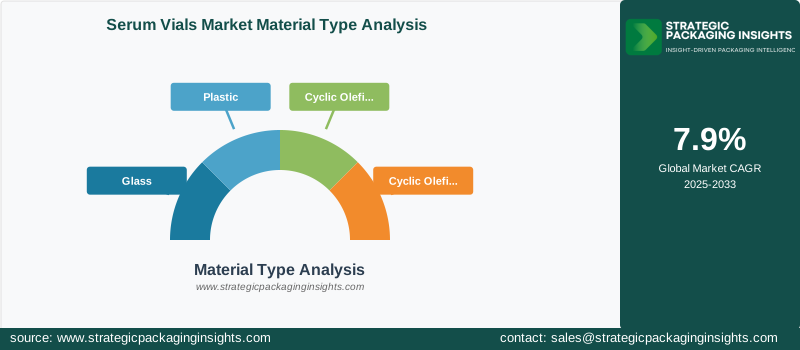
The cyclic olefin polymer and cyclic olefin copolymer segments are gaining traction due to their excellent chemical resistance and transparency, making them ideal for packaging sensitive drugs and biologics. These materials offer a lightweight and shatterproof alternative to glass, making them increasingly popular in the pharmaceutical and biotechnology industries. The growing focus on sustainability and the development of eco-friendly packaging solutions are also driving the demand for cyclic olefin polymer and cyclic olefin copolymer vials, as they offer a lower carbon footprint compared to traditional glass vials.
Capacity Analysis
The serum vials market is segmented by capacity into below 5 ml, 5-10 ml, and above 10 ml. The below 5 ml segment holds a significant share of the market, driven by the increasing demand for small-dose vaccines and biologics. These vials are ideal for single-dose applications, reducing the risk of contamination and ensuring accurate dosing. The 5-10 ml segment is also witnessing significant growth, driven by the increasing demand for multi-dose vaccines and biologics. These vials offer a balance between capacity and convenience, making them popular in the pharmaceutical and biotechnology industries.
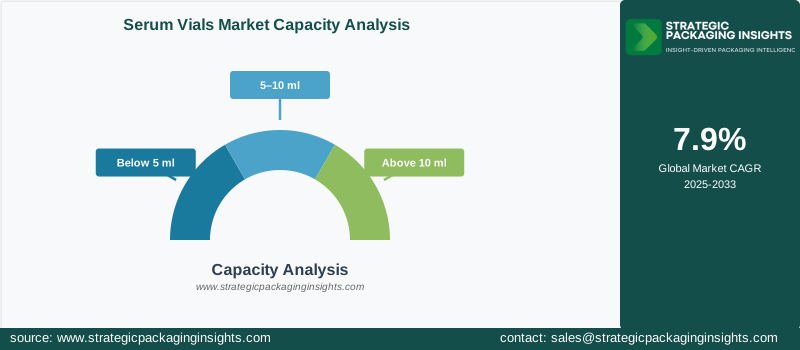
The above 10 ml segment is gaining traction, driven by the increasing demand for large-dose injectable drugs and biologics. These vials are ideal for applications that require larger volumes of drugs, such as infusion therapies and parenteral nutrition. The growing focus on personalized medicine and the increasing trend of self-administration of drugs are also driving the demand for larger capacity vials, as they offer greater flexibility and convenience for patients. The development of advanced vial designs and materials is further driving the demand for larger capacity vials, offering improved safety and efficacy for patients.
Application Analysis
The serum vials market is segmented by application into vaccines, biologics, diagnostics, and injectable drugs. The vaccines segment holds a significant share of the market, driven by the increasing demand for vaccines to combat infectious diseases and the ongoing COVID-19 pandemic. The development of new vaccines and the expansion of vaccination programs worldwide are further driving the demand for serum vials in this segment. The biologics segment is also witnessing significant growth, driven by the increasing production of biologic drugs and therapies, which require secure and reliable packaging solutions.
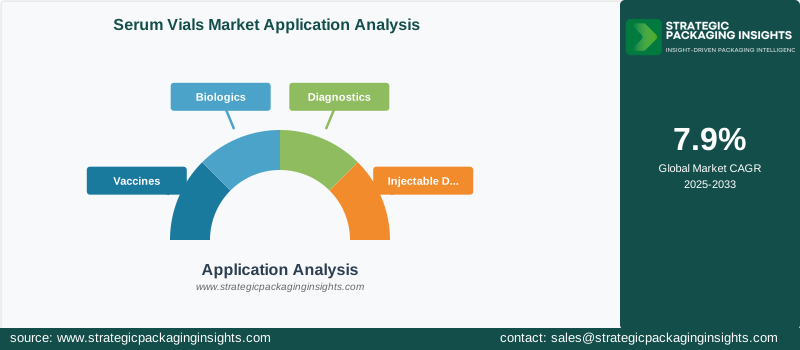
The diagnostics segment is gaining traction, driven by the increasing prevalence of chronic diseases and the subsequent rise in diagnostic procedures. Serum vials are essential for the collection and storage of diagnostic samples, ensuring the accuracy and reliability of test results. The injectable drugs segment is also witnessing significant growth, driven by the increasing demand for parenteral drugs and therapies. The growing focus on personalized medicine and the trend of self-administration of drugs are further driving the demand for serum vials in this segment, as they offer safe and convenient packaging solutions for patients.
End Use Analysis
The serum vials market is segmented by end use into pharmaceutical companies, biotech companies, hospitals, and laboratories. Pharmaceutical companies hold a significant share of the market, driven by the increasing production of vaccines, biologics, and injectable drugs. These companies require secure and reliable packaging solutions to ensure the safety and efficacy of their products, driving the demand for serum vials. Biotech companies are also witnessing significant growth, driven by the increasing development of biologic drugs and therapies, which require specialized packaging solutions.
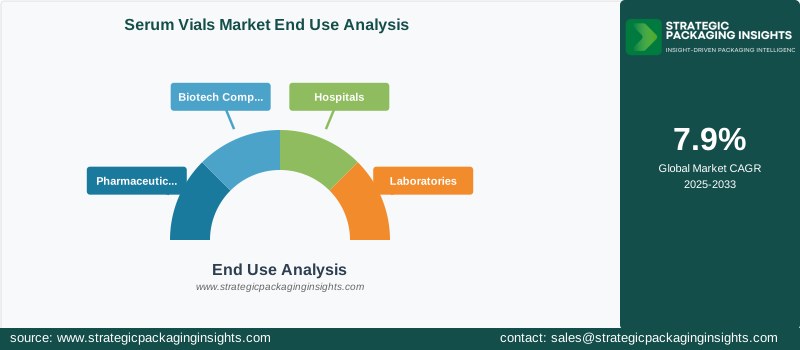
Hospitals and laboratories are gaining traction in the serum vials market, driven by the increasing demand for diagnostic procedures and the collection and storage of diagnostic samples. Serum vials are essential for ensuring the accuracy and reliability of test results, making them a critical component of hospital and laboratory operations. The growing focus on personalized medicine and the trend of self-administration of drugs are also driving the demand for serum vials in these segments, as they offer safe and convenient packaging solutions for patients and healthcare providers.
Serum Vials Market Segments
The Serum Vials market has been segmented on the basis ofMaterial Type
- Glass
- Plastic
- Cyclic Olefin Polymer
- Cyclic Olefin Copolymer
Capacity
- Below 5 ml
- 5–10 ml
- Above 10 ml
Application
- Vaccines
- Biologics
- Diagnostics
- Injectable Drugs
End Use
- Pharmaceutical Companies
- Biotech Companies
- Hospitals
- Laboratories
Region
- Asia Pacific
- North America
- Latin America
- Europe
- Middle East & Africa




