


Self-Heating Instant Hot Pot Market Outlook
The Self-Heating Instant Hot Pot market size was valued at USD $1.2 Billion in 2025 and is anticipated to reach USD $2.4 Billion by 2035, growing at a CAGR of 7.2% during the forecast period according to Strategic Packaging Insights.
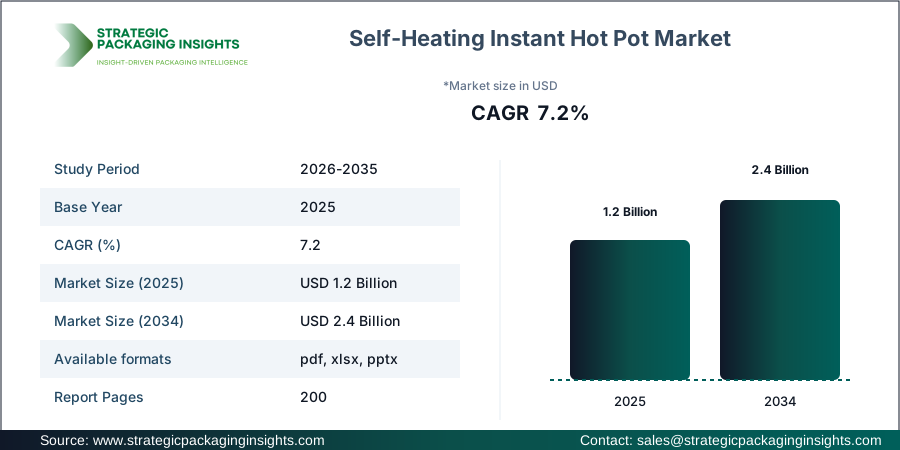
The most impactful market driver is the increasing demand for convenient and ready-to-eat meal solutions, particularly in urban areas where busy lifestyles necessitate quick meal options. The rise in outdoor activities and travel also contributes to the demand for self-heating meals, as they offer a portable and easy-to-prepare food option without the need for external heating sources.
Report Scope
| Attributes | Details |
| Report Title | Self-Heating Instant Hot Pot Market Projected to Scale to 2.4 Billion by 2035, Assesses Strategic Packaging Insights |
| By Product Type | Self-Heating Hot Pot, Self-Heating Rice Meals, Self-Heating Noodle Meals, Self-Heating Soup Meals, Self-Heating Stew Meals, Other Self-Heating Meals |
| By Heating Technology | Quicklime-Based Heating, Magnesium-Iron Heating, Magnesium-Based Heating, Other Heating Technologies |
| By Food Type | Hot Pot, Noodles, Rice and Grain Meals, Soup, Stew, Meat and Seafood Meals, Vegetable Meals |
| By Packaging Type | Plastic Containers, Paper-Based Containers, Aluminum Containers, Multi-Compartment Containers, Other Packaging Formats |
| By Serving Size | Single Serving, Two Serving, Family Serving |
| By Distribution Channel | Supermarkets and Hypermarkets, Convenience Stores, Specialty Food Stores, Online Retail, Vending Machines, Foodservice Channels |
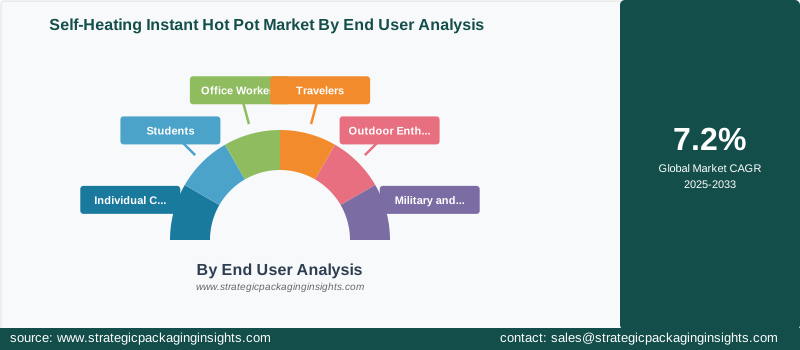
| By End User | Individual Consumers, Students, Office Workers, Travelers, Outdoor Enthusiasts, Military and Emergency Services |
| By Price Range | Economy, Mid-Range, Premium |
| By Region | North America, Europe, Asia-Pacific, Latin America, Middle East and Africa |
| Base Year | 2025 |
| Historic Period | 2018-2024 |
| Forecast Period | 2026-2035 |
| Number of Pages | 200 |
| Customization Available | Yes* |
Market Trends Analysis
Self-heating instant hot pots are witnessing a surge in demand due to their convenience and portability, aligning with the fast-paced lifestyles of urban consumers. The trend towards healthier eating is also influencing product development, with manufacturers introducing options that cater to dietary preferences such as low-sodium or organic ingredients. This trend is expected to drive product diversification and innovation, enhancing market growth.
Technological advancements in heating mechanisms, such as the development of safer and more efficient heating packs, are transforming the market. These innovations not only improve the safety and usability of self-heating meals but also reduce environmental impact by utilizing more sustainable materials. As a result, companies are investing in R&D to enhance product offerings, which is likely to strengthen their competitive positioning.
Industry Transformation Analysis
The self-heating instant hot pot industry is evolving with significant advancements in manufacturing processes and supply chain optimization. Companies are focusing on enhancing operational efficiency through automation and digitalization, which helps in reducing production costs and improving product quality. This transformation is crucial for maintaining competitive pricing in a market characterized by price-sensitive consumers.
Localization of production facilities is becoming a strategic priority for manufacturers to mitigate supply chain disruptions and reduce logistics costs. This shift towards regional production hubs is expected to enhance supply chain resilience and ensure timely delivery of products to meet growing consumer demand. Additionally, the integration of sustainable practices in production and packaging is becoming increasingly important, driven by consumer preferences and regulatory requirements.
Trends & Disruptions Impacting Customers' Customers
Downstream customers, including individual consumers and outdoor enthusiasts, are increasingly seeking convenient meal solutions that align with their active lifestyles. The demand for self-heating instant hot pots is driven by the need for quick, easy-to-prepare meals that do not compromise on taste or nutritional value. This shift in consumer behavior is prompting manufacturers to innovate and expand their product portfolios to cater to diverse dietary preferences and meal occasions.
As consumers become more health-conscious, there is a growing demand for self-heating meals that offer healthier options, such as low-calorie or organic ingredients. This trend is influencing purchasing decisions and driving product innovation, creating opportunities for manufacturers to differentiate their offerings. The focus on sustainability is also impacting supplier requirements, as companies seek to source eco-friendly materials and adopt sustainable practices to meet consumer expectations and regulatory standards.
Self-Heating Instant Hot Pot Market Ecosystem
The self-heating instant hot pot market ecosystem involves a complex interplay of raw material suppliers, technology developers, manufacturers, distributors, and retailers. Each stage contributes to value creation, from sourcing quality ingredients and innovative heating technologies to efficient manufacturing and distribution processes. The ecosystem's efficiency is crucial for meeting consumer demand and maintaining competitive pricing.
Supply chain dependencies, such as the availability of raw materials and heating technology components, can impact production timelines and costs. Manufacturers must navigate these challenges while ensuring product quality and safety. The distribution network plays a vital role in reaching diverse consumer segments, with online retail and specialty food stores emerging as significant channels for market expansion.
Analyst Perspective
Analyst Perspective: The self-heating instant hot pot market is poised for significant growth, driven by consumer demand for convenience and innovation in heating technologies.
One of the most important structural changes is the shift towards sustainable packaging and production practices, which is likely to influence competitive dynamics and consumer preferences. Companies that invest in eco-friendly solutions and efficient supply chains are expected to gain a competitive edge.
Market participants should closely monitor advancements in heating technology and consumer trends towards health and sustainability. These factors will shape product development and market positioning, offering opportunities for differentiation and growth.
Opportunities & Threats
The self-heating instant hot pot market presents significant opportunities for growth, particularly in emerging markets where urbanization and changing lifestyles drive demand for convenient meal solutions. The expansion of distribution channels, including online retail and specialty food stores, offers manufacturers the chance to reach a broader consumer base and increase market penetration.
Technological advancements in heating mechanisms provide opportunities for product innovation and differentiation. Companies that invest in R&D to develop safer, more efficient heating technologies can enhance their competitive positioning and capture a larger market share. Additionally, the growing focus on sustainability presents opportunities for manufacturers to adopt eco-friendly practices and materials, aligning with consumer preferences and regulatory requirements.
However, the market faces threats from raw material price volatility, which can impact production costs and pricing strategies. Regulatory uncertainty, particularly regarding food safety and packaging standards, poses challenges for manufacturers seeking to expand into new markets. Companies must navigate these complexities while maintaining compliance and ensuring product quality.
Competition from alternative meal solutions, such as ready-to-eat and frozen meals, presents a threat to market growth. Manufacturers must differentiate their offerings through innovation and quality to remain competitive. Additionally, supply chain disruptions, such as those caused by geopolitical tensions or natural disasters, can impact production and distribution, posing risks to market stability.
Drivers & Challenges
The primary driver of the self-heating instant hot pot market is the increasing demand for convenient and ready-to-eat meal solutions. Urbanization and busy lifestyles have led consumers to seek quick meal options that do not compromise on taste or nutrition. The rise in outdoor activities and travel also contributes to the demand for portable and easy-to-prepare food options, further driving market growth.
Technological advancements in heating mechanisms are another key driver, as they enhance product safety and usability. Innovations in heating technology, such as the development of more efficient and environmentally friendly heating packs, are transforming the market and attracting consumer interest. These advancements enable manufacturers to offer a wider range of products that cater to diverse consumer preferences and dietary needs.
Challenges in the market include raw material price volatility, which can impact production costs and pricing strategies. Regulatory compliance, particularly regarding food safety and packaging standards, poses challenges for manufacturers seeking to expand into new markets. Companies must navigate these complexities while maintaining compliance and ensuring product quality. Additionally, competition from alternative meal solutions, such as ready-to-eat and frozen meals, presents a challenge to market growth.
Market Share Analysis
The self-heating instant hot pot market is characterized by a competitive landscape with several key players, including Zhongbai Group, Haidilao, Zihaiguo, Mogu Mogu, and other regional ready-to-eat meal manufacturers. These companies are leveraging their expertise in food production and distribution to capture market share and expand their presence in emerging markets.
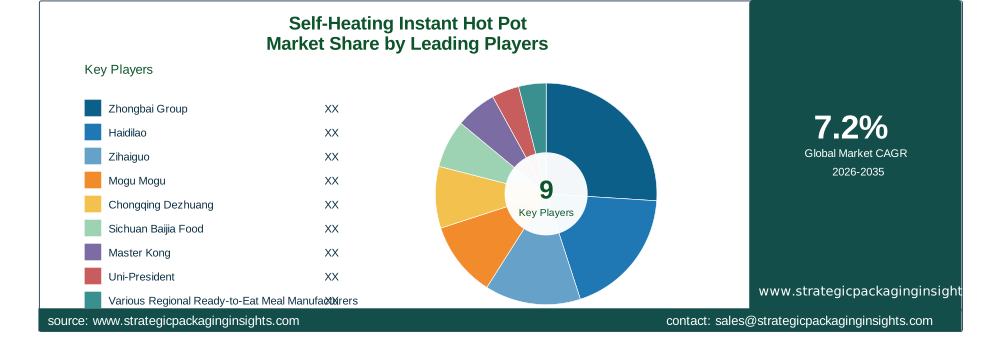
Haidilao, a prominent player in the market, is known for its innovative product offerings and strong brand presence. The company has invested in R&D to develop new self-heating meal solutions that cater to diverse consumer preferences. Similarly, Zihaiguo has focused on expanding its product portfolio and distribution network to reach a broader consumer base.
Regional players, such as Chongqing Dezhuang and Sichuan Baijia Food, are capitalizing on their local market knowledge and consumer insights to offer tailored products that meet regional tastes and preferences. These companies are also exploring opportunities for international expansion to tap into the growing demand for self-heating meals in global markets.
Overall, the market is witnessing increased competition as companies strive to differentiate their offerings through innovation and quality. The focus on sustainability and eco-friendly practices is also influencing competitive dynamics, with companies that adopt sustainable solutions gaining a competitive edge.
Key Highlights
- Asia Pacific is the largest and fastest-growing region in the self-heating instant hot pot market.
- The market size was valued at USD 1.2 Billion in 2025.
- The forecast market size is expected to reach USD 2.4 Billion by 2035.
- The market is projected to grow at a CAGR of 7.2% during the forecast period.
- Self-heating hot pots are the largest segment by product type.
- Quicklime-based heating is the most widely used heating technology.
- Convenience and portability are major drivers of market demand.
- Technological advancements in heating mechanisms are transforming the market.
- Online retail and specialty food stores are significant distribution channels.
- Health-conscious consumers are driving demand for healthier meal options.
Regional Insights
The global self-heating instant hot pot market is dominated by the Asia Pacific region, which is the largest and fastest-growing market. The region's growth is driven by increasing urbanization, changing consumer lifestyles, and a growing preference for convenient meal solutions. North America and Europe also represent significant markets, with demand driven by busy lifestyles and a focus on convenience.
North America
In North America, the self-heating instant hot pot market is experiencing steady growth, driven by the demand for convenient meal solutions among busy consumers. The region's focus on health and wellness is influencing product development, with manufacturers introducing healthier meal options to cater to consumer preferences. The presence of established distribution channels, such as supermarkets and online retail, supports market expansion.
Technological advancements in heating mechanisms are also contributing to market growth, as consumers seek safer and more efficient self-heating meal solutions. The region's emphasis on sustainability is prompting manufacturers to adopt eco-friendly practices and materials, aligning with consumer expectations and regulatory requirements.
Europe
The European market for self-heating instant hot pots is characterized by a growing demand for convenient and ready-to-eat meal solutions. The region's focus on sustainability and health is driving product innovation, with manufacturers introducing options that cater to dietary preferences and environmental concerns. The expansion of distribution channels, including online retail and specialty food stores, is supporting market growth.
Regulatory requirements related to food safety and packaging standards are influencing market dynamics, as manufacturers seek to ensure compliance while maintaining product quality. The region's emphasis on sustainability is also impacting supplier requirements, as companies seek to source eco-friendly materials and adopt sustainable practices.
Asia Pacific
Asia Pacific is the largest and fastest-growing region in the self-heating instant hot pot market, driven by increasing urbanization and changing consumer lifestyles. The region's demand for convenient meal solutions is supported by a growing middle class and a preference for quick, easy-to-prepare meals. The presence of established manufacturers and a strong distribution network further supports market growth.
Technological advancements in heating mechanisms are transforming the market, as companies invest in R&D to develop safer and more efficient self-heating meal solutions. The region's focus on sustainability is also influencing product development, with manufacturers adopting eco-friendly practices and materials to meet consumer expectations and regulatory requirements.
Latin America
The self-heating instant hot pot market in Latin America is experiencing growth, driven by the demand for convenient meal solutions among urban consumers. The region's focus on health and wellness is influencing product development, with manufacturers introducing healthier meal options to cater to consumer preferences. The expansion of distribution channels, including online retail and specialty food stores, supports market growth.
Technological advancements in heating mechanisms are also contributing to market growth, as consumers seek safer and more efficient self-heating meal solutions. The region's emphasis on sustainability is prompting manufacturers to adopt eco-friendly practices and materials, aligning with consumer expectations and regulatory requirements.
Middle East & Africa
The Middle East & Africa region is witnessing growth in the self-heating instant hot pot market, driven by the demand for convenient meal solutions among busy consumers. The region's focus on health and wellness is influencing product development, with manufacturers introducing healthier meal options to cater to consumer preferences. The expansion of distribution channels, including online retail and specialty food stores, supports market growth.
Technological advancements in heating mechanisms are also contributing to market growth, as consumers seek safer and more efficient self-heating meal solutions. The region's emphasis on sustainability is prompting manufacturers to adopt eco-friendly practices and materials, aligning with consumer expectations and regulatory requirements.
Self-Heating Instant Hot Pot Market Segments Insights

By Product Type Analysis
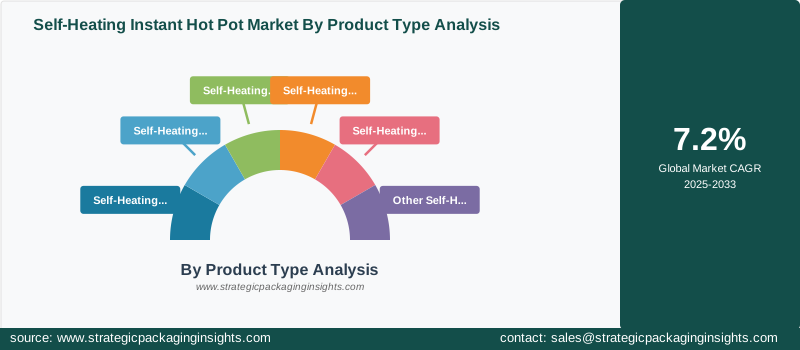
The self-heating instant hot pot market is segmented by product type, with self-heating hot pots being the largest segment. These products are popular among consumers seeking convenient meal solutions that do not require external heating sources. The demand for self-heating rice meals and noodle meals is also growing, driven by consumer preferences for diverse meal options.
Manufacturers are focusing on product innovation and diversification to cater to changing consumer preferences and dietary needs. The introduction of healthier meal options, such as low-sodium or organic ingredients, is expected to drive market growth. The expansion of distribution channels, including online retail and specialty food stores, supports market penetration and consumer reach.
By Heating Technology Analysis
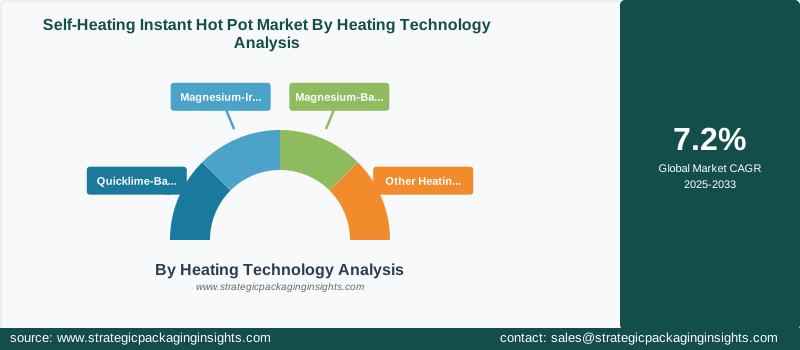
The market is segmented by heating technology, with quicklime-based heating being the most widely used method. This technology is favored for its efficiency and cost-effectiveness, making it a popular choice among manufacturers. Magnesium-iron and magnesium-based heating technologies are also gaining traction, driven by advancements in safety and environmental sustainability.
Technological innovations in heating mechanisms are transforming the market, as companies invest in R&D to develop safer and more efficient solutions. These advancements enable manufacturers to offer a wider range of products that cater to diverse consumer preferences and dietary needs. The focus on sustainability is also influencing product development, with manufacturers adopting eco-friendly practices and materials.
By Food Type Analysis
The self-heating instant hot pot market is segmented by food type, with hot pot meals being the most popular choice among consumers. The demand for noodle and rice meals is also growing, driven by consumer preferences for diverse meal options. Manufacturers are focusing on product innovation and diversification to cater to changing consumer preferences and dietary needs.
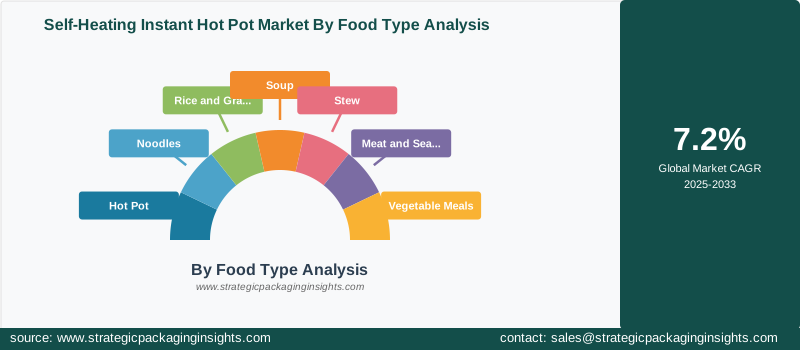
The introduction of healthier meal options, such as low-sodium or organic ingredients, is expected to drive market growth. The expansion of distribution channels, including online retail and specialty food stores, supports market penetration and consumer reach. The focus on sustainability is also influencing product development, with manufacturers adopting eco-friendly practices and materials.
By Packaging Type Analysis
The market is segmented by packaging type, with plastic containers being the most widely used format. These containers are favored for their durability and cost-effectiveness, making them a popular choice among manufacturers. Paper-based and aluminum containers are also gaining traction, driven by advancements in sustainability and environmental concerns.
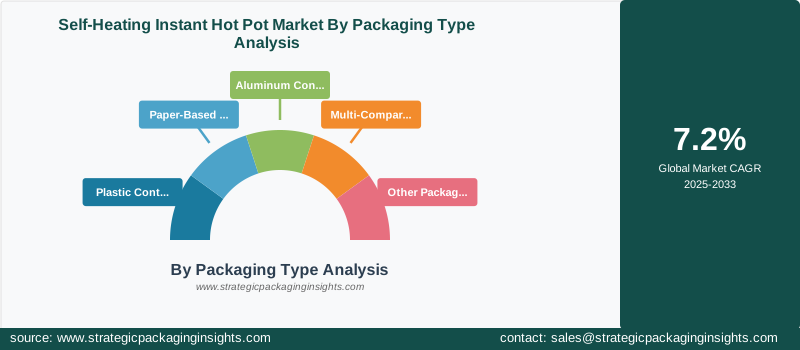
Technological innovations in packaging materials are transforming the market, as companies invest in R&D to develop safer and more efficient solutions. These advancements enable manufacturers to offer a wider range of products that cater to diverse consumer preferences and dietary needs. The focus on sustainability is also influencing product development, with manufacturers adopting eco-friendly practices and materials.
By Serving Size Analysis
The self-heating instant hot pot market is segmented by serving size, with single-serving meals being the most popular choice among consumers. These products are favored for their convenience and portability, making them a popular choice among busy consumers. The demand for two-serving and family-serving meals is also growing, driven by consumer preferences for diverse meal options.
Manufacturers are focusing on product innovation and diversification to cater to changing consumer preferences and dietary needs. The introduction of healthier meal options, such as low-sodium or organic ingredients, is expected to drive market growth. The expansion of distribution channels, including online retail and specialty food stores, supports market penetration and consumer reach.
By Distribution Channel Analysis
The market is segmented by distribution channel, with supermarkets and hypermarkets being the most significant channels for self-heating instant hot pots. These channels offer a wide range of products and provide consumers with easy access to convenient meal solutions. Online retail and specialty food stores are also gaining traction, driven by the growing preference for online shopping and niche product offerings.
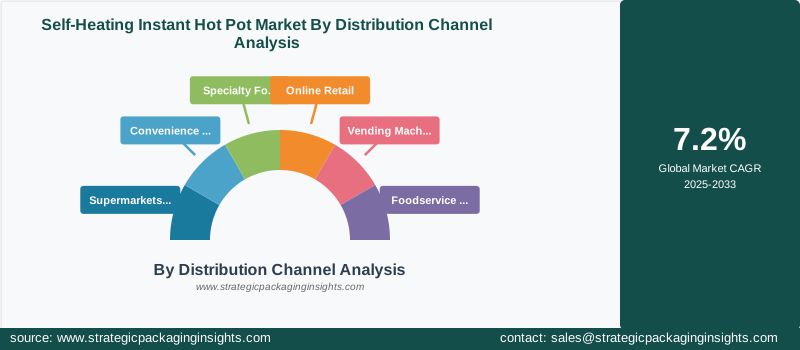
The expansion of distribution channels is supporting market growth, as manufacturers seek to reach a broader consumer base and increase market penetration. The focus on sustainability is also influencing product development, with manufacturers adopting eco-friendly practices and materials. The emphasis on health and wellness is driving demand for healthier meal options, creating opportunities for product innovation and differentiation.
By End User Analysis
The self-heating instant hot pot market is segmented by end user, with individual consumers being the largest segment. These products are popular among busy consumers seeking convenient meal solutions that do not require external heating sources. The demand for self-heating meals among students, office workers, and travelers is also growing, driven by consumer preferences for diverse meal options.
Manufacturers are focusing on product innovation and diversification to cater to changing consumer preferences and dietary needs. The introduction of healthier meal options, such as low-sodium or organic ingredients, is expected to drive market growth. The expansion of distribution channels, including online retail and specialty food stores, supports market penetration and consumer reach.
By Price Range Analysis
The market is segmented by price range, with economy products being the most popular choice among consumers. These products are favored for their affordability and accessibility, making them a popular choice among price-sensitive consumers. The demand for mid-range and premium products is also growing, driven by consumer preferences for diverse meal options and higher-quality ingredients.
Manufacturers are focusing on product innovation and diversification to cater to changing consumer preferences and dietary needs. The introduction of healthier meal options, such as low-sodium or organic ingredients, is expected to drive market growth. The expansion of distribution channels, including online retail and specialty food stores, supports market penetration and consumer reach.
Top 10 Companies in the Self-Heating Instant Hot Pot Market
Zhongbai Group (China)
Zhongbai Group is a key player in the self-heating instant hot pot market, offering a wide range of products that cater to diverse consumer preferences. The company is known for its innovative product offerings and strong distribution network, which supports market expansion and consumer reach.
Haidilao (China)
Haidilao is a prominent player in the self-heating instant hot pot market, known for its innovative product offerings and strong brand presence. The company has invested in R&D to develop new self-heating meal solutions that cater to diverse consumer preferences.
Zihaiguo (China)
Zihaiguo is a leading player in the self-heating instant hot pot market, focusing on expanding its product portfolio and distribution network to reach a broader consumer base. The company is known for its innovative product offerings and strong brand presence.
Mogu Mogu (China)
Mogu Mogu is a key player in the self-heating instant hot pot market, offering a wide range of products that cater to diverse consumer preferences. The company is known for its innovative product offerings and strong distribution network, which supports market expansion and consumer reach.
Chongqing Dezhuang (China)
Chongqing Dezhuang is a regional player in the self-heating instant hot pot market, capitalizing on its local market knowledge and consumer insights to offer tailored products that meet regional tastes and preferences.
Sichuan Baijia Food (China)
Sichuan Baijia Food is a regional player in the self-heating instant hot pot market, focusing on expanding its product portfolio and distribution network to reach a broader consumer base. The company is known for its innovative product offerings and strong brand presence.
Master Kong (China)
Master Kong is a leading player in the self-heating instant hot pot market, known for its innovative product offerings and strong brand presence. The company has invested in R&D to develop new self-heating meal solutions that cater to diverse consumer preferences.
Uni-President (China)
Uni-President is a key player in the self-heating instant hot pot market, offering a wide range of products that cater to diverse consumer preferences. The company is known for its innovative product offerings and strong distribution network, which supports market expansion and consumer reach.
Various Regional Ready-to-Eat Meal Manufacturers (China)
Various regional ready-to-eat meal manufacturers are key players in the self-heating instant hot pot market, focusing on expanding their product portfolios and distribution networks to reach a broader consumer base. These companies are known for their innovative product offerings and strong brand presence.
Self-Heating Instant Hot Pot Market Segments
The Self-Heating Instant Hot Pot market has been segmented on the basis ofBy Product Type
- Self-Heating Hot Pot
- Self-Heating Rice Meals
- Self-Heating Noodle Meals
- Self-Heating Soup Meals
- Self-Heating Stew Meals
- Other Self-Heating Meals
By Heating Technology
- Quicklime-Based Heating
- Magnesium-Iron Heating
- Magnesium-Based Heating
- Other Heating Technologies
By Food Type
- Hot Pot
- Noodles
- Rice and Grain Meals
- Soup
- Stew
- Meat and Seafood Meals
- Vegetable Meals
By Packaging Type
- Plastic Containers
- Paper-Based Containers
- Aluminum Containers
- Multi-Compartment Containers
- Other Packaging Formats
By Serving Size
- Single Serving
- Two Serving
- Family Serving
By Distribution Channel
- Supermarkets and Hypermarkets
- Convenience Stores
- Specialty Food Stores
- Online Retail
- Vending Machines
- Foodservice Channels
By End User
- Individual Consumers
- Students
- Office Workers
- Travelers
- Outdoor Enthusiasts
- Military and Emergency Services
By Price Range
- Economy
- Mid-Range
- Premium
By Region
- North America
- Europe
- Asia-Pacific
- Latin America
- Middle East and Africa




