


Self Cooling Packaging Market Outlook
The Self Cooling Packaging market was valued at $189.23 million in 2025 and is projected to reach $546.21 million by 2034, growing at a CAGR of 12.5% during the forecast period 2026-2034. This market is witnessing significant growth due to the increasing demand for innovative packaging solutions that maintain product temperature without external cooling sources. The rise in consumer preference for convenience and ready-to-eat products is driving the adoption of self-cooling packaging, especially in the food and beverage sectors. Additionally, the pharmaceutical industry is increasingly utilizing these solutions to ensure the integrity of temperature-sensitive medications during transportation and storage.
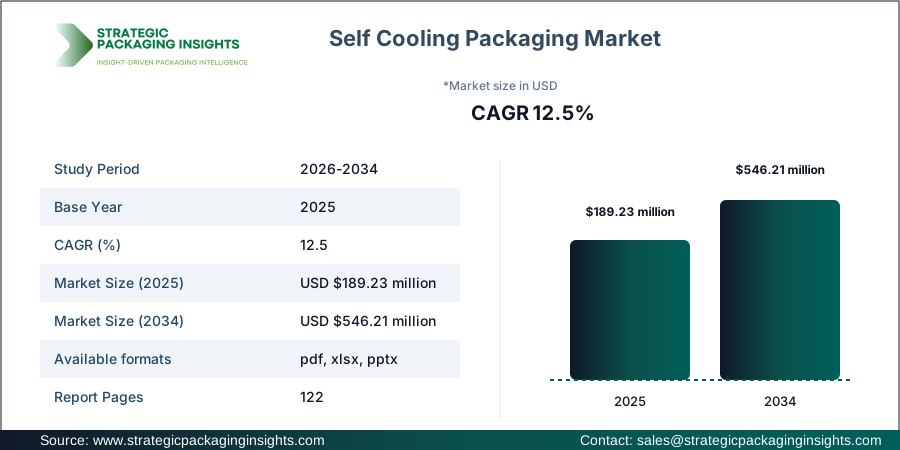
Despite the promising growth trajectory, the self-cooling packaging market faces challenges such as high production costs and regulatory hurdles. The initial investment required for developing and manufacturing self-cooling packaging solutions is substantial, which can be a barrier for new entrants. Moreover, stringent regulations regarding packaging materials and environmental impact are compelling manufacturers to innovate continuously. However, the market holds immense potential for growth, driven by technological advancements and the increasing focus on sustainability. Companies are investing in research and development to create eco-friendly and cost-effective self-cooling packaging solutions, which is expected to open new avenues for market expansion.
Report Scope
| Attributes | Details |
| Report Title | Self Cooling Packaging Market Size, Future Growth and Forecast 2034 |
| Technology | Phase Change Materials, Evaporative |
| Application | Food, Beverages, Pharma |
| Material | Polymer, Metal |
| End Use | Consumer, Industrial |
| Region | Asia Pacific, North America, Latin America, Europe, Middle East & Africa |
| Base Year | 2025 |
| Historic Period | 2018-2024 |
| Forecast Period | 2026-2034 |
| Number of Pages | 122 |
| Customization Available | Yes* |
Opportunities & Threats
The self-cooling packaging market presents numerous opportunities, particularly in the food and beverage industry. As consumers increasingly seek convenience and freshness in their food products, the demand for packaging solutions that can maintain optimal temperatures without external cooling is on the rise. This trend is particularly evident in the ready-to-eat and on-the-go food segments, where maintaining product quality and safety is paramount. Additionally, the growing e-commerce sector is driving the need for innovative packaging solutions that can ensure product integrity during transit, further boosting the demand for self-cooling packaging.
Another significant opportunity lies in the pharmaceutical industry, where the need for temperature-controlled packaging is critical. With the increasing prevalence of biologics and other temperature-sensitive medications, pharmaceutical companies are seeking reliable packaging solutions that can maintain the required temperature range throughout the supply chain. Self-cooling packaging offers a viable solution, providing an added layer of security and compliance with regulatory standards. This demand is expected to grow as the pharmaceutical industry continues to expand globally, presenting lucrative opportunities for market players.
However, the market is not without its threats. One of the primary restrainers is the high cost associated with self-cooling packaging solutions. The advanced technology and materials required to produce these packages can result in higher production costs, which may be passed on to consumers. This could limit the adoption of self-cooling packaging, particularly in price-sensitive markets. Additionally, regulatory challenges related to packaging materials and environmental impact pose a threat to market growth. Manufacturers must navigate complex regulations and invest in sustainable solutions to remain competitive, which can be a significant challenge for smaller companies.
Drivers & Challenges
The self-cooling packaging market is driven by several key factors, including the increasing demand for convenience and ready-to-eat products. As consumers lead busier lifestyles, the need for packaging solutions that can maintain product quality and freshness without external cooling is growing. This trend is particularly evident in the food and beverage industry, where self-cooling packaging offers a practical solution for maintaining product integrity. Additionally, the rise of e-commerce and online food delivery services is driving the demand for innovative packaging solutions that can ensure product safety during transit.
Technological advancements are also playing a crucial role in driving market growth. Innovations in materials and design are enabling the development of more efficient and cost-effective self-cooling packaging solutions. Companies are investing in research and development to create packaging that not only maintains temperature but also meets sustainability standards. This focus on innovation is expected to drive market growth, as manufacturers seek to differentiate their products and meet evolving consumer demands.
Despite these drivers, the market faces several challenges. One of the primary challenges is the high cost of production, which can limit the adoption of self-cooling packaging solutions. The advanced technology and materials required to produce these packages can result in higher costs, which may be passed on to consumers. Additionally, regulatory challenges related to packaging materials and environmental impact pose a threat to market growth. Manufacturers must navigate complex regulations and invest in sustainable solutions to remain competitive, which can be a significant challenge for smaller companies.
Market Share Analysis
The self-cooling packaging market is characterized by a competitive landscape with several key players vying for market share. Companies such as TempTime, Sonoco, Huhtamaki, Amcor, and Berry Global are leading the market, leveraging their extensive experience and innovative solutions to maintain a competitive edge. These companies are investing heavily in research and development to create advanced self-cooling packaging solutions that meet the evolving needs of consumers and industries.
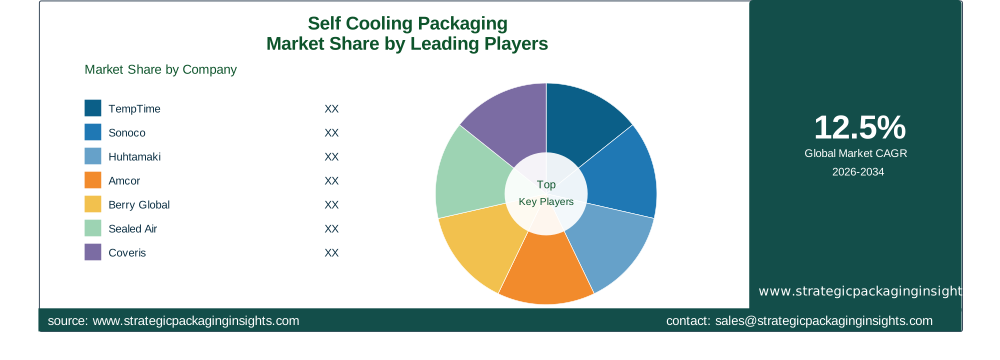
TempTime is a prominent player in the market, known for its innovative temperature-sensitive packaging solutions. The company has a strong focus on the pharmaceutical industry, providing reliable packaging solutions that ensure the integrity of temperature-sensitive medications. Sonoco, another key player, offers a wide range of packaging solutions, including self-cooling options for the food and beverage industry. The company's extensive distribution network and strong customer relationships have helped it maintain a significant market share.
Huhtamaki and Amcor are also major players in the self-cooling packaging market, known for their commitment to sustainability and innovation. Huhtamaki offers a range of eco-friendly packaging solutions, while Amcor focuses on creating packaging that meets the highest standards of quality and safety. Berry Global, Sealed Air, and Coveris are other notable companies in the market, each offering unique solutions that cater to different industry needs.
Constantia Flexibles, Klöckner Pentaplast, and Linpac are also key players in the market, known for their innovative packaging solutions and strong focus on sustainability. These companies are investing in research and development to create packaging that not only meets the needs of consumers but also aligns with environmental standards. As the market continues to grow, these companies are expected to play a significant role in shaping the future of self-cooling packaging.
Key Highlights
- The self-cooling packaging market is projected to grow at a CAGR of 12.5% from 2026 to 2034.
- Increasing demand for convenience and ready-to-eat products is driving market growth.
- The pharmaceutical industry is a key end-user, requiring temperature-controlled packaging solutions.
- Technological advancements are enabling the development of more efficient self-cooling packaging.
- High production costs and regulatory challenges are significant market restrainers.
- Key players include TempTime, Sonoco, Huhtamaki, Amcor, and Berry Global.
- Companies are focusing on sustainability and innovation to remain competitive.
- The market is characterized by a competitive landscape with several key players.
- Eco-friendly packaging solutions are gaining traction in the market.
Top Countries Insights
In the self-cooling packaging market, the United States stands out as a leading country, with a market size of approximately $150 million and a CAGR of 10%. The country's robust food and beverage industry, coupled with a strong focus on innovation, drives the demand for self-cooling packaging solutions. Additionally, the growing e-commerce sector and increasing consumer preference for convenience products contribute to market growth. However, regulatory challenges related to packaging materials and environmental impact remain a concern for manufacturers.
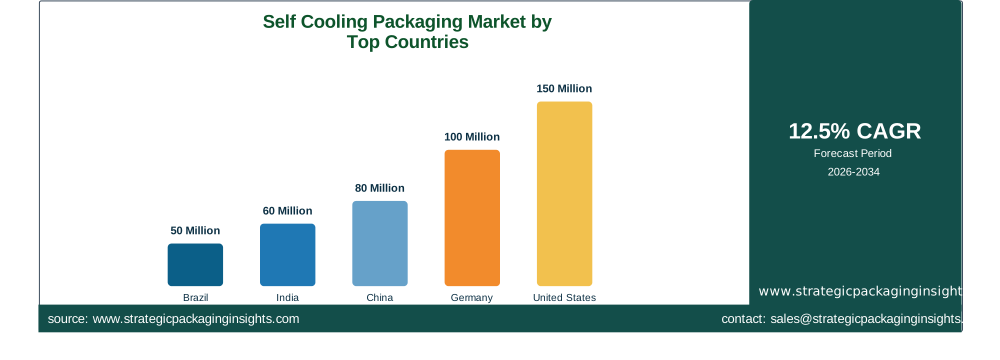
Germany is another key player in the self-cooling packaging market, with a market size of around $100 million and a CAGR of 8%. The country's strong emphasis on sustainability and innovation drives the demand for eco-friendly packaging solutions. The food and beverage industry is a significant end-user, with companies seeking packaging solutions that maintain product quality and safety. However, high production costs and regulatory challenges pose a threat to market growth.
China is emerging as a significant market for self-cooling packaging, with a market size of approximately $80 million and a CAGR of 12%. The country's growing middle class and increasing demand for convenience products drive the market. Additionally, the expanding e-commerce sector and rising awareness of food safety contribute to market growth. However, regulatory challenges and high production costs remain a concern for manufacturers.
India is also a growing market for self-cooling packaging, with a market size of around $60 million and a CAGR of 15%. The country's expanding food and beverage industry, coupled with a growing focus on convenience products, drives the demand for self-cooling packaging solutions. However, regulatory challenges and high production costs pose a threat to market growth.
Brazil is another key market, with a market size of approximately $50 million and a CAGR of 9%. The country's growing food and beverage industry and increasing demand for convenience products drive the market. However, regulatory challenges and high production costs remain a concern for manufacturers.
Self Cooling Packaging Market Segments Insights

Technology Analysis
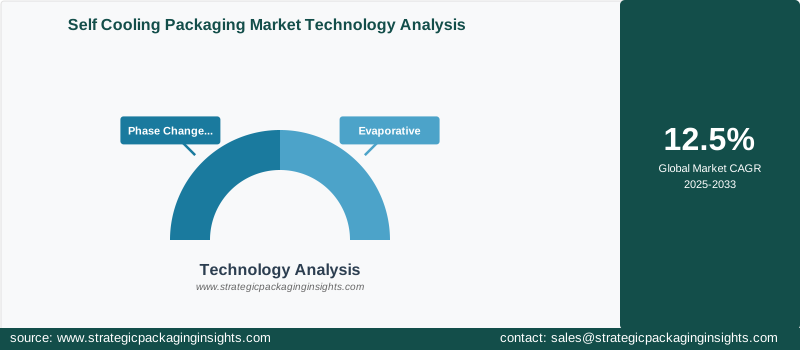
The self-cooling packaging market is segmented by technology into Phase Change Materials (PCM) and Evaporative technologies. Phase Change Materials are gaining traction due to their ability to maintain a consistent temperature over extended periods. This technology is particularly beneficial for the pharmaceutical industry, where maintaining the integrity of temperature-sensitive medications is crucial. The demand for PCM-based packaging is expected to grow as companies seek reliable and efficient solutions for temperature control. On the other hand, evaporative technology is widely used in the food and beverage industry, offering a cost-effective solution for maintaining product freshness and quality. The increasing demand for ready-to-eat and on-the-go food products is driving the adoption of evaporative self-cooling packaging solutions.
Application Analysis
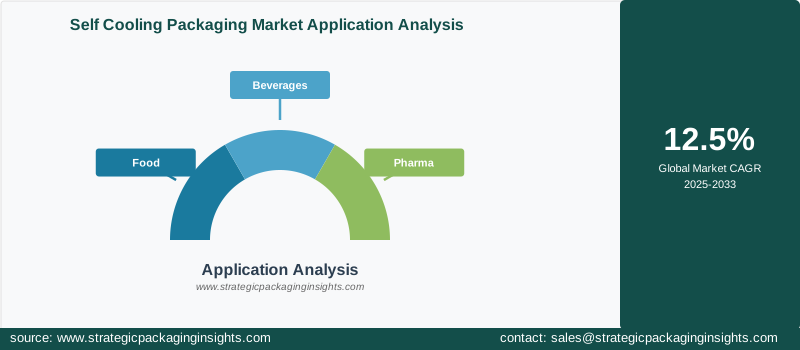
The application segment of the self-cooling packaging market includes food, beverages, and pharmaceuticals. The food industry is a major end-user, with the increasing demand for convenience and ready-to-eat products driving the need for innovative packaging solutions. Self-cooling packaging offers a practical solution for maintaining product quality and safety, particularly in the e-commerce and online food delivery sectors. The beverage industry is also a significant market, with companies seeking packaging solutions that can maintain optimal temperatures without external cooling. The pharmaceutical industry is another key application area, with the need for temperature-controlled packaging solutions driving the demand for self-cooling packaging.
Material Analysis
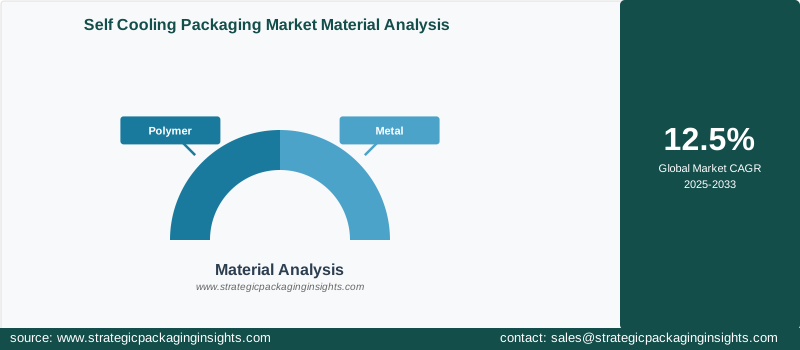
The self-cooling packaging market is segmented by material into polymer and metal. Polymer-based packaging solutions are widely used due to their lightweight and cost-effective nature. These materials offer excellent insulation properties, making them ideal for self-cooling applications. The demand for polymer-based packaging is expected to grow as companies seek sustainable and eco-friendly solutions. Metal-based packaging, on the other hand, offers superior durability and temperature control, making it suitable for high-end applications in the pharmaceutical and food industries. The increasing focus on sustainability and innovation is driving the development of advanced materials that meet the evolving needs of consumers and industries.
End Use Analysis
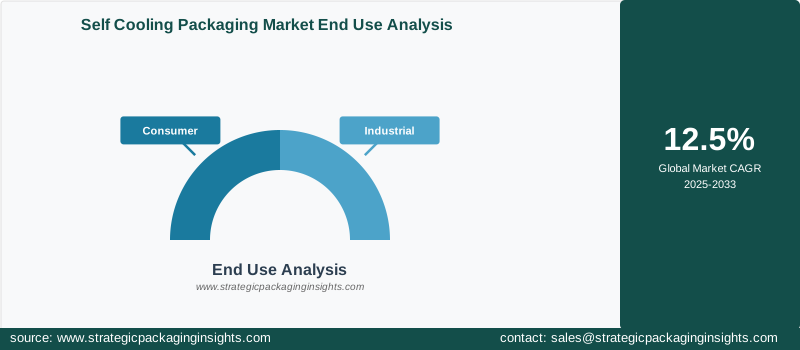
The end-use segment of the self-cooling packaging market includes consumer and industrial applications. The consumer segment is a major driver of market growth, with the increasing demand for convenience and ready-to-eat products driving the need for innovative packaging solutions. Self-cooling packaging offers a practical solution for maintaining product quality and safety, particularly in the e-commerce and online food delivery sectors. The industrial segment is also a significant market, with companies seeking packaging solutions that can maintain optimal temperatures without external cooling. The pharmaceutical industry is another key end-user, with the need for temperature-controlled packaging solutions driving the demand for self-cooling packaging.
Self Cooling Packaging Market Segments
The Self Cooling Packaging market has been segmented on the basis ofTechnology
- Phase Change Materials
- Evaporative
Application
- Food
- Beverages
- Pharma
Material
- Polymer
- Metal
End Use
- Consumer
- Industrial
Region
- Asia Pacific
- North America
- Latin America
- Europe
- Middle East & Africa




