


Self-adhesive Material Market Outlook
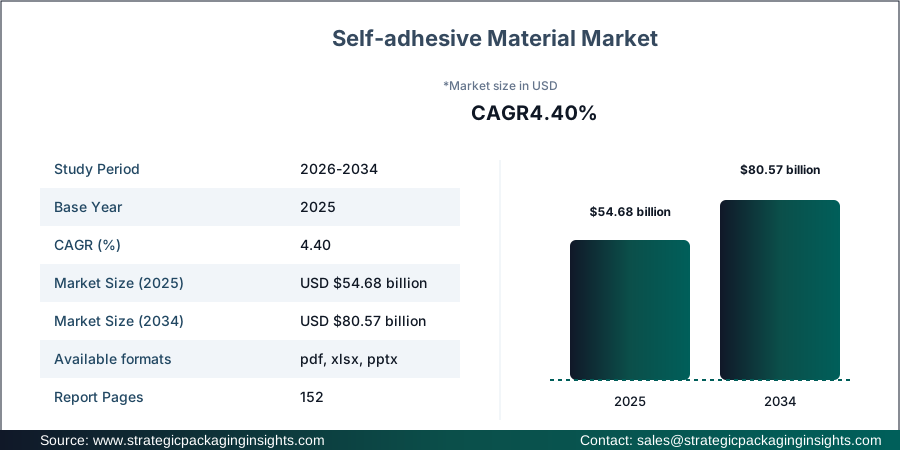
The self-adhesive material market was valued at $54.68 billion in 2025 and is projected to reach $80.57 billion by 2034, growing at a CAGR of 4.40% during the forecast period 2026-2034. This market is witnessing significant growth due to the increasing demand for self-adhesive materials across various industries such as packaging, automotive, and electronics. The versatility and ease of use of self-adhesive materials make them a preferred choice for manufacturers looking to enhance product functionality and consumer convenience. The market is also driven by technological advancements in adhesive formulations, which have improved the performance characteristics of these materials, making them suitable for a wider range of applications.
However, the market faces certain restraints, including regulatory challenges related to environmental concerns and the disposal of adhesive materials. The industry is under pressure to develop eco-friendly alternatives that comply with stringent environmental regulations. Despite these challenges, the market holds significant growth potential, driven by the rising demand for sustainable and recyclable adhesive solutions. The increasing focus on reducing carbon footprints and enhancing product sustainability is expected to create new opportunities for market players to innovate and expand their product offerings.
Report Scope
| Attributes | Details |
| Report Title | Self-adhesive Material Market Size, Future Growth and Forecast 2034 |
| By Product Type | Tapes, Labels, Films, Others |
| By Material Type | Paper, Plastic, Metal, Others |
| By Application | Packaging, Automotive, Electronics, Construction, Medical, Others |
| Region | Asia Pacific, North America, Latin America, Europe, Middle East & Africa |
| Base Year | 2025 |
| Historic Period | 2018-2024 |
| Forecast Period | 2026-2034 |
| Number of Pages | 152 |
| Customization Available | Yes* |
Opportunities & Threats
The self-adhesive material market presents numerous opportunities, particularly in the realm of sustainable and eco-friendly products. As environmental concerns continue to rise, there is a growing demand for adhesives that are not only effective but also environmentally responsible. This trend is pushing manufacturers to innovate and develop new formulations that reduce environmental impact while maintaining performance. Additionally, the expansion of e-commerce and the subsequent increase in packaging needs offer a significant opportunity for growth. The demand for efficient and reliable packaging solutions is driving the adoption of self-adhesive materials, which are known for their versatility and ease of application.
Another opportunity lies in the technological advancements in adhesive materials. Innovations such as pressure-sensitive adhesives and the development of new polymer blends are enhancing the performance and application range of self-adhesive materials. These advancements are opening up new markets and applications, particularly in the automotive and electronics sectors, where the demand for lightweight and durable materials is high. Furthermore, the growing trend of smart packaging, which integrates technology with packaging materials, is expected to drive the demand for advanced adhesive solutions that can support these innovations.
Despite the opportunities, the self-adhesive material market faces threats from fluctuating raw material prices and stringent regulatory requirements. The cost of raw materials, such as resins and polymers, can significantly impact the profitability of manufacturers. Additionally, the industry is subject to various regulations aimed at ensuring product safety and environmental compliance. These regulations can pose challenges for manufacturers, particularly those operating in multiple regions with varying regulatory standards. Companies must navigate these challenges by investing in research and development to create compliant and cost-effective solutions.
Drivers & Challenges
The self-adhesive material market is primarily driven by the increasing demand from the packaging industry. As consumer preferences shift towards convenience and sustainability, the need for efficient and eco-friendly packaging solutions is on the rise. Self-adhesive materials offer a versatile and reliable option for packaging applications, providing benefits such as ease of use, strong adhesion, and the ability to adhere to a variety of surfaces. This makes them an ideal choice for manufacturers looking to enhance product appeal and functionality. Additionally, the growth of the e-commerce sector is further fueling the demand for self-adhesive materials, as they are widely used in packaging and labeling applications.
Another significant driver is the growing demand from the automotive and electronics industries. In the automotive sector, self-adhesive materials are used for various applications, including bonding, sealing, and insulation. The trend towards lightweight and fuel-efficient vehicles is driving the adoption of advanced adhesive solutions that can replace traditional mechanical fasteners. Similarly, in the electronics industry, the miniaturization of devices and the need for reliable bonding solutions are boosting the demand for self-adhesive materials. These materials offer excellent adhesion properties and can withstand harsh environmental conditions, making them suitable for use in electronic components.
Despite the positive drivers, the self-adhesive material market faces challenges such as environmental concerns and the need for sustainable solutions. The disposal of adhesive materials and their impact on the environment is a growing concern, prompting manufacturers to develop eco-friendly alternatives. Additionally, the market is challenged by the need to comply with stringent regulations related to product safety and environmental impact. These challenges require significant investment in research and development to create innovative solutions that meet regulatory requirements while maintaining performance and cost-effectiveness.
Market Share Analysis
The self-adhesive material market is characterized by a competitive landscape with several key players dominating the industry. Companies such as 3M Company, Avery Dennison Corporation, and Henkel AG & Co. KGaA hold significant market shares due to their extensive product portfolios and strong global presence. These companies have established themselves as leaders in the market by continuously innovating and expanding their product offerings to meet the evolving needs of consumers. Their focus on research and development, coupled with strategic partnerships and acquisitions, has enabled them to maintain a competitive edge in the market.
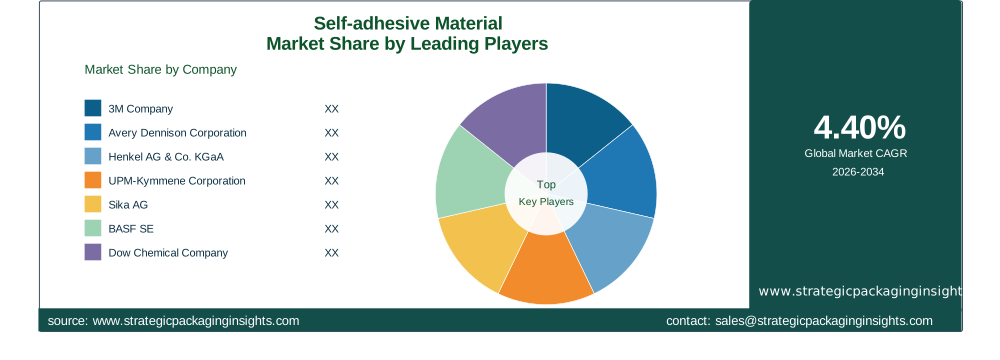
3M Company is a major player in the self-adhesive material market, known for its innovative adhesive solutions and strong brand reputation. The company offers a wide range of products, including tapes, labels, and films, catering to various industries such as automotive, electronics, and healthcare. Avery Dennison Corporation is another leading player, specializing in pressure-sensitive adhesive materials and labeling solutions. The company's focus on sustainability and innovation has helped it capture a significant share of the market, particularly in the packaging and retail sectors.
Henkel AG & Co. KGaA is a prominent player in the adhesive industry, offering a diverse range of self-adhesive materials for industrial and consumer applications. The company's strong focus on research and development has resulted in the introduction of advanced adhesive technologies that cater to the specific needs of different industries. UPM-Kymmene Corporation, known for its sustainable adhesive solutions, is also a key player in the market. The company's commitment to environmental responsibility and innovation has positioned it as a leader in the development of eco-friendly adhesive materials.
Other notable companies in the market include Sika AG, BASF SE, Dow Chemical Company, Eastman Chemical Company, Scapa Group plc, and Lohmann GmbH & Co. KG. These companies are actively involved in expanding their product portfolios and enhancing their market presence through strategic initiatives such as mergers and acquisitions, partnerships, and collaborations. Their focus on innovation and sustainability is driving the development of new adhesive solutions that meet the changing demands of consumers and industries.
Key Highlights
- The self-adhesive material market is projected to grow from $54.68 billion in 2025 to $80.57 billion by 2034, at a CAGR of 4.40%.
- Key drivers include the increasing demand from the packaging, automotive, and electronics industries.
- Technological advancements in adhesive formulations are enhancing product performance and expanding application areas.
- Environmental concerns and regulatory challenges are driving the development of sustainable adhesive solutions.
- The market is characterized by a competitive landscape with major players such as 3M Company, Avery Dennison Corporation, and Henkel AG & Co. KGaA.
- Opportunities exist in the development of eco-friendly and recyclable adhesive materials.
- The growth of e-commerce is fueling the demand for self-adhesive materials in packaging applications.
Top Countries Insights
In the self-adhesive material market, the United States holds a significant share, driven by the robust demand from the packaging and automotive industries. The market size in the U.S. is substantial, with a CAGR of 4%, supported by technological advancements and the presence of major market players. The country's focus on sustainability and innovation is further propelling market growth, as companies invest in eco-friendly adhesive solutions to meet regulatory requirements and consumer preferences.
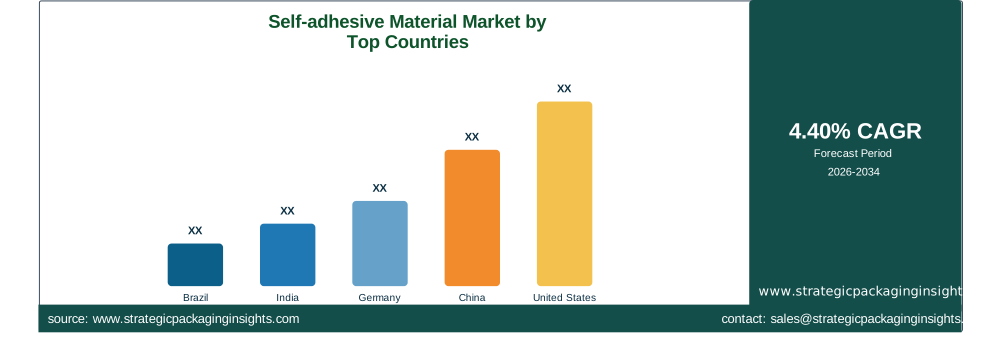
China is another key market for self-adhesive materials, with a high CAGR of 6%. The rapid industrialization and urbanization in the country are driving the demand for adhesive materials across various sectors, including construction, electronics, and automotive. Government initiatives to promote sustainable manufacturing practices and reduce environmental impact are also contributing to market growth, as companies develop innovative adhesive solutions that comply with stringent regulations.
Germany is a leading market in Europe, with a CAGR of 3%. The country's strong automotive and electronics industries are major consumers of self-adhesive materials, driving demand for advanced adhesive solutions. The focus on research and development, coupled with government support for sustainable manufacturing practices, is fostering innovation in the market. Companies are investing in new technologies to enhance product performance and meet the evolving needs of consumers.
India is experiencing significant growth in the self-adhesive material market, with a CAGR of 5%. The expanding packaging and construction industries are key drivers of market growth, as the demand for efficient and reliable adhesive solutions increases. The government's focus on infrastructure development and the growth of the e-commerce sector are further boosting demand for self-adhesive materials, as companies seek to enhance product functionality and consumer convenience.
Brazil is a growing market for self-adhesive materials, with a CAGR of 4%. The country's packaging and automotive industries are major consumers of adhesive materials, driving demand for innovative and sustainable solutions. The focus on reducing environmental impact and enhancing product sustainability is creating opportunities for market players to develop eco-friendly adhesive solutions that meet regulatory requirements and consumer preferences.
Self-adhesive Material Market Segments Insights

Product Type Analysis
The self-adhesive material market is segmented by product type into tapes, labels, films, and others. Tapes hold a significant share of the market due to their wide range of applications across various industries, including packaging, automotive, and construction. The demand for tapes is driven by their versatility, ease of use, and strong adhesion properties, making them an ideal choice for manufacturers looking to enhance product functionality and consumer convenience. Labels are also a key segment, with growing demand from the packaging and retail sectors. The need for efficient and reliable labeling solutions is driving the adoption of self-adhesive labels, which offer benefits such as ease of application and the ability to adhere to a variety of surfaces.
Films are another important segment, with increasing demand from the electronics and automotive industries. The trend towards lightweight and durable materials is driving the adoption of self-adhesive films, which offer excellent adhesion properties and can withstand harsh environmental conditions. The development of new polymer blends and pressure-sensitive adhesives is enhancing the performance and application range of self-adhesive films, opening up new markets and applications. The 'others' segment includes specialty adhesive products that cater to specific industry needs, such as medical and electronics applications.
Material Type Analysis
The self-adhesive material market is also segmented by material type into paper, plastic, metal, and others. Paper-based adhesives are widely used in the packaging and labeling industries due to their cost-effectiveness and ease of use. The demand for paper-based adhesives is driven by the growing focus on sustainability and the need for eco-friendly packaging solutions. Plastic-based adhesives are another key segment, with increasing demand from the automotive and electronics industries. The versatility and durability of plastic-based adhesives make them suitable for a wide range of applications, driving their adoption in various sectors.
Metal-based adhesives are used in specialized applications, such as electronics and construction, where strong adhesion and durability are required. The demand for metal-based adhesives is driven by the need for reliable bonding solutions that can withstand harsh environmental conditions. The 'others' segment includes specialty adhesive materials that cater to specific industry needs, such as medical and electronics applications. The development of new adhesive formulations and the focus on sustainability are driving innovation in the material type segment, creating opportunities for market players to expand their product offerings and meet the evolving needs of consumers.
Application Analysis
The self-adhesive material market is segmented by application into packaging, automotive, electronics, construction, medical, and others. The packaging industry is a major consumer of self-adhesive materials, driving demand for efficient and reliable adhesive solutions. The growth of the e-commerce sector and the increasing focus on sustainability are further boosting demand for self-adhesive materials in packaging applications. The automotive industry is another key segment, with growing demand for lightweight and durable adhesive solutions that can replace traditional mechanical fasteners.
The electronics industry is also a significant consumer of self-adhesive materials, driven by the need for reliable bonding solutions in electronic components. The trend towards miniaturization and the increasing complexity of electronic devices are driving demand for advanced adhesive solutions that offer excellent adhesion properties and can withstand harsh environmental conditions. The construction industry is another important segment, with demand for self-adhesive materials driven by the need for efficient and reliable bonding solutions in building and infrastructure projects. The 'others' segment includes specialty applications, such as medical and electronics, where self-adhesive materials are used for specific industry needs.
Self-adhesive Material Market Segments
The Self-adhesive Material market has been segmented on the basis ofBy Product Type
- Tapes
- Labels
- Films
- Others
By Material Type
- Paper
- Plastic
- Metal
- Others
By Application
- Packaging
- Automotive
- Electronics
- Construction
- Medical
- Others
Region
- Asia Pacific
- North America
- Latin America
- Europe
- Middle East & Africa




