


Seaweed-Based Edible Packaging Films Market Outlook
The Seaweed-Based Edible Packaging Films market size was valued at USD 218.0 Million in 2025 and is anticipated to reach USD 812.0 Million by 2034, growing at a CAGR of 15.8% during the forecast period according to Strategic Packaging Insights. Notpla, a leading brand in this market, has been at the forefront of innovation, driving the demand for sustainable packaging solutions. The increasing awareness about environmental sustainability and the need to reduce plastic waste are significant factors propelling the growth of this market. Consumers and businesses alike are shifting towards eco-friendly alternatives, and seaweed-based films offer a biodegradable and renewable option that aligns with these preferences.
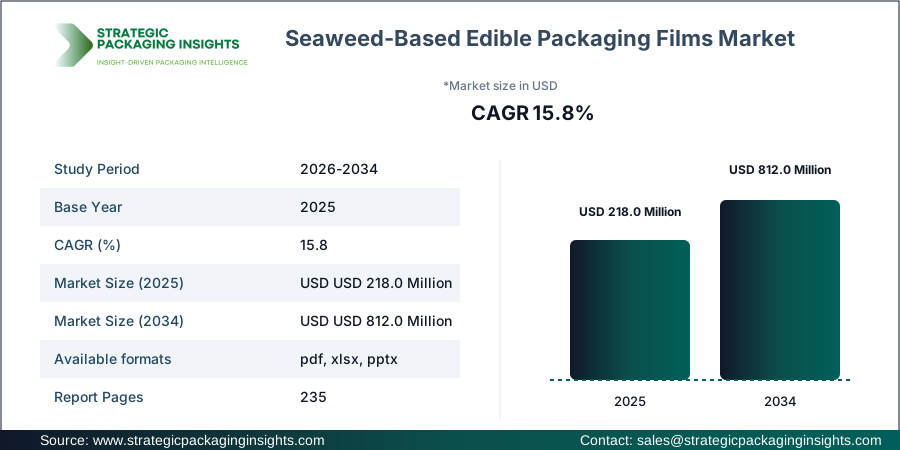
One of the most impactful drivers of the Seaweed-Based Edible Packaging Films market is the growing regulatory support for sustainable packaging solutions. Governments worldwide are implementing stringent regulations to curb plastic pollution, which is encouraging the adoption of biodegradable packaging materials. According to recent news reports, several countries have introduced bans on single-use plastics, further boosting the demand for seaweed-based alternatives. Notpla and other key players are capitalizing on these regulatory changes by expanding their product offerings and investing in research and development to enhance the performance and cost-effectiveness of seaweed-based films.
Report Scope
| Attributes | Details |
| Report Title | Seaweed-Based Edible Packaging Films Market Size, Future Growth and Forecast 2034 |
| By Seaweed Type | Red Seaweed, Brown Seaweed, Green Seaweed |
| By Material | Alginate-Based Films, Carrageenan-Based Films, Agar-Based Films, Composite Seaweed Films |
| By Application | Food Packaging, Fresh Produce Packaging, Snack & Confectionery Packaging, Beverage Pods, Pharmaceutical Packaging, Personal Care Packaging |
| By End User | Food & Beverage Manufacturers, Packaging Companies, Pharmaceutical Companies, Personal Care Brands, Retail & E-commerce |
| Region | Asia Pacific, North America, Latin America, Europe, Middle East & Africa |
| Base Year | 2025 |
| Historic Period | 2018-2024 |
| Forecast Period | 2026-2034 |
| Number of Pages | 235 |
| Customization Available | Yes* |
Sustainability & Circular Economy Analysis
Sustainability initiatives and circular economy practices are significantly influencing the Seaweed-Based Edible Packaging Films market. The shift towards recyclable materials and reusable packaging is driving innovation in packaging design and manufacturing. Companies like Notpla are focusing on developing lightweight packaging solutions that reduce material usage and transportation costs, aligning with consumer preferences for eco-friendly products. The integration of eco-friendly material innovation is not only reducing the carbon footprint but also enhancing the market competitiveness of seaweed-based films.
Extended Producer Responsibility (EPR) and packaging regulations are playing a crucial role in shaping the market dynamics. These regulations are compelling manufacturers to adopt waste reduction strategies and invest in sustainable packaging solutions. As a result, companies are prioritizing ESG initiatives and carbon footprint reduction in their supply chain strategies. This focus on sustainability is influencing investment decisions and driving long-term market competitiveness. The demand for seaweed-based films is expected to grow as more companies align their operations with these sustainability trends.
Consumer sustainability preferences are also driving the adoption of seaweed-based edible packaging films. With increasing awareness about environmental issues, consumers are demanding packaging solutions that are not only functional but also environmentally friendly. This shift in consumer behavior is encouraging brand owners and retailers to invest in sustainable packaging solutions. The emphasis on sustainability is influencing packaging design and manufacturing processes, leading to the development of innovative and eco-friendly products that meet regulatory compliance and consumer expectations.
Packaging Value Chain & Supply Chain Analysis
The packaging value chain for seaweed-based edible films involves several key components, including raw material sourcing, packaging converters, and manufacturers. The availability of high-quality seaweed is crucial for the production of effective packaging films. Companies like Notpla and Evoware are investing in sustainable sourcing practices to ensure a steady supply of raw materials. Packaging converters play a vital role in transforming these raw materials into functional packaging solutions, while manufacturers focus on optimizing production capabilities to meet growing demand.
Logistics and distribution channels are critical components of the supply chain ecosystem. Efficient transportation and inventory management strategies are essential for ensuring timely delivery of products to brand owners and retailers. Companies are leveraging strategic partnerships and localization strategies to enhance supply chain resilience and reduce transportation costs. The integration of global sourcing practices is also helping companies to diversify their supply chains and mitigate risks associated with raw material availability.
Recycling networks and procurement strategies are becoming increasingly important in the seaweed-based edible packaging films market. Companies are investing in recycling infrastructure to support the circular economy and reduce waste. Procurement strategies are focused on securing sustainable raw materials and optimizing inventory management to meet fluctuating demand. These efforts are enhancing overall market performance and business competitiveness, positioning seaweed-based films as a viable alternative to traditional packaging solutions.
Opportunities & Threats
The Seaweed-Based Edible Packaging Films market presents numerous opportunities for growth and innovation. One of the key opportunities lies in the expanding application areas for seaweed-based films. As consumer demand for sustainable packaging solutions increases, there is a growing need for innovative applications in sectors such as food packaging, pharmaceutical packaging, and personal care packaging. Companies like Notpla and Loliware are exploring new product lines and expanding their market reach to capitalize on these opportunities. Additionally, advancements in material science and technology are enabling the development of high-performance seaweed-based films that offer enhanced barrier properties and durability.
Another significant opportunity in the market is the increasing investment in research and development. Companies are focusing on developing cost-effective production processes and improving the scalability of seaweed-based films. This investment is driving innovation and enabling companies to offer competitive pricing, which is crucial for gaining market share. The growing consumer awareness about the environmental impact of packaging materials is also creating opportunities for companies to differentiate themselves by offering eco-friendly and biodegradable solutions. As a result, the market is witnessing increased collaboration between packaging manufacturers, brand owners, and research institutions to drive innovation and address industry challenges.
Despite the promising opportunities, the Seaweed-Based Edible Packaging Films market faces certain threats and challenges. One of the primary challenges is the high production cost associated with seaweed-based films. The cost of raw materials and the complexity of the production process can limit the scalability and affordability of these films. Additionally, the lack of standardized regulations and certifications for biodegradable packaging materials can pose challenges for market entry and expansion. Companies need to navigate these regulatory complexities and invest in research and development to overcome these challenges and ensure the long-term viability of seaweed-based films.
Drivers & Challenges
The Seaweed-Based Edible Packaging Films market is driven by several key factors, including the increasing demand for sustainable packaging solutions and the growing regulatory support for biodegradable materials. The rising awareness about the environmental impact of plastic waste is encouraging consumers and businesses to adopt eco-friendly alternatives. Companies like Notpla and Evoware are leveraging this trend by offering innovative seaweed-based films that align with consumer preferences for sustainable packaging. Additionally, government initiatives and regulations aimed at reducing plastic pollution are providing a favorable environment for the growth of the seaweed-based films market.
Another significant driver of the market is the technological advancements in material science and production processes. Companies are investing in research and development to enhance the performance and cost-effectiveness of seaweed-based films. These advancements are enabling the development of films with improved barrier properties, durability, and flexibility, making them suitable for a wide range of applications. The increasing investment in R&D is also driving innovation and enabling companies to offer competitive pricing, which is crucial for gaining market share and expanding their customer base.
Despite the positive drivers, the Seaweed-Based Edible Packaging Films market faces several challenges. One of the primary challenges is the high production cost associated with seaweed-based films. The cost of raw materials and the complexity of the production process can limit the scalability and affordability of these films. Additionally, the lack of standardized regulations and certifications for biodegradable packaging materials can pose challenges for market entry and expansion. Companies need to navigate these regulatory complexities and invest in research and development to overcome these challenges and ensure the long-term viability of seaweed-based films.
Market Share Analysis
The competitive landscape of the Seaweed-Based Edible Packaging Films market is characterized by the presence of several key players, including Notpla, Evoware, Loliware, and Sway Innovation Co. These companies are at the forefront of innovation, driving the development and commercialization of seaweed-based films. Notpla, a leading player in the market, is known for its innovative packaging solutions that are both biodegradable and sustainable. The company's focus on research and development has enabled it to offer high-performance films that meet the evolving needs of consumers and businesses.
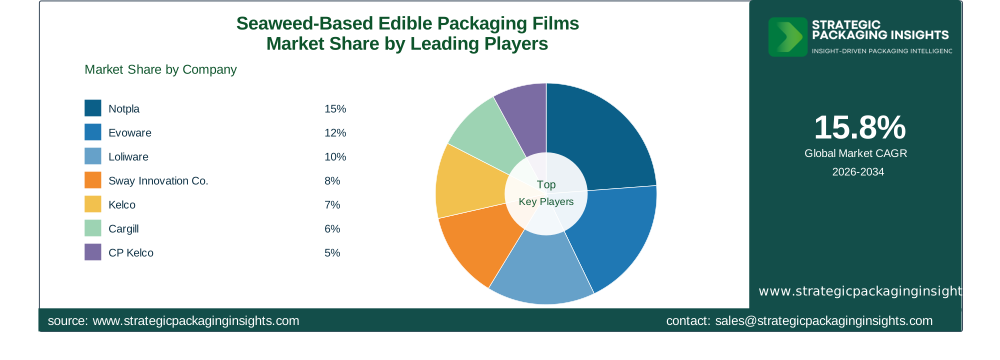
Evoware is another prominent player in the market, offering a range of seaweed-based packaging solutions that are designed to reduce plastic waste and promote sustainability. The company's commitment to environmental responsibility and innovation has positioned it as a key player in the market. Loliware, known for its edible and biodegradable packaging products, is also making significant strides in the market. The company's focus on creating sustainable alternatives to single-use plastics has garnered attention from consumers and businesses alike.
Sway Innovation Co. is a notable player in the market, offering innovative seaweed-based films that are designed to meet the needs of various industries. The company's emphasis on sustainability and innovation has enabled it to capture a significant share of the market. Other key players in the market include Kelco, Cargill, CP Kelco, FMC Corporation, JRS Group, Algaia, Marinova Pty Ltd., SmartFiber, Lactips, B'ZEOS, and Xampla. These companies are investing in research and development to enhance the performance and cost-effectiveness of seaweed-based films, driving the growth of the market.
The competitive landscape is characterized by strategic partnerships, collaborations, and mergers and acquisitions. Companies are leveraging these strategies to expand their product offerings, enhance their market presence, and gain a competitive edge. The focus on sustainability and innovation is driving the development of new products and solutions that meet the evolving needs of consumers and businesses. As the market continues to grow, companies are expected to invest in research and development, expand their production capabilities, and explore new market opportunities to maintain their competitive position.
Key Highlights
- The Seaweed-Based Edible Packaging Films market is projected to grow from USD 218.0 Million in 2025 to USD 812.0 Million by 2034, with a CAGR of 15.8%.
- Notpla, Evoware, and Loliware are leading brands driving innovation in the market.
- Regulatory support for biodegradable materials is boosting market growth.
- Technological advancements are enhancing the performance of seaweed-based films.
- High production costs and regulatory complexities pose challenges to market expansion.
- Asia Pacific is expected to witness significant growth due to increasing demand for sustainable packaging solutions.
- Strategic partnerships and collaborations are key strategies for market players to gain a competitive edge.
Seaweed-Based Edible Packaging Films Market Segments Insights

By Seaweed Type Analysis
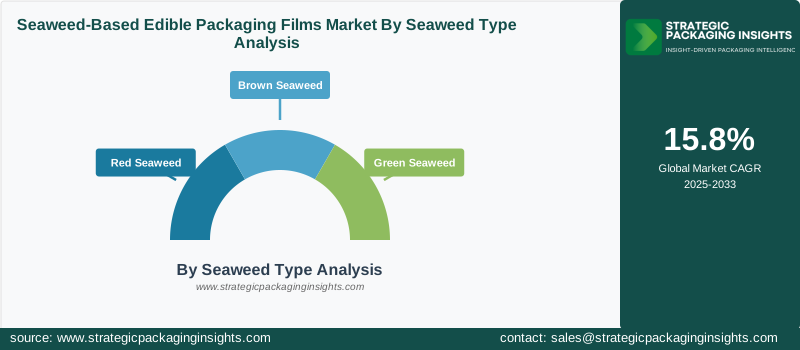
The Seaweed-Based Edible Packaging Films market is segmented by seaweed type into Red Seaweed, Brown Seaweed, and Green Seaweed. Red Seaweed is gaining popularity due to its high carrageenan content, which provides excellent film-forming properties. This segment is expected to witness significant growth as manufacturers focus on developing high-performance films with enhanced barrier properties. Brown Seaweed is also gaining traction due to its alginate content, which offers flexibility and durability. The demand for Green Seaweed is driven by its eco-friendly properties and potential for innovation in packaging solutions.
Manufacturers are investing in research and development to optimize the extraction and processing of seaweed to enhance the quality and performance of packaging films. The focus on sustainability and environmental responsibility is driving the demand for seaweed-based films across various industries. As consumer awareness about the environmental impact of packaging materials increases, the demand for eco-friendly alternatives is expected to grow. The seaweed type segment is poised for significant growth as companies explore new applications and expand their product offerings to meet the evolving needs of consumers and businesses.
By Material Analysis
The Seaweed-Based Edible Packaging Films market is segmented by material into Alginate-Based Films, Carrageenan-Based Films, Agar-Based Films, and Composite Seaweed Films. Alginate-Based Films are gaining popularity due to their excellent film-forming properties and biodegradability. These films are widely used in food packaging applications, offering a sustainable alternative to traditional plastic films. Carrageenan-Based Films are also gaining traction due to their ability to provide enhanced barrier properties and flexibility. The demand for Agar-Based Films is driven by their eco-friendly properties and potential for innovation in packaging solutions.
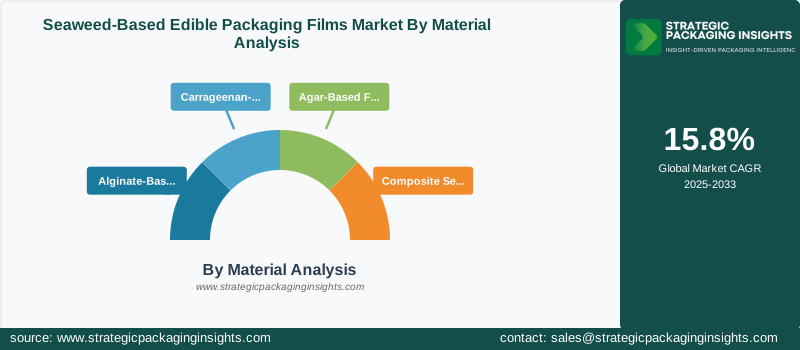
Composite Seaweed Films are emerging as a promising segment, offering a combination of different seaweed types to enhance the performance and functionality of packaging films. Manufacturers are focusing on developing composite films that offer improved barrier properties, durability, and flexibility. The focus on sustainability and environmental responsibility is driving the demand for seaweed-based films across various industries. As consumer awareness about the environmental impact of packaging materials increases, the demand for eco-friendly alternatives is expected to grow. The material segment is poised for significant growth as companies explore new applications and expand their product offerings to meet the evolving needs of consumers and businesses.
By Application Analysis
The Seaweed-Based Edible Packaging Films market is segmented by application into Food Packaging, Fresh Produce Packaging, Snack & Confectionery Packaging, Beverage Pods, Pharmaceutical Packaging, and Personal Care Packaging. Food Packaging is the largest application segment, driven by the increasing demand for sustainable and biodegradable packaging solutions. The focus on reducing plastic waste and promoting environmental sustainability is driving the adoption of seaweed-based films in food packaging applications. Fresh Produce Packaging is also gaining traction due to the need for eco-friendly packaging solutions that extend the shelf life of fresh produce.
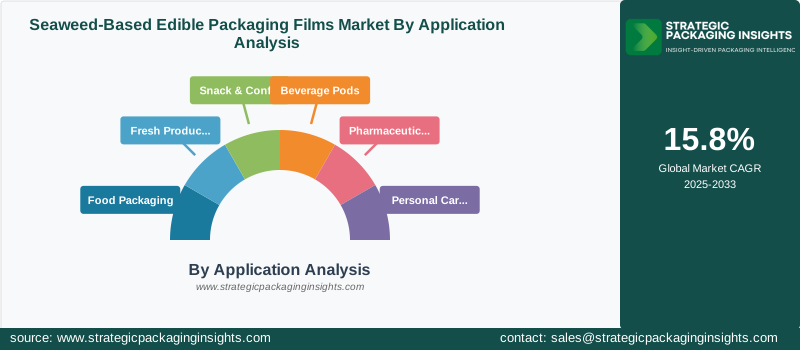
Snack & Confectionery Packaging is another significant application segment, driven by the demand for innovative and sustainable packaging solutions. Beverage Pods are emerging as a promising application area, offering a biodegradable alternative to traditional plastic pods. Pharmaceutical Packaging and Personal Care Packaging are also witnessing increased adoption of seaweed-based films due to their eco-friendly properties and potential for innovation. The application segment is poised for significant growth as companies explore new applications and expand their product offerings to meet the evolving needs of consumers and businesses.
By End User Analysis
The Seaweed-Based Edible Packaging Films market is segmented by end user into Food & Beverage Manufacturers, Packaging Companies, Pharmaceutical Companies, Personal Care Brands, and Retail & E-commerce. Food & Beverage Manufacturers are the largest end-user segment, driven by the increasing demand for sustainable packaging solutions. The focus on reducing plastic waste and promoting environmental sustainability is driving the adoption of seaweed-based films in the food and beverage industry. Packaging Companies are also gaining traction due to the need for innovative and eco-friendly packaging solutions.
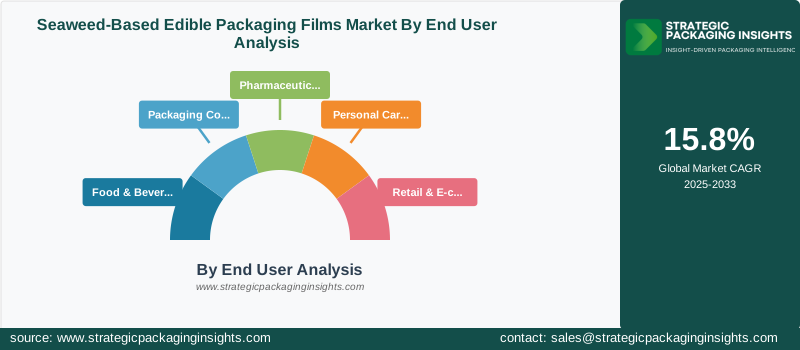
Pharmaceutical Companies and Personal Care Brands are witnessing increased adoption of seaweed-based films due to their eco-friendly properties and potential for innovation. Retail & E-commerce is another significant end-user segment, driven by the demand for sustainable packaging solutions that align with consumer preferences for eco-friendly products. The end-user segment is poised for significant growth as companies explore new applications and expand their product offerings to meet the evolving needs of consumers and businesses.
Seaweed-Based Edible Packaging Films Market Segments
The Seaweed-Based Edible Packaging Films market has been segmented on the basis ofBy Seaweed Type
- Red Seaweed
- Brown Seaweed
- Green Seaweed
By Material
- Alginate-Based Films
- Carrageenan-Based Films
- Agar-Based Films
- Composite Seaweed Films
By Application
- Food Packaging
- Fresh Produce Packaging
- Snack & Confectionery Packaging
- Beverage Pods
- Pharmaceutical Packaging
- Personal Care Packaging
By End User
- Food & Beverage Manufacturers
- Packaging Companies
- Pharmaceutical Companies
- Personal Care Brands
- Retail & E-commerce
Region
- Asia Pacific
- North America
- Latin America
- Europe
- Middle East & Africa




