


Sealant Packaging Market Outlook
The sealant packaging market was valued at $3.5 billion in 2024 and is projected to reach $5.8 billion by 2033, growing at a CAGR of 5.2% during the forecast period 2025-2033. This market is witnessing significant growth due to the increasing demand for sealants in various industries such as construction, automotive, and electronics. The rise in infrastructure development projects, especially in emerging economies, is a major driver for the market. Additionally, the growing automotive industry, which requires sealants for various applications, is further propelling the demand for sealant packaging. The market is also benefiting from advancements in packaging technologies that enhance the shelf life and usability of sealants.
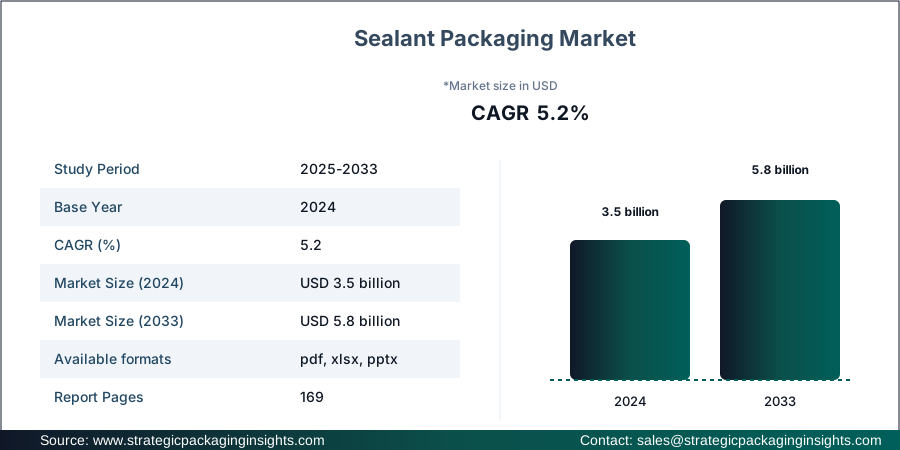
However, the market faces challenges such as stringent environmental regulations regarding the disposal and recycling of packaging materials. These regulations are pushing manufacturers to adopt eco-friendly packaging solutions, which can increase production costs. Despite these challenges, the market holds significant growth potential due to the increasing adoption of advanced packaging solutions that offer better protection and ease of use. The development of bio-based and recyclable packaging materials is expected to create new opportunities for market players. Moreover, the growing trend of DIY home improvement projects is boosting the demand for sealant packaging in the residential sector.
Report Scope
| Attributes | Details |
| Report Title | Sealant Packaging Market Size, Future Growth and Forecast 2033 |
| Material Type | Plastic, Metal, Glass, Others |
| Application | Construction, Automotive, Aerospace, Electronics, Others |
| Packaging Type | Tubes, Cartridges, Pouches, Others |
| End-User | Industrial, Commercial, Residential, Others |
| Base Year | 2024 |
| Historic Period | 2017-2023 |
| Forecast Period | 2025-2033 |
| Number of Pages | 169 |
| Customization Available | Yes* |
Opportunities & Threats
The sealant packaging market presents numerous opportunities, particularly with the increasing demand for sustainable and eco-friendly packaging solutions. As environmental concerns rise, consumers and industries are shifting towards packaging that minimizes environmental impact. This trend is driving innovation in the development of biodegradable and recyclable packaging materials. Companies that invest in sustainable packaging technologies are likely to gain a competitive edge in the market. Additionally, the expansion of the construction and automotive industries in emerging markets offers significant growth opportunities. These industries are major consumers of sealants, and their growth directly impacts the demand for sealant packaging.
Another opportunity lies in the technological advancements in packaging solutions. The development of smart packaging, which includes features like tamper-evidence and extended shelf life, is gaining traction. Such innovations not only enhance product safety but also improve consumer convenience. The integration of digital technologies in packaging, such as QR codes for product information and tracking, is also creating new avenues for market growth. Furthermore, the increasing trend of online retailing is boosting the demand for efficient and durable packaging solutions that can withstand the rigors of shipping and handling.
On the other hand, the market faces threats from fluctuating raw material prices, which can impact production costs and profit margins. The packaging industry is heavily reliant on raw materials such as plastics and metals, whose prices are subject to volatility due to factors like supply chain disruptions and geopolitical tensions. Additionally, the stringent regulations regarding packaging waste and recycling pose a challenge for manufacturers. Compliance with these regulations requires significant investment in research and development to create sustainable packaging solutions, which can be a barrier for small and medium-sized enterprises.
Drivers & Challenges
The primary drivers of the sealant packaging market include the robust growth of the construction industry and the increasing demand for sealants in automotive applications. The construction industry is witnessing a surge in infrastructure projects, particularly in developing regions, which is driving the demand for sealants and, consequently, sealant packaging. In the automotive sector, sealants are essential for various applications, including bonding, sealing, and insulation, which is fueling the demand for specialized packaging solutions. Additionally, the trend towards lightweight and fuel-efficient vehicles is increasing the use of sealants, further boosting the market.
Another significant driver is the advancement in packaging technologies that enhance the functionality and appeal of sealant packaging. Innovations such as resealable and easy-to-use packaging designs are gaining popularity among consumers, leading to increased demand. The development of packaging solutions that offer extended shelf life and protection against environmental factors is also contributing to market growth. Moreover, the rise of e-commerce and online retailing is driving the need for durable and protective packaging solutions that ensure product integrity during transit.
Despite these drivers, the market faces challenges such as the high cost of raw materials and the need for compliance with environmental regulations. The volatility in raw material prices can impact the profitability of manufacturers, making it challenging to maintain competitive pricing. Additionally, the packaging industry is under pressure to reduce its environmental footprint, which requires significant investment in sustainable packaging solutions. The development of eco-friendly packaging materials is still in its nascent stages, and widespread adoption may take time. Furthermore, the market is highly competitive, with numerous players vying for market share, which can lead to pricing pressures and reduced profit margins.
Market Share Analysis
The sealant packaging market is characterized by a highly competitive landscape, with several key players dominating the market. These companies are focusing on strategic initiatives such as mergers and acquisitions, partnerships, and product innovations to strengthen their market position. The competitive rivalry is intense, with companies striving to offer innovative and cost-effective packaging solutions to meet the evolving needs of consumers. The market is also witnessing the entry of new players, which is further intensifying the competition.
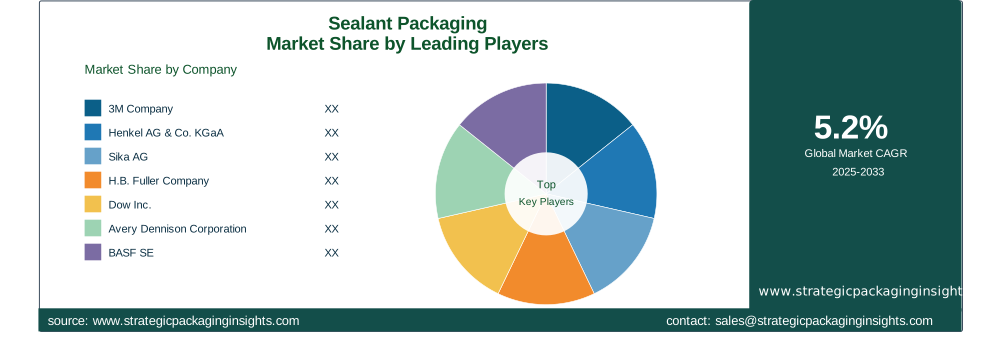
Some of the major companies in the sealant packaging market include 3M Company, Henkel AG & Co. KGaA, Sika AG, H.B. Fuller Company, and Dow Inc. These companies have a strong presence in the market and are continuously investing in research and development to introduce advanced packaging solutions. For instance, 3M Company is known for its innovative packaging solutions that enhance product performance and sustainability. Henkel AG & Co. KGaA is focusing on expanding its product portfolio to cater to the growing demand for eco-friendly packaging solutions.
Sika AG is another prominent player in the market, offering a wide range of sealant packaging solutions for various industries. The company is leveraging its strong distribution network to expand its market reach. H.B. Fuller Company is focusing on strategic acquisitions to strengthen its market position and enhance its product offerings. Dow Inc. is investing in advanced packaging technologies to improve the functionality and sustainability of its products. These companies are also focusing on expanding their presence in emerging markets to capitalize on the growing demand for sealant packaging.
In addition to these major players, there are several other companies contributing to the market growth. These include Avery Dennison Corporation, BASF SE, Arkema Group, and RPM International Inc. These companies are focusing on product innovation and strategic collaborations to enhance their market presence. The competitive landscape is dynamic, with companies continuously striving to gain a competitive edge through innovation and strategic partnerships.
Key Highlights
- The sealant packaging market is projected to grow at a CAGR of 5.2% from 2025 to 2033.
- Increasing demand for eco-friendly and sustainable packaging solutions is driving market growth.
- Technological advancements in packaging solutions are creating new growth opportunities.
- The construction and automotive industries are major consumers of sealant packaging.
- Fluctuating raw material prices pose a challenge to market growth.
- Stringent environmental regulations are pushing manufacturers towards sustainable packaging solutions.
- The rise of e-commerce is boosting the demand for durable and protective packaging solutions.
- Key players are focusing on strategic initiatives to strengthen their market position.
- The market is witnessing the entry of new players, intensifying competition.
- Emerging markets offer significant growth opportunities for market players.
Top Countries Insights
In the sealant packaging market, the United States holds a significant share, with a market size of $1.2 billion and a CAGR of 4%. The growth in this region is driven by the robust construction industry and the increasing demand for advanced packaging solutions. The presence of major market players and the adoption of innovative packaging technologies are also contributing to market growth.
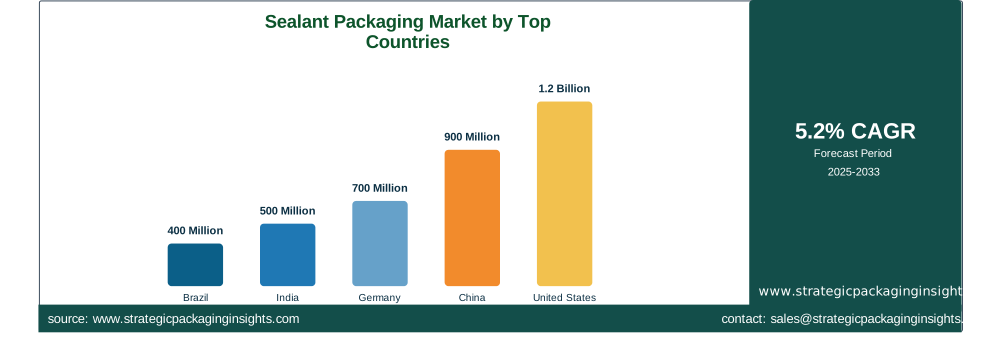
China is another key market, with a market size of $900 million and a CAGR of 6%. The rapid industrialization and urbanization in the country are driving the demand for sealants, thereby boosting the packaging market. The government's focus on infrastructure development and the growth of the automotive industry are significant growth drivers.
Germany, with a market size of $700 million and a CAGR of 5%, is a leading market in Europe. The country's strong automotive industry and the emphasis on sustainable packaging solutions are driving market growth. The presence of major packaging companies and the focus on innovation are also contributing to the market's expansion.
India, with a market size of $500 million and a CAGR of 7%, is witnessing significant growth due to the booming construction industry and the increasing demand for sealants in various applications. The government's initiatives to boost infrastructure development and the growth of the automotive sector are key growth drivers.
Brazil, with a market size of $400 million and a CAGR of 5%, is a prominent market in Latin America. The growth in this region is driven by the expanding construction industry and the increasing demand for advanced packaging solutions. The focus on sustainable packaging and the presence of major market players are also contributing to market growth.
Evolving Market Dynamics (2018-2024) and Strategic Foresight (2025-2033)
| Metrics | 2018-2024 | 2025-2033 |
|---|---|---|
| CAGR | 4.5% | 5.2% |
| Market Size Evolution | $2.8 billion to $3.5 billion | $3.5 billion to $5.8 billion |
| Segment Distribution Shifts | Construction and Automotive Dominance | Increased Focus on Eco-Friendly Solutions |
| Regional Contribution Changes | North America and Europe Lead | Asia Pacific Emerging Strongly |
| Technological Impact Factors | Basic Packaging Solutions | Advanced and Smart Packaging |
| Client Demand Transformations | Standard Packaging Needs | Customized and Sustainable Solutions |
Sealant Packaging Market Segments Insights

Material Type Analysis
The material type segment in the sealant packaging market is primarily dominated by plastic, owing to its versatility, cost-effectiveness, and ease of use. Plastic packaging offers excellent barrier properties, which are crucial for maintaining the integrity and shelf life of sealants. However, the growing environmental concerns and regulatory pressures are driving the shift towards more sustainable materials such as bio-based plastics and recycled materials. Metal and glass are also used in sealant packaging, particularly for industrial applications where durability and resistance to harsh conditions are required. The demand for eco-friendly materials is expected to grow, with companies investing in research and development to create innovative solutions that meet both performance and sustainability criteria.
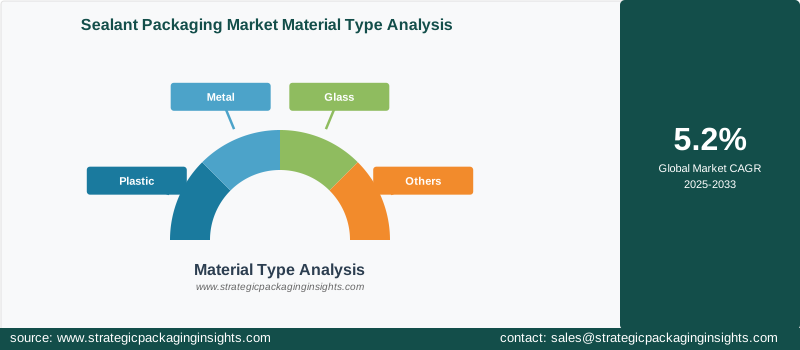
Plastic packaging continues to be the preferred choice due to its lightweight nature and flexibility, which allows for easy handling and transportation. The development of advanced plastic materials that offer enhanced performance characteristics is further boosting the demand in this segment. However, the increasing focus on reducing plastic waste and the implementation of stringent regulations are encouraging manufacturers to explore alternative materials. The adoption of metal and glass packaging is expected to grow, particularly in applications where high strength and chemical resistance are required. The market is also witnessing the emergence of hybrid packaging solutions that combine the benefits of different materials to meet specific application needs.
Application Analysis
The application segment of the sealant packaging market is diverse, with construction and automotive being the major consumers. In the construction industry, sealants are used for various applications such as sealing joints, waterproofing, and insulation, driving the demand for specialized packaging solutions. The growth of infrastructure projects, particularly in emerging economies, is a significant driver for this segment. In the automotive industry, sealants are essential for bonding, sealing, and noise reduction, leading to increased demand for packaging solutions that ensure product integrity and ease of use.
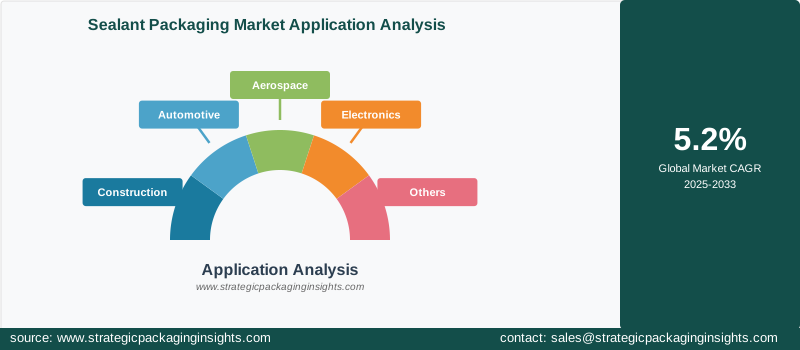
The electronics industry is also a growing application area for sealant packaging, with the increasing demand for electronic devices and components. Sealants are used for encapsulation and protection of electronic components, requiring packaging solutions that offer excellent barrier properties and protection against environmental factors. The aerospace industry is another key application area, with sealants used for bonding and sealing in aircraft manufacturing and maintenance. The demand for high-performance packaging solutions that meet stringent industry standards is driving innovation in this segment. The market is also witnessing growth in other applications such as marine and industrial, where sealants are used for various maintenance and repair tasks.
Packaging Type Analysis
The packaging type segment in the sealant packaging market includes tubes, cartridges, pouches, and others. Tubes are the most commonly used packaging type, offering convenience and ease of use for consumers. They are widely used in both consumer and industrial applications, providing a cost-effective solution for packaging sealants. Cartridges are another popular packaging type, particularly in the construction and automotive industries, where they are used for dispensing sealants in precise amounts. The demand for cartridges is driven by their ability to provide accurate application and reduce waste.
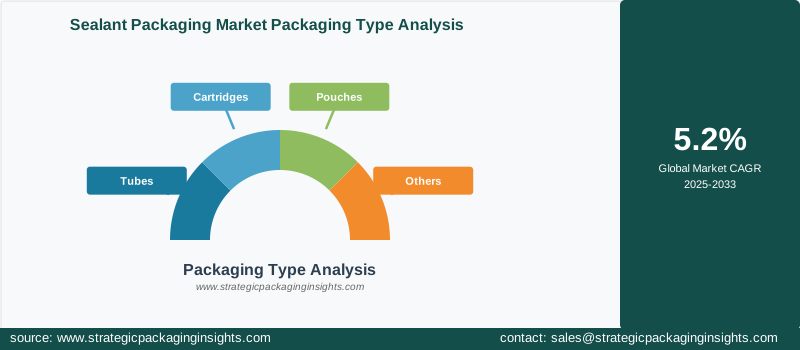
Pouches are gaining popularity as an alternative packaging solution, offering benefits such as lightweight, flexibility, and reduced material usage. They are particularly suitable for single-use applications and are increasingly being adopted in the consumer market. The development of advanced pouch designs that offer enhanced barrier properties and resealability is further boosting their demand. Other packaging types, such as bulk containers and drums, are used for industrial applications where large volumes of sealants are required. The market is witnessing innovation in packaging designs, with companies focusing on developing solutions that enhance user convenience and product performance.
End-User Analysis
The end-user segment of the sealant packaging market is categorized into industrial, commercial, residential, and others. The industrial sector is the largest consumer of sealant packaging, driven by the demand from industries such as construction, automotive, and electronics. The need for high-performance packaging solutions that meet industry standards and regulations is a key driver for this segment. The commercial sector is also a significant consumer, with applications in areas such as retail, hospitality, and healthcare driving the demand for sealant packaging.
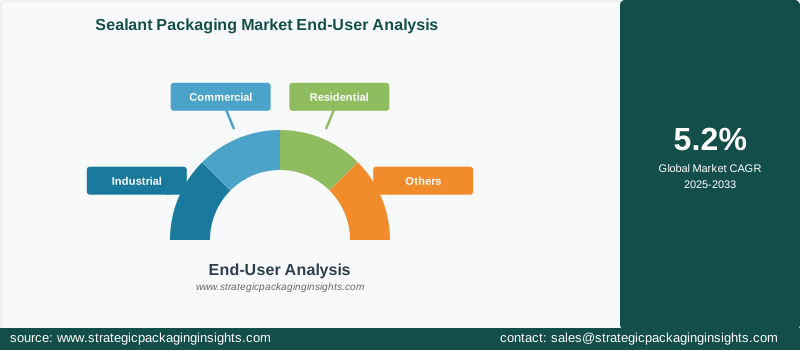
The residential sector is witnessing growth due to the increasing trend of DIY home improvement projects. Consumers are seeking convenient and easy-to-use packaging solutions for sealants used in home repairs and maintenance. The development of packaging designs that offer ease of application and storage is driving demand in this segment. The market is also witnessing growth in other end-user segments such as marine and aerospace, where sealants are used for various maintenance and repair tasks. The focus on developing packaging solutions that meet the specific needs of different end-user segments is driving innovation and growth in the market.
Sealant Packaging Market Segments
The Sealant Packaging market has been segmented on the basis ofMaterial Type
- Plastic
- Metal
- Glass
- Others
Application
- Construction
- Automotive
- Aerospace
- Electronics
- Others
Packaging Type
- Tubes
- Cartridges
- Pouches
- Others
End-User
- Industrial
- Commercial
- Residential
- Others




