


Screen Printing Mesh Market Outlook
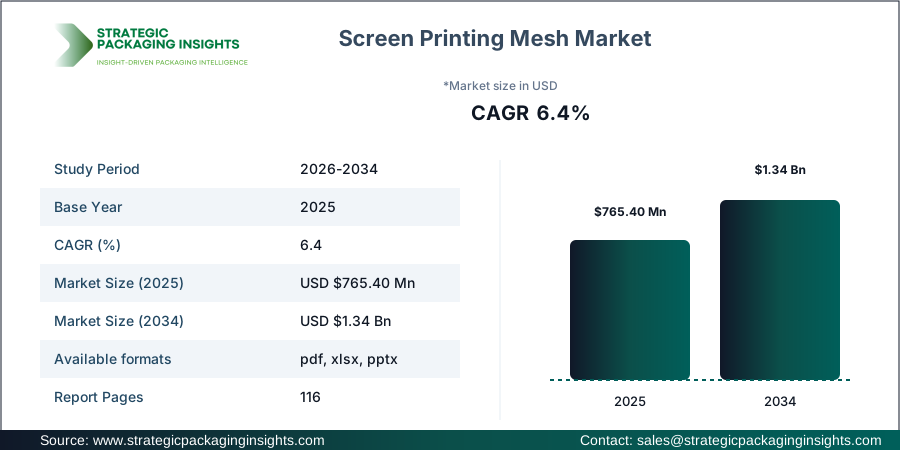
The Screen Printing Mesh market was valued at $765.40 million in 2025 and is projected to reach $1.34 billion by 2034, growing at a CAGR of 6.4% during the forecast period 2026-2034. This growth is driven by the increasing demand for screen printing across various industries such as textiles, electronics, and graphics. The versatility and cost-effectiveness of screen printing mesh make it a preferred choice for high-volume production, especially in the textile industry. Additionally, advancements in mesh technology, such as the development of high-tension and durable materials, are expected to further boost market growth. The market is also witnessing a shift towards eco-friendly and sustainable printing solutions, which is likely to create new opportunities for manufacturers.
Despite the promising growth prospects, the Screen Printing Mesh market faces certain challenges. Regulatory restrictions on the use of certain chemicals in printing processes and the availability of alternative printing technologies, such as digital printing, pose significant threats to market expansion. However, the potential for growth remains substantial, particularly in emerging markets where industrialization and urbanization are driving demand for printed materials. The market's growth potential is further supported by the increasing adoption of screen printing in the electronics industry, where it is used for printing circuit boards and other components.
Report Scope
| Attributes | Details |
| Report Title | Screen Printing Mesh Market Size, Future Growth and Forecast 2034 |
| Mesh Type | Polyester, Stainless Steel, Nylon |
| Application | Textile, Electronics, Graphic |
| Tension | Low, Medium, High |
| End Use | Industrial, Commercial |
| Region | Asia Pacific, North America, Latin America, Europe, Middle East & Africa |
| Base Year | 2025 |
| Historic Period | 2018-2024 |
| Forecast Period | 2026-2034 |
| Number of Pages | 116 |
| Customization Available | Yes* |
Opportunities & Threats
The Screen Printing Mesh market presents numerous opportunities, particularly in the textile industry, where the demand for customized and high-quality prints is on the rise. The growing trend of personalized fashion and home décor items is driving the need for advanced screen printing solutions. Additionally, the increasing popularity of eco-friendly and sustainable printing practices is creating opportunities for manufacturers to develop innovative mesh materials that reduce environmental impact. The electronics industry also offers significant growth potential, as screen printing is widely used for manufacturing printed circuit boards and other electronic components. The development of new applications and the expansion of existing ones are expected to drive market growth in the coming years.
Another opportunity lies in the expansion of the market in emerging economies, where rapid industrialization and urbanization are fueling demand for printed materials. The increasing disposable income and changing consumer preferences in these regions are driving the demand for high-quality and customized products, which in turn is boosting the demand for screen printing mesh. Furthermore, the growing adoption of screen printing in the packaging industry, particularly for labeling and branding purposes, is expected to create new growth avenues for market players.
However, the market also faces certain threats, such as the increasing competition from alternative printing technologies like digital printing. Digital printing offers several advantages, including faster production times and the ability to print complex designs with high precision. This has led to a shift in preference among some end-users, particularly in the graphics and advertising industries. Additionally, regulatory restrictions on the use of certain chemicals in the printing process pose a challenge for manufacturers, as they need to comply with stringent environmental regulations while maintaining product quality and performance.
Drivers & Challenges
One of the primary drivers of the Screen Printing Mesh market is the growing demand for screen printing in the textile industry. Screen printing is widely used for producing high-quality and durable prints on fabrics, making it a preferred choice for textile manufacturers. The increasing popularity of customized and personalized fashion items is further driving the demand for screen printing mesh. Additionally, advancements in mesh technology, such as the development of high-tension and durable materials, are enhancing the performance and efficiency of screen printing processes, thereby boosting market growth.
Another significant driver is the increasing adoption of screen printing in the electronics industry. Screen printing is used for manufacturing printed circuit boards and other electronic components, where precision and accuracy are critical. The growing demand for electronic devices and components is driving the need for efficient and reliable printing solutions, thereby fueling the growth of the Screen Printing Mesh market. Furthermore, the expansion of the packaging industry, where screen printing is used for labeling and branding purposes, is expected to contribute to market growth.
Despite the positive growth drivers, the Screen Printing Mesh market faces several challenges. One of the major challenges is the increasing competition from alternative printing technologies, such as digital printing. Digital printing offers several advantages, including faster production times and the ability to print complex designs with high precision. This has led to a shift in preference among some end-users, particularly in the graphics and advertising industries. Additionally, regulatory restrictions on the use of certain chemicals in the printing process pose a challenge for manufacturers, as they need to comply with stringent environmental regulations while maintaining product quality and performance.
Market Share Analysis
The Screen Printing Mesh market is characterized by a competitive landscape with several key players vying for market share. Some of the major companies operating in this market include Saati, NBC Meshtec, Bopp, Sefar, Trelleborg, Mativ, A.L. Wilson, Asada Mesh, NBC Industries, and Nittobo. These companies are focusing on product innovation, strategic partnerships, and mergers and acquisitions to strengthen their market position and expand their product offerings. The competitive landscape is further intensified by the presence of several regional players who are catering to the specific needs of local markets.
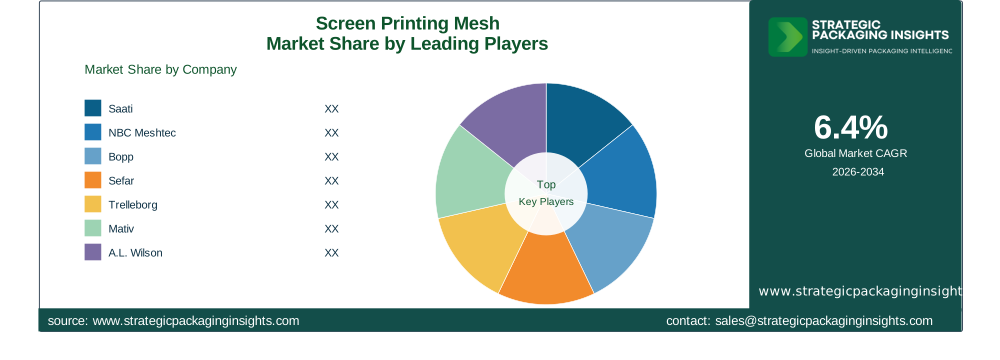
Saati is one of the leading players in the Screen Printing Mesh market, known for its high-quality mesh products and innovative solutions. The company has a strong presence in the global market and is continuously investing in research and development to enhance its product portfolio. NBC Meshtec is another prominent player, offering a wide range of mesh products for various applications. The company is focusing on expanding its market presence through strategic partnerships and collaborations with other industry players.
Bopp and Sefar are also key players in the market, known for their high-performance mesh products and extensive distribution networks. These companies are leveraging their strong brand reputation and technical expertise to capture a significant share of the market. Trelleborg and Mativ are focusing on product innovation and expanding their product offerings to cater to the growing demand for screen printing mesh in various industries.
Other notable players in the market include A.L. Wilson, Asada Mesh, NBC Industries, and Nittobo. These companies are focusing on enhancing their product quality and expanding their distribution networks to strengthen their market position. The competitive landscape of the Screen Printing Mesh market is expected to remain dynamic, with companies focusing on innovation and strategic partnerships to gain a competitive edge.
Key Highlights
- The Screen Printing Mesh market is projected to grow at a CAGR of 6.4% from 2026 to 2034.
- The market was valued at $765.40 million in 2025 and is expected to reach $1.34 billion by 2034.
- Key growth drivers include the increasing demand for screen printing in the textile and electronics industries.
- Advancements in mesh technology are enhancing the performance and efficiency of screen printing processes.
- The market faces competition from alternative printing technologies like digital printing.
- Regulatory restrictions on the use of certain chemicals in printing processes pose a challenge for manufacturers.
- Key players in the market include Saati, NBC Meshtec, Bopp, Sefar, Trelleborg, and Mativ.
Top Countries Insights
In the Screen Printing Mesh market, the United States is a leading player, with a market size of approximately $250 million and a CAGR of 5%. The country's strong industrial base and advanced technology infrastructure are key growth drivers. The demand for high-quality and customized printed materials in the textile and electronics industries is fueling market growth. However, the market faces challenges from stringent environmental regulations and competition from digital printing technologies.
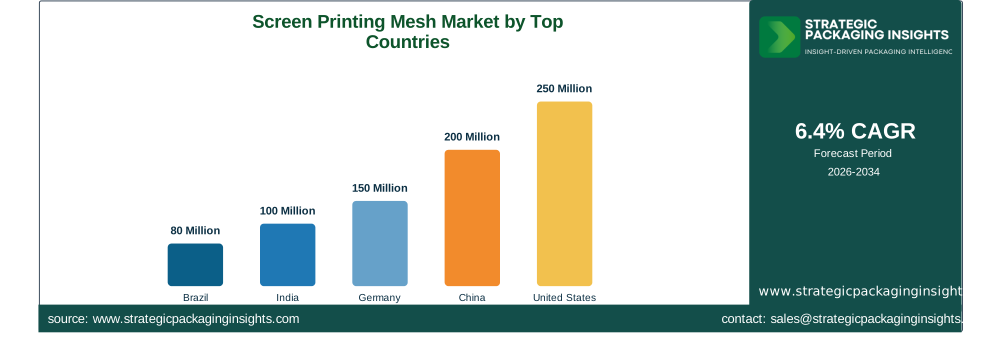
China is another significant market, with a market size of around $200 million and a CAGR of 7%. The country's rapid industrialization and urbanization are driving demand for screen printing mesh. The growing electronics industry and increasing adoption of screen printing in the textile sector are key growth drivers. However, the market faces challenges from regulatory restrictions and the availability of alternative printing technologies.
Germany is a key player in the European market, with a market size of approximately $150 million and a CAGR of 6%. The country's strong manufacturing base and focus on innovation are driving demand for screen printing mesh. The increasing adoption of screen printing in the automotive and electronics industries is a key growth driver. However, the market faces challenges from stringent environmental regulations and competition from digital printing technologies.
India is an emerging market, with a market size of around $100 million and a CAGR of 8%. The country's rapid industrialization and growing textile industry are driving demand for screen printing mesh. The increasing disposable income and changing consumer preferences are key growth drivers. However, the market faces challenges from regulatory restrictions and the availability of alternative printing technologies.
Brazil is a significant market in Latin America, with a market size of approximately $80 million and a CAGR of 6%. The country's growing industrial base and increasing adoption of screen printing in the textile and packaging industries are key growth drivers. However, the market faces challenges from economic instability and competition from digital printing technologies.
Screen Printing Mesh Market Segments Insights

Mesh Type Analysis
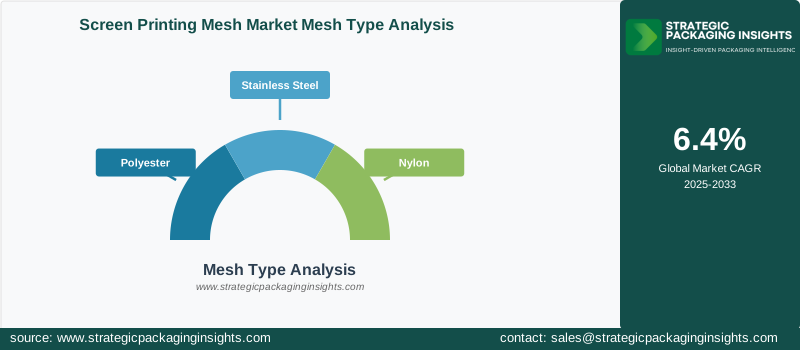
The Screen Printing Mesh market is segmented by mesh type into polyester, stainless steel, and nylon. Polyester mesh is the most widely used type due to its cost-effectiveness and versatility. It is preferred for textile applications where high-volume production is required. The demand for polyester mesh is driven by its durability and ability to produce high-quality prints. Stainless steel mesh, on the other hand, is known for its strength and precision, making it ideal for applications in the electronics industry. The growing demand for electronic devices and components is driving the need for stainless steel mesh. Nylon mesh is also gaining popularity due to its flexibility and resistance to abrasion, making it suitable for various industrial applications.
The competition in the mesh type segment is intense, with several players focusing on product innovation and quality enhancement to gain a competitive edge. The demand for high-tension and durable mesh materials is driving manufacturers to invest in research and development. The growing trend of eco-friendly and sustainable printing practices is also influencing the development of new mesh materials that reduce environmental impact. The market is witnessing a shift towards advanced mesh technologies that enhance the performance and efficiency of screen printing processes.
Application Analysis
The Screen Printing Mesh market is segmented by application into textile, electronics, and graphic. The textile industry is the largest application segment, driven by the increasing demand for customized and high-quality prints. Screen printing is widely used for producing durable and vibrant prints on fabrics, making it a preferred choice for textile manufacturers. The growing trend of personalized fashion and home décor items is further driving the demand for screen printing mesh in the textile industry.
The electronics industry is another significant application segment, where screen printing is used for manufacturing printed circuit boards and other components. The precision and accuracy offered by screen printing make it ideal for electronic applications. The growing demand for electronic devices and components is driving the need for efficient and reliable printing solutions, thereby fueling the growth of the Screen Printing Mesh market. The graphic industry is also witnessing increasing adoption of screen printing for producing high-quality and intricate designs, particularly in the advertising and branding sectors.
Tension Analysis
The Screen Printing Mesh market is segmented by tension into low, medium, and high. High-tension mesh is preferred for applications that require precision and accuracy, such as in the electronics industry. The demand for high-tension mesh is driven by its ability to produce fine and intricate designs with high precision. Medium-tension mesh is widely used in the textile industry, where it offers a balance between durability and print quality. The growing demand for customized and high-quality prints in the textile industry is driving the need for medium-tension mesh.
Low-tension mesh is used for applications that require flexibility and ease of use, such as in the graphic industry. The demand for low-tension mesh is driven by its ability to produce vibrant and intricate designs with ease. The competition in the tension segment is intense, with manufacturers focusing on developing advanced mesh materials that offer high performance and efficiency. The growing trend of eco-friendly and sustainable printing practices is also influencing the development of new mesh materials that reduce environmental impact.
End Use Analysis
The Screen Printing Mesh market is segmented by end use into industrial and commercial. The industrial segment is the largest end-use segment, driven by the increasing demand for screen printing in various industries such as textiles, electronics, and packaging. The growing industrial base and rapid industrialization in emerging economies are driving the demand for screen printing mesh in the industrial segment.
The commercial segment is also witnessing significant growth, driven by the increasing adoption of screen printing in the advertising and branding sectors. The demand for high-quality and customized printed materials in the commercial sector is driving the need for screen printing mesh. The competition in the end-use segment is intense, with manufacturers focusing on developing advanced mesh materials that offer high performance and efficiency. The growing trend of eco-friendly and sustainable printing practices is also influencing the development of new mesh materials that reduce environmental impact.
Screen Printing Mesh Market Segments
The Screen Printing Mesh market has been segmented on the basis ofMesh Type
- Polyester
- Stainless Steel
- Nylon
Application
- Textile
- Electronics
- Graphic
Tension
- Low
- Medium
- High
End Use
- Industrial
- Commercial
Region
- Asia Pacific
- North America
- Latin America
- Europe
- Middle East & Africa




