


Scintillation Vials Market Outlook
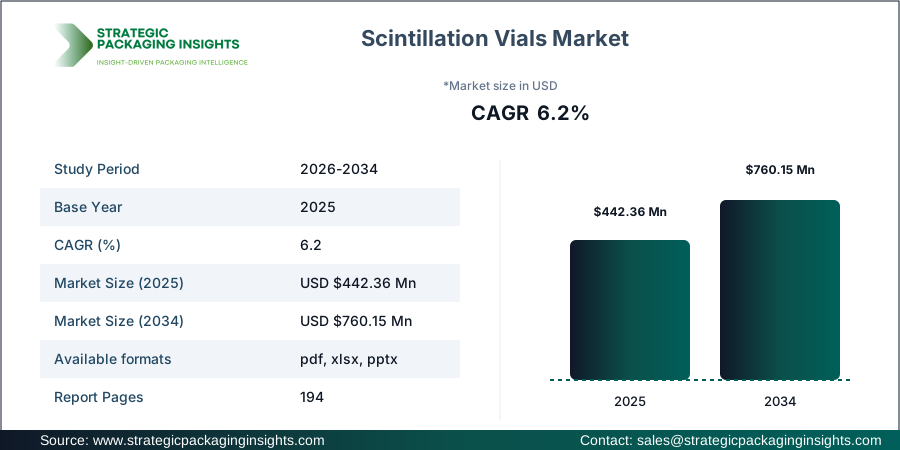
The scintillation vials market was valued at $442.36 million in 2025 and is projected to reach $760.15 million by 2034, growing at a CAGR of 6.2% during the forecast period 2026-2034. This growth is driven by increasing demand in various applications such as liquid scintillation counting, radiochemical analysis, and environmental testing. The market is witnessing a surge in demand due to advancements in research methodologies and the growing need for precise and reliable measurement tools in laboratories. The rise in pharmaceutical research and development activities further propels the demand for scintillation vials, as they are essential for accurate sample analysis.
Despite the promising growth trajectory, the market faces challenges such as stringent regulatory requirements and the high cost of raw materials, which could potentially hinder market expansion. However, the increasing focus on environmental testing and the rising number of diagnostic labs globally present significant growth opportunities. The market's potential is further enhanced by technological advancements in vial manufacturing, which aim to improve the durability and efficiency of scintillation vials. As the market evolves, companies are focusing on developing innovative products to meet the diverse needs of end-users, thereby driving market growth.
Report Scope
| Attributes | Details |
| Report Title | Scintillation Vials Market Size, Future Growth and Forecast 2034 |
| By Material Type | Glass, Plastic, Borosilicate Glass |
| By Capacity | Below 10 ml, 10–20 ml, Above 20 ml |
| By Application | Liquid Scintillation Counting, Radiochemical Analysis, Environmental Testing |
| By End Use | Research Laboratories, Pharmaceutical Companies, Academic Institutes, Diagnostic Labs |
| Region | Asia Pacific, North America, Latin America, Europe, Middle East & Africa |
| Base Year | 2025 |
| Historic Period | 2018-2024 |
| Forecast Period | 2026-2034 |
| Number of Pages | 194 |
| Customization Available | Yes* |
Opportunities & Threats
The scintillation vials market presents numerous opportunities, particularly in the realm of environmental testing. With increasing global awareness about environmental conservation and the need for pollution control, the demand for scintillation vials in environmental testing is expected to rise significantly. This trend is further supported by government regulations mandating regular environmental assessments, which necessitate the use of precise measurement tools like scintillation vials. Additionally, the growing pharmaceutical industry, driven by the need for new drug development and testing, offers substantial growth prospects for the market. As pharmaceutical companies expand their research capabilities, the demand for high-quality scintillation vials is anticipated to increase, providing lucrative opportunities for market players.
Another significant opportunity lies in the academic sector, where the use of scintillation vials is crucial for various research activities. As academic institutions enhance their research infrastructure and focus on advanced scientific studies, the demand for scintillation vials is expected to grow. This is particularly relevant in developing regions where educational institutions are increasingly investing in research facilities. Furthermore, the trend towards miniaturization in laboratory equipment presents an opportunity for manufacturers to innovate and develop smaller, more efficient scintillation vials that cater to the evolving needs of end-users.
However, the market is not without its threats. One of the primary challenges is the stringent regulatory landscape governing the use of scintillation vials, particularly in pharmaceutical and environmental applications. Compliance with these regulations can be costly and time-consuming, potentially deterring new entrants and limiting market growth. Additionally, fluctuations in raw material prices, particularly for glass and plastic, pose a threat to market stability. These price variations can impact the overall production cost, affecting the profitability of manufacturers. To mitigate these threats, companies are focusing on developing cost-effective production techniques and exploring alternative materials to ensure sustainable growth.
Drivers & Challenges
The scintillation vials market is primarily driven by the increasing demand for accurate and reliable measurement tools in various scientific applications. The rise in pharmaceutical research and development activities is a significant driver, as scintillation vials are essential for precise sample analysis in drug testing and development. Additionally, the growing focus on environmental testing, driven by stringent government regulations and the need for pollution control, is propelling the demand for scintillation vials. The market is also benefiting from advancements in research methodologies, which require high-quality vials for accurate data collection and analysis. As laboratories and research institutions continue to expand their capabilities, the demand for scintillation vials is expected to grow, driving market expansion.
Technological advancements in vial manufacturing are another key driver of market growth. Manufacturers are focusing on developing innovative products that enhance the durability and efficiency of scintillation vials, catering to the evolving needs of end-users. The trend towards miniaturization in laboratory equipment is also driving innovation in the market, as companies strive to develop smaller, more efficient vials that meet the demands of modern research methodologies. Furthermore, the increasing adoption of automation in laboratories is boosting the demand for high-quality scintillation vials, as automated systems require precise and reliable measurement tools for accurate data collection.
Despite these drivers, the market faces several challenges that could hinder its growth. One of the primary challenges is the high cost of raw materials, particularly for glass and plastic, which can impact the overall production cost and affect the profitability of manufacturers. Additionally, the stringent regulatory landscape governing the use of scintillation vials, particularly in pharmaceutical and environmental applications, poses a challenge for market players. Compliance with these regulations can be costly and time-consuming, potentially deterring new entrants and limiting market growth. To overcome these challenges, companies are focusing on developing cost-effective production techniques and exploring alternative materials to ensure sustainable growth.
Market Share Analysis
The scintillation vials market is characterized by a competitive landscape with several key players vying for market share. Companies such as PerkinElmer, Thermo Fisher Scientific, and DWK Life Sciences are leading the market, leveraging their extensive product portfolios and strong distribution networks to maintain their competitive edge. These companies are focusing on product innovation and strategic partnerships to expand their market presence and cater to the evolving needs of end-users. The competitive landscape is further intensified by the presence of regional players who offer cost-effective solutions, challenging the dominance of established market leaders.
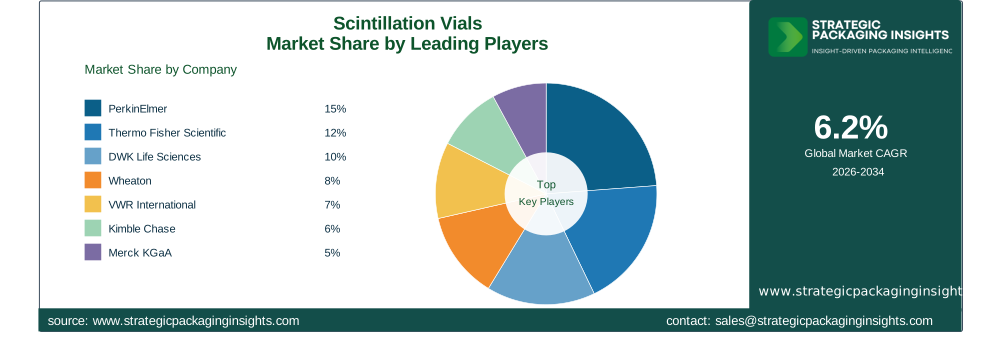
PerkinElmer is a prominent player in the scintillation vials market, known for its innovative product offerings and strong focus on research and development. The company has a significant market share, driven by its extensive product portfolio and strategic partnerships with leading research institutions. Thermo Fisher Scientific is another key player, leveraging its global presence and strong distribution network to maintain its competitive position. The company's focus on product innovation and customer-centric solutions has enabled it to capture a significant share of the market.
DWK Life Sciences is a leading provider of high-quality scintillation vials, known for its commitment to quality and customer satisfaction. The company's strong focus on product development and innovation has enabled it to maintain a competitive edge in the market. Wheaton, a subsidiary of DWK Life Sciences, is also a key player, offering a wide range of scintillation vials that cater to the diverse needs of end-users. VWR International, a part of Avantor, is another major player, known for its extensive product portfolio and strong distribution network.
Kimble Chase, Merck KGaA, Cole-Parmer, Qorpak, and Corning are other notable players in the scintillation vials market. These companies are focusing on expanding their product offerings and enhancing their distribution networks to capture a larger share of the market. The competitive landscape is further characterized by strategic collaborations and partnerships, as companies seek to leverage each other's strengths to drive market growth. As the market continues to evolve, companies are focusing on developing innovative products and solutions to meet the diverse needs of end-users, thereby driving market expansion.
Key Highlights
- The scintillation vials market is projected to grow at a CAGR of 6.2% from 2026 to 2034.
- Increasing demand for environmental testing is a significant growth driver.
- Technological advancements in vial manufacturing are enhancing product efficiency.
- Stringent regulatory requirements pose a challenge for market players.
- Pharmaceutical research and development activities are boosting market demand.
- Key players include PerkinElmer, Thermo Fisher Scientific, and DWK Life Sciences.
- Product innovation and strategic partnerships are key competitive strategies.
- Fluctuations in raw material prices impact market stability.
- Growing focus on automation in laboratories is driving demand for high-quality vials.
Top Countries Insights
In the scintillation vials market, the United States holds a significant share, driven by the presence of major pharmaceutical companies and advanced research facilities. The market in the U.S. is expected to grow at a CAGR of 5%, supported by government initiatives to promote research and development activities. The demand for scintillation vials in the U.S. is further propelled by the increasing focus on environmental testing and pollution control measures.
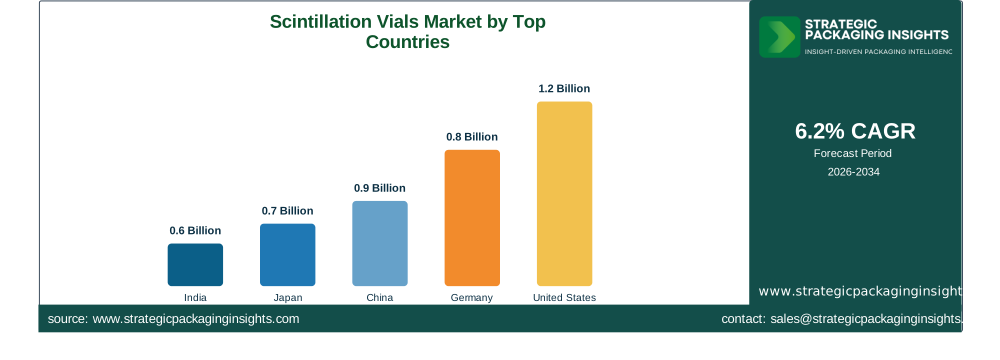
Germany is another key market for scintillation vials, with a strong focus on pharmaceutical research and development. The market in Germany is projected to grow at a CAGR of 4%, driven by the presence of leading pharmaceutical companies and research institutions. The country's stringent regulatory framework for environmental testing also supports the demand for scintillation vials.
China is emerging as a significant market for scintillation vials, with a projected CAGR of 7%. The country's growing pharmaceutical industry and increasing investment in research and development activities are key growth drivers. Additionally, government initiatives to promote environmental conservation and pollution control are boosting the demand for scintillation vials in China.
In Japan, the scintillation vials market is expected to grow at a CAGR of 6%, driven by advancements in research methodologies and the increasing focus on pharmaceutical research. The country's strong regulatory framework for environmental testing further supports market growth.
India is also witnessing significant growth in the scintillation vials market, with a projected CAGR of 8%. The country's expanding pharmaceutical industry and increasing investment in research infrastructure are key growth drivers. Additionally, government initiatives to promote environmental testing and pollution control are boosting the demand for scintillation vials in India.
Scintillation Vials Market Segments Insights

Material Type Analysis
The scintillation vials market is segmented by material type into glass, plastic, and borosilicate glass. Glass scintillation vials are widely used due to their excellent chemical resistance and transparency, making them ideal for various laboratory applications. The demand for glass vials is driven by their durability and ability to provide accurate measurement results. However, the high cost of glass vials and their susceptibility to breakage are challenges that manufacturers are addressing through product innovation and the development of more robust glass materials.
Plastic scintillation vials are gaining popularity due to their cost-effectiveness and lightweight nature. These vials are particularly favored in applications where breakage is a concern, such as in field testing and transportation. The demand for plastic vials is further supported by advancements in plastic manufacturing technologies, which have improved the chemical resistance and transparency of plastic vials. Borosilicate glass vials, known for their superior thermal and chemical resistance, are preferred in high-temperature applications and environments where chemical exposure is a concern. The demand for borosilicate glass vials is driven by their ability to withstand harsh conditions, making them ideal for use in pharmaceutical and environmental testing applications.
Capacity Analysis
The scintillation vials market is segmented by capacity into below 10 ml, 10-20 ml, and above 20 ml. Vials with a capacity below 10 ml are commonly used in applications requiring small sample volumes, such as radiochemical analysis and environmental testing. The demand for these vials is driven by the increasing focus on miniaturization in laboratory equipment and the need for precise measurement tools in small-scale applications. Vials with a capacity of 10-20 ml are widely used in liquid scintillation counting and other laboratory applications that require moderate sample volumes. The demand for these vials is supported by their versatility and ability to accommodate a wide range of sample types.
Vials with a capacity above 20 ml are preferred in applications requiring larger sample volumes, such as pharmaceutical research and development. The demand for these vials is driven by the increasing focus on large-scale testing and the need for accurate measurement tools in high-volume applications. As laboratories and research institutions continue to expand their capabilities, the demand for vials with larger capacities is expected to grow, driving market expansion. Manufacturers are focusing on developing innovative products that cater to the diverse needs of end-users, ensuring that they can provide accurate and reliable measurement results across a wide range of applications.
Application Analysis
The scintillation vials market is segmented by application into liquid scintillation counting, radiochemical analysis, and environmental testing. Liquid scintillation counting is a key application for scintillation vials, driven by the need for accurate measurement tools in various scientific and research applications. The demand for scintillation vials in this application is supported by advancements in research methodologies and the increasing focus on precise data collection and analysis. Radiochemical analysis is another significant application, with scintillation vials playing a crucial role in the accurate measurement of radioactive samples. The demand for vials in this application is driven by the growing focus on nuclear research and the need for reliable measurement tools in radiochemical analysis.
Environmental testing is a rapidly growing application for scintillation vials, driven by increasing global awareness about environmental conservation and the need for pollution control. The demand for scintillation vials in environmental testing is supported by government regulations mandating regular environmental assessments and the need for precise measurement tools in pollution control measures. As environmental testing becomes more prevalent, the demand for high-quality scintillation vials is expected to grow, driving market expansion. Manufacturers are focusing on developing innovative products that cater to the evolving needs of end-users, ensuring that they can provide accurate and reliable measurement results across a wide range of applications.
End Use Analysis
The scintillation vials market is segmented by end use into research laboratories, pharmaceutical companies, academic institutes, and diagnostic labs. Research laboratories are a key end-user segment, driven by the increasing focus on scientific research and the need for accurate measurement tools in various applications. The demand for scintillation vials in research laboratories is supported by advancements in research methodologies and the growing focus on precise data collection and analysis. Pharmaceutical companies are another significant end-user segment, with scintillation vials playing a crucial role in drug testing and development. The demand for vials in this segment is driven by the increasing focus on pharmaceutical research and development and the need for reliable measurement tools in drug testing.
Academic institutes are also a key end-user segment, with scintillation vials playing a crucial role in various research activities. The demand for vials in this segment is driven by the increasing focus on scientific research and the need for accurate measurement tools in academic studies. Diagnostic labs are another significant end-user segment, with scintillation vials playing a crucial role in various diagnostic applications. The demand for vials in this segment is driven by the increasing focus on diagnostic testing and the need for reliable measurement tools in diagnostic applications. As the market continues to evolve, manufacturers are focusing on developing innovative products that cater to the diverse needs of end-users, ensuring that they can provide accurate and reliable measurement results across a wide range of applications.
Scintillation Vials Market Segments
The Scintillation Vials market has been segmented on the basis ofBy Material Type
- Glass
- Plastic
- Borosilicate Glass
By Capacity
- Below 10 ml
- 10–20 ml
- Above 20 ml
By Application
- Liquid Scintillation Counting
- Radiochemical Analysis
- Environmental Testing
By End Use
- Research Laboratories
- Pharmaceutical Companies
- Academic Institutes
- Diagnostic Labs
Region
- Asia Pacific
- North America
- Latin America
- Europe
- Middle East & Africa




