


Scented Paper Market Outlook
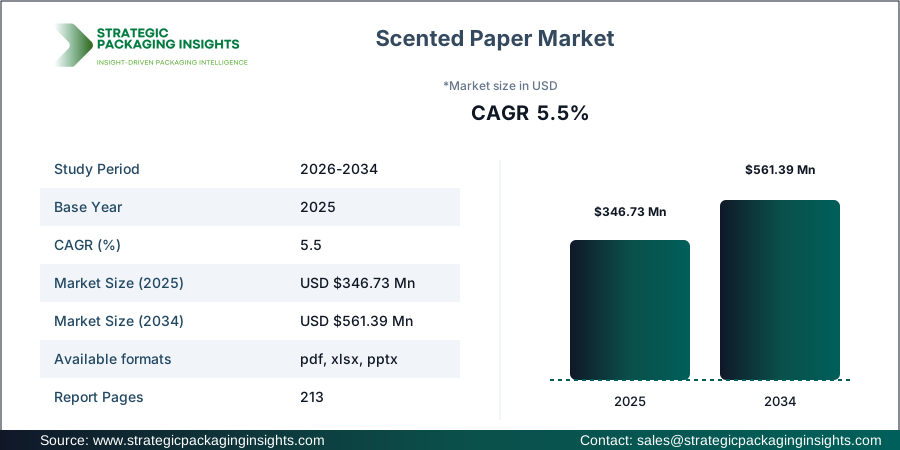
The Scented Paper market size was valued at USD 346.73 million in 2025 and is anticipated to reach USD 561.39 million by 2034, growing at a CAGR of 5.5% during the forecast period according to Strategic Packaging Insights. This growth is driven by increasing consumer demand for personalized and luxurious packaging solutions, particularly in the cosmetics and luxury goods sectors. Companies like Sappi and Mondi are leading the charge by innovating in fragrance-infused paper products that cater to evolving consumer preferences. The market's expansion is further supported by advancements in scent technology, allowing for more diverse and long-lasting fragrance options.
One of the most impactful drivers of the Scented Paper market is the rising trend of experiential marketing, where brands use sensory elements to enhance consumer engagement. According to industry reports, consumers are more likely to remember and engage with brands that offer a multi-sensory experience, which includes scent. This trend is particularly strong in the retail and advertising sectors, where scented paper is used to create memorable unboxing experiences and promotional materials. Companies like Fedrigoni and Neenah Paper are capitalizing on this trend by offering customizable scented paper solutions that align with brand identities and marketing strategies.
Report Scope
| Attributes | Details |
| Report Title | Scented Paper Market Size, Future Growth and Forecast 2034 |
| By Product Type | Fragrance-Infused Paper, Scented Tissue Paper, Scented Gift Paper, Scented Inserts |
| By Application | Packaging Inserts, Gift Wrap, Advertising, Personal Care |
| By End Use | Retail, Cosmetics, Luxury Goods, Stationery |
| By Fragrance Type | Floral, Citrus, Woody, Custom |
| Region | Asia Pacific, North America, Latin America, Europe, Middle East & Africa |
| Base Year | 2025 |
| Historic Period | 2018-2024 |
| Forecast Period | 2026-2034 |
| Number of Pages | 213 |
| Customization Available | Yes* |
Sustainability & Circular Economy Analysis
Sustainability initiatives are increasingly shaping the scented paper market, as consumers and brands alike prioritize eco-friendly practices. The use of recyclable materials and the development of biodegradable scented papers are becoming standard practices among leading manufacturers. Companies like Stora Enso and International Paper are investing in sustainable forestry and production processes to reduce their carbon footprint and meet regulatory requirements. These efforts not only enhance brand reputation but also align with consumer preferences for environmentally responsible products.
The circular economy is influencing packaging design and manufacturing decisions, with a focus on reducing waste and promoting reuse. Scented paper products are being designed to be lightweight and recyclable, minimizing environmental impact while maintaining quality and functionality. Extended Producer Responsibility (EPR) regulations are encouraging manufacturers to take greater accountability for the lifecycle of their products, driving innovation in sustainable packaging solutions. This shift is evident in the strategies of companies like Asia Pulp & Paper, which are integrating circular economy principles into their operations.
Consumer preferences for sustainability are also impacting investment decisions and supply chain strategies. Brands are increasingly seeking partnerships with suppliers who demonstrate strong ESG (Environmental, Social, and Governance) credentials. This trend is fostering collaboration across the value chain, from raw material sourcing to distribution, as companies work together to achieve sustainability goals. The emphasis on eco-friendly materials and processes is expected to enhance the long-term competitiveness of the scented paper market, as consumers continue to prioritize sustainability in their purchasing decisions.
Packaging Value Chain & Supply Chain Analysis
The packaging value chain for scented paper involves a complex ecosystem of raw material suppliers, converters, manufacturers, and distributors. Raw material sourcing is critical, with companies like Glatfelter and Twin Rivers Paper focusing on sustainable forestry practices to ensure a steady supply of high-quality pulp. Packaging converters play a key role in transforming raw materials into finished products, utilizing advanced machinery and technology to enhance production efficiency and product quality.
Supply chain efficiency is paramount in the scented paper market, as it directly impacts cost competitiveness and market responsiveness. Manufacturers are investing in logistics and distribution channels to optimize inventory management and reduce lead times. Strategic partnerships with logistics providers and retailers are essential for ensuring timely delivery and meeting consumer demand. Companies like Koehler Paper are leveraging global sourcing strategies to enhance supply chain resilience and mitigate risks associated with raw material availability and transportation challenges.
Recycling networks are becoming increasingly important in the scented paper supply chain, as brands and manufacturers seek to close the loop on packaging waste. Procurement strategies are evolving to prioritize recycled and recyclable materials, aligning with consumer expectations and regulatory requirements. Localization efforts are also gaining traction, with companies focusing on regional production and distribution to reduce carbon emissions and enhance supply chain agility. These strategies are critical for maintaining competitiveness in a market where sustainability and efficiency are key differentiators.
Opportunities & Threats
The scented paper market presents significant opportunities for growth, driven by the increasing demand for personalized and luxurious packaging solutions. The rise of e-commerce and online retailing is creating new avenues for scented paper products, as brands seek to enhance the unboxing experience and differentiate themselves in a crowded market. The cosmetics and luxury goods sectors, in particular, are poised for growth, as consumers continue to seek premium and unique packaging options. Companies that can innovate and offer customizable scented paper solutions are well-positioned to capitalize on these opportunities.
Another opportunity lies in the expansion of scented paper applications beyond traditional packaging. The advertising and personal care sectors are exploring the use of scented paper for promotional materials and product inserts, creating new revenue streams for manufacturers. The ability to offer a multi-sensory experience is becoming a key differentiator for brands, and scented paper is an effective tool for achieving this. Companies that can develop innovative applications and leverage scent technology to enhance consumer engagement will likely see increased demand for their products.
However, the scented paper market also faces challenges, particularly in terms of regulatory compliance and environmental concerns. Stringent regulations on volatile organic compounds (VOCs) and other chemicals used in fragrance production can impact manufacturing processes and product formulations. Companies must navigate these regulatory hurdles while maintaining product quality and performance. Additionally, the need for sustainable and eco-friendly packaging solutions is driving manufacturers to invest in research and development, which can increase costs and impact profitability. Balancing these challenges with the need for innovation and market competitiveness is a key consideration for industry players.
Drivers & Challenges
One of the primary drivers of the scented paper market is the growing consumer preference for personalized and experiential products. As consumers increasingly seek unique and memorable experiences, brands are leveraging scented paper to enhance their packaging and marketing strategies. The ability to customize fragrances and align them with brand identities is a significant advantage, allowing companies to create a strong emotional connection with consumers. This trend is particularly evident in the luxury goods and cosmetics sectors, where scent plays a crucial role in brand differentiation and consumer engagement.
Technological advancements in fragrance encapsulation and delivery systems are also driving market growth. Innovations in scent technology are enabling manufacturers to offer a wider range of fragrance options and improve the longevity and intensity of scented paper products. This is enhancing the appeal of scented paper across various applications, from gift wrap to advertising materials. Companies that invest in research and development to stay at the forefront of scent technology are likely to gain a competitive edge in the market.
Despite these drivers, the scented paper market faces challenges related to cost and sustainability. The production of scented paper can be resource-intensive, and the need for high-quality raw materials can drive up costs. Additionally, the emphasis on sustainability and eco-friendly practices requires manufacturers to invest in new technologies and processes, which can impact profitability. Companies must balance these challenges with the need to meet consumer expectations and regulatory requirements, while also maintaining competitiveness in a dynamic market environment.
Market Share Analysis
The competitive landscape of the scented paper market is characterized by the presence of several key players, each striving to capture a significant share of the market. Companies like Sappi, Mondi, and Fedrigoni are leading the market with their innovative product offerings and strong focus on sustainability. These companies have established themselves as leaders in the industry by investing in research and development to enhance product quality and meet evolving consumer demands. Their commitment to sustainability and eco-friendly practices has also helped them gain a competitive edge in the market.
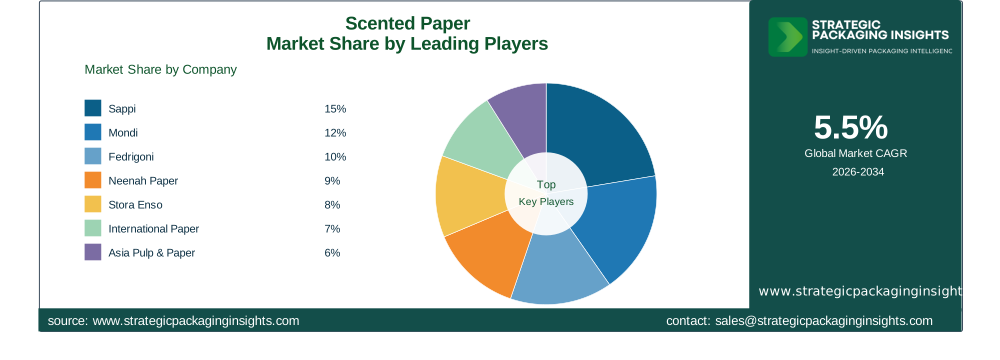
Neenah Paper and Stora Enso are also prominent players in the scented paper market, known for their high-quality products and strong distribution networks. These companies have a global presence and are well-positioned to capitalize on the growing demand for scented paper products across various regions. Their focus on innovation and customer-centric solutions has enabled them to maintain a strong market position and expand their product offerings to meet diverse consumer needs.
International Paper and Asia Pulp & Paper are key players in the market, leveraging their extensive experience and expertise in the paper industry to offer a wide range of scented paper products. These companies have a strong focus on sustainability and are committed to reducing their environmental impact through responsible sourcing and production practices. Their ability to offer customized solutions and meet specific customer requirements has helped them build strong relationships with clients and enhance their market presence.
Glatfelter, Twin Rivers Paper, and Koehler Paper are also notable players in the scented paper market, known for their innovative product offerings and commitment to quality. These companies have a strong focus on research and development, enabling them to stay at the forefront of scent technology and offer a diverse range of fragrance options. Their emphasis on sustainability and eco-friendly practices has also helped them gain a competitive edge in the market, as consumers increasingly prioritize environmentally responsible products.
Key Highlights
- Market Size: The scented paper market was valued at USD 346.73 million in 2025 and is projected to reach USD 561.39 million by 2034.
- Growth Rate: The market is expected to grow at a CAGR of 5.5% during the forecast period.
- Leading Companies: Key players include Sappi, Mondi, Fedrigoni, Neenah Paper, and Stora Enso.
- Product Innovation: Advancements in fragrance technology are driving product innovation and market growth.
- Sustainability Focus: Increasing emphasis on eco-friendly practices and sustainable packaging solutions.
- Regional Growth: Asia Pacific is expected to witness significant growth due to rising consumer demand.
- Application Expansion: Growing use of scented paper in advertising and personal care sectors.
Scented Paper Market Segments Insights

Product Type Analysis
The scented paper market is segmented by product type into fragrance-infused paper, scented tissue paper, scented gift paper, and scented inserts. Fragrance-infused paper is gaining popularity due to its versatility and ability to enhance the sensory experience of various products. This segment is driven by the increasing demand for personalized and luxurious packaging solutions, particularly in the cosmetics and luxury goods sectors. Companies like Sappi and Mondi are leading the charge by innovating in fragrance-infused paper products that cater to evolving consumer preferences.
Scented tissue paper is another key segment, widely used in personal care and gift wrapping applications. The demand for scented tissue paper is driven by the growing trend of experiential marketing, where brands use sensory elements to enhance consumer engagement. This trend is particularly strong in the retail and advertising sectors, where scented paper is used to create memorable unboxing experiences and promotional materials. Companies like Fedrigoni and Neenah Paper are capitalizing on this trend by offering customizable scented paper solutions that align with brand identities and marketing strategies.
Application Analysis
The application segment of the scented paper market includes packaging inserts, gift wrap, advertising, and personal care. Packaging inserts are a significant application, as they enhance the unboxing experience and create a lasting impression on consumers. The use of scented paper in gift wrap is also gaining traction, as consumers seek unique and memorable packaging solutions for special occasions. The advertising sector is exploring the use of scented paper for promotional materials, creating new revenue streams for manufacturers.
Personal care is another growing application, with scented paper being used in product inserts and packaging to enhance the sensory experience. The ability to offer a multi-sensory experience is becoming a key differentiator for brands, and scented paper is an effective tool for achieving this. Companies that can develop innovative applications and leverage scent technology to enhance consumer engagement will likely see increased demand for their products. The expansion of scented paper applications beyond traditional packaging is creating new opportunities for growth in the market.
End Use Analysis
The end-use segment of the scented paper market includes retail, cosmetics, luxury goods, and stationery. The retail sector is a major end-user, driven by the increasing demand for personalized and luxurious packaging solutions. The cosmetics and luxury goods sectors are also significant end-users, as consumers continue to seek premium and unique packaging options. The ability to customize fragrances and align them with brand identities is a significant advantage, allowing companies to create a strong emotional connection with consumers.
Stationery is another important end-use segment, with scented paper being used in a variety of applications, from notebooks to greeting cards. The demand for scented stationery is driven by the growing trend of experiential marketing, where brands use sensory elements to enhance consumer engagement. Companies that can offer innovative and customizable scented paper solutions are well-positioned to capitalize on these opportunities. The expansion of scented paper applications beyond traditional packaging is creating new opportunities for growth in the market.
Fragrance Type Analysis
The fragrance type segment of the scented paper market includes floral, citrus, woody, and custom fragrances. Floral fragrances are the most popular, driven by their widespread appeal and versatility. The demand for floral fragrances is particularly strong in the cosmetics and luxury goods sectors, where they are used to create a luxurious and memorable sensory experience. Companies like Sappi and Mondi are leading the charge by offering a wide range of floral fragrance options to cater to diverse consumer preferences.
Citrus and woody fragrances are also gaining popularity, driven by their unique and refreshing scent profiles. The demand for these fragrances is particularly strong in the personal care and advertising sectors, where they are used to create a distinctive and memorable sensory experience. Custom fragrances are another growing segment, as consumers increasingly seek personalized and unique scent options. Companies that can offer a wide range of fragrance options and customize them to meet specific consumer preferences are well-positioned to capitalize on these opportunities.
Scented Paper Market Segments
The Scented Paper market has been segmented on the basis ofBy Product Type
- Fragrance-Infused Paper
- Scented Tissue Paper
- Scented Gift Paper
- Scented Inserts
By Application
- Packaging Inserts
- Gift Wrap
- Advertising
- Personal Care
By End Use
- Retail
- Cosmetics
- Luxury Goods
- Stationery
By Fragrance Type
- Floral
- Citrus
- Woody
- Custom
Region
- Asia Pacific
- North America
- Latin America
- Europe
- Middle East & Africa




