


Sausage Casing Market Outlook
The sausage casing market was valued at $4.13 billion in 2025 and is projected to reach $6.08 billion by 2034, growing at a CAGR of 4.4% during the forecast period 2026-2034. This market is driven by the increasing demand for processed meat products, which are becoming a staple in many diets worldwide. The growth is further fueled by the rising popularity of gourmet sausages and the expansion of the foodservice industry, which is increasingly incorporating sausages into their menus. Additionally, technological advancements in casing production are enhancing product quality and shelf life, further boosting market growth.
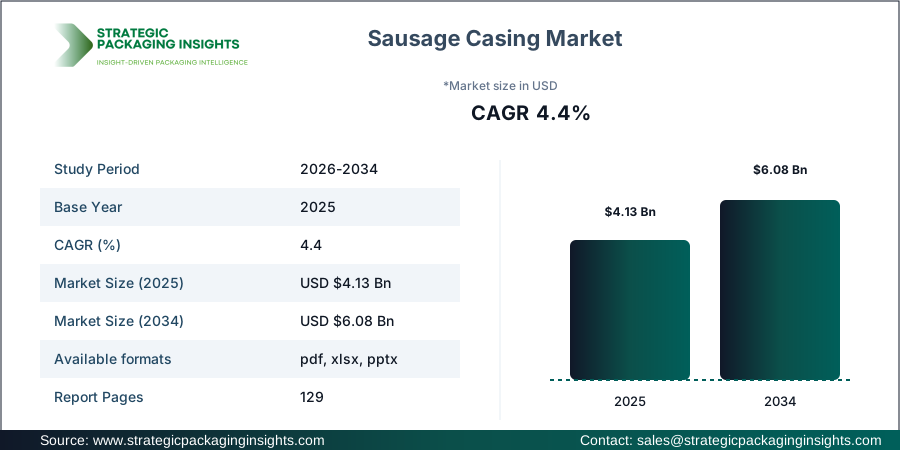
However, the market faces challenges such as stringent regulations regarding food safety and quality standards, which can hinder growth. The high cost of natural casings compared to synthetic alternatives also poses a restraint, as cost-conscious manufacturers may opt for cheaper options. Despite these challenges, the market holds significant growth potential, particularly in emerging economies where the demand for meat products is on the rise. Innovations in casing materials and the development of eco-friendly casings are expected to open new avenues for market expansion.
Report Scope
| Attributes | Details |
| Report Title | Sausage Casing Market Size, Future Growth and Forecast 2034 |
| Product Type | Natural Casings, Collagen Casings, Cellulose Casings, Plastic Casings |
| Source | Hog, Sheep, Beef, Synthetic |
| Application | Fresh Sausages, Cooked Sausages, Smoked Sausages |
| End Use | Meat Processors, Sausage Manufacturers, Foodservice, Retail |
| Region | Asia Pacific, North America, Latin America, Europe, Middle East & Africa |
| Base Year | 2025 |
| Historic Period | 2018-2024 |
| Forecast Period | 2026-2034 |
| Number of Pages | 129 |
| Customization Available | Yes* |
Opportunities & Threats
The sausage casing market presents numerous opportunities, particularly with the growing trend towards premium and gourmet sausages. Consumers are increasingly seeking unique flavors and high-quality products, which drives demand for natural and collagen casings that offer superior taste and texture. Additionally, the rise of health-conscious consumers is leading to the development of low-fat and organic sausage products, creating further opportunities for casing manufacturers to innovate and cater to these niche markets. The expansion of the foodservice industry, particularly in developing regions, also presents significant growth opportunities as restaurants and fast-food chains incorporate more sausage-based dishes into their offerings.
Another opportunity lies in the development of sustainable and biodegradable casings. With increasing environmental concerns, there is a growing demand for eco-friendly packaging solutions, including sausage casings. Manufacturers investing in research and development to create casings from renewable resources or biodegradable materials can tap into this emerging market segment. Furthermore, advancements in technology are enabling the production of casings with improved properties, such as enhanced strength and elasticity, which can further drive market growth.
Despite these opportunities, the market faces threats from regulatory challenges and fluctuating raw material prices. Stringent food safety regulations can increase production costs and limit market entry for new players. Additionally, the volatility in prices of raw materials, such as collagen and cellulose, can impact profit margins for casing manufacturers. The competition from alternative protein sources, such as plant-based sausages, also poses a threat as they gain popularity among health-conscious and environmentally aware consumers.
Drivers & Challenges
The primary drivers of the sausage casing market include the increasing global demand for processed meat products and the expansion of the foodservice industry. As urbanization and busy lifestyles lead to a preference for convenient and ready-to-eat foods, sausages have become a popular choice among consumers. This trend is particularly evident in developing regions, where rising disposable incomes and changing dietary habits are driving the demand for meat products. Additionally, the growing popularity of gourmet and specialty sausages is boosting the demand for high-quality casings that enhance the flavor and appearance of the final product.
Technological advancements in casing production are also driving market growth. Innovations in manufacturing processes have led to the development of casings with improved properties, such as enhanced strength, elasticity, and shelf life. These advancements not only improve the quality of the final product but also reduce production costs, making sausages more affordable for consumers. Furthermore, the increasing focus on food safety and quality standards is driving manufacturers to invest in high-quality casings that meet regulatory requirements and consumer expectations.
However, the market faces several challenges, including regulatory hurdles and competition from alternative protein sources. Stringent food safety regulations can increase production costs and limit market entry for new players. Additionally, the rising popularity of plant-based sausages poses a challenge to traditional sausage manufacturers, as consumers become more health-conscious and environmentally aware. The volatility in raw material prices, such as collagen and cellulose, can also impact profit margins for casing manufacturers, making it essential for companies to adopt cost-effective production methods and diversify their raw material sources.
Market Share Analysis
The sausage casing market is characterized by a competitive landscape with several key players dominating the industry. Companies such as Viscofan, Devro, and ViskoTeepak hold significant market shares due to their extensive product portfolios and strong distribution networks. These companies have established themselves as leaders in the market by consistently investing in research and development to innovate and improve their product offerings. Their focus on quality and customer satisfaction has enabled them to maintain a competitive edge in the market.
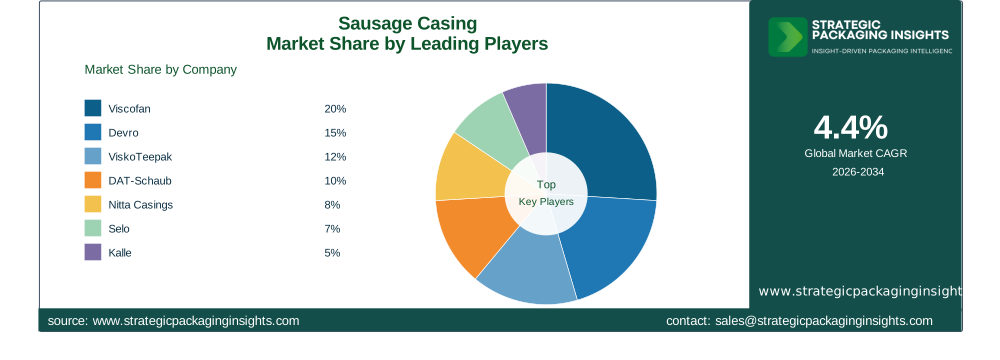
Viscofan is one of the leading players in the sausage casing market, known for its wide range of natural and synthetic casings. The company's strong global presence and commitment to sustainability have contributed to its success in the market. Devro, another major player, specializes in collagen casings and has a strong focus on innovation and product development. The company's emphasis on quality and customer service has helped it maintain a strong position in the market.
ViskoTeepak is a key player in the market, offering a diverse range of casing products, including cellulose and fibrous casings. The company's focus on sustainability and innovation has enabled it to capture a significant share of the market. DAT-Schaub, a subsidiary of Danish Crown, is also a prominent player in the market, known for its high-quality natural casings and strong distribution network. The company's commitment to quality and customer satisfaction has helped it maintain a competitive edge in the market.
Other notable players in the market include Nitta Casings, Selo, Kalle, Oversea Casing, Syracuse Casing, and Natural Casing Company. These companies have established themselves as key players in the market by offering a wide range of casing products and focusing on quality and customer service. Their strong distribution networks and commitment to innovation have enabled them to capture significant market shares and maintain a competitive edge in the industry.
Key Highlights
- The sausage casing market is projected to grow from $4.13 billion in 2025 to $6.08 billion by 2034, at a CAGR of 4.4%.
- Natural and collagen casings are gaining popularity due to their superior taste and texture.
- Technological advancements in casing production are enhancing product quality and shelf life.
- The rise of gourmet and specialty sausages is driving demand for high-quality casings.
- Eco-friendly and biodegradable casings are emerging as a new market segment.
- Stringent food safety regulations pose a challenge to market growth.
- Key players in the market include Viscofan, Devro, and ViskoTeepak.
- The foodservice industry's expansion is boosting demand for sausage casings.
- Emerging economies present significant growth opportunities for the market.
- Competition from plant-based sausages poses a threat to traditional sausage manufacturers.
Top Countries Insights
In the sausage casing market, the United States holds a significant share, driven by the high demand for processed meat products and the presence of major market players. The market in the U.S. is expected to grow at a CAGR of 3%, supported by the expansion of the foodservice industry and the increasing popularity of gourmet sausages. Regulatory support for food safety and quality standards also contributes to market growth, although stringent regulations can pose challenges for manufacturers.
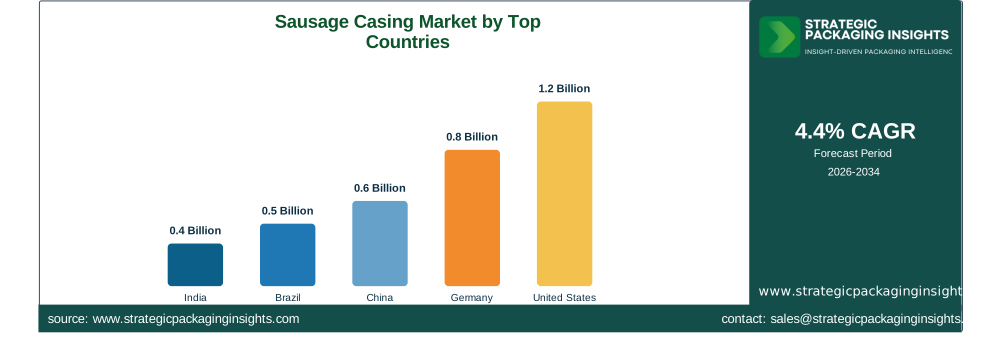
Germany is another key market for sausage casings, with a strong tradition of sausage consumption and production. The market is expected to grow at a CAGR of 4%, driven by the demand for high-quality natural and collagen casings. The presence of leading casing manufacturers and a well-established meat processing industry further support market growth. However, the market faces challenges from rising raw material costs and competition from plant-based alternatives.
China represents a rapidly growing market for sausage casings, with a projected CAGR of 6%. The increasing urbanization and rising disposable incomes are driving the demand for processed meat products, including sausages. The expansion of the foodservice industry and the growing popularity of Western-style sausages are also contributing to market growth. However, the market faces challenges from regulatory hurdles and the need for high-quality casings to meet consumer expectations.
Brazil is a key market in Latin America, with a strong tradition of sausage consumption and production. The market is expected to grow at a CAGR of 5%, driven by the demand for high-quality casings and the expansion of the foodservice industry. The presence of major market players and a well-established meat processing industry further support market growth. However, the market faces challenges from rising raw material costs and competition from plant-based alternatives.
India is an emerging market for sausage casings, with a projected CAGR of 7%. The increasing urbanization and rising disposable incomes are driving the demand for processed meat products, including sausages. The expansion of the foodservice industry and the growing popularity of Western-style sausages are also contributing to market growth. However, the market faces challenges from regulatory hurdles and the need for high-quality casings to meet consumer expectations.
Sausage Casing Market Segments Insights

Product Type Analysis
The sausage casing market is segmented by product type into natural casings, collagen casings, cellulose casings, and plastic casings. Natural casings, derived from animal intestines, are favored for their superior taste and texture, making them a popular choice for gourmet and specialty sausages. However, their high cost and limited availability can be a constraint for manufacturers. Collagen casings, made from animal collagen, offer a more affordable alternative with consistent quality and are widely used in mass production. Cellulose casings, derived from plant fibers, are primarily used for skinless sausages and offer ease of use and cost-effectiveness. Plastic casings, although less common, provide durability and are used for specific applications where strength and shelf life are critical.

Source Analysis
The market is also segmented by source into hog, sheep, beef, and synthetic casings. Hog casings are the most traditional and widely used, known for their strength and versatility. Sheep casings are preferred for smaller sausages due to their delicate texture and flavor. Beef casings, although less common, are used for larger sausages and specialty products. Synthetic casings, including collagen and cellulose, offer a cost-effective and consistent alternative to natural casings, with the added benefit of being customizable in terms of size and shape. The choice of casing source often depends on the specific requirements of the sausage product and the target market.

Application Analysis
By application, the sausage casing market is divided into fresh sausages, cooked sausages, and smoked sausages. Fresh sausages, which are uncooked and require refrigeration, are popular for their natural flavor and texture. Cooked sausages, which are pre-cooked and ready to eat, offer convenience and are widely consumed in fast-food and ready-to-eat meals. Smoked sausages, known for their distinct flavor and longer shelf life, are favored in regions with a strong tradition of smoked meat products. The choice of casing often depends on the specific application, with natural casings preferred for fresh and smoked sausages, while collagen and cellulose casings are commonly used for cooked sausages.

End Use Analysis
The market is further segmented by end use into meat processors, sausage manufacturers, foodservice, and retail. Meat processors and sausage manufacturers are the primary consumers of sausage casings, using them in the production of a wide range of sausage products. The foodservice industry, including restaurants and catering services, is a significant end user, incorporating sausages into their menus to meet consumer demand for convenient and flavorful meals. The retail segment, including supermarkets and specialty stores, also plays a crucial role in the distribution of sausage products, offering a variety of options to consumers. The choice of casing often depends on the specific requirements of the end user, with natural and collagen casings favored for premium products, while cellulose and plastic casings are used for mass-produced items.

Sausage Casing Market Segments
The Sausage Casing market has been segmented on the basis ofProduct Type
- Natural Casings
- Collagen Casings
- Cellulose Casings
- Plastic Casings
Source
- Hog
- Sheep
- Beef
- Synthetic
Application
- Fresh Sausages
- Cooked Sausages
- Smoked Sausages
End Use
- Meat Processors
- Sausage Manufacturers
- Foodservice
- Retail
Region
- Asia Pacific
- North America
- Latin America
- Europe
- Middle East & Africa




