


Safety Label Market Outlook
The Safety Label market was valued at $5.85 billion in 2025 and is projected to reach $8.56 billion by 2034, growing at a CAGR of 4.3% during the forecast period 2026-2034. This growth is driven by increasing regulatory requirements across various industries, which mandate the use of safety labels to ensure compliance and enhance workplace safety. The demand for safety labels is further fueled by the rising awareness about occupational hazards and the need for effective communication of safety information. As industries continue to prioritize safety and compliance, the market for safety labels is expected to witness significant growth, with technological advancements and innovations in label materials and printing techniques playing a crucial role in shaping the market dynamics.
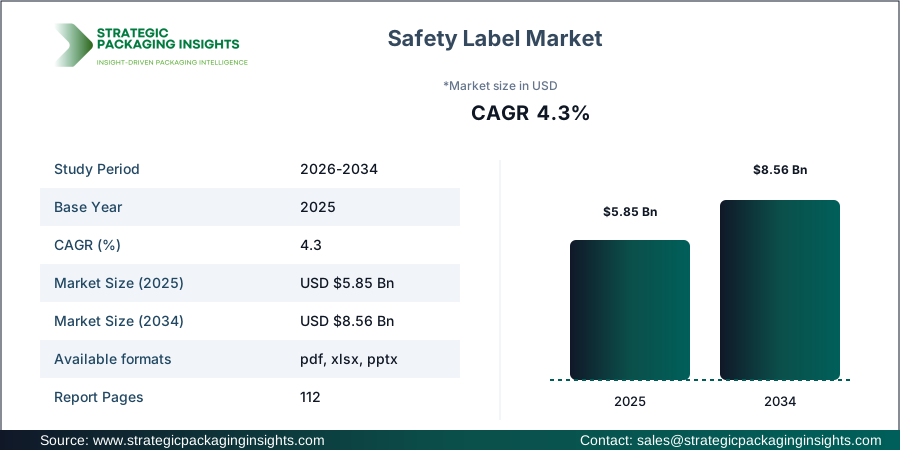
Despite the promising growth prospects, the Safety Label market faces certain challenges that could hinder its expansion. One of the primary restraints is the fluctuating prices of raw materials used in label production, which can impact the overall cost structure and profitability of manufacturers. Additionally, the market is subject to stringent regulatory standards, which can pose compliance challenges for companies operating in different regions. However, the growing emphasis on sustainability and eco-friendly labeling solutions presents significant growth potential for the market. As consumers and industries increasingly prioritize environmentally friendly practices, the demand for sustainable safety labels is expected to rise, offering new opportunities for market players to innovate and differentiate their offerings.
Report Scope
| Attributes | Details |
| Report Title | Safety Label Market Size, Future Growth and Forecast 2034 |
| Product Type | Warning Labels, Hazard Labels, Compliance Labels, Asset Labels |
| Material Type | Polyester, Vinyl, Paper, Polyimide |
| Application | Industrial Safety, Chemical Labeling, Electrical Safety, Logistics |
| End Use | Manufacturing, Chemicals, Healthcare, Utilities |
| Region | Asia Pacific, North America, Latin America, Europe, Middle East & Africa |
| Base Year | 2025 |
| Historic Period | 2018-2024 |
| Forecast Period | 2026-2034 |
| Number of Pages | 112 |
| Customization Available | Yes* |
Opportunities & Threats
The Safety Label market presents numerous opportunities for growth, driven by the increasing adoption of automation and digitalization across various industries. As companies strive to enhance operational efficiency and reduce human errors, the demand for advanced safety labeling solutions is expected to rise. The integration of smart technologies, such as RFID and QR codes, into safety labels offers significant potential for improving traceability and real-time monitoring of assets and equipment. This trend is particularly prominent in industries such as logistics and manufacturing, where the need for accurate and timely information is critical for ensuring safety and compliance. Furthermore, the growing focus on workplace safety and the implementation of stringent safety regulations across emerging economies provide lucrative opportunities for market expansion.
Another key opportunity lies in the development of customized safety labeling solutions tailored to specific industry requirements. As industries become more diverse and complex, the need for specialized safety labels that cater to unique operational challenges is increasing. Companies that can offer innovative and customizable labeling solutions are likely to gain a competitive edge in the market. Additionally, the rising demand for eco-friendly and sustainable labeling options presents a significant opportunity for market players to differentiate their offerings and tap into the growing consumer preference for environmentally conscious products.
However, the Safety Label market also faces certain threats that could impact its growth trajectory. One of the primary challenges is the increasing competition from low-cost manufacturers, particularly in regions such as Asia Pacific, where the availability of cheap labor and raw materials enables the production of cost-effective labeling solutions. This competitive pressure can lead to price wars and margin erosion for established players in the market. Moreover, the rapid pace of technological advancements and the need for continuous innovation pose a threat to companies that fail to keep up with the latest trends and developments in the industry. To mitigate these threats, market players must focus on enhancing their R&D capabilities and investing in cutting-edge technologies to stay ahead of the competition.
Drivers & Challenges
The Safety Label market is primarily driven by the increasing regulatory requirements across various industries, which mandate the use of safety labels to ensure compliance and enhance workplace safety. Governments and regulatory bodies worldwide are implementing stringent safety standards to protect workers and consumers from potential hazards, thereby driving the demand for safety labels. Additionally, the growing awareness about occupational hazards and the need for effective communication of safety information are further propelling the market growth. As industries continue to prioritize safety and compliance, the demand for safety labels is expected to witness significant growth, with technological advancements and innovations in label materials and printing techniques playing a crucial role in shaping the market dynamics.
Another key driver of the Safety Label market is the increasing adoption of automation and digitalization across various industries. As companies strive to enhance operational efficiency and reduce human errors, the demand for advanced safety labeling solutions is expected to rise. The integration of smart technologies, such as RFID and QR codes, into safety labels offers significant potential for improving traceability and real-time monitoring of assets and equipment. This trend is particularly prominent in industries such as logistics and manufacturing, where the need for accurate and timely information is critical for ensuring safety and compliance. Furthermore, the growing focus on workplace safety and the implementation of stringent safety regulations across emerging economies provide lucrative opportunities for market expansion.
Despite the promising growth prospects, the Safety Label market faces certain challenges that could hinder its expansion. One of the primary challenges is the fluctuating prices of raw materials used in label production, which can impact the overall cost structure and profitability of manufacturers. Additionally, the market is subject to stringent regulatory standards, which can pose compliance challenges for companies operating in different regions. However, the growing emphasis on sustainability and eco-friendly labeling solutions presents significant growth potential for the market. As consumers and industries increasingly prioritize environmentally friendly practices, the demand for sustainable safety labels is expected to rise, offering new opportunities for market players to innovate and differentiate their offerings.
Market Share Analysis
The Safety Label market is characterized by a competitive landscape with several key players vying for market share. Companies such as Avery Dennison, 3M, Brady Corporation, CCL Industries, UPM Raflatac, HellermannTyton, Zebra Technologies, SATO Holdings, Multi-Color Corporation, and Resource Label Group are some of the prominent players in the market. These companies are actively engaged in strategic initiatives such as mergers and acquisitions, partnerships, and product innovations to strengthen their market position and expand their product offerings. The competitive rivalry in the market is intense, with players focusing on enhancing their R&D capabilities and investing in cutting-edge technologies to gain a competitive edge.
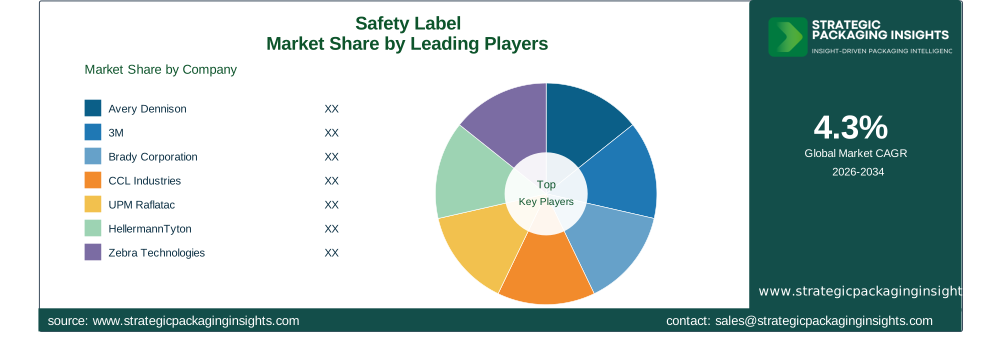
Avery Dennison is a leading player in the Safety Label market, known for its innovative labeling solutions and strong global presence. The company offers a wide range of safety labels catering to various industries, including manufacturing, chemicals, and healthcare. Avery Dennison's focus on sustainability and eco-friendly labeling solutions has helped it gain a competitive advantage in the market. Similarly, 3M is another major player in the market, renowned for its high-quality safety labels and advanced labeling technologies. The company's extensive product portfolio and strong distribution network have enabled it to maintain a significant market share.
Brady Corporation is a key player in the Safety Label market, offering a comprehensive range of safety labeling solutions for industrial and commercial applications. The company's focus on innovation and customer-centric approach has helped it establish a strong foothold in the market. CCL Industries is another prominent player, known for its diverse product offerings and strong customer base. The company's strategic acquisitions and partnerships have enabled it to expand its market presence and enhance its product portfolio. UPM Raflatac is a leading provider of sustainable labeling solutions, with a strong emphasis on environmental responsibility and innovation.
HellermannTyton, Zebra Technologies, SATO Holdings, Multi-Color Corporation, and Resource Label Group are also significant players in the Safety Label market, each with its unique strengths and capabilities. These companies are focused on expanding their product offerings and enhancing their market presence through strategic initiatives and investments in advanced technologies. The competitive landscape of the Safety Label market is dynamic, with players continuously striving to innovate and differentiate their offerings to meet the evolving needs of customers and gain a competitive edge.
Key Highlights
- The Safety Label market is projected to grow from $5.85 billion in 2025 to $8.56 billion by 2034, at a CAGR of 4.3%.
- Increasing regulatory requirements and awareness about occupational hazards are driving the demand for safety labels.
- Technological advancements and innovations in label materials and printing techniques are shaping market dynamics.
- The integration of smart technologies, such as RFID and QR codes, into safety labels is enhancing traceability and monitoring.
- Customization and eco-friendly labeling solutions present significant growth opportunities for market players.
- Fluctuating raw material prices and stringent regulatory standards pose challenges to market growth.
- Key players in the market include Avery Dennison, 3M, Brady Corporation, CCL Industries, and UPM Raflatac.
- The competitive landscape is characterized by intense rivalry and a focus on innovation and sustainability.
- Emerging economies offer lucrative opportunities for market expansion due to increasing safety regulations.
- The demand for advanced safety labeling solutions is rising with the adoption of automation and digitalization.
Top Countries Insights
In the Safety Label market, the United States holds a significant share, driven by stringent safety regulations and a strong focus on workplace safety. The market in the U.S. is valued at approximately $1.5 billion, with a CAGR of 3%. The country's well-established industrial base and the presence of major market players contribute to its dominance. Additionally, the increasing adoption of advanced labeling technologies and the emphasis on sustainability are key growth drivers in the U.S. market.
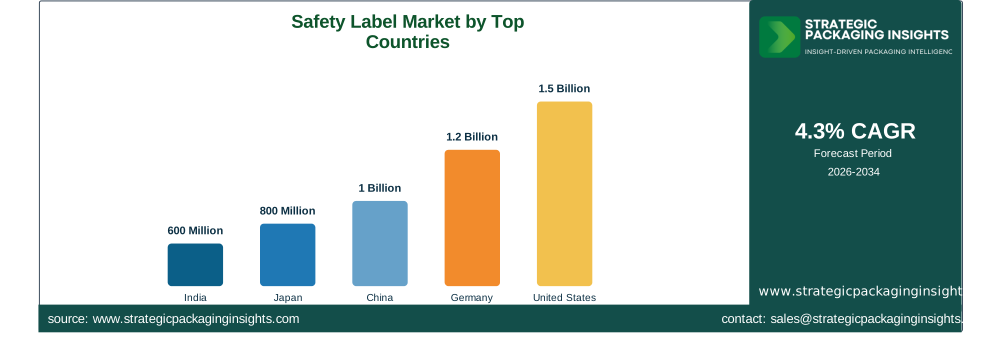
Germany is another prominent market for safety labels, with a market size of around $1.2 billion and a CAGR of 4%. The country's strong manufacturing sector and stringent safety standards drive the demand for safety labels. Germany's focus on innovation and technological advancements in labeling solutions further supports market growth. The increasing adoption of automation and digitalization in industries also contributes to the rising demand for safety labels in the country.
China is a rapidly growing market for safety labels, with a market size of approximately $1 billion and a CAGR of 6%. The country's expanding industrial base and increasing safety regulations are key drivers of market growth. China's focus on enhancing workplace safety and compliance, coupled with the rising demand for eco-friendly labeling solutions, presents significant opportunities for market players. The presence of low-cost manufacturers in the region also contributes to the competitive landscape.
In Japan, the Safety Label market is valued at around $800 million, with a CAGR of 2%. The country's emphasis on safety and quality standards drives the demand for safety labels. Japan's advanced manufacturing sector and the adoption of cutting-edge labeling technologies further support market growth. The increasing focus on sustainability and eco-friendly practices is also influencing the demand for safety labels in the country.
India is an emerging market for safety labels, with a market size of approximately $600 million and a CAGR of 5%. The country's growing industrial sector and the implementation of stringent safety regulations are key growth drivers. India's focus on improving workplace safety and the rising awareness about occupational hazards contribute to the increasing demand for safety labels. The market is also influenced by the adoption of advanced labeling technologies and the emphasis on sustainability.
Safety Label Market Segments Insights

Product Type Analysis
The Safety Label market is segmented by product type into warning labels, hazard labels, compliance labels, and asset labels. Warning labels are essential for alerting individuals to potential dangers and are widely used across various industries, including manufacturing and chemicals. The demand for warning labels is driven by the increasing emphasis on workplace safety and the need for effective communication of safety information. Hazard labels, on the other hand, are crucial for identifying hazardous materials and substances, particularly in the chemical and healthcare sectors. The growing awareness about the risks associated with hazardous materials is propelling the demand for hazard labels.
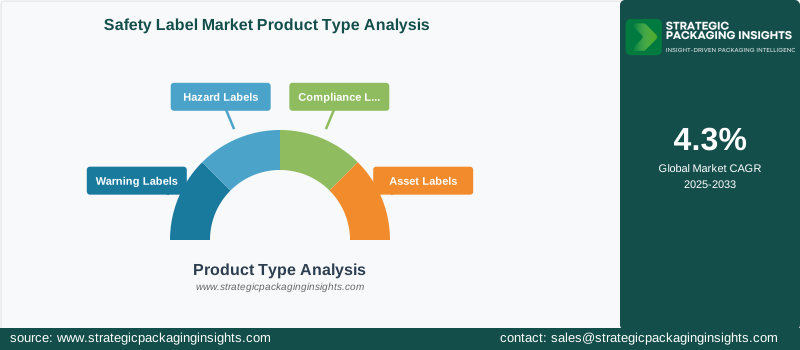
Compliance labels are used to ensure that products and equipment meet regulatory standards and requirements. These labels are critical for industries such as healthcare and utilities, where compliance with safety regulations is paramount. The demand for compliance labels is driven by the increasing regulatory requirements and the need for accurate and reliable labeling solutions. Asset labels are used for tracking and managing assets and equipment, particularly in industries such as logistics and manufacturing. The integration of smart technologies, such as RFID and QR codes, into asset labels is enhancing their functionality and driving their adoption across various sectors.
Material Type Analysis
The Safety Label market is segmented by material type into polyester, vinyl, paper, and polyimide. Polyester labels are known for their durability and resistance to harsh environmental conditions, making them ideal for industrial and outdoor applications. The demand for polyester labels is driven by their versatility and ability to withstand extreme temperatures and chemicals. Vinyl labels are popular for their flexibility and ease of application, particularly in the logistics and transportation sectors. The growing demand for cost-effective and durable labeling solutions is propelling the adoption of vinyl labels.
Paper labels are widely used for their affordability and ease of customization, making them suitable for a variety of applications, including packaging and retail. The demand for paper labels is driven by the increasing focus on sustainability and eco-friendly labeling solutions. Polyimide labels are known for their high-temperature resistance and are commonly used in the electronics and automotive industries. The demand for polyimide labels is driven by the growing need for reliable and durable labeling solutions in high-temperature environments.
Application Analysis
The Safety Label market is segmented by application into industrial safety, chemical labeling, electrical safety, and logistics. Industrial safety labels are essential for ensuring workplace safety and compliance with safety regulations. The demand for industrial safety labels is driven by the increasing emphasis on occupational safety and the need for effective communication of safety information. Chemical labeling is critical for identifying hazardous materials and substances, particularly in the chemical and healthcare sectors. The growing awareness about the risks associated with hazardous materials is propelling the demand for chemical labeling solutions.
Electrical safety labels are used to identify electrical hazards and ensure compliance with safety standards. The demand for electrical safety labels is driven by the increasing focus on electrical safety and the need for accurate and reliable labeling solutions. Logistics labels are used for tracking and managing assets and equipment, particularly in the transportation and logistics sectors. The integration of smart technologies, such as RFID and QR codes, into logistics labels is enhancing their functionality and driving their adoption across various sectors.
End Use Analysis
The Safety Label market is segmented by end use into manufacturing, chemicals, healthcare, and utilities. The manufacturing sector is a major end-user of safety labels, driven by the need for effective communication of safety information and compliance with safety regulations. The demand for safety labels in the manufacturing sector is further propelled by the increasing adoption of automation and digitalization. The chemicals sector is another significant end-user of safety labels, with the growing awareness about the risks associated with hazardous materials driving the demand for chemical labeling solutions.
The healthcare sector relies on safety labels for ensuring compliance with safety standards and regulations. The demand for safety labels in the healthcare sector is driven by the increasing focus on patient safety and the need for accurate and reliable labeling solutions. The utilities sector also uses safety labels for identifying hazards and ensuring compliance with safety regulations. The demand for safety labels in the utilities sector is driven by the increasing emphasis on safety and the need for effective communication of safety information.
Safety Label Market Segments
The Safety Label market has been segmented on the basis ofProduct Type
- Warning Labels
- Hazard Labels
- Compliance Labels
- Asset Labels
Material Type
- Polyester
- Vinyl
- Paper
- Polyimide
Application
- Industrial Safety
- Chemical Labeling
- Electrical Safety
- Logistics
End Use
- Manufacturing
- Chemicals
- Healthcare
- Utilities
Region
- Asia Pacific
- North America
- Latin America
- Europe
- Middle East & Africa




