


Safety Cans Market Outlook
The Safety Cans market was valued at $758.25 million in 2025 and is projected to reach $1.38 billion by 2034, growing at a CAGR of 6.8% during the forecast period 2026-2034. This market is driven by the increasing need for safe storage and handling of hazardous materials across various industries. Safety cans are essential for preventing accidents and ensuring compliance with safety regulations, which is a significant factor contributing to their growing demand. The market is also benefiting from advancements in material technology, which have led to the development of more durable and efficient safety cans. Additionally, the rise in industrial activities and stringent government regulations regarding workplace safety are further propelling the market growth.
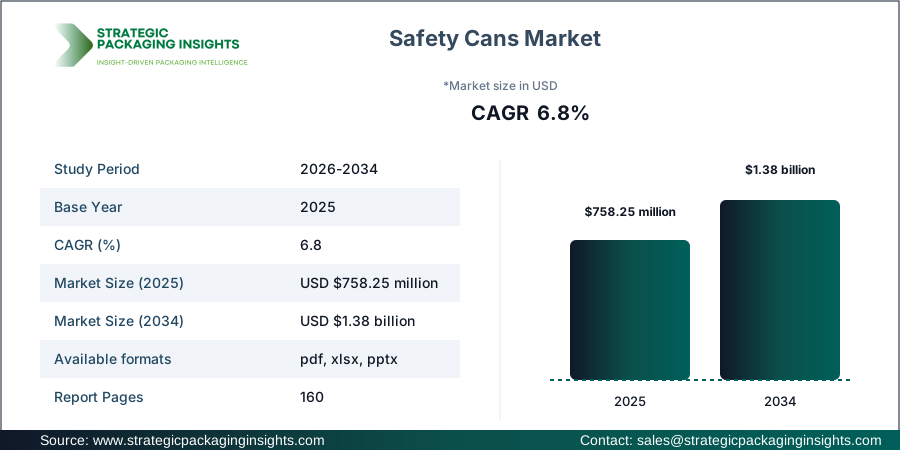
However, the market faces certain restraints, such as the high cost of raw materials and the availability of cheaper alternatives, which could hinder its growth potential. Despite these challenges, the market holds significant growth potential due to the increasing awareness about workplace safety and the need for compliance with safety standards. The growing emphasis on environmental sustainability is also expected to drive the demand for eco-friendly safety cans, providing new opportunities for market players. Furthermore, the expansion of industries in emerging economies presents lucrative opportunities for market growth, as these regions are witnessing a surge in industrial activities and a growing focus on safety measures.
Report Scope
| Attributes | Details |
| Report Title | Safety Cans Market Size, Future Growth and Forecast 2034 |
| Product Type | Type I Safety Cans, Type II Safety Cans, Disposal Cans |
| Material Type | Steel, Stainless Steel, HDPE |
| Capacity | Below 1 Gallon, 1–5 Gallons, Above 5 Gallons |
| End Use | Industrial, Laboratories, Chemicals, Manufacturing |
| Region | Asia Pacific, North America, Latin America, Europe, Middle East & Africa |
| Base Year | 2025 |
| Historic Period | 2018-2024 |
| Forecast Period | 2026-2034 |
| Number of Pages | 160 |
| Customization Available | Yes* |
Opportunities & Threats
The Safety Cans market presents numerous opportunities, particularly in the realm of technological advancements and product innovations. As industries continue to evolve, there is a growing demand for safety cans that offer enhanced features such as improved durability, ease of use, and better safety mechanisms. Companies investing in research and development to create innovative products are likely to gain a competitive edge in the market. Additionally, the increasing focus on environmental sustainability is driving the demand for eco-friendly safety cans made from recyclable materials, opening up new avenues for growth.
Another significant opportunity lies in the expansion of industries in emerging economies. As these regions experience rapid industrialization, there is a heightened need for safety measures to prevent accidents and ensure compliance with safety regulations. This creates a substantial demand for safety cans, providing market players with the chance to expand their presence in these lucrative markets. Furthermore, the growing awareness about workplace safety and the implementation of stringent safety standards are expected to drive the demand for safety cans across various industries, including chemicals, manufacturing, and laboratories.
Despite the promising opportunities, the Safety Cans market faces certain threats that could impact its growth. One of the primary challenges is the high cost of raw materials, which can increase the overall production costs and affect the pricing of safety cans. Additionally, the availability of cheaper alternatives, such as plastic containers, poses a threat to the market as they offer a cost-effective solution for storage and handling of hazardous materials. Moreover, the market is subject to stringent regulations and standards, which can pose compliance challenges for manufacturers and limit their ability to innovate and introduce new products.
Drivers & Challenges
The Safety Cans market is primarily driven by the increasing emphasis on workplace safety and the need for compliance with safety regulations. As industries become more aware of the potential risks associated with handling hazardous materials, there is a growing demand for safety cans that can prevent accidents and ensure safe storage and transportation. The implementation of stringent government regulations and safety standards further drives the demand for safety cans, as companies strive to meet these requirements and avoid penalties. Additionally, the rise in industrial activities and the expansion of sectors such as chemicals, manufacturing, and laboratories are contributing to the market growth.
Another key driver of the Safety Cans market is the advancements in material technology, which have led to the development of more durable and efficient safety cans. Manufacturers are increasingly focusing on creating products that offer enhanced features such as improved durability, ease of use, and better safety mechanisms. This has resulted in the introduction of innovative safety cans that cater to the evolving needs of industries, thereby driving the market growth. Furthermore, the growing emphasis on environmental sustainability is encouraging the development of eco-friendly safety cans made from recyclable materials, which is expected to boost the market demand.
Despite the positive drivers, the Safety Cans market faces several challenges that could hinder its growth. One of the primary challenges is the high cost of raw materials, which can increase the overall production costs and affect the pricing of safety cans. This can make it difficult for manufacturers to offer competitive pricing, especially in price-sensitive markets. Additionally, the availability of cheaper alternatives, such as plastic containers, poses a threat to the market as they offer a cost-effective solution for storage and handling of hazardous materials. Moreover, the market is subject to stringent regulations and standards, which can pose compliance challenges for manufacturers and limit their ability to innovate and introduce new products.
Market Share Analysis
The Safety Cans market is characterized by a competitive landscape with several key players vying for market share. Companies such as Justrite, Eagle Manufacturing, DENIOS, New Pig, and U.S. Plastic Corp. are some of the prominent players in the market. These companies are focusing on product innovation, strategic partnerships, and mergers and acquisitions to strengthen their market position and expand their product offerings. The market is also witnessing the entry of new players, which is intensifying the competition and driving companies to adopt innovative strategies to maintain their competitive edge.
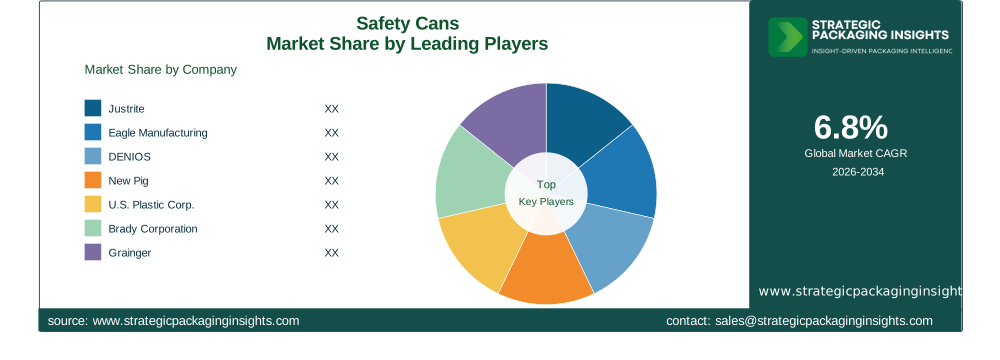
Justrite is a leading player in the Safety Cans market, known for its wide range of safety products and solutions. The company has a strong presence in the market and is focused on expanding its product portfolio through continuous research and development. Eagle Manufacturing is another key player, offering a comprehensive range of safety cans and related products. The company is committed to providing high-quality products that meet the stringent safety standards and regulations, which has helped it establish a strong foothold in the market.
DENIOS is a prominent player in the Safety Cans market, known for its innovative solutions and commitment to environmental sustainability. The company offers a wide range of safety cans and related products, catering to the diverse needs of industries. New Pig is another key player, offering a comprehensive range of safety products and solutions. The company is focused on expanding its product offerings and strengthening its market position through strategic partnerships and collaborations.
U.S. Plastic Corp. is a well-known player in the Safety Cans market, offering a wide range of plastic products and solutions. The company is focused on providing high-quality products that meet the stringent safety standards and regulations. Brady Corporation is another key player, known for its innovative safety solutions and commitment to quality. The company is focused on expanding its product portfolio and strengthening its market position through strategic partnerships and collaborations.
Key Highlights
- The Safety Cans market is projected to grow at a CAGR of 6.8% during the forecast period 2026-2034.
- The market is driven by the increasing emphasis on workplace safety and the need for compliance with safety regulations.
- Advancements in material technology are leading to the development of more durable and efficient safety cans.
- The growing emphasis on environmental sustainability is driving the demand for eco-friendly safety cans.
- The expansion of industries in emerging economies presents lucrative opportunities for market growth.
- The market faces challenges such as the high cost of raw materials and the availability of cheaper alternatives.
- Key players in the market include Justrite, Eagle Manufacturing, DENIOS, New Pig, and U.S. Plastic Corp.
- The market is characterized by a competitive landscape with several key players vying for market share.
- Companies are focusing on product innovation, strategic partnerships, and mergers and acquisitions to strengthen their market position.
- The market is subject to stringent regulations and standards, which can pose compliance challenges for manufacturers.
Top Countries Insights
In the Safety Cans market, the United States holds a significant share, driven by stringent safety regulations and a strong focus on workplace safety. The market in the U.S. is valued at approximately $300 million, with a CAGR of 5%. The demand is fueled by the presence of a large number of industries and the need for compliance with safety standards. Additionally, the growing emphasis on environmental sustainability is driving the demand for eco-friendly safety cans in the country.

Germany is another key market for safety cans, with a market size of around $150 million and a CAGR of 6%. The country's strong industrial base and stringent safety regulations are driving the demand for safety cans. The market is also benefiting from advancements in material technology and the growing focus on environmental sustainability. The presence of key players in the region further contributes to the market growth.
China is witnessing rapid growth in the Safety Cans market, with a market size of approximately $200 million and a CAGR of 8%. The country's rapid industrialization and increasing focus on workplace safety are driving the demand for safety cans. Additionally, the government's emphasis on environmental sustainability and the implementation of stringent safety regulations are further propelling the market growth.
India is emerging as a lucrative market for safety cans, with a market size of around $100 million and a CAGR of 9%. The country's expanding industrial sector and growing awareness about workplace safety are driving the demand for safety cans. The market is also benefiting from the government's initiatives to promote environmental sustainability and the implementation of stringent safety standards.
Brazil is another key market for safety cans, with a market size of approximately $80 million and a CAGR of 7%. The country's growing industrial activities and increasing focus on workplace safety are driving the demand for safety cans. The market is also benefiting from the government's emphasis on environmental sustainability and the implementation of stringent safety regulations.
Safety Cans Market Segments Insights

Product Type Analysis
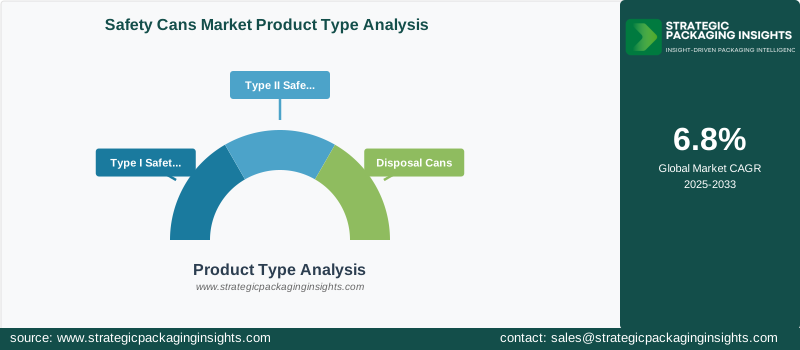
The Safety Cans market is segmented by product type into Type I safety cans, Type II safety cans, and disposal cans. Type I safety cans are designed for the safe storage and handling of flammable liquids, featuring a single spout for both filling and pouring. These cans are widely used in industries where the risk of fire hazards is high, driving their demand. Type II safety cans, on the other hand, feature a separate spout for filling and pouring, providing enhanced safety and ease of use. These cans are gaining popularity in industries that require frequent handling of hazardous materials, contributing to their market growth. Disposal cans are designed for the safe disposal of flammable waste, and their demand is driven by the increasing emphasis on environmental sustainability and waste management.
The demand for safety cans is also influenced by the growing awareness about workplace safety and the need for compliance with safety regulations. Industries are increasingly adopting safety cans to prevent accidents and ensure safe storage and transportation of hazardous materials. The market is also benefiting from advancements in material technology, which have led to the development of more durable and efficient safety cans. Manufacturers are focusing on creating products that offer enhanced features such as improved durability, ease of use, and better safety mechanisms, driving the market growth.
Material Type Analysis
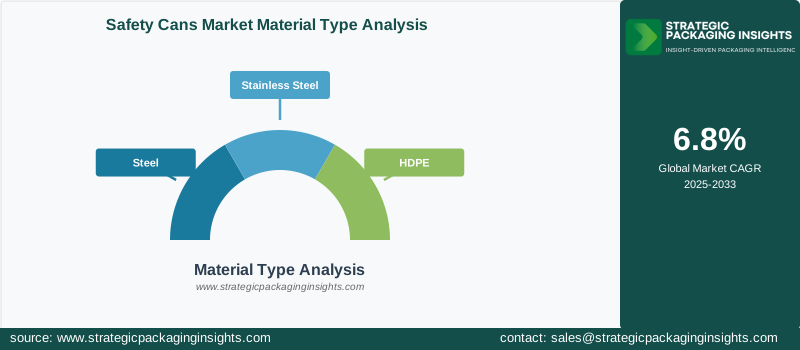
The Safety Cans market is segmented by material type into steel, stainless steel, and HDPE. Steel safety cans are widely used in industries due to their durability and ability to withstand harsh conditions. These cans are ideal for storing flammable liquids and are commonly used in industries such as chemicals, manufacturing, and laboratories. Stainless steel safety cans offer enhanced corrosion resistance and are preferred in industries where the risk of chemical exposure is high. The demand for stainless steel safety cans is driven by the increasing emphasis on workplace safety and the need for compliance with safety regulations.
HDPE safety cans are gaining popularity due to their lightweight and cost-effective nature. These cans are ideal for storing non-flammable liquids and are commonly used in industries such as laboratories and manufacturing. The demand for HDPE safety cans is driven by the growing emphasis on environmental sustainability and the need for eco-friendly solutions. Manufacturers are focusing on creating products that offer enhanced features such as improved durability, ease of use, and better safety mechanisms, driving the market growth. The market is also benefiting from advancements in material technology, which have led to the development of more durable and efficient safety cans.
Capacity Analysis
The Safety Cans market is segmented by capacity into below 1 gallon, 1-5 gallons, and above 5 gallons. Safety cans with a capacity of below 1 gallon are ideal for storing small quantities of flammable liquids and are commonly used in laboratories and small-scale industries. The demand for these cans is driven by the increasing emphasis on workplace safety and the need for compliance with safety regulations. Safety cans with a capacity of 1-5 gallons are widely used in industries due to their versatility and ability to store moderate quantities of flammable liquids. These cans are ideal for use in industries such as chemicals, manufacturing, and laboratories, driving their demand.
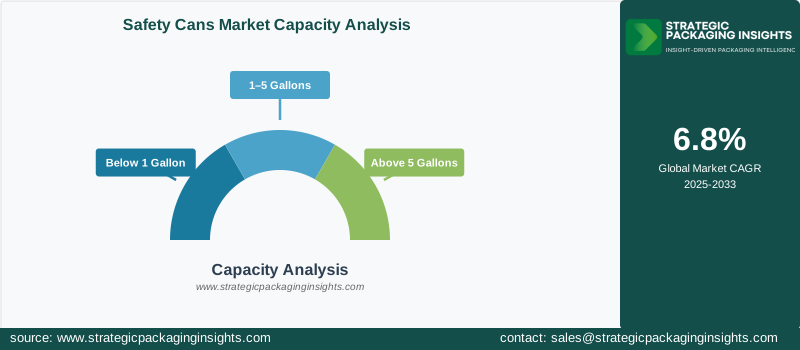
Safety cans with a capacity of above 5 gallons are designed for storing large quantities of flammable liquids and are commonly used in industries where the risk of fire hazards is high. The demand for these cans is driven by the increasing emphasis on workplace safety and the need for compliance with safety regulations. The market is also benefiting from advancements in material technology, which have led to the development of more durable and efficient safety cans. Manufacturers are focusing on creating products that offer enhanced features such as improved durability, ease of use, and better safety mechanisms, driving the market growth.
End Use Analysis
The Safety Cans market is segmented by end use into industrial, laboratories, chemicals, and manufacturing. The industrial segment is the largest end-use segment, driven by the increasing emphasis on workplace safety and the need for compliance with safety regulations. Safety cans are widely used in industries to prevent accidents and ensure safe storage and transportation of hazardous materials. The demand for safety cans in the industrial segment is also driven by the rise in industrial activities and the expansion of sectors such as chemicals, manufacturing, and laboratories.
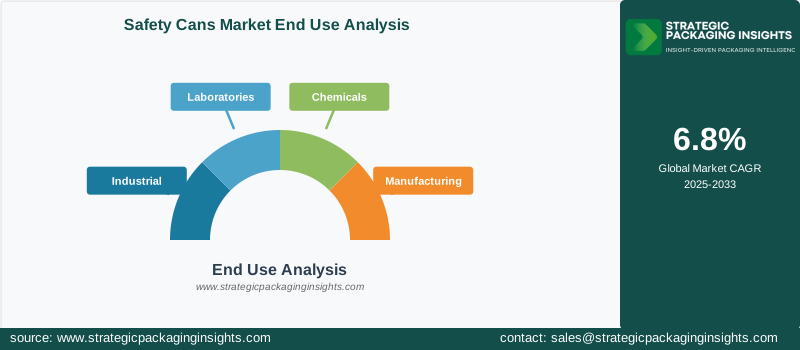
The laboratories segment is another key end-use segment, driven by the increasing emphasis on workplace safety and the need for compliance with safety regulations. Safety cans are widely used in laboratories to prevent accidents and ensure safe storage and transportation of hazardous materials. The demand for safety cans in the laboratories segment is also driven by the growing emphasis on environmental sustainability and the need for eco-friendly solutions. The market is also benefiting from advancements in material technology, which have led to the development of more durable and efficient safety cans.
Safety Cans Market Segments
The Safety Cans market has been segmented on the basis ofProduct Type
- Type I Safety Cans
- Type II Safety Cans
- Disposal Cans
Material Type
- Steel
- Stainless Steel
- HDPE
Capacity
- Below 1 Gallon
- 1–5 Gallons
- Above 5 Gallons
End Use
- Industrial
- Laboratories
- Chemicals
- Manufacturing
Region
- Asia Pacific
- North America
- Latin America
- Europe
- Middle East & Africa




