


Rotational Molding Machine Market Outlook
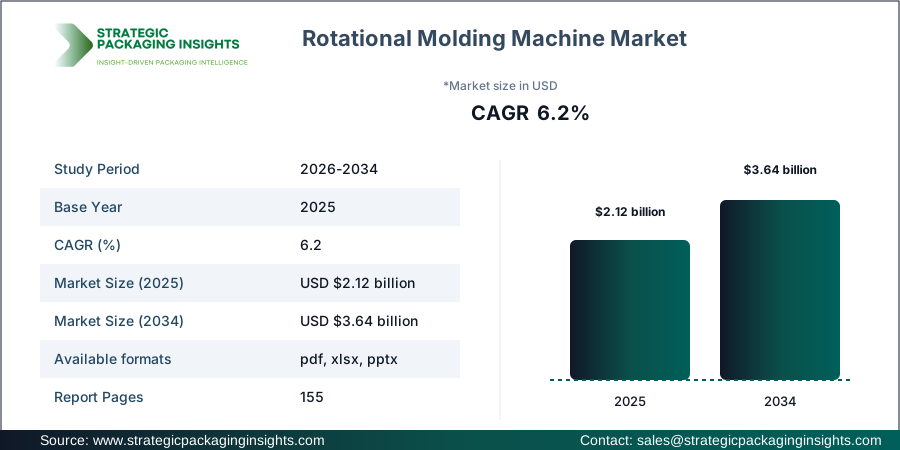
The rotational molding machine market was valued at $2.12 billion in 2025 and is projected to reach $3.64 billion by 2034, growing at a CAGR of 6.2% during the forecast period 2026-2034. This market is witnessing significant growth due to the increasing demand for durable and cost-effective manufacturing solutions across various industries. The versatility of rotational molding machines in producing complex shapes and large hollow parts without seams or weld lines is a key driver. Additionally, the growing adoption of these machines in the automotive and packaging sectors is further propelling market expansion. The ability to use a wide range of materials, including polyethylene, polypropylene, and PVC, enhances the appeal of rotational molding machines, making them a preferred choice for manufacturers aiming to optimize production efficiency and reduce material waste.
Despite the promising growth trajectory, the rotational molding machine market faces certain challenges that could impede its progress. Regulatory constraints related to environmental concerns and the high initial investment required for advanced machinery are notable restraining factors. However, the market holds substantial growth potential, driven by technological advancements and the increasing focus on automation. The integration of IoT and AI in rotational molding processes is expected to enhance operational efficiency and product quality, offering lucrative opportunities for market players. Moreover, the rising demand for customized and lightweight products in various end-use industries is likely to fuel market growth, as manufacturers seek innovative solutions to meet evolving consumer preferences.
Report Scope
| Attributes | Details |
| Report Title | Rotational Molding Machine Market Size, Future Growth and Forecast 2034 |
| By Machine Type | rock-and-roll machines, carousel machines, shuttle machines |
| By Application | tanks, containers, bins, industrial parts |
| By Automation | manual, semi-automatic, automatic |
| By End Use | packaging, automotive, agriculture, industrial |
| Region | Asia Pacific, North America, Latin America, Europe, Middle East & Africa |
| Base Year | 2025 |
| Historic Period | 2018-2024 |
| Forecast Period | 2026-2034 |
| Number of Pages | 155 |
| Customization Available | Yes* |
Opportunities & Threats
The rotational molding machine market presents numerous opportunities, particularly in the realm of technological advancements and automation. As industries increasingly adopt Industry 4.0 practices, the integration of smart technologies such as IoT and AI in rotational molding processes is becoming more prevalent. This trend is expected to enhance operational efficiency, reduce downtime, and improve product quality, thereby driving market growth. Additionally, the growing demand for customized and lightweight products in sectors such as automotive, packaging, and consumer goods is creating new avenues for market expansion. Manufacturers are increasingly focusing on developing innovative solutions to meet these demands, which is likely to boost the adoption of rotational molding machines.
Another significant opportunity lies in the expanding applications of rotational molding machines across various industries. The versatility of these machines in producing complex shapes and large hollow parts without seams or weld lines makes them ideal for a wide range of applications, from tanks and containers to industrial parts and automotive components. As industries continue to seek cost-effective and efficient manufacturing solutions, the demand for rotational molding machines is expected to rise. Furthermore, the increasing focus on sustainability and the use of eco-friendly materials in manufacturing processes is likely to drive the adoption of rotational molding machines, as they offer the ability to use a wide range of materials, including recycled plastics.
However, the market is not without its threats. One of the primary challenges facing the rotational molding machine market is the high initial investment required for advanced machinery. This can be a significant barrier for small and medium-sized enterprises looking to adopt these technologies. Additionally, regulatory constraints related to environmental concerns and the disposal of plastic waste pose challenges for market players. As governments worldwide implement stricter regulations on plastic usage and waste management, manufacturers may face increased compliance costs and operational challenges. To mitigate these threats, companies are focusing on developing sustainable solutions and investing in research and development to enhance the efficiency and environmental performance of their machines.
Drivers & Challenges
The rotational molding machine market is driven by several key factors, including the increasing demand for durable and cost-effective manufacturing solutions across various industries. The versatility of rotational molding machines in producing complex shapes and large hollow parts without seams or weld lines is a significant driver of market growth. This capability makes them ideal for a wide range of applications, from tanks and containers to industrial parts and automotive components. Additionally, the growing adoption of these machines in the automotive and packaging sectors is further propelling market expansion. The ability to use a wide range of materials, including polyethylene, polypropylene, and PVC, enhances the appeal of rotational molding machines, making them a preferred choice for manufacturers aiming to optimize production efficiency and reduce material waste.
Another major driver of the rotational molding machine market is the increasing focus on automation and technological advancements. As industries increasingly adopt Industry 4.0 practices, the integration of smart technologies such as IoT and AI in rotational molding processes is becoming more prevalent. This trend is expected to enhance operational efficiency, reduce downtime, and improve product quality, thereby driving market growth. Furthermore, the rising demand for customized and lightweight products in various end-use industries is likely to fuel market growth, as manufacturers seek innovative solutions to meet evolving consumer preferences. The growing emphasis on sustainability and the use of eco-friendly materials in manufacturing processes is also contributing to the market's expansion.
Despite the promising growth trajectory, the rotational molding machine market faces certain challenges that could impede its progress. One of the primary challenges is the high initial investment required for advanced machinery, which can be a significant barrier for small and medium-sized enterprises looking to adopt these technologies. Additionally, regulatory constraints related to environmental concerns and the disposal of plastic waste pose challenges for market players. As governments worldwide implement stricter regulations on plastic usage and waste management, manufacturers may face increased compliance costs and operational challenges. To overcome these challenges, companies are focusing on developing sustainable solutions and investing in research and development to enhance the efficiency and environmental performance of their machines.
Market Share Analysis
The rotational molding machine market is characterized by a competitive landscape with several key players vying for market share. Companies such as Ferry Industries, Rotoline, Persico, Reinhardt, Naroto, Rising Sun Rotomolding, Orex Rotomoulding, Polivinil Rotomachinery, M. Plast, and Rotomachinery Group are prominent players in this market. These companies are focusing on strategic initiatives such as mergers and acquisitions, partnerships, and collaborations to strengthen their market position and expand their product offerings. Additionally, they are investing in research and development to enhance their technological capabilities and offer innovative solutions to meet the evolving demands of end-use industries.
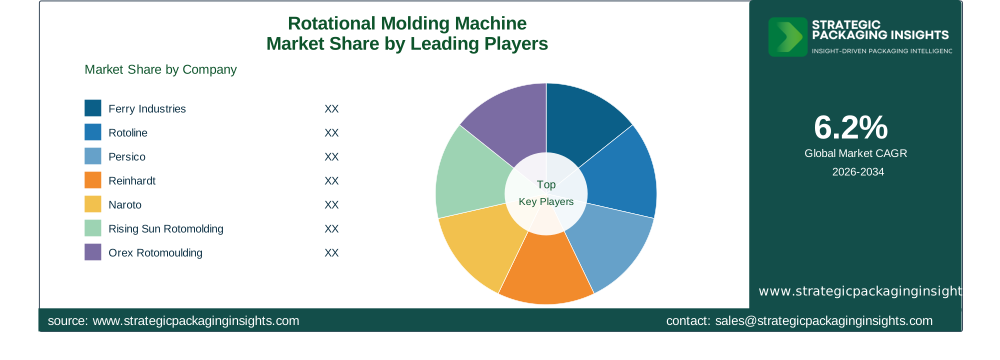
Ferry Industries is a leading player in the rotational molding machine market, known for its advanced machinery and innovative solutions. The company has a strong presence in North America and is expanding its footprint in other regions through strategic partnerships and collaborations. Rotoline, another key player, is recognized for its high-quality machines and customer-centric approach. The company is focusing on expanding its product portfolio and enhancing its technological capabilities to cater to the growing demand for rotational molding machines.
Persico is a prominent player in the European market, known for its cutting-edge technology and innovative solutions. The company is investing in research and development to enhance its product offerings and strengthen its market position. Reinhardt, a well-established player in the market, is focusing on expanding its presence in emerging markets through strategic partnerships and collaborations. The company is also investing in advanced manufacturing technologies to improve its operational efficiency and product quality.
Naroto and Rising Sun Rotomolding are key players in the Asia Pacific market, known for their cost-effective solutions and strong customer base. These companies are focusing on expanding their product offerings and enhancing their technological capabilities to cater to the growing demand for rotational molding machines in the region. Orex Rotomoulding and Polivinil Rotomachinery are also prominent players in the market, known for their innovative solutions and customer-centric approach. These companies are investing in research and development to enhance their product offerings and strengthen their market position.
Key Highlights
- The rotational molding machine market is projected to grow at a CAGR of 6.2% from 2026 to 2034.
- Key players in the market include Ferry Industries, Rotoline, Persico, Reinhardt, and Naroto.
- The market is driven by the increasing demand for durable and cost-effective manufacturing solutions.
- Technological advancements and automation are key trends shaping the market.
- The market faces challenges related to high initial investment and regulatory constraints.
- Asia Pacific is a key growth region, driven by rising demand in automotive and packaging sectors.
- Companies are focusing on strategic initiatives such as mergers and acquisitions to strengthen their market position.
- The integration of IoT and AI in rotational molding processes is enhancing operational efficiency.
- The market is witnessing increasing demand for customized and lightweight products.
- Sustainability and the use of eco-friendly materials are key focus areas for market players.
Top Countries Insights
In the rotational molding machine market, the United States stands out as a key player, with a market size of approximately $1.2 billion and a CAGR of 5%. The country's strong industrial base and focus on technological advancements are major growth drivers. The demand for durable and cost-effective manufacturing solutions in the automotive and packaging sectors is fueling market expansion. However, regulatory constraints related to environmental concerns pose challenges for market players.
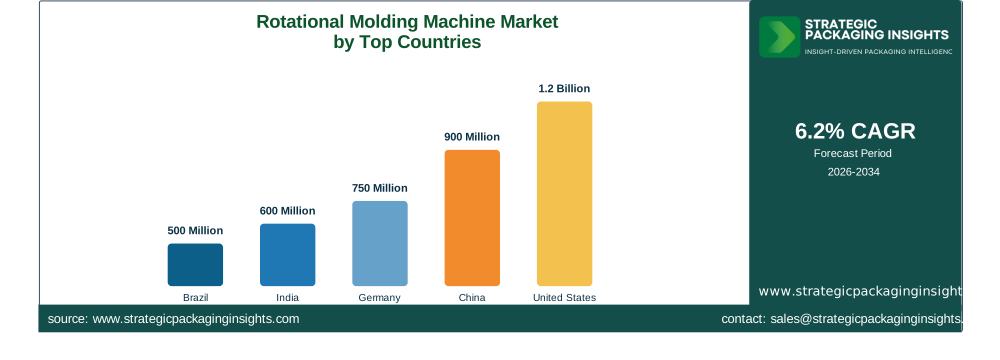
China is another significant market, with a market size of around $900 million and a CAGR of 7%. The country's rapid industrialization and growing demand for customized and lightweight products are driving market growth. The increasing focus on automation and the integration of smart technologies in manufacturing processes are also contributing to market expansion. However, the market faces challenges related to high initial investment and regulatory constraints.
Germany, with a market size of approximately $750 million and a CAGR of 6%, is a key player in the European market. The country's strong focus on innovation and technological advancements is driving market growth. The demand for eco-friendly materials and sustainable manufacturing solutions is also contributing to market expansion. However, regulatory constraints related to environmental concerns pose challenges for market players.
India, with a market size of around $600 million and a CAGR of 8%, is a rapidly growing market in the Asia Pacific region. The country's expanding industrial base and increasing demand for cost-effective manufacturing solutions are driving market growth. The focus on automation and the integration of smart technologies in manufacturing processes are also contributing to market expansion. However, the market faces challenges related to high initial investment and regulatory constraints.
Brazil, with a market size of approximately $500 million and a CAGR of 6%, is a key player in the Latin American market. The country's growing demand for durable and cost-effective manufacturing solutions in the automotive and packaging sectors is driving market growth. The focus on sustainability and the use of eco-friendly materials in manufacturing processes are also contributing to market expansion. However, regulatory constraints related to environmental concerns pose challenges for market players.
Rotational Molding Machine Market Segments Insights

Machine Type Analysis
The rotational molding machine market is segmented by machine type into rock-and-roll machines, carousel machines, and shuttle machines. Rock-and-roll machines are primarily used for producing large, hollow parts and are favored for their simplicity and cost-effectiveness. These machines are particularly popular in the production of tanks and containers, where their ability to handle large volumes is a significant advantage. Carousel machines, on the other hand, are known for their versatility and efficiency in producing a wide range of products. They are widely used in the automotive and packaging industries, where the demand for complex shapes and high production volumes is prevalent. Shuttle machines offer the flexibility of producing multiple products simultaneously, making them ideal for manufacturers looking to optimize production efficiency and reduce lead times.
The demand for carousel machines is expected to grow significantly during the forecast period, driven by their ability to produce complex shapes and high production volumes. The increasing adoption of these machines in the automotive and packaging sectors is a key driver of market growth. Additionally, the integration of smart technologies such as IoT and AI in carousel machines is enhancing their operational efficiency and product quality, further boosting their adoption. Shuttle machines are also gaining traction, particularly among manufacturers looking to optimize production efficiency and reduce lead times. The ability to produce multiple products simultaneously is a significant advantage, making them a preferred choice for manufacturers in various industries.
Application Analysis
The application segment of the rotational molding machine market includes tanks, containers, bins, and industrial parts. Tanks and containers are the largest application segments, driven by the increasing demand for durable and cost-effective storage solutions across various industries. The versatility of rotational molding machines in producing large, hollow parts without seams or weld lines is a significant advantage, making them ideal for the production of tanks and containers. The growing demand for customized and lightweight storage solutions is further propelling market growth in this segment.
Bins and industrial parts are also significant application segments, driven by the increasing demand for durable and cost-effective manufacturing solutions in various industries. The ability of rotational molding machines to produce complex shapes and large hollow parts without seams or weld lines is a key driver of market growth in these segments. Additionally, the growing focus on sustainability and the use of eco-friendly materials in manufacturing processes is contributing to market expansion. The demand for customized and lightweight products in various end-use industries is also fueling market growth, as manufacturers seek innovative solutions to meet evolving consumer preferences.
Automation Analysis
The automation segment of the rotational molding machine market includes manual, semi-automatic, and automatic machines. Manual machines are primarily used in small-scale operations where cost-effectiveness is a priority. These machines are favored for their simplicity and ease of use, making them ideal for small and medium-sized enterprises looking to optimize production efficiency and reduce costs. Semi-automatic machines offer a balance between cost-effectiveness and operational efficiency, making them a popular choice among manufacturers looking to enhance their production capabilities without significant investment.
Automatic machines are gaining traction, driven by the increasing focus on automation and technological advancements in the manufacturing sector. The integration of smart technologies such as IoT and AI in automatic machines is enhancing their operational efficiency and product quality, further boosting their adoption. The demand for automatic machines is expected to grow significantly during the forecast period, driven by the increasing adoption of Industry 4.0 practices and the growing demand for customized and lightweight products in various end-use industries. The ability to optimize production efficiency and reduce lead times is a significant advantage, making automatic machines a preferred choice for manufacturers in various industries.
End Use Analysis
The end-use segment of the rotational molding machine market includes packaging, automotive, agriculture, and industrial applications. The packaging industry is the largest end-use segment, driven by the increasing demand for durable and cost-effective packaging solutions across various industries. The versatility of rotational molding machines in producing complex shapes and large hollow parts without seams or weld lines is a significant advantage, making them ideal for the production of packaging solutions. The growing demand for customized and lightweight packaging solutions is further propelling market growth in this segment.
The automotive industry is another significant end-use segment, driven by the increasing demand for durable and lightweight components. The ability of rotational molding machines to produce complex shapes and large hollow parts without seams or weld lines is a key driver of market growth in this segment. Additionally, the growing focus on sustainability and the use of eco-friendly materials in manufacturing processes is contributing to market expansion. The agriculture and industrial sectors are also significant end-use segments, driven by the increasing demand for durable and cost-effective manufacturing solutions. The demand for customized and lightweight products in these sectors is also fueling market growth, as manufacturers seek innovative solutions to meet evolving consumer preferences.
Rotational Molding Machine Market Segments
The Rotational Molding Machine market has been segmented on the basis ofBy Machine Type
- rock-and-roll machines
- carousel machines
- shuttle machines
By Application
- tanks
- containers
- bins
- industrial parts
By Automation
- manual
- semi-automatic
- automatic
By End Use
- packaging
- automotive
- agriculture
- industrial
Region
- Asia Pacific
- North America
- Latin America
- Europe
- Middle East & Africa




