


Roll Handling Machine Market Outlook
The Roll Handling Machine market size was valued at USD 1.1 billion in 2025 and is anticipated to reach USD 1.6 billion by 2034, growing at a CAGR of 4.20% during the forecast period according to Strategic Packaging Insights. The market is witnessing significant growth due to the increasing demand for automation in industrial processes, particularly in sectors like paper and board mills, flexible packaging, and film converters. Companies like Dalmec and Movomech are leading the charge by offering innovative solutions that enhance operational efficiency and safety in handling heavy rolls. The integration of advanced technologies such as IoT and AI in roll handling machines is further propelling market growth, enabling real-time monitoring and predictive maintenance.
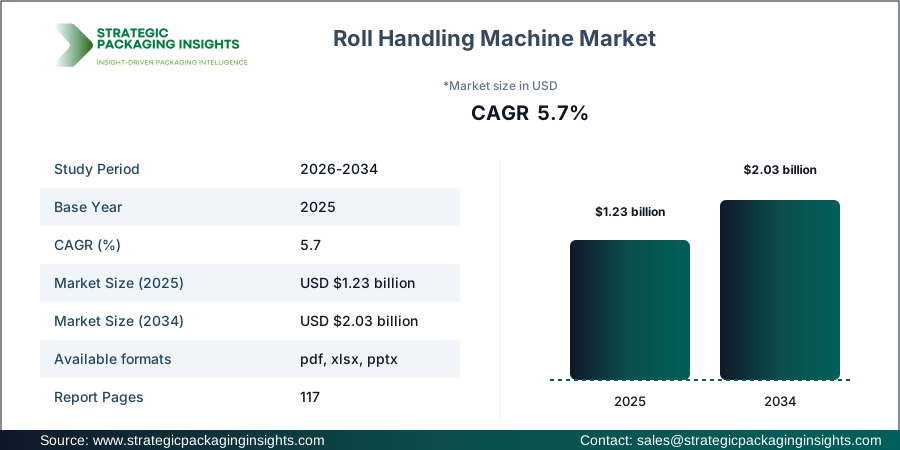
One of the most impactful drivers of the Roll Handling Machine market is the growing emphasis on workplace safety and ergonomics. According to industry reports, there is a rising trend towards minimizing manual handling of heavy materials to reduce workplace injuries and improve productivity. This shift is supported by stringent government regulations and safety standards that mandate the use of automated handling equipment in industrial settings. Companies like TAWI (Piab) and Schmalz are at the forefront, developing ergonomic solutions that not only comply with safety standards but also enhance operational efficiency. The increasing adoption of these machines in emerging economies, driven by industrialization and urbanization, presents significant growth opportunities for market players.
Report Scope
| Attributes | Details |
| Report Title | Roll Handling Machine Market Size, Future Growth and Forecast 2034 |
| By Equipment Type | Roll Lifters & Manipulators, Roll Upenders / Turners, Roll Conveyors, Automated Roll Storage & Retrieval, Roll Wrapping & Strapping Machines, Roll Doffing Systems |
| By Operation | Manual-Assist, Semi-Automatic, Fully Automatic / Robotic |
| By Roll Weight Capacity | Up to 500 kg, 500-2,000 kg, Above 2,000 kg |
| By End Use | Paper & Board Mills, Flexible Packaging & Film Converters, Printing, Textiles & Nonwovens, Steel & Aluminum Coil, Cable & Wire |
| By Region | North America (U.S., Canada, Mexico), Europe (Germany, UK, France, Italy, Spain, Rest of Europe), Asia Pacific (China, India, Japan, South Korea, Australia, Rest of Asia Pacific), Latin America (Brazil, Argentina, Rest of Latin America), Middle East & Africa (GCC Countries, South Africa, Rest of MEA) |
| Base Year | 2025 |
| Historic Period | 2018-2024 |
| Forecast Period | 2026-2034 |
| Number of Pages | 165 |
| Customization Available | Yes* |
Sustainability & Circular Economy Analysis
Sustainability initiatives and circular economy practices are increasingly influencing the packaging market, including the roll handling machine sector. The push towards eco-friendly material innovation and waste reduction strategies is driving manufacturers to adopt recyclable materials and reusable packaging solutions. This shift is not only reducing the carbon footprint but also aligning with consumer sustainability preferences, which are becoming a critical factor in purchasing decisions. Companies are investing in lightweight packaging and developing machines that support these sustainable practices, thereby enhancing their market competitiveness.
The integration of ESG (Environmental, Social, and Governance) initiatives is reshaping packaging design and manufacturing processes. Companies are focusing on reducing their carbon footprint by optimizing supply chain strategies and investing in energy-efficient machinery. This trend is influencing investment decisions, as stakeholders are increasingly prioritizing companies with strong sustainability credentials. Regulatory compliance is also a key driver, with governments implementing stricter packaging regulations and extended producer responsibility (EPR) policies to promote sustainable practices.
These sustainability trends are having a profound impact on the long-term competitiveness of the roll handling machine market. Manufacturers are leveraging these trends to differentiate their products and capture a larger market share. By aligning with sustainability goals, companies are not only meeting regulatory requirements but also enhancing their brand reputation and customer loyalty. This strategic focus on sustainability is expected to drive innovation and growth in the roll handling machine market, as companies strive to meet the evolving demands of environmentally conscious consumers.
Packaging Value Chain & Supply Chain Analysis
The packaging value chain and supply chain ecosystem for roll handling machines is complex and multifaceted, involving various stakeholders from raw material sourcing to end-user delivery. Raw material availability is a critical factor influencing the production capabilities of manufacturers. Companies like Bushman Equipment and PHS Innovate are focusing on securing reliable sources of high-quality materials to ensure consistent production and meet the growing demand for roll handling machines. Strategic partnerships with suppliers and logistics providers are essential for optimizing procurement strategies and inventory management, thereby enhancing supply chain resilience.
Supply chain efficiency is a key determinant of market performance and business competitiveness. Manufacturers are investing in advanced packaging machinery and automation technologies to streamline production processes and reduce lead times. This focus on efficiency is complemented by robust logistics and distribution channels that ensure timely delivery of products to brand owners and retailers. Companies are also exploring localization strategies to mitigate the risks associated with global sourcing and enhance their responsiveness to market demands.
Recycling networks and sustainable procurement practices are becoming increasingly important in the roll handling machine market. Companies are adopting circular economy principles to minimize waste and promote the reuse of materials. This approach not only supports environmental sustainability but also reduces costs and enhances operational efficiency. By integrating these practices into their supply chain strategies, manufacturers are positioning themselves as leaders in the market, capable of meeting the evolving needs of environmentally conscious consumers and regulatory requirements.
Opportunities & Threats
The roll handling machine market presents numerous opportunities for growth, driven by technological advancements and increasing demand for automation. The integration of IoT and AI technologies in roll handling machines is creating new avenues for innovation, enabling real-time monitoring and predictive maintenance. This technological evolution is enhancing the efficiency and reliability of roll handling operations, thereby attracting investments from industries seeking to optimize their production processes. Additionally, the growing emphasis on workplace safety and ergonomics is driving the adoption of automated handling solutions, presenting significant opportunities for market expansion.
Emerging markets in Asia Pacific and Latin America offer substantial growth potential for roll handling machine manufacturers. Rapid industrialization and urbanization in these regions are driving the demand for efficient material handling solutions. Companies are capitalizing on this trend by expanding their presence in these markets and establishing strategic partnerships with local distributors and suppliers. The increasing adoption of roll handling machines in sectors such as paper and board mills, flexible packaging, and film converters is further fueling market growth, providing lucrative opportunities for manufacturers to expand their customer base and increase their market share.
Despite the promising opportunities, the roll handling machine market faces certain threats that could hinder its growth. One of the primary challenges is the high initial cost of automated roll handling solutions, which may deter small and medium-sized enterprises from adopting these technologies. Additionally, the market is subject to fluctuations in raw material prices, which can impact production costs and profit margins. Manufacturers must also navigate complex regulatory environments and comply with stringent safety standards, which can pose operational challenges and increase compliance costs. To mitigate these threats, companies must focus on innovation, cost optimization, and strategic partnerships to enhance their competitiveness and sustain growth in the market.
Drivers & Challenges
The roll handling machine market is driven by several key factors, including the increasing demand for automation and the need for efficient material handling solutions. The growing emphasis on workplace safety and ergonomics is a significant driver, as companies seek to minimize manual handling of heavy materials and reduce workplace injuries. This trend is supported by stringent government regulations and safety standards that mandate the use of automated handling equipment in industrial settings. Additionally, the integration of advanced technologies such as IoT and AI in roll handling machines is enhancing operational efficiency and enabling real-time monitoring and predictive maintenance, further driving market growth.
Another major driver of the roll handling machine market is the rising demand from end-use industries such as paper and board mills, flexible packaging, and film converters. These industries require efficient and reliable material handling solutions to optimize their production processes and meet the growing demand for their products. The increasing adoption of roll handling machines in emerging economies, driven by industrialization and urbanization, presents significant growth opportunities for market players. Companies are investing in research and development to develop innovative solutions that cater to the specific needs of these industries, thereby enhancing their market competitiveness.
Despite the positive drivers, the roll handling machine market faces several challenges that could impact its growth. One of the primary challenges is the high initial cost of automated roll handling solutions, which may deter small and medium-sized enterprises from adopting these technologies. Additionally, the market is subject to fluctuations in raw material prices, which can impact production costs and profit margins. Manufacturers must also navigate complex regulatory environments and comply with stringent safety standards, which can pose operational challenges and increase compliance costs. To overcome these challenges, companies must focus on innovation, cost optimization, and strategic partnerships to enhance their competitiveness and sustain growth in the market.
Market Share Analysis
The competitive landscape of the roll handling machine market is characterized by the presence of several key players who are driving innovation and growth in the industry. Companies like Dalmec, Movomech, and TAWI (Piab) are leading the market with their advanced roll handling solutions that cater to the diverse needs of end-use industries. These companies are focusing on product innovation, strategic partnerships, and expansion into emerging markets to strengthen their market position and increase their market share. The market is also witnessing the entry of new players who are leveraging technological advancements to offer innovative solutions and capture a share of the growing market.
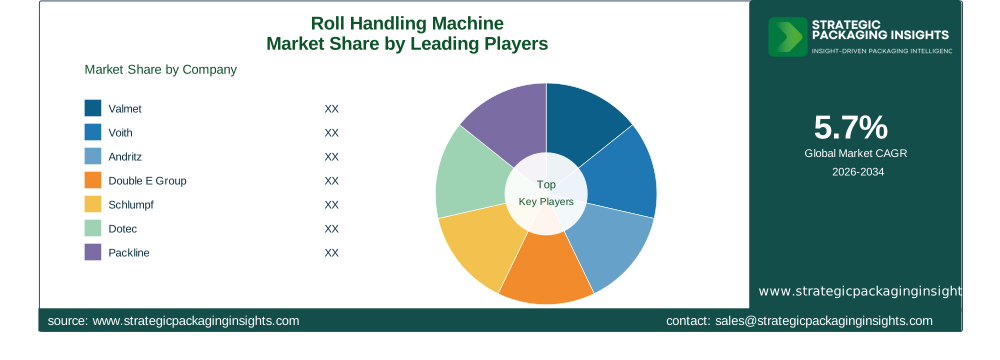
Dalmec is a prominent player in the roll handling machine market, known for its innovative solutions that enhance operational efficiency and safety. The company offers a wide range of roll handling equipment, including roll lifters and manipulators, that cater to the specific needs of various industries. Movomech is another key player, offering advanced roll handling solutions that integrate IoT and AI technologies for real-time monitoring and predictive maintenance. The company's focus on product innovation and customer-centric solutions has helped it establish a strong presence in the market.
TAWI (Piab) is a leading provider of ergonomic roll handling solutions that prioritize workplace safety and efficiency. The company's products are designed to minimize manual handling and reduce workplace injuries, aligning with the growing emphasis on safety and ergonomics in industrial settings. Schmalz is another major player, offering a comprehensive range of roll handling equipment that caters to the diverse needs of end-use industries. The company's focus on sustainability and eco-friendly solutions has helped it gain a competitive edge in the market.
Other notable players in the roll handling machine market include Bushman Equipment, PHS Innovate, Fhopepack, Cousins Packaging, ARPAC, and Goldenrod Corporation. These companies are focusing on expanding their product portfolios, enhancing their distribution networks, and investing in research and development to drive innovation and growth in the market. The competitive landscape is expected to remain dynamic, with companies leveraging technological advancements and strategic partnerships to capture a larger share of the growing market.
Key Highlights
- Market Size: The Roll Handling Machine market was valued at USD 1.1 billion in 2025 and is projected to reach USD 1.6 billion by 2034.
- Growth Rate: The market is expected to grow at a CAGR of 4.20% during the forecast period.
- Leading Companies: Key players include Dalmec, Movomech, TAWI (Piab), and Schmalz.
- Technological Advancements: Integration of IoT and AI technologies is driving innovation in roll handling machines.
- Regional Growth: Asia Pacific and Latin America offer significant growth opportunities due to rapid industrialization.
- Sustainability Focus: Companies are adopting eco-friendly solutions and circular economy practices to enhance competitiveness.
- End-Use Industries: Major demand from paper and board mills, flexible packaging, and film converters.
Roll Handling Machine Market Segments Insights

By Equipment Type Analysis
The roll handling machine market is segmented by equipment type, including roll lifters & manipulators, roll upenders/turners, roll conveyors, automated roll storage & retrieval, roll wrapping & strapping machines, and roll doffing systems. Roll lifters and manipulators are witnessing significant demand due to their ability to enhance operational efficiency and safety in handling heavy rolls. Companies like Dalmec and Movomech are leading the market with their innovative solutions that cater to the diverse needs of end-use industries. The integration of advanced technologies such as IoT and AI in these machines is further driving market growth, enabling real-time monitoring and predictive maintenance.
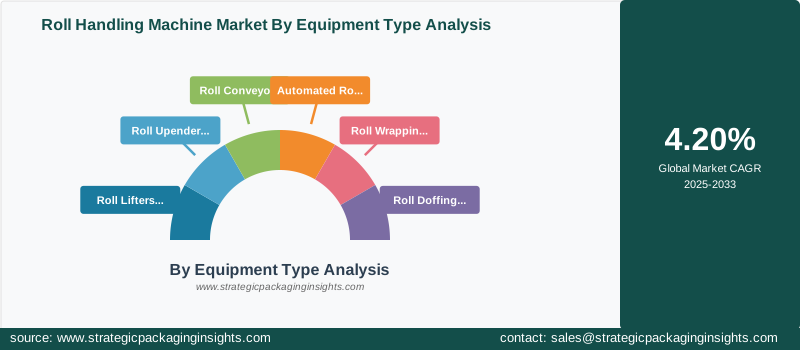
Roll upenders and turners are also gaining traction in the market, driven by the increasing demand for efficient material handling solutions in industries such as paper and board mills, flexible packaging, and film converters. These machines offer enhanced safety and ergonomics, reducing the risk of workplace injuries and improving productivity. Automated roll storage and retrieval systems are becoming increasingly popular, particularly in large-scale industrial operations, due to their ability to optimize storage space and streamline material handling processes. The growing emphasis on automation and efficiency is expected to drive the demand for these machines in the coming years.
By Operation Analysis
The roll handling machine market is segmented by operation into manual-assist, semi-automatic, and fully automatic/robotic systems. Fully automatic and robotic systems are witnessing significant growth due to the increasing demand for automation and efficiency in industrial operations. These systems offer enhanced precision and reliability, reducing the need for manual intervention and minimizing the risk of errors. Companies like TAWI (Piab) and Schmalz are at the forefront, developing advanced solutions that integrate IoT and AI technologies for real-time monitoring and predictive maintenance.
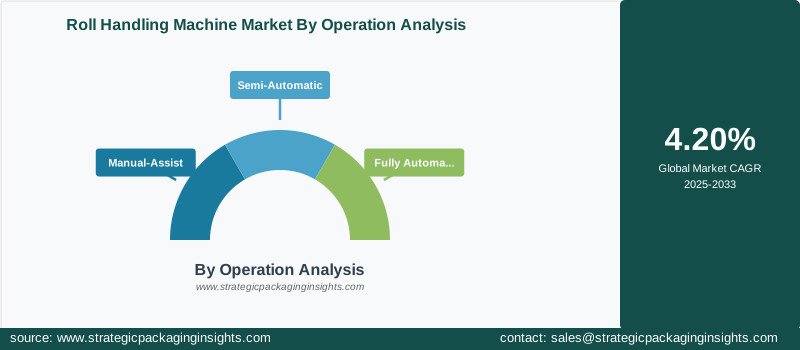
Semi-automatic systems are also gaining popularity, particularly in small and medium-sized enterprises that seek to balance automation with cost-effectiveness. These systems offer a combination of manual and automated operations, providing flexibility and efficiency in material handling processes. Manual-assist systems, while less prevalent, continue to play a role in industries where manual handling is still required. The growing emphasis on workplace safety and ergonomics is driving the adoption of automated and semi-automatic systems, as companies seek to minimize manual handling and reduce workplace injuries.
By Roll Weight Capacity Analysis
The roll handling machine market is segmented by roll weight capacity into up to 500 kg, 500-2, 000 kg, and above 2, 000 kg. Machines with a capacity of 500-2, 000 kg are witnessing significant demand, driven by the need for efficient handling of medium to large-sized rolls in industries such as paper and board mills, flexible packaging, and film converters. Companies are focusing on developing robust and reliable solutions that cater to the specific needs of these industries, enhancing their market competitiveness.
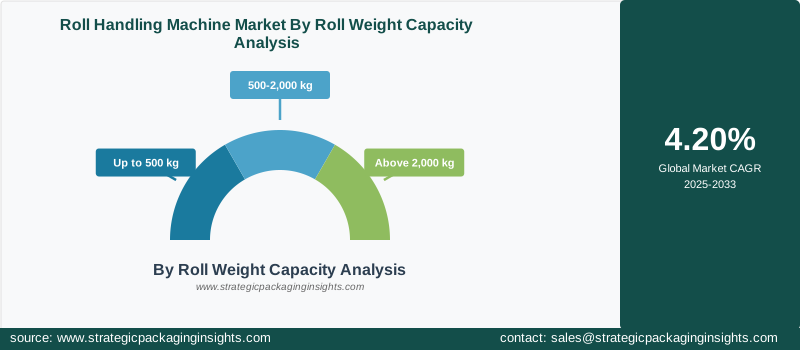
Machines with a capacity of up to 500 kg are also gaining traction, particularly in small-scale operations and industries where lighter rolls are prevalent. These machines offer flexibility and efficiency, enabling companies to optimize their material handling processes and improve productivity. Machines with a capacity of above 2, 000 kg are primarily used in heavy-duty industrial operations, such as steel and aluminum coil handling, where the ability to handle large and heavy rolls is critical. The growing demand for efficient and reliable material handling solutions is expected to drive the adoption of these machines in the coming years.
By End Use Analysis
The roll handling machine market is segmented by end use into paper & board mills, flexible packaging & film converters, printing, textiles & nonwovens, steel & aluminum coil, and cable & wire. Paper and board mills are one of the largest end-use segments, driven by the increasing demand for efficient material handling solutions in the production of paper and board products. Companies are focusing on developing innovative solutions that cater to the specific needs of this industry, enhancing their market competitiveness.
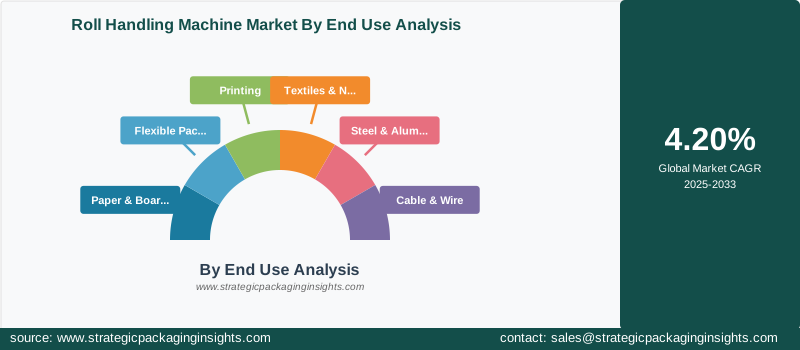
Flexible packaging and film converters are also significant end-use segments, driven by the growing demand for packaging solutions in various industries. The increasing adoption of roll handling machines in these segments is driven by the need for efficient and reliable material handling solutions that optimize production processes and improve productivity. Other end-use segments, such as printing, textiles & nonwovens, steel & aluminum coil, and cable & wire, are also witnessing growth, driven by the need for efficient handling of rolls in their respective operations. The growing demand for roll handling machines in these segments is expected to drive market growth in the coming years.
Roll Handling Machine Market Segments
The Roll Handling Machine market has been segmented on the basis ofBy Equipment Type
- Roll Lifters & Manipulators
- Roll Upenders / Turners
- Roll Conveyors
- Automated Roll Storage & Retrieval
- Roll Wrapping & Strapping Machines
- Roll Doffing Systems
By Operation
- Manual-Assist
- Semi-Automatic
- Fully Automatic / Robotic
By Roll Weight Capacity
- Up to 500 kg
- 500-2,000 kg
- Above 2,000 kg
By End Use
- Paper & Board Mills
- Flexible Packaging & Film Converters
- Printing
- Textiles & Nonwovens
- Steel & Aluminum Coil
- Cable & Wire
By Region
- North America (U.S., Canada, Mexico)
- Europe (Germany, UK, France, Italy, Spain, Rest of Europe)
- Asia Pacific (China, India, Japan, South Korea, Australia, Rest of Asia Pacific)
- Latin America (Brazil, Argentina, Rest of Latin America)
- Middle East & Africa (GCC Countries, South Africa, Rest of MEA)




