


Roll Containers Market Outlook
The Roll Containers market was valued at $2.68 billion in 2025 and is projected to reach $3.91 billion by 2034, growing at a CAGR of 4.3% during the forecast period 2026-2034. This growth is driven by the increasing demand for efficient logistics solutions across various industries, including retail, healthcare, and manufacturing. Roll containers are essential for streamlining operations in warehouses and distribution centers, offering flexibility and ease of movement for goods. The market is also benefiting from advancements in material technology, which enhance the durability and functionality of roll containers, making them more appealing to end-users.
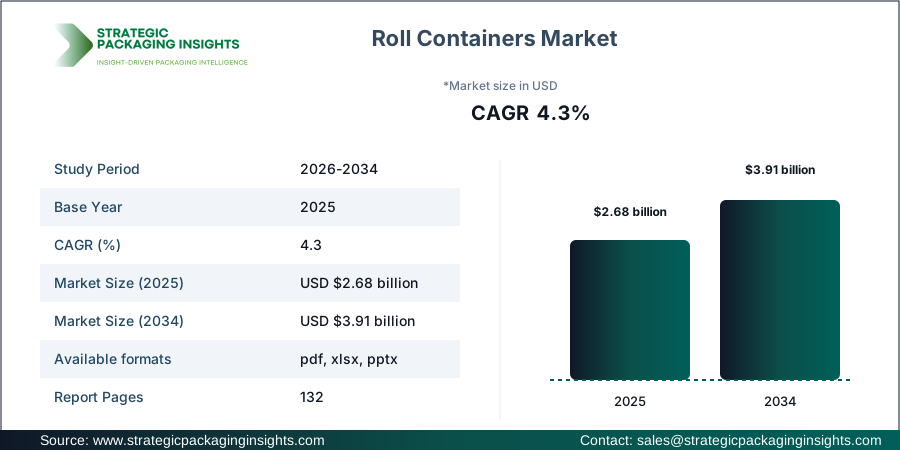
Despite the promising growth prospects, the roll containers market faces certain challenges. Regulatory constraints related to material usage and environmental concerns are significant hurdles. However, the market's potential remains strong, driven by the ongoing need for efficient logistics solutions and the adoption of innovative designs that cater to specific industry needs. The increasing focus on sustainability and the development of eco-friendly materials present additional growth opportunities, as companies strive to meet regulatory requirements and consumer expectations.
Report Scope
| Attributes | Details |
| Report Title | Roll Containers Market Size, Future Growth and Forecast 2034 |
| By Product Type | Nestable Roll Containers, Demountable Roll Containers, Security Roll Containers, Shelf Roll Containers |
| By Material Type | Steel, Aluminum, Plastic, Hybrid |
| By Application | Retail Logistics, Warehouse Handling, Postal Logistics, Hospital Logistics |
| By End Use | Retail, Logistics, Healthcare, Manufacturing |
| Region | Asia Pacific, North America, Latin America, Europe, Middle East & Africa |
| Base Year | 2025 |
| Historic Period | 2018-2024 |
| Forecast Period | 2026-2034 |
| Number of Pages | 132 |
| Customization Available | Yes* |
Opportunities & Threats
The roll containers market presents numerous opportunities, particularly in the realm of technological advancements and material innovations. As industries increasingly prioritize efficiency and sustainability, there is a growing demand for roll containers made from eco-friendly materials. This trend is driving manufacturers to explore new materials and designs that reduce environmental impact while maintaining functionality and durability. Additionally, the rise of e-commerce and the subsequent increase in logistics and warehousing activities offer significant growth potential for the roll containers market. Companies that can provide innovative, cost-effective solutions tailored to the needs of these sectors are well-positioned to capitalize on this opportunity.
Another opportunity lies in the expansion of the healthcare sector, which requires specialized logistics solutions for the safe and efficient transport of medical supplies and equipment. Roll containers designed specifically for hospital logistics can help streamline operations and improve patient care. As healthcare facilities continue to expand and modernize, the demand for such solutions is expected to grow, providing a lucrative market for roll container manufacturers.
However, the roll containers market is not without its threats. One of the primary challenges is the volatility of raw material prices, which can significantly impact production costs and profit margins. Additionally, the market faces competition from alternative logistics solutions, such as automated guided vehicles and conveyor systems, which offer different advantages in terms of efficiency and scalability. To remain competitive, roll container manufacturers must continuously innovate and adapt to changing market conditions, ensuring their products meet the evolving needs of their customers.
Drivers & Challenges
The roll containers market is driven by several key factors, including the increasing demand for efficient logistics solutions and the growth of the e-commerce sector. As online shopping continues to rise, the need for streamlined warehousing and distribution processes becomes more critical. Roll containers offer a practical solution for handling and transporting goods within these environments, providing flexibility and ease of use. Additionally, advancements in material technology have led to the development of more durable and lightweight roll containers, further enhancing their appeal to end-users.
Another significant driver is the growing emphasis on sustainability and environmental responsibility. As companies strive to reduce their carbon footprint and comply with regulatory requirements, there is a heightened demand for eco-friendly logistics solutions. Roll containers made from recyclable materials or designed for long-term use align with these goals, making them an attractive option for businesses looking to enhance their sustainability efforts. This trend is expected to continue, driving further growth in the roll containers market.
Despite these drivers, the roll containers market faces several challenges. One of the primary obstacles is the high cost of raw materials, which can impact production costs and pricing strategies. Additionally, the market is subject to stringent regulations regarding material usage and safety standards, which can pose compliance challenges for manufacturers. Furthermore, the increasing competition from alternative logistics solutions, such as automated systems, presents a threat to the traditional roll containers market. To overcome these challenges, manufacturers must focus on innovation and adaptability, ensuring their products remain relevant and competitive in a rapidly evolving market.
Market Share Analysis
The roll containers market is characterized by a competitive landscape, with several key players vying for market share. Companies such as K. Hartwall, Wanzl, and Demes are prominent in the industry, known for their innovative designs and high-quality products. These companies have established strong reputations and customer bases, allowing them to maintain significant market shares. Additionally, Fletcher European Containers and Creaciones Marsanz are notable players, offering a wide range of roll container solutions tailored to various industry needs.
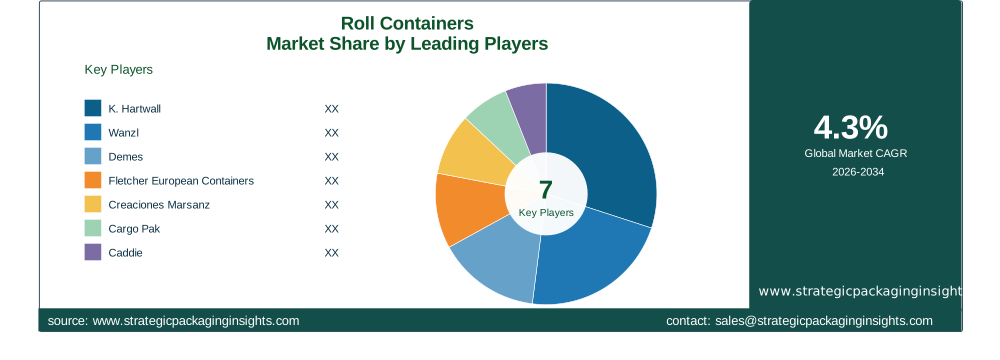
Other important companies in the market include Cargo Pak, Caddie, and Matador, each of which has carved out a niche in the roll containers industry. These companies focus on providing specialized solutions that cater to specific applications, such as retail logistics and warehouse handling. By leveraging their expertise and understanding of customer needs, they have been able to capture significant market shares and establish themselves as leaders in the field.
Ravas and Kongamek are also key players in the roll containers market, known for their commitment to innovation and quality. These companies invest heavily in research and development, ensuring their products remain at the forefront of industry trends and technological advancements. By continuously improving their offerings and expanding their product lines, they have been able to maintain strong market positions and compete effectively with larger players.
Overall, the roll containers market is highly competitive, with companies striving to differentiate themselves through product innovation, quality, and customer service. As the market continues to grow, driven by increasing demand for efficient logistics solutions, these companies will need to remain agile and responsive to changing customer needs and market conditions. By focusing on innovation and sustainability, they can continue to capture market share and drive growth in the roll containers industry.
Key Highlights
- The roll containers market is projected to grow from $2.68 billion in 2025 to $3.91 billion by 2034, at a CAGR of 4.3%.
- Key drivers include the rise of e-commerce and the demand for efficient logistics solutions.
- Challenges include raw material price volatility and competition from alternative logistics solutions.
- Opportunities exist in the development of eco-friendly materials and specialized healthcare logistics solutions.
- Major players include K. Hartwall, Wanzl, Demes, and Fletcher European Containers.
- Technological advancements in material science are enhancing the durability and functionality of roll containers.
- Regulatory constraints related to material usage and environmental concerns pose challenges.
- The market is characterized by a competitive landscape with several key players vying for market share.
- Innovation and adaptability are crucial for manufacturers to remain competitive in the market.
- The healthcare sector presents significant growth potential for specialized roll container solutions.
Top Countries Insights
In the roll containers market, the United States stands out as a key player, with a market size of approximately $1.2 billion and a CAGR of 5%. The country's robust logistics infrastructure and the rapid growth of e-commerce are major drivers of demand for roll containers. Additionally, the focus on sustainability and the adoption of eco-friendly materials are further propelling market growth. However, challenges such as regulatory constraints and competition from alternative logistics solutions remain.
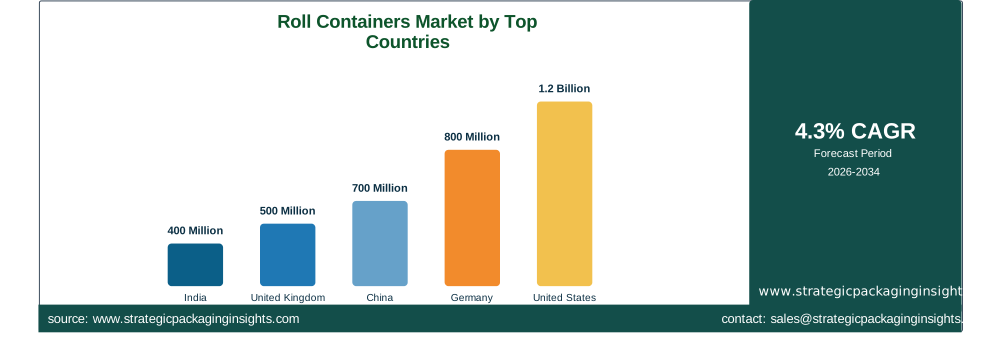
Germany is another significant market, with a market size of around $800 million and a CAGR of 4%. The country's strong manufacturing sector and emphasis on efficient logistics solutions drive demand for roll containers. Innovations in material technology and the development of specialized solutions for various industries are key growth drivers. However, the market faces challenges related to raw material price volatility and stringent regulatory requirements.
China, with a market size of approximately $700 million and a CAGR of 6%, is a rapidly growing market for roll containers. The country's expanding e-commerce sector and increasing investments in logistics infrastructure are major growth drivers. Additionally, the focus on sustainability and the development of eco-friendly materials are contributing to market expansion. However, challenges such as intense competition and regulatory constraints persist.
In the United Kingdom, the roll containers market is valued at around $500 million, with a CAGR of 3%. The country's strong retail sector and emphasis on efficient logistics solutions drive demand for roll containers. Innovations in material technology and the development of specialized solutions for various industries are key growth drivers. However, the market faces challenges related to raw material price volatility and stringent regulatory requirements.
India, with a market size of approximately $400 million and a CAGR of 7%, is an emerging market for roll containers. The country's growing logistics sector and increasing investments in infrastructure are major growth drivers. Additionally, the focus on sustainability and the development of eco-friendly materials are contributing to market expansion. However, challenges such as intense competition and regulatory constraints persist.
Roll Containers Market Segments Insights

Product Type Analysis
The roll containers market is segmented by product type into nestable roll containers, demountable roll containers, security roll containers, and shelf roll containers. Nestable roll containers are particularly popular due to their space-saving design, which allows for efficient storage and transportation. These containers are widely used in retail logistics and warehouse handling, where space optimization is crucial. Demountable roll containers, on the other hand, offer flexibility and ease of assembly, making them ideal for applications that require frequent setup and breakdown. Security roll containers are designed to provide enhanced protection for valuable goods, making them suitable for postal logistics and high-security environments. Shelf roll containers, with their multi-tiered design, are favored in industries that require organized storage and easy access to goods.
Each product type caters to specific industry needs, with demand driven by factors such as ease of use, durability, and cost-effectiveness. The growing emphasis on sustainability and the development of eco-friendly materials are also influencing product design and innovation. Manufacturers are increasingly focusing on creating roll containers that not only meet functional requirements but also align with environmental goals. This trend is expected to continue, driving further growth and diversification in the roll containers market.
Material Type Analysis
The roll containers market is also segmented by material type, including steel, aluminum, plastic, and hybrid materials. Steel roll containers are known for their strength and durability, making them suitable for heavy-duty applications in logistics and manufacturing. Aluminum roll containers offer a lightweight alternative, providing ease of handling and transportation without compromising on strength. Plastic roll containers are favored for their versatility and cost-effectiveness, particularly in industries where hygiene and corrosion resistance are important. Hybrid roll containers, which combine different materials, offer a balance of strength, weight, and cost, catering to a wide range of applications.
Material selection is a critical factor in roll container design, influencing factors such as weight capacity, durability, and cost. As industries increasingly prioritize sustainability, there is a growing demand for roll containers made from recyclable materials or designed for long-term use. This trend is driving innovation in material technology, with manufacturers exploring new materials and production techniques to enhance the performance and environmental impact of their products. As a result, the material type segment is expected to see continued growth and diversification in the coming years.
Application Analysis
The roll containers market is segmented by application into retail logistics, warehouse handling, postal logistics, and hospital logistics. Retail logistics is a major application area, driven by the need for efficient handling and transportation of goods in retail environments. Roll containers are widely used in warehouses and distribution centers, where they facilitate the movement and storage of goods. Postal logistics is another key application, with roll containers providing a secure and efficient solution for the transport of mail and packages. In hospital logistics, roll containers are used to streamline the transport of medical supplies and equipment, improving efficiency and patient care.
Each application segment has unique requirements, influencing factors such as design, material selection, and functionality. The growing emphasis on efficiency and sustainability is driving demand for roll containers that meet these needs, with manufacturers focusing on creating innovative solutions that enhance operational efficiency and reduce environmental impact. As industries continue to evolve and modernize, the application segment is expected to see continued growth and diversification, providing significant opportunities for roll container manufacturers.
End Use Analysis
The roll containers market is segmented by end use into retail, logistics, healthcare, and manufacturing. The retail sector is a major end-user, driven by the need for efficient logistics solutions to support the movement and storage of goods. Roll containers are widely used in logistics operations, where they facilitate the handling and transport of goods in warehouses and distribution centers. The healthcare sector is another key end-user, with roll containers providing a practical solution for the transport of medical supplies and equipment. In manufacturing, roll containers are used to streamline operations and improve efficiency, supporting the movement of raw materials and finished products.
Each end-use segment has unique requirements, influencing factors such as design, material selection, and functionality. The growing emphasis on efficiency and sustainability is driving demand for roll containers that meet these needs, with manufacturers focusing on creating innovative solutions that enhance operational efficiency and reduce environmental impact. As industries continue to evolve and modernize, the end-use segment is expected to see continued growth and diversification, providing significant opportunities for roll container manufacturers.
Roll Containers Market Segments
The Roll Containers market has been segmented on the basis ofBy Product Type
- Nestable Roll Containers
- Demountable Roll Containers
- Security Roll Containers
- Shelf Roll Containers
By Material Type
- Steel
- Aluminum
- Plastic
- Hybrid
By Application
- Retail Logistics
- Warehouse Handling
- Postal Logistics
- Hospital Logistics
By End Use
- Retail
- Logistics
- Healthcare
- Manufacturing
Region
- Asia Pacific
- North America
- Latin America
- Europe
- Middle East & Africa




