


Robotic Palletizers & De-Palletizers Market Outlook
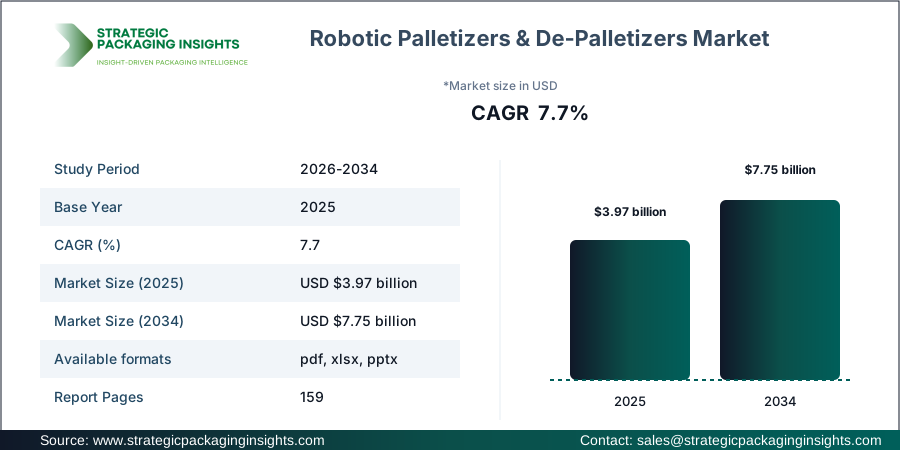
The Robotic Palletizers & De-Palletizers market was valued at $3.97 billion in 2025 and is projected to reach $7.75 billion by 2034, growing at a CAGR of 7.7% during the forecast period 2026-2034. This market is witnessing significant growth due to the increasing demand for automation in various industries such as food & beverage, logistics, and pharmaceuticals. The need for efficient and reliable material handling solutions is driving the adoption of robotic palletizers and de-palletizers. These systems offer enhanced productivity, reduced labor costs, and improved safety, making them an attractive investment for companies looking to optimize their operations.
Despite the promising growth prospects, the market faces certain challenges that could hinder its expansion. High initial investment costs and the complexity of integrating robotic systems into existing workflows are some of the key restraints. Additionally, the lack of skilled workforce to operate and maintain these advanced systems poses a challenge for market growth. However, advancements in technology and the development of user-friendly interfaces are expected to mitigate these challenges, providing ample growth opportunities for market players.
Report Scope
| Attributes | Details |
| Report Title | Robotic Palletizers & De-Palletizers Market Size, Future Growth and Forecast 2034 |
| By Product Type | Robotic Palletizers, Robotic De-Palletizers, Gantry Systems, Collaborative Palletizers |
| By Payload | Low, Medium, High |
| By Application | Case Palletizing, Bag Palletizing, Bottle Handling, Carton Handling |
| By End Use | Food & Beverage, Logistics, Consumer Goods, Pharmaceuticals |
| Region | Asia Pacific, North America, Latin America, Europe, Middle East & Africa |
| Base Year | 2025 |
| Historic Period | 2018-2024 |
| Forecast Period | 2026-2034 |
| Number of Pages | 159 |
| Customization Available | Yes* |
Opportunities & Threats
The Robotic Palletizers & De-Palletizers market presents numerous opportunities for growth, driven by the increasing adoption of automation across various industries. The food & beverage sector, in particular, is witnessing a surge in demand for robotic palletizers due to the need for efficient handling of packaged goods. The growing trend of e-commerce and the subsequent rise in logistics activities are also contributing to the market's expansion. Companies are increasingly investing in robotic solutions to enhance their supply chain efficiency and meet the rising consumer demand for fast and reliable delivery services.
Another significant opportunity lies in the development of collaborative robots, or cobots, which are designed to work alongside human operators. These robots offer flexibility and ease of use, making them ideal for small and medium-sized enterprises (SMEs) looking to automate their operations without significant capital investment. The increasing focus on sustainability and the need to reduce carbon footprints are also driving the demand for energy-efficient robotic systems, providing further growth opportunities for market players.
However, the market is not without its threats. The high cost of robotic systems and the complexity of integration can deter potential buyers, especially in developing regions where budget constraints are a significant concern. Additionally, the rapid pace of technological advancements poses a threat to existing market players, as they must continuously innovate to stay competitive. The risk of cyber-attacks and data breaches is another concern, as these systems rely heavily on digital technologies and connectivity.
Drivers & Challenges
The primary drivers of the Robotic Palletizers & De-Palletizers market include the increasing demand for automation in manufacturing and logistics, the need for efficient material handling solutions, and the growing focus on workplace safety. Automation helps companies reduce labor costs, increase productivity, and improve accuracy, making it an attractive option for businesses looking to optimize their operations. The rise of e-commerce and the need for fast and reliable delivery services are also driving the demand for robotic palletizers and de-palletizers, as they enable companies to handle large volumes of goods efficiently.
Technological advancements in robotics, such as the development of collaborative robots and the integration of artificial intelligence (AI) and machine learning, are further propelling market growth. These innovations are making robotic systems more versatile, user-friendly, and capable of handling complex tasks, thereby expanding their application scope across various industries. The increasing focus on sustainability and energy efficiency is also driving the demand for advanced robotic solutions that can help companies reduce their carbon footprints and comply with environmental regulations.
Despite the positive growth drivers, the market faces several challenges that could hinder its expansion. The high initial investment costs associated with robotic systems can be a significant barrier for small and medium-sized enterprises (SMEs) looking to adopt automation. Additionally, the complexity of integrating robotic systems into existing workflows and the lack of skilled workforce to operate and maintain these systems are major challenges. Companies must invest in training and development programs to address the skills gap and ensure the successful implementation of robotic solutions.
Market Share Analysis
The Robotic Palletizers & De-Palletizers market is characterized by intense competition, with several key players vying for market share. Companies such as FANUC, ABB, KUKA, Yaskawa Motoman, and Kawasaki Robotics are leading the market, leveraging their extensive experience and technological expertise to offer innovative solutions. These companies are focusing on expanding their product portfolios, enhancing their service offerings, and strengthening their distribution networks to maintain their competitive edge.
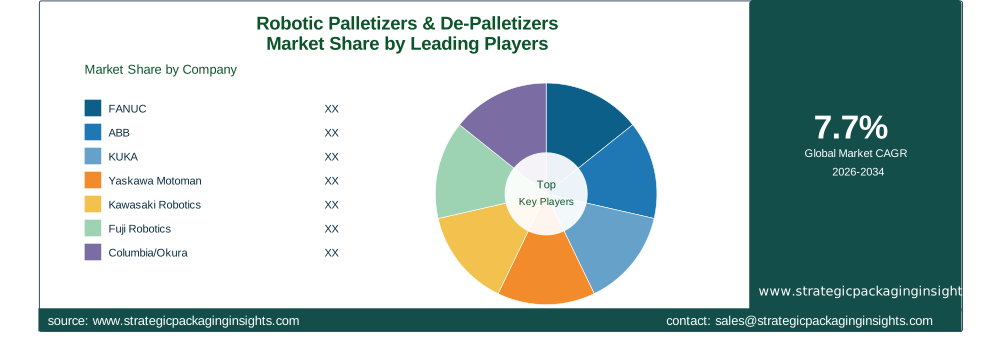
FANUC, a leading player in the market, holds a significant share due to its comprehensive range of robotic solutions and strong global presence. The company is known for its high-performance robots that cater to various industries, including automotive, electronics, and food & beverage. ABB, another major player, is renowned for its advanced robotic technologies and commitment to sustainability. The company's focus on developing energy-efficient solutions and its strong emphasis on research and development have helped it maintain a competitive position in the market.
KUKA, a prominent player in the robotic palletizers & de-palletizers market, is known for its innovative solutions and strong customer focus. The company's extensive product portfolio and strategic partnerships have enabled it to capture a significant market share. Yaskawa Motoman, with its wide range of robotic solutions and strong emphasis on customer satisfaction, is also a key player in the market. The company's focus on developing user-friendly and versatile robots has helped it gain a competitive edge.
Kawasaki Robotics, Fuji Robotics, Columbia/Okura, Premier Tech, Brenton, and Honeywell Intelligrated are other notable players in the market. These companies are focusing on expanding their product offerings, enhancing their technological capabilities, and strengthening their market presence to capture a larger share of the market. The competitive landscape is expected to remain dynamic, with companies continuously innovating and adapting to changing market trends and customer demands.
Key Highlights
- The Robotic Palletizers & De-Palletizers market is projected to grow at a CAGR of 7.7% from 2026 to 2034.
- Increasing demand for automation in the food & beverage and logistics sectors is driving market growth.
- Collaborative robots, or cobots, are gaining popularity due to their flexibility and ease of use.
- Technological advancements in AI and machine learning are enhancing the capabilities of robotic systems.
- The high initial investment cost is a significant barrier for small and medium-sized enterprises.
- Key players in the market include FANUC, ABB, KUKA, Yaskawa Motoman, and Kawasaki Robotics.
- The market is characterized by intense competition and continuous innovation.
Top Countries Insights
In the Robotic Palletizers & De-Palletizers market, the United States holds a significant share, with a market size of approximately $1.2 billion and a CAGR of 6%. The country's strong focus on automation and technological advancements in robotics are key growth drivers. The presence of major players and the increasing adoption of robotic solutions in the food & beverage and logistics sectors further contribute to market growth. However, the high cost of robotic systems and the complexity of integration remain challenges.
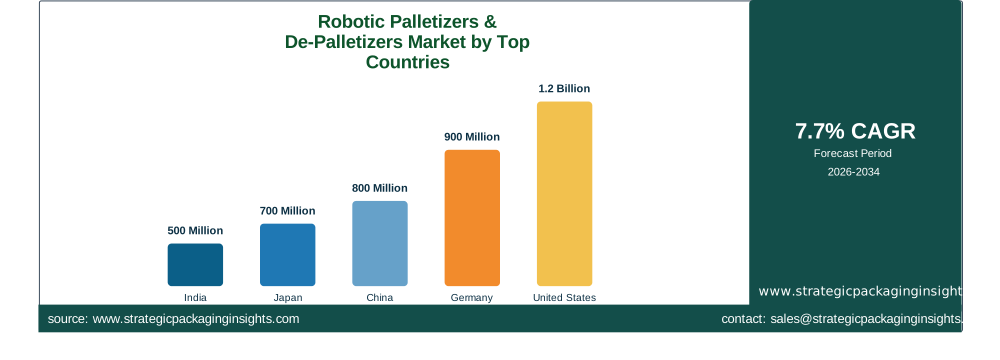
Germany is another leading market, with a market size of around $900 million and a CAGR of 5%. The country's strong manufacturing base and emphasis on Industry 4.0 initiatives are driving the demand for robotic palletizers and de-palletizers. The government's support for automation and the presence of key players such as KUKA and ABB are also contributing to market growth. However, the lack of skilled workforce and high initial investment costs are challenges that need to be addressed.
China, with a market size of approximately $800 million and a CAGR of 8%, is experiencing rapid growth in the robotic palletizers & de-palletizers market. The country's focus on industrial automation and the increasing demand for efficient material handling solutions are key growth drivers. The government's support for automation and the presence of local players are also contributing to market expansion. However, the high cost of robotic systems and the lack of skilled workforce remain challenges.
Japan, with a market size of around $700 million and a CAGR of 4%, is a key player in the robotic palletizers & de-palletizers market. The country's strong focus on automation and technological advancements in robotics are driving market growth. The presence of major players such as FANUC and Yaskawa Motoman further contributes to market expansion. However, the high cost of robotic systems and the complexity of integration are challenges that need to be addressed.
India, with a market size of approximately $500 million and a CAGR of 9%, is emerging as a significant market for robotic palletizers & de-palletizers. The country's focus on industrial automation and the increasing demand for efficient material handling solutions are key growth drivers. The government's support for automation and the presence of local players are also contributing to market expansion. However, the high cost of robotic systems and the lack of skilled workforce remain challenges.
Robotic Palletizers & De-Palletizers Market Segments Insights

Product Type Analysis
The Robotic Palletizers & De-Palletizers market is segmented by product type into robotic palletizers, robotic de-palletizers, gantry systems, and collaborative palletizers. Robotic palletizers are widely used in industries such as food & beverage and logistics due to their efficiency and reliability in handling packaged goods. The increasing demand for automation and the need for efficient material handling solutions are driving the growth of this segment. Robotic de-palletizers, on the other hand, are gaining traction in industries where the handling of incoming goods is critical. The development of advanced technologies and the integration of AI and machine learning are enhancing the capabilities of these systems, making them more versatile and user-friendly.
Gantry systems, known for their precision and flexibility, are also witnessing increased adoption in various industries. These systems are ideal for applications that require high-speed and accurate handling of goods. The growing focus on automation and the need for efficient material handling solutions are driving the demand for gantry systems. Collaborative palletizers, or cobots, are gaining popularity due to their ability to work alongside human operators. These robots offer flexibility and ease of use, making them ideal for small and medium-sized enterprises (SMEs) looking to automate their operations without significant capital investment.
Payload Analysis
The market is segmented by payload into low, medium, and high categories. Low payload robotic systems are widely used in industries such as food & beverage and consumer goods, where the handling of lightweight packages is common. The increasing demand for automation and the need for efficient material handling solutions are driving the growth of this segment. Medium payload systems are gaining traction in industries where the handling of moderately heavy goods is required. The development of advanced technologies and the integration of AI and machine learning are enhancing the capabilities of these systems, making them more versatile and user-friendly.
High payload systems, known for their ability to handle heavy goods, are witnessing increased adoption in industries such as logistics and pharmaceuticals. These systems are ideal for applications that require the handling of large volumes of goods efficiently. The growing focus on automation and the need for efficient material handling solutions are driving the demand for high payload systems. The increasing focus on sustainability and energy efficiency is also driving the demand for advanced robotic solutions that can help companies reduce their carbon footprints and comply with environmental regulations.
Application Analysis
The Robotic Palletizers & De-Palletizers market is segmented by application into case palletizing, bag palletizing, bottle handling, and carton handling. Case palletizing is widely used in industries such as food & beverage and logistics due to its efficiency and reliability in handling packaged goods. The increasing demand for automation and the need for efficient material handling solutions are driving the growth of this segment. Bag palletizing, on the other hand, is gaining traction in industries where the handling of bulk goods is critical. The development of advanced technologies and the integration of AI and machine learning are enhancing the capabilities of these systems, making them more versatile and user-friendly.
Bottle handling, known for its precision and flexibility, is also witnessing increased adoption in various industries. These systems are ideal for applications that require high-speed and accurate handling of goods. The growing focus on automation and the need for efficient material handling solutions are driving the demand for bottle handling systems. Carton handling, or cobots, are gaining popularity due to their ability to work alongside human operators. These robots offer flexibility and ease of use, making them ideal for small and medium-sized enterprises (SMEs) looking to automate their operations without significant capital investment.
End Use Analysis
The market is segmented by end use into food & beverage, logistics, consumer goods, and pharmaceuticals. The food & beverage sector is witnessing a surge in demand for robotic palletizers due to the need for efficient handling of packaged goods. The growing trend of e-commerce and the subsequent rise in logistics activities are also contributing to the market's expansion. Companies are increasingly investing in robotic solutions to enhance their supply chain efficiency and meet the rising consumer demand for fast and reliable delivery services.
The logistics sector is another significant end-use segment, driven by the increasing demand for automation and the need for efficient material handling solutions. The development of advanced technologies and the integration of AI and machine learning are enhancing the capabilities of these systems, making them more versatile and user-friendly. The consumer goods and pharmaceuticals sectors are also witnessing increased adoption of robotic palletizers and de-palletizers, driven by the need for efficient handling of goods and the growing focus on automation.
Robotic Palletizers & De-Palletizers Market Segments
The Robotic Palletizers & De-Palletizers market has been segmented on the basis ofBy Product Type
- Robotic Palletizers
- Robotic De-Palletizers
- Gantry Systems
- Collaborative Palletizers
By Payload
- Low
- Medium
- High
By Application
- Case Palletizing
- Bag Palletizing
- Bottle Handling
- Carton Handling
By End Use
- Food & Beverage
- Logistics
- Consumer Goods
- Pharmaceuticals
Region
- Asia Pacific
- North America
- Latin America
- Europe
- Middle East & Africa




