


Robotic Packaging Machines Market Outlook
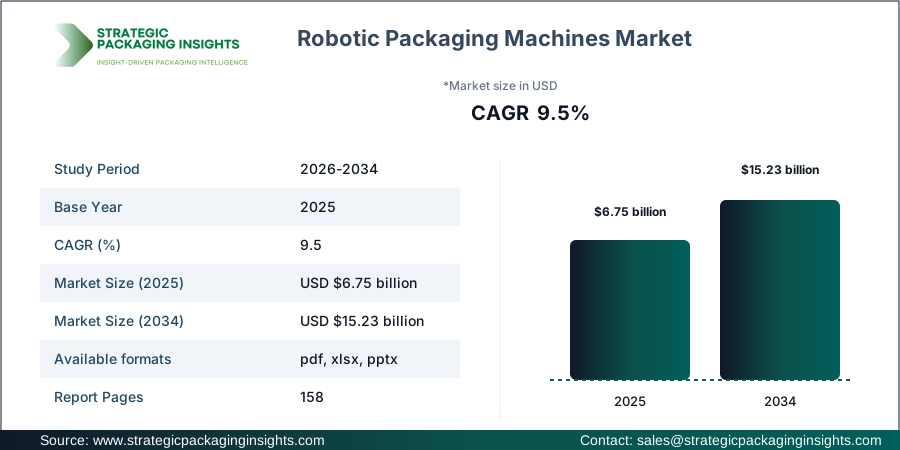
The Robotic Packaging Machines market was valued at $6.75 billion in 2025 and is projected to reach $15.23 billion by 2034, growing at a CAGR of 9.5% during the forecast period 2026-2034. This market is witnessing significant growth due to the increasing demand for automation in packaging processes across various industries. The need for efficiency, precision, and speed in packaging operations is driving the adoption of robotic solutions. Additionally, the rise in e-commerce and the growing trend of smart factories are further propelling the market forward. The integration of advanced technologies such as AI and IoT in robotic packaging machines is enhancing their capabilities, making them more adaptable and efficient in handling diverse packaging tasks.
Despite the promising growth prospects, the market faces certain challenges that could hinder its expansion. High initial investment costs and the complexity of integrating robotic systems into existing production lines are significant barriers for small and medium-sized enterprises. Moreover, the lack of skilled workforce to operate and maintain these advanced machines poses a challenge. However, the increasing focus on reducing operational costs and improving productivity is expected to drive the demand for robotic packaging machines in the long run. Regulatory standards and safety concerns related to the use of robots in packaging processes also need to be addressed to ensure smooth market growth.
Report Scope
| Attributes | Details |
| Report Title | Robotic Packaging Machines Market Size, Future Growth and Forecast 2034 |
| By Machine Type | Robotic Pick-and-Place, Robotic Case Packers, Robotic Palletizers |
| By Robot Type | SCARA, Delta, Articulated, Collaborative |
| By Application | Food, Pharma, E-commerce, Consumer Goods |
| By End Use | Manufacturers, Warehouses, Contract Packers, 3PLs |
| Region | Asia Pacific, North America, Latin America, Europe, Middle East & Africa |
| Base Year | 2025 |
| Historic Period | 2018-2024 |
| Forecast Period | 2026-2034 |
| Number of Pages | 158 |
| Customization Available | Yes* |
Opportunities & Threats
The Robotic Packaging Machines market presents numerous opportunities for growth, primarily driven by the increasing demand for automation in the packaging industry. As companies strive to enhance their operational efficiency and reduce labor costs, the adoption of robotic packaging solutions is becoming more prevalent. The rise of e-commerce and the need for faster and more accurate packaging processes are further fueling the demand for these machines. Additionally, the integration of advanced technologies such as artificial intelligence and machine learning is opening new avenues for innovation in robotic packaging, enabling machines to perform complex tasks with greater precision and speed.
Another significant opportunity lies in the growing trend of smart factories and Industry 4.0. As manufacturers aim to create more connected and automated production environments, the demand for robotic packaging machines is expected to rise. These machines can seamlessly integrate with other automated systems, providing real-time data and analytics to optimize packaging processes. Furthermore, the increasing focus on sustainability and eco-friendly packaging solutions is driving the development of robotic machines that can handle biodegradable and recyclable materials, aligning with the global push towards greener practices.
However, the market also faces certain threats that could impact its growth trajectory. One of the primary challenges is the high initial investment required for purchasing and implementing robotic packaging machines. This can be a significant barrier for small and medium-sized enterprises, limiting their ability to adopt these advanced solutions. Additionally, the complexity of integrating robotic systems into existing production lines can pose challenges, requiring specialized expertise and resources. Moreover, concerns related to data security and privacy in connected robotic systems need to be addressed to ensure the safe and secure operation of these machines.
Drivers & Challenges
The Robotic Packaging Machines market is driven by several key factors, including the increasing demand for automation in packaging processes. As industries strive to enhance their operational efficiency and reduce labor costs, the adoption of robotic packaging solutions is becoming more prevalent. The rise of e-commerce and the need for faster and more accurate packaging processes are further fueling the demand for these machines. Additionally, the integration of advanced technologies such as artificial intelligence and machine learning is opening new avenues for innovation in robotic packaging, enabling machines to perform complex tasks with greater precision and speed.
Another significant driver is the growing trend of smart factories and Industry 4.0. As manufacturers aim to create more connected and automated production environments, the demand for robotic packaging machines is expected to rise. These machines can seamlessly integrate with other automated systems, providing real-time data and analytics to optimize packaging processes. Furthermore, the increasing focus on sustainability and eco-friendly packaging solutions is driving the development of robotic machines that can handle biodegradable and recyclable materials, aligning with the global push towards greener practices.
Despite these drivers, the market faces several challenges that could hinder its growth. One of the primary challenges is the high initial investment required for purchasing and implementing robotic packaging machines. This can be a significant barrier for small and medium-sized enterprises, limiting their ability to adopt these advanced solutions. Additionally, the complexity of integrating robotic systems into existing production lines can pose challenges, requiring specialized expertise and resources. Moreover, concerns related to data security and privacy in connected robotic systems need to be addressed to ensure the safe and secure operation of these machines.
Market Share Analysis
The competitive landscape of the Robotic Packaging Machines market is characterized by the presence of several key players who are driving innovation and growth in the industry. Companies such as ABB, FANUC, Yaskawa, KUKA, Omron, Schneider Electric, Rockwell Automation, Syntegon, ProMach, and Coesia are at the forefront of developing advanced robotic packaging solutions. These companies are investing heavily in research and development to enhance the capabilities of their machines and expand their product portfolios. The market is highly competitive, with players focusing on strategic partnerships, mergers, and acquisitions to strengthen their market position and expand their global footprint.
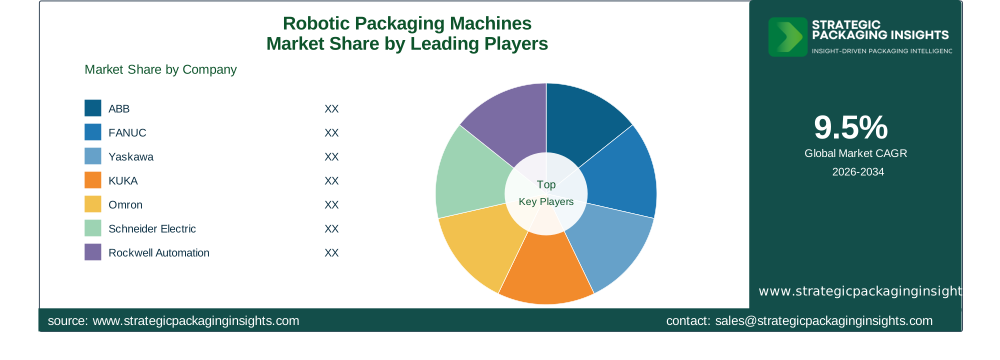
ABB is a leading player in the robotic packaging machines market, known for its innovative solutions and extensive product range. The company has a strong presence in various industries, including food and beverage, pharmaceuticals, and consumer goods. FANUC, another major player, is renowned for its high-performance robotic systems that offer precision and efficiency in packaging processes. Yaskawa, with its advanced robotic technologies, is also a key contributor to the market, providing solutions that cater to diverse packaging needs.
KUKA is a prominent name in the robotic packaging machines market, offering a wide range of robotic solutions for various applications. The company's focus on automation and digitalization has enabled it to deliver cutting-edge technologies that enhance packaging efficiency. Omron, known for its expertise in industrial automation, provides robotic packaging solutions that integrate seamlessly with other automated systems, ensuring smooth and efficient operations. Schneider Electric, with its emphasis on sustainability and energy efficiency, offers robotic packaging machines that align with the growing demand for eco-friendly solutions.
Rockwell Automation, Syntegon, ProMach, and Coesia are also significant players in the market, each contributing to the development of advanced robotic packaging technologies. These companies are focused on expanding their product offerings and enhancing their technological capabilities to meet the evolving needs of the packaging industry. The competitive landscape is dynamic, with companies continuously striving to innovate and deliver solutions that offer greater efficiency, precision, and sustainability in packaging processes.
Key Highlights
- The Robotic Packaging Machines market is projected to grow from $6.75 billion in 2025 to $15.23 billion by 2034, at a CAGR of 9.5%.
- Key drivers include the increasing demand for automation, the rise of e-commerce, and the integration of AI and IoT technologies.
- Challenges include high initial investment costs and the complexity of integrating robotic systems into existing production lines.
- Opportunities lie in the growing trend of smart factories and the demand for eco-friendly packaging solutions.
- Key players in the market include ABB, FANUC, Yaskawa, KUKA, Omron, Schneider Electric, Rockwell Automation, Syntegon, ProMach, and Coesia.
- The market is characterized by intense competition, with companies focusing on innovation and strategic partnerships.
- Regulatory standards and safety concerns related to robotic packaging processes need to be addressed for smooth market growth.
Top Countries Insights
In the Robotic Packaging Machines market, the United States stands out as a leading country, with a market size of approximately $3.5 billion and a CAGR of 8%. The country's strong focus on automation and technological advancements in packaging processes is driving market growth. The presence of major players and the increasing adoption of smart factory solutions are further contributing to the expansion of the market in the United States. However, challenges such as high initial investment costs and the need for skilled workforce remain significant barriers.
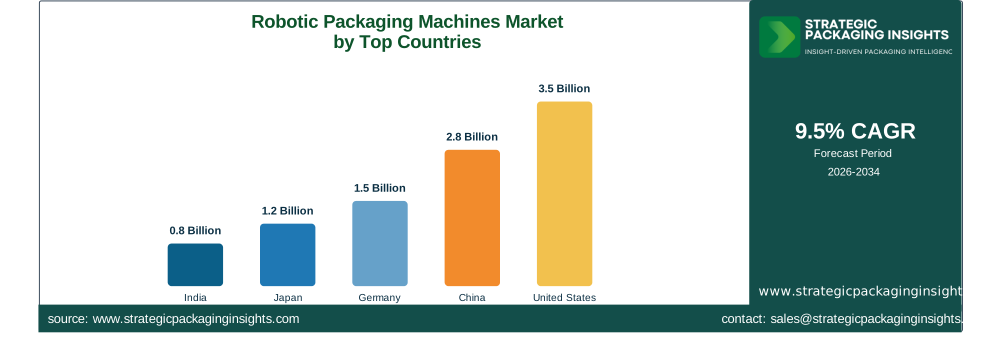
China is another key player in the market, with a market size of around $2.8 billion and a CAGR of 12%. The country's rapid industrialization and the growing demand for efficient packaging solutions in the food and beverage and e-commerce sectors are driving the market. Government initiatives to promote automation and the development of smart manufacturing facilities are also playing a crucial role in the market's growth. However, the market faces challenges related to regulatory standards and the integration of advanced technologies.
Germany, with a market size of approximately $1.5 billion and a CAGR of 9%, is a significant contributor to the Robotic Packaging Machines market in Europe. The country's strong manufacturing base and focus on innovation in packaging technologies are driving market growth. The increasing demand for sustainable and eco-friendly packaging solutions is also contributing to the market's expansion. However, the market faces challenges related to high costs and the complexity of integrating robotic systems into existing production lines.
Japan, with a market size of around $1.2 billion and a CAGR of 10%, is a key player in the Asia Pacific region. The country's advanced technological capabilities and focus on automation in packaging processes are driving market growth. The presence of major players and the increasing adoption of smart factory solutions are further contributing to the market's expansion. However, challenges such as high initial investment costs and the need for skilled workforce remain significant barriers.
India, with a market size of approximately $0.8 billion and a CAGR of 15%, is emerging as a significant player in the Robotic Packaging Machines market. The country's rapid industrialization and the growing demand for efficient packaging solutions in the food and beverage and e-commerce sectors are driving the market. Government initiatives to promote automation and the development of smart manufacturing facilities are also playing a crucial role in the market's growth. However, the market faces challenges related to regulatory standards and the integration of advanced technologies.
Robotic Packaging Machines Market Segments Insights

Machine Type Analysis
The Robotic Packaging Machines market is segmented by machine type into robotic pick-and-place, robotic case packers, and robotic palletizers. The robotic pick-and-place segment is witnessing significant growth due to its ability to handle delicate and lightweight products with precision and speed. These machines are widely used in the food and beverage and pharmaceutical industries, where accuracy and efficiency are paramount. The increasing demand for automation in packaging processes is driving the adoption of robotic pick-and-place machines, as they offer flexibility and adaptability in handling various packaging tasks.
Robotic case packers are also gaining traction in the market, driven by the need for efficient and reliable packaging solutions in the consumer goods and e-commerce sectors. These machines are designed to handle a wide range of packaging formats and sizes, making them ideal for high-volume production environments. The integration of advanced technologies such as vision systems and AI is enhancing the capabilities of robotic case packers, enabling them to perform complex tasks with greater accuracy and speed. The growing trend of smart factories and the demand for connected and automated packaging solutions are further propelling the growth of this segment.
Robotic palletizers are experiencing steady growth, driven by the increasing demand for efficient and cost-effective palletizing solutions in the manufacturing and logistics sectors. These machines are designed to handle heavy and bulky products, making them ideal for high-volume production environments. The integration of advanced technologies such as AI and IoT is enhancing the capabilities of robotic palletizers, enabling them to perform complex tasks with greater precision and speed. The growing trend of smart factories and the demand for connected and automated packaging solutions are further propelling the growth of this segment.
Robot Type Analysis
The Robotic Packaging Machines market is segmented by robot type into SCARA, delta, articulated, and collaborative robots. SCARA robots are widely used in the packaging industry due to their high-speed and precision capabilities. These robots are ideal for pick-and-place applications, where speed and accuracy are critical. The increasing demand for automation in packaging processes is driving the adoption of SCARA robots, as they offer flexibility and adaptability in handling various packaging tasks. The integration of advanced technologies such as vision systems and AI is enhancing the capabilities of SCARA robots, enabling them to perform complex tasks with greater accuracy and speed.
Delta robots are also gaining traction in the market, driven by their ability to handle high-speed and high-precision applications. These robots are widely used in the food and beverage and pharmaceutical industries, where accuracy and efficiency are paramount. The increasing demand for automation in packaging processes is driving the adoption of delta robots, as they offer flexibility and adaptability in handling various packaging tasks. The integration of advanced technologies such as vision systems and AI is enhancing the capabilities of delta robots, enabling them to perform complex tasks with greater accuracy and speed.
Articulated robots are experiencing steady growth, driven by their ability to handle complex and heavy-duty applications. These robots are widely used in the manufacturing and logistics sectors, where precision and efficiency are critical. The increasing demand for automation in packaging processes is driving the adoption of articulated robots, as they offer flexibility and adaptability in handling various packaging tasks. The integration of advanced technologies such as vision systems and AI is enhancing the capabilities of articulated robots, enabling them to perform complex tasks with greater accuracy and speed.
Application Analysis
The Robotic Packaging Machines market is segmented by application into food, pharma, e-commerce, and consumer goods. The food industry is a major driver of the market, with the increasing demand for efficient and reliable packaging solutions driving the adoption of robotic packaging machines. These machines are designed to handle a wide range of packaging formats and sizes, making them ideal for high-volume production environments. The integration of advanced technologies such as vision systems and AI is enhancing the capabilities of robotic packaging machines, enabling them to perform complex tasks with greater accuracy and speed.
The pharmaceutical industry is also a significant contributor to the market, with the increasing demand for precision and accuracy in packaging processes driving the adoption of robotic packaging machines. These machines are designed to handle delicate and lightweight products with precision and speed, making them ideal for the pharmaceutical industry. The integration of advanced technologies such as vision systems and AI is enhancing the capabilities of robotic packaging machines, enabling them to perform complex tasks with greater accuracy and speed.
The e-commerce and consumer goods sectors are experiencing steady growth, driven by the increasing demand for efficient and reliable packaging solutions. These machines are designed to handle a wide range of packaging formats and sizes, making them ideal for high-volume production environments. The integration of advanced technologies such as vision systems and AI is enhancing the capabilities of robotic packaging machines, enabling them to perform complex tasks with greater accuracy and speed. The growing trend of smart factories and the demand for connected and automated packaging solutions are further propelling the growth of this segment.
End Use Analysis
The Robotic Packaging Machines market is segmented by end use into manufacturers, warehouses, contract packers, and 3PLs. Manufacturers are a major driver of the market, with the increasing demand for efficient and reliable packaging solutions driving the adoption of robotic packaging machines. These machines are designed to handle a wide range of packaging formats and sizes, making them ideal for high-volume production environments. The integration of advanced technologies such as vision systems and AI is enhancing the capabilities of robotic packaging machines, enabling them to perform complex tasks with greater accuracy and speed.
Warehouses and contract packers are also significant contributors to the market, with the increasing demand for efficient and reliable packaging solutions driving the adoption of robotic packaging machines. These machines are designed to handle a wide range of packaging formats and sizes, making them ideal for high-volume production environments. The integration of advanced technologies such as vision systems and AI is enhancing the capabilities of robotic packaging machines, enabling them to perform complex tasks with greater accuracy and speed.
3PLs are experiencing steady growth, driven by the increasing demand for efficient and reliable packaging solutions. These machines are designed to handle a wide range of packaging formats and sizes, making them ideal for high-volume production environments. The integration of advanced technologies such as vision systems and AI is enhancing the capabilities of robotic packaging machines, enabling them to perform complex tasks with greater accuracy and speed. The growing trend of smart factories and the demand for connected and automated packaging solutions are further propelling the growth of this segment.
Robotic Packaging Machines Market Segments
The Robotic Packaging Machines market has been segmented on the basis ofBy Machine Type
- Robotic Pick-and-Place
- Robotic Case Packers
- Robotic Palletizers
By Robot Type
- SCARA
- Delta
- Articulated
- Collaborative
By Application
- Food
- Pharma
- E-commerce
- Consumer Goods
By End Use
- Manufacturers
- Warehouses
- Contract Packers
- 3PLs
Region
- Asia Pacific
- North America
- Latin America
- Europe
- Middle East & Africa




