


Robotic Case Packing Systems Market Outlook
The Robotic Case Packing Systems market size was valued at USD 3.42 Billion in 2025 and is anticipated to reach USD 8.96 Billion by 2034, growing at a CAGR of 11.3% during the forecast period according to Strategic Packaging Insights. This growth trajectory is driven by the increasing demand for automation in packaging processes across various industries, including food and beverage, pharmaceuticals, and consumer goods. Companies like ABB Ltd. and FANUC Corporation are at the forefront of this technological advancement, providing innovative robotic solutions that enhance efficiency and reduce labor costs. The integration of advanced technologies such as AI and IoT in robotic systems is further propelling market growth, enabling real-time monitoring and predictive maintenance capabilities.
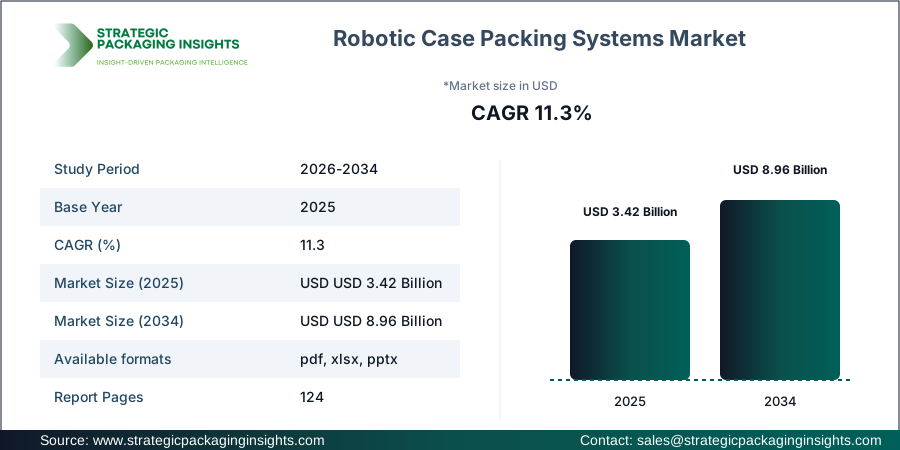
One of the most impactful drivers of the Robotic Case Packing Systems market is the rising emphasis on operational efficiency and productivity. As industries face increasing pressure to optimize their supply chains and reduce operational costs, the adoption of robotic case packing systems becomes a strategic imperative. According to industry reports, the implementation of these systems can lead to a significant reduction in packaging time and errors, thereby enhancing overall productivity. Additionally, the growing trend of customization and flexibility in packaging solutions is encouraging manufacturers to invest in robotic systems that can handle diverse packaging requirements with precision and speed. This shift towards automation is not only driven by cost savings but also by the need to meet stringent quality standards and regulatory compliance, making robotic case packing systems an essential component of modern manufacturing processes.
Report Scope
| Attributes | Details |
| Report Title | Robotic Case Packing Systems Market Size, Future Growth and Forecast 2034 |
| By Robot Type | Articulated Robots, Delta Robots, SCARA Robots, Collaborative Robots (Cobots), Cartesian Robots |
| By Packing Type | Top Load Case Packing, Side Load Case Packing, Wraparound Case Packing, Pick-and-Place Case Packing |
| By End User | Food & Beverage, Pharmaceuticals, Personal Care & Cosmetics, Consumer Goods, E-Commerce, Industrial Manufacturing |
| By Automation Level | Semi-Automatic, Fully Automatic |
| Region | Asia Pacific, North America, Latin America, Europe, Middle East & Africa |
| Base Year | 2025 |
| Historic Period | 2018-2024 |
| Forecast Period | 2026-2034 |
| Number of Pages | 124 |
| Customization Available | Yes* |
Sustainability & Circular Economy Analysis
Sustainability initiatives and circular economy practices are increasingly shaping the packaging market, with a strong focus on reducing environmental impact and promoting resource efficiency. In the context of robotic case packing systems, the use of recyclable materials and eco-friendly packaging solutions is gaining traction. Companies are investing in lightweight packaging designs that minimize material usage while maintaining product integrity. This shift towards sustainable packaging is driven by consumer preferences for environmentally friendly products and stringent packaging regulations that mandate waste reduction and recycling efforts.
The integration of sustainability trends into packaging design and manufacturing processes is influencing investment decisions and supply chain strategies. Packaging manufacturers are adopting waste reduction strategies and ESG initiatives to align with global sustainability goals. The emphasis on reducing carbon footprints and enhancing energy efficiency is prompting companies to innovate in eco-friendly material development and packaging machinery. These trends are not only enhancing regulatory compliance but also providing a competitive edge in the market by appealing to environmentally conscious consumers and investors.
Extended Producer Responsibility (EPR) is another critical aspect of the circular economy that is impacting the packaging industry. EPR policies require manufacturers to take responsibility for the entire lifecycle of their products, including end-of-life disposal and recycling. This has led to increased collaboration between packaging manufacturers, brand owners, and recycling networks to develop sustainable packaging solutions. As a result, companies are focusing on designing packaging that is easy to recycle and reuse, thereby contributing to a circular economy. These sustainability trends are expected to drive long-term market competitiveness and foster innovation in the packaging sector.
Packaging Value Chain & Supply Chain Analysis
The packaging value chain and supply chain ecosystem are critical components of the Robotic Case Packing Systems market, influencing overall market performance and business competitiveness. Raw material sourcing is a fundamental aspect, with packaging converters and manufacturers relying on a steady supply of high-quality materials to produce efficient and durable packaging solutions. The availability of raw materials and the efficiency of procurement strategies directly impact production capabilities and cost-effectiveness, making supply chain resilience a key focus for industry players.
Packaging machinery, including robotic case packing systems, plays a pivotal role in enhancing supply chain efficiency. These systems streamline packaging processes, reduce labor dependency, and improve throughput, thereby optimizing logistics and distribution channels. Strategic partnerships between packaging machinery manufacturers and brand owners are essential for developing customized solutions that meet specific industry requirements. Additionally, localization and global sourcing strategies are being adopted to mitigate risks associated with supply chain disruptions and ensure timely delivery of products to end-users.
Recycling networks and inventory management are integral to the packaging supply chain, particularly in the context of sustainability and circular economy practices. Companies are investing in advanced inventory management systems to optimize stock levels and reduce waste. The collaboration between packaging manufacturers and recycling networks is crucial for developing sustainable packaging solutions that align with regulatory compliance and consumer expectations. These efforts are not only enhancing supply chain efficiency but also contributing to the overall competitiveness of the Robotic Case Packing Systems market by promoting sustainable business practices and reducing environmental impact.
Opportunities & Threats
The Robotic Case Packing Systems market presents significant opportunities for growth, driven by the increasing demand for automation and technological advancements. The integration of AI and IoT in robotic systems offers opportunities for real-time monitoring, predictive maintenance, and enhanced operational efficiency. Companies like KUKA AG and Yaskawa Electric Corporation are leveraging these technologies to develop innovative solutions that cater to diverse industry needs. The growing trend of customization in packaging solutions is also creating opportunities for manufacturers to offer flexible and adaptable robotic systems that can handle a wide range of packaging requirements.
Another opportunity lies in the expanding e-commerce sector, which is driving the demand for efficient and reliable packaging solutions. As online retail continues to grow, the need for automated packaging systems that can handle high volumes and ensure timely delivery is becoming increasingly important. This trend is encouraging manufacturers to invest in advanced robotic systems that can enhance productivity and reduce operational costs. Additionally, the focus on sustainability and eco-friendly packaging solutions is opening new avenues for innovation and market expansion, as companies strive to meet consumer preferences and regulatory requirements.
Despite the promising opportunities, the Robotic Case Packing Systems market faces certain threats that could hinder growth. One of the primary challenges is the high initial investment required for implementing robotic systems, which can be a barrier for small and medium-sized enterprises. Additionally, the complexity of integrating robotic systems into existing production lines and the need for skilled personnel to operate and maintain these systems can pose challenges for manufacturers. Regulatory compliance and the need to adhere to stringent safety standards are also potential threats that could impact market growth, as companies must navigate complex regulatory landscapes to ensure compliance and avoid penalties.
Drivers & Challenges
The Robotic Case Packing Systems market is driven by several key factors, including the increasing demand for automation and the need to enhance operational efficiency. As industries strive to optimize their supply chains and reduce labor costs, the adoption of robotic systems becomes a strategic imperative. Companies like Schneider Packaging Equipment and Syntegon Technology are leading the way in providing innovative solutions that streamline packaging processes and improve productivity. The integration of advanced technologies such as AI and IoT in robotic systems is further driving market growth, enabling real-time monitoring and predictive maintenance capabilities.
Another significant driver is the growing emphasis on sustainability and eco-friendly packaging solutions. As consumers become more environmentally conscious, there is a rising demand for packaging solutions that minimize environmental impact and promote resource efficiency. This trend is encouraging manufacturers to invest in sustainable packaging materials and technologies that align with global sustainability goals. The focus on reducing carbon footprints and enhancing energy efficiency is also driving innovation in the packaging sector, as companies strive to meet regulatory requirements and consumer expectations.
Despite the positive drivers, the Robotic Case Packing Systems market faces several challenges that could impact growth. One of the primary challenges is the high initial investment required for implementing robotic systems, which can be a barrier for small and medium-sized enterprises. Additionally, the complexity of integrating robotic systems into existing production lines and the need for skilled personnel to operate and maintain these systems can pose challenges for manufacturers. Regulatory compliance and the need to adhere to stringent safety standards are also potential challenges that could impact market growth, as companies must navigate complex regulatory landscapes to ensure compliance and avoid penalties.
Market Share Analysis
The competitive landscape of the Robotic Case Packing Systems market is characterized by the presence of several key players who are driving innovation and market growth. Companies like ABB Ltd., FANUC Corporation, and KUKA AG are leading the market with their advanced robotic solutions and strong global presence. These companies are investing heavily in research and development to enhance their product offerings and maintain a competitive edge. The focus on technological advancements and strategic partnerships is enabling these companies to expand their market share and cater to diverse industry needs.
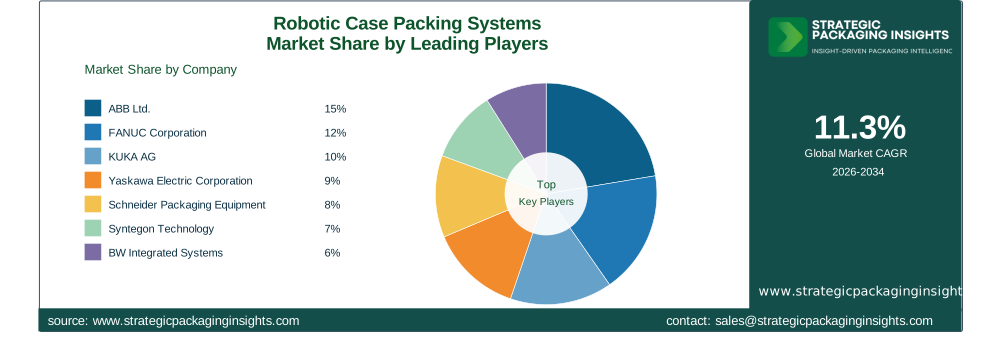
ABB Ltd. is a prominent player in the market, known for its innovative robotic solutions that enhance operational efficiency and productivity. The company's strong focus on research and development has enabled it to introduce cutting-edge technologies that cater to various industry requirements. FANUC Corporation is another key player, renowned for its high-performance robotic systems that offer precision and reliability. The company's extensive global presence and strategic partnerships have contributed to its strong market position.
KUKA AG is a leading provider of robotic solutions, offering a wide range of products that cater to different industry needs. The company's commitment to innovation and sustainability has enabled it to develop advanced robotic systems that align with global sustainability goals. Yaskawa Electric Corporation is also a major player in the market, known for its high-quality robotic solutions that enhance productivity and reduce operational costs. The company's strong focus on customer satisfaction and technological advancements has contributed to its success in the market.
Other notable companies in the market include Schneider Packaging Equipment, Syntegon Technology, and BW Integrated Systems, all of which are known for their innovative solutions and strong market presence. These companies are investing in research and development to enhance their product offerings and maintain a competitive edge. The focus on sustainability and eco-friendly packaging solutions is also driving innovation in the market, as companies strive to meet consumer preferences and regulatory requirements.
Key Highlights
- Market Size: The Robotic Case Packing Systems market was valued at USD 3.42 Billion in 2025 and is projected to reach USD 8.96 Billion by 2034.
- Growth Rate: The market is expected to grow at a CAGR of 11.3% during the forecast period.
- Leading Companies: Key players include ABB Ltd., FANUC Corporation, and KUKA AG.
- Technological Advancements: Integration of AI and IoT in robotic systems is driving market growth.
- Sustainability Focus: Increasing demand for eco-friendly packaging solutions is influencing market trends.
- Regional Insights: Asia Pacific is expected to witness significant growth due to rising industrialization.
- End-User Demand: High demand from the food and beverage and e-commerce sectors is driving market expansion.
Robotic Case Packing Systems Market Segments Insights

By Robot Type Analysis
The Robotic Case Packing Systems market is segmented by robot type, including articulated robots, delta robots, SCARA robots, collaborative robots (cobots), and cartesian robots. Articulated robots are widely used due to their versatility and ability to handle complex packaging tasks with precision. These robots are favored in industries such as food and beverage and pharmaceuticals, where precision and speed are critical. Delta robots, known for their high-speed capabilities, are gaining traction in applications that require rapid pick-and-place operations. SCARA robots, with their compact design and high-speed performance, are ideal for applications in confined spaces, making them popular in the electronics and consumer goods sectors.
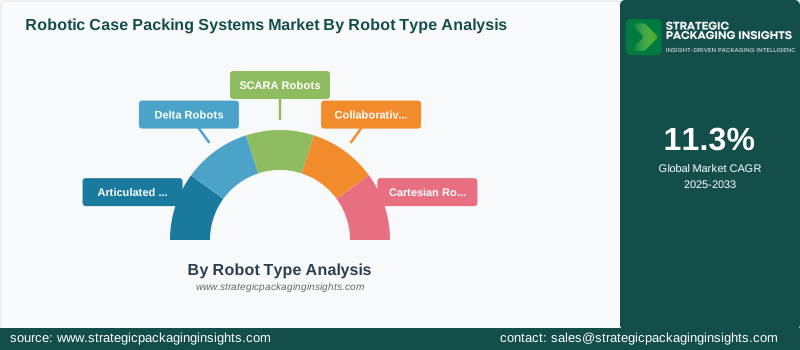
Collaborative robots, or cobots, are emerging as a significant trend in the market, driven by their ability to work alongside human operators safely. These robots are designed to enhance productivity and flexibility in packaging operations, making them suitable for small and medium-sized enterprises. Cartesian robots, known for their linear motion and precision, are used in applications that require high accuracy and repeatability. The growing demand for automation and the need for efficient packaging solutions are driving the adoption of these robotic systems across various industries.
By Packing Type Analysis
The market is also segmented by packing type, including top load case packing, side load case packing, wraparound case packing, and pick-and-place case packing. Top load case packing is widely used in industries such as food and beverage and pharmaceuticals, where products need to be packed securely and efficiently. This packing type offers flexibility and ease of integration into existing production lines, making it a popular choice among manufacturers. Side load case packing is preferred for applications that require gentle handling of products, such as fragile items and consumer goods.
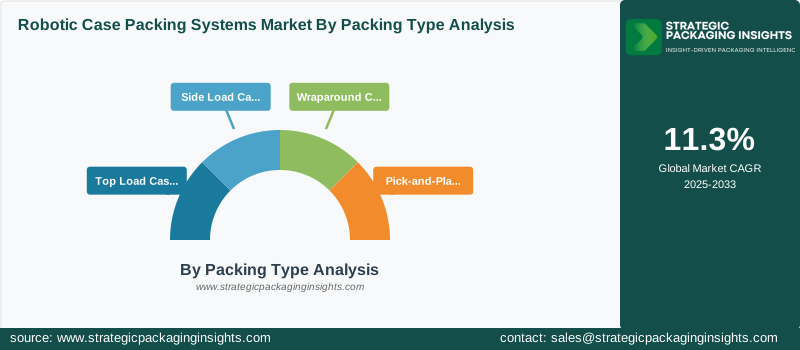
Wraparound case packing is gaining popularity due to its ability to provide secure and compact packaging solutions. This packing type is ideal for applications that require high-speed operations and minimal material usage. Pick-and-place case packing is widely used in industries that require precise and rapid handling of products, such as electronics and personal care products. The growing demand for efficient and reliable packaging solutions is driving the adoption of these packing types, as manufacturers seek to enhance productivity and reduce operational costs.
By End User Analysis
The Robotic Case Packing Systems market is segmented by end-user, including food and beverage, pharmaceuticals, personal care and cosmetics, consumer goods, e-commerce, and industrial manufacturing. The food and beverage industry is a major end-user of robotic case packing systems, driven by the need for efficient and reliable packaging solutions that ensure product safety and quality. The pharmaceuticals industry is also a significant end-user, as robotic systems offer precision and speed in packaging operations, ensuring compliance with stringent regulatory standards.
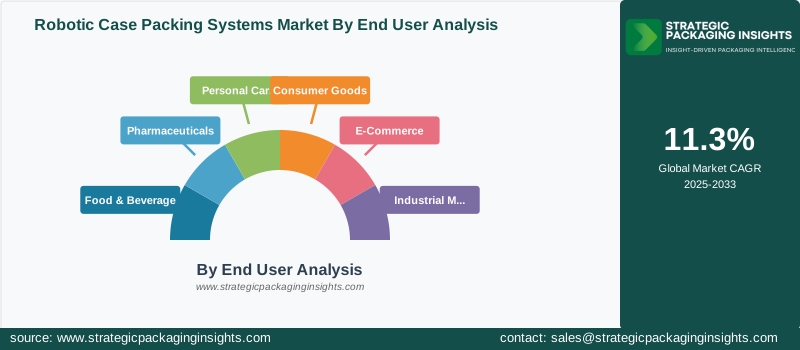
The personal care and cosmetics industry is witnessing increased adoption of robotic case packing systems, as manufacturers seek to enhance productivity and reduce labor costs. The consumer goods and e-commerce sectors are also driving demand for robotic systems, as these industries require efficient and flexible packaging solutions to handle high volumes and diverse product ranges. The industrial manufacturing sector is adopting robotic case packing systems to enhance operational efficiency and reduce downtime, as manufacturers seek to optimize their production processes and meet growing demand.
By Automation Level Analysis
The market is segmented by automation level, including semi-automatic and fully automatic systems. Fully automatic systems are gaining popularity due to their ability to enhance productivity and reduce labor dependency. These systems are widely used in industries such as food and beverage and pharmaceuticals, where high-speed operations and precision are critical. Semi-automatic systems are preferred by small and medium-sized enterprises, as they offer flexibility and ease of integration into existing production lines.
The growing demand for automation and the need to enhance operational efficiency are driving the adoption of fully automatic systems, as manufacturers seek to optimize their packaging processes and reduce operational costs. The focus on reducing labor dependency and enhancing productivity is also driving the adoption of semi-automatic systems, as these systems offer a cost-effective solution for manufacturers looking to enhance their packaging operations. The increasing emphasis on sustainability and eco-friendly packaging solutions is also influencing the adoption of these systems, as manufacturers seek to align with global sustainability goals and meet consumer preferences.
Robotic Case Packing Systems Market Segments
The Robotic Case Packing Systems market has been segmented on the basis ofBy Robot Type
- Articulated Robots
- Delta Robots
- SCARA Robots
- Collaborative Robots (Cobots)
- Cartesian Robots
By Packing Type
- Top Load Case Packing
- Side Load Case Packing
- Wraparound Case Packing
- Pick-and-Place Case Packing
By End User
- Food & Beverage
- Pharmaceuticals
- Personal Care & Cosmetics
- Consumer Goods
- E-Commerce
- Industrial Manufacturing
By Automation Level
- Semi-Automatic
- Fully Automatic
Region
- Asia Pacific
- North America
- Latin America
- Europe
- Middle East & Africa




