


Rigid Food Packaging Market Outlook
The rigid food packaging market was valued at $229.65 billion in 2025 and is projected to reach $344.78 billion by 2034, growing at a CAGR of 4.6% during the forecast period 2026-2034. This market is driven by the increasing demand for durable and sustainable packaging solutions in the food industry. The rise in consumer preference for packaged food products, coupled with the growth of the food and beverage industry, is significantly contributing to the market's expansion. Additionally, advancements in packaging technologies and the introduction of innovative materials are expected to further propel market growth. The market is also witnessing a shift towards eco-friendly packaging solutions, which is anticipated to create lucrative opportunities for market players.
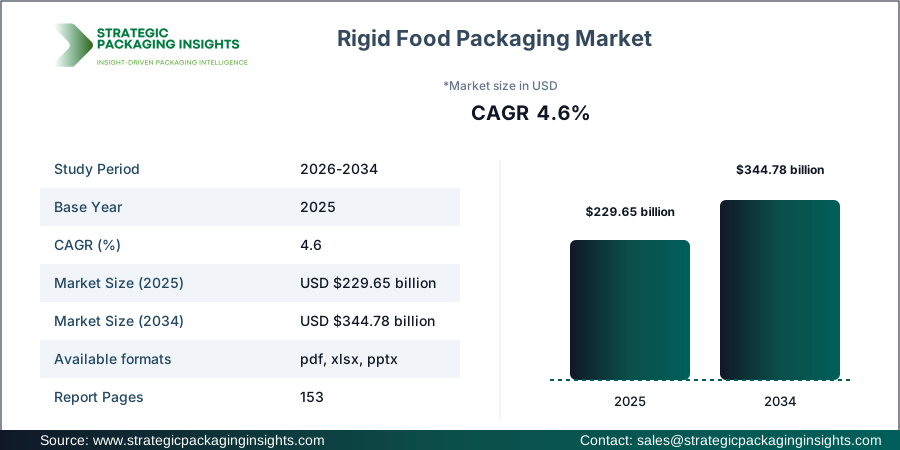
However, the market faces challenges such as stringent regulations regarding packaging waste and environmental concerns. The high cost of raw materials and the complexity of recycling rigid packaging materials are also restraining market growth. Despite these challenges, the market holds significant potential for growth, driven by the increasing demand for convenience foods and the expansion of the retail sector. The growing trend of online food delivery services is also expected to boost the demand for rigid food packaging solutions. Furthermore, the development of biodegradable and recyclable packaging materials is likely to offer new growth avenues for the market.
Report Scope
| Attributes | Details |
| Report Title | Rigid Food Packaging Market Size, Future Growth and Forecast 2034 |
| By Material Type | Plastic, Paperboard, Metal, Glass |
| By Packaging Type | Containers, Trays, Bottles, Jars, Cans, Clamshells |
| By Application | Dairy, Meat & Poultry, Ready Meals, Bakery, Beverages |
| By End Use | Food Manufacturers, Foodservice, Retail, FMCG |
| Region | Asia Pacific, North America, Latin America, Europe, Middle East & Africa |
| Base Year | 2025 |
| Historic Period | 2018-2024 |
| Forecast Period | 2026-2034 |
| Number of Pages | 153 |
| Customization Available | Yes* |
Opportunities & Threats
The rigid food packaging market presents numerous opportunities, primarily driven by the increasing consumer demand for sustainable and eco-friendly packaging solutions. As environmental concerns continue to rise, consumers are becoming more conscious of the impact of packaging waste on the environment. This has led to a growing preference for packaging materials that are recyclable, biodegradable, and made from renewable resources. Companies in the rigid food packaging market are investing in research and development to create innovative packaging solutions that meet these consumer demands. Additionally, the expansion of the e-commerce sector and the increasing popularity of online food delivery services are creating new opportunities for market growth. The need for durable and secure packaging solutions to ensure the safe delivery of food products is driving the demand for rigid food packaging.
Another significant opportunity lies in the growing demand for convenience foods. As consumers lead increasingly busy lifestyles, there is a rising preference for ready-to-eat and on-the-go food products. This trend is driving the demand for rigid food packaging solutions that offer convenience, portability, and extended shelf life. Moreover, the increasing urbanization and the growth of the middle-class population in emerging economies are expected to further boost the demand for packaged food products, thereby creating new growth opportunities for the rigid food packaging market. Companies are also exploring new markets and expanding their product portfolios to cater to the diverse needs of consumers.
Despite the numerous opportunities, the rigid food packaging market faces several threats. One of the major challenges is the stringent regulations imposed by governments and regulatory bodies regarding packaging waste and environmental impact. These regulations require companies to adhere to strict guidelines and standards, which can increase production costs and affect profitability. Additionally, the high cost of raw materials and the volatility in their prices pose a significant threat to market growth. The complexity of recycling rigid packaging materials and the lack of adequate recycling infrastructure in some regions are also hindering market expansion. Companies need to address these challenges by investing in sustainable packaging solutions and adopting innovative technologies to reduce their environmental footprint.
Drivers & Challenges
The rigid food packaging market is driven by several key factors, including the increasing demand for packaged food products and the growth of the food and beverage industry. As consumers become more health-conscious and seek convenience, there is a rising preference for packaged foods that offer extended shelf life and easy portability. This trend is driving the demand for rigid food packaging solutions that provide durability and protection to food products. Additionally, the expansion of the retail sector and the increasing popularity of online food delivery services are further boosting the demand for rigid food packaging. The need for secure and tamper-proof packaging solutions to ensure the safe delivery of food products is a significant driver of market growth.
Another major driver of the rigid food packaging market is the growing focus on sustainability and eco-friendly packaging solutions. As environmental concerns continue to rise, consumers are becoming more conscious of the impact of packaging waste on the environment. This has led to a growing demand for packaging materials that are recyclable, biodegradable, and made from renewable resources. Companies in the rigid food packaging market are investing in research and development to create innovative packaging solutions that meet these consumer demands. The development of biodegradable and recyclable packaging materials is expected to offer new growth avenues for the market.
Despite the numerous drivers, the rigid food packaging market faces several challenges. One of the major challenges is the stringent regulations imposed by governments and regulatory bodies regarding packaging waste and environmental impact. These regulations require companies to adhere to strict guidelines and standards, which can increase production costs and affect profitability. Additionally, the high cost of raw materials and the volatility in their prices pose a significant threat to market growth. The complexity of recycling rigid packaging materials and the lack of adequate recycling infrastructure in some regions are also hindering market expansion. Companies need to address these challenges by investing in sustainable packaging solutions and adopting innovative technologies to reduce their environmental footprint.
Market Share Analysis
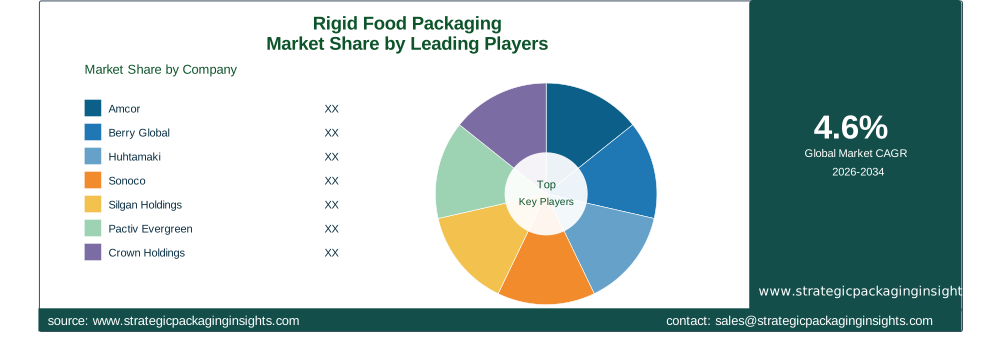
The rigid food packaging market is characterized by intense competition among key players, with several companies holding significant market shares. The competitive landscape is shaped by factors such as product innovation, strategic partnerships, mergers and acquisitions, and geographical expansion. Companies are focusing on expanding their product portfolios and enhancing their production capabilities to gain a competitive edge in the market. The market is dominated by a few major players, including Amcor, Berry Global, Huhtamaki, Sonoco, Silgan Holdings, Pactiv Evergreen, Crown Holdings, Ball Corporation, Sealed Air, and Graphic Packaging. These companies are investing in research and development to create innovative packaging solutions that meet the evolving needs of consumers.
Amcor is one of the leading players in the rigid food packaging market, known for its extensive product portfolio and strong global presence. The company focuses on sustainability and innovation, offering a wide range of packaging solutions that cater to various industries. Berry Global is another major player, recognized for its expertise in plastic packaging solutions. The company is committed to sustainability and has made significant investments in developing eco-friendly packaging materials. Huhtamaki is a key player in the market, known for its innovative packaging solutions and strong focus on sustainability. The company offers a diverse range of packaging products, including rigid food packaging solutions.
Sonoco is a prominent player in the rigid food packaging market, offering a wide range of packaging solutions for various industries. The company is known for its commitment to sustainability and innovation, with a focus on developing eco-friendly packaging materials. Silgan Holdings is another major player, recognized for its expertise in metal packaging solutions. The company has a strong global presence and offers a diverse range of packaging products, including rigid food packaging solutions. Pactiv Evergreen is a leading player in the market, known for its innovative packaging solutions and strong focus on sustainability. The company offers a wide range of packaging products, including rigid food packaging solutions.
Crown Holdings is a key player in the rigid food packaging market, known for its expertise in metal packaging solutions. The company has a strong global presence and offers a diverse range of packaging products, including rigid food packaging solutions. Ball Corporation is another major player, recognized for its expertise in metal packaging solutions. The company is committed to sustainability and has made significant investments in developing eco-friendly packaging materials. Sealed Air is a prominent player in the market, offering a wide range of packaging solutions for various industries. The company is known for its commitment to sustainability and innovation, with a focus on developing eco-friendly packaging materials.
Key Highlights
- The rigid food packaging market is projected to grow from $229.65 billion in 2025 to $344.78 billion by 2034, at a CAGR of 4.6%.
- Increasing demand for sustainable and eco-friendly packaging solutions is driving market growth.
- The expansion of the e-commerce sector and online food delivery services is creating new opportunities for market growth.
- Stringent regulations regarding packaging waste and environmental impact pose challenges to market growth.
- Key players in the market include Amcor, Berry Global, Huhtamaki, Sonoco, Silgan Holdings, and Pactiv Evergreen.
- Companies are investing in research and development to create innovative packaging solutions.
- The development of biodegradable and recyclable packaging materials is expected to offer new growth avenues for the market.
Top Countries Insights
In the rigid food packaging market, the United States holds a significant share, driven by the strong presence of key market players and the high demand for packaged food products. The market in the U.S. is expected to grow at a CAGR of 4%, supported by the increasing consumer preference for convenience foods and the expansion of the e-commerce sector. The country's stringent regulations regarding packaging waste and environmental impact are also driving the demand for sustainable packaging solutions.
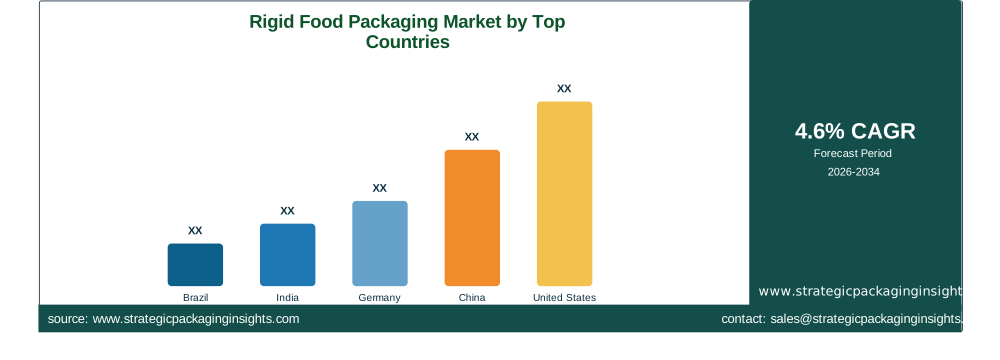
China is another major market for rigid food packaging, with a projected CAGR of 6%. The country's rapid urbanization and the growth of the middle-class population are driving the demand for packaged food products. Additionally, the increasing popularity of online food delivery services is boosting the demand for rigid food packaging solutions. The Chinese government's focus on sustainability and environmental protection is also encouraging the adoption of eco-friendly packaging materials.
Germany is a key market in Europe, with a projected CAGR of 3%. The country's strong focus on sustainability and environmental protection is driving the demand for eco-friendly packaging solutions. The growth of the food and beverage industry and the increasing consumer preference for convenience foods are also contributing to market growth. Germany's stringent regulations regarding packaging waste and recycling are encouraging companies to invest in sustainable packaging solutions.
India is an emerging market for rigid food packaging, with a projected CAGR of 7%. The country's rapid urbanization and the growth of the middle-class population are driving the demand for packaged food products. The increasing popularity of online food delivery services and the expansion of the retail sector are also boosting the demand for rigid food packaging solutions. The Indian government's focus on sustainability and environmental protection is encouraging the adoption of eco-friendly packaging materials.
Brazil is a significant market in Latin America, with a projected CAGR of 5%. The country's growing middle-class population and the increasing demand for convenience foods are driving the demand for rigid food packaging solutions. The expansion of the e-commerce sector and the increasing popularity of online food delivery services are also contributing to market growth. Brazil's focus on sustainability and environmental protection is encouraging the adoption of eco-friendly packaging materials.
Rigid Food Packaging Market Segments Insights

Material Type Analysis
The material type segment in the rigid food packaging market is dominated by plastic, which is widely used due to its durability, versatility, and cost-effectiveness. Plastic packaging solutions offer excellent protection to food products, ensuring their safety and extending their shelf life. However, the growing environmental concerns and the increasing demand for sustainable packaging solutions are driving the shift towards alternative materials such as paperboard, metal, and glass. Paperboard is gaining popularity due to its recyclability and biodegradability, making it an eco-friendly option for packaging. Metal and glass packaging solutions are also witnessing increased demand, particularly in the premium food segment, due to their superior barrier properties and aesthetic appeal.
The increasing focus on sustainability and the development of biodegradable and recyclable packaging materials are expected to drive the growth of the material type segment. Companies are investing in research and development to create innovative packaging solutions that meet the evolving needs of consumers. The introduction of bio-based plastics and the use of recycled materials in packaging are gaining traction, offering new growth opportunities for the market. The material type segment is also witnessing increased competition, with companies focusing on expanding their product portfolios and enhancing their production capabilities to gain a competitive edge.
Packaging Type Analysis
The packaging type segment in the rigid food packaging market includes containers, trays, bottles, jars, cans, and clamshells. Containers are the most widely used packaging type, offering excellent protection and convenience for a wide range of food products. Trays are also popular, particularly in the ready meals and meat & poultry segments, due to their ability to provide secure and tamper-proof packaging. Bottles and jars are commonly used for beverages and liquid food products, offering excellent protection and ease of use. Cans are widely used for packaging beverages and canned food products, providing superior barrier properties and extended shelf life.
The increasing demand for convenience foods and the growth of the food and beverage industry are driving the demand for various packaging types. Companies are focusing on developing innovative packaging solutions that offer convenience, portability, and extended shelf life. The introduction of smart packaging solutions, such as active and intelligent packaging, is gaining traction, offering new growth opportunities for the market. The packaging type segment is also witnessing increased competition, with companies focusing on expanding their product portfolios and enhancing their production capabilities to gain a competitive edge.
Application Analysis
The application segment in the rigid food packaging market includes dairy, meat & poultry, ready meals, bakery, and beverages. The dairy segment is one of the largest application segments, driven by the increasing demand for packaged dairy products such as milk, cheese, and yogurt. The meat & poultry segment is also witnessing significant growth, driven by the increasing demand for packaged meat products and the growing popularity of ready-to-eat meals. The ready meals segment is gaining traction, driven by the increasing consumer preference for convenience foods and the growth of the foodservice industry.
The bakery segment is witnessing steady growth, driven by the increasing demand for packaged bakery products such as bread, cakes, and pastries. The beverages segment is also witnessing significant growth, driven by the increasing demand for packaged beverages such as soft drinks, juices, and alcoholic beverages. Companies are focusing on developing innovative packaging solutions that cater to the diverse needs of consumers in various application segments. The introduction of smart packaging solutions, such as active and intelligent packaging, is gaining traction, offering new growth opportunities for the market.
End Use Analysis
The end use segment in the rigid food packaging market includes food manufacturers, foodservice, retail, and FMCG. Food manufacturers are the largest end users of rigid food packaging solutions, driven by the increasing demand for packaged food products and the growth of the food and beverage industry. The foodservice segment is also witnessing significant growth, driven by the increasing popularity of online food delivery services and the expansion of the foodservice industry. The retail segment is witnessing steady growth, driven by the increasing demand for packaged food products and the expansion of the retail sector.
The FMCG segment is also witnessing significant growth, driven by the increasing demand for packaged food products and the growth of the FMCG industry. Companies are focusing on developing innovative packaging solutions that cater to the diverse needs of consumers in various end use segments. The introduction of smart packaging solutions, such as active and intelligent packaging, is gaining traction, offering new growth opportunities for the market. The end use segment is also witnessing increased competition, with companies focusing on expanding their product portfolios and enhancing their production capabilities to gain a competitive edge.
Rigid Food Packaging Market Segments
The Rigid Food Packaging market has been segmented on the basis ofBy Material Type
- Plastic
- Paperboard
- Metal
- Glass
By Packaging Type
- Containers
- Trays
- Bottles
- Jars
- Cans
- Clamshells
By Application
- Dairy
- Meat & Poultry
- Ready Meals
- Bakery
- Beverages
By End Use
- Food Manufacturers
- Foodservice
- Retail
- FMCG
Region
- Asia Pacific
- North America
- Latin America
- Europe
- Middle East & Africa




