


rHDPE Recycling Processes Tailored to PPWR 2030 Requirements Market Outlook
The rHDPE Recycling Processes Tailored to PPWR 2030 Requirements market was valued at $256.40 million in 2025 and is projected to reach $642.48 million by 2034, growing at a CAGR of 10.7% during the forecast period 2026-2034. This market is driven by the increasing demand for sustainable packaging solutions and stringent regulations aimed at reducing plastic waste. The European Union's PPWR 2030 requirements are a significant catalyst, pushing industries to adopt more eco-friendly practices. The market's growth is further fueled by technological advancements in recycling processes, which enhance the quality and efficiency of recycled HDPE products. As industries strive to meet these regulatory standards, the demand for rHDPE is expected to surge, particularly in sectors like packaging and FMCG.
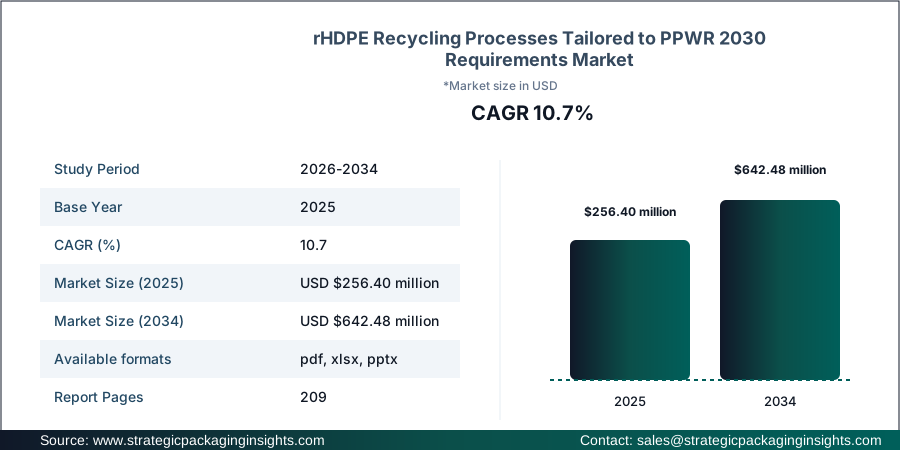
Despite the promising growth prospects, the market faces challenges such as the high initial investment costs associated with advanced recycling technologies and the fluctuating prices of virgin HDPE. However, the potential for growth remains substantial, driven by increasing consumer awareness and the push for circular economy practices. The market's expansion is also supported by government incentives and subsidies aimed at promoting recycling initiatives. As more companies invest in rHDPE recycling processes, the market is poised for significant growth, with opportunities for innovation and collaboration across the value chain.
Report Scope
| Attributes | Details |
| Report Title | rHDPE Recycling Processes Tailored to PPWR 2030 Requirements Market Size, Future Growth and Forecast 2034 |
| By Process Type | Sorting, Washing, Extrusion, Deodorization |
| By Output Type | Food-Grade rHDPE, Non-Food-Grade rHDPE, Colored rHDPE |
| By Application | Bottles, Closures, Industrial Containers |
| By End Use | Packaging Converters, FMCG Brands, Recyclers |
| Region | Asia Pacific, North America, Latin America, Europe, Middle East & Africa |
| Base Year | 2025 |
| Historic Period | 2018-2024 |
| Forecast Period | 2026-2034 |
| Number of Pages | 209 |
| Customization Available | Yes* |
Opportunities & Threats
The rHDPE recycling market presents numerous opportunities, particularly in the development of advanced recycling technologies that can enhance the quality and efficiency of recycled products. Innovations in sorting and washing processes, for instance, can significantly improve the purity of rHDPE, making it suitable for a wider range of applications, including food-grade packaging. Additionally, the growing consumer demand for sustainable products is encouraging brands to incorporate more recycled materials into their packaging, creating a robust market for rHDPE. Companies that can offer high-quality, cost-effective recycling solutions are likely to gain a competitive edge in this evolving market landscape.
Another opportunity lies in the expansion of recycling infrastructure, particularly in emerging markets where waste management systems are still developing. By investing in local recycling facilities, companies can reduce transportation costs and improve the supply chain efficiency for rHDPE. Furthermore, partnerships between recyclers and packaging manufacturers can lead to innovative solutions that meet both regulatory requirements and consumer expectations. As the market continues to grow, there is also potential for new entrants to capitalize on niche segments, such as colored rHDPE or specialized applications in industrial containers.
However, the market is not without its threats. One of the primary challenges is the competition from virgin HDPE, which can often be cheaper and more readily available. Additionally, the quality of recycled HDPE can vary significantly, depending on the source and processing methods, which can deter some manufacturers from adopting rHDPE. Regulatory changes and trade policies can also impact the market dynamics, particularly in regions where recycling standards are still evolving. Companies must navigate these challenges carefully to maintain their market position and capitalize on the growth opportunities.
Drivers & Challenges
The primary drivers of the rHDPE recycling market include the increasing regulatory pressure to reduce plastic waste and the growing consumer demand for sustainable packaging solutions. Governments worldwide are implementing stringent regulations to curb plastic pollution, which is driving industries to adopt more sustainable practices. The European Union's PPWR 2030 requirements, for instance, mandate a significant reduction in plastic waste, encouraging companies to invest in recycling technologies. Additionally, the rising awareness among consumers about the environmental impact of plastic waste is prompting brands to incorporate more recycled materials into their products, further boosting the demand for rHDPE.
Technological advancements in recycling processes are also a significant driver of market growth. Innovations in sorting, washing, and extrusion technologies have improved the quality and efficiency of recycled HDPE, making it a viable alternative to virgin materials. These advancements have expanded the range of applications for rHDPE, particularly in sectors like packaging and FMCG. Furthermore, government incentives and subsidies aimed at promoting recycling initiatives are encouraging companies to invest in rHDPE recycling processes, creating a favorable market environment.
Despite these drivers, the market faces several challenges. One of the primary challenges is the high initial investment costs associated with advanced recycling technologies. Setting up a recycling facility requires significant capital investment, which can be a barrier for small and medium-sized enterprises. Additionally, the fluctuating prices of virgin HDPE can impact the competitiveness of recycled materials, as manufacturers may opt for cheaper alternatives. The quality of recycled HDPE can also vary, depending on the source and processing methods, which can deter some manufacturers from adopting rHDPE. Companies must address these challenges to capitalize on the growth opportunities in the market.
Market Share Analysis
The competitive landscape of the rHDPE recycling market is characterized by the presence of several key players, each striving to enhance their market position through strategic initiatives such as mergers, acquisitions, and partnerships. Companies like Veolia, Suez, and Plastipak are leading the market with their extensive recycling capabilities and innovative solutions. These companies have invested heavily in advanced recycling technologies, enabling them to offer high-quality rHDPE products that meet stringent regulatory standards. Their strong market presence is further bolstered by their global reach and robust supply chain networks.
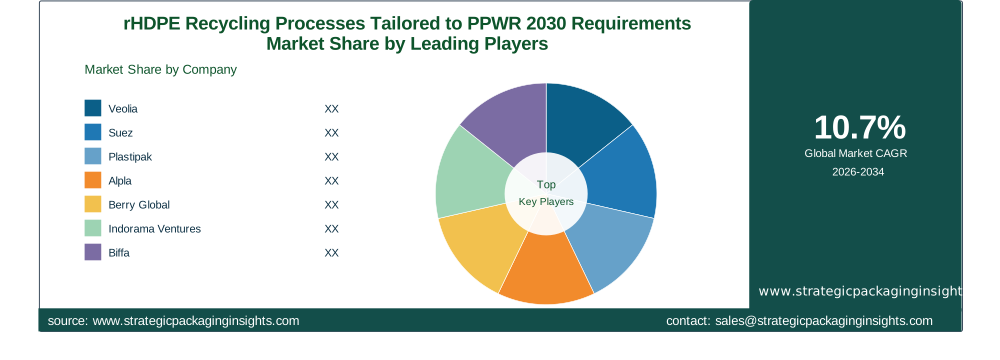
Veolia, for instance, has established itself as a leader in the recycling industry, with a focus on sustainability and innovation. The company has developed advanced sorting and washing technologies that enhance the quality of recycled HDPE, making it suitable for a wide range of applications. Similarly, Suez has made significant investments in recycling infrastructure, expanding its capabilities to meet the growing demand for rHDPE. The company's strategic partnerships with packaging manufacturers have also enabled it to offer customized solutions that meet specific customer requirements.
Plastipak, another major player in the market, has focused on developing closed-loop recycling systems that ensure the continuous supply of high-quality rHDPE. The company's commitment to sustainability and innovation has positioned it as a key player in the market, with a strong focus on meeting the PPWR 2030 requirements. Other notable companies in the market include Alpla, Berry Global, and Indorama Ventures, each of which has made significant strides in enhancing their recycling capabilities and expanding their market presence.
Alpla, for example, has invested in state-of-the-art recycling facilities that enable it to produce high-quality rHDPE for various applications. The company's focus on sustainability and innovation has helped it maintain a competitive edge in the market. Berry Global, on the other hand, has leveraged its extensive manufacturing capabilities to offer a wide range of recycled products, catering to diverse customer needs. Indorama Ventures has also made significant investments in recycling technologies, positioning itself as a leader in the market with a strong focus on sustainability and innovation.
Key Highlights
- The rHDPE recycling market is projected to grow at a CAGR of 10.7% from 2026 to 2034.
- Technological advancements in recycling processes are enhancing the quality and efficiency of rHDPE products.
- Government regulations, such as the European Union's PPWR 2030 requirements, are driving the demand for sustainable packaging solutions.
- Key players like Veolia, Suez, and Plastipak are leading the market with their innovative recycling solutions.
- The market faces challenges such as high initial investment costs and competition from virgin HDPE.
- Opportunities exist in the development of advanced recycling technologies and the expansion of recycling infrastructure in emerging markets.
- Consumer demand for sustainable products is encouraging brands to incorporate more recycled materials into their packaging.
- Partnerships between recyclers and packaging manufacturers are leading to innovative solutions that meet regulatory requirements.
- The market is characterized by the presence of several key players, each striving to enhance their market position through strategic initiatives.
Top Countries Insights
In the rHDPE recycling market, the United States stands out as a key player, with a market size of approximately $150 million and a CAGR of 8%. The country's strong regulatory framework and consumer demand for sustainable packaging solutions are driving the market growth. The U.S. government has implemented several initiatives to promote recycling, including tax incentives and subsidies for companies investing in recycling technologies. Additionally, the presence of major players like KW Plastics and Envision Plastics further strengthens the market position.
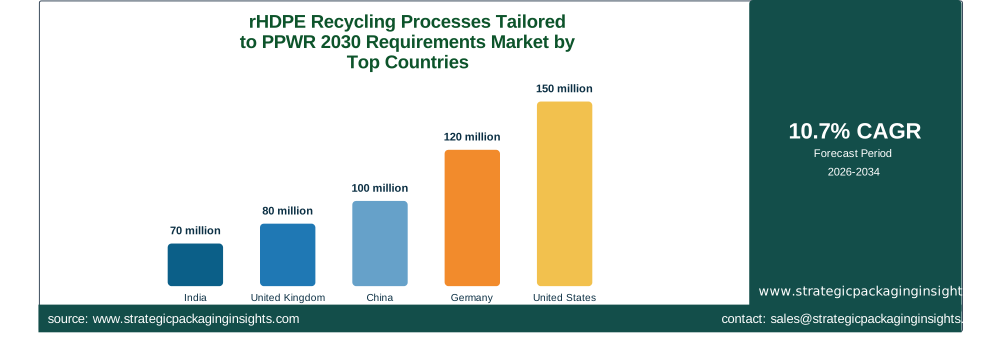
Germany is another significant market, with a market size of around $120 million and a CAGR of 9%. The country's stringent recycling regulations and commitment to sustainability have created a favorable environment for the rHDPE market. Germany's advanced recycling infrastructure and strong focus on innovation have positioned it as a leader in the European market. The government's support for recycling initiatives, coupled with the presence of key players like Alpla, is driving the market growth.
China, with a market size of approximately $100 million and a CAGR of 12%, is emerging as a major player in the rHDPE recycling market. The country's rapid industrialization and growing consumer awareness about environmental issues are driving the demand for sustainable packaging solutions. The Chinese government has implemented several policies to promote recycling, including subsidies for companies investing in recycling technologies. The presence of major players like Indorama Ventures further strengthens the market position.
In the United Kingdom, the rHDPE recycling market is valued at around $80 million, with a CAGR of 7%. The country's strong regulatory framework and consumer demand for sustainable products are driving the market growth. The UK government has implemented several initiatives to promote recycling, including tax incentives and subsidies for companies investing in recycling technologies. The presence of major players like Biffa and Jayplas further strengthens the market position.
India, with a market size of approximately $70 million and a CAGR of 10%, is emerging as a key player in the rHDPE recycling market. The country's growing population and increasing consumer awareness about environmental issues are driving the demand for sustainable packaging solutions. The Indian government has implemented several policies to promote recycling, including subsidies for companies investing in recycling technologies. The presence of major players like Veolia further strengthens the market position.
rHDPE Recycling Processes Tailored to PPWR 2030 Requirements Market Segments Insights

Process Type Analysis
The process type segment in the rHDPE recycling market is crucial, as it determines the efficiency and quality of the recycled products. Sorting, washing, extrusion, and deodorization are the primary processes involved in recycling HDPE. Sorting is the initial step, where materials are separated based on their type and quality. Advanced sorting technologies, such as optical sorting, have significantly improved the accuracy and efficiency of this process, reducing contamination and enhancing the quality of the final product. Washing is another critical process, as it removes impurities and contaminants from the recycled materials. Innovations in washing technologies, such as the use of eco-friendly detergents and high-pressure washing systems, have further improved the quality of rHDPE.
Extrusion is the process where the cleaned HDPE is melted and reformed into pellets or other forms. This process is crucial for determining the physical properties of the recycled product, such as its strength and durability. Advanced extrusion technologies have enabled manufacturers to produce high-quality rHDPE that meets stringent regulatory standards. Deodorization is the final step, where any residual odors are removed from the recycled product. This process is particularly important for applications where the recycled product will come into contact with food or other sensitive materials. Overall, advancements in these processes have significantly improved the quality and efficiency of rHDPE recycling, making it a viable alternative to virgin materials.
Output Type Analysis
The output type segment in the rHDPE recycling market is categorized into food-grade rHDPE, non-food-grade rHDPE, and colored rHDPE. Food-grade rHDPE is in high demand due to the increasing regulatory requirements for sustainable packaging solutions in the food and beverage industry. The stringent standards for food-grade materials necessitate advanced recycling processes that ensure the purity and safety of the recycled product. Companies that can offer high-quality food-grade rHDPE are likely to gain a competitive edge in this segment.
Non-food-grade rHDPE is used in a wide range of applications, including industrial containers and construction materials. This segment is driven by the growing demand for sustainable materials in various industries. The versatility and cost-effectiveness of non-food-grade rHDPE make it an attractive option for manufacturers looking to reduce their environmental impact. Colored rHDPE is another important segment, as it offers aesthetic appeal and branding opportunities for packaging manufacturers. The demand for colored rHDPE is driven by the increasing consumer preference for visually appealing and sustainable packaging solutions.
Application Analysis
The application segment in the rHDPE recycling market includes bottles, closures, and industrial containers. Bottles are the largest application segment, driven by the increasing demand for sustainable packaging solutions in the beverage industry. The use of rHDPE in bottle manufacturing offers several advantages, including reduced environmental impact and cost savings. The growing consumer preference for eco-friendly products is further boosting the demand for rHDPE bottles.
Closures are another important application segment, as they play a crucial role in ensuring the safety and integrity of packaged products. The use of rHDPE in closure manufacturing offers several benefits, including improved durability and reduced environmental impact. The increasing demand for sustainable packaging solutions in the FMCG industry is driving the growth of this segment. Industrial containers are also a significant application segment, as they are used in a wide range of industries, including chemicals and agriculture. The use of rHDPE in industrial container manufacturing offers several advantages, including improved strength and reduced environmental impact.
End Use Analysis
The end-use segment in the rHDPE recycling market includes packaging converters, FMCG brands, and recyclers. Packaging converters are the largest end-use segment, as they play a crucial role in transforming recycled materials into finished products. The increasing demand for sustainable packaging solutions is driving the growth of this segment, as packaging converters look to incorporate more recycled materials into their products.
FMCG brands are another important end-use segment, as they are increasingly looking to reduce their environmental impact by incorporating more recycled materials into their packaging. The growing consumer demand for sustainable products is driving the growth of this segment, as FMCG brands look to differentiate themselves by offering eco-friendly packaging solutions. Recyclers are also a significant end-use segment, as they play a crucial role in the recycling process by collecting and processing waste materials. The increasing demand for rHDPE is driving the growth of this segment, as recyclers look to expand their capabilities and improve the quality of their recycled products.
rHDPE Recycling Processes Tailored to PPWR 2030 Requirements Market Segments
The rHDPE Recycling Processes Tailored to PPWR 2030 Requirements market has been segmented on the basis ofBy Process Type
- Sorting
- Washing
- Extrusion
- Deodorization
By Output Type
- Food-Grade rHDPE
- Non-Food-Grade rHDPE
- Colored rHDPE
By Application
- Bottles
- Closures
- Industrial Containers
By End Use
- Packaging Converters
- FMCG Brands
- Recyclers
Region
- Asia Pacific
- North America
- Latin America
- Europe
- Middle East & Africa




