


rHDPE Recycling Capacity Expansion for FMCG Packaging Market Outlook
The rHDPE Recycling Capacity Expansion for FMCG Packaging market was valued at $6.86 billion in 2025 and is projected to reach $13.15 billion by 2034, growing at a CAGR of 7.5% during the forecast period 2026-2034. This market is witnessing significant growth due to the increasing demand for sustainable packaging solutions in the fast-moving consumer goods (FMCG) sector. The rising awareness about environmental conservation and the need to reduce plastic waste are driving the adoption of recycled high-density polyethylene (rHDPE) in packaging applications. The FMCG industry is increasingly focusing on reducing its carbon footprint, which is further propelling the demand for rHDPE. Additionally, advancements in recycling technologies and the development of efficient recycling processes are enhancing the quality and performance of rHDPE, making it a preferred choice for packaging applications.
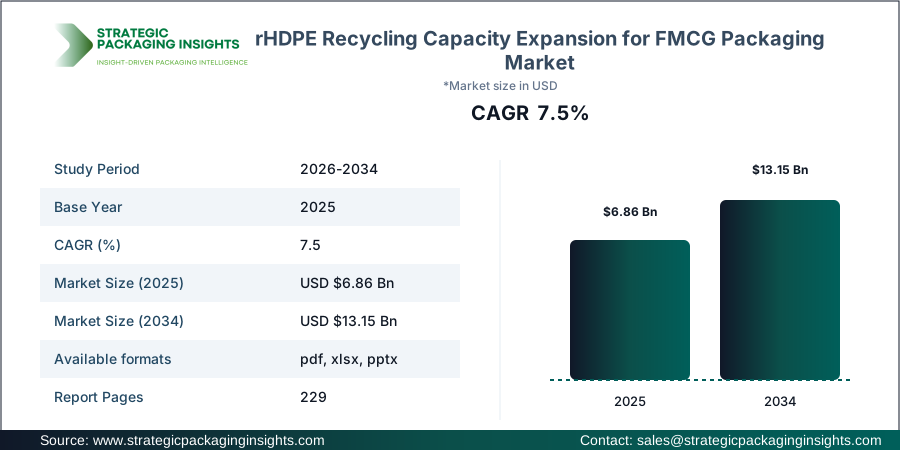
However, the market faces challenges such as the high cost of recycling processes and the need for significant investments in recycling infrastructure. Regulatory frameworks and stringent quality standards for recycled materials also pose challenges to market growth. Despite these challenges, the market holds immense growth potential due to the increasing investments in recycling infrastructure and the development of innovative recycling technologies. The growing collaboration between FMCG companies and recycling firms to enhance the supply chain of recycled materials is expected to create lucrative opportunities for market players. Furthermore, government initiatives and policies promoting the use of recycled materials in packaging are anticipated to drive market growth during the forecast period.
Report Scope
| Attributes | Details |
| Report Title | rHDPE Recycling Capacity Expansion for FMCG Packaging Market Size, Future Growth and Forecast 2034 |
| Process Type | Sorting, Washing, Extrusion, Deodorization |
| Output Type | Food-Grade rHDPE, Non-Food-Grade rHDPE, Colored rHDPE |
| Application | FMCG Bottles, Closures, Household Packs, Personal Care Packs |
| End Use | Packaging Converters, FMCG Brands, Recyclers |
| Region | Asia Pacific, North America, Latin America, Europe, Middle East & Africa |
| Base Year | 2025 |
| Historic Period | 2018-2024 |
| Forecast Period | 2026-2034 |
| Number of Pages | 229 |
| Customization Available | Yes* |
Opportunities & Threats
The rHDPE Recycling Capacity Expansion for FMCG Packaging market presents numerous opportunities, primarily driven by the increasing demand for sustainable packaging solutions. As consumers become more environmentally conscious, there is a growing preference for products packaged in eco-friendly materials. This shift in consumer behavior is encouraging FMCG companies to adopt rHDPE for packaging, thereby creating significant growth opportunities for market players. Additionally, advancements in recycling technologies are enhancing the quality and performance of rHDPE, making it a viable alternative to virgin plastics. The development of efficient recycling processes is also reducing the cost of rHDPE production, further boosting its adoption in the FMCG sector.
Another opportunity lies in the growing collaboration between FMCG companies and recycling firms. These partnerships are aimed at enhancing the supply chain of recycled materials and ensuring a steady supply of high-quality rHDPE for packaging applications. Moreover, government initiatives and policies promoting the use of recycled materials in packaging are expected to drive market growth. For instance, several countries have implemented regulations mandating the use of a certain percentage of recycled content in packaging, which is likely to boost the demand for rHDPE. The increasing investments in recycling infrastructure and the development of innovative recycling technologies are also expected to create lucrative opportunities for market players.
Despite the numerous opportunities, the market faces certain threats that could hinder its growth. One of the major challenges is the high cost of recycling processes, which can make rHDPE less competitive compared to virgin plastics. Additionally, the need for significant investments in recycling infrastructure can be a barrier for new entrants in the market. Regulatory frameworks and stringent quality standards for recycled materials also pose challenges to market growth. Ensuring the consistent quality and performance of rHDPE is crucial for its widespread adoption in packaging applications. Furthermore, the fluctuating prices of raw materials and the availability of alternative sustainable packaging solutions could pose threats to the market.
Drivers & Challenges
The primary drivers of the rHDPE Recycling Capacity Expansion for FMCG Packaging market include the increasing demand for sustainable packaging solutions and the rising awareness about environmental conservation. As consumers become more environmentally conscious, there is a growing preference for products packaged in eco-friendly materials. This shift in consumer behavior is encouraging FMCG companies to adopt rHDPE for packaging, thereby driving market growth. Additionally, advancements in recycling technologies are enhancing the quality and performance of rHDPE, making it a viable alternative to virgin plastics. The development of efficient recycling processes is also reducing the cost of rHDPE production, further boosting its adoption in the FMCG sector.
Another significant driver is the growing collaboration between FMCG companies and recycling firms. These partnerships are aimed at enhancing the supply chain of recycled materials and ensuring a steady supply of high-quality rHDPE for packaging applications. Moreover, government initiatives and policies promoting the use of recycled materials in packaging are expected to drive market growth. For instance, several countries have implemented regulations mandating the use of a certain percentage of recycled content in packaging, which is likely to boost the demand for rHDPE. The increasing investments in recycling infrastructure and the development of innovative recycling technologies are also expected to create lucrative opportunities for market players.
Despite the numerous drivers, the market faces certain challenges that could hinder its growth. One of the major challenges is the high cost of recycling processes, which can make rHDPE less competitive compared to virgin plastics. Additionally, the need for significant investments in recycling infrastructure can be a barrier for new entrants in the market. Regulatory frameworks and stringent quality standards for recycled materials also pose challenges to market growth. Ensuring the consistent quality and performance of rHDPE is crucial for its widespread adoption in packaging applications. Furthermore, the fluctuating prices of raw materials and the availability of alternative sustainable packaging solutions could pose threats to the market.
Market Share Analysis
The competitive landscape of the rHDPE Recycling Capacity Expansion for FMCG Packaging market is characterized by the presence of several key players who are actively engaged in expanding their recycling capacities and enhancing their market presence. Companies such as Veolia, Suez, Plastipak, ALPLA, Berry Global, Indorama Ventures, Biffa, Jayplas, KW Plastics, and Envision Plastics are leading the market with their extensive recycling capabilities and strong distribution networks. These companies are focusing on strategic partnerships, mergers, and acquisitions to strengthen their market position and expand their product offerings.
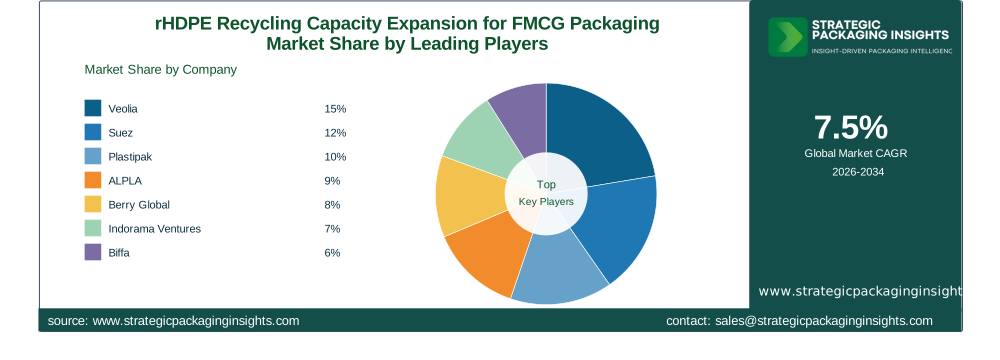
Veolia, a global leader in environmental solutions, holds a significant market share due to its extensive recycling infrastructure and innovative recycling technologies. The company is actively involved in expanding its recycling capacities and enhancing its product portfolio to cater to the growing demand for rHDPE in the FMCG sector. Suez, another major player in the market, is focusing on strategic partnerships and collaborations to enhance its recycling capabilities and expand its market presence. The company is also investing in research and development to develop innovative recycling technologies and improve the quality of its recycled products.
Plastipak, a leading provider of plastic packaging solutions, is actively engaged in expanding its recycling capacities and enhancing its market presence. The company is focusing on strategic partnerships and collaborations to strengthen its supply chain and ensure a steady supply of high-quality rHDPE for packaging applications. ALPLA, a global leader in plastic packaging solutions, is also actively involved in expanding its recycling capacities and enhancing its product portfolio. The company is focusing on strategic partnerships and collaborations to enhance its recycling capabilities and expand its market presence.
Berry Global, a leading provider of plastic packaging solutions, is actively engaged in expanding its recycling capacities and enhancing its market presence. The company is focusing on strategic partnerships and collaborations to strengthen its supply chain and ensure a steady supply of high-quality rHDPE for packaging applications. Indorama Ventures, a global leader in chemical manufacturing, is also actively involved in expanding its recycling capacities and enhancing its product portfolio. The company is focusing on strategic partnerships and collaborations to enhance its recycling capabilities and expand its market presence.
Key Highlights
- The rHDPE Recycling Capacity Expansion for FMCG Packaging market is projected to reach $13.15 billion by 2034, growing at a CAGR of 7.5% during the forecast period.
- Increasing demand for sustainable packaging solutions is driving the adoption of rHDPE in the FMCG sector.
- Advancements in recycling technologies are enhancing the quality and performance of rHDPE, making it a viable alternative to virgin plastics.
- Government initiatives and policies promoting the use of recycled materials in packaging are expected to drive market growth.
- Growing collaboration between FMCG companies and recycling firms is enhancing the supply chain of recycled materials.
- High cost of recycling processes and the need for significant investments in recycling infrastructure are major challenges for market growth.
- Regulatory frameworks and stringent quality standards for recycled materials pose challenges to market growth.
- Fluctuating prices of raw materials and the availability of alternative sustainable packaging solutions could pose threats to the market.
- Key players in the market include Veolia, Suez, Plastipak, ALPLA, Berry Global, Indorama Ventures, Biffa, Jayplas, KW Plastics, and Envision Plastics.
Top Countries Insights
In the rHDPE Recycling Capacity Expansion for FMCG Packaging market, the United States holds a significant market share due to its advanced recycling infrastructure and strong demand for sustainable packaging solutions. The market in the United States is driven by stringent regulations promoting the use of recycled materials in packaging and the growing awareness about environmental conservation. The country is witnessing a steady growth rate with a CAGR of 6%, supported by government initiatives and policies encouraging the adoption of rHDPE in the FMCG sector.
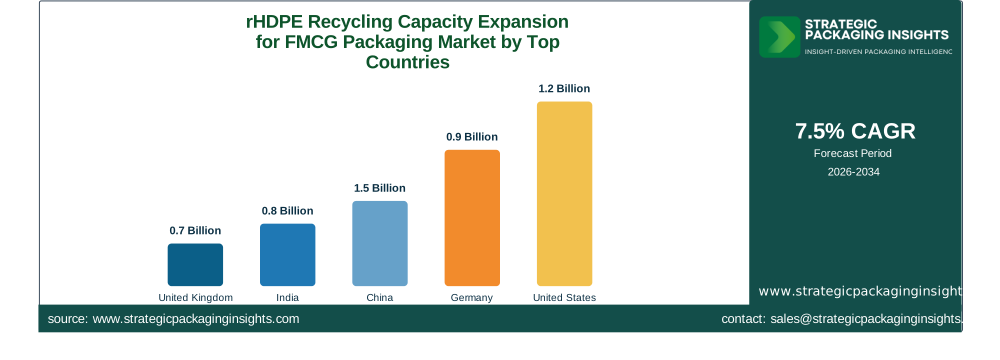
Germany is another key market for rHDPE recycling capacity expansion, driven by the country's strong focus on sustainability and environmental conservation. The market in Germany is characterized by the presence of several key players who are actively engaged in expanding their recycling capacities and enhancing their market presence. The country is witnessing a growth rate of 7% CAGR, supported by government initiatives promoting the use of recycled materials in packaging and the growing demand for eco-friendly packaging solutions.
China is emerging as a significant market for rHDPE recycling capacity expansion, driven by the country's growing demand for sustainable packaging solutions and the increasing investments in recycling infrastructure. The market in China is witnessing a growth rate of 8% CAGR, supported by government initiatives promoting the use of recycled materials in packaging and the growing awareness about environmental conservation. The country's strong manufacturing base and the presence of several key players are also contributing to market growth.
India is another key market for rHDPE recycling capacity expansion, driven by the country's growing demand for sustainable packaging solutions and the increasing investments in recycling infrastructure. The market in India is witnessing a growth rate of 9% CAGR, supported by government initiatives promoting the use of recycled materials in packaging and the growing awareness about environmental conservation. The country's strong manufacturing base and the presence of several key players are also contributing to market growth.
The United Kingdom is also a significant market for rHDPE recycling capacity expansion, driven by the country's strong focus on sustainability and environmental conservation. The market in the United Kingdom is characterized by the presence of several key players who are actively engaged in expanding their recycling capacities and enhancing their market presence. The country is witnessing a growth rate of 5% CAGR, supported by government initiatives promoting the use of recycled materials in packaging and the growing demand for eco-friendly packaging solutions.
rHDPE Recycling Capacity Expansion for FMCG Packaging Market Segments Insights

Process Type Analysis
The process type segment in the rHDPE Recycling Capacity Expansion for FMCG Packaging market is categorized into sorting, washing, extrusion, and deodorization. Sorting is a critical step in the recycling process, ensuring that only high-quality materials are processed further. Advanced sorting technologies are being developed to enhance the efficiency and accuracy of this process, thereby improving the overall quality of rHDPE. Washing is another essential process, aimed at removing contaminants and impurities from the recycled materials. Innovations in washing technologies are enhancing the effectiveness of this process, ensuring that the recycled materials meet stringent quality standards.
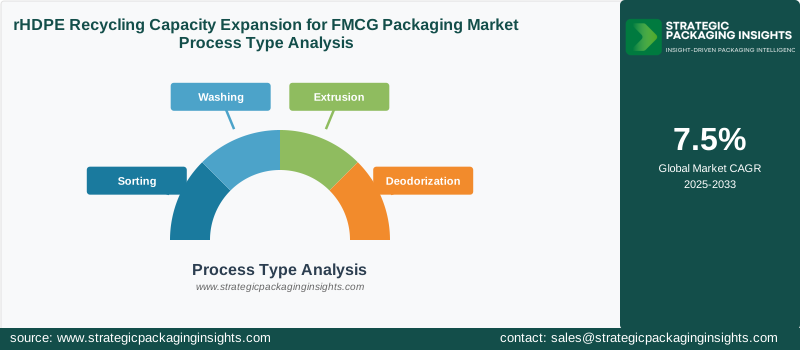
Extrusion is a key process in the production of rHDPE, where the recycled materials are melted and formed into pellets. This process is crucial for ensuring the consistent quality and performance of rHDPE. Advancements in extrusion technologies are enhancing the efficiency and effectiveness of this process, making it a vital component of the recycling process. Deodorization is the final step in the recycling process, aimed at removing any residual odors from the recycled materials. This process is essential for ensuring that the recycled materials are suitable for use in packaging applications, particularly in the FMCG sector.
Output Type Analysis
The output type segment in the rHDPE Recycling Capacity Expansion for FMCG Packaging market is categorized into food-grade rHDPE, non-food-grade rHDPE, and colored rHDPE. Food-grade rHDPE is in high demand due to its suitability for use in packaging applications that come into direct contact with food products. The stringent quality standards and regulatory requirements for food-grade materials are driving the development of advanced recycling technologies to ensure the consistent quality and performance of food-grade rHDPE. Non-food-grade rHDPE is used in a wide range of packaging applications, including household and personal care products.
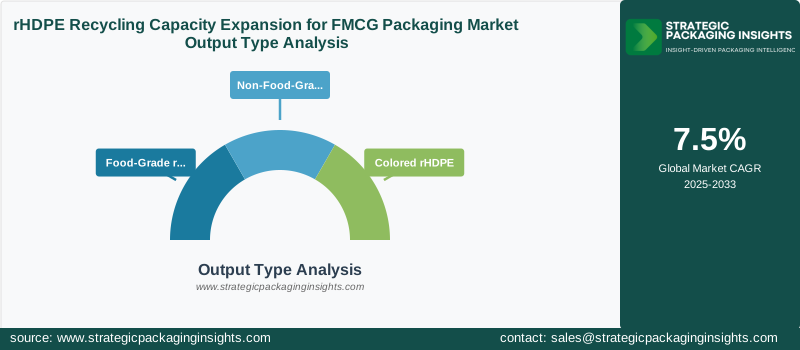
Colored rHDPE is another significant segment, driven by the growing demand for aesthetically appealing packaging solutions. The development of advanced coloring technologies is enhancing the quality and performance of colored rHDPE, making it a preferred choice for packaging applications in the FMCG sector. The increasing demand for sustainable packaging solutions and the growing awareness about environmental conservation are driving the adoption of rHDPE in various packaging applications. The development of efficient recycling processes and the availability of high-quality recycled materials are further boosting the growth of this segment.
Application Analysis
The application segment in the rHDPE Recycling Capacity Expansion for FMCG Packaging market is categorized into FMCG bottles, closures, household packs, and personal care packs. FMCG bottles are a significant application segment, driven by the growing demand for sustainable packaging solutions in the beverage and personal care industries. The development of advanced recycling technologies is enhancing the quality and performance of rHDPE, making it a preferred choice for packaging applications in the FMCG sector. Closures are another significant application segment, driven by the growing demand for high-quality and durable packaging solutions.
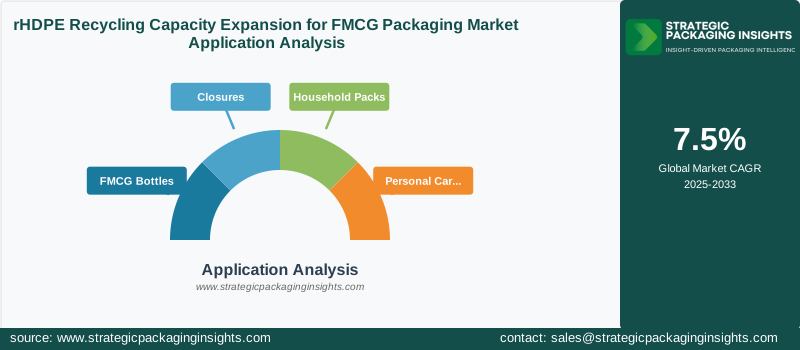
Household packs and personal care packs are also significant application segments, driven by the growing demand for sustainable packaging solutions in the household and personal care industries. The increasing awareness about environmental conservation and the need to reduce plastic waste are driving the adoption of rHDPE in these application segments. The development of efficient recycling processes and the availability of high-quality recycled materials are further boosting the growth of these segments. The growing collaboration between FMCG companies and recycling firms is also enhancing the supply chain of recycled materials, ensuring a steady supply of high-quality rHDPE for packaging applications.
End Use Analysis
The end-use segment in the rHDPE Recycling Capacity Expansion for FMCG Packaging market is categorized into packaging converters, FMCG brands, and recyclers. Packaging converters are a significant end-use segment, driven by the growing demand for sustainable packaging solutions in the FMCG sector. The development of advanced recycling technologies is enhancing the quality and performance of rHDPE, making it a preferred choice for packaging converters. FMCG brands are another significant end-use segment, driven by the growing demand for eco-friendly packaging solutions and the increasing awareness about environmental conservation.
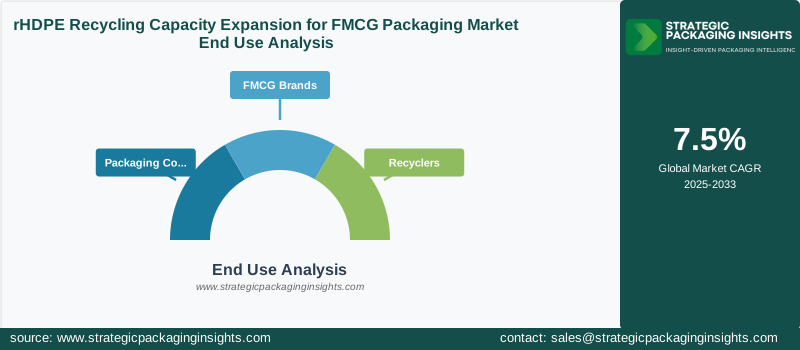
Recyclers are also a significant end-use segment, driven by the growing demand for high-quality recycled materials and the increasing investments in recycling infrastructure. The development of efficient recycling processes and the availability of high-quality recycled materials are further boosting the growth of this segment. The growing collaboration between FMCG companies and recycling firms is also enhancing the supply chain of recycled materials, ensuring a steady supply of high-quality rHDPE for packaging applications. The increasing investments in recycling infrastructure and the development of innovative recycling technologies are expected to create lucrative opportunities for market players in this segment.
rHDPE Recycling Capacity Expansion for FMCG Packaging Market Segments
The rHDPE Recycling Capacity Expansion for FMCG Packaging market has been segmented on the basis ofProcess Type
- Sorting
- Washing
- Extrusion
- Deodorization
Output Type
- Food-Grade rHDPE
- Non-Food-Grade rHDPE
- Colored rHDPE
Application
- FMCG Bottles
- Closures
- Household Packs
- Personal Care Packs
End Use
- Packaging Converters
- FMCG Brands
- Recyclers
Region
- Asia Pacific
- North America
- Latin America
- Europe
- Middle East & Africa




