


RFID-Integrated Retail Packaging Market Outlook
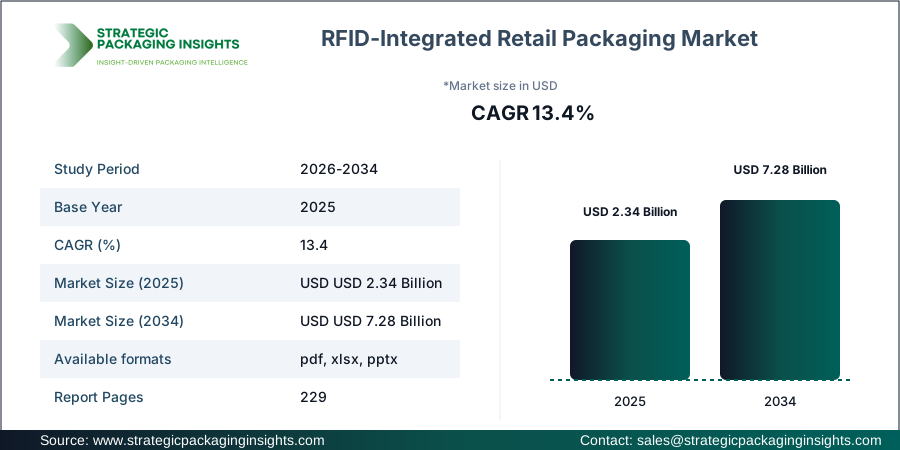
The RFID-Integrated Retail Packaging market size was valued at USD 2.34 Billion in 2025 and is anticipated to reach USD 7.28 Billion by 2034, growing at a CAGR of 13.4% during the forecast period according to Strategic Packaging Insights. This growth is driven by the increasing demand for efficient inventory management and enhanced supply chain visibility. Companies like Avery Dennison and Zebra Technologies are at the forefront of this market, leveraging RFID technology to offer innovative solutions that streamline operations and reduce costs. The adoption of RFID in retail packaging is further fueled by the need for real-time data tracking and improved customer experience, making it a critical component in modern retail strategies.
One of the most impactful drivers of the RFID-Integrated Retail Packaging market is the growing emphasis on reducing shrinkage and theft in retail environments. According to industry reports, retailers lose billions annually due to inventory shrinkage, which includes theft, administrative errors, and supplier fraud. RFID technology, as implemented by companies like Checkpoint Systems and SML Group, offers a robust solution to this problem by providing accurate inventory tracking and loss prevention capabilities. This technology not only helps in reducing shrinkage but also enhances the overall efficiency of the supply chain, leading to increased profitability for retailers. The integration of RFID in retail packaging is thus becoming a strategic priority for businesses aiming to optimize their operations and safeguard their assets.
Report Scope
| Attributes | Details |
| Report Title | RFID-Integrated Retail Packaging Market Size, Future Growth and Forecast 2034 |
| By Component | RFID Tags, RFID Labels, RFID Inlays, RFID Readers, RFID Software |
| By Frequency | Low Frequency (LF), High Frequency (HF), Ultra-High Frequency (UHF), Near Field Communication (NFC) |
| By Packaging Type | Corrugated Packaging, Flexible Packaging, Cartons, Labels, Rigid Packaging |
| By End User | Retail Chains, Apparel & Fashion, Food & Beverage, Consumer Electronics, Pharmaceuticals, E-Commerce |
| Region | Asia Pacific, North America, Latin America, Europe, Middle East & Africa |
| Base Year | 2025 |
| Historic Period | 2018-2024 |
| Forecast Period | 2026-2034 |
| Number of Pages | 229 |
| Customization Available | Yes* |
Sustainability & Circular Economy Analysis
Sustainability initiatives and circular economy practices are significantly influencing the RFID-Integrated Retail Packaging market. The shift towards eco-friendly materials and recyclable packaging solutions is driven by increasing consumer awareness and regulatory pressures. Companies are investing in the development of RFID tags and labels made from biodegradable materials, aligning with global sustainability goals. This trend is not only reducing the environmental impact of packaging but also enhancing brand reputation and customer loyalty.
Moreover, the adoption of lightweight packaging solutions is gaining traction as businesses aim to minimize their carbon footprint. RFID technology plays a crucial role in this transition by enabling precise inventory management and reducing waste. By integrating RFID into packaging, companies can optimize their supply chains, reduce excess inventory, and lower transportation emissions. This approach aligns with extended producer responsibility (EPR) regulations, which hold manufacturers accountable for the entire lifecycle of their products.
As sustainability becomes a key differentiator in the market, companies are prioritizing investments in eco-friendly packaging innovations. This includes the development of reusable packaging systems that incorporate RFID technology for efficient tracking and management. Such initiatives not only support waste reduction strategies but also enhance the long-term competitiveness of businesses. By embracing circular economy principles, companies can achieve regulatory compliance, meet consumer sustainability preferences, and drive growth in the RFID-Integrated Retail Packaging market.
Packaging Value Chain & Supply Chain Analysis
The packaging value chain in the RFID-Integrated Retail Packaging market is complex, involving multiple stakeholders from raw material suppliers to end consumers. Raw material sourcing is a critical component, as the availability and cost of materials like paper, plastic, and metals directly impact production capabilities. Packaging converters and manufacturers play a pivotal role in transforming these materials into RFID-enabled packaging solutions, ensuring quality and efficiency in the production process.
Logistics and distribution channels are essential for the seamless delivery of RFID-integrated packaging products to retailers and brand owners. Efficient transportation and inventory management strategies are crucial for maintaining supply chain resilience and meeting customer demands. Companies like Impinj Inc. and HID Global are leveraging strategic partnerships and advanced technologies to enhance their supply chain operations, ensuring timely delivery and reducing operational costs.
Recycling networks and procurement strategies are also integral to the packaging value chain, supporting sustainability goals and regulatory compliance. By incorporating RFID technology, companies can improve traceability and accountability throughout the supply chain, facilitating efficient recycling and waste management processes. This not only enhances the overall market performance but also strengthens business competitiveness by aligning with consumer expectations and environmental standards.
Opportunities & Threats
The RFID-Integrated Retail Packaging market presents numerous opportunities for growth and innovation. One significant opportunity lies in the expansion of RFID technology into new retail sectors, such as pharmaceuticals and consumer electronics. As these industries increasingly adopt RFID for inventory management and product authentication, there is a growing demand for specialized RFID packaging solutions. Companies that can offer tailored products and services to meet the unique needs of these sectors are well-positioned to capture a larger market share.
Another opportunity is the integration of RFID technology with emerging technologies like the Internet of Things (IoT) and blockchain. By combining RFID with IoT, companies can enhance real-time data collection and analysis, improving supply chain visibility and decision-making. Blockchain integration offers additional benefits, such as enhanced security and transparency in product tracking. These technological advancements provide a competitive edge for businesses, enabling them to offer innovative solutions that address the evolving needs of the retail industry.
Despite the promising opportunities, the RFID-Integrated Retail Packaging market faces several threats that could hinder its growth. One major challenge is the high cost of RFID technology implementation, which can be a barrier for small and medium-sized enterprises. Additionally, concerns about data privacy and security may deter some retailers from adopting RFID solutions. To overcome these challenges, companies must focus on developing cost-effective solutions and addressing privacy concerns through robust security measures and transparent data management practices.
Drivers & Challenges
The RFID-Integrated Retail Packaging market is driven by several key factors that are shaping its growth trajectory. One of the primary drivers is the increasing demand for efficient inventory management solutions in the retail sector. RFID technology offers real-time tracking and visibility, enabling retailers to optimize their inventory levels and reduce stockouts. This not only improves operational efficiency but also enhances customer satisfaction by ensuring product availability.
Another significant driver is the growing emphasis on enhancing the customer experience in retail environments. RFID technology enables personalized shopping experiences by providing retailers with valuable insights into consumer behavior and preferences. By leveraging this data, retailers can offer targeted promotions and personalized recommendations, increasing customer engagement and loyalty. This focus on customer-centric strategies is propelling the adoption of RFID-integrated packaging solutions in the retail industry.
However, the market also faces several challenges that could impact its growth. One of the main challenges is the complexity of integrating RFID technology into existing retail systems and processes. This requires significant investment in infrastructure and training, which can be a deterrent for some businesses. Additionally, the lack of standardized protocols and interoperability issues can hinder the seamless implementation of RFID solutions. To address these challenges, industry stakeholders must collaborate to develop standardized frameworks and provide comprehensive support to retailers during the transition process.
Market Share Analysis
The competitive landscape of the RFID-Integrated Retail Packaging market is characterized by the presence of several key players who are driving innovation and growth. Companies like Avery Dennison, Zebra Technologies, and Checkpoint Systems hold significant market shares, leveraging their expertise in RFID technology to offer comprehensive solutions for the retail industry. These companies are continuously investing in research and development to enhance their product offerings and maintain their competitive edge.
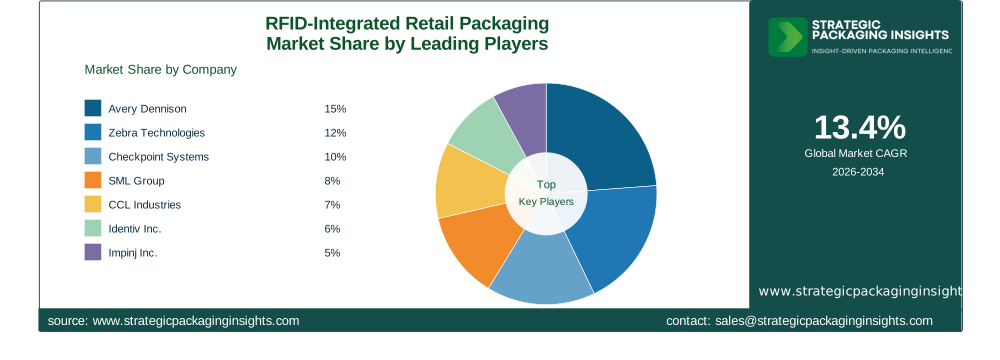
Avery Dennison is a leading player in the market, known for its innovative RFID solutions that cater to various retail applications. The company's strong focus on sustainability and eco-friendly packaging has further strengthened its market position. Zebra Technologies, another major player, is renowned for its advanced RFID readers and software solutions that enable seamless integration with existing retail systems. The company's commitment to customer-centric innovation has made it a preferred choice for retailers worldwide.
Checkpoint Systems is a key player in the RFID-Integrated Retail Packaging market, offering a wide range of RFID tags and labels that enhance inventory accuracy and reduce shrinkage. The company's strategic partnerships with leading retailers have contributed to its strong market presence. SML Group is also a prominent player, known for its comprehensive RFID solutions that cater to the apparel and fashion industry. The company's focus on delivering value-added services has helped it establish a loyal customer base.
Other notable companies in the market include CCL Industries, Identiv Inc., Impinj Inc., HID Global, and Tageos. These companies are actively expanding their product portfolios and strengthening their distribution networks to capture new market opportunities. The competitive landscape is further enriched by the presence of emerging players like Beontag, NXP Semiconductors, Alien Technology, Honeywell International, Avery Dennison Smartrac, and Nedap N.V., who are continuously innovating to meet the evolving needs of the retail industry.
Key Highlights
- Market Size: The RFID-Integrated Retail Packaging market was valued at USD 2.34 Billion in 2025 and is projected to reach USD 7.28 Billion by 2034.
- Growth Rate: The market is expected to grow at a CAGR of 13.4% during the forecast period.
- Leading Companies: Key players include Avery Dennison, Zebra Technologies, and Checkpoint Systems.
- Technological Integration: RFID technology is increasingly being integrated with IoT and blockchain for enhanced supply chain visibility.
- Sustainability Focus: Companies are prioritizing eco-friendly and recyclable RFID packaging solutions.
- Regional Insights: Asia Pacific is expected to witness significant growth due to increasing retail activities.
- End-User Expansion: The market is expanding into new sectors like pharmaceuticals and consumer electronics.
RFID-Integrated Retail Packaging Market Segments Insights

By Component Analysis
The RFID-Integrated Retail Packaging market is segmented by component into RFID Tags, RFID Labels, RFID Inlays, RFID Readers, and RFID Software. RFID Tags and Labels are the most widely used components, driven by their ability to enhance inventory management and reduce shrinkage. Companies like Avery Dennison and SML Group are leading the market with their innovative tag and label solutions that cater to various retail applications. RFID Readers and Software are also gaining traction, enabling seamless integration with existing retail systems and providing real-time data insights.
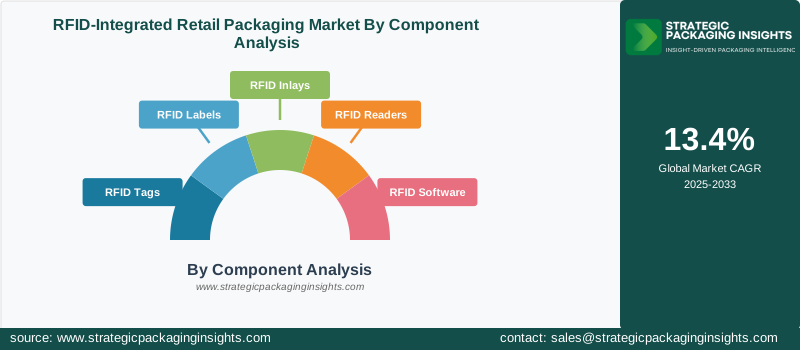
RFID Inlays are a critical component in the market, offering flexibility and cost-effectiveness for various packaging applications. The demand for RFID Inlays is driven by the need for efficient tracking and authentication of products across the supply chain. Companies are investing in the development of advanced inlay technologies to meet the evolving needs of the retail industry. The integration of RFID Software with IoT and blockchain technologies is further enhancing the capabilities of RFID solutions, providing retailers with valuable insights into consumer behavior and preferences.
By Frequency Analysis
The market is also segmented by frequency into Low Frequency (LF), High Frequency (HF), Ultra-High Frequency (UHF), and Near Field Communication (NFC). Ultra-High Frequency (UHF) is the most widely used frequency in the market, offering long-range communication and high data transfer rates. This makes UHF ideal for inventory management and supply chain applications, where real-time tracking and visibility are critical. Companies like Impinj Inc. and NXP Semiconductors are leading the market with their advanced UHF solutions that cater to various retail applications.
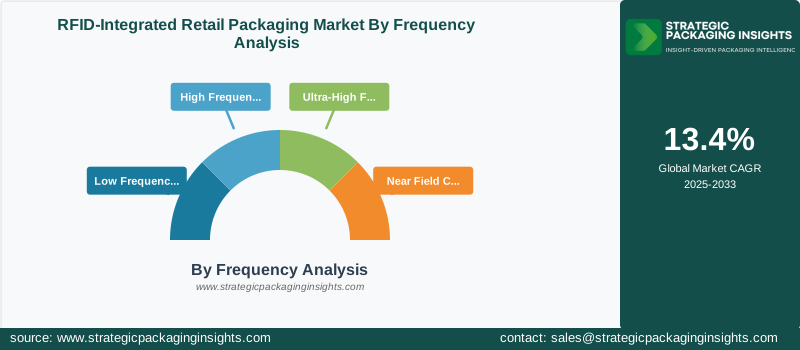
High Frequency (HF) and Near Field Communication (NFC) are also gaining traction, driven by their ability to enhance customer engagement and provide personalized shopping experiences. NFC technology is particularly popular in the apparel and fashion industry, where it is used for product authentication and anti-counterfeiting measures. The demand for Low Frequency (LF) solutions is limited, primarily used in niche applications where short-range communication is required. Overall, the frequency segment is witnessing significant innovation, with companies investing in the development of advanced frequency technologies to meet the evolving needs of the retail industry.
By Packaging Type Analysis
The RFID-Integrated Retail Packaging market is segmented by packaging type into Corrugated Packaging, Flexible Packaging, Cartons, Labels, and Rigid Packaging. Corrugated Packaging is the most widely used packaging type, driven by its durability and cost-effectiveness. Companies like Avery Dennison and Zebra Technologies are leading the market with their innovative corrugated packaging solutions that cater to various retail applications. Flexible Packaging is also gaining traction, offering versatility and sustainability benefits that align with consumer preferences.
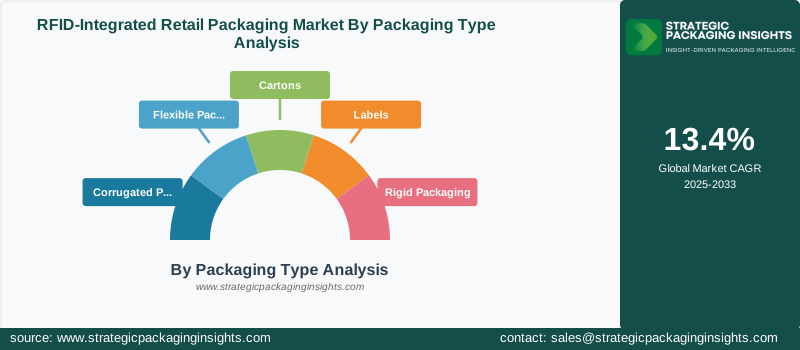
Labels and Cartons are critical components in the market, offering branding and product information capabilities that enhance the overall customer experience. The demand for Rigid Packaging is limited, primarily used in niche applications where durability and protection are required. Overall, the packaging type segment is witnessing significant innovation, with companies investing in the development of advanced packaging solutions that meet the evolving needs of the retail industry. The focus on sustainability and eco-friendly materials is further driving the demand for innovative packaging solutions in the market.
By End User Analysis
The RFID-Integrated Retail Packaging market is segmented by end user into Retail Chains, Apparel & Fashion, Food & Beverage, Consumer Electronics, Pharmaceuticals, and E-Commerce. Retail Chains are the largest end-user segment, driven by the need for efficient inventory management and enhanced supply chain visibility. Companies like Checkpoint Systems and SML Group are leading the market with their comprehensive RFID solutions that cater to the unique needs of retail chains.
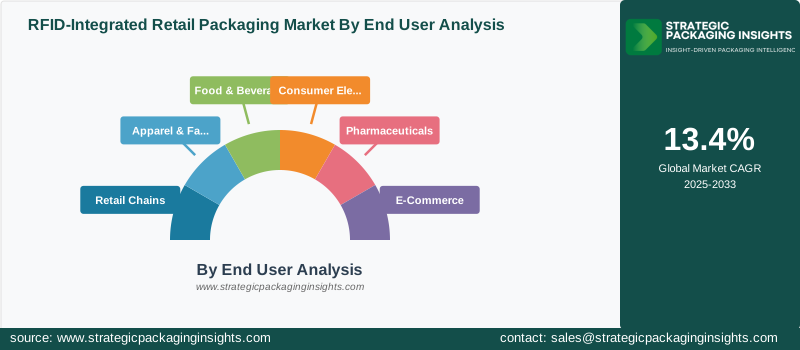
The Apparel & Fashion industry is also a significant end-user segment, leveraging RFID technology for product authentication and anti-counterfeiting measures. The Food & Beverage and Consumer Electronics industries are increasingly adopting RFID solutions for inventory management and product tracking. The Pharmaceuticals industry is also gaining traction, driven by the need for efficient tracking and authentication of products across the supply chain. Overall, the end-user segment is witnessing significant growth, with companies investing in the development of tailored RFID solutions that meet the evolving needs of various industries.
RFID-Integrated Retail Packaging Market Segments
The RFID-Integrated Retail Packaging market has been segmented on the basis ofBy Component
- RFID Tags
- RFID Labels
- RFID Inlays
- RFID Readers
- RFID Software
By Frequency
- Low Frequency (LF)
- High Frequency (HF)
- Ultra-High Frequency (UHF)
- Near Field Communication (NFC)
By Packaging Type
- Corrugated Packaging
- Flexible Packaging
- Cartons
- Labels
- Rigid Packaging
By End User
- Retail Chains
- Apparel & Fashion
- Food & Beverage
- Consumer Electronics
- Pharmaceuticals
- E-Commerce
Region
- Asia Pacific
- North America
- Latin America
- Europe
- Middle East & Africa




