


Reverse Tuck Box Market Outlook
The Reverse Tuck Box market was valued at $2.66 billion in 2025 and is projected to reach $3.67 billion by 2034, growing at a CAGR of 3.6% during the forecast period 2026-2034. This market is witnessing steady growth due to the increasing demand for sustainable and efficient packaging solutions across various industries. The versatility and cost-effectiveness of reverse tuck boxes make them a preferred choice for packaging in sectors such as cosmetics, pharmaceuticals, food, and retail. The market is also driven by the rising trend of e-commerce, which necessitates robust packaging solutions to ensure product safety during transit. Additionally, the growing awareness about environmental sustainability is pushing manufacturers to adopt eco-friendly materials, further propelling the market growth.
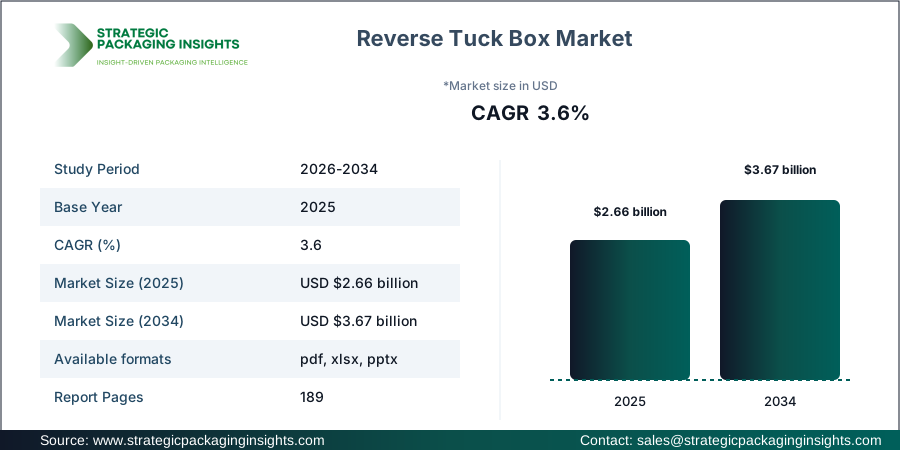
Report Scope
| Attributes | Details |
| Report Title | Reverse Tuck Box Market Size, Future Growth and Forecast 2034 |
| Product Type | Standard Reverse Tuck Boxes, Window Reverse Tuck Boxes, Printed Reverse Tuck Boxes |
| Material Type | Paperboard, Kraft Board, Recycled Board |
| Application | Cosmetics, Pharma, Food, Retail |
| End Use | FMCG Brands, Retailers, Contract Packers |
| Region | Asia Pacific, North America, Latin America, Europe, Middle East & Africa |
| Base Year | 2025 |
| Historic Period | 2018-2024 |
| Forecast Period | 2026-2034 |
| Number of Pages | 189 |
| Customization Available | Yes* |
Opportunities & Threats
One of the significant opportunities in the Reverse Tuck Box market lies in the increasing demand for customized packaging solutions. As brands strive to differentiate themselves in a crowded marketplace, the need for unique and personalized packaging has become paramount. This trend is particularly evident in the cosmetics and retail sectors, where packaging plays a crucial role in brand identity and consumer appeal. Companies that can offer innovative design and printing capabilities are likely to capture a larger market share. Furthermore, the shift towards sustainable packaging materials presents another opportunity for growth. With consumers becoming more environmentally conscious, there is a growing demand for packaging solutions that minimize environmental impact, such as those made from recycled or biodegradable materials.
Another opportunity is the expansion of the e-commerce sector, which has been accelerated by the global pandemic. As more consumers turn to online shopping, the demand for secure and efficient packaging solutions has surged. Reverse tuck boxes, with their sturdy construction and ease of assembly, are well-suited to meet the needs of e-commerce businesses. This trend is expected to continue, providing a significant boost to the market. Additionally, the increasing penetration of organized retail in emerging markets offers a lucrative opportunity for market players. As retail chains expand their footprint, the demand for standardized and reliable packaging solutions is expected to rise, further driving the growth of the reverse tuck box market.
However, the market faces certain threats that could hinder its growth. One of the primary challenges is the volatility in raw material prices, particularly paperboard and kraft board, which are essential components of reverse tuck boxes. Fluctuations in the cost of these materials can impact the profitability of manufacturers and lead to increased prices for end consumers. Additionally, stringent regulations regarding packaging waste and recycling in various regions pose a challenge for market players. Companies need to invest in sustainable practices and comply with regulatory standards to avoid penalties and maintain their market position. Furthermore, the intense competition from alternative packaging solutions, such as flexible packaging and rigid boxes, could limit the growth potential of the reverse tuck box market.
Drivers & Challenges
The primary driver of the Reverse Tuck Box market is the growing demand for sustainable packaging solutions. As environmental concerns continue to rise, consumers and businesses alike are seeking packaging options that reduce their carbon footprint. Reverse tuck boxes, made from recyclable materials, align with this demand and are increasingly being adopted across various industries. Additionally, the rise of e-commerce has significantly contributed to the market's growth. With more consumers shopping online, the need for durable and protective packaging has become crucial. Reverse tuck boxes offer the necessary strength and security to protect products during transit, making them a preferred choice for e-commerce businesses.
Another key driver is the increasing focus on branding and product differentiation. In today's competitive market, packaging is not just about protection but also about creating a memorable brand experience. Reverse tuck boxes offer ample space for creative designs and branding elements, allowing companies to enhance their product's visual appeal and stand out on the shelves. This trend is particularly prominent in the cosmetics and retail sectors, where packaging plays a vital role in influencing consumer purchasing decisions. Moreover, advancements in printing technology have enabled manufacturers to offer high-quality, customized packaging solutions, further driving the demand for reverse tuck boxes.
Despite the positive growth drivers, the Reverse Tuck Box market faces several challenges. One of the significant challenges is the high competition from alternative packaging solutions. Flexible packaging, for instance, offers advantages such as lightweight and cost-effectiveness, which can be appealing to certain industries. Additionally, the market is challenged by the need for continuous innovation to meet changing consumer preferences and regulatory requirements. Companies must invest in research and development to create packaging solutions that are not only functional but also environmentally friendly. Furthermore, the economic uncertainties and supply chain disruptions caused by global events, such as the COVID-19 pandemic, have posed challenges for market players, affecting production and distribution processes.
Market Share Analysis
The Reverse Tuck Box market is characterized by a competitive landscape with several key players vying for market share. Companies such as WestRock, Graphic Packaging International, Smurfit Kappa, DS Smith, and International Paper are some of the prominent players in this market. These companies have established themselves as leaders through their extensive product portfolios, strong distribution networks, and focus on innovation. WestRock, for instance, is known for its comprehensive range of packaging solutions and commitment to sustainability. Similarly, Graphic Packaging International has made significant investments in research and development to offer innovative and eco-friendly packaging options.
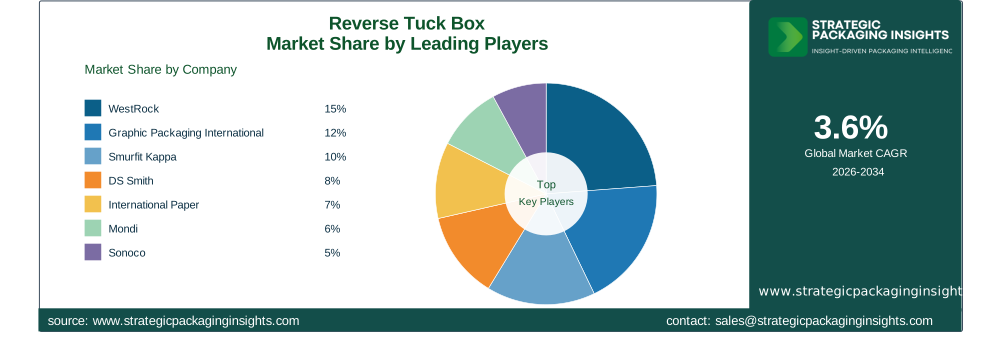
Smurfit Kappa, another major player, has a strong presence in the European market and is recognized for its sustainable packaging solutions. The company has been actively expanding its operations and investing in new technologies to enhance its product offerings. DS Smith, with its focus on circular economy principles, has positioned itself as a leader in sustainable packaging. The company's emphasis on recycling and waste reduction has resonated well with environmentally conscious consumers. International Paper, a global leader in the paper and packaging industry, has leveraged its extensive resources and expertise to maintain a competitive edge in the reverse tuck box market.
Other notable companies in the market include Mondi, Sonoco, Mayr-Melnhof Karton, Huhtamaki, and Pactiv Evergreen. Mondi is known for its innovative packaging solutions and commitment to sustainability. The company has been actively expanding its product portfolio to cater to the growing demand for eco-friendly packaging. Sonoco, with its diverse range of packaging products, has a strong presence in the North American market. The company's focus on customer-centric solutions and operational excellence has contributed to its success. Mayr-Melnhof Karton, a leading producer of cartonboard, has been investing in new technologies to enhance its production capabilities and meet the evolving needs of its customers.
Huhtamaki, a global provider of sustainable packaging solutions, has been focusing on expanding its presence in emerging markets. The company's emphasis on innovation and sustainability has helped it capture a significant share of the reverse tuck box market. Pactiv Evergreen, known for its comprehensive range of foodservice and food packaging products, has been leveraging its strong distribution network to expand its market reach. The company's commitment to sustainability and customer satisfaction has been a key factor in its growth. Overall, the competitive landscape of the reverse tuck box market is characterized by a mix of established players and emerging companies, all striving to capture a larger share of the growing market.
Key Highlights
- The Reverse Tuck Box market is projected to grow from $2.66 billion in 2025 to $3.67 billion by 2034, at a CAGR of 3.6%.
- Increasing demand for sustainable and eco-friendly packaging solutions is a major driver of market growth.
- The rise of e-commerce has significantly boosted the demand for durable and protective packaging solutions.
- Customization and branding opportunities in packaging are driving demand in the cosmetics and retail sectors.
- Volatility in raw material prices poses a challenge to market growth.
- Key players in the market include WestRock, Graphic Packaging International, Smurfit Kappa, and DS Smith.
- Emerging markets offer significant growth opportunities due to the expansion of organized retail.
- Technological advancements in printing and packaging design are enhancing product offerings.
- Regulatory requirements for packaging waste and recycling are influencing market dynamics.
Top Countries Insights
In the Reverse Tuck Box market, the United States holds a significant share due to its well-established retail and e-commerce sectors. The market size in the U.S. is substantial, driven by the demand for efficient and sustainable packaging solutions. The country's focus on innovation and sustainability, coupled with stringent regulations on packaging waste, has propelled the adoption of eco-friendly materials. The CAGR for the U.S. market is expected to be around 4%, supported by the continuous growth of e-commerce and the increasing preference for customized packaging solutions.
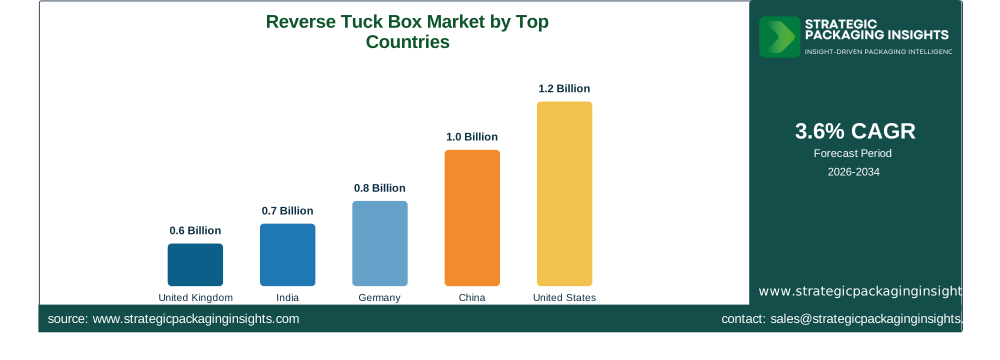
China is another key player in the Reverse Tuck Box market, with a rapidly growing packaging industry. The country's market size is expanding due to the booming e-commerce sector and the increasing demand for consumer goods. China's focus on sustainability and the government's initiatives to promote eco-friendly packaging solutions are driving market growth. The CAGR for the Chinese market is projected to be around 5%, reflecting the country's strong economic growth and the rising awareness of environmental issues among consumers.
Germany, with its robust manufacturing sector and emphasis on sustainability, is a significant market for reverse tuck boxes in Europe. The country's market size is driven by the demand for high-quality and sustainable packaging solutions in industries such as cosmetics and pharmaceuticals. Germany's commitment to recycling and waste reduction, along with its focus on innovation, supports a CAGR of approximately 3% for the reverse tuck box market.
India is emerging as a lucrative market for reverse tuck boxes, driven by the growth of organized retail and the increasing penetration of e-commerce. The country's market size is expanding as more consumers turn to online shopping, necessitating efficient packaging solutions. India's focus on sustainability and the government's initiatives to promote eco-friendly practices are expected to drive a CAGR of around 6% in the reverse tuck box market.
The United Kingdom is also a key market for reverse tuck boxes, with a strong emphasis on sustainability and innovation. The market size in the UK is supported by the demand for customized and eco-friendly packaging solutions in sectors such as cosmetics and food. The country's regulatory framework on packaging waste and recycling is driving the adoption of sustainable materials, contributing to a CAGR of approximately 3% for the reverse tuck box market.
Reverse Tuck Box Market Segments Insights

Product Type Analysis
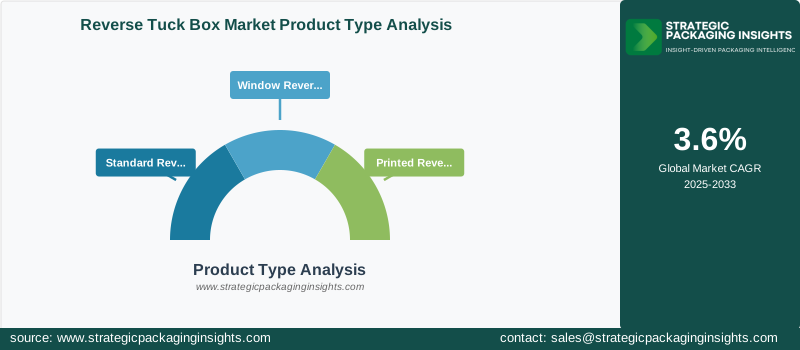
The Reverse Tuck Box market is segmented by product type into standard reverse tuck boxes, window reverse tuck boxes, and printed reverse tuck boxes. Standard reverse tuck boxes are widely used due to their simplicity and cost-effectiveness, making them a popular choice for various applications. These boxes are particularly favored in the food and retail sectors, where they provide a reliable and efficient packaging solution. Window reverse tuck boxes, on the other hand, are gaining traction in the cosmetics and retail industries, where product visibility is crucial. The transparent window allows consumers to view the product without opening the packaging, enhancing the overall shopping experience. Printed reverse tuck boxes are also in demand, especially in the cosmetics and FMCG sectors, where branding and product differentiation are essential. The ability to customize designs and incorporate branding elements makes printed reverse tuck boxes a preferred choice for companies looking to enhance their brand image.
Material Type Analysis
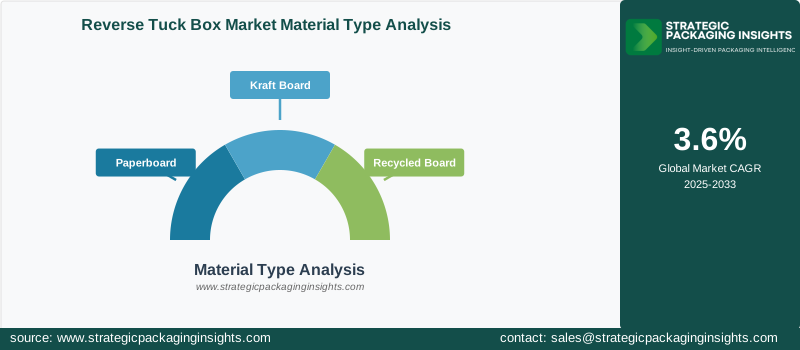
The market is also segmented by material type into paperboard, kraft board, and recycled board. Paperboard is the most commonly used material due to its versatility and cost-effectiveness. It is widely used in the food and retail sectors, where it provides a sturdy and reliable packaging solution. Kraft board, known for its strength and durability, is favored in the pharmaceutical and FMCG sectors, where product protection is paramount. The increasing demand for sustainable packaging solutions has led to a rise in the use of recycled board, which is gaining popularity across various industries. Recycled board offers an eco-friendly alternative to traditional materials, aligning with the growing consumer preference for sustainable products. The use of recycled materials not only reduces environmental impact but also enhances brand image, making it an attractive option for companies looking to meet sustainability goals.
Application Analysis
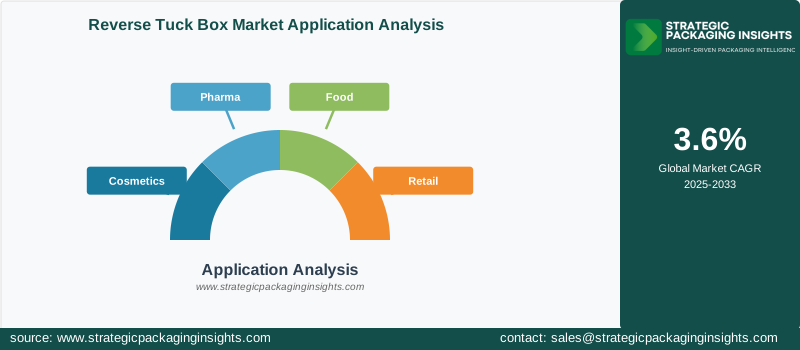
By application, the Reverse Tuck Box market is segmented into cosmetics, pharma, food, and retail. The cosmetics industry is a major driver of market growth, with packaging playing a crucial role in brand identity and consumer appeal. Reverse tuck boxes offer the flexibility and customization options needed to create visually appealing packaging that stands out on the shelves. In the pharmaceutical sector, the demand for secure and tamper-evident packaging solutions is driving the adoption of reverse tuck boxes. These boxes provide the necessary protection and compliance with regulatory standards, making them a preferred choice for pharmaceutical companies. The food industry also relies heavily on reverse tuck boxes for packaging a wide range of products, from dry goods to confectionery. The boxes' ability to provide a secure and hygienic packaging solution is a key factor driving their demand in the food sector. In the retail industry, the rise of e-commerce has significantly boosted the demand for reverse tuck boxes, which offer the durability and protection needed for shipping products to consumers.
End Use Analysis
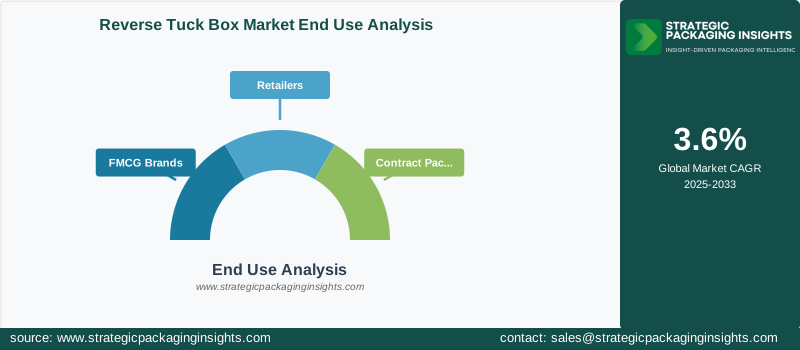
The market is further segmented by end use into FMCG brands, retailers, and contract packers. FMCG brands are a major consumer of reverse tuck boxes, using them for packaging a wide range of products, from personal care items to household goods. The need for efficient and cost-effective packaging solutions is driving the demand for reverse tuck boxes in this sector. Retailers, particularly those in the e-commerce space, are also significant users of reverse tuck boxes. The boxes' ability to provide secure and reliable packaging for shipping products to consumers is a key factor driving their demand among retailers. Contract packers, who provide packaging services to various industries, are another important end user of reverse tuck boxes. These companies rely on reverse tuck boxes for their versatility and ease of use, making them a preferred choice for packaging a wide range of products.
Reverse Tuck Box Market Segments
The Reverse Tuck Box market has been segmented on the basis ofProduct Type
- Standard Reverse Tuck Boxes
- Window Reverse Tuck Boxes
- Printed Reverse Tuck Boxes
Material Type
- Paperboard
- Kraft Board
- Recycled Board
Application
- Cosmetics
- Pharma
- Food
- Retail
End Use
- FMCG Brands
- Retailers
- Contract Packers
Region
- Asia Pacific
- North America
- Latin America
- Europe
- Middle East & Africa




